Saga · YoshinogariNo.540★★★Open in map →
Yoshinogari Historical Park
— Reconstructed Yayoi-period moated settlement
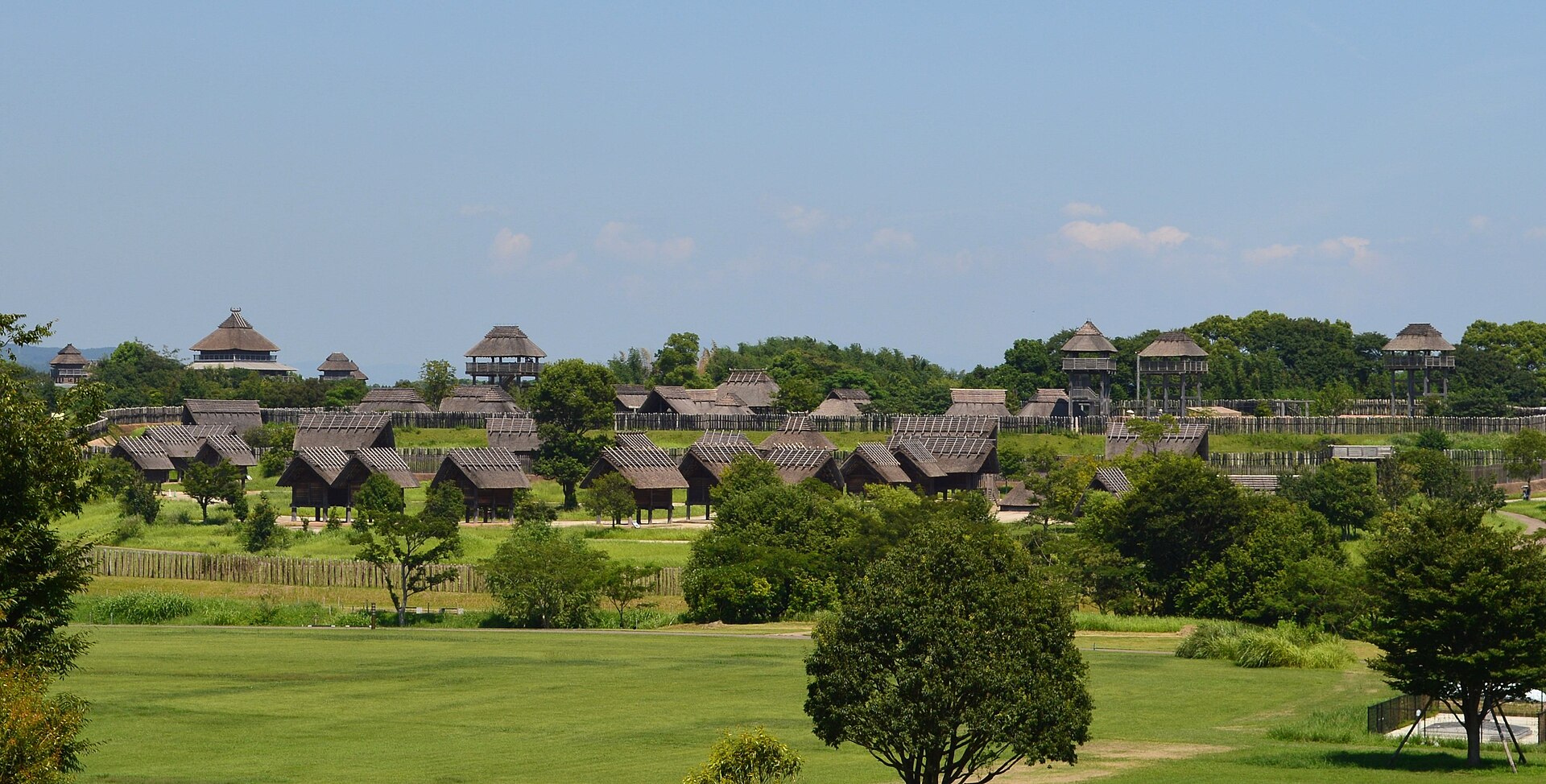
A national park in Saga built directly over one of Japan's largest Yayoi-period moated settlements. Watchtowers, pit dwellings and raised storehouses stand on the excavated ground itself, so the plan of the village is also the plan of the dig.
- FromSaga Station
- ~30 minJR local train, then a 15-min walk
- Get off atYoshinogari-koen Station (JR Nagasaki Line)
- On foot
- Yoshinogari Historical Park
Where it is
14 more notes in Saga · open the map →What to look for — in walking order
- Historical Park Centerthe entrance-zone hall, with exhibits and a film that lay out the whole site
- South Inner Enclosure (Minami-Naikaku)the ruling class's quarter, with watchtowers and pit dwellings inside a palisade
- Storehouses and Market (Kura to Ichi)raised granaries for tribute, with the market hall and shrine building rebuilt beside them
- North Inner Enclosure (Kita-Naikaku)the political and ritual core, built around a large ceremonial hall
- North Burial Mound (Kita Funkyubo)the tomb of the settlement's rulers, with excavated jar coffins shown where they were found
How to actually get there
- Saga Station → Yoshinogari-koen Station (JR Nagasaki Line, local, three stops).
- Yoshinogari-koen Station → the park's East Gate, about 15 minutes on foot and signposted from the station.
- East Gate → Historical Park Center, then north into the moated-settlement zone.
- North through the enclosures to the North Burial Mound, then back the same way or out west to Kanzaki Station.
- JR Nagasaki Line local from Saga Station
- Saga Station →(JR Nagasaki Line, local, three stops)→ Yoshinogari-koen Station, then about 15 minutes on foot to the East Gate, which is the main gate. Limited-express trains mostly run through, so take a local. Coming from Hakata, change to a local at Tosu or Saga.
- Return from Yoshinogari-koen or Kanzaki
- Walk back to Yoshinogari-koen Station for trains toward Tosu and Hakata, or leave by the West Gate for Kanzaki Station, which is a similar walk on the same line. Locals keep running into the evening and the park closes well before the last train, so the return is rarely tight.
About the place
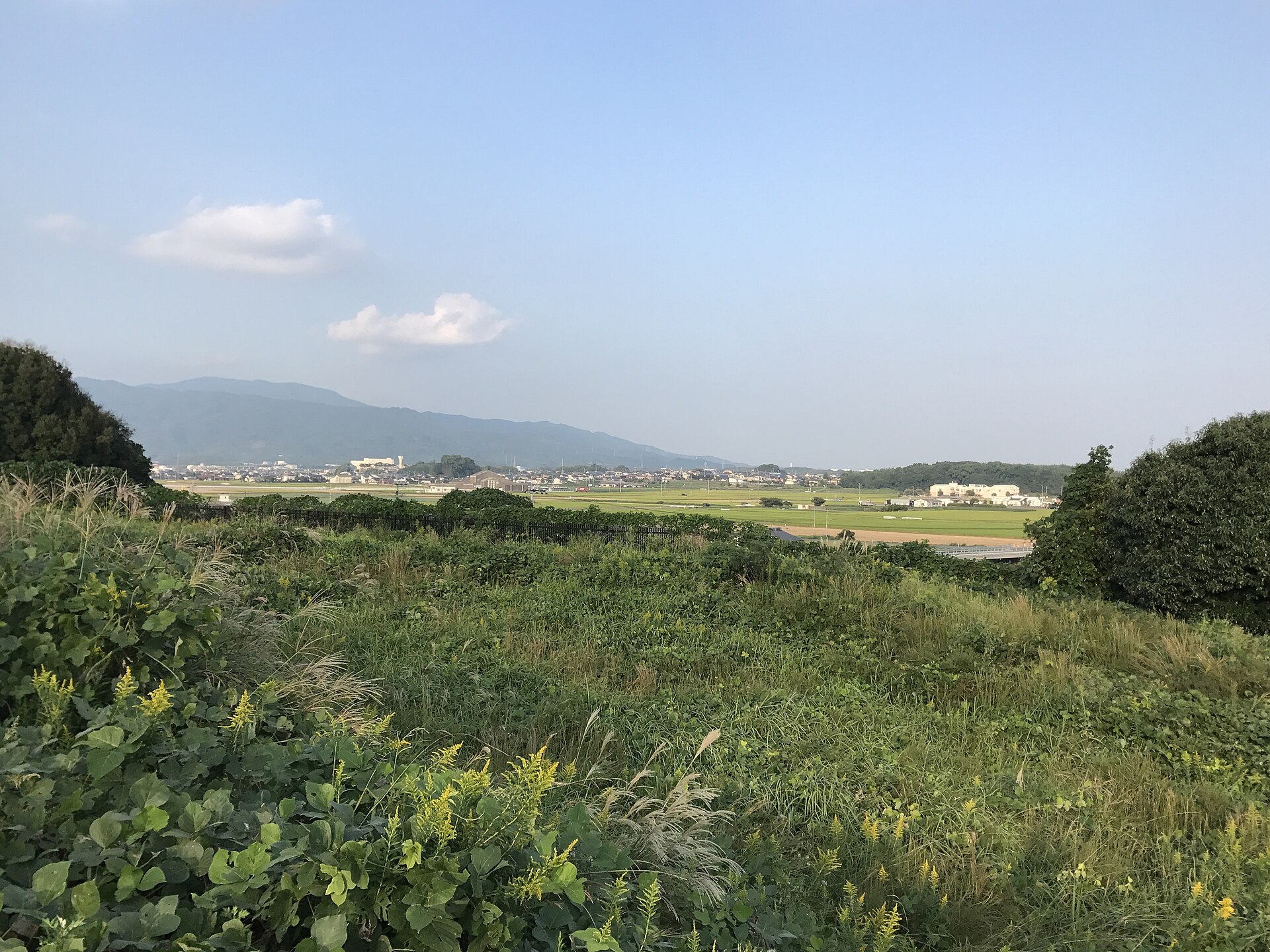
Yoshinogari sits on a low rise between the Sefuri hills and the Saga plain, straddling the town of Yoshinogari and the city of Kanzaki. Rescue digs ahead of an industrial estate uncovered a village that grew, over the Yayoi centuries, into a moated settlement enclosing more than 40 hectares. Rather than rebury the find, the state and the prefecture turned the whole site into a park and put the reconstructions back on the same ground, raised on protective fill. Ditches, palisades, watchtowers, pit dwellings and raised storehouses now stand where the post holes were found. Walking the park is close to walking the excavation plan.
How to enjoy it
Gates open at 9:00 and close at 17:00, with an extra hour of evening from June through August. Start at the East Gate and work north through the enclosures, and the reconstructions arrive in the order the settlement was organised: dwellings first, then storehouses and market, then the ritual precinct and the tombs.
Background & history
The dig began as an ordinary buried-cultural-property survey ahead of construction, and what came out of it was a settlement with defensive ditches, a ritual precinct and the burial mound of its rulers. In 1991 the site was designated a Special Historic Site, the top tier of Japan's historic-site protection. The park opened to visitors in 2001, and excavation has continued alongside it, so part of what you walk past is still being interpreted.
Before you go
- Cash
- Admission is 460 yen for adults and 200 yen for visitors aged 65 and over; junior-high students and younger enter free. Rail fare from Saga is separate.
- Good to know
- The park closes on 31 December and on the third Monday of January with the day after it. The reconstructions stand on open ground with very little shade, so sun, wind and rain all reach you, and there is no evening opening beyond the June-to-August hours.
- Another way
- From the west, use Kanzaki Station on the same JR Nagasaki Line and enter by the West Gate, which opens onto the recreation ground rather than the reconstructions. By car, the park is signposted from the Higashi-Sefuri interchange on the Nagasaki Expressway.
- After you get off
- From Yoshinogari-koen Station, follow the signs south-west for about 15 minutes to the East Gate. The route is flat and paved the whole way.
Nearby notes
 Masahiko Satoh / CC BY 2.0
Food · Saga★★★
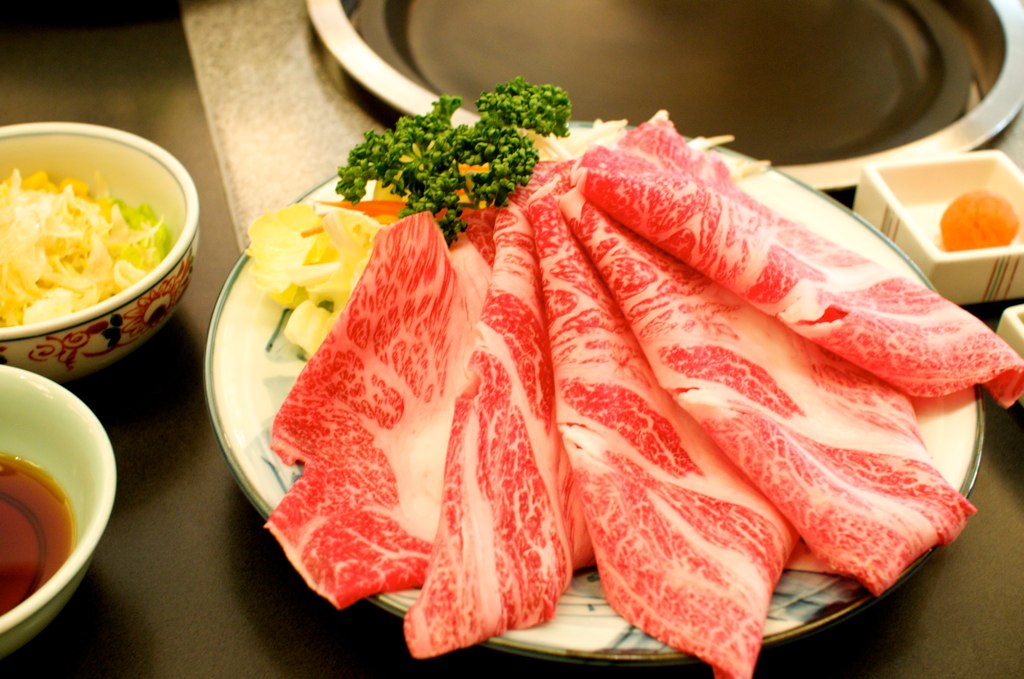
Saga Beef
10.6 km · straight line
 Pekachu / CC BY-SA 4.0
Entertainment · Saga★★★
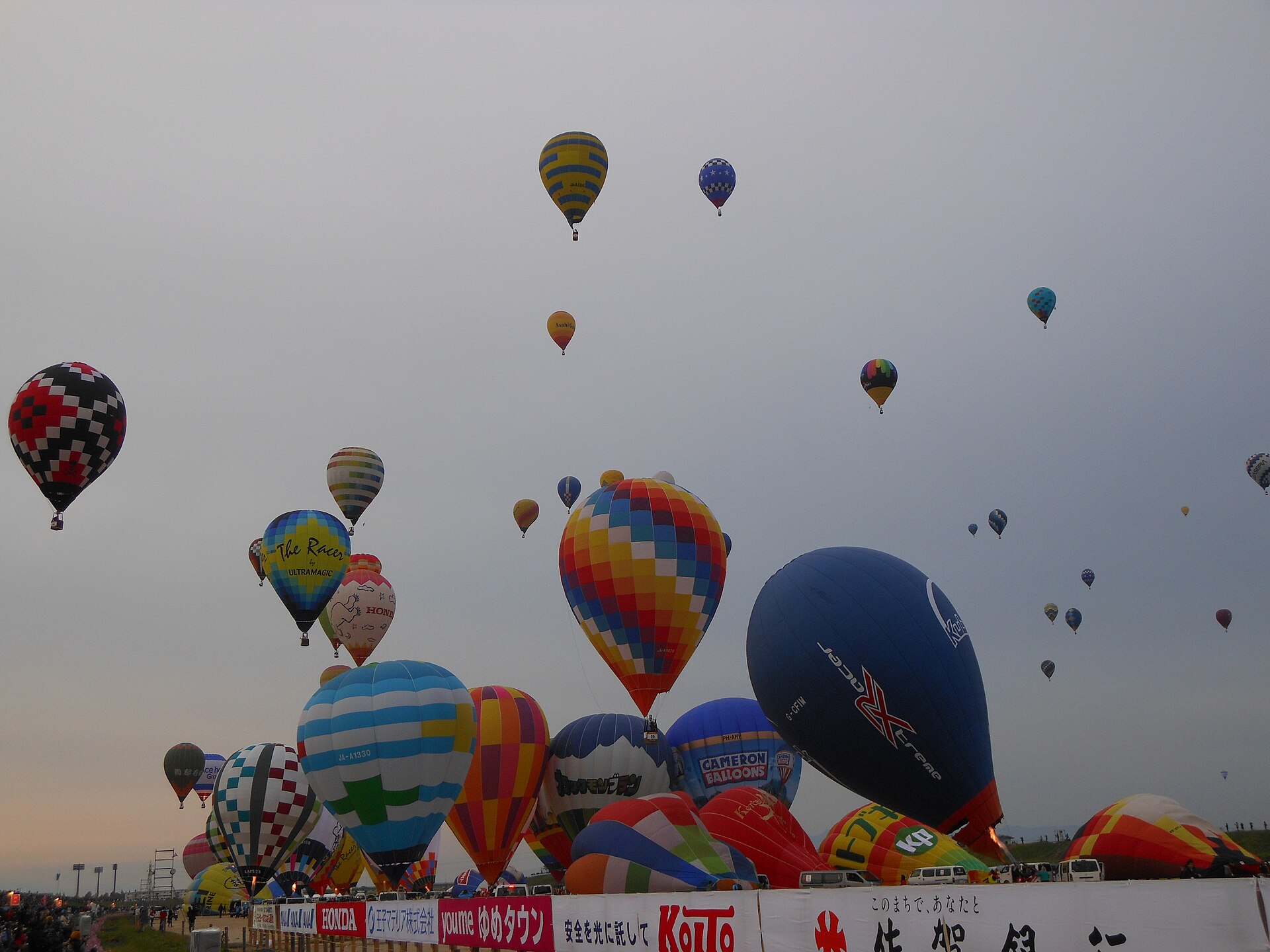
Saga International Balloon Fiesta
15.2 km · straight line
 Asturio Cantabrio / CC BY-SA 4.0
Local life · Fukuoka★★★
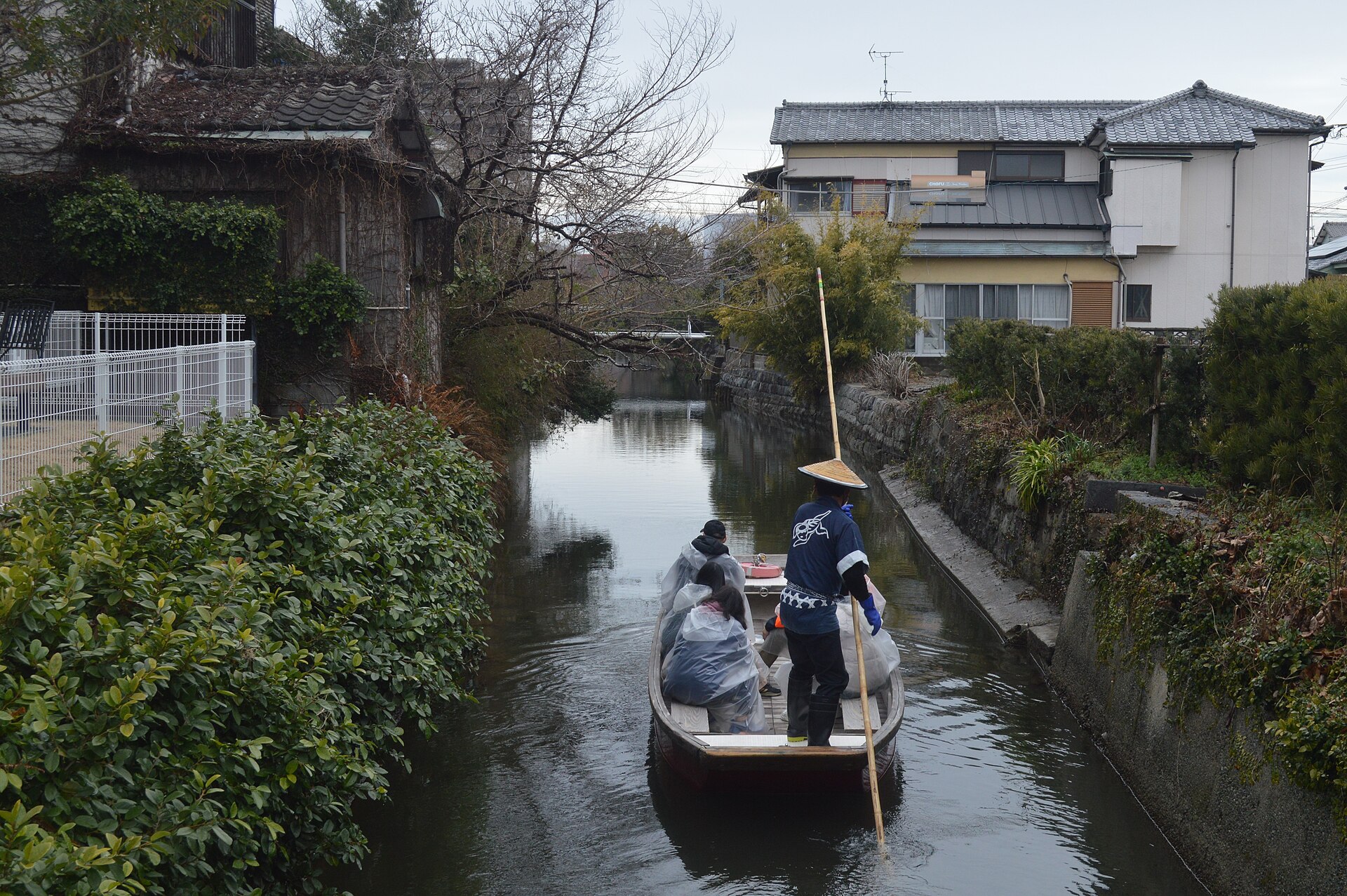
Yanagawa Canal Cruise
17.6 km · straight line
 isoyan / CC BY-SA 3.0
History · Fukuoka★★
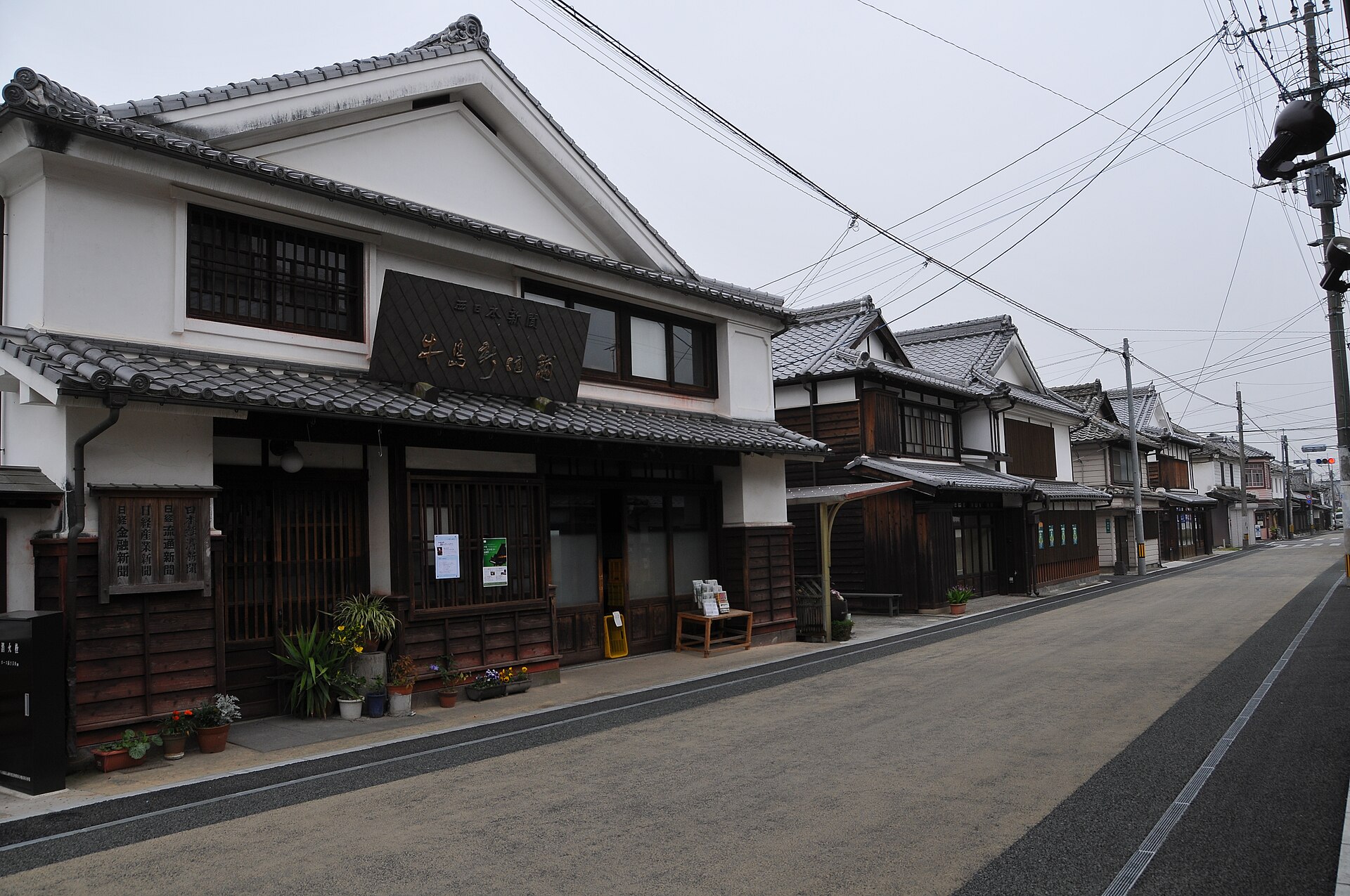
Yame Fukushima Historic Merchant Town
20.4 km · straight line
Distances are straight lines on the map, not travel times.