Wakayama · Kada coastNo.062★Open in map →
Miyama Battery Ruins
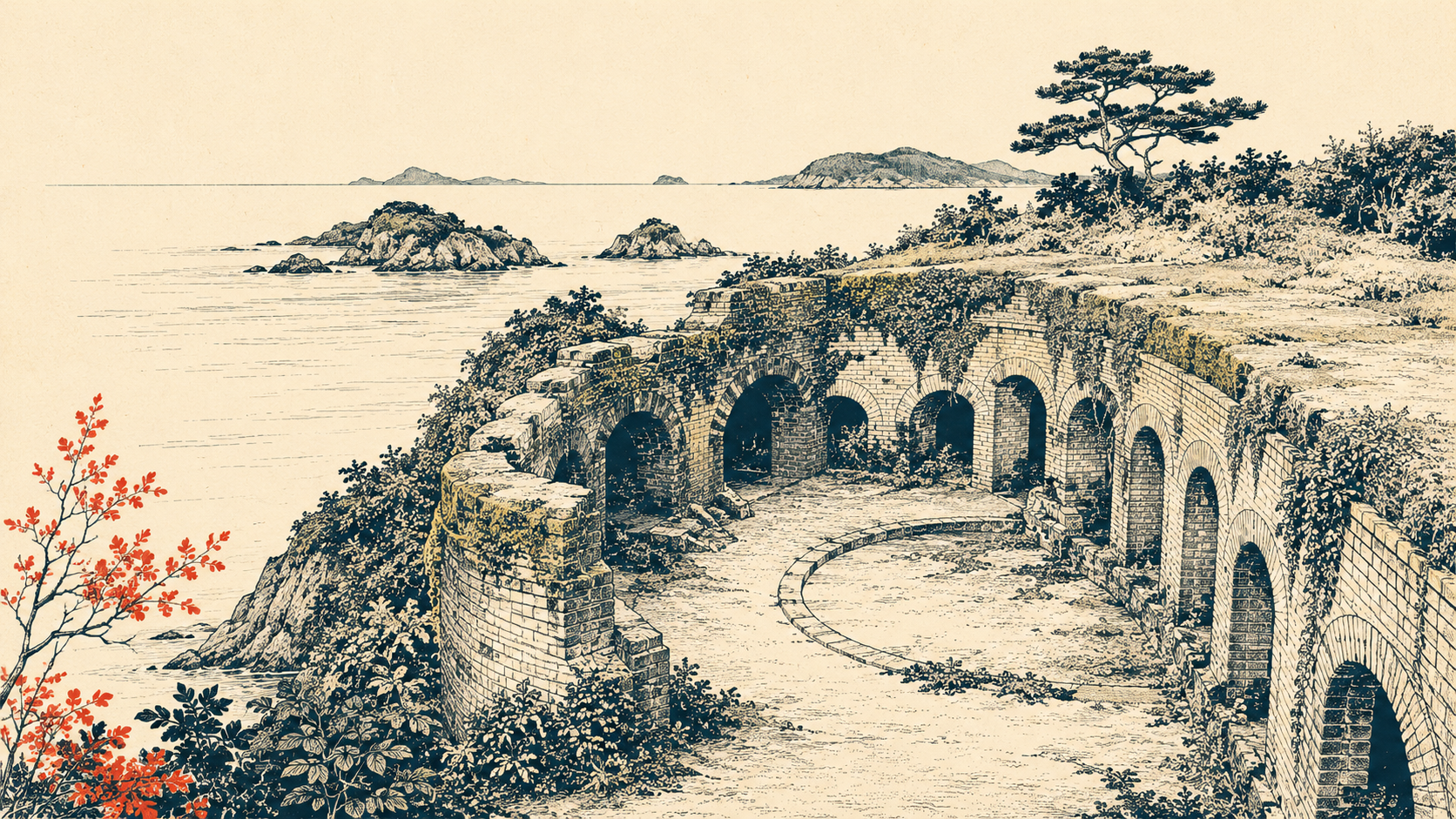
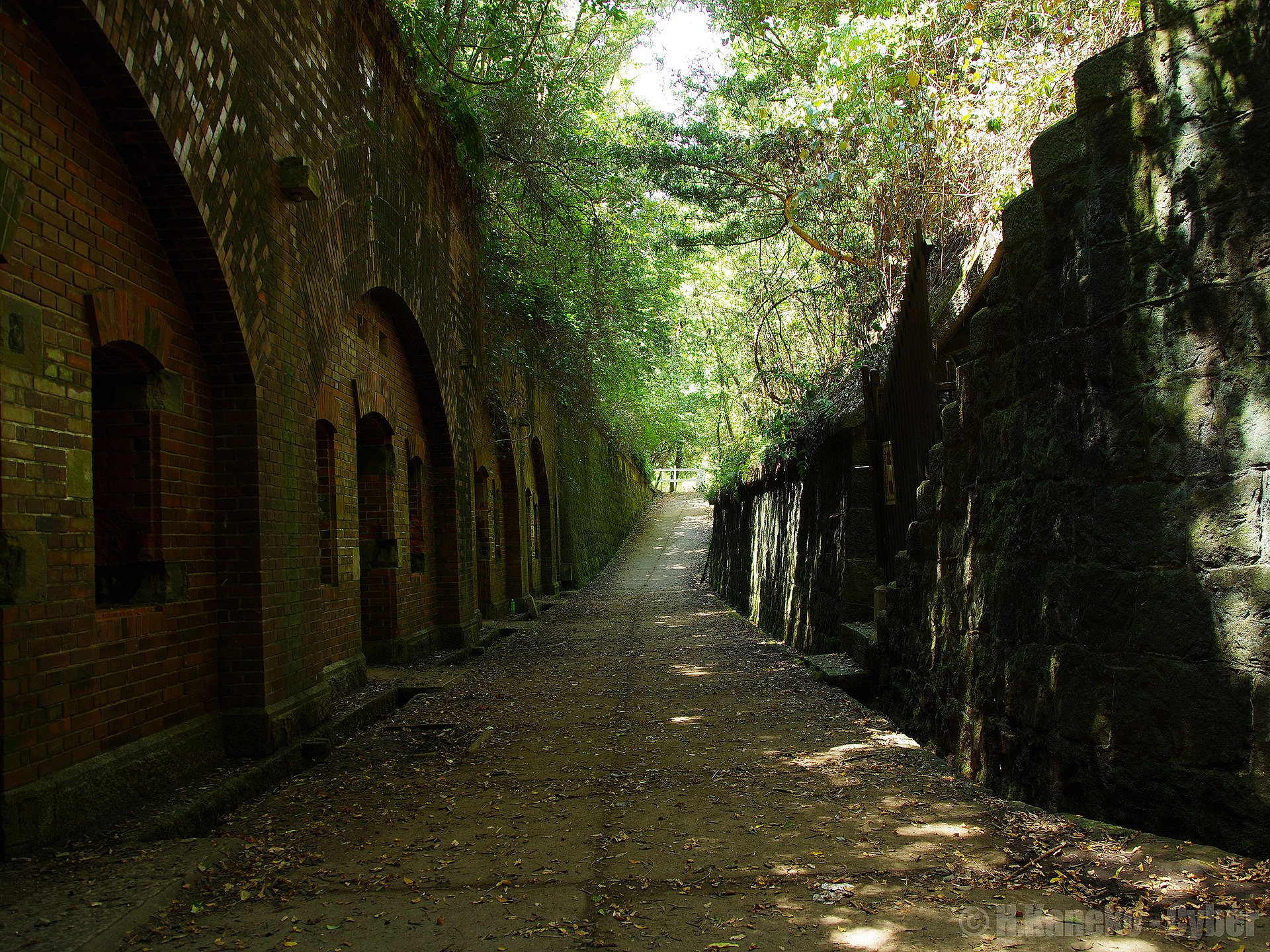
A moss-covered Meiji-era artillery fort in the hills above the fishing town of Kada, Wakayama — built to guard the Kii Channel as part of the Yura Fortress network, reachable by a short hiking trail without a ferry.
- FromWakayamashi Stn
- ~40 mintrain + walk
- Get off atKada Stn (Nankai)
- From there
- Miyama Battery Ruins
The sweet spot
It sits on the mainland, off the island day-trip route that most visitors follow, and it has almost no English signage — there is not even a sign naming the battery, only a national-park sign at the trail entrance. Most people reach it by parking at the trailhead and walking up.
Where it is
22 more notes in Wakayama · open the map →What to look for — in walking order
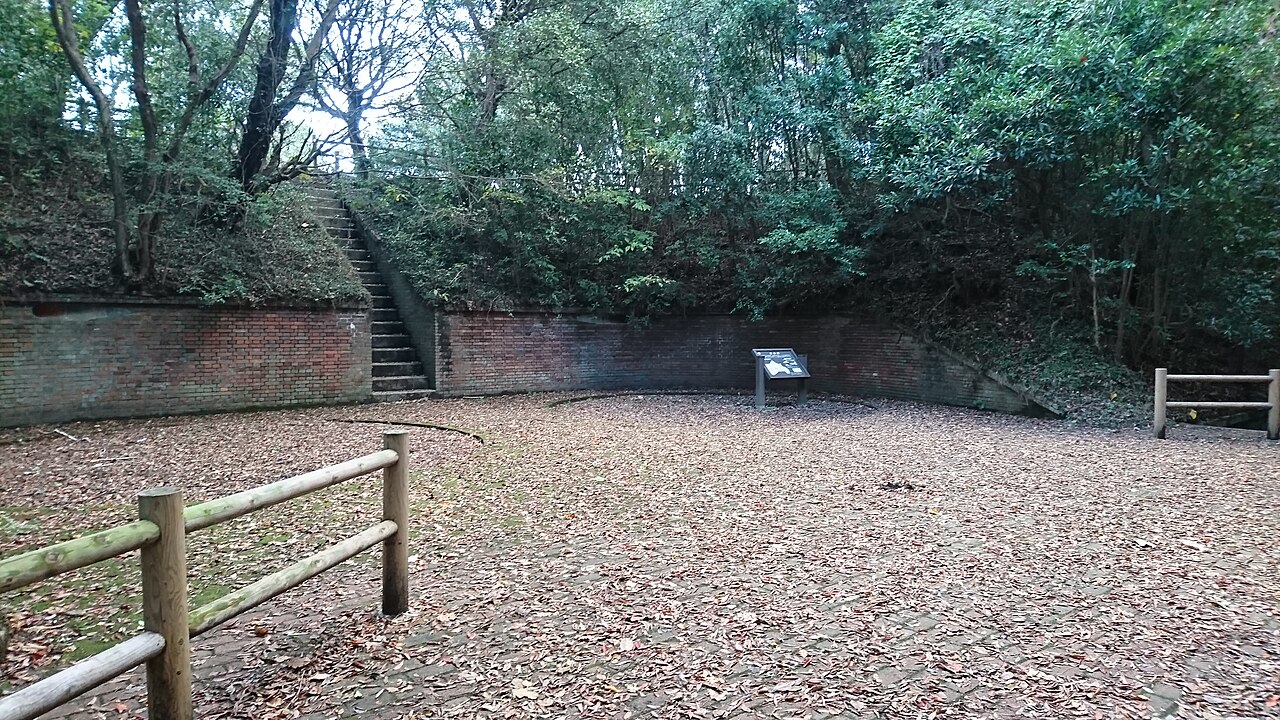
- Trail to the ridgemarked hiking path from the trailhead above Kada; entrance marked by a Setonaikai National Park sign, not a battery sign
- Red-brick gun positionsthe platforms and walls where the cannons stood, similar in design to the Tomogashima batteries across the strait
- Ammunition storesruined magazines — rooms that once held shells and gunpowder — recorded as remaining from the First Battery
- Strait viewpointfrom the ridge, views across the Kii Channel toward Tomogashima island and Awaji Island
How to actually get there
- Wakayamashi Stn → Kada Stn (Nankai Kada Line, ~25 min; Kada is the last stop)
- Kada Stn → trailhead (taxi ~10 min, or walk the road toward the coast)
- Trailhead → the brick battery ruins (marked hiking path, ~15 min uphill on foot)
- Nankai train + short taxi/walk
- Wakayamashi Stn →(Nankai Kada Line, ~25 min)→ Kada Stn →(taxi, ~10 min, or walk the road toward the coast then a ~15 min hike up)→ Miyama Battery trailhead and ruins. Total roughly 40–60 min from Wakayamashi Stn depending on whether you take a taxi. Kada is the last stop on the line.
- Return the same way
- Walk or taxi back down to Kada Stn, then the Nankai Kada Line back to Wakayamashi Stn. The trail is unlit, so start down while there is still daylight; check the return train times before you set out.
About the place
Miyama Battery (Miyama Hodai) was built into the hills behind Kada as part of the Yura Fortress, a coastal defense system that guarded the narrow Kii Channel and the sea approach to Osaka Bay. Records say the First Battery was completed in 1897, fitted with German-made 28cm howitzers and observation posts. Today the site is preserved as red-brick structures, ammunition-store ruins and walled passageways set among the trees, inside Setonaikai (Seto Inland Sea) National Park. Because the fortress guarded the strait, the ridge looks out across the water toward Tomogashima island — whose better-known batteries formed the same defensive line. You reach the First Battery by a hiking trail from the mainland, so no ferry crossing is needed.
How to enjoy it
Walk up the marked hiking course from the trailhead above Kada — about 15 minutes uphill — to reach the brick ruins. The entrance is marked by a Setonaikai National Park sign, not a battery name sign. Go on a clear day to see across the strait to Tomogashima and Awaji Island. There are no shops or vending machines on the ridge, so bring water.
Background & history
The Yura Fortress was begun in 1889, fortifying the Kii Channel with Western-style artillery across four positions: Yura on Awaji Island, Tomogashima island, the Kada–Miyama mainland, and later Naruto. The Miyama and Takurazaki sites held the mainland-side positions. The batteries never saw major combat and were eventually abandoned, leaving the brickwork and ammunition stores that survive today. The Miyama battery sites are designated cultural properties by Wakayama City.
Before you go
- Cash
- There are no shops or vending machines on the ridge — bring water and a small flashlight. Rural taxis may be cash-only, so carry some coins.
- Good to know
- Loose brick and open pits at the ruins — stay on the path and keep children close.
- Another way
- If you are short on time, the Kada seafront walk gives a similar view across the strait without the climb.
- After you get off
- From Kada Stn the battery is about 10 minutes by taxi, or a walk along the road toward the coast followed by a ~15 min uphill hike from the trailhead. The entrance is marked by a Setonaikai National Park sign, not a battery sign.
Nearby notes
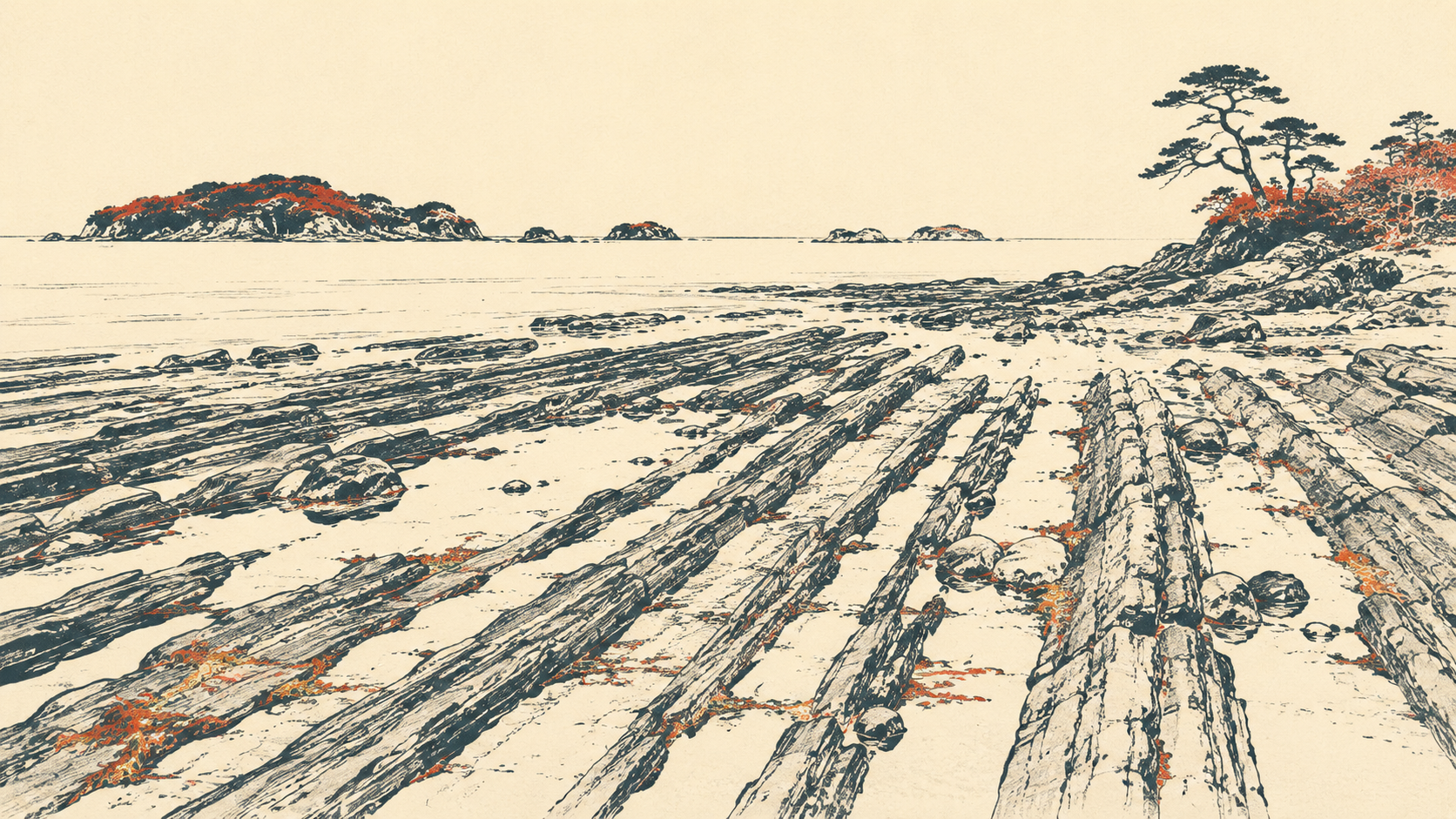 illustration (AI-illustrated)
Nature · Wakayama★
Jogasaki Coast
1.2 km · straight line
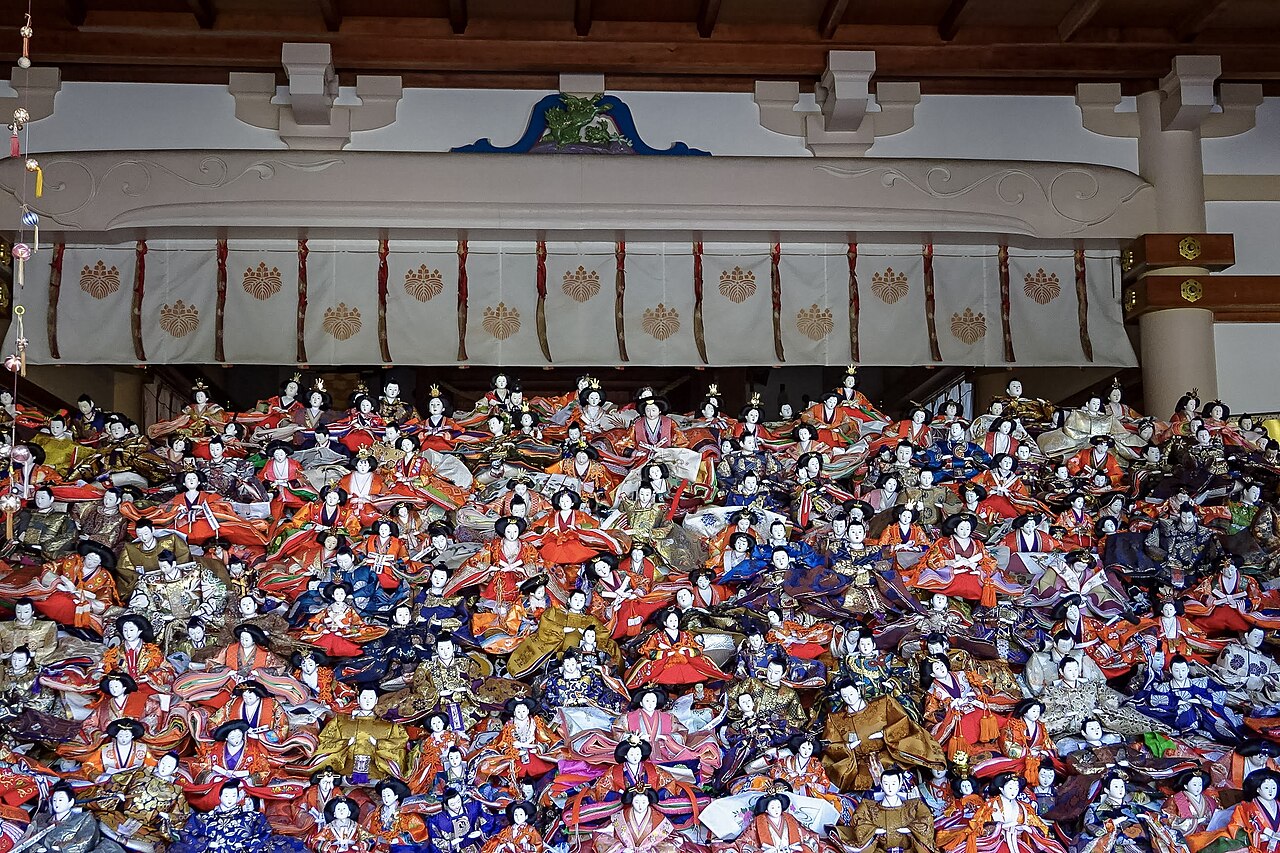 KQuhen / CC BY-SA 4.0
History · Wakayama★
Awashima Shrine
2.6 km · straight line
 Hiroaki Kaneko / CC BY-SA 3.0
History · Wakayama★★
Tomogashima Islands
6.8 km · straight line
 Sakumata / CC0
Food · Wakayama★
Wakayama chuka soba
11.4 km · straight line
Distances are straight lines on the map, not travel times.