Fushimi · south Kyoto CityNo.309★Open in map →
Fushimi's sake quarter
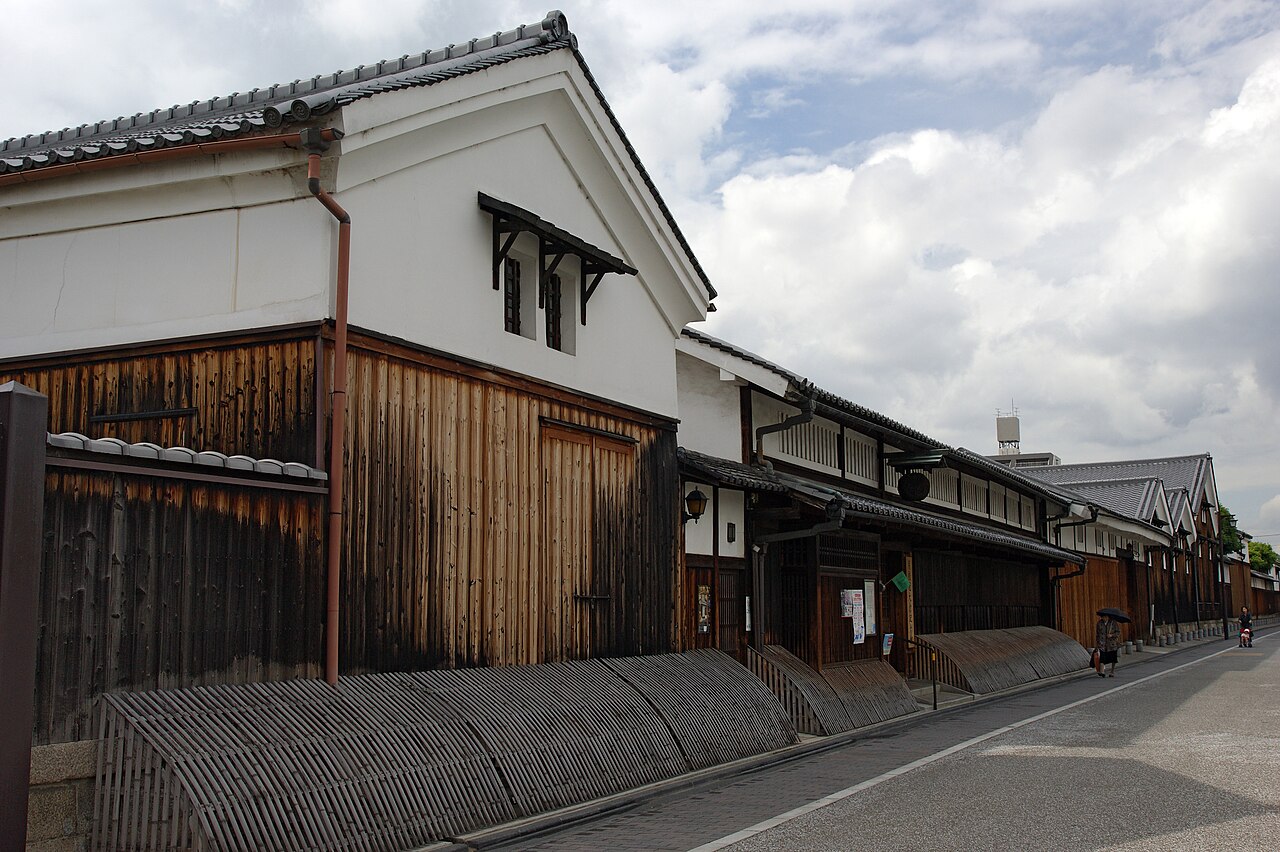
A canal-side district of white-walled sake storehouses in southern Kyoto, centred on the Gekkeikan Okura Sake Museum — a 1909 brewhouse holding around 400 city-designated brewing tools, with a three-glass tasting included in admission.
- FromKyoto Stn
- ~25 mintrain (frequent)
- Get off atChushojima Stn (Keihan Main Line)
- On foot
- Fushimi's sake quarter
The sweet spot
Sake tourism in Japan usually means a tasting counter with a gift shop attached. The non-obvious thing about Fushimi is that the tasting is the smallest part: you are walking through a district that still brews, past storehouses that are still storehouses, and the museum holds a city-designated collection of the actual tools rather than replicas. Come for the exhibition and treat the three-glass tasting at the end as the footnote it is.
Where it is
90 more notes in Kyoto · open the map →What to look for
- The Okura Sake Museum buildinga brewhouse built in 1909 and converted for display, rather than a purpose-built museum
- The designated brewing toolsaround 400 pieces on show from the 6,120 that Kyoto City designated in 1985 — wooden vats, casks and kai paddles
- The tasting counterthree sake, chosen from roughly ten that change with the season, included with admission
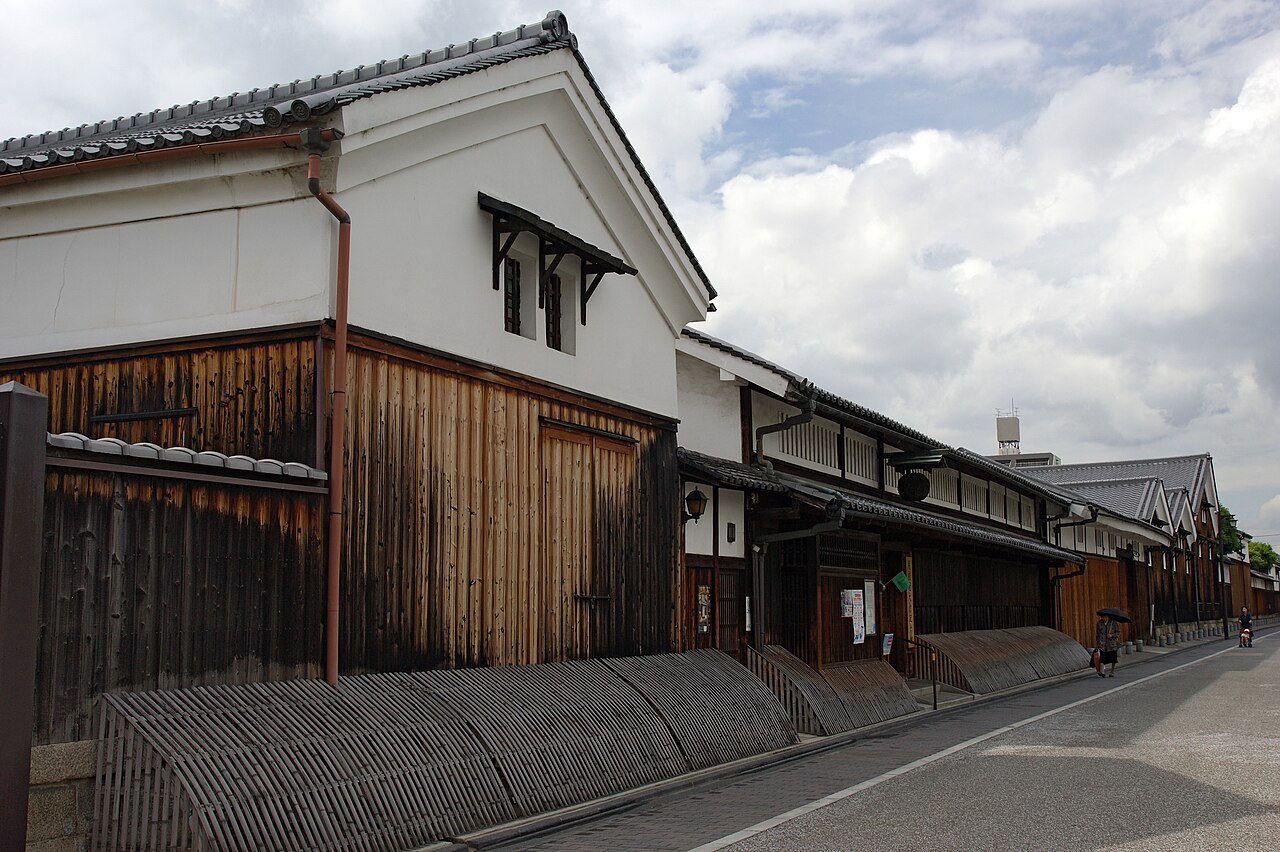
- The canal-side storehouse rowwhite plaster walls backing onto the Horikawa, the water route that once carried the barrels out of Fushimi
How to actually get there
- Kyoto Stn → Tofukuji Stn (JR Nara Line, ~2 min)
- Tofukuji Stn → Chushojima Stn (Keihan Main Line, ~12 min)
- Chushojima Stn → Okura Sake Museum (walk, ~5 min)
- JR + Keihan Main Line, then a short walk
- Kyoto Stn →(JR Nara Line, ~2 min)→ Tofukuji Stn →(Keihan Main Line toward Yodoyabashi, ~12 min)→ Chushojima Stn →(walk, ~5 min)→ the Okura Sake Museum. Total about 25 min. Both lines are frequent, so there is no timetable to plan around.
- Same route, or straight on to Osaka
- Walk back to Chushojima and take the Keihan Main Line north to Tofukuji, then JR to Kyoto Stn (~20 min). Chushojima is also on the through line to Osaka, so continuing south to Yodoyabashi is just as easy as going back.
About the place
Fushimi is one of Japan's major sake districts, and the stretch along the Horikawa canal is its face: rows of white-plastered storehouses with dark tiled roofs, backing onto the water that once carried the barrels out. Gekkeikan, founded here in 1637, runs the Okura Sake Museum in the middle of it. The museum building is not a reconstruction — it is a brewhouse built in 1909 and converted for display. Inside is the working equipment of pre-industrial sake making: in 1985 the city designated 6,120 of Gekkeikan's brewing tools as a tangible folk cultural property, and roughly 400 of them are on show here. Wooden vats, casks and the long-handled kai paddles stand where they were used.
How to enjoy it
Give the exhibition proper time before the tasting, not after — the tools upstairs turn three glasses at a counter into something you can actually read. Then walk the canal rather than heading straight back to the station: the storehouse frontages are the reason the district looks the way it does, and they are free. Fushimi pairs naturally with Fushimi Inari to the north on the same rail corridor, though doing both in one day makes for a long one.
Background & history
Gekkeikan gives its founding here as 1637, in the Kan'ei era, which places the business in Fushimi through the whole Edo period and into the present. The brewhouse that now serves as the museum was built in 1909, in the late Meiji period, when the industry was mechanising but the wooden tools were still in daily use — which is why the collection survived intact. In 1985 Kyoto City designated 6,120 of those tools as a tangible folk cultural property, one of the larger such designations tied to a single trade. The museum opened in that same building to display about 400 of them, and the district around it kept the low white storehouse silhouette that the water transport era gave it.
Before you go
- Cash
- The museum takes cards, but this is an old commercial district and some of the smaller brewery shops and eateries along the canal are cash only.
- Good to know
- The tasting is included with admission and is genuinely alcohol — if you are driving, say so at the counter; the museum can substitute. Do not drink and then drive the canal road.
- Another way
- JR Nara Line to Momoyama Stn or Kintetsu Kyoto Line to Momoyama-Goryomae, then about 10 minutes on foot, both work from Kyoto Station in roughly 15 minutes of riding.
- After you get off
- From Chushojima Stn, head north toward the canal; the museum is about 5 minutes on flat streets, and the white storehouse walls make it obvious once you are on the right block.
Nearby notes
 Balon Greyjoy / CC0
History · Kyoto★★★
Fushimi Inari Taisha
4.4 km · straight line
 663highland / CC BY 2.5
History · Kyoto★★★
Tofuku-ji
5.3 km · straight line
 ignis / CC BY-SA 3.0
History · Kyoto★★★
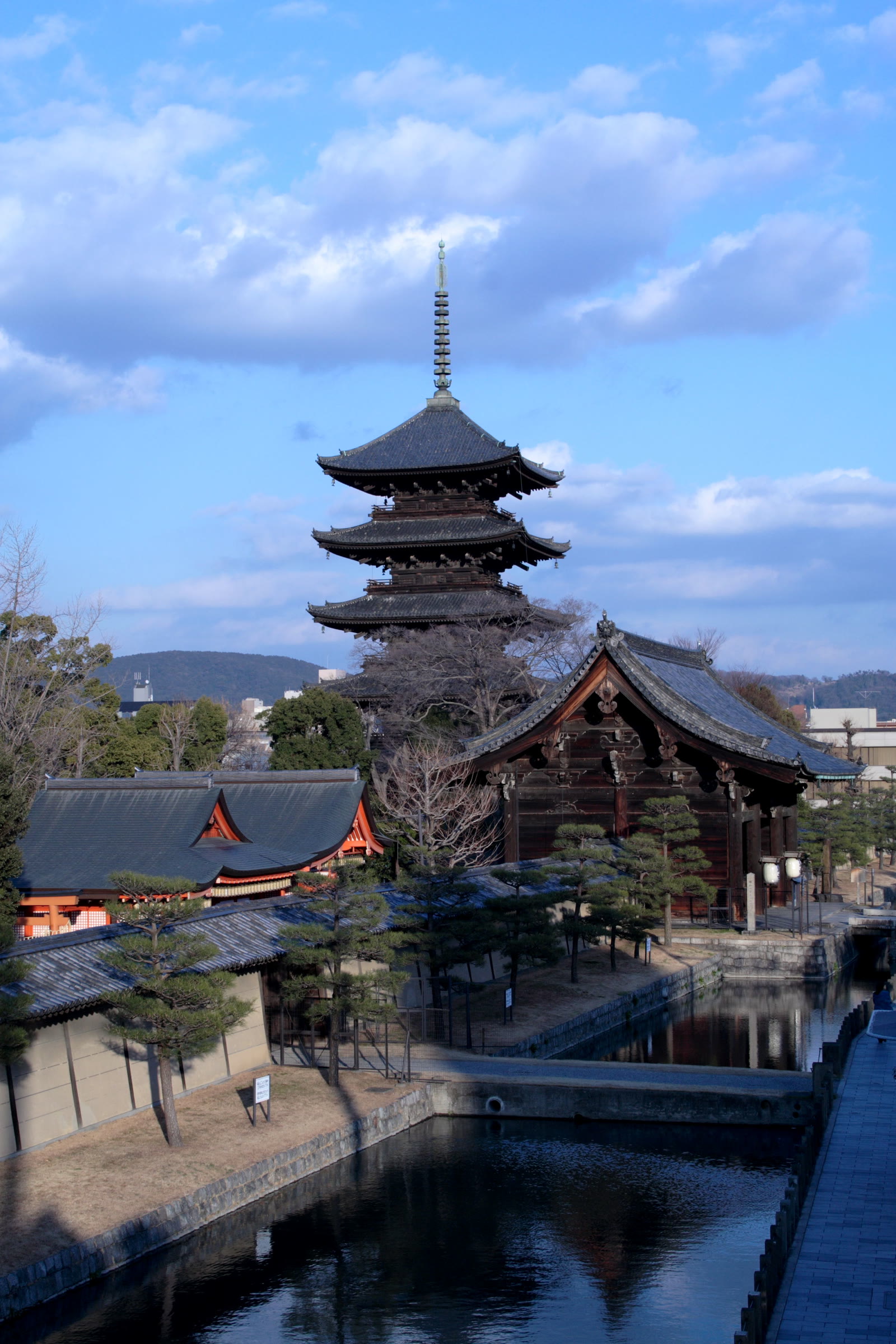
To-ji Temple
5.8 km · straight line
 bethom33 / CC BY-SA 2.0
Food · Kyoto★
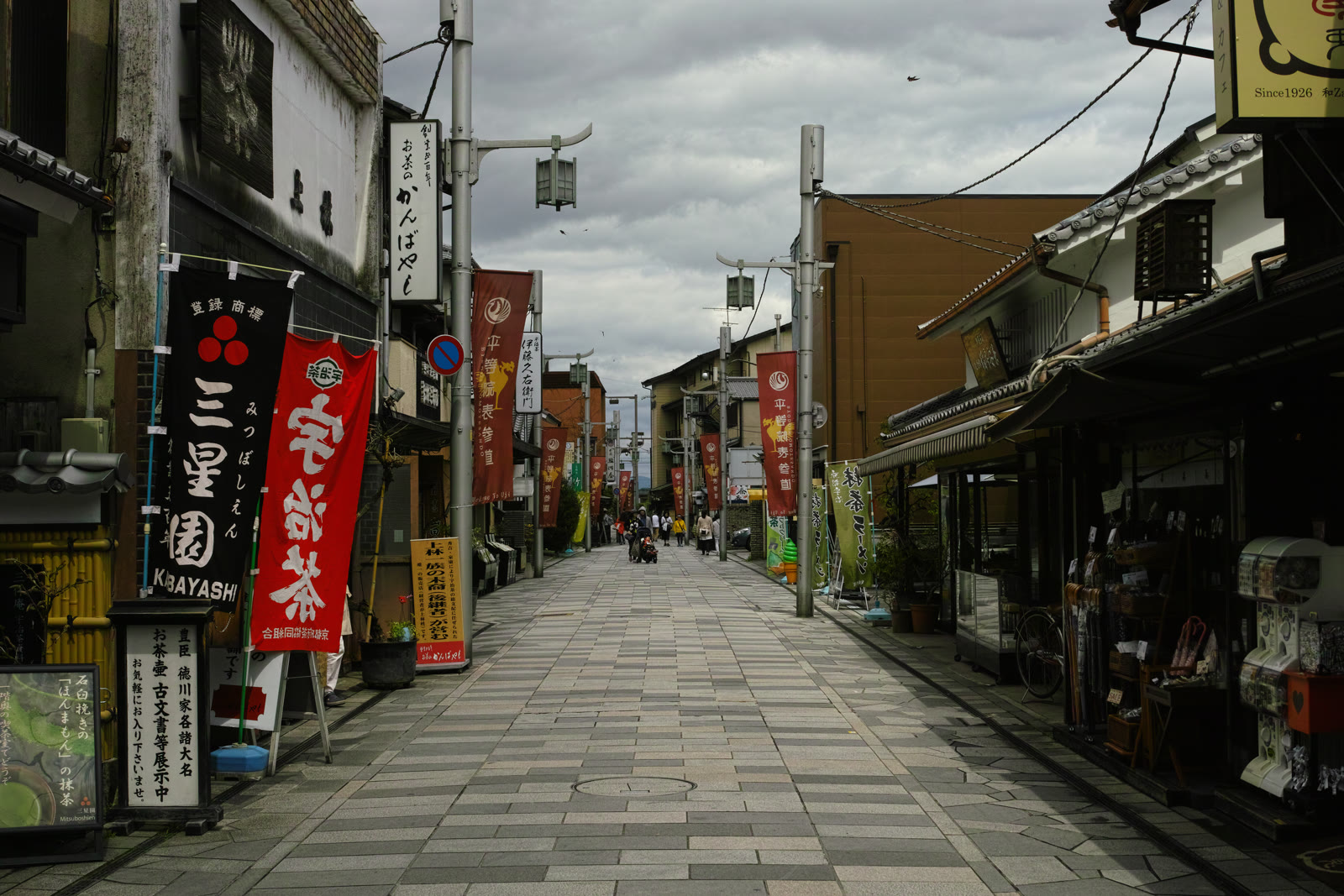
Uji's matcha street
6.0 km · straight line
On a curated routeTwo Banks and a Canal →
Distances are straight lines on the map, not travel times.