Tokyo · Harajuku / OmotesandoNo.162★★Open in map →
Takeshita Street
— the 400-metre home of kawaii culture
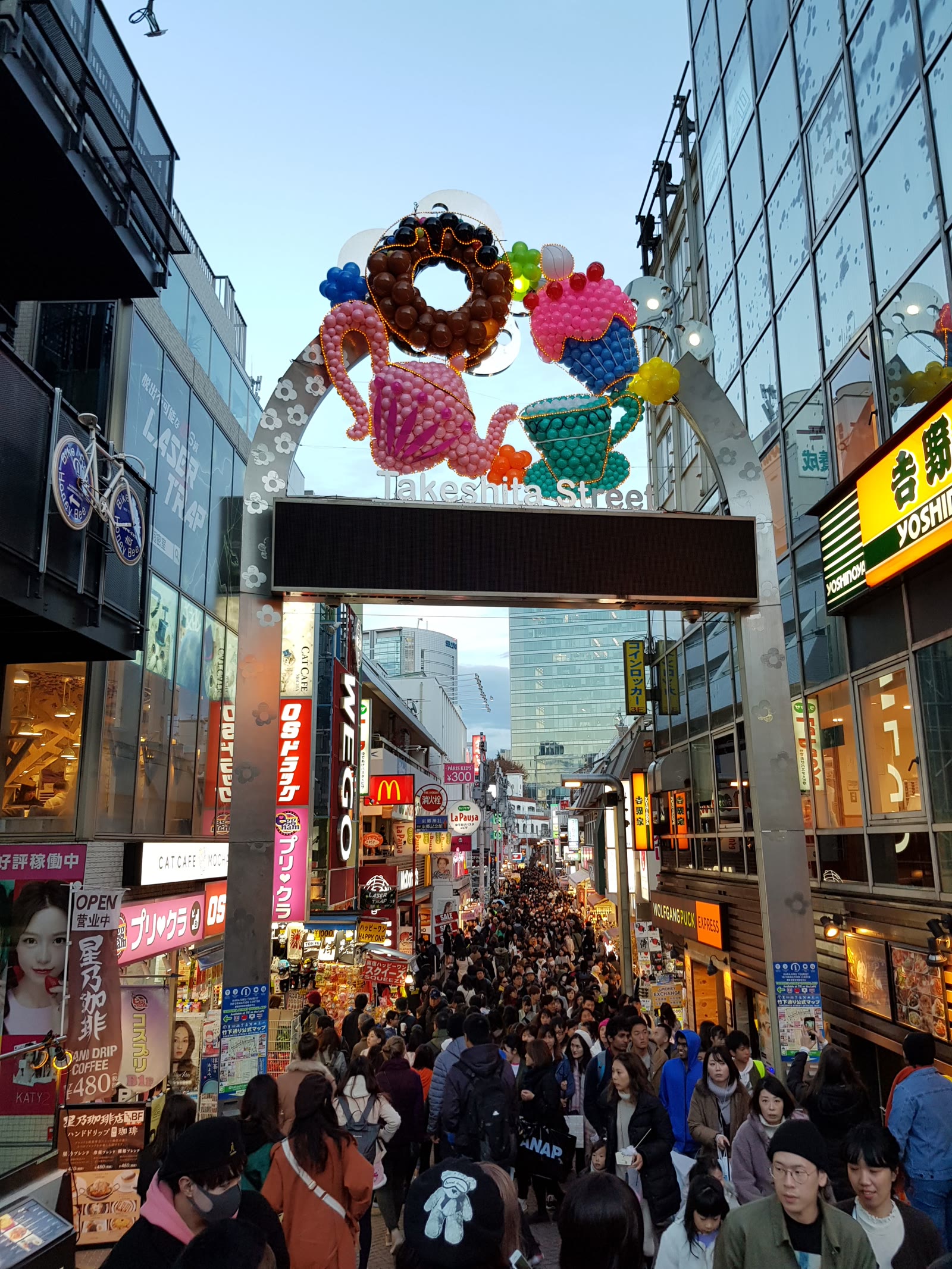
A pedestrian lane running from the JR Harajuku Station exit, packed with fashion boutiques, crêpe stands, and candy shops that define Tokyo's kawaii aesthetic.
- FromHarajuku Station (JR Yamanote Line)
- ~1 min walkJR + metro (very frequent)
- Takeshita Street
Where it is
77 more notes in Tokyo · open the map →What to look for — in walking order
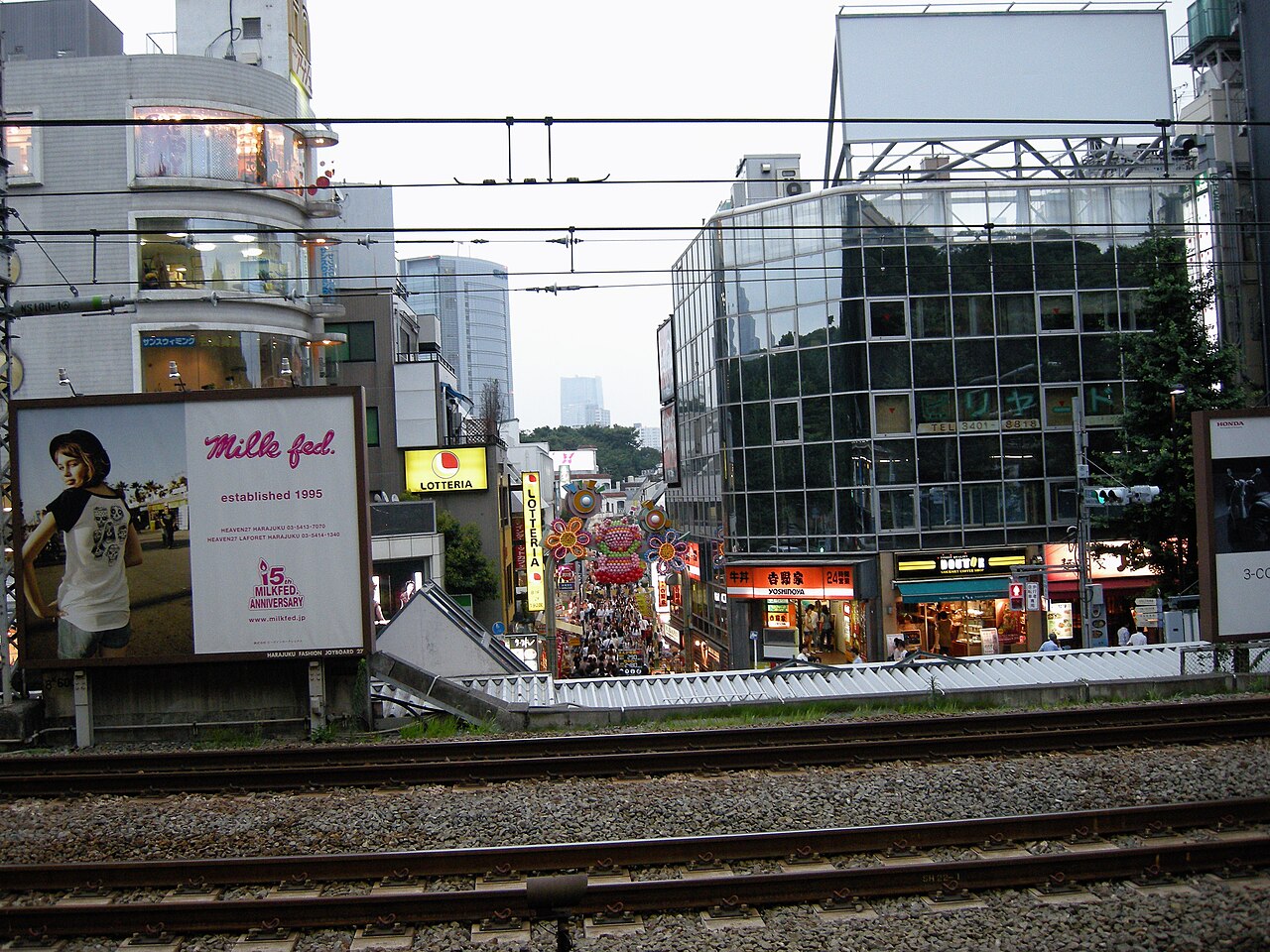
- Takeshita Exit (JR Harajuku Station)the entrance to the street, immediately outside the station — the walk is under one minute
- Fashion boutiquessmall shops selling kawaii clothing, accessories, and vintage pieces along the full 400-metre stretch
- Crêpe standsthe sweet crêpes sold on the street are as much the attraction as the fashion — multiple vendors side by side
- Omotesando endthe south end of the street opens onto Meiji-dori; from here it is a short walk to Omotesando's wide tree-lined boulevard
How to actually get there
- Tokyo Station → Harajuku Station (JR Yamanote Line, ~30 min, 12 stops, outer loop direction Shinagawa/Shibuya).
- Exit via the Takeshita Exit (竹下口) — the entrance to Takeshita Street is immediately outside.
- Walk the full 400-metre street to the south end, where it meets Meiji-dori near Omotesando.
- Tokyo Stn → Harajuku Stn (JR Yamanote Line)
- From Tokyo Station, take the JR Yamanote Line (outer loop, clockwise, direction Shinagawa/Shibuya) to Harajuku Station — about 30 minutes, 12 stops. Trains run every 2-4 minutes. Use the Takeshita Exit (竹下口) as you leave: the street entrance is immediately in front of you, under one minute on foot.
- Return from Harajuku or nearby Meiji-jingumae Station
- From Harajuku Station, take the JR Yamanote Line back toward Tokyo. Alternatively, the south end of the street is a short walk from Meiji-jingumae Station (Tokyo Metro Chiyoda and Fukutoshin lines), which gives direct access to Shibuya or Shinjuku. Both stations are central Tokyo, so trains run frequently until past midnight.
About the place
Takeshita Street is a 400-metre pedestrian lane that begins immediately outside the Takeshita Exit of JR Harajuku Station. It runs roughly south from the station, lined on both sides with boutiques selling second-hand fashion, accessories, and street clothes, alongside the crêpe stands and sweet shops the street is now famous for. The street developed from the 1970s and grew into a hub for youth fashion through the 1980s and 1990s, when young people looking for unusual clothing not available in mainstream shops found it here. It is now one of the most photographed streets in Tokyo and is considered the birthplace of several waves of Japanese street fashion that have spread internationally.
How to enjoy it
Visit on a weekday morning to walk the street at an easy pace before the weekend crowds arrive. Shops open from around 11:00 and vehicle traffic is restricted between 11:00 and 18:00, so the lane is pedestrian-only during those hours. Crêpe stands open earlier. From the south end, Omotesando is a short walk for a quieter contrast.
Background & history
The street began to attract young shoppers in the 1970s as small boutiques opened near Harajuku Station. Through the 1980s and 1990s it became closely associated with the layered, eclectic styles known collectively as kawaii fashion. The crêpe stands arrived in the 1970s and became a permanent fixture. Today the street is internationally recognised as a starting point for Japanese youth fashion trends.
Before you go
- Cash
- Entry to the street is free. The JR Yamanote Line accepts IC cards (Suica, PASMO) and paper tickets. Most shops accept card payments; some smaller stalls are cash only.
- Good to know
- The street is open every day. Shops typically open around 11:00 and close by 20:00–21:00. Weekends and public holidays are very crowded. No closures for the street itself.
- Another way
- Meiji-jingumae 〈Harajuku〉 Station (Tokyo Metro Chiyoda Line C-03 / Fukutoshin Line F-19) is a short walk from the south end of the street and connects directly to Shibuya and central Tokyo.
- After you get off
- From Harajuku Station Takeshita Exit, the street entrance is directly in front — no map needed.
Nearby notes
 Guilhem Vellut from Annecy, France / CC BY 2.0
History · Tokyo★★★
Meiji Jingu
0.7 km · straight line
 663highland / CC BY 2.5
Local life · Tokyo★★★
Omotesando
0.7 km · straight line
 Nesnad / CC BY 4.0
Nature · Tokyo★★
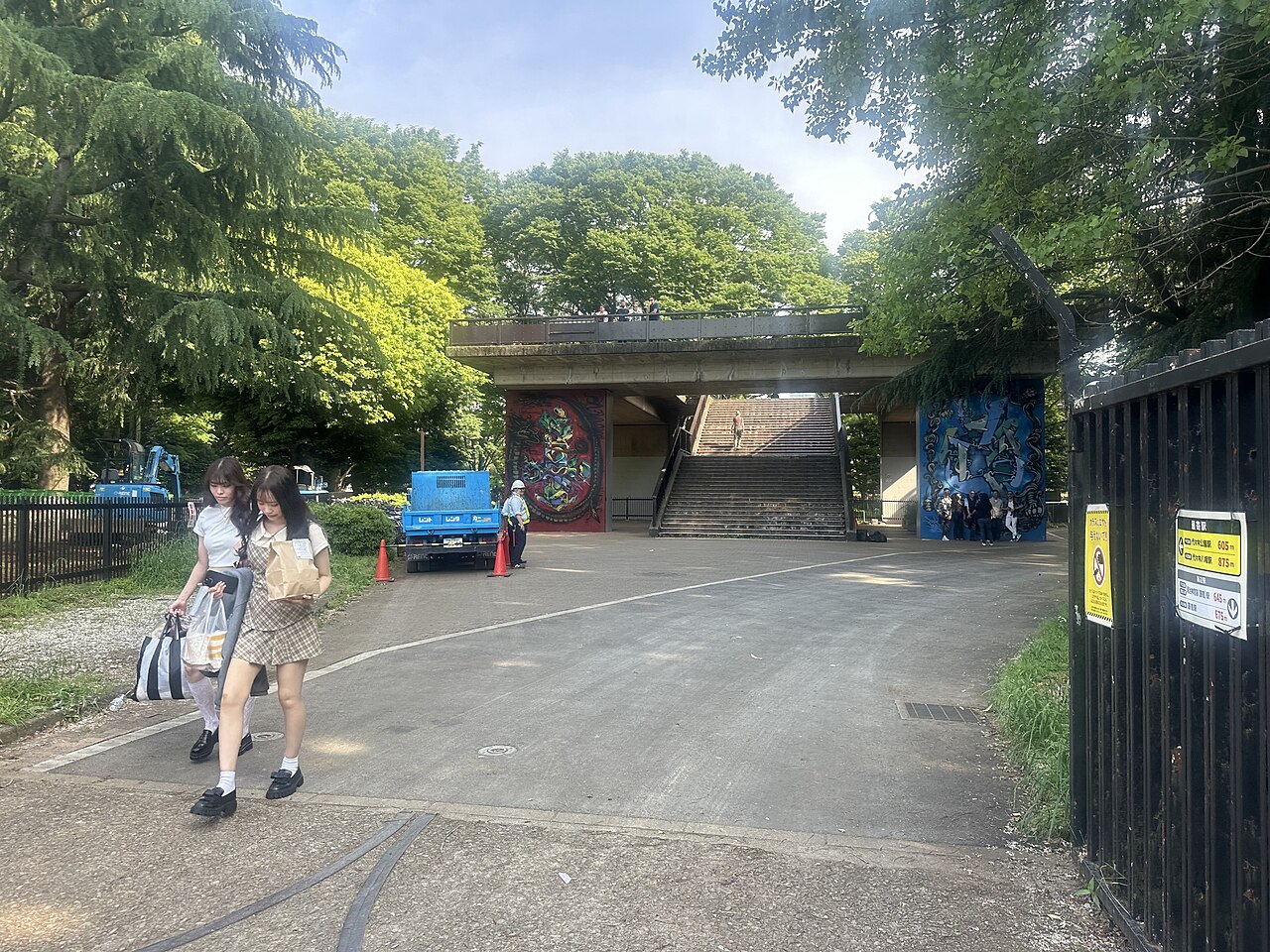
Yoyogi Park
0.7 km · straight line
 PEPSI697 / CC BY-SA 4.0
Local life · Tokyo★★★
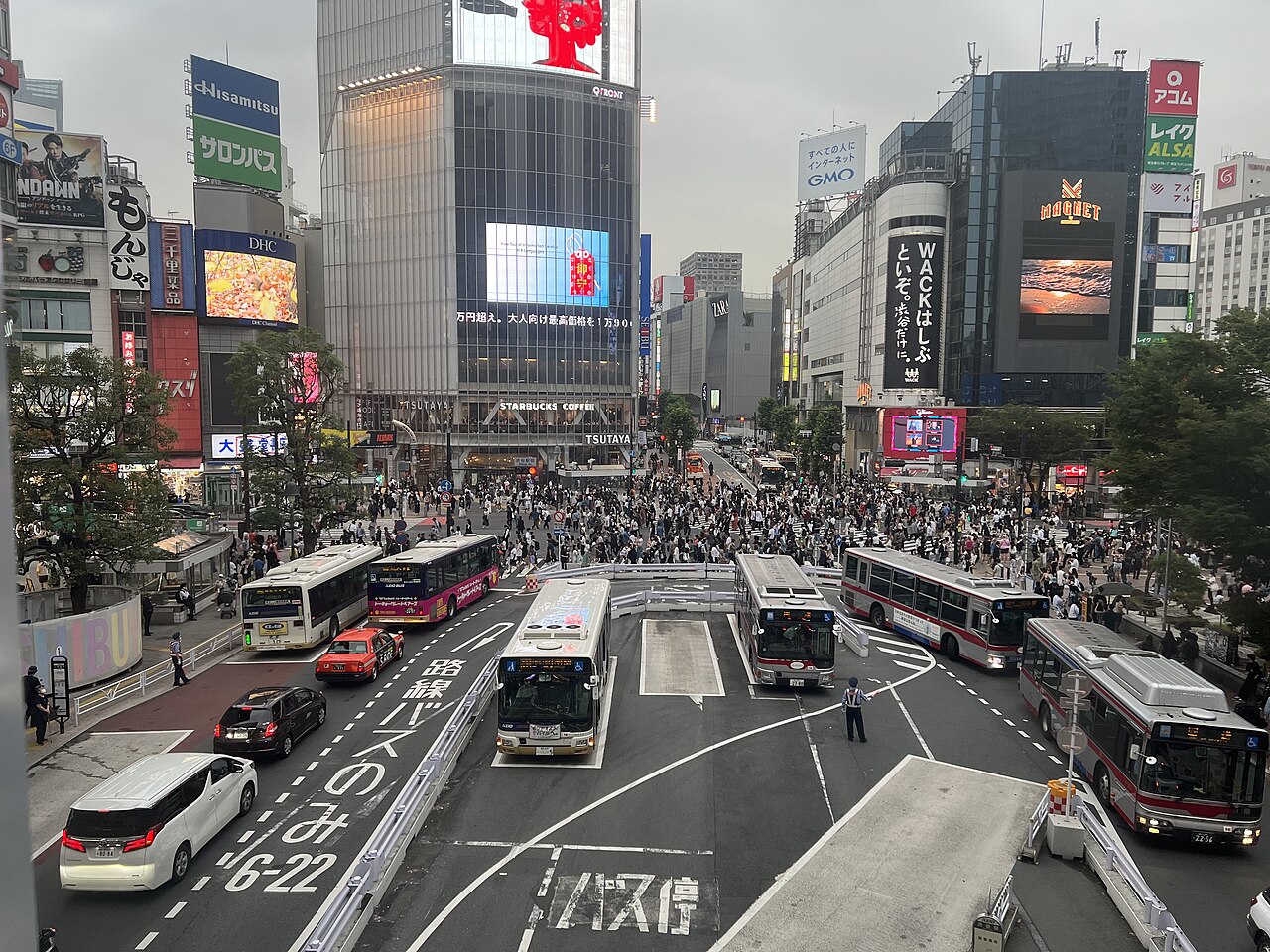
Shibuya Scramble Crossing
1.3 km · straight line
Distances are straight lines on the map, not travel times.