Tokyo · Shibuya / HarajukuNo.317★★Open in map →
Yoyogi Park
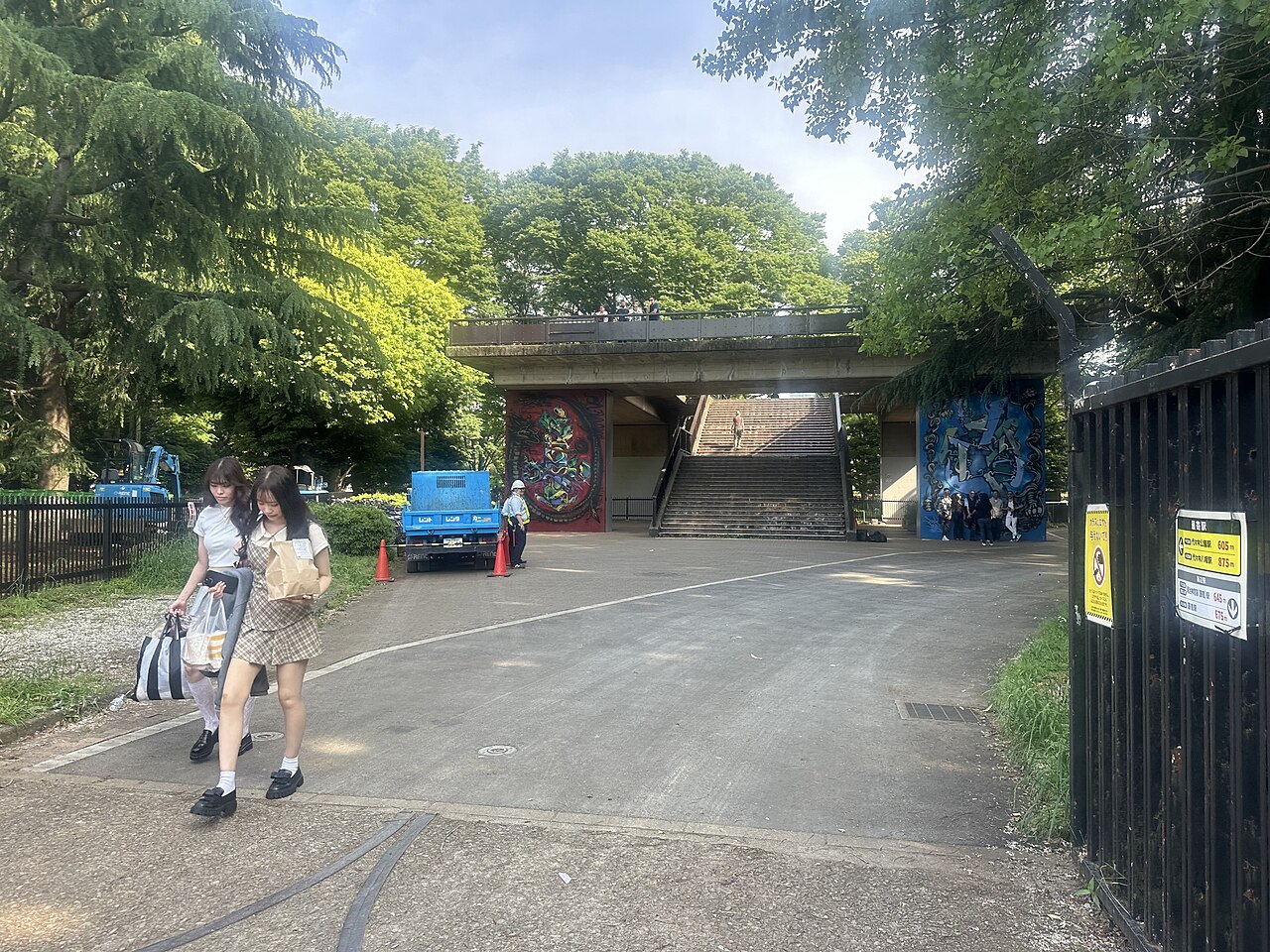
Yoyogi Park in Shibuya is one of central Tokyo's largest parks — broad lawns, cherry and ginkgo avenues, and Japan's first urban bird sanctuary, next door to Meiji Jingu and five minutes from Harajuku Station. Free to enter.
- FromShinjuku Stn
- ~10 minJR Yamanote (very frequent)
- Get off atHarajuku Station (JR Yamanote Line)
- On foot
- Yoyogi Park
The sweet spot
Most visitors to Harajuku stay on Takeshita Street and Omotesando and never cross the bridge into the park — or they visit Meiji Jingu and leave from the same gate. The park absorbs an enormous number of people without ever feeling packed, so even at peak weekend hours there is empty lawn a two-minute walk from the crowd.
Where it is
77 more notes in Tokyo · open the map →What to look for — in walking order
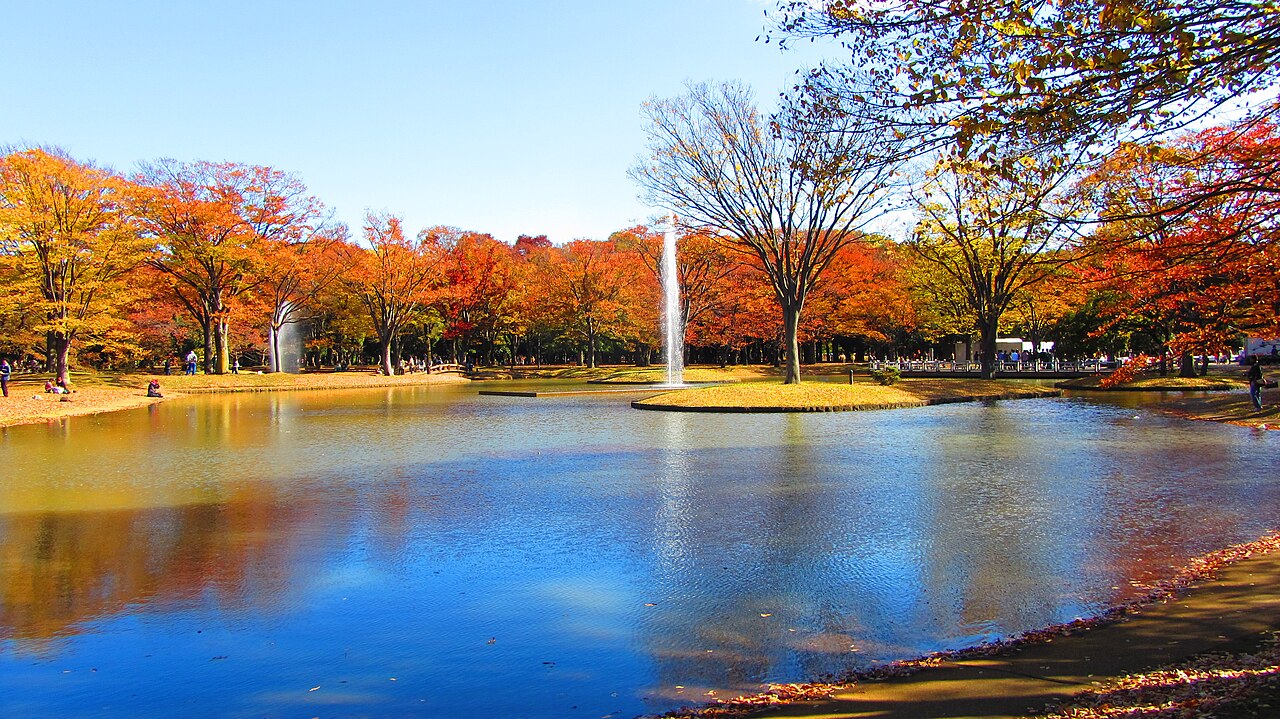
- The central lawnthe park's main open space, ringed by cherry trees and busy with picnics on fine weekends
- The ginkgo avenuea long straight path that turns solid yellow in late November
- The bird sanctuaryJapan's first urban bird sanctuary, a quiet wooded corner with observation points
- The event plazaacross the road from the main park; weekend food and culture festivals run here through much of the year
How to actually get there
- Shinjuku Stn → Harajuku Stn (JR Yamanote Line, 2 stops, ~5 min).
- Exit toward Meiji Jingu and cross the bridge over the railway.
- Walk about 5 minutes to the Harajuku Gate; the central lawn is straight ahead.
- JR Yamanote Line to Harajuku
- Shinjuku Stn →(JR Yamanote Line toward Shibuya, 2 stops, ~5 min)→ Harajuku Stn. Leave by the exit toward Meiji Jingu, cross the bridge over the railway, and the park's Harajuku Gate is about 5 minutes' walk. Total about 10 minutes. Trains run every few minutes, so no timetable check is needed.
- Back from Harajuku, or walk out to Shibuya
- Return on the Yamanote Line from Harajuku, or leave by the park's south side and walk about 15 minutes to Shibuya Station — an easy way to end the afternoon. Yoyogi-koen Station on the Chiyoda Line sits at the park's west side.
About the place
Yoyogi Park is where Tokyo goes to have space. It sits immediately west of Harajuku Station and shares a boundary with the Meiji Jingu forest, but the two could not feel more different: the shrine woods are silent and processional, and the park is loud, flat and completely unstructured. On a Sunday you can cross a single lawn and pass a rockabilly dance crew, a family barbecue permit queue, a Thai food festival and a man practising trumpet into a hedge. Cherry trees line the central lawn in spring; a long ginkgo avenue turns the whole path yellow in late autumn. Entry is free and there is no closing gate on the main areas.
How to enjoy it
Sunday afternoon is the park at full volume — the food festivals, the dance crews and the drum circles all land at once, and it is the best free show in Tokyo. If you want the opposite, come on a weekday morning and use the west entrances near Yoyogi-hachiman, where the lawns are almost empty. Late November for the ginkgos and early April for the cherries are the two dates worth planning around. Pair it with Meiji Jingu next door, or walk out south to Shibuya.
Background & history
The ground has changed use repeatedly: a military parade field before the war, a US forces housing area during the occupation, and then the athletes' village for the 1964 Tokyo Olympics. After the Games the site was converted to public parkland and opened as Yoyogi Park in 1967. Its bird sanctuary was the first of its kind in Japan.
Before you go
- Cash
- The park is free. There are drink vending machines and a few kiosks inside, but for a proper meal use Harajuku or Shibuya. Weekend food festivals on the event plaza usually take cash only.
- Good to know
- There is very little shelter, so a wet day is a poor day here. The central forest area has posted opening hours that shift by season; the lawns and paths are open longer. Barbecuing is only allowed in the designated area with a reservation.
- Another way
- Yoyogi-koen Station (Chiyoda Line) or Yoyogi-hachiman Station (Odakyu Line) both put you at the quieter west entrances, away from the Harajuku crowd.
- After you get off
- From Harajuku Station, cross the bridge and follow the signs; the Harajuku Gate is about 5 minutes on foot, with the event plaza on your left and the main lawn straight ahead.
Nearby notes
 Guilhem Vellut from Annecy, France / CC BY 2.0
History · Tokyo★★★
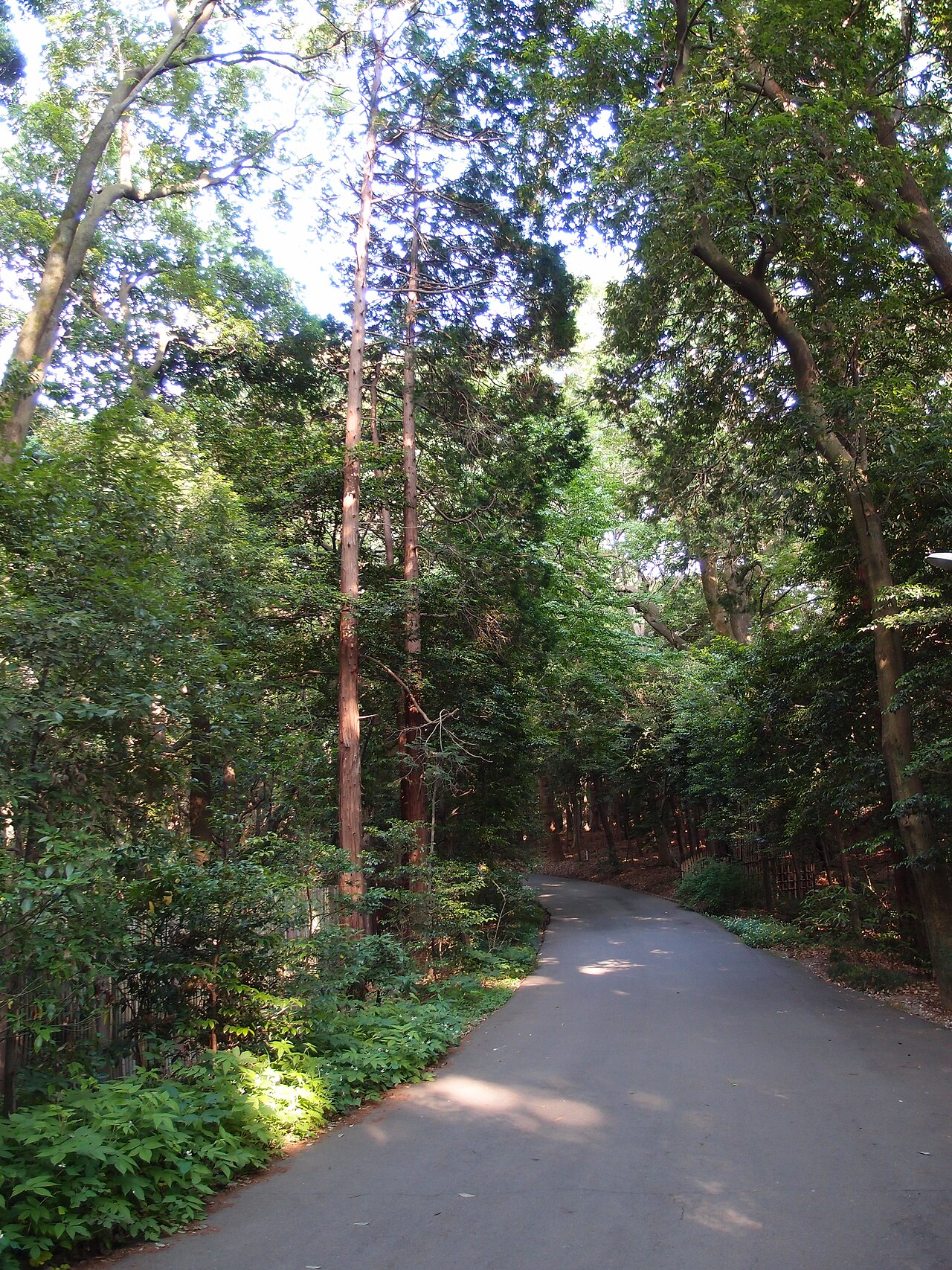
Meiji Jingu
0.6 km · straight line
 Intforce / CC BY-SA 4.0
Local life · Tokyo★★
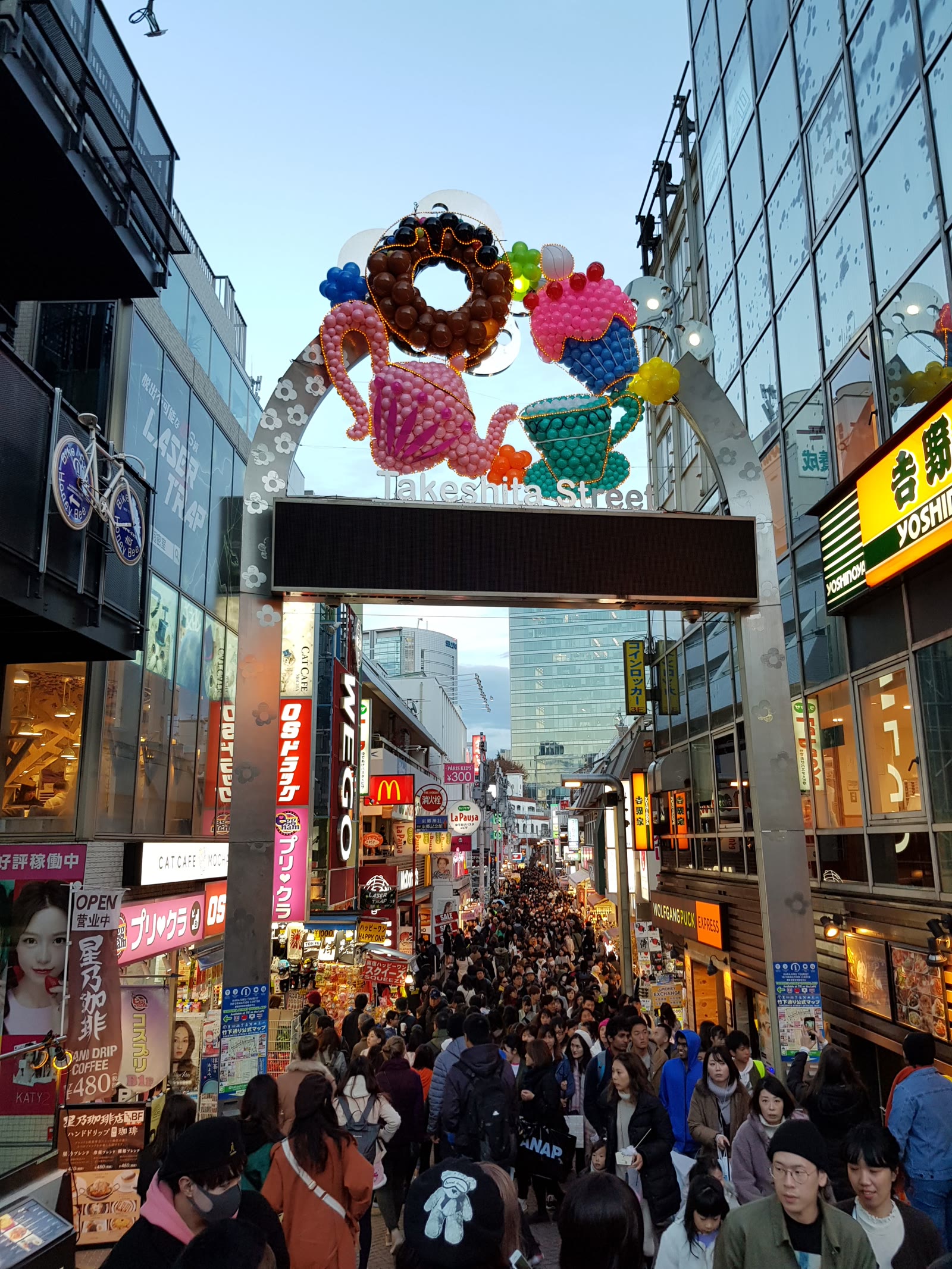
Takeshita Street
0.7 km · straight line
 663highland / CC BY 2.5
Local life · Tokyo★★★
Omotesando
1.4 km · straight line
 PEPSI697 / CC BY-SA 4.0
Local life · Tokyo★★★
Shibuya Scramble Crossing
1.5 km · straight line
On a curated routeTokyo, Forest to Rooftop →
Distances are straight lines on the map, not travel times.