Kyoto by the sea · IneNo.024★★Open in map →
Ine no Funaya
— the boathouse village built on the sea
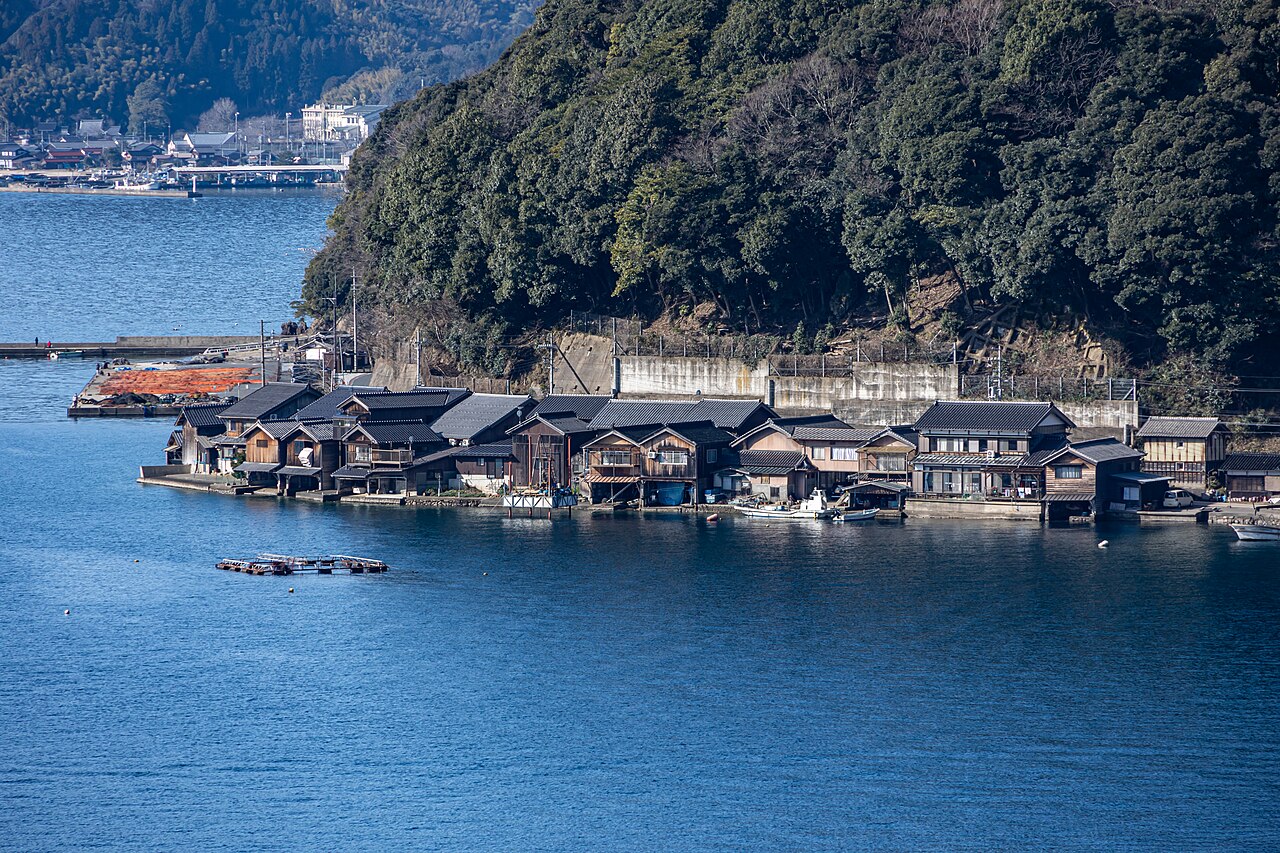
In the fishing town of Ine, on the Sea of Japan coast of northern Kyoto, about 230 wooden boathouses ring the bay — each with a ground floor open to the water and living quarters above.
- FromKyoto Station
- ~3 hrtrain + bus (hourly)
- Get off atIne bus stop
- From there
- Ine no Funaya
The sweet spot
The quiet neighbourhoods stay that way because there is little English signage and no ticket gate, so most day-trippers stop at the sightseeing-boat pier and turn back. Walking the seawall lane on foot, past the pier to where the working boathouses stand, takes time and effort that a short visit skips.
Where it is
90 more notes in Kyoto · open the map →What to look for — in walking order
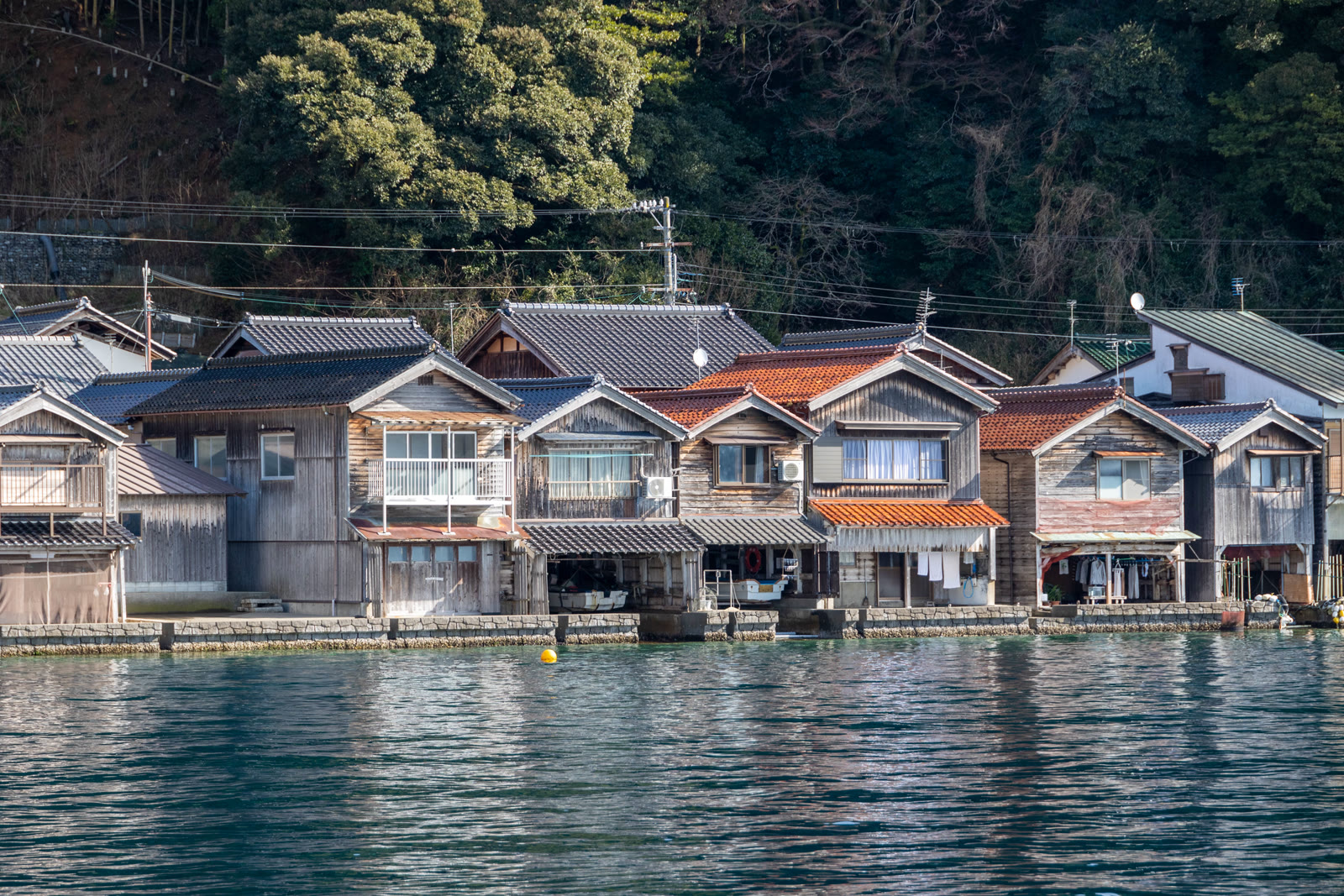
- Boathouses on the waterabout 230 funaya, each with a ground floor open to the sea and a home above
- Tateishi to Kameyama stretchthe neighbourhoods where the still-working boathouses stand most densely
- Roadside rest-stop overlookMichi-no-Eki Funaya-no-Sato Ine: a raised view over the whole bay
- Bay cruise or sea taxisightseeing boats and fisher-run water taxis to see the boathouse row from the water
How to actually get there
- 1. Kyoto Station to Amanohashidate Station (JR Hashidate limited express, ~2 hr).
- 2. Amanohashidate Station to Ine (Tankai bus, Ine line, ~1 hr).
- 3. Ine bus stop to the boathouses (on foot, a few minutes to the waterfront lane).
- JR train to Amanohashidate + Tankai bus to Ine
- From Kyoto Station, take the JR Hashidate limited express train to Amanohashidate Station (~2 hr; a few trains a day, so check the timetable). At Amanohashidate, change to the Tankai bus on the Ine line toward Ine (~1 hr). Get off at the Ine bus stop in the town centre. Total about 3 hr from Kyoto. The bus runs roughly once an hour, so check the day's departure times before you go.
- Return before evening
- The Ine buses run roughly once an hour and the last one back leaves in the early evening. When you arrive, check the return times posted at the bus stop, and plan your last bus so you do not miss the connecting train.
About the place
Ine sits on a south-facing bay, unusually calm for the Japan Sea coast. About 230 funaya (boathouses) line the roughly five-kilometre shoreline. The ground floor of each opens level with the water to pull in a fishing boat and gear; the family lives on the floor above. Seen from the water, the row of rooflines seems to float on the surface. The most densely packed working boathouses stand in the Tateishi, Mimi-hana and Kameyama neighbourhoods, a short walk from the main pier. Most funaya are private homes, so the village keeps its lived-in character. A few now serve as cafes, restaurants and inns, but the pace is still set by the fishing community.
How to enjoy it
The sheltered bay is at its calmest in the morning. Try the boathouses two ways: on foot along the seawall lane, and from the water by cruise boat or sea taxi. The funaya are private homes, so admire them from the street or the bay.
Background & history
Boathouses have lined Ine Bay since at least the Edo period (1600s–1860s), growing over time into the two-storey form seen today. In July 2005, the Ineura district was designated an Important Preservation District for Groups of Traditional Buildings — reported to be the first fishing village in Japan to receive that national heritage status. The protected area covers the townscape and the bay itself across eight neighbourhoods, from Tateishi and Mimi-hana to Kameyama and beyond.
Before you go
- Cash
- Rural buses and small shops are often cash-only, so carry coins and small notes. The Tankai bus accepts cash; check on board whether IC cards are usable.
- Good to know
- People live and work in the funaya. Stay on the public seawall lane, and do not step into the boat slips or private ground floors.
- Another way
- If you would rather see the boathouses from the water, the Ine Bay sightseeing boat and fisher-run sea taxis loop the bay.
- After you get off
- From the Ine bus stop, walk down to the waterfront and follow the paved seawall lane; the quiet working boathouses lie to the southeast along it, roughly 900 m away in a straight line.
Nearby notes
 Asturio Cantabrio / CC BY-SA 4.0
Nature · Kyoto★
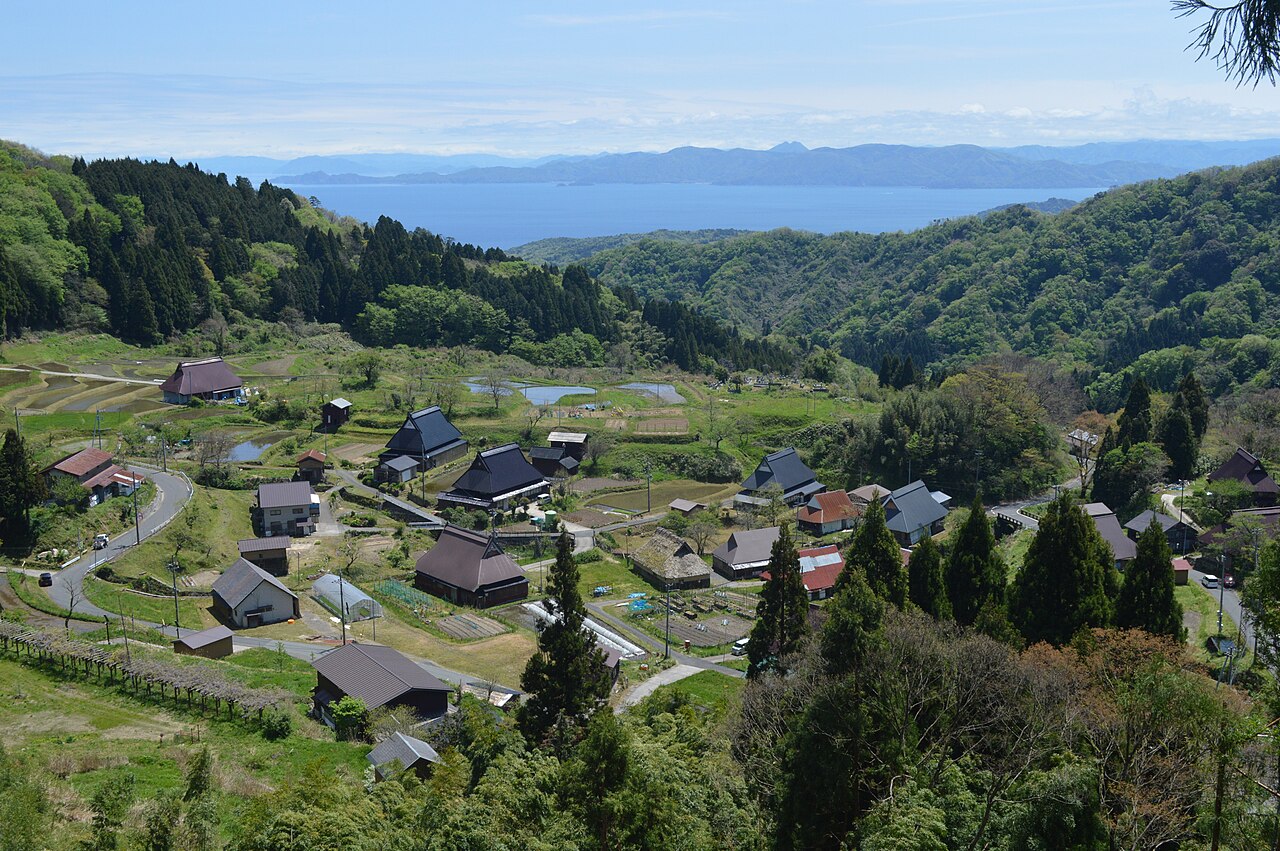
Kami-Seya
10.2 km · straight line
 663highland / CC BY 2.5
Nature · Kyoto★★★
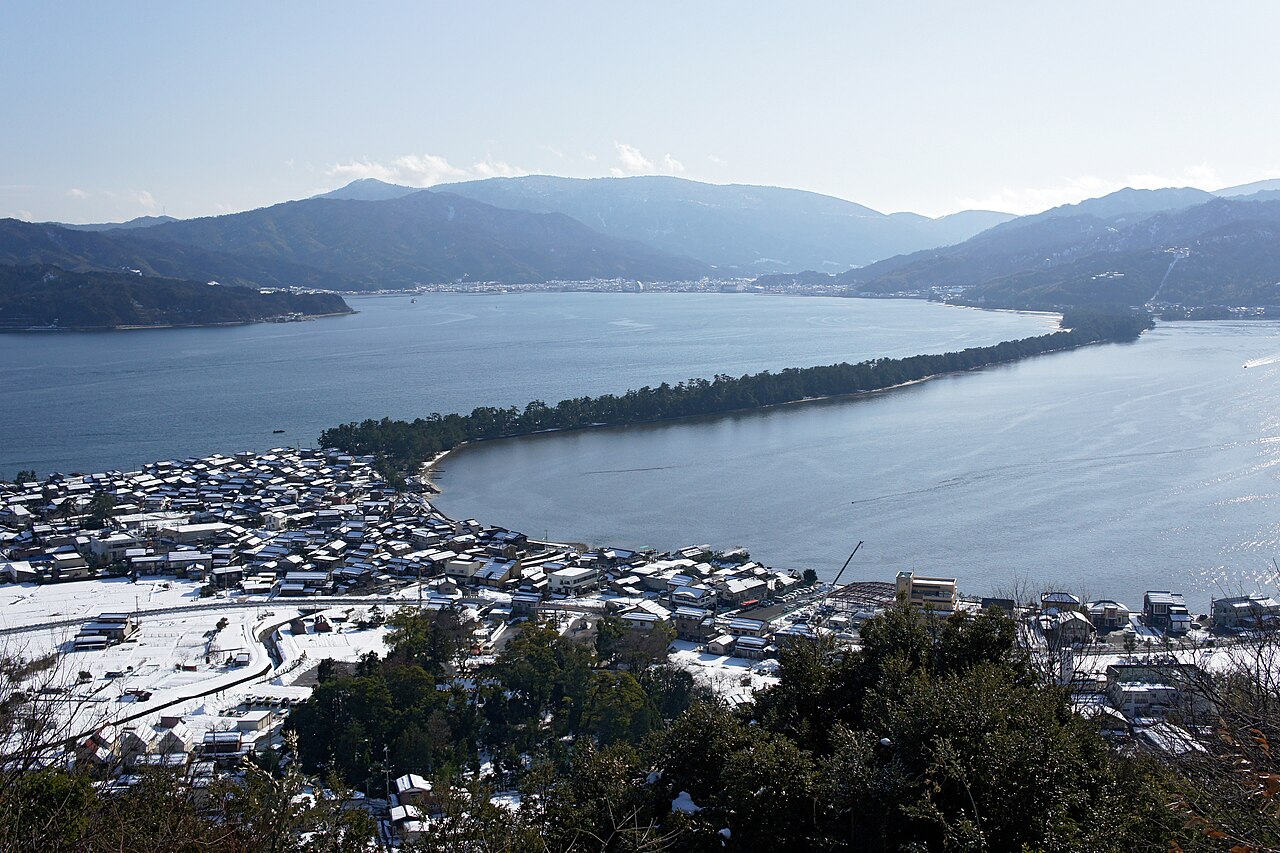
Amanohashidate
14.7 km · straight line
 At by At / CC BY-SA 3.0
Craft · Kyoto★
Chirimen Kaido
25.9 km · straight line
Distances are straight lines on the map, not travel times.