Kyoto west · Sagano / ArashiyamaNo.382★★Open in map →
Jojakko-ji
— a hillside temple of maples
A hillside Nichiren temple on the slope of Mt. Ogura in western Kyoto, known for its thatched gate, a 1620 pagoda, and about two hundred maples.
- FromKyoto Stn
- ~35 minJR + walk
- Get off atSaga-Arashiyama Station (JR Sagano / San'in Line)
- On foot
- Jojakko-ji
The sweet spot
The bamboo grove and Tenryu-ji are ten minutes downhill and absorb almost the entire Arashiyama crowd; virtually no English-language itinerary continues northwest up the lane. Because the temple climbs a slope in terraces rather than spreading across a courtyard, it also never reads as full — even in the last week of November, when every other maple site in Kyoto is a queue.
Where it is
90 more notes in Kyoto · open the map →What to look for — in walking order
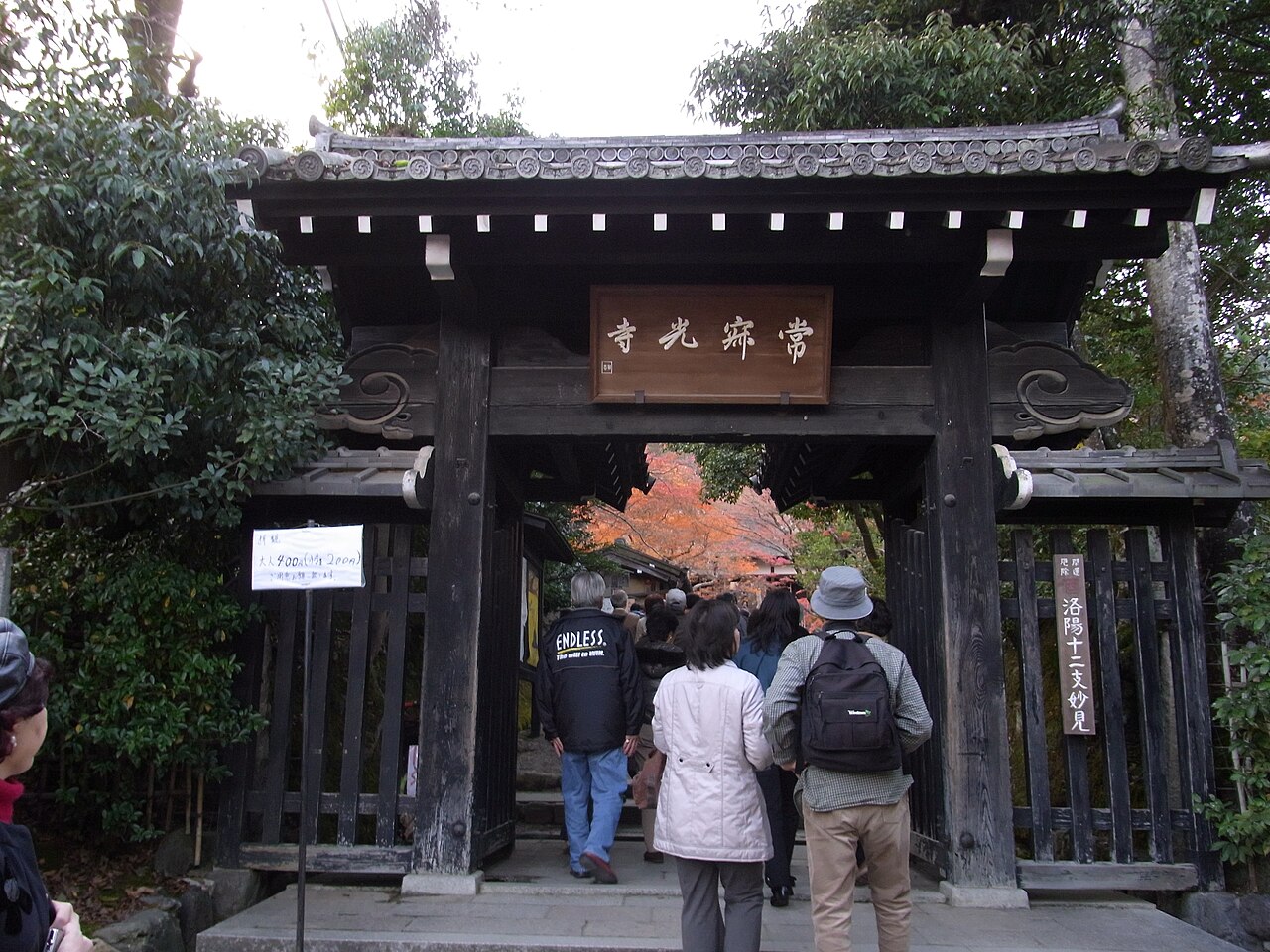
- Niomon gatethe thatched entrance gate, moved here from Honkoku-ji in the early 1600s; its guardian figures are traditionally credited to the Unkei school
- Tahoto pagodaa two-storey pagoda of 1620 with a cypress-bark roof, designated an Important Cultural Property; the ornate detailing is late Momoyama in character
- The upper terrace viewfrom beside the pagoda the slope opens west over the roofs of Sagano toward the Kyoto basin and Mt. Hiei
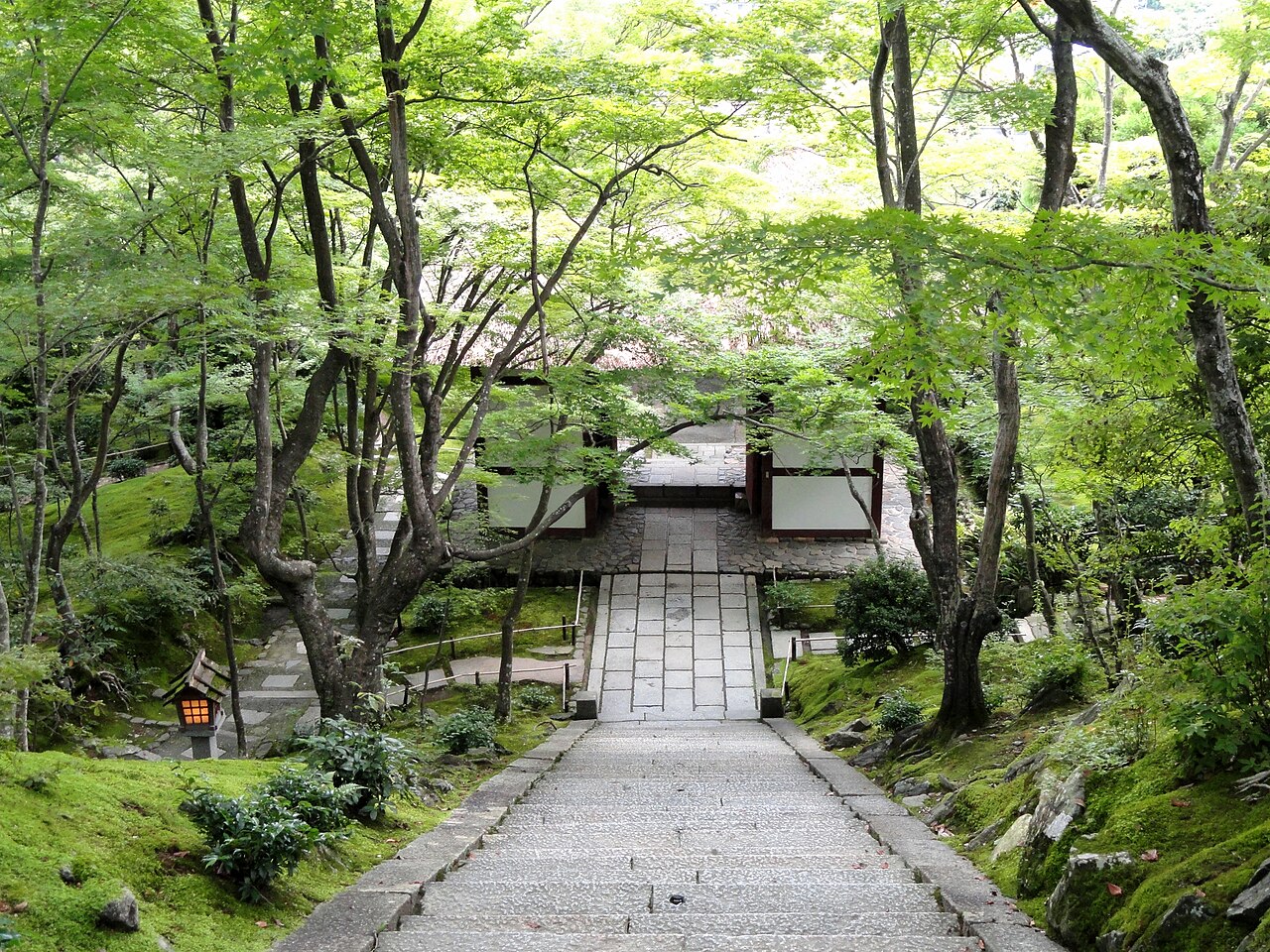
- The maple sloperoughly two hundred maples planted through the terraces; the same slope is deep green and far emptier in early summer
How to actually get there
- Kyoto Stn → Saga-Arashiyama Stn (JR Sagano Line, ~15 min).
- Walk southwest past the bamboo grove and Tenryu-ji, then northwest up the lane (~15-20 min) to the Niomon gate.
- Climb the terraces: main hall, bell tower, then the 1620 pagoda and the westward view over Sagano.
- Kyoto Stn → Saga-Arashiyama, then walk
- Kyoto Stn →(JR Sagano / San'in Line, local or rapid, ~15 min)→ Saga-Arashiyama Stn. Leave by the south exit, walk southwest past the Torokko Saga station and follow the lane toward the bamboo grove; keep going past Tenryu-ji's north gate and continue northwest — Jojakko-ji's gate is about 15-20 minutes on foot, signposted in English. Total about 35 minutes from Kyoto Station.
- Walk back down to Saga-Arashiyama or Randen Arashiyama
- Retrace the lane downhill; Saga-Arashiyama Stn (JR) is about 20 minutes, or continue south to Randen Arashiyama Stn on the Keifuku tram line for a slower, more scenic ride back toward central Kyoto. JR trains run several times an hour into the evening.
About the place
Jojakko-ji is not a flat temple. From the thatched Niomon gate the path turns immediately into stone steps, and the buildings are set on terraces cut into the eastern slope of Mt. Ogura — main hall on one level, bell tower on the next, and a small two-storey pagoda higher still. Because the compound climbs rather than spreads, you never see all of it at once; each flight of steps reveals a different arrangement of roof, moss, and maple. From the terrace beside the pagoda the ground opens westward over the Sagano rooftops toward the Kyoto basin and the ridge of Mt. Hiei beyond. Around two hundred maples are planted through the grounds, and in late autumn the slope reads as a single sheet of red seen from below and a red ceiling seen from the steps. The temple takes its name from Jojakkodo, the Pure Land of Eternal Tranquil Light — a name chosen, the temple says, for the quality of the place itself.
How to enjoy it
Come in the first hour after the 9:00 opening. The bamboo grove ten minutes downhill absorbs most of the Arashiyama crowd, and the walk up to Jojakko-ji thins it further, but late-November mornings still fill by ten. Wear shoes you can climb steps in — the whole visit is stairs and moss, and the best angles are found by turning around and looking back down. If you have half a day, chain it with Nison-in and Gio-ji further up the same lane, all within ten minutes' walk of each other.
Background & history
The temple was founded in 1596 by the priest Nisshin, who left Honkoku-ji in the city and retired to this slope. The thatched Niomon gate was brought here from Honkoku-ji in the early 17th century; its guardian figures are traditionally attributed to the Unkei school. The Tahoto pagoda higher up the hill was built in 1620 and is designated an Important Cultural Property, its cypress-bark roof and bracketing carrying the ornate Momoyama manner into the Edo period. The slope itself carries an older literary association: Mt. Ogura is where the poet Fujiwara no Teika is said to have kept the hut called Shiguretei and compiled the Hyakunin Isshu, the hundred-poem anthology that every Japanese schoolchild still learns.
Before you go
- Cash
- Admission is collected at the Niomon gate and is a few hundred yen for an adult — bring cash, as the gate is not set up for cards. IC cards (ICOCA, Suica) work on the JR ride out. Nothing else on the grounds requires payment.
- Good to know
- Open 9:00-17:00, with the last entry at 16:30. Late November is the peak of the maple season and the steps become slow-moving; the temple is at its calmest in the first hour after opening. The stone steps are steep and uneven in places and there is no step-free route to the upper terraces.
- Another way
- The Randen tram from Shijo-Omiya to Arashiyama Station is a pleasant alternative approach (about 25 minutes), leaving a 20-minute walk north through Sagano to the temple. City buses 28 and 11 also reach Arashiyama from central Kyoto but are slow in season.
- After you get off
- From Saga-Arashiyama Station, head southwest toward the bamboo grove and keep walking northwest past Tenryu-ji; the thatched Niomon gate stands at the foot of the hill, about 15-20 minutes on foot.
Nearby notes
 Erol Ahmed / CC0
Nature · Kyoto★★★
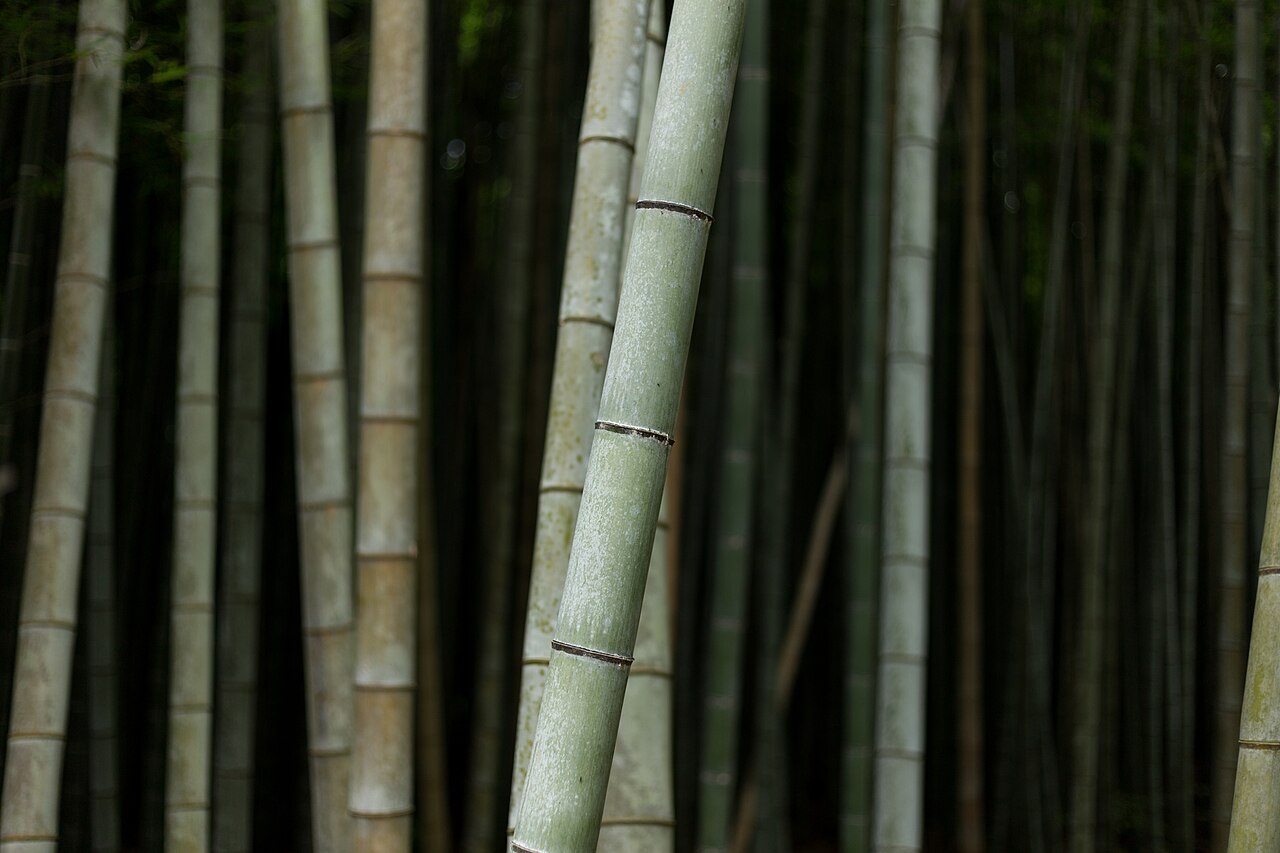
Arashiyama Bamboo Grove
0.6 km · straight line
 663highland / CC BY 2.5
History · Kyoto★
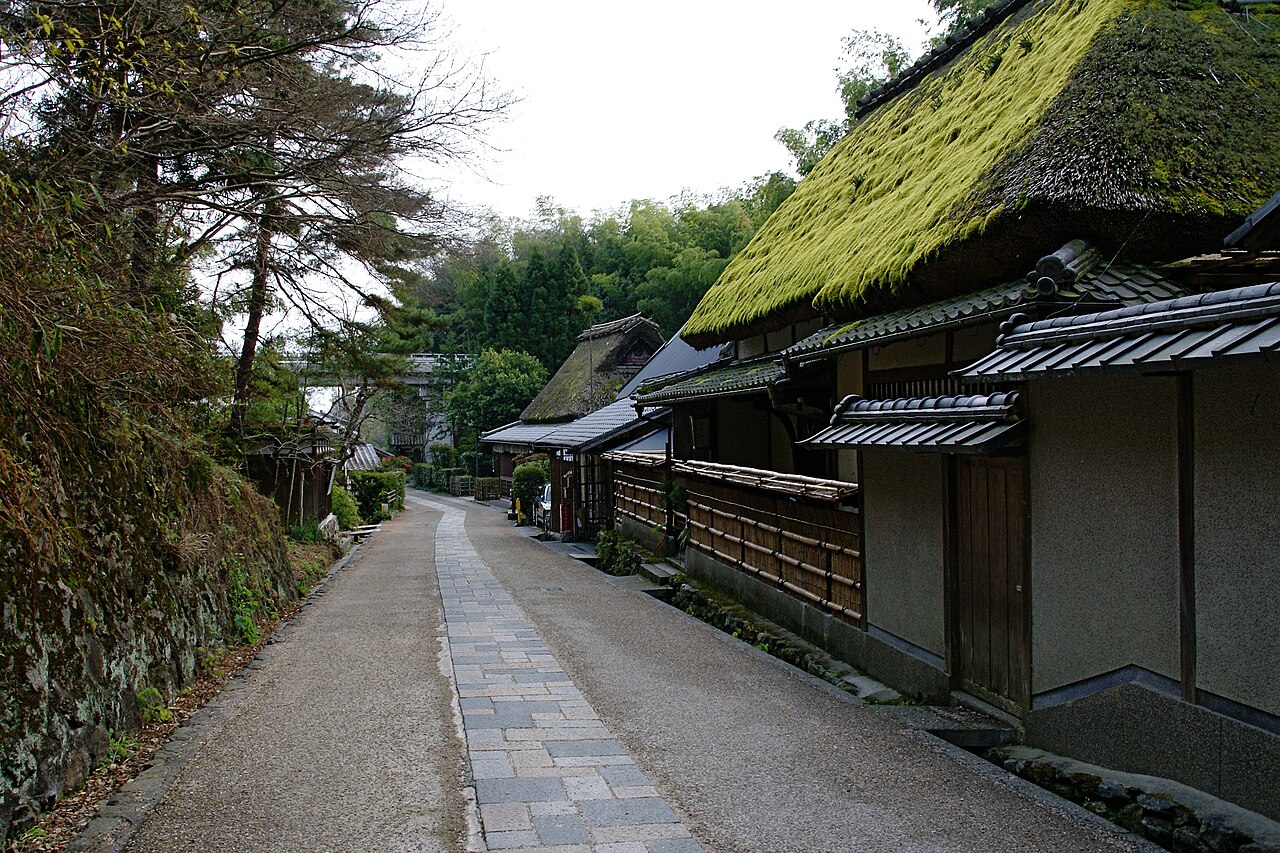
Saga-Toriimoto
0.7 km · straight line
 Hyppolyte de Saint-Rambert / CC BY 4.0
History · Kyoto★★
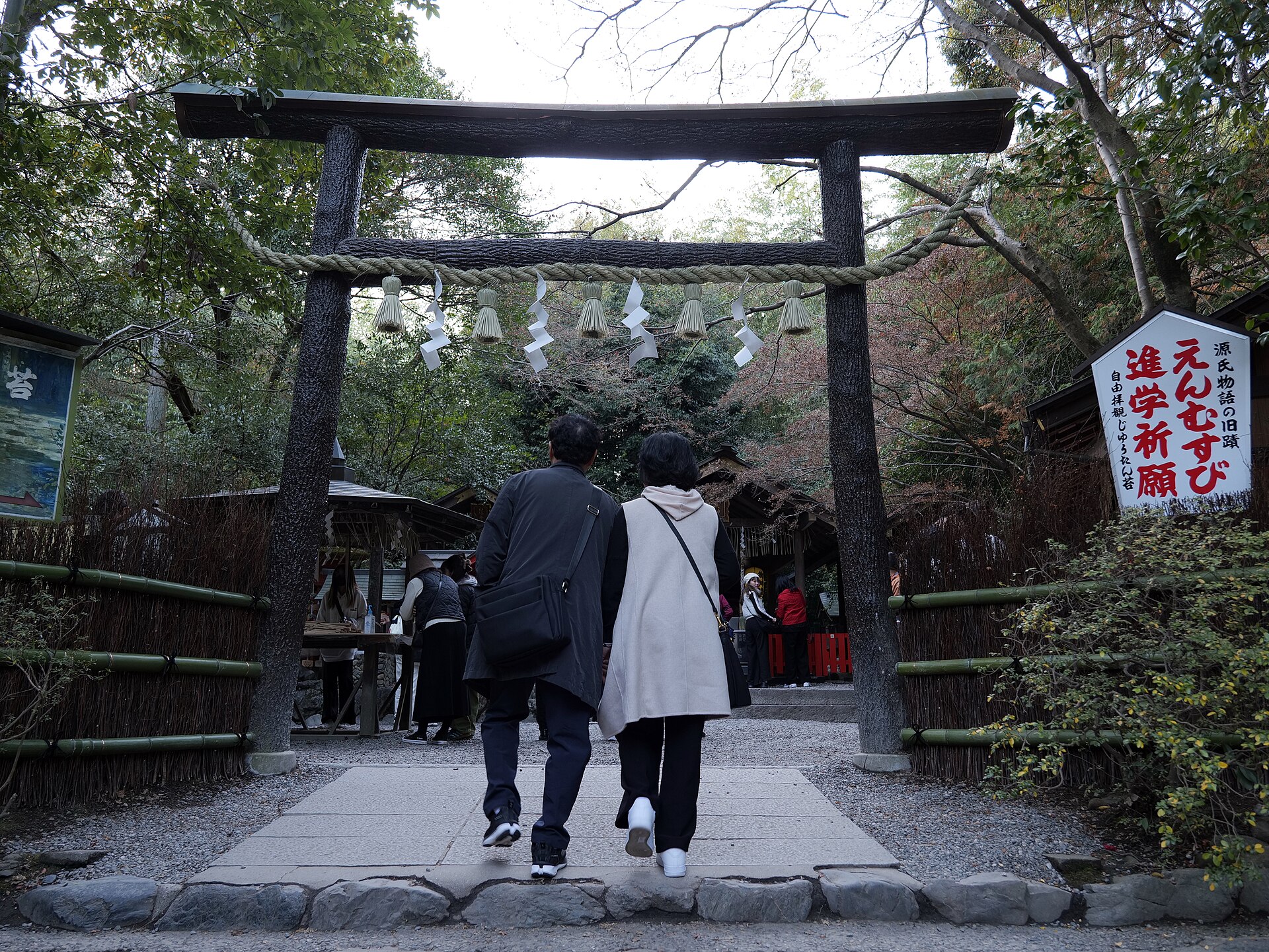
Nonomiya Shrine
0.7 km · straight line
 osakaosaka / CC BY-SA 3.0
History · Kyoto★★★
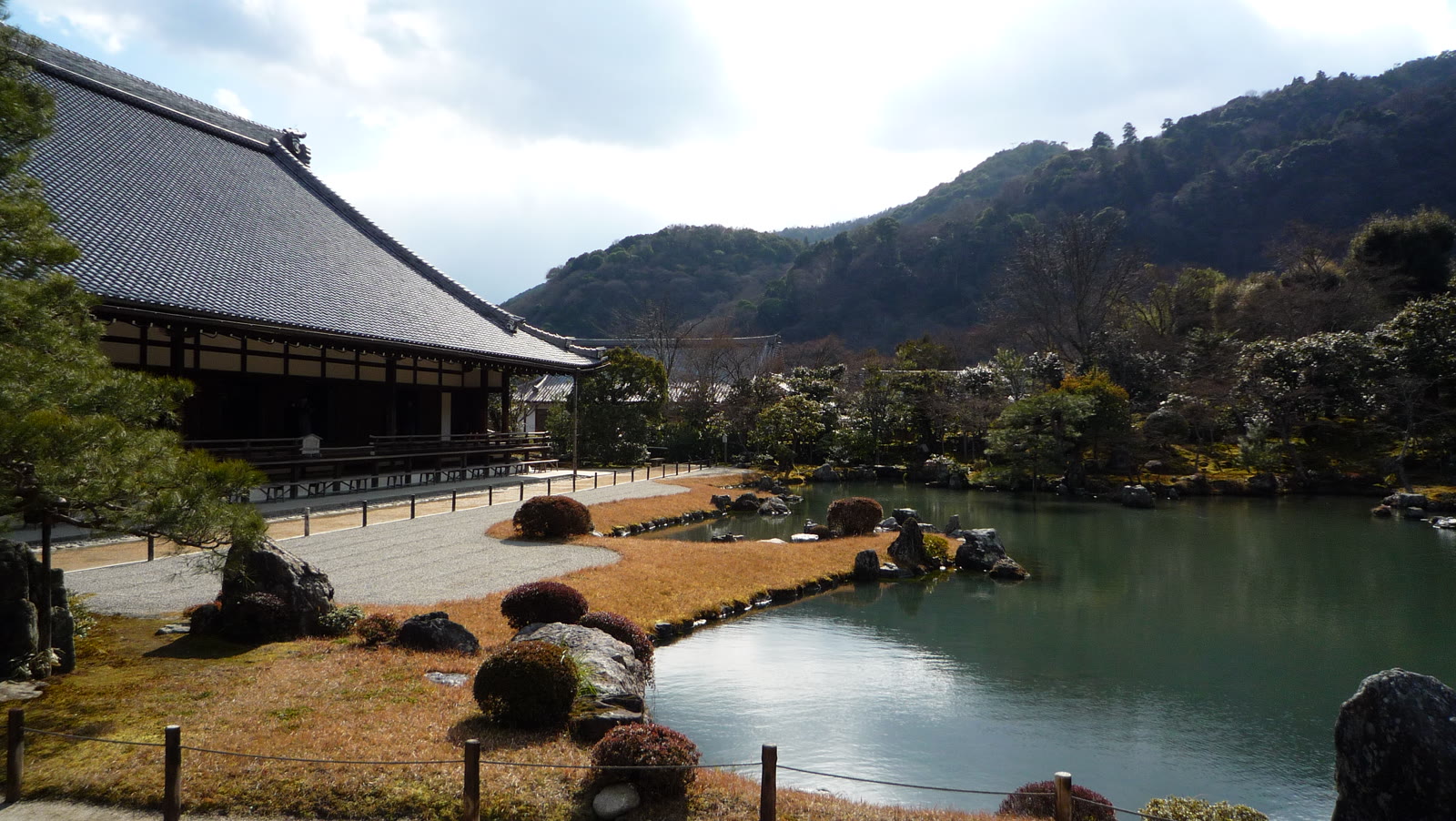
Tenryu-ji
0.8 km · straight line
Distances are straight lines on the map, not travel times.