Kyoto Tamba · AyabeNo.019★Open in map →
Kisaichi Maruyama Kofun
— Kyoto's largest round burial mound
A reconstructed 5th-century round burial mound in Ayabe, northern Kyoto Prefecture — the largest round kofun in the prefecture and now the centrepiece of a hilltop park.
- FromKyoto Stn
- ~90 minbus (infrequent)
- Get off atYuden stop (Ayabus)
- On foot
- Kisaichi Maruyama Kofun
The sweet spot
The site has almost no English signage and rarely appears on Kyoto day-trip lists, and the last stretch depends on an infrequent local bus, so few foreign visitors make the trip.
Where it is
90 more notes in Kyoto · open the map →What to look for — in walking order
- Ayabe City Museumthe grave goods from the excavation — including gilded quiver fittings — displayed near the base of the mound
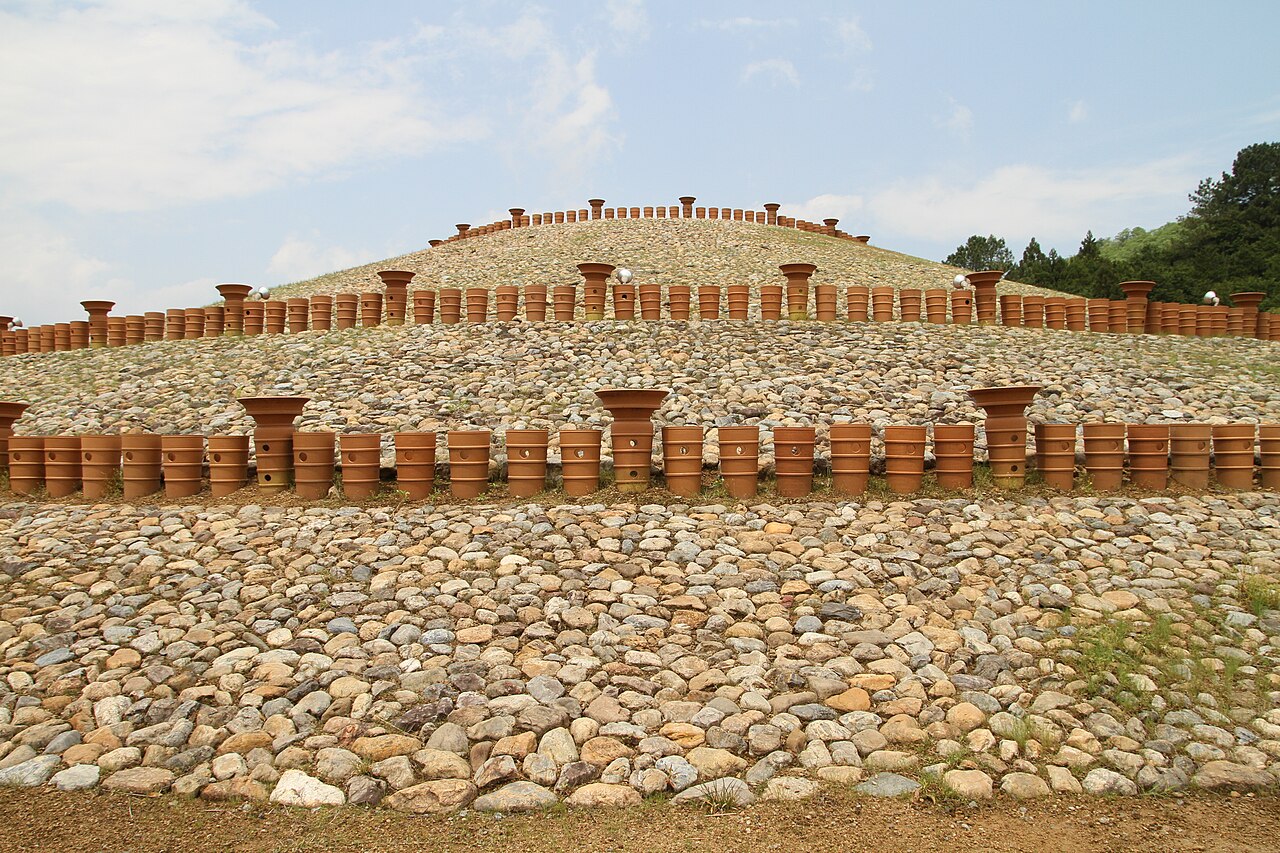
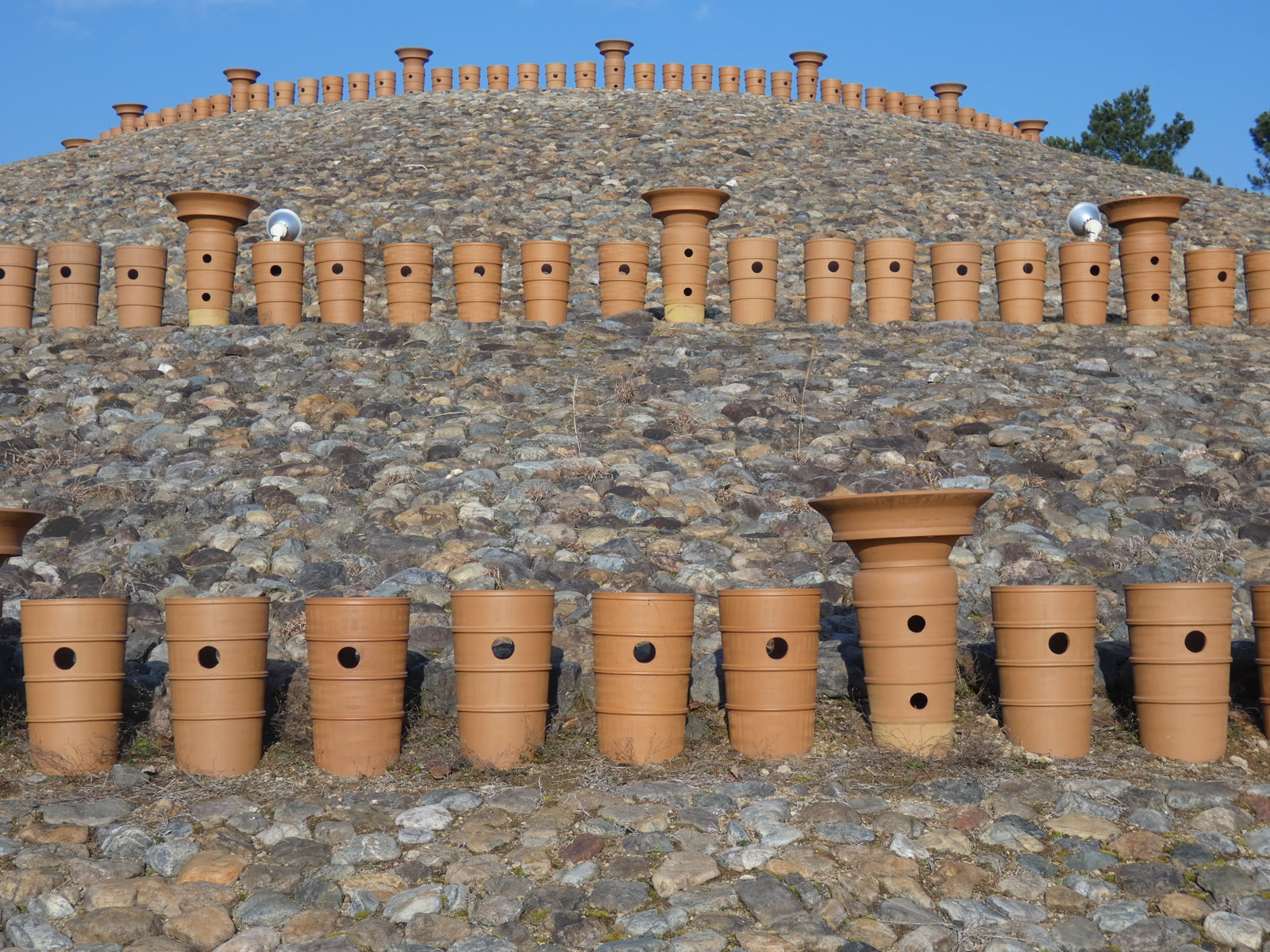
- Three-tiered moundthe 70-metre round tomb rebuilt in three stepped tiers, easy to read as a shape from close up
- Fukiishi stone facingroughly 60,000 river stones from the Yura River re-laid across the slopes, recreating the original armour-like surface
- Replica cylinder haniwaabout a thousand terracotta cylinders ringing the terraces, recreating the array that once stood on the mound
How to actually get there
- Kyoto Station → Ayabe Station (JR San'in Main Line limited express, ~65 min).
- Ayabe Station → Yuden stop (Ayabus Nishizaka Line, a few runs a day).
- Yuden stop → mound summit (on foot, ~15 min uphill via the small museum).
- JR limited express + local Ayabus
- Kyoto Station →(JR San'in Main Line limited express — Hashidate, Maizuru or Kinosaki — ~65 min)→ Ayabe Station →(Ayabus Nishizaka Line, a small municipal bus, to the Yuden stop, a short ride)→ then a short walk. Total about 90 min. The limited express runs often through the day, but the Ayabus runs only a few times a day, so check that day's bus timetable before you leave.
- Return via Ayabe Station
- Take the Ayabus back to Ayabe Station, then a JR limited express to Kyoto. The local bus runs only a few times a day and finishes in the early evening, so when you arrive, check the return times at the Yuden stop. If you miss the last bus, the fallback is a taxi to Ayabe Station.
About the place
Kisaichi Maruyama Kofun is a round burial mound from the mid-5th century, about 70 metres across and 10 metres high, standing on a ridge above Ayabe. Its existence was completely unknown until 1988, when survey work for a new expressway uncovered it. The mound has since been restored in three tiers: roughly 60,000 river stones re-armour the slopes as fukiishi — the stone facing that once covered such tombs — and about a thousand replica cylinder haniwa, the terracotta tubes that ancient builders stood in rows on the terraces, ring the tiers, giving a vivid picture of how the tomb originally looked. It is the largest round burial mound in Kyoto Prefecture, and the open hilltop makes it a rewarding, uncrowded stop.
How to enjoy it
Walk up to the open summit for the full three-tiered shape and the ring of haniwa cylinders, which stand out clearly in good light. Combine the visit with the Ayabe City Museum at the base to see the real objects that came out of the tomb.
Background & history
The tomb was built in the mid-5th century and remained unknown until it was found during preparatory surveys for the Maizuru-Wakasa Expressway in 1988. Because the discovery was significant, the expressway route was changed from an open cutting to a tunnel, which now runs beneath the site so the mound itself could be preserved intact. Excavation revealed multiple burials with grave goods including armour, swords, bronze mirrors, and beads. The restored park opened in May 1993, and the site was designated a National Historic Site in 1994.
Before you go
- Cash
- The Ayabus is a small local bus and is cash-only, so carry coins and small bills.
- Good to know
- The mound is an open hilltop park with free entry and little shade. Wear a hat in summer and take care in strong wind.
- Another way
- By car it is easiest: about 20 minutes from the Ayabe or Fukuchiyama interchange on the Maizuru-Wakasa Expressway, with 100 free parking spaces at the foot.
- After you get off
- From the Yuden stop, walk about 5 minutes on a paved lane to the parking area, then about 10 minutes up the mound path to the summit.
Nearby notes
 At by At / CC BY-SA 3.0
Craft · Kyoto★
Chirimen Kaido
23.2 km · straight line
 ja:User:Nnn / CC BY-SA 3.0
History · Kyoto★
Komyo-ji's Niomon
23.8 km · straight line
 河川一等兵 / CC BY-SA 3.0
Nature · Kyoto★
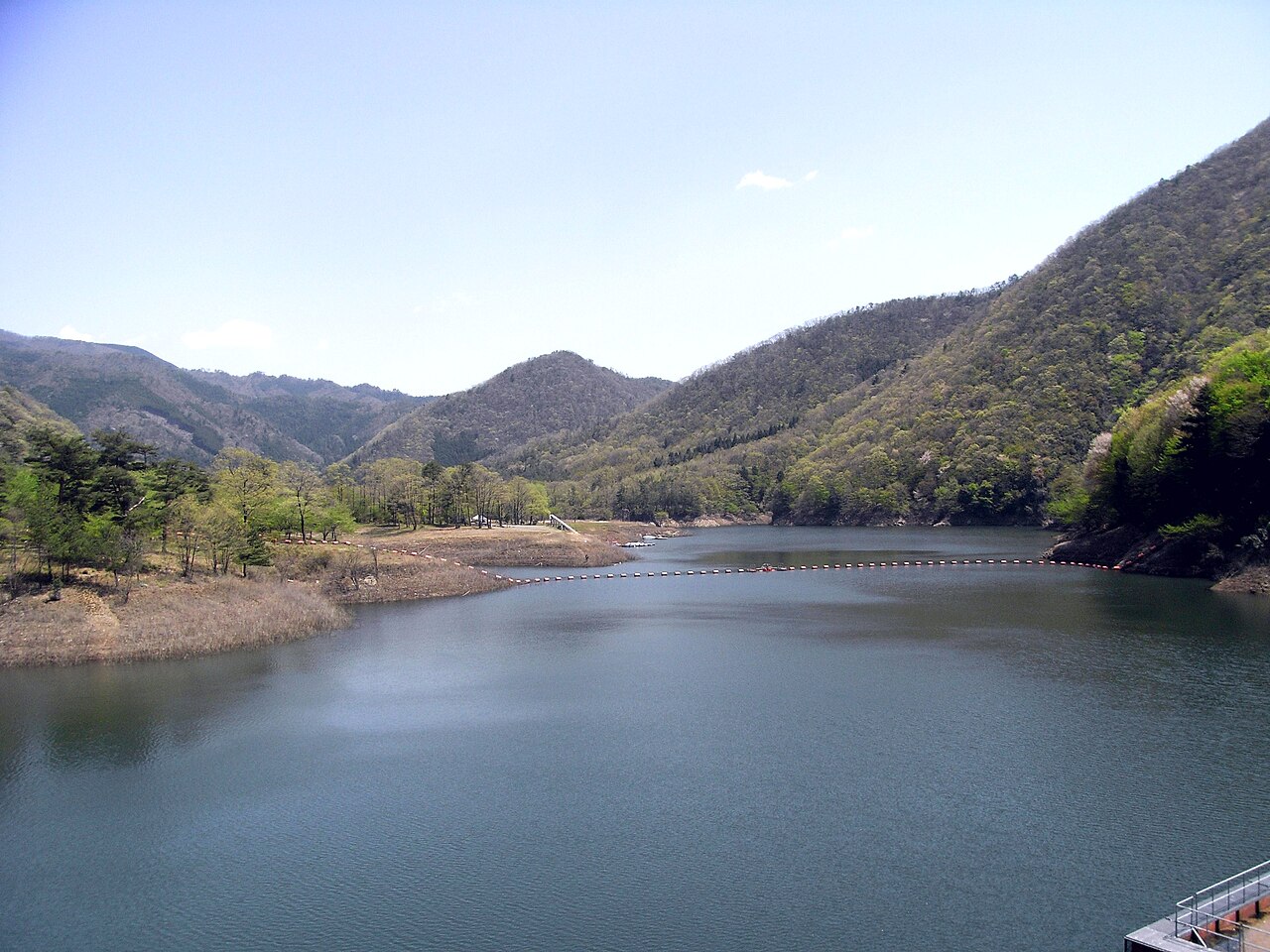
Ohno Dam's Rainbow Lake
24.6 km · straight line
 663highland / CC BY 2.5
History · Hyogo★
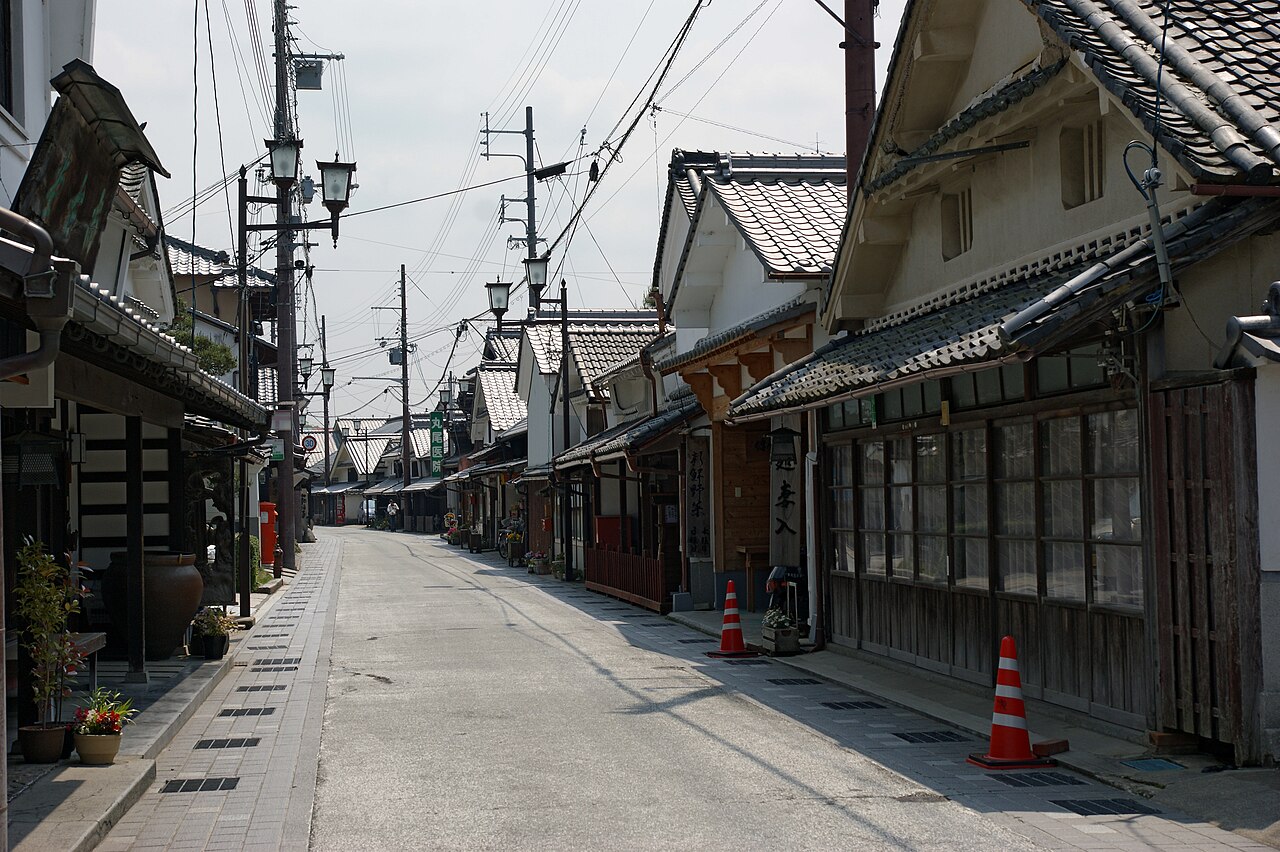
Kawaramachi Tsumairi Merchant Row
27.1 km · straight line
Distances are straight lines on the map, not travel times.