Osaka · Kishiwada castle townNo.377★★Open in map →
Kishiwada Castle & the Danjiri Hall
A rebuilt castle keep with a modernist rock garden at its foot, and a museum a few minutes away that keeps the Kishiwada danjiri festival — one of Japan's fastest and most dangerous cart festivals — on display all year.
- FromNamba Stn
- ~35 minNankai Main Line (frequent)
- Get off atTakojizo Stn (Nankai Main Line, then ~7-min walk)
- On foot
- Kishiwada Castle & the Danjiri Hall
The sweet spot
Japan's great festivals are usually all-or-nothing: you are there on the day or you get nothing. Kishiwada is one of the few places that has built a serious year-round substitute, with real carts and renewed film. The castle next door then delivers something unrelated and unadvertised — a 1953 Shigemori Mirei garden that outranks most of the castle itself.
Where it is
40 more notes in Osaka · open the map →What to look for — in walking order
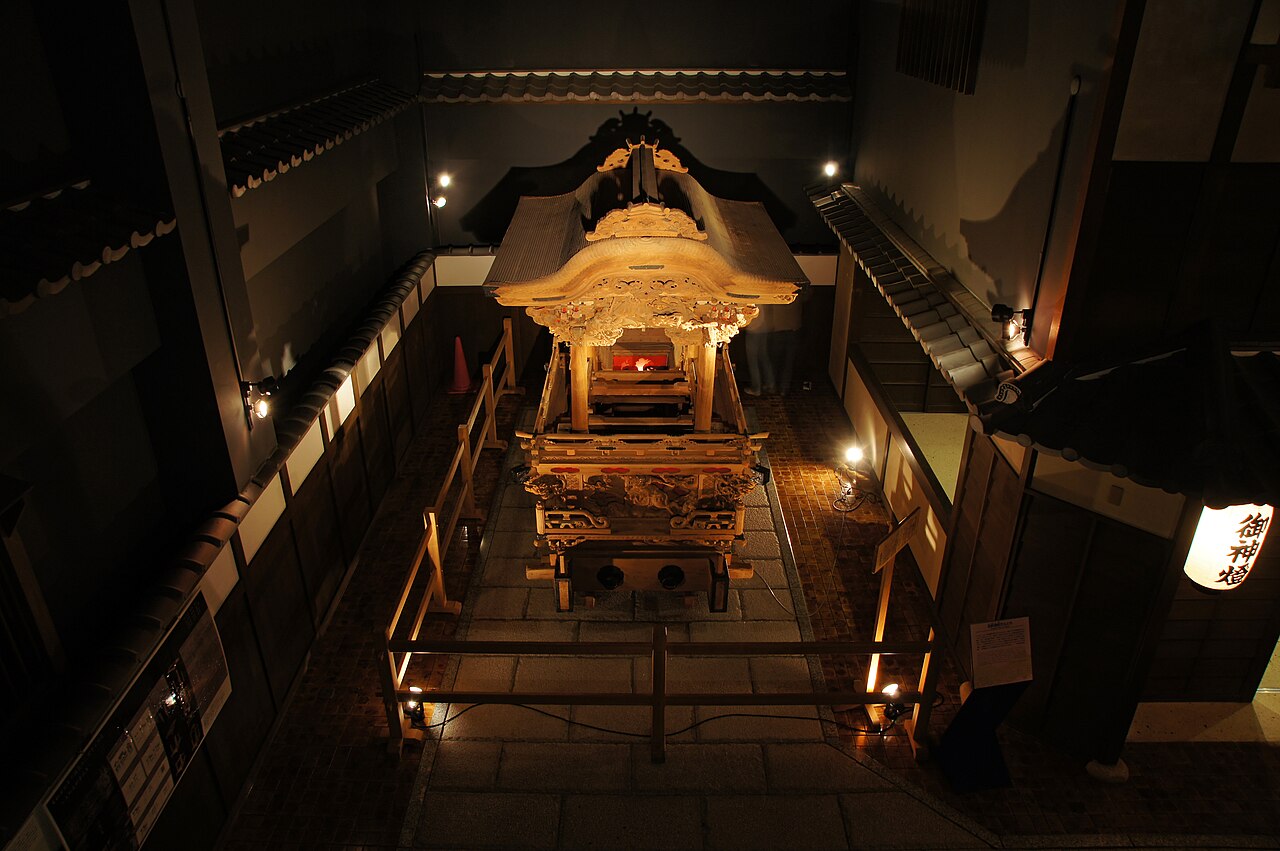
- Real danjiri carts indoorsfull-size carts you can circle at close range, with relief carving cut several layers deep into the timber
- The large-format festival filmthe hall's video system, renewed in March 2024, which puts the speed and noise of a corner turn in front of you
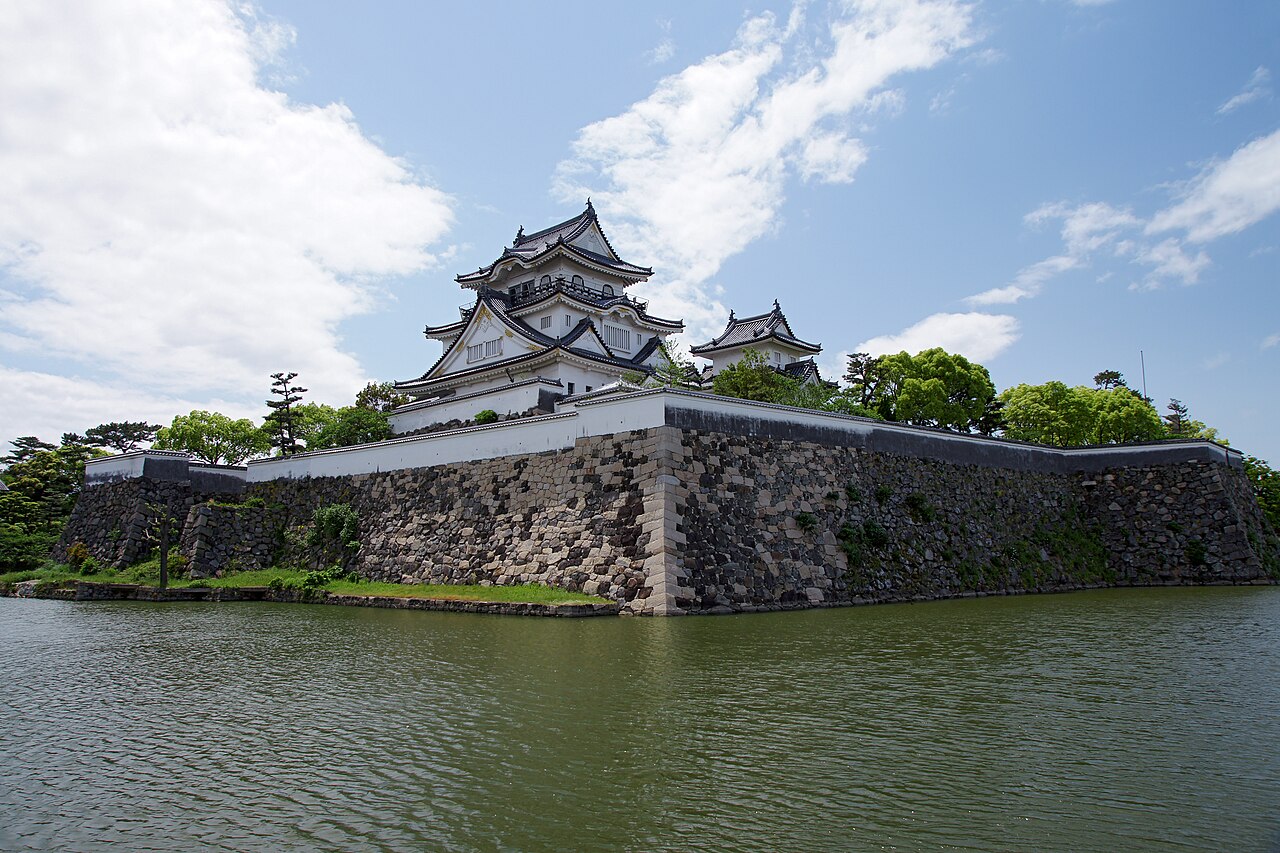
- Kishiwada Castle keepthe 1954 three-tier reconstruction over the moat, with exhibits inside and a view across the castle town
- Hachijin no NiwaShigemori Mirei's 1953 stone garden at the keep's foot, laid out as eight battle formations; National Place of Scenic Beauty since 2014
How to actually get there
- Namba Station → Kishiwada Station (Nankai Main Line, ~25 min), then one local stop to Takojizo.
- Takojizo Station → Danjiri Kaikan (walk northwest, ~7 min). Check it is not a Monday.
- Danjiri Kaikan first, then walk a few minutes to the castle keep and the Hachijin no Niwa at its base.
- Namba → Takojizo on the Nankai Main Line
- From Nankai Namba Station, take the Nankai Main Line south toward Wakayamashi. Limited express and rapid services reach Kishiwada in about 25 minutes; from Kishiwada, transfer to a local for one stop to Takojizo, or simply walk about 13 minutes from Kishiwada Station. From Takojizo Station it is about 7 minutes on foot to the Danjiri Kaikan. Trains run frequently all day.
- Back from Takojizo or Kishiwada
- Return from Takojizo Station (local trains only) or walk to Kishiwada Station, where faster services to Namba also stop. Trains toward Namba run until late evening, so timing is not a constraint.
About the place
Kishiwada's danjiri festival is not a procession. Teams of several hundred people haul a multi-tonne wooden cart at a run through the streets, and at each corner they attempt the yarimawashi — turning the cart at full speed without slowing, with a carpenter dancing on the roof. It happens over a few days in September and again in October, and if you are not in Japan then, you miss it entirely. The Danjiri Kaikan exists to close that gap. Real carts sit indoors where you can walk around them and see the depth of the relief carving on every surface — battle scenes cut several layers deep into keyaki wood — and large-format video, refreshed in March 2024, puts you inside a run. It is the rare festival museum that is worth the ticket even for someone who has seen the real thing. A few minutes' walk away the castle keep rises over its moat: a three-tier reconstruction of 1954, standing in for the five-tier keep that lightning burned down in 1827. At its foot is the surprise — the Hachijin no Niwa, a stone garden laid out in 1953 by the modernist garden designer Shigemori Mirei, representing the eight battle formations of Chinese military doctrine. It became a National Place of Scenic Beauty in 2014.
How to enjoy it
The Danjiri Kaikan opens 10:00–17:00 with last entry at 16:00, costs 600 yen for adults and 300 for school children, and closes on Mondays (open if Monday is a public holiday) and over New Year. The castle opens 9:00–17:00 with last entry at 16:30, costs 300 yen, and is free for junior high age and under; it closes over New Year and during exhibition changeovers. A 700 yen combined ticket covers the hall, the castle and the Kishiwada Natural History Museum and stays valid for a month. Because the hall shuts on Mondays and the castle does not, check the day before you go. If you can time a visit to the festival itself in September or October, do — the hall is the substitute, not the equal.
Background & history
The Kishiwada danjiri festival is documented from the early Edo period and has run for around three centuries. The castle's original five-tier keep burned after a lightning strike in 1827 and was not rebuilt for over a century; the present three-tier, three-storey keep dates from 1954. The Hachijin no Niwa at its base was created in 1953 by Shigemori Mirei, one of the defining figures of twentieth-century Japanese garden design, and was designated a National Place of Scenic Beauty on 6 October 2014 — a modern garden receiving the same status usually reserved for centuries-old ones.
Before you go
- Cash
- Danjiri Kaikan 600 yen (adults), 300 yen (elementary and junior high). Kishiwada Castle 300 yen, free for junior high age and under. The 700 yen three-site combined ticket also covers the Natural History Museum and is valid for one month. IC cards work on Nankai trains.
- Good to know
- The Danjiri Kaikan is closed on Mondays — or the following day if Monday is a public holiday — and from 29 December to 3 January. The castle closes over the same New Year period and during exhibition changeovers. Last entry is 16:00 at the hall and 16:30 at the castle.
- Another way
- By car, it is about 5 minutes from the Kishiwada-minami exit of the Hanshin Expressway Route 4 Bayshore Line. During the September and October festival days, streets in the old town are closed to traffic and the town is extremely crowded — go by train on those dates.
- After you get off
- From Takojizo Station, walk northwest for about 7 minutes into the old castle town; the Danjiri Kaikan and the castle are within a few minutes of each other. The station building itself is worth a look on the way out for the stained glass telling the octopus legend behind its name.
Nearby notes
 阪神強いな / CC BY-SA 3.0
History · Osaka★
Kuzunoha Inari Shrine
8.5 km · straight line
 Nankou Oronain (as36… / CC BY-SA 3.0
Nature · Osaka★
Ushitaki Gorge & Daiitoku-ji
12.3 km · straight line
 KENPEI / CC BY-SA 3.0
Onsen · Osaka★
Inunakiyama Onsen
13.0 km · straight line
 Sakai Yayoi / CC0
History · Osaka★★★
Nintoku Mausoleum
16.0 km · straight line
Distances are straight lines on the map, not travel times.