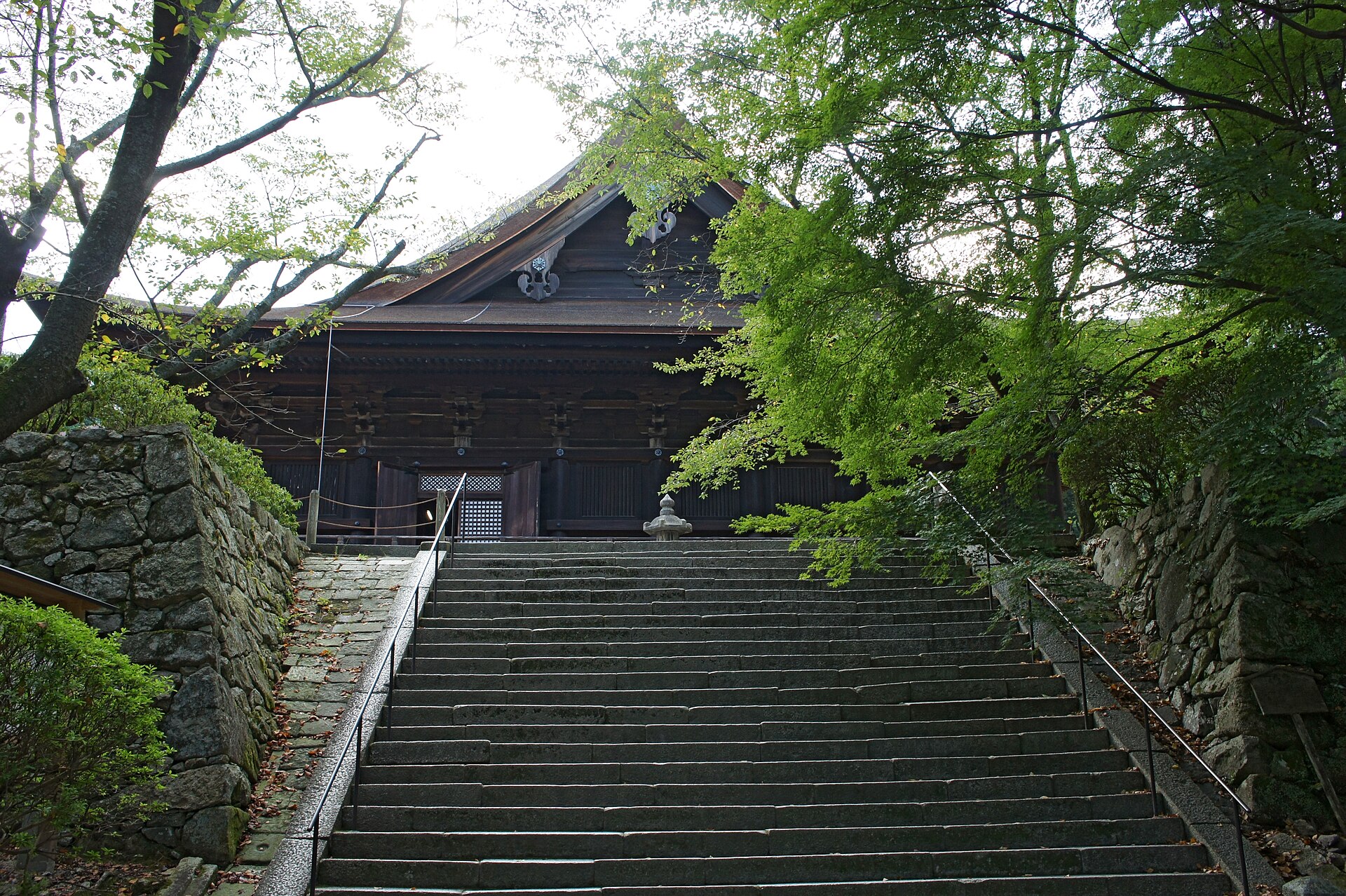
Shiga · Otsu / Lake BiwaNo.891★★Open in map →
Miidera Temple
The head temple of the Tendai Jimon school, laid out along a wooded slope above Lake Biwa in Otsu. National Treasure halls, a bell counted among Japan's finest, and the fourteenth station of the Saikoku pilgrimage, half an hour from Kyoto.
- FromKyoto Station
- ~40 minJR + Keihan, then a short walk
- Get off atMiidera Station (Keihan Ishiyama-Sakamoto Line)
- On foot
- Miidera Temple
The sweet spot
Miidera is well known within Japan and is a fixed point on the Saikoku pilgrimage, so it is not undiscovered. What thins the crowd is scale and distance: it sits one prefecture east of Kyoto, and the grounds are wide enough that visitors spread out instead of queueing.
Where it is
21 more notes in Shiga · open the map →What to look for — in walking order
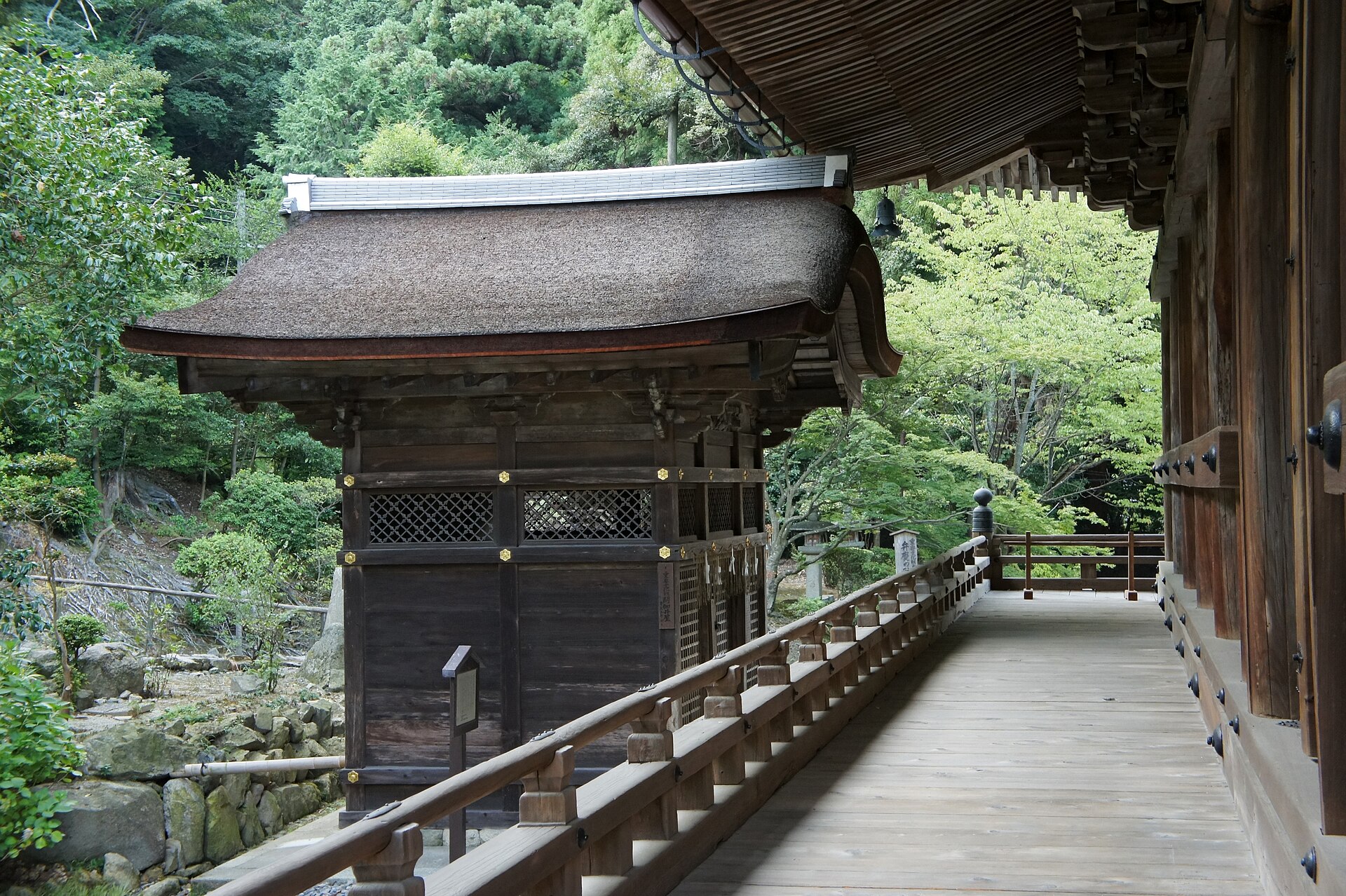
- Kondo, the Golden Hallthe main hall and a National Treasure, wide-eaved and dark-timbered at the centre of the grounds
- Akaiya well housethe covered spring beside the Golden Hall that gave the temple its everyday name
- Bell tower, the Evening Bell of Miithe bell counted among the three finest in Japan and named in the Eight Views of Omi
- Benkei's dragged bellan ancient bell, scarred and cracked, tied to the legend of the warrior monk hauling it up Mount Hiei
- Kannon-dothe pilgrimage hall at the southern, upper end of the grounds, with a terrace looking over the lake
How to actually get there
- Kyoto Station → Yamashina Station (JR Biwako Line), then cross to Keihan-Yamashina.
- Keihan-Yamashina → Biwako-Hamaotsu (Keihan Keishin Line), change to the Ishiyama-Sakamoto Line.
- Biwako-Hamaotsu → Miidera Station (one stop), then walk west along the canal to the main gate.
- Walk the slope from the Golden Hall up to the Kannon hall, then back down to the station.
- Kyoto Station to Otsu, then the Keihan local line
- From Kyoto Station take the JR Biwako Line to Yamashina, cross to Keihan-Yamashina and ride the Keihan Keishin Line to Biwako-Hamaotsu, then change to the Ishiyama-Sakamoto Line for one stop to Miidera Station. It is three short legs but all of them run frequently, and the last is a two-car tram-like train that runs down the middle of the street for part of the way.
- Return via Biwako-Hamaotsu or JR Otsu
- Retrace to Biwako-Hamaotsu and take the Keishin Line back to Yamashina for the JR to Kyoto. If you would rather ride JR the whole way, walk south-east from the temple to JR Otsu Station instead, which puts you on the Biwako Line direct to Kyoto and Osaka. Both options run late; the tram line is the one to check first if you leave after dark.
About the place
Miidera occupies the lower slopes of Mount Nagara on the western shore of Lake Biwa, close enough to Otsu's waterfront that the lake shows through the trees from the upper terraces. Its formal name is Nagarasan Onjoji, and it is the head temple of the Tendai Jimon school. The grounds are not a single courtyard but a chain of halls, gates and subsidiary shrines strung along a slope, so walking them is closer to a hillside circuit than a temple visit. Several of the buildings are National Treasures, and the Kannon hall at the southern end is the fourteenth station of the Saikoku Kannon pilgrimage, which keeps a steady traffic of pilgrims in white jackets moving through.
How to enjoy it
At the time of checking, the grounds open at 9:00 and close at 16:30, with the ticket desk shutting earlier, so an arrival before mid-afternoon leaves room to walk the whole slope rather than half of it. Go up to the Kannon hall first while your legs are fresh and come down through the Golden Hall, which reverses the usual flow and puts you against the pilgrim traffic. Late March into early April brings the cherry season and evening illumination.
Background & history
The temple traces its founding to 686, when Emperor Tenmu granted the name Onjoji and Otomo no Yotao established it in memory of his family. Two centuries later the priest Enchin rebuilt its fortunes and made it the base of what became the Jimon branch of Tendai Buddhism, in permanent rivalry with Enryakuji on Mount Hiei across the ridge. That rivalry cost Miidera dearly: the temple was burned down and rebuilt over and over through the medieval wars, and it acquired the nickname of the phoenix temple for coming back each time. The Golden Hall standing today is a Momoyama-period rebuilding.
Before you go
- Cash
- Admission is charged at the entrance. The posted rate has changed in recent years and the two official listings we checked disagreed, so read the board rather than trusting a figure in advance, and carry cash. The car park is paid and separate. Keihan and JR fares take IC cards such as ICOCA and Suica.
- Good to know
- The grounds are a slope with steps and gravel between halls, and there is a real climb up to the Kannon hall. Interiors and treasure buildings keep their own hours. Snow and heavy rain make the upper paths slow, and the terraces have no shelter.
- Another way
- From JR Otsu Station or JR Otsukyo Station the temple is a short taxi ride; a Keihan bus route also runs to a Miidera stop, which is the easier option with luggage or in bad weather.
- After you get off
- From Miidera Station, walk west along the canal for roughly seven to ten minutes to the temple's main gate, then continue uphill into the grounds.
Nearby notes
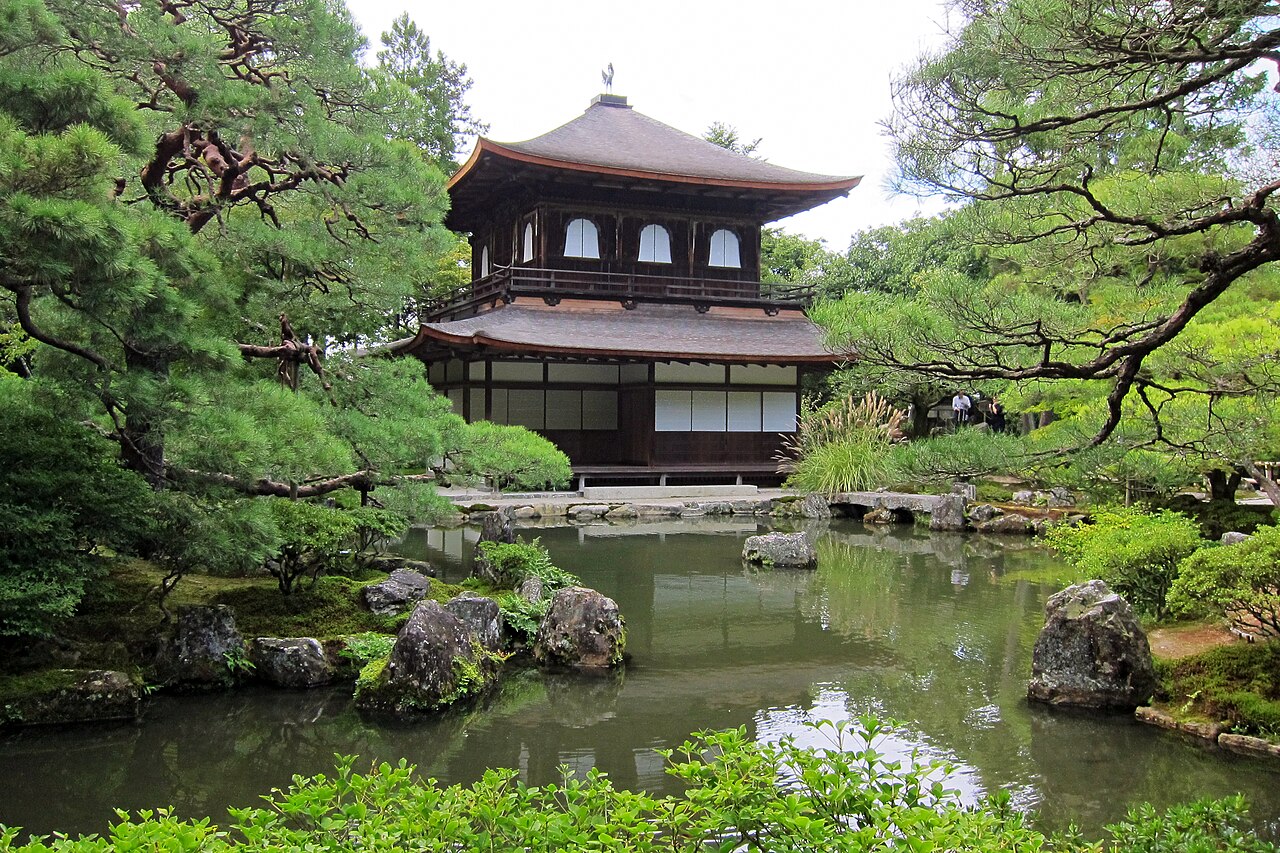 Oilstreet / CC BY 2.5
History · Kyoto★★
Ginkaku-ji
5.2 km · straight line
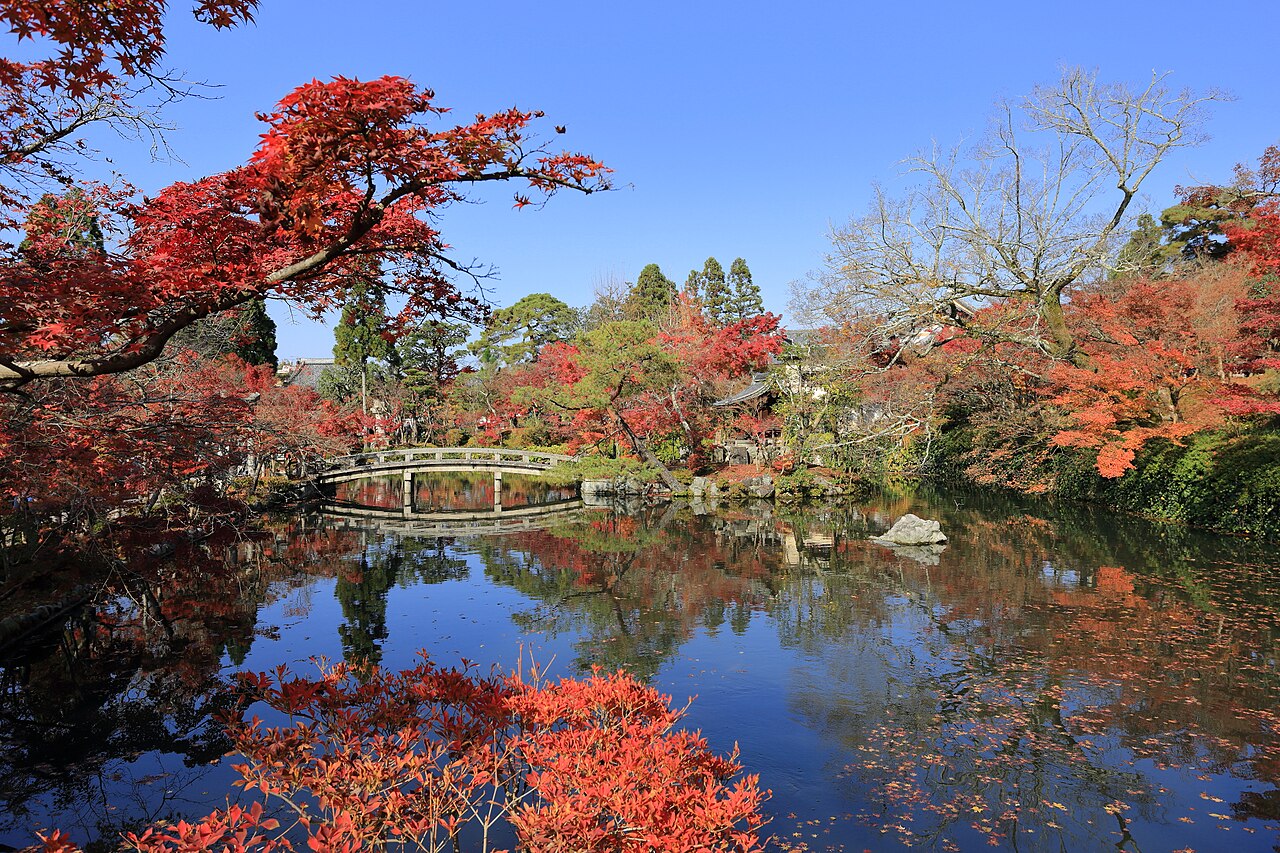 Martin Falbisoner / CC BY-SA 4.0
History · Kyoto★★
Eikando Zenrin-ji
5.3 km · straight line
 Naokijp / CC BY-SA 4.0
History · Kyoto★★★
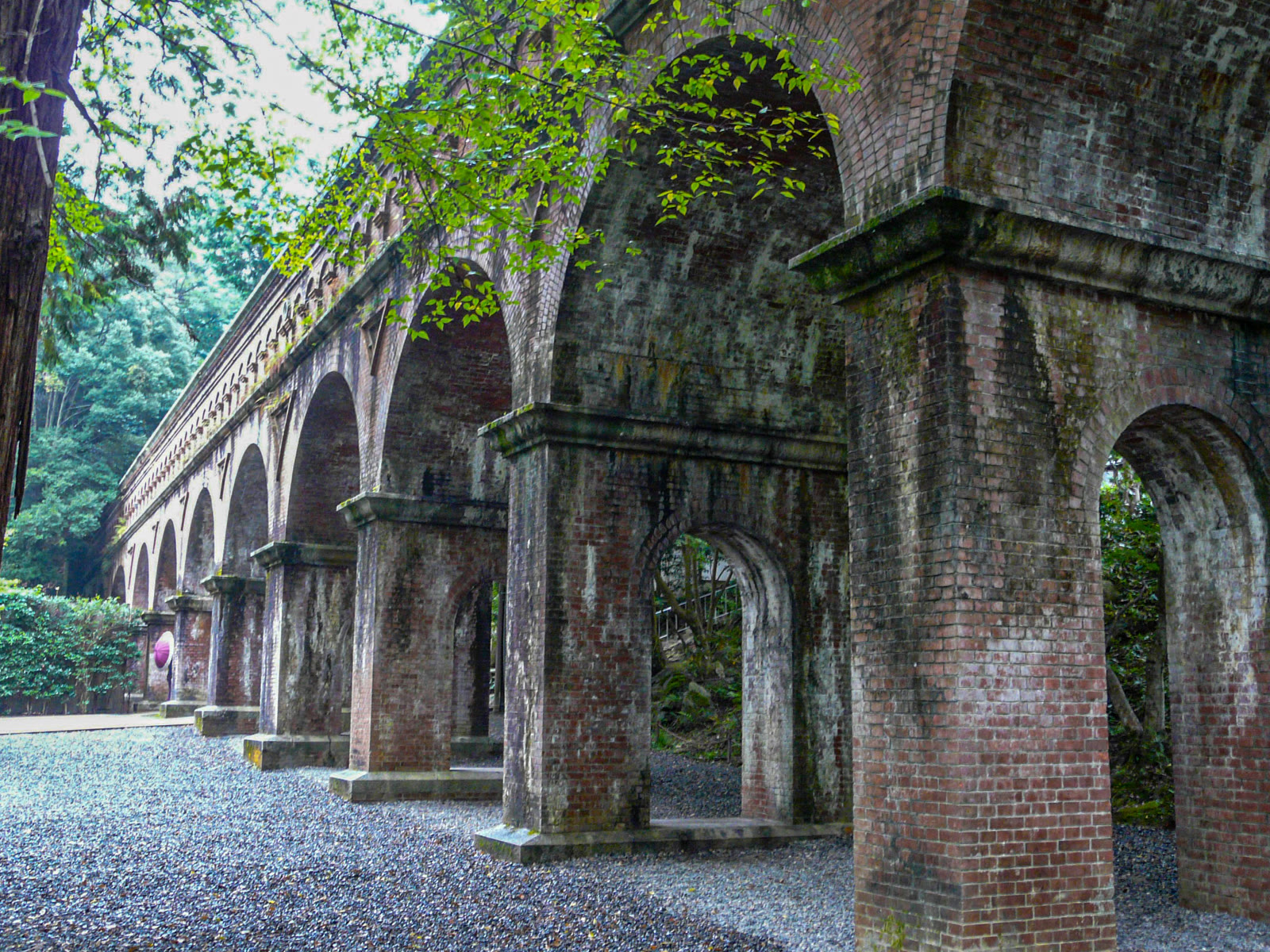
Nanzen-ji
5.3 km · straight line
 Kirin7739 / CC BY 4.0
History · Kyoto★★
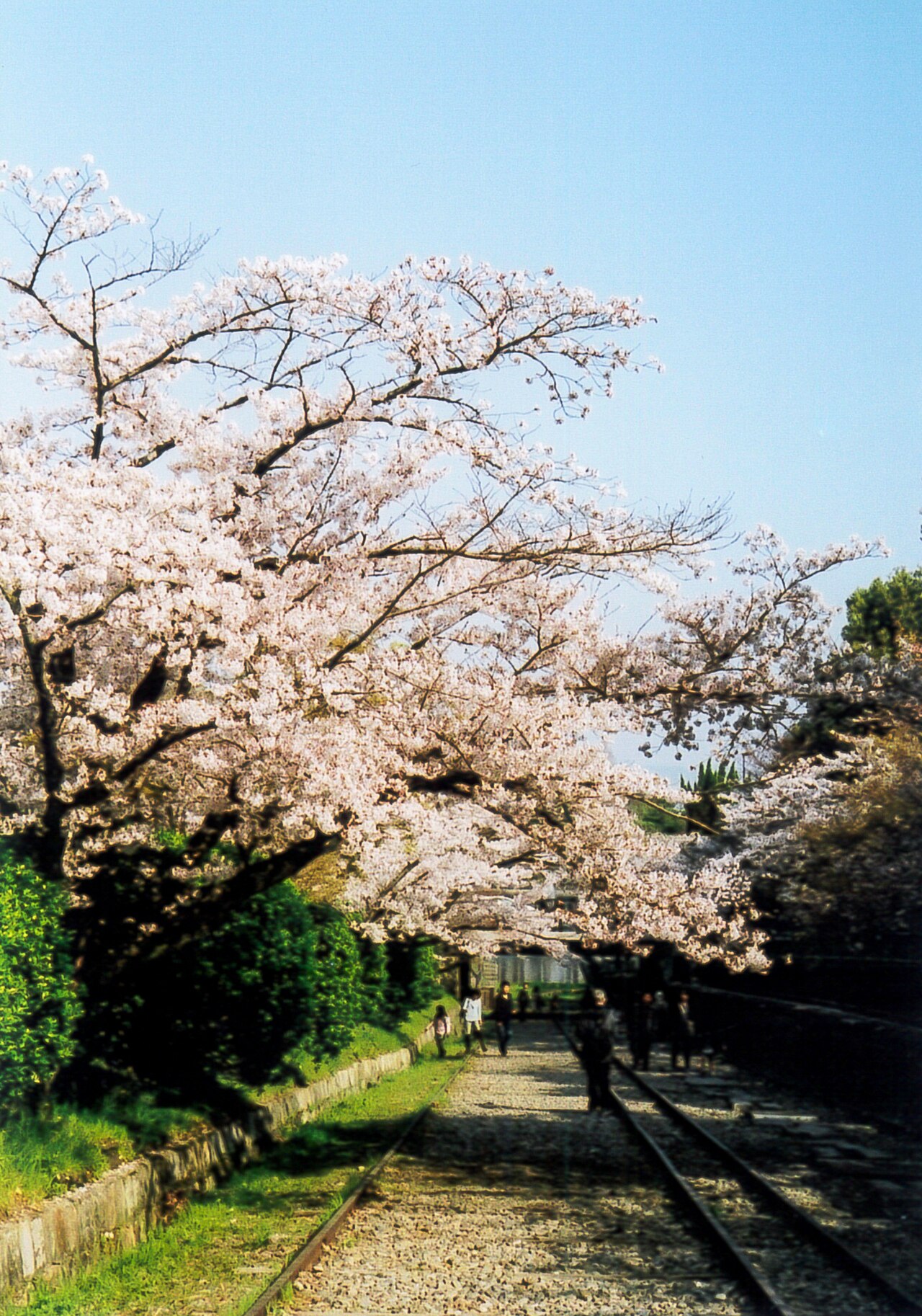
Keage Incline
5.9 km · straight line
Distances are straight lines on the map, not travel times.