Chiba · NaritaNo.169★★★Open in map →
Naritasan Shinshoji
— a thousand-year temple through an Edo-era town
The head temple of the Shingon Chizan school in Narita, Chiba, founded in 940. The approach — Naritasan Omotesando — is a kilometre of old merchant street leading from the station to the temple gate.
- FromTokyo Stn
- ~60-75 mintrain (frequent)
- Get off atJR Narita Station / Keisei Narita Station
- On foot
- Naritasan Shinshoji
Where it is
50 more notes in Chiba · open the map →What to look for — in walking order
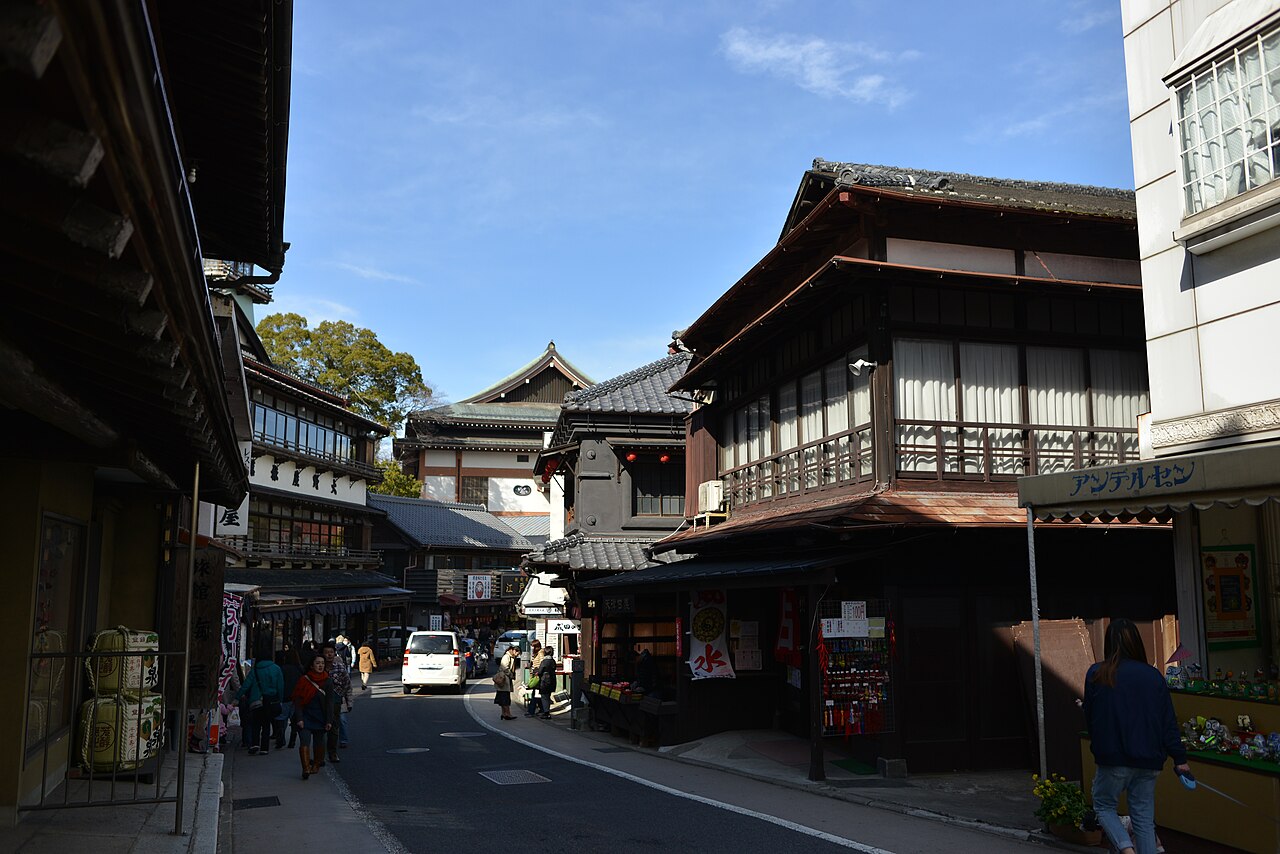
- Naritasan Omotesando (approach street)roughly 800 metres of old merchant streetscape from the station to the Somon gate, lined with eel restaurants and traditional shops
- Somon and Niomon gatesthe two ceremonial gates that mark the entry to the temple precinct, passed in succession on the way from the street to the Main Hall
- Great Main Hall (Daihondo)the central building housing the Fudo Myoo statue, where Goma fire rituals are held several times daily
- Three-storied pagoda and Great Pagoda of Peacetwo pagodas within the temple grounds; the Great Pagoda of Peace is a large Tahoto-style structure in the upper garden
How to actually get there
- Tokyo Station → JR Narita Station (JR Narita Line / Sobu-Yokosuka Line rapid, ~60–75 min).
- JR Narita Station → Naritasan Omotesando (walk uphill along the approach street, ~15 min).
- Omotesando → Somon gate → Niomon gate → Great Main Hall (walk through the gate sequence, ~5 min).
- JR Narita Line or Keisei Line from Tokyo
- From Tokyo Station, take the JR Narita Line (Sobu-Yokosuka Line rapid) to JR Narita Station (about 60–75 min; transfer at Chiba or take the Airport Narita special rapid). Alternatively, from Ueno Station take the Keisei Main Line to Keisei-Narita Station (about 70–80 min). JR and Keisei stations are about 200 m apart, both about a 15–20 min walk from the temple via the Omotesando approach.
- Return from JR Narita or Keisei-Narita
- Take the JR Narita Line back toward Tokyo Station, or the Keisei Line back toward Ueno. Both run frequently through the evening. Check the return platform when you arrive at the station; last trains to central Tokyo are in the evening.
About the place
Naritasan Shinshoji is a major Shingon Buddhist temple in the centre of Narita city, about an hour by train from central Tokyo — and very close to Narita Airport. The temple was founded in 940 by the priest Kancho Daisojo, who brought a statue of Fudo Myoo (Acala, the Unmovable Wisdom King) to Narita to help suppress a rebellion against the imperial court. After the revolt ended, the statue was said to have become too heavy to move — a divine sign that it should remain. The Omotesando approach street, connecting the two Narita stations to the temple gate, has been lined with merchant stalls and inns since the Edo period, when the temple became a popular pilgrimage destination from Edo (now Tokyo). Walking this street is still part of the arrival: eel restaurants, sembei shops and traditional storefronts line the route. Daily Goma fire rituals — a Shingon ceremony in which prayers are burned in a sacred fire — are held several times each day inside the temple.
How to enjoy it
Walk the Omotesando approach street from the station all the way to the temple, stopping at the eel restaurants for which Narita is known — the walk is part of the experience. Check the day's Goma fire ritual schedule on the temple's official website before going, then time your arrival to watch one inside the Main Hall. The temple grounds include several buildings and a garden, so allow at least an hour and a half after arriving at the gate.
Background & history
The temple was established in 940, making it over a thousand years old. It rose to national prominence during the Edo period (1603–1868) as one of the most visited pilgrimage sites accessible from the capital. Today it is the head temple of the Chisan school of Shingon Buddhism and draws among the largest New Year's pilgrimages in Japan — typically ranking in the top three by visitor count during the first three days of January. The current Great Main Hall (Daihondo) was completed in 1968 and enshrines the Fudo Myoo statue that has been kept at the temple since its founding.
Before you go
- Cash
- Entry to the temple grounds is free. IC cards (Suica / PASMO) are accepted on JR; Keisei also accepts IC cards. Some smaller shops on the Omotesando street are cash-only.
- Good to know
- The temple grounds are open daily. The Great Main Hall opens at 6:00 (inner precinct closes at 17:00). Goma ritual times vary by day — check the temple's official website. The temple is extremely crowded during the first three days of January (Hatsumode New Year's pilgrimages).
- Another way
- From Narita Airport (Terminal 2/3), the JR Narita Line also stops at JR Narita Station in about 10 minutes — making it a practical stop between flights for travellers in transit.
- After you get off
- From JR Narita Station or Keisei-Narita Station, follow the Omotesando (approach street) signs; the route leads directly uphill to the temple gate, about 800 m and 15–20 min on foot.
Nearby notes
 Higa4 / CC0
History · Chiba★
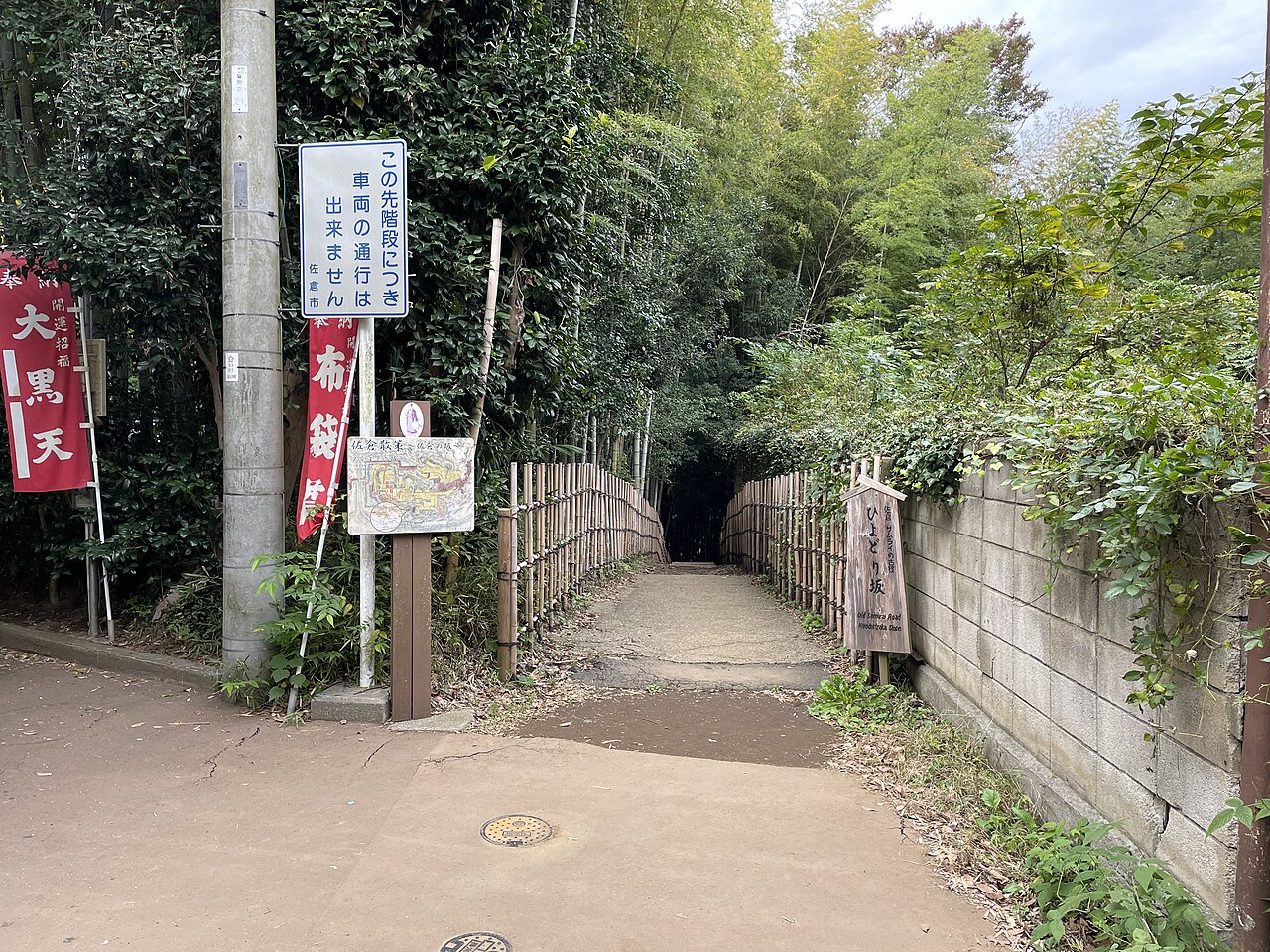
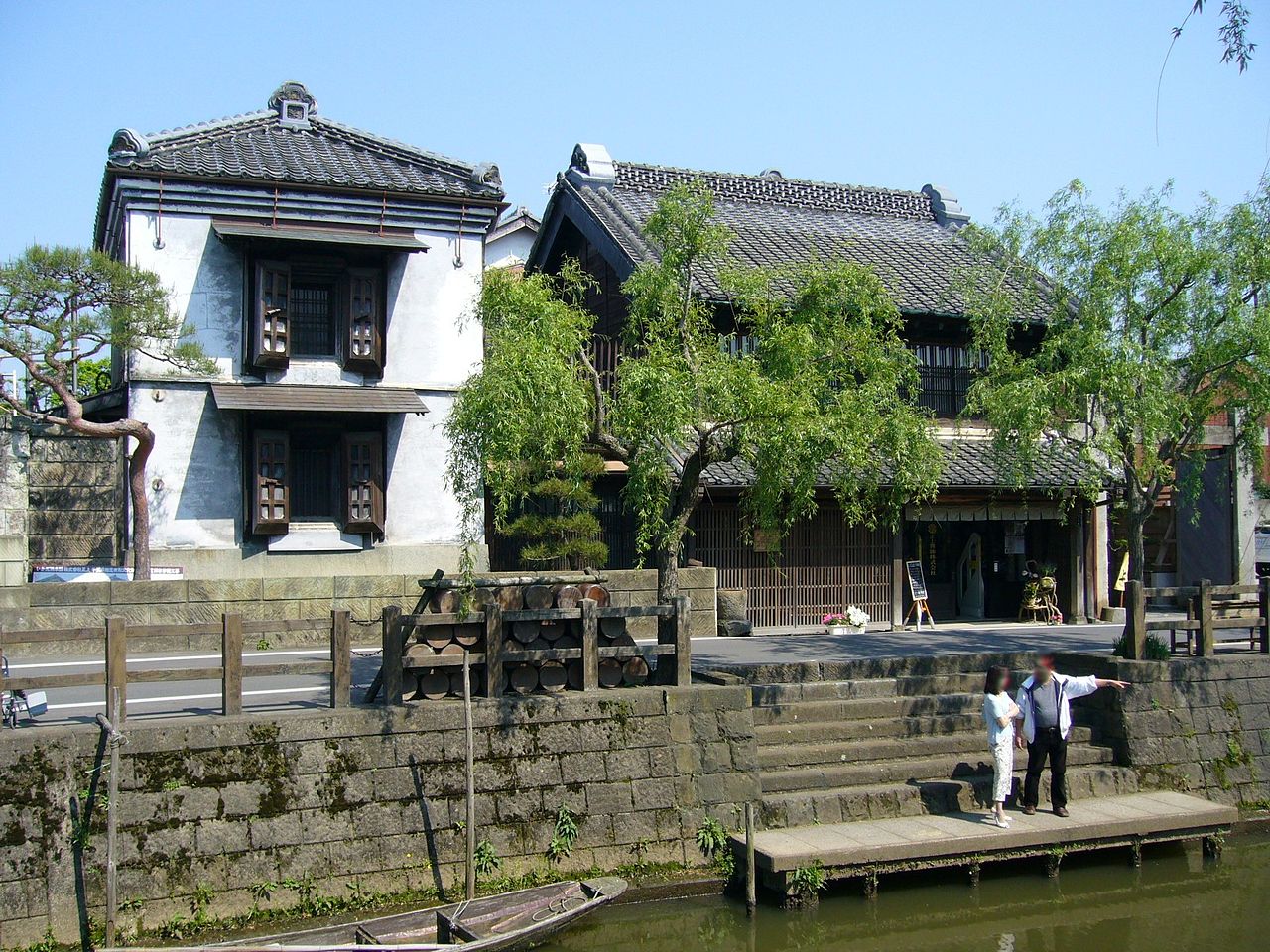
Hiyodori-zaka
11.6 km · straight line
 Unaaari / CC BY-SA 3.0
Food · Chiba★
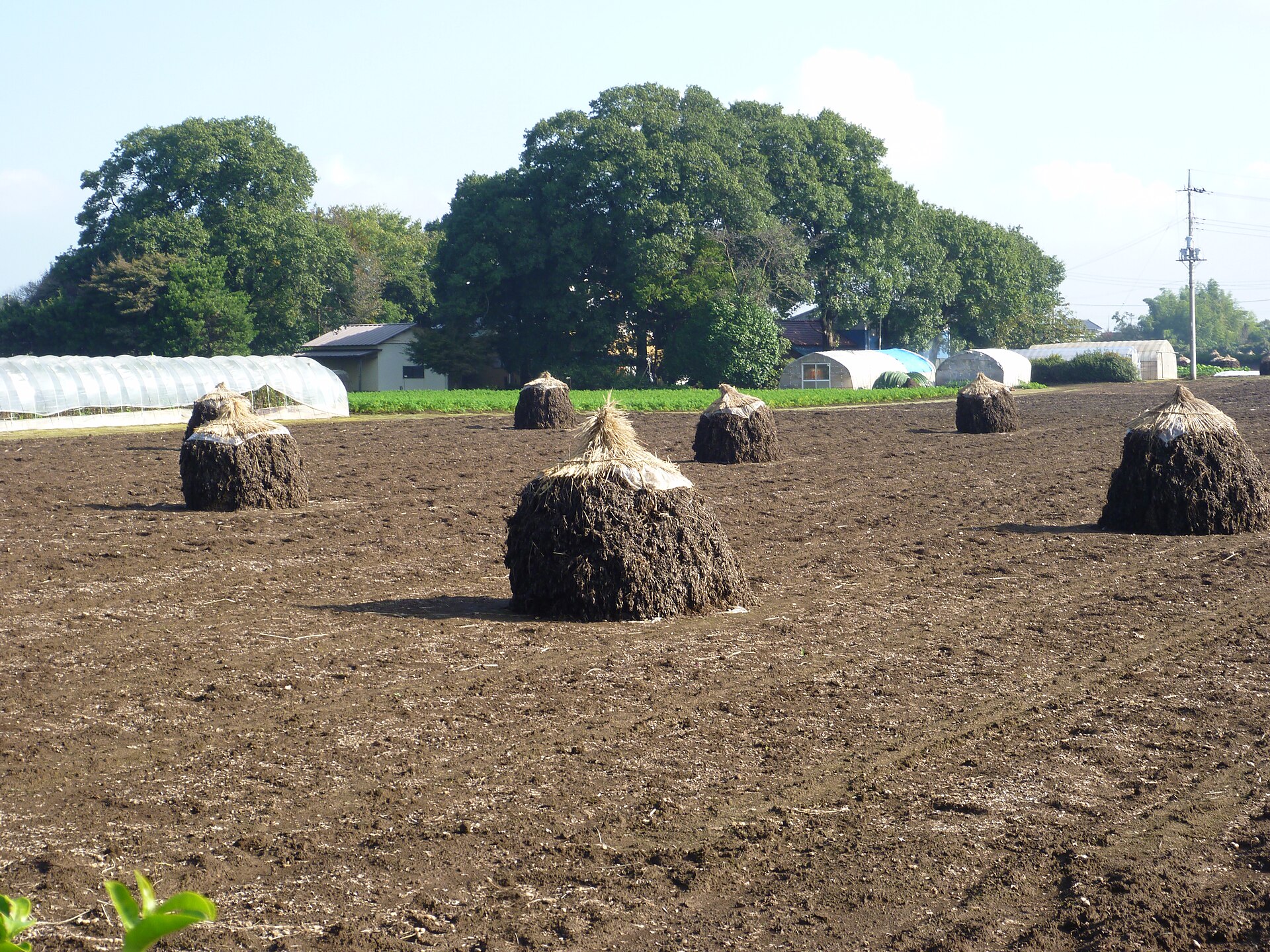
Yachimata Peanuts
13.7 km · straight line
 Katorisi / CC BY 2.5
Local life · Chiba★★
Sawara
19.8 km · straight line
 Zairon / CC BY-SA 4.0
History · Chiba★★
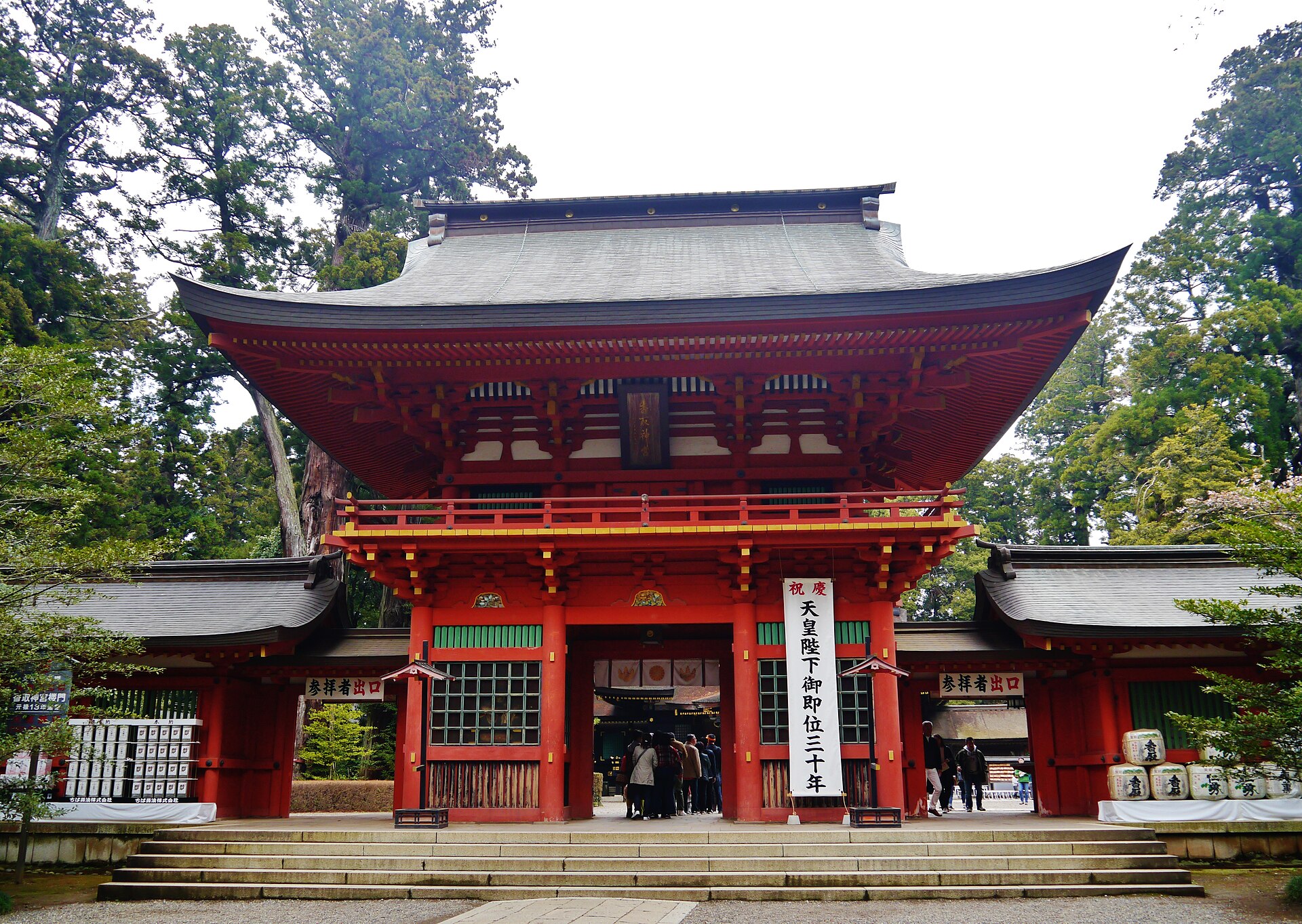
Katori Jingu Shrine
22.0 km · straight line
Distances are straight lines on the map, not travel times.