Chiba · KatoriNo.946★★Open in map →
Katori Jingu Shrine
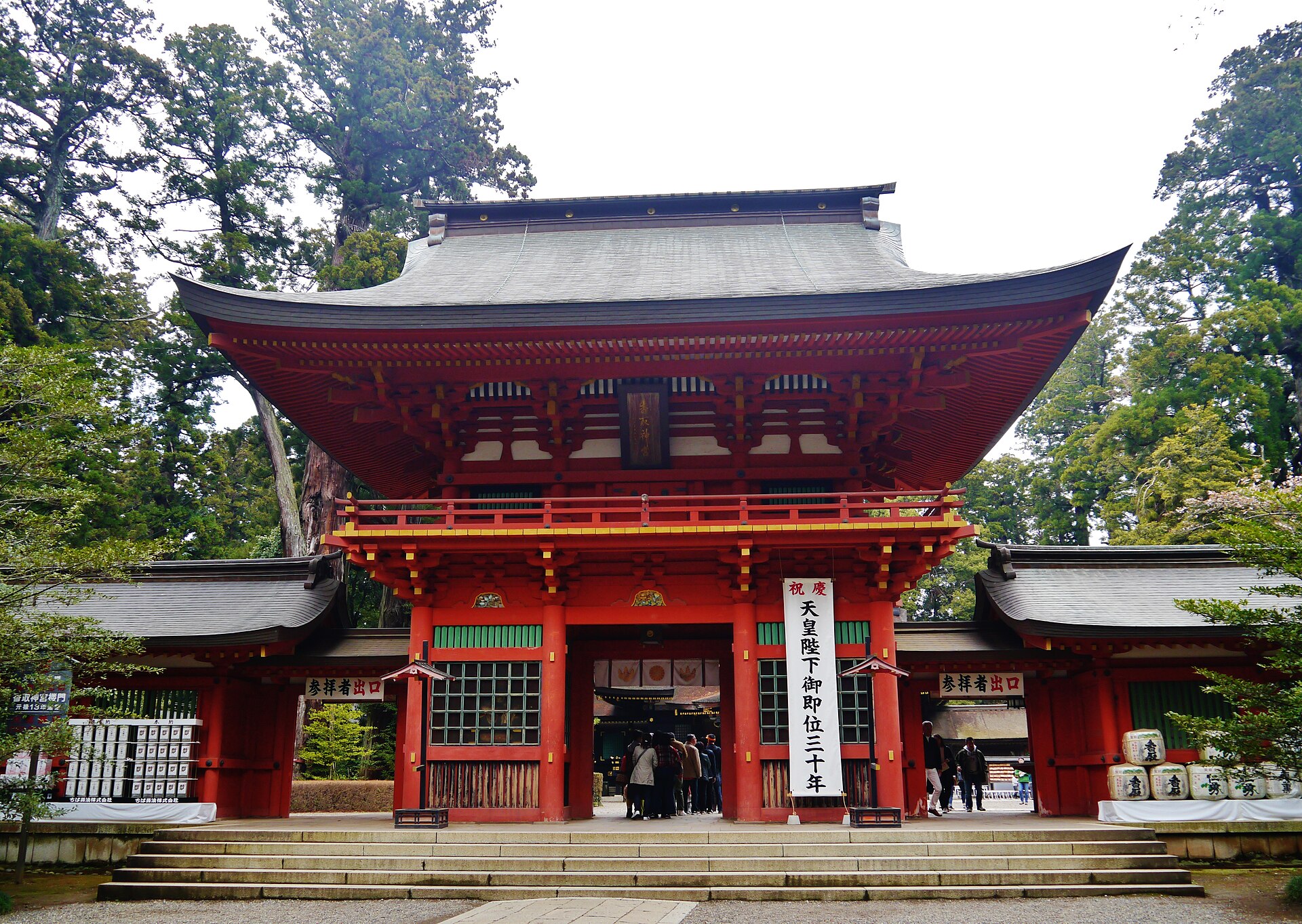
The head shrine of the Katori shrines, on wooded high ground south of the Tone river in Chiba. A cedar-lined gravel approach climbs to a vermilion two-storey gate and a black-lacquered hall, both raised by the Tokugawa shogunate.
- FromTokyo Stn
- ~2 hrJR + taxi
- Get off atSawara Station (JR Narita Line)
- From there
- Katori Jingu Shrine
The sweet spot
It is a major shrine, not a secret one, but it is awkward to reach on foot: the nearest station is unstaffed and a walk away, and most people who come to this corner of Chiba stop at the merchant town of Sawara instead. The approach is quieter than the shrine's rank would suggest.
Where it is
50 more notes in Chiba · open the map →What to look for — in walking order
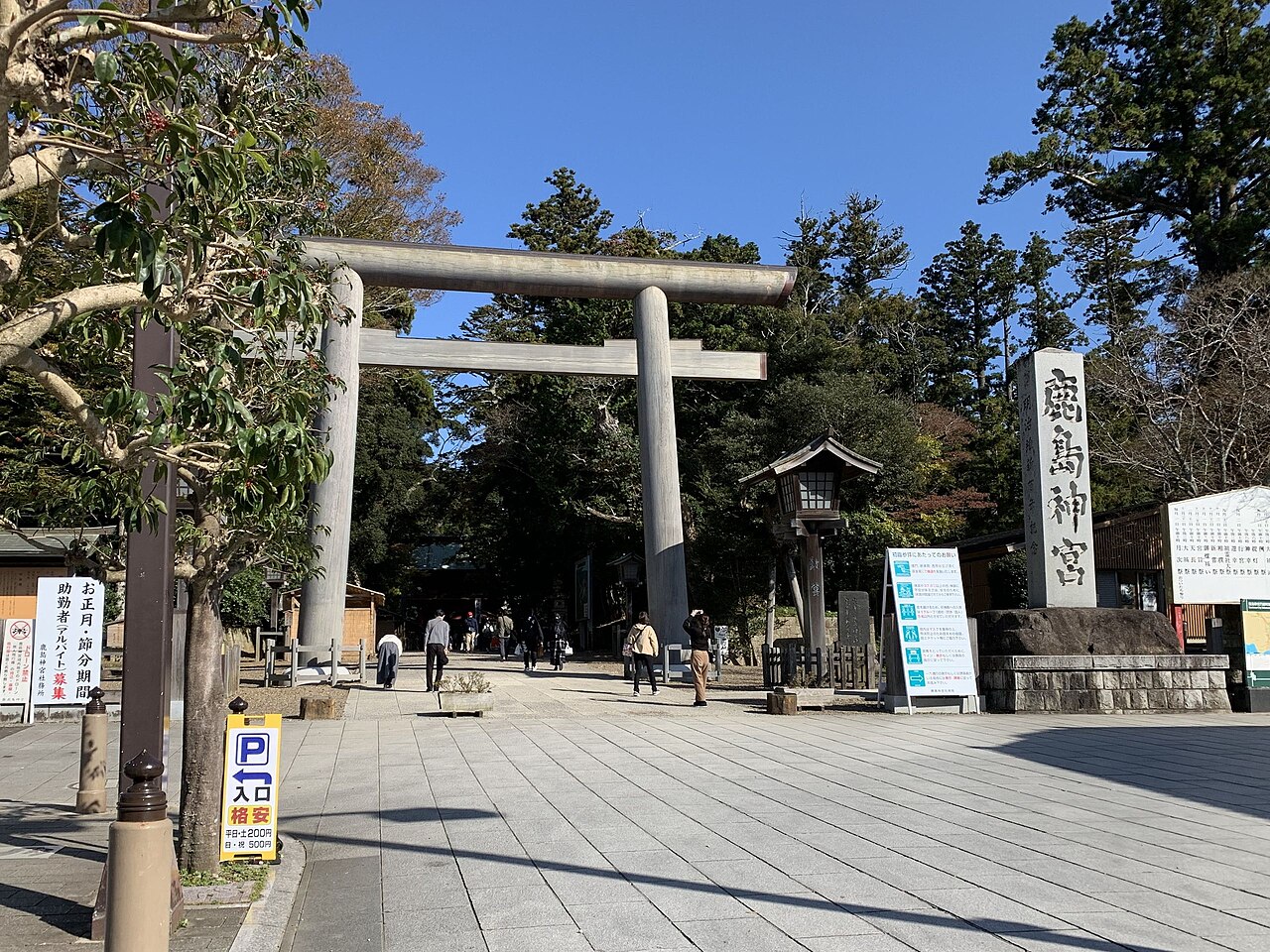
- The vermilion torii on the main approachthe shrine's front door, rebuilt in new timber and lacquered fresh
- The cedar approachgravel underfoot, old cedars on both sides, cherry and maple planted between them
- The two-storey gatean Important Cultural Property of the shogunate; the plaque above was written by Admiral Togo Heihachiro
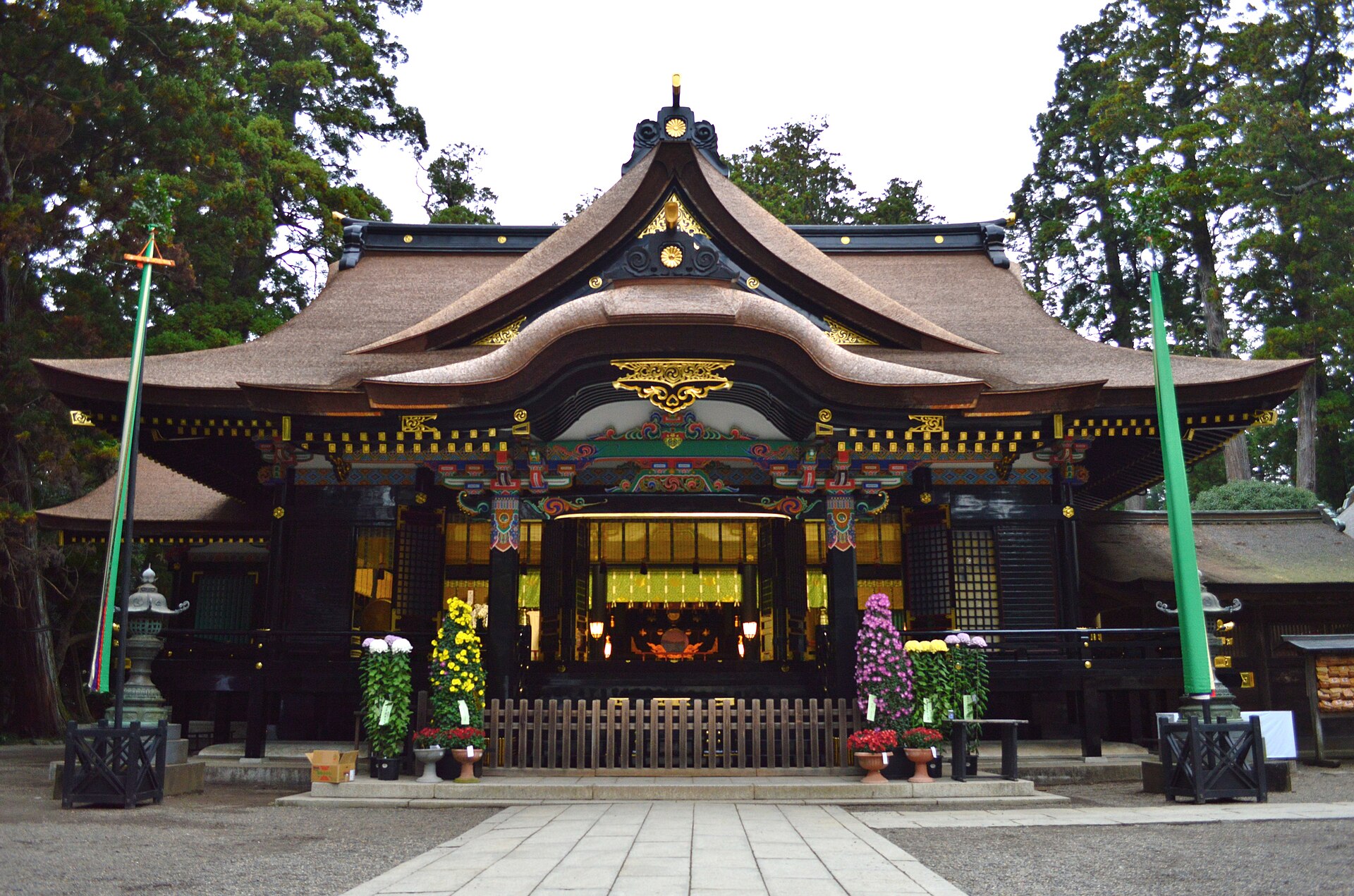
- The worship hall and main hallblack lacquer instead of red, with gold and coloured carving worked along the beams
- The Kaname-ishi stonea small convex stone west of the precinct, said to pin down the catfish that causes earthquakes
How to actually get there
- Tokyo Station → Sawara Station (JR toward Narita, then the Narita Line).
- Sawara Station → Katori Jingu (taxi, or the Katori city circular bus).
- Torii at the foot → cedar approach → two-storey gate → worship hall (walk, uphill).
- JR to Sawara, then a taxi
- Tokyo Station to Narita on the JR lines toward Narita, then a change to the Narita Line for Sawara. From the station forecourt a taxi reaches the shrine in about ten minutes. A Katori city circular bus also runs from Sawara Station to the shrine.
- Return to Sawara
- The same taxi or the circular bus takes you back to Sawara Station for the trains toward Tokyo. Arrange the return before you walk into the precinct rather than afterwards, and read the evening departures at Sawara Station when you first arrive.
About the place
Katori Jingu is the head shrine of roughly four hundred Katori shrines, most of them across the Kanto region. It enshrines Futsunushi no Okami, a deity of the sword, and together with Kashima Jingu and Ikisu Shrine it forms the three shrines of the eastern provinces. The precinct sits on wooded high ground south of the Tone river. From the vermilion torii at the bottom, a gravel approach climbs between old cedars to a two-storey gate. The buildings behind that gate are lacquered black rather than red, an unusual choice that makes the gold and the coloured carving on the beams read louder than they otherwise would.
How to enjoy it
Walk up rather than down: start at the torii at the foot and climb through the cedars, so the gate arrives at the top of the approach rather than behind you. The precinct itself can be walked freely, while the amulet counter and the prayer office keep set hours, so deal with those first. The old merchant town of Sawara is close enough to pair with the shrine for a half day.
Background & history
The shrine is old enough that its founding is given in legend rather than in record. In the Engishiki register of official shrines, compiled in the Heian period, only three were entered under the title jingu: Ise, Kashima and Katori. The present main hall and gate date from 1700, built by the Tokugawa shogunate, and both are Important Cultural Properties. The shrine also holds a Tang-dynasty bronze mirror designated a National Treasure. The vermilion torii on the main approach is far younger: the one it replaced was raised in 1926, and the new gate went up in 2025.
Before you go
- Cash
- There is no admission to the precinct. The treasure hall that holds the National Treasure mirror is closed for renovation with no reopening date announced, so the collection cannot be seen at present. Amulets and prayer bookings are handled at the counter inside the gate.
- Good to know
- Restoration has been running in the precinct for several years — the worship hall has been relacquered and the main torii replaced — and small areas can be fenced off while work continues. The approach is gravel and it climbs.
- Another way
- A highway bus from Tokyo Station on the Sawara and Hokota route stops at Katori Jingu itself, a few minutes from the torii, but it runs only a few times a day. By car the shrine is just off the Sawara-Katori interchange on the Higashi-Kanto Expressway.
- After you get off
- From Sawara Station a taxi is the quick way in. If you would rather walk, take the train one stop further to Katori, an unstaffed station, and walk about two kilometres, roughly thirty minutes, to the foot of the approach.
Nearby notes
 Katorisi / CC BY 2.5
Local life · Chiba★★
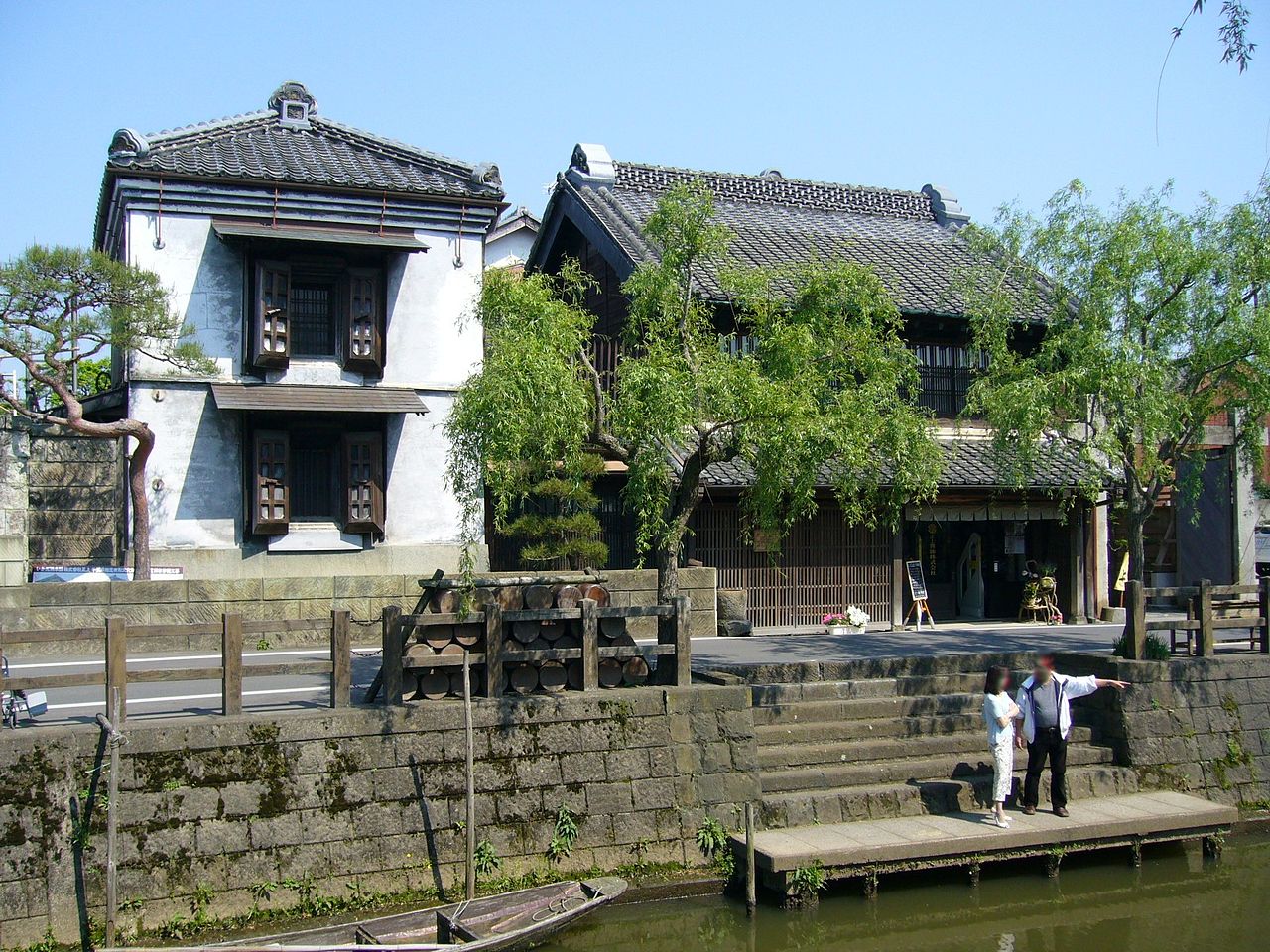
Sawara
2.8 km · straight line
 アリオト / CC BY-SA 4.0
Nature · Chiba★
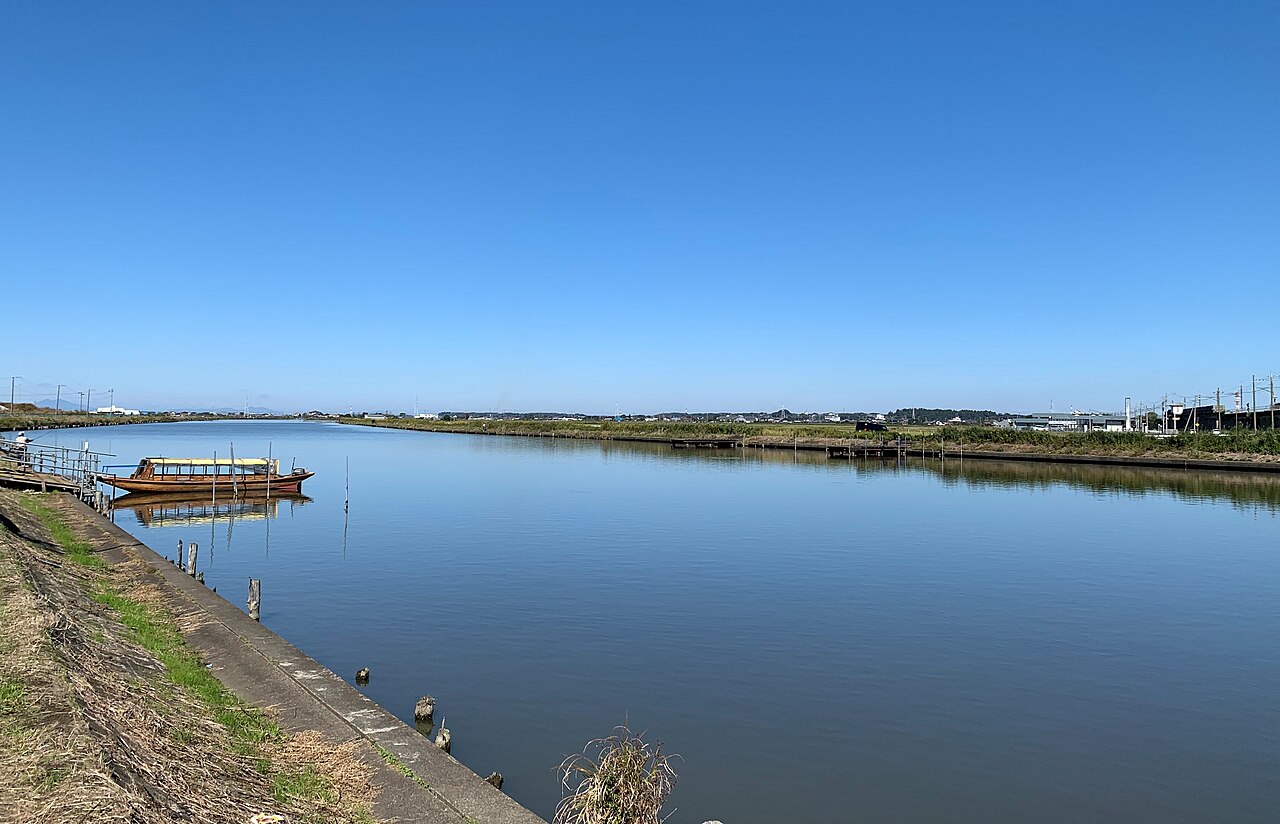
Katozu Twelve Bridges
4.7 km · straight line
 Kzaral / CC BY 2.0
History · Ibaraki★
Kashima Jingu
13.2 km · straight line
 Guilhem Vellut from Annecy, France / CC BY 2.0
History · Chiba★★★
Naritasan Shinshoji
22.0 km · straight line
Distances are straight lines on the map, not travel times.