Ibaraki southeast · KashimaNo.293★Open in map →
Kashima Jingu
— the sword god's shrine
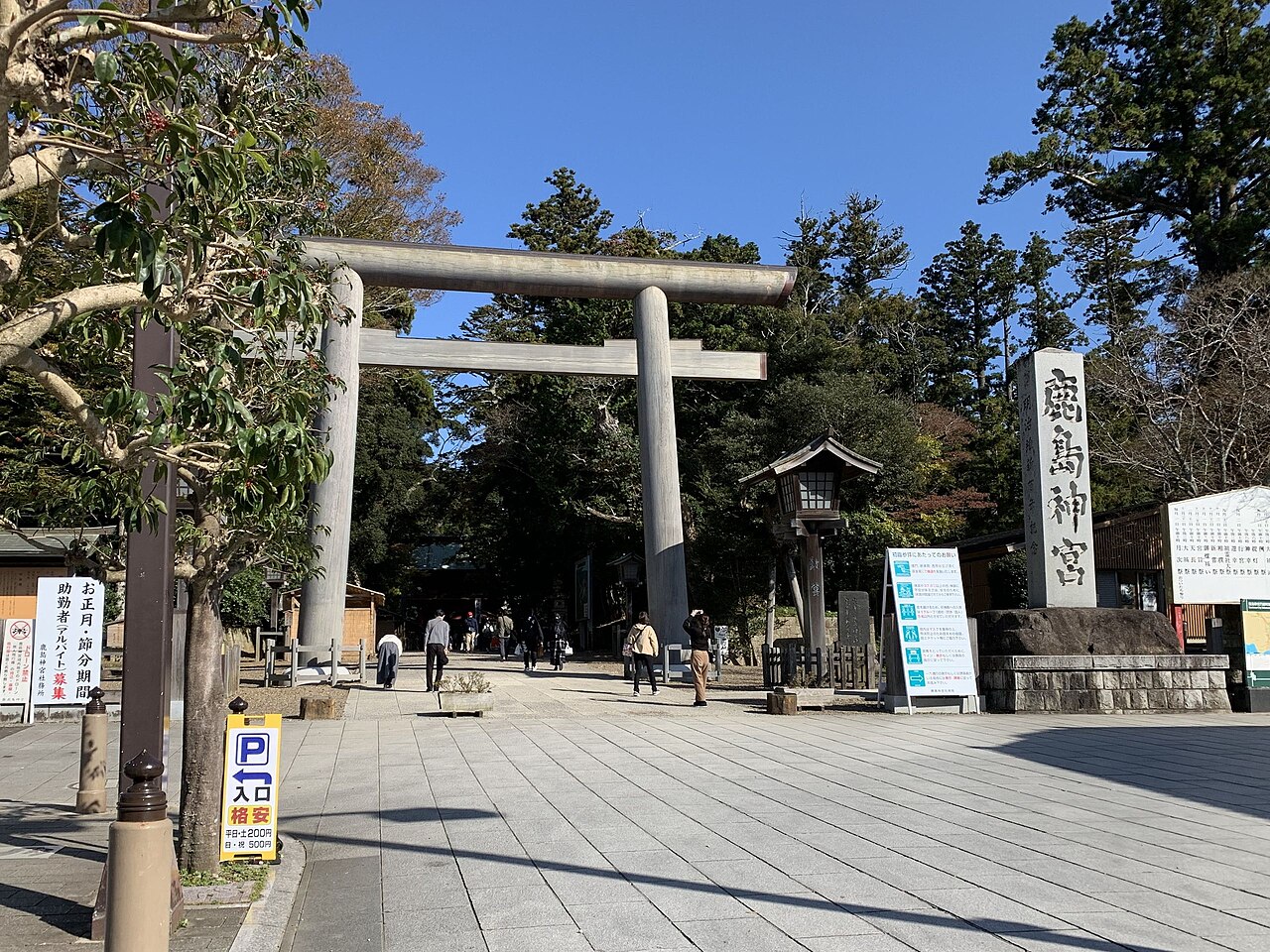
Head shrine of about 600 Kashima shrines, dedicated to the sword deity Takemikazuchi. Halls built by three generations of Tokugawa stand inside a protected forest of over 800 plant species, two hours from Tokyo Station.
- FromTokyo Stn
- ~2 hhighway bus (direct)
- Get off atKashima Jingu bus stop / Kashima-Jingu Stn
- From there
- Kashima Jingu
The sweet spot
Kashima sits at the far end of its rail line, past the point where Tokyo day-trippers usually turn round, and the town is better known abroad for its football club than for the shrine. Even domestically it is overshadowed by Meiji Jingu and Nikko, so a shrine of this rank stays surprisingly quiet on an ordinary morning.
Where it is
13 more notes in Ibaraki · open the map →What to look for
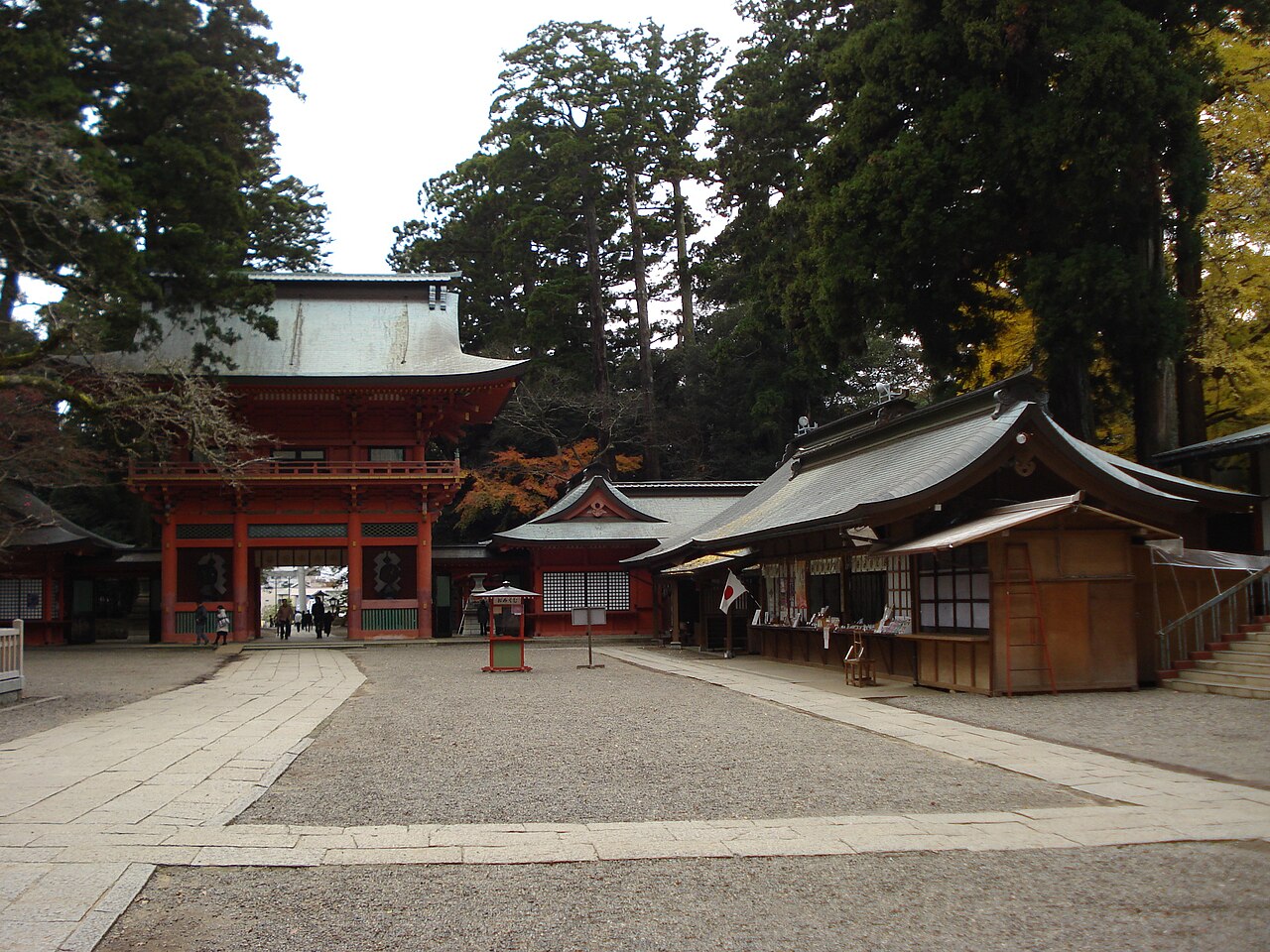
- The vermilion gate (romon)Built in 1634 by Tokugawa Yorifusa of Mito and counted among Japan's three great shrine gates.
- The main sanctuaryDonated by the second shogun Tokugawa Hidetada in 1619 and still the ritual centre of the shrine.
- The cedar avenue and inner shrineA straight forest path leading back to the Okumiya, the hall Ieyasu paid for in 1605.
- Kaname-ishiThe earthquake stone, whose small visible tip is said to be the top of something far larger underground.
- Mitarashi PondA clear purification pond fed by roughly 400,000 litres of spring water a day.
- The deer parkDeer kept as the deity's messengers, on the inner approach — the same lineage as Nara's.
How to actually get there
- Tokyo Stn (Yaesu side) → Kashima Jingu (highway bus, ~2 h)
- Bus stop → the vermilion gate (walk, ~5 min)
- Gate → inner shrine, kaname-ishi and Mitarashi Pond (cedar avenue on foot, ~15 min each way)
- Direct highway bus from Tokyo Stn
- Tokyo Stn (Yaesu side) →(Kashima-bound highway bus, ~2 h)→ Kashima Jingu →(walk, ~5 min)→ the vermilion gate. The bus is the fastest option and runs through the day. By rail it is about 2 h 30 min from Tokyo Station to Kashima-Jingu Station, then a walk of about 10 minutes uphill through the town.
- Same stop, or the station
- Buses back to Tokyo leave from the same roadside stop. The bus and the train run to different last departures, so check the posted times when you arrive and decide which you are aiming for before you start walking the grounds.
About the place
Kashima Jingu stands on the neck of land between Lake Kitaura and the Pacific, and by tradition dates to the first year of Emperor Jimmu — around 660 BC. It appears in both the Kojiki and the Nihon Shoki. Its deity is Takemikazuchi-no-Okami, a god of the sword and of decisive force, and about 600 Kashima shrines across Japan look to this one as their head shrine. The Tokugawa took it seriously: Ieyasu paid for a hall in 1605, his son Hidetada built the present main sanctuary in 1619, and Yorifusa, first lord of Mito, added the great vermilion gate in 1634 — a gate counted among the three finest shrine gates in the country. Behind the buildings the approach turns into forest. The shrine's woodland is a prefecturally designated natural monument covering some 210,000 tsubo and holding more than 800 plant species, and the straight cedar avenue running back from the gate to the inner shrine is the part most visitors remember.
How to enjoy it
Come early. The grounds open onto forest rather than city, and the cedar avenue is at its best before the light gets high and the coach parties reach the gate. Walk the full length to the inner shrine, then branch left to the kaname-ishi and right down the steps to Mitarashi Pond; the whole circuit takes about an hour at an unhurried pace. The approach street outside the gate has a handful of old shops and teahouses for afterwards.
Background & history
Takemikazuchi is the deity sent, in the myths, to secure the handing over of the land — a god of decisive force, which is why warrior houses patronised Kashima for centuries. When his spirit was divided and carried to Kasuga Taisha in Nara, tradition holds that it travelled on the back of a deer; the deer of Nara are said to descend from that journey, and Kashima keeps its own herd in a deer park along the inner approach. The Tokugawa rebuilding left the shrine as it stands: Hidetada's main sanctuary of 1619 and Yorifusa's gate of 1634, with Ieyasu's earlier hall of 1605 moved back down the avenue to serve as the inner shrine. The strangest thing on the grounds is underground — the kaname-ishi, a stone said to pin down the giant catfish that causes earthquakes, of which only a rounded tip shows above the soil.
Before you go
- Cash
- Entry to the grounds is free. Small separate fees apply at the treasure hall and the deer park, and the shops along the approach street are largely cash.
- Good to know
- This is an active shrine. Bow at the torii on the way in, and keep to the sides rather than the middle of the main approach — the centre line is reserved for the deity.
- Another way
- From Mito, the Kashima Rinkai Railway reaches Kashima-Jingu in about 1 h 20 min, which makes the shrine easy to pair with a day in northern Ibaraki.
- After you get off
- From Kashima-Jingu Station the shrine is about a 10-minute walk uphill through the town centre. The highway bus sets you down closer, a few minutes from the gate.
Nearby notes
 アリオト / CC BY-SA 4.0
Nature · Chiba★
Katozu Twelve Bridges
10.9 km · straight line
 Zairon / CC BY-SA 4.0
History · Chiba★★
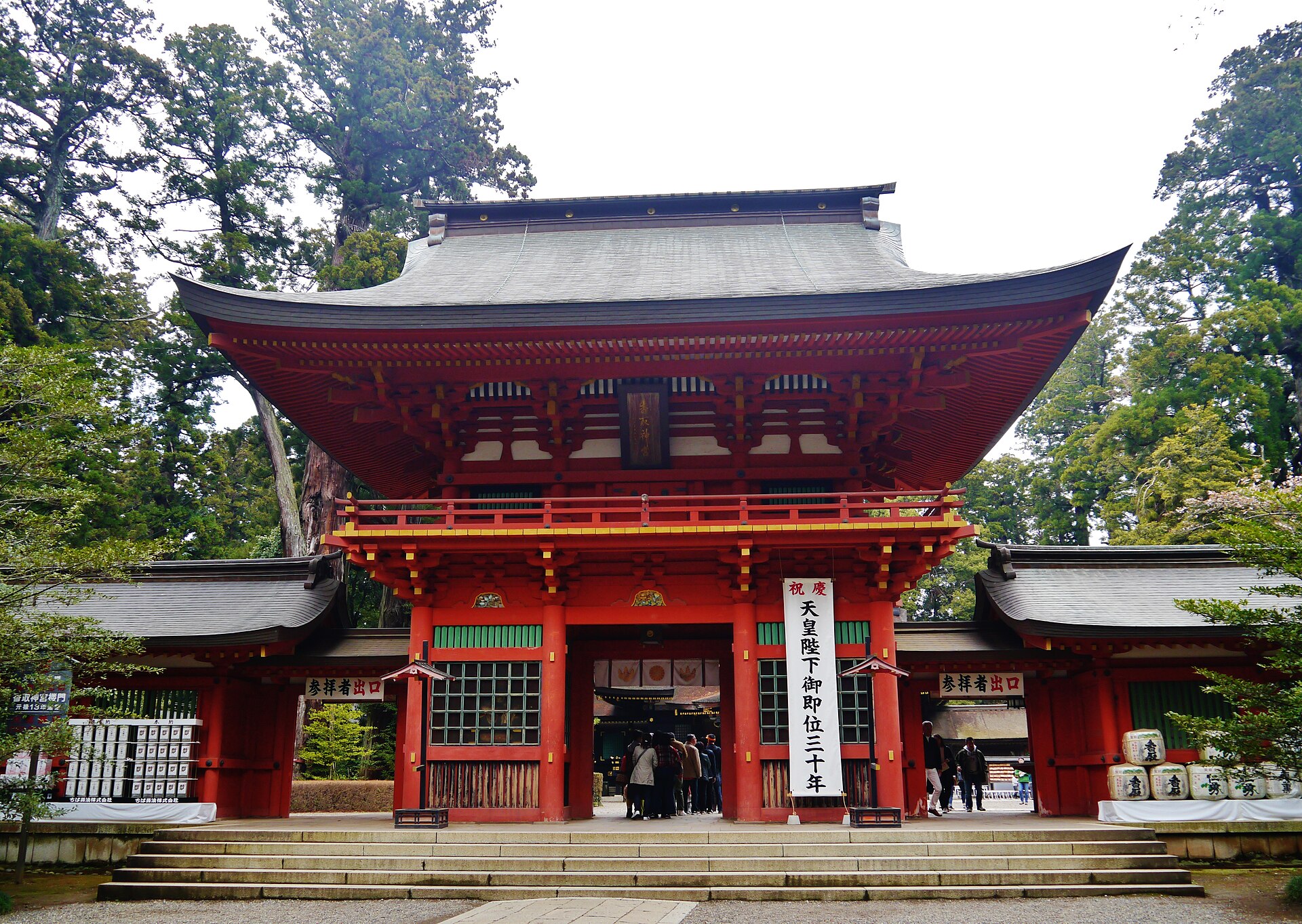
Katori Jingu Shrine
13.2 km · straight line
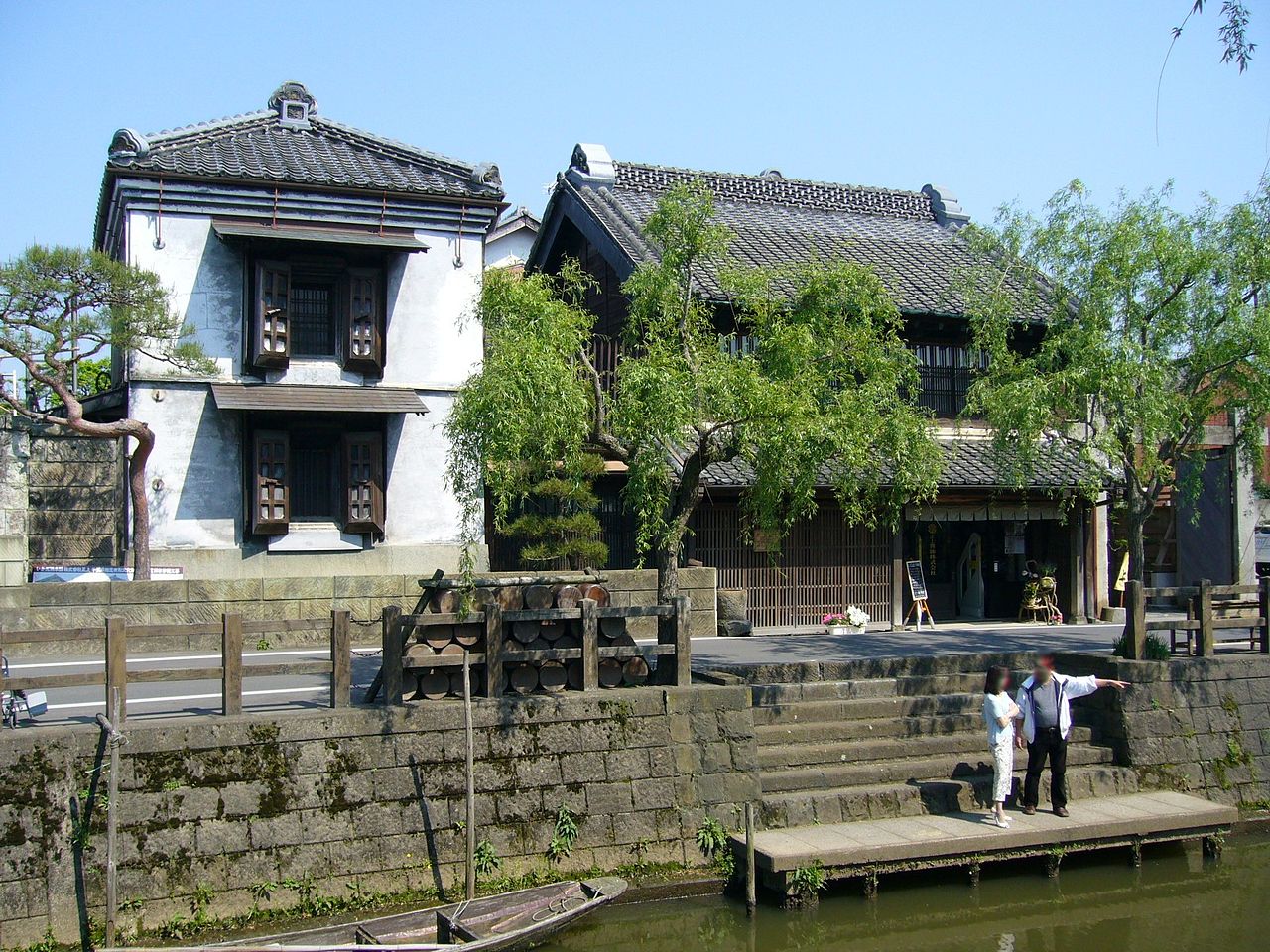 Katorisi / CC BY 2.5
Local life · Chiba★★
Sawara
15.2 km · straight line
Distances are straight lines on the map, not travel times.