Yamanashi east · TsuruNo.116★Open in map →
Tokaichiba-Natsugari Springs & Taro-Jiro Falls
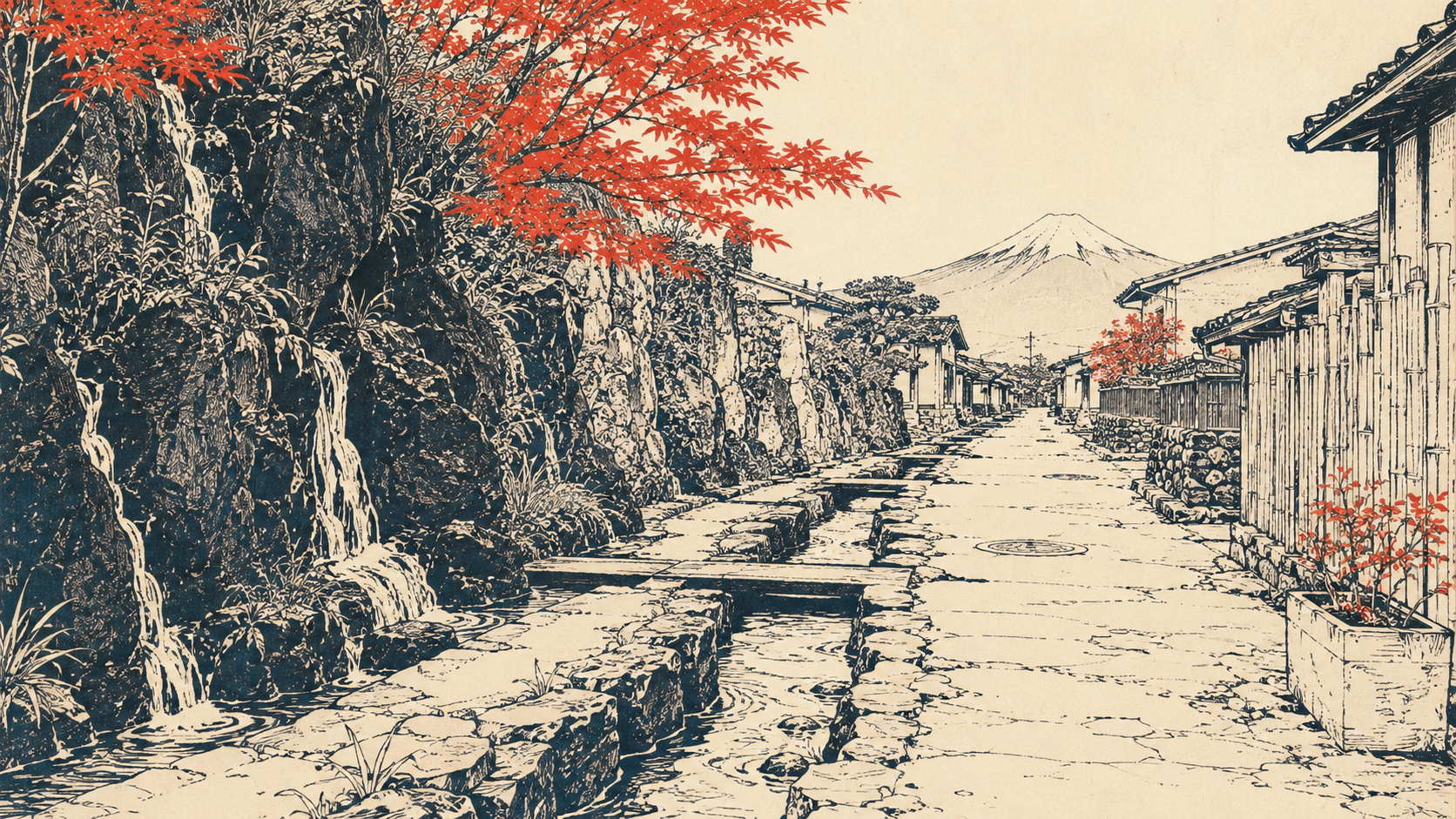
Cold, clear groundwater from Mt. Fuji rises at a steady 12°C in the lanes of Tsuru City, feeding wasabi beds, watercress channels and a pair of cliff-side waterfalls.
- FromShinjuku Stn
- ~2 hrtrain (local ×1-2/hr)
- Get off atTokaichiba Stn (Fuji Kyuko Line)
- On foot
- Tokaichiba-Natsugari Springs & Taro-Jiro Falls
The sweet spot
It stays quiet because it is a working village waterway, not a ticketed attraction: there is little information in English, no gate or signposted route, and the springs are spread through back lanes you find only by walking from one station to the next.
Where it is
18 more notes in Yamanashi · open the map →What to look for — in walking order
- Village lanes to the springsa short walk from Tokaichiba Station through working farm lanes where the springs emerge
- Wasabi and watercress bedsthe spring water grows wasabi, watercress and other water-greens alongside the channels
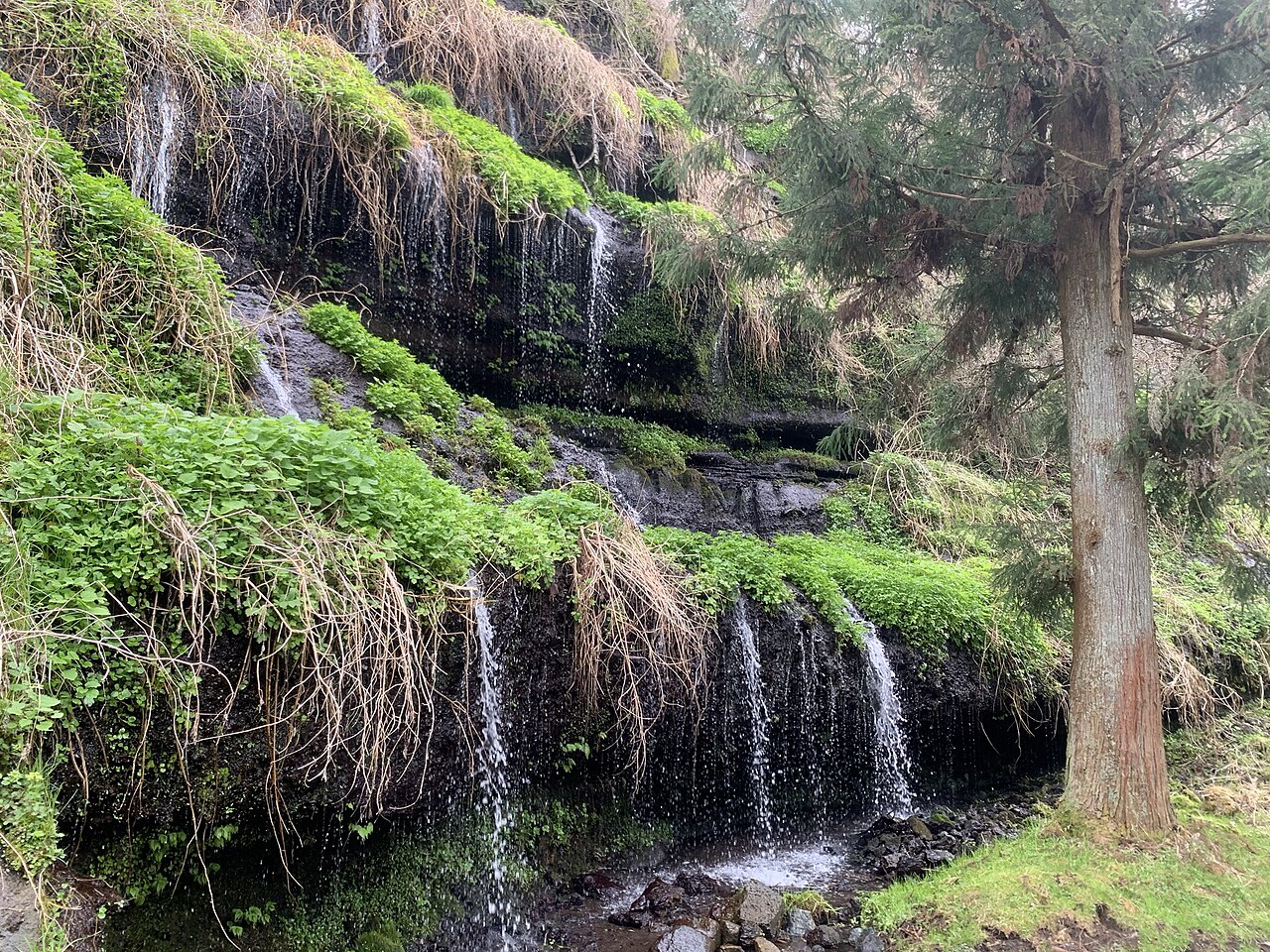
- Taro and Jiro Fallstwin waterfalls on a cliff of the Hishaku-nagare River in the Natsugari district
- Baika-mo flowerssmall white water-crowfoot flowers appear in the spring-fed streams from late spring into summer
How to actually get there
- Shinjuku → Otsuki Stn (JR Chuo Line rapid ~90 min, or limited express ~60 min)
- Otsuki Stn → Tokaichiba Stn (Fuji Kyuko Line local, ~30 min)
- Tokaichiba Stn → the springs (on foot, ~10 min on village lanes), then west to Taro and Jiro Falls (about 1.7 km) and on to Higashi-Katsura Stn (~15 min walk from the falls)
- JR Chuo Line + Fuji Kyuko Line
- Shinjuku (Tokyo) →(JR Chuo Line rapid, ~90 min; or limited express Kaiji/Azusa, ~60 min)→ Otsuki Stn →(Fuji Kyuko Line local train, ~30 min)→ Tokaichiba Stn. Total about 1.5-2 hours from Shinjuku. The Fuji Kyuko local runs only about 1-2 trains an hour, so check the day's timetable before you leave.
- return the same way
- Ride the Fuji Kyuko local back from Tokaichiba to Otsuki, then the JR Chuo Line toward Tokyo. Trains thin out after dusk, so when you arrive check the time of a good return train on the station timetable.
About the place
In the Tokaichiba and Natsugari districts of Tsuru City, groundwater from Mt. Fuji surfaces at a constant 12°C year-round. Rain and snowmelt filter underground through volcanic ash and gravel over an estimated sixty years before emerging where the old lava flow breaks open. The clear, soft water supplies daily household needs and grows wasabi, watercress and other water-greens, as well as trout. In the Natsugari district nearby, the twin Taro and Jiro Falls drop from a cliff of the Hishaku-nagare River, with spring water seeping from the rock face alongside them.
How to enjoy it
The springs and falls sit within a short walk of two stations on the Fuji Kyuko line — an easy way to see them is to walk the quiet farm lanes between water points. Late spring through summer is when baika-mo flowers bloom in the clear channels. The springs are a working farm and household water source; do not step into the wasabi beds or water channels.
Background & history
The spring group was selected for Japan's Heisei 100 Famous Waters, a national list of clean water sites chosen by the Ministry of the Environment. Local customs for managing this water are documented back roughly 380 years to the Edo period (1603–1868). The Taro and Jiro Falls take their name from a legend about two brothers said to have fallen into the plunge pool while fleeing pursuers.
Before you go
- Cash
- Nothing to pay — the springs are public. Rural stations may not take IC cards for the fare gate, so keep some coins and small notes for the train.
- Good to know
- This is a working farm and household water source. Do not step into the wasabi beds or the water channels.
- Another way
- Taro and Jiro Falls are closer to Higashi-Katsura Stn, one stop further on the same line (about a 15-minute walk from the station), so you can walk from one station to the other.
- After you get off
- From Tokaichiba Stn it is about a 10-minute walk on paved village lanes to the springs. Taro and Jiro Falls are about 1.7 km farther west in the Natsugari district, near Higashi-Katsura Stn: enter the narrow lane opposite the Kami-Natsugari community hall and the falls appear on the cliff upstream.
Nearby notes
 Manishprabhune / CC BY-SA 4.0
History · Yamanashi★★★
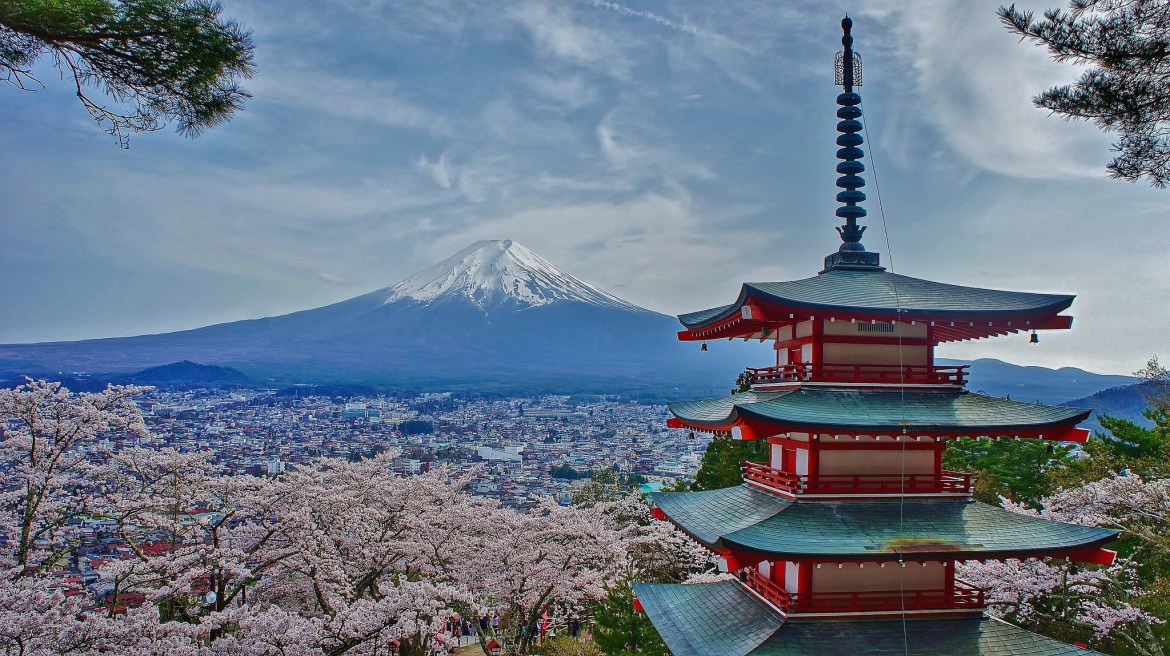
Arakurayama Sengen Park
8.8 km · straight line
 Snap55 / CC BY 3.0
Nature · Yamanashi★★★
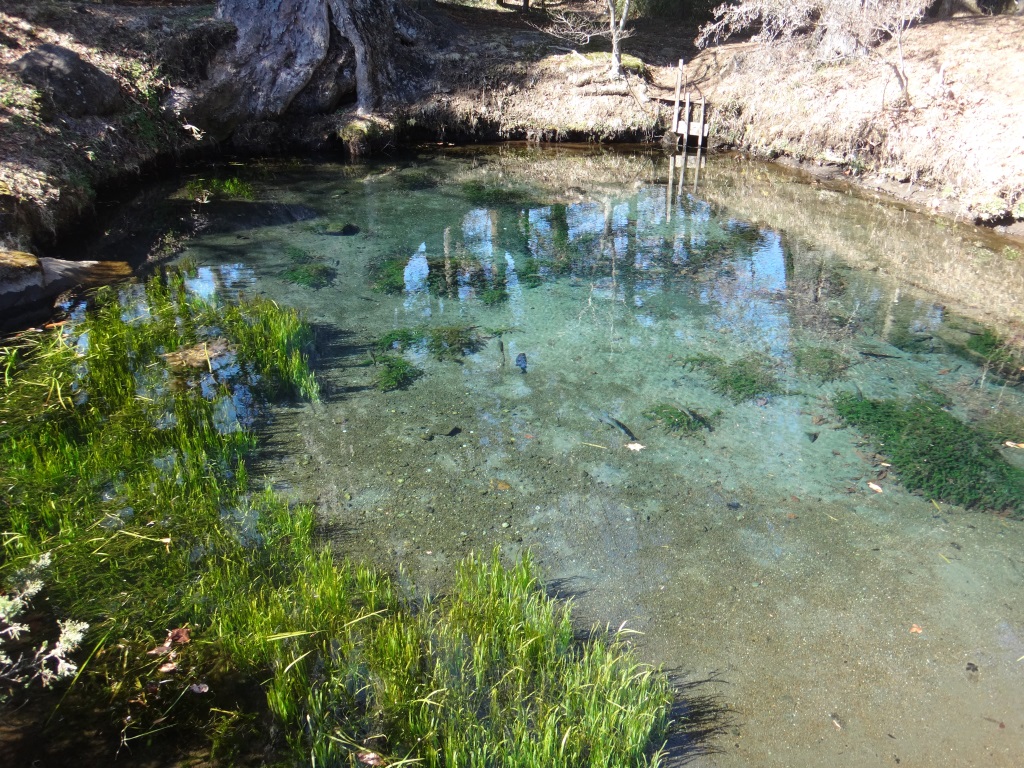
Oshino Hakkai
10.1 km · straight line
 ISAKA Yoji (cory) / CC BY-SA 3.0
Local life · Yamanashi★
Roadside Station Doshi
10.3 km · straight line
 Σ64 / CC BY 3.0
History · Yamanashi★
Mount Iwadono
10.6 km · straight line
Distances are straight lines on the map, not travel times.