Kyoto Tamba · Sonobe uplandNo.023★Open in map →
Rurikei Gorge
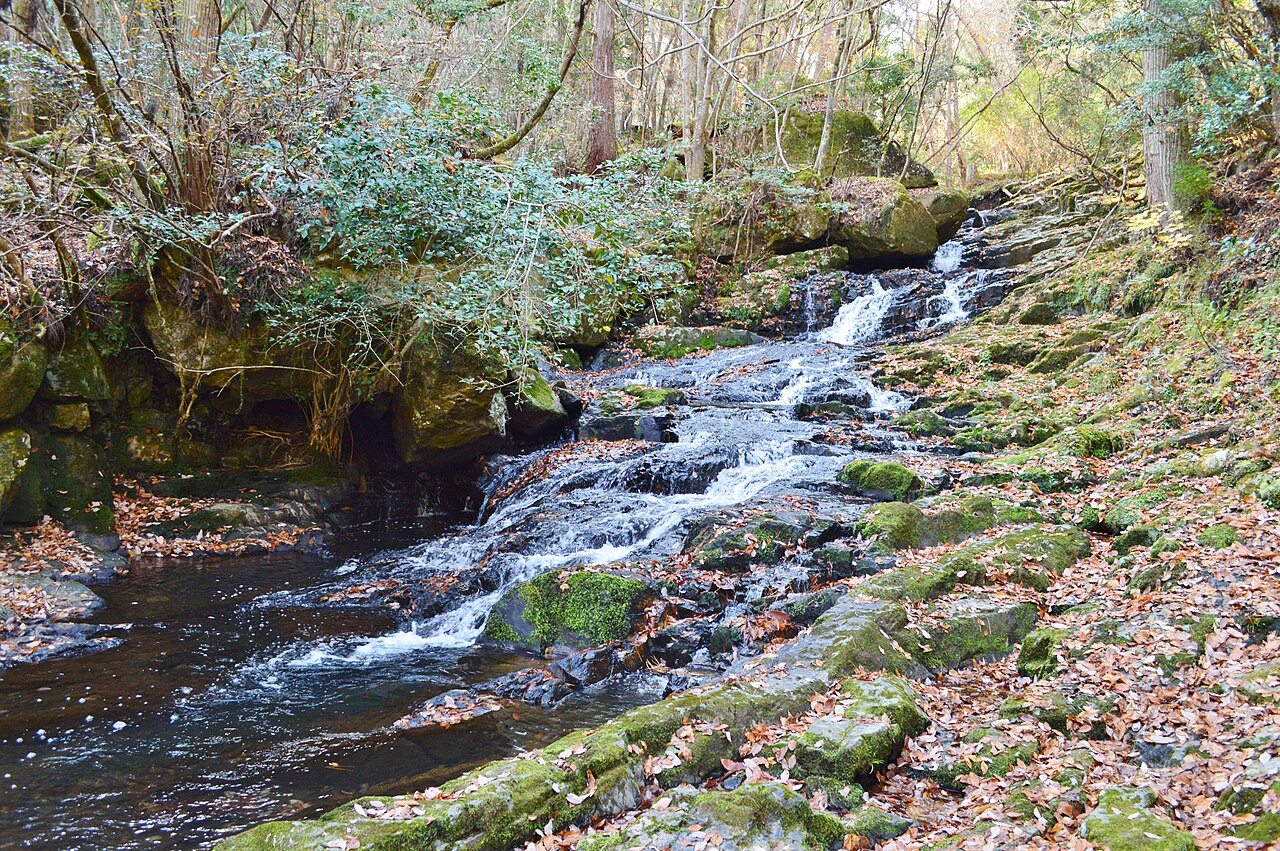
A roughly 4 km river gorge in Nantan, western Kyoto Prefecture, where each waterfall and rock formation carries its own old poetic name. The gorge runs up to a small dam reservoir called Lake Tsutenko.
- FromSonobe Stn
- ~2 hrtrain + bus (infrequent)
- Get off atRurikei bus stop
- On foot
- Rurikei Gorge
The sweet spot
It sits on a plateau off the main river valleys and needs a bus transfer that most day-trippers skip. There is little English signage or online guidance, and the local community buses run only a few times a day, so casual visitors rarely reach it.
Where it is
90 more notes in Kyoto · open the map →What to look for — in walking order
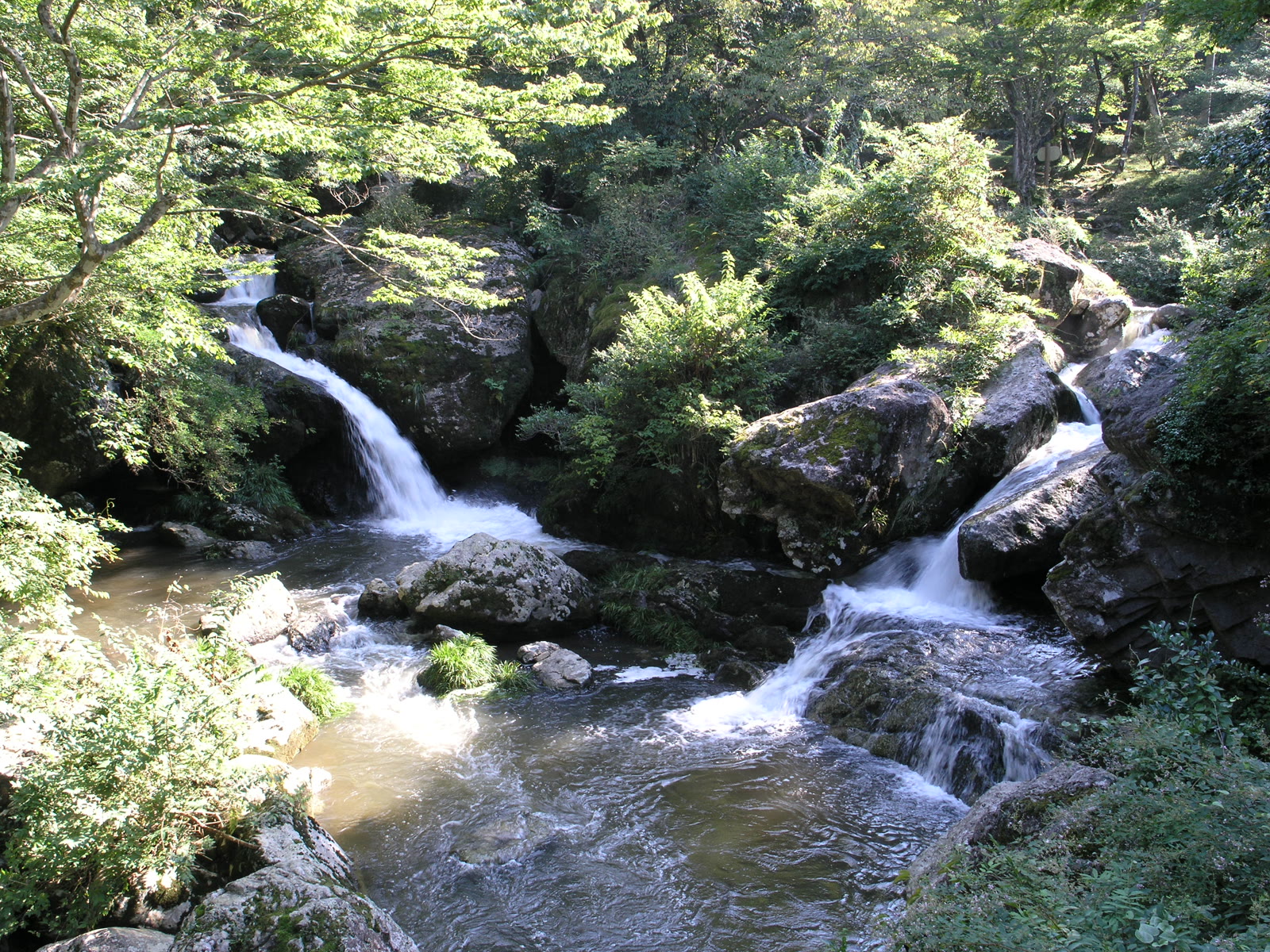
- Rurikei Twelve Scenesnamed waterfalls, pools, and rocks strung along the gorge path from Meibaku to Gyokusoban
- 12.5 m dam overflowwater dropping from the dam like a curtain just below the lake
- Lake Tsutenkothe small dam reservoir at the head of the valley that feeds the river below
- Lapis-lazuli waterthe clear river that shimmers blue in good light, giving the gorge its name
How to actually get there
- Kyoto Stn → Sonobe Stn (JR Sagano Line, ~35 min)
- Sonobe Stn → Hatta stop (Keihan Kyoto Kotsu bus, Hatta Line No. 40, ~25 min)
- Hatta → Rurikei / Lake Tsutenko (Gururin community bus No. 10, ~17 min)
- Rurikei stop → start of the named-scene trail (walk, ~20 min)
- Sonobe Stn → Keihan bus → Gururin community bus
- From Kyoto Stn, take the JR Sagano Line to Sonobe Stn (~35 min). From Sonobe Stn, take the Keihan Kyoto Kotsu bus (Hatta Line, No. 40) to Hatta stop (~25 min). Transfer there to the Gururin community bus (No. 10) toward Rurikei / Lake Tsutenko (~17 min). Total from Sonobe ~45 min plus the transfer wait. These local buses run only a few times a day — check the day's timetable before leaving. Note: the final leg to the Tsutenko / Oku-Rurikei stops runs on Saturdays, Sundays and holidays only; on weekdays get off at the Rurikei stop.
- Return by the same two buses
- Return by the Gururin bus to Hatta, then the Keihan bus back to Sonobe Stn. Both are infrequent and services end by early evening, so when you arrive check the last return time posted at the stop before you walk into the gorge.
About the place
Rurikei — written with the characters for 'lapis lazuli' — is a gorge cut by the Sonobe River as it flows down from Lake Tsutenko on a highland about 500 metres above sea level in Nantan City. The clear water shimmers blue when the light catches it, which is how the valley earned its name. Walking upstream toward the lake, the path passes the 'Rurikei Twelve Scenes' — a sequence of waterfalls, pools, and rocks each given its own poetic name, including Meibaku ('crying waterfall'), Soryuen ('twin-dragon pool'), and Gyokusoban. At the top sits Lake Tsutenko, a small reservoir, with water falling from the overflow channel at a recorded 12.5 metres. The gorge was chosen as one of Japan's '100 Soundscapes.'
How to enjoy it
Walk from the lower entrance upstream toward Lake Tsutenko, following the named scenes in order along the roughly 4 km route. The highland keeps the ravine noticeably cooler than the surrounding lowlands in summer. As one of Japan's '100 Soundscapes,' it rewards a slow pace with time to listen to the water. Rock along the stream is wet and slippery — proper shoes are essential.
Background & history
The valley was known by a plainer local name until 1905, when a visiting government official named Miyake Shoin was struck by its beauty and renamed it Rurikei, after the lapis-lazuli colour of the water. In 1932 it was designated a national Place of Scenic Beauty, and it forms the core of a Kyoto prefectural natural park. The rock is rhyolite, a hard volcanic stone worn into flat slabs and rounded pools by the river over a long period — the source of the distinctive shapes that gave each scene its individual character.
Before you go
- Cash
- These rural community buses are usually cash-only, so carry coins (the Gururin bus fare starts at 150 yen).
- Good to know
- The rock along the stream is wet and slippery — wear proper shoes and do not cross any safety barriers.
- Another way
- By car is easiest: there is free parking near the gorge, and you can walk the named scenes from there.
- After you get off
- From the Rurikei bus stop it is a short walk on the level, about 20 minutes, to where the named-scene trail begins.
Nearby notes
 Mti / CC BY-SA 3.0
Onsen · Kyoto★
Yunohana Onsen
10.1 km · straight line
 illustration (AI-illustrated)
Food · Hyogo★
Moushi
16.4 km · straight line
 663highland / CC BY 2.5
History · Hyogo★
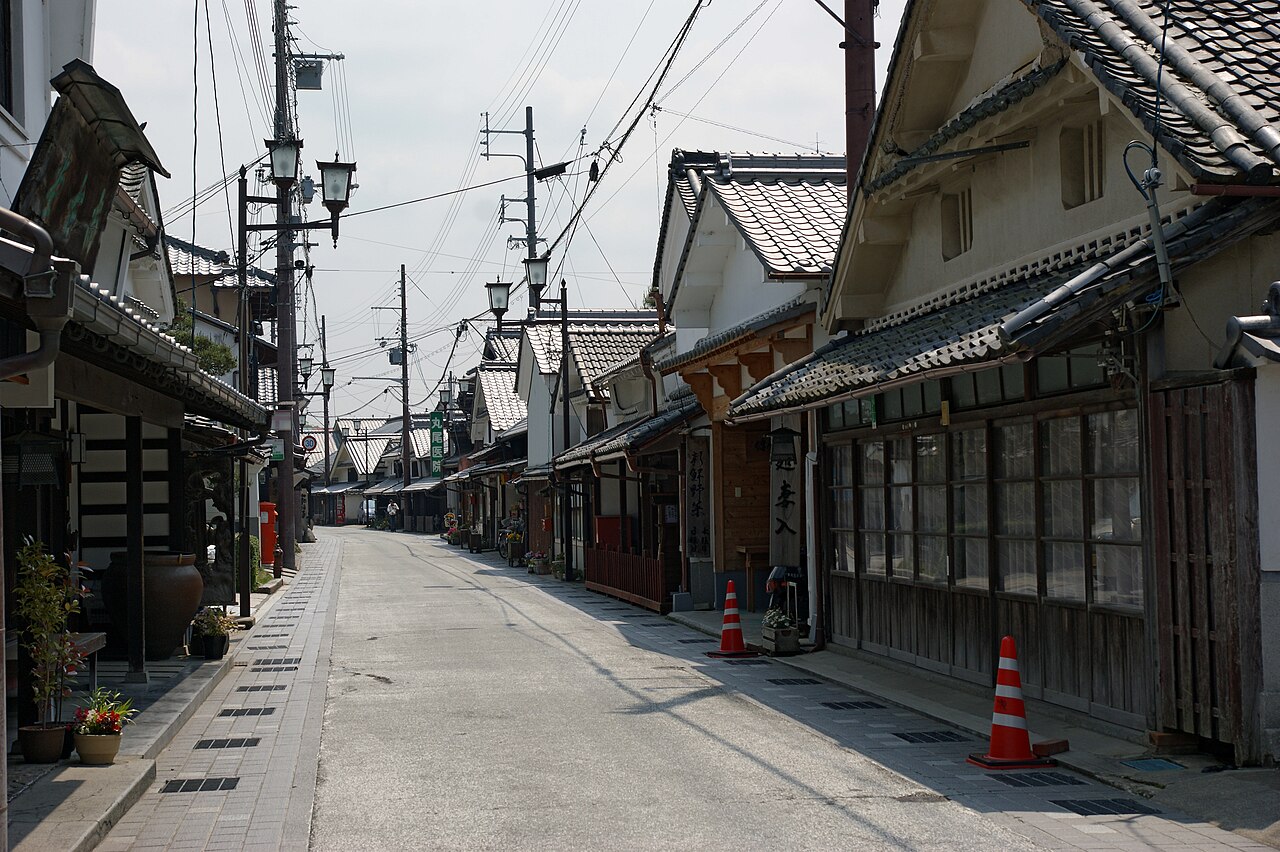
Kawaramachi Tsumairi Merchant Row
16.7 km · straight line
 江戸村のとくぞう / CC BY-SA 4.0
Nature · Kyoto★★
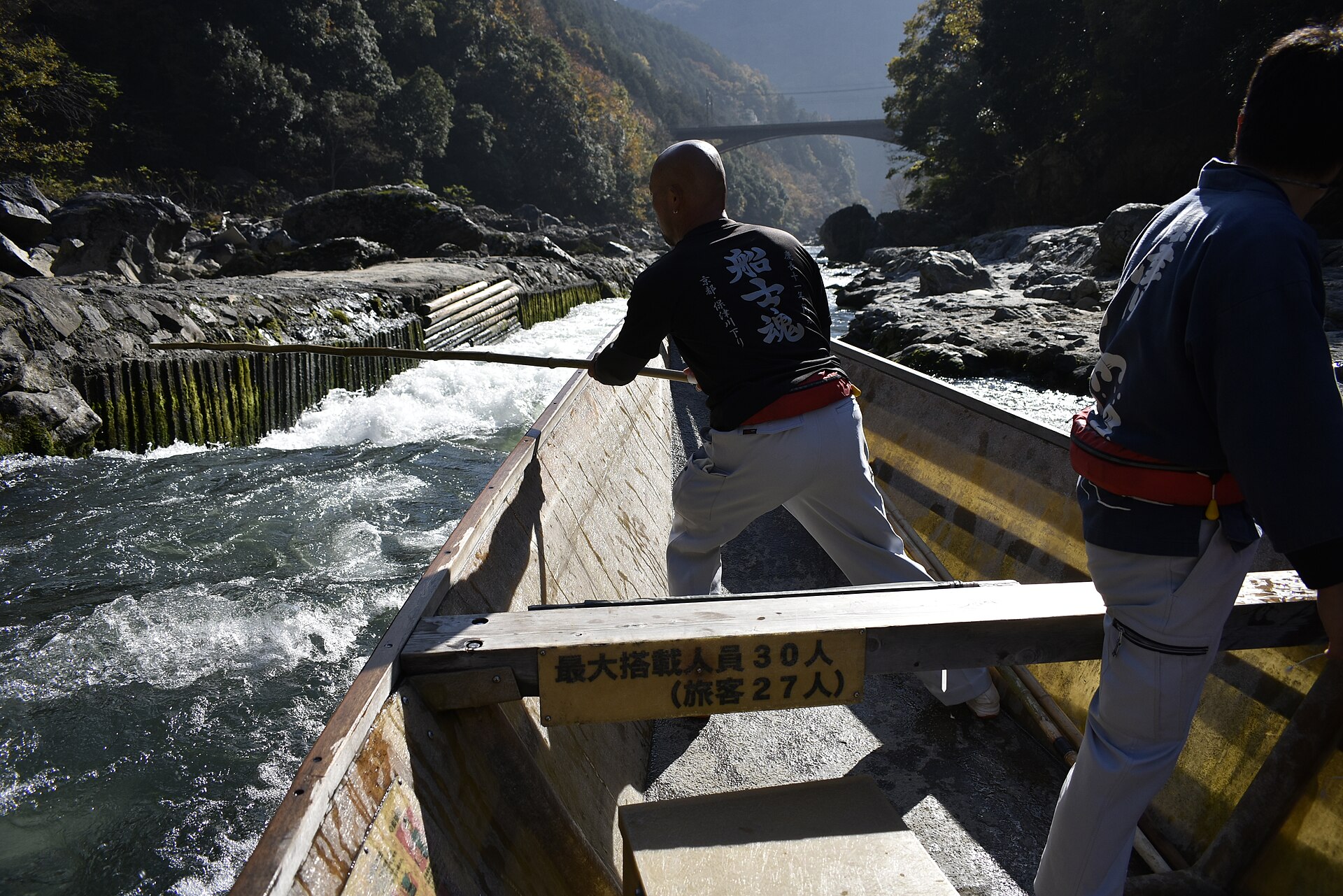
Hozugawa River Boat Ride
16.9 km · straight line
Distances are straight lines on the map, not travel times.