Sanda north · BoshiNo.053★Open in map →
Moushi
— the highland tea hamlet of northern Sanda
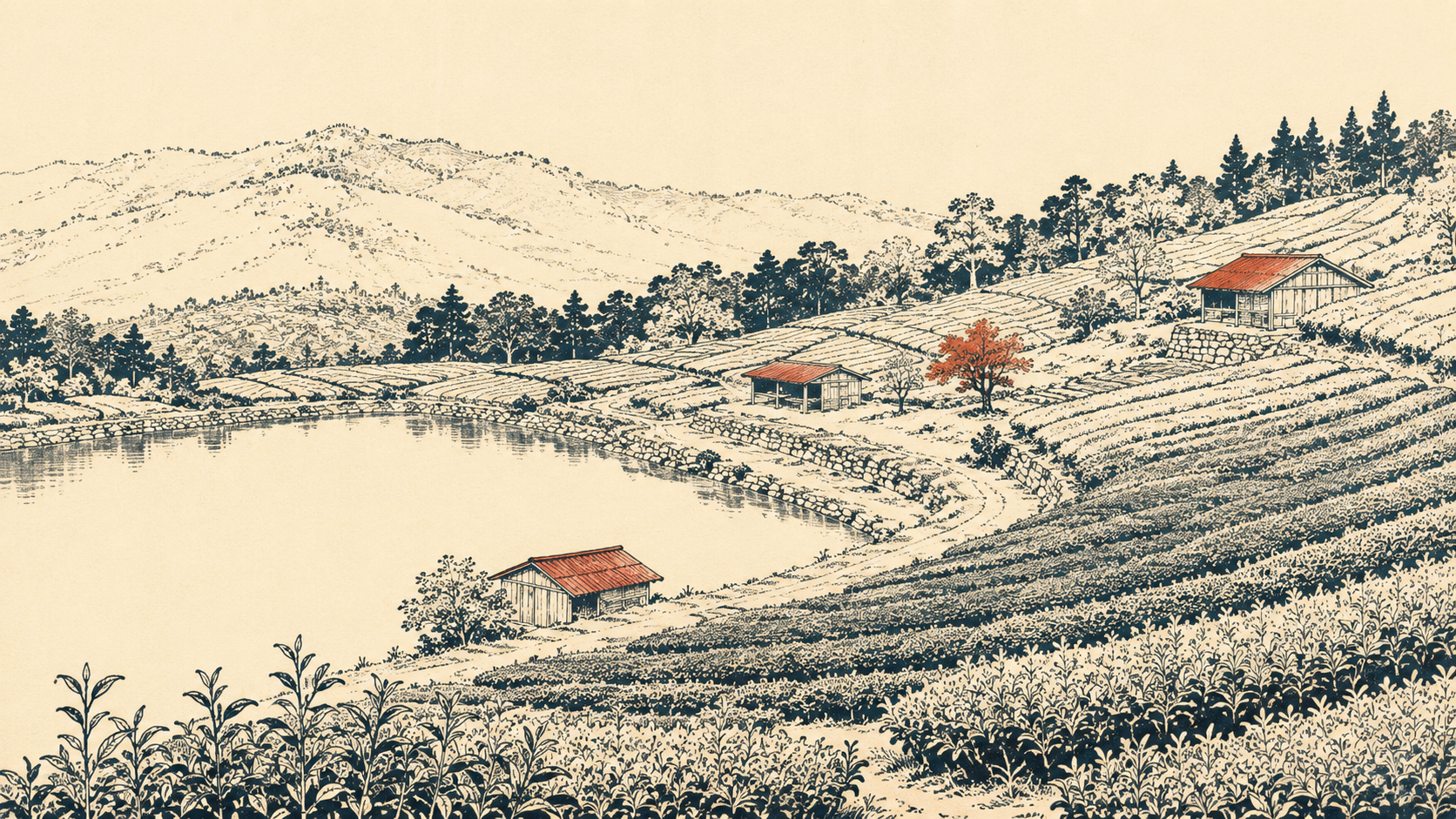
The northernmost hamlet of Sanda, Hyogo, sits at roughly 500 metres above sea level. A small community of farmers grows and processes its own green tea here, called Moushi-cha.
- FromOsaka Stn
- ~80-90 minbus (infrequent)
- Get off atMoushi (Shinki Bus #24)
- On foot
- Moushi
The sweet spot
Moushi is a real but tiny tea district, entirely overshadowed by Uji, the famous tea region near Kyoto. There is no train station, the connecting bus runs only a few times a day, and almost nothing is written about it in English, so it stays off tourist maps.
Where it is
30 more notes in Hyogo · open the map →What to look for — in walking order
- Highland tea rowssloped tea fields at roughly 500 metres; green in spring, often snow-covered in winter
- Moushi Oike reservoira large farm irrigation pond finished in 1933 — the largest in Sanda
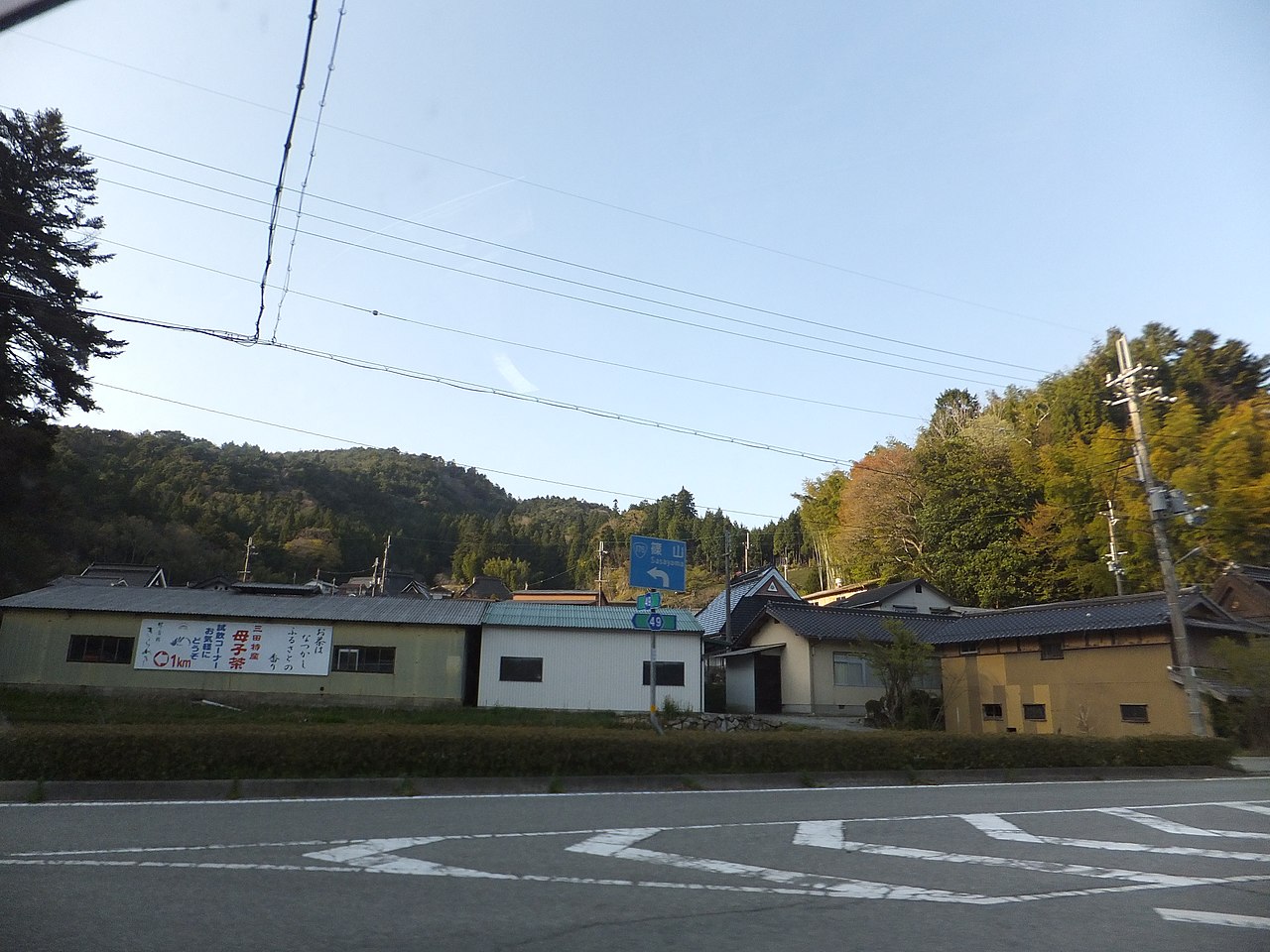
- Chakobo Kiramekithe local workshop where the Moushi co-operative processes its leaf
- Misty upland airthe cold, mist-prone basin and wide day-to-night temperature swing that growers prize for tea
How to actually get there
- Osaka Stn → Sanda Stn (JR Takarazuka/Fukuchiyama Line rapid, ~40 min)
- Sanda Stn north exit → Moushi (Shinki Bus #24 toward Moushi, ~40 min)
- Moushi bus stop → tea rows & Moushi Oike reservoir (short walk on the paved lane)
- JR train + Shinki Bus #24 (Moushi line)
- Osaka Stn →(JR Takarazuka/Fukuchiyama Line rapid, ~40 min)→ Sanda Stn →(Shinki Bus #24 toward Moushi, from the north exit, ~40 min)→ Moushi. Total about 80-90 min. The bus runs only a few times a day and some runs require a transfer at Otohara Valley (Otohara-bally / 乙原バレイ) stop — check the day's timetable before you leave.
- return the same way
- Take Shinki Bus #24 back down to Sanda Stn, then the JR line to Osaka. The bus is infrequent and services end by evening, so check the return times posted at the Moushi stop as soon as you arrive.
About the place
Moushi sits high in the upper Aono River valley, above the city of Sanda. Rows of tea bushes climb the slopes between farmhouses and forest. The high altitude brings a wide swing between day and night temperatures and mist that settles into the basin — conditions the local growers value for green tea. Tea is picked by the one-branch, two-leaves method, taking only the two tender tip leaves for higher quality. Processing is done nearby by the Moushi tea producers' co-operative at their workshop, Chakobo Kirameki. Close by is Moushi Oike, a large farm reservoir finished in 1933, the largest in Sanda.
How to enjoy it
The tea fields are at their greenest from late spring. Each May the co-operative holds a hand-picking event at Chakobo Kirameki. Treat a visit as a quiet pass through Sanda's northern uplands, and look for Moushi-cha for sale at shops in central Sanda.
Background & history
Moushi is recorded as one of Hyogo's long-established tea districts. Local accounts say tea was brought here from China by a monk of Eitakuji, a temple founded nearby about 600 years ago. Tea growing has continued in this cold upland ever since, and the tea fields remain part of the hamlet's landscape and identity.
Before you go
- Cash
- The local tea co-operative sells for cash — do not count on cards up here. Rural buses are often cash-only too, so carry coins and small notes.
- Good to know
- These are working tea fields. Stay on the lanes and do not step into the rows.
- Another way
- If bus times do not fit your day, a taxi from Sanda Stn up the valley is the fallback, but it is a long climb and fares are not fixed.
- After you get off
- From the Moushi bus stop, the tea rows and the reservoir are a short walk along the paved lane; the area is spread out, so allow time to wander.
Nearby notes
 663highland / CC BY 2.5
History · Hyogo★
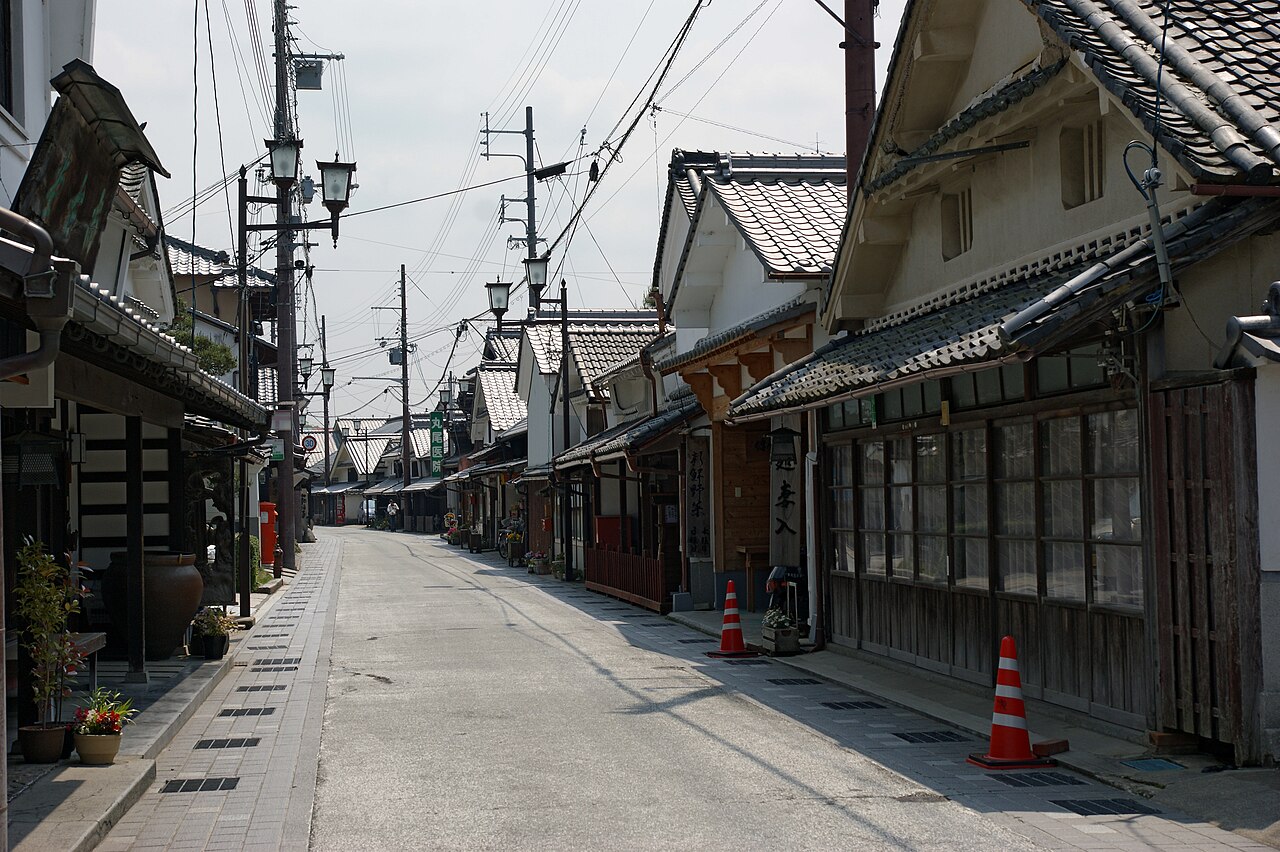
Kawaramachi Tsumairi Merchant Row
5.8 km · straight line
 663highland / CC BY 2.5
Craft · Hyogo★★★
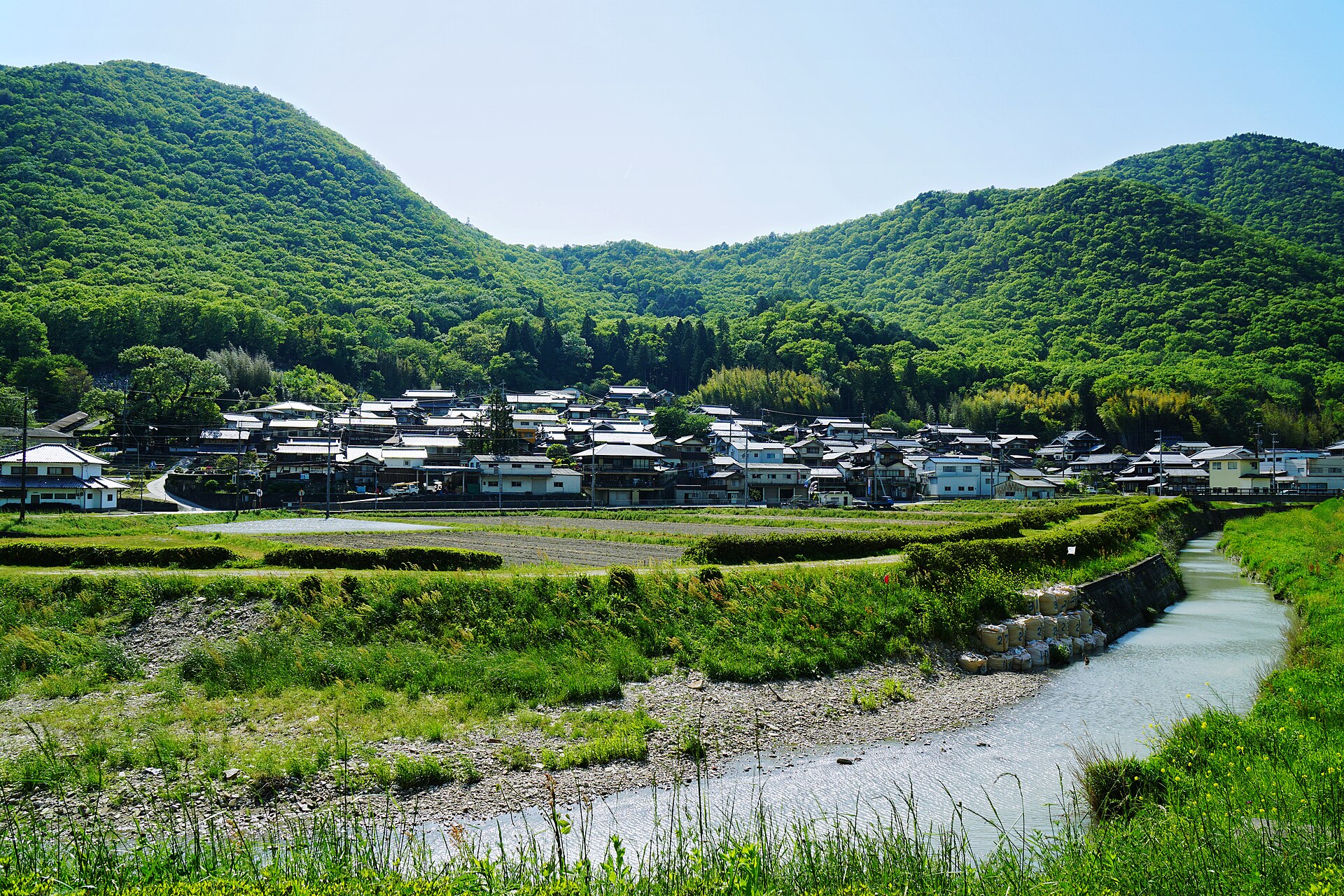
Tamba Ware
9.3 km · straight line
 Saigen Jiro / CC0
Nature · Kyoto★
Rurikei Gorge
16.4 km · straight line
 KENPEI / CC BY 3.0
Nature · Hyogo★
Nakayama-dera Oku-no-in
23.7 km · straight line
Distances are straight lines on the map, not travel times.