East Hyogo · Tamba-SasayamaNo.1010★★★Open in map →
Tamba Ware
One of Japan's six ancient kilns, still working in the valley it takes its name from. Sue-no-Sato is the cooperative's park at the head of Tachikui, holding the sales hall of the whole hamlet, a hands-on studio and a climbing kiln.
- FromAino Station
- One bus rideShinki bus from Aino
- Get off atSue-no-Sato-mae (Shinki bus)
- On foot
- Tamba Ware
Where it is
30 more notes in Hyogo · open the map →What to look for — in walking order
- Kamado-Yokochothe cooperative's sales hall, the hamlet's kilns each given their own stand
- The pottery studiothe hands-on room for shaping and painting, with the firing left to the park
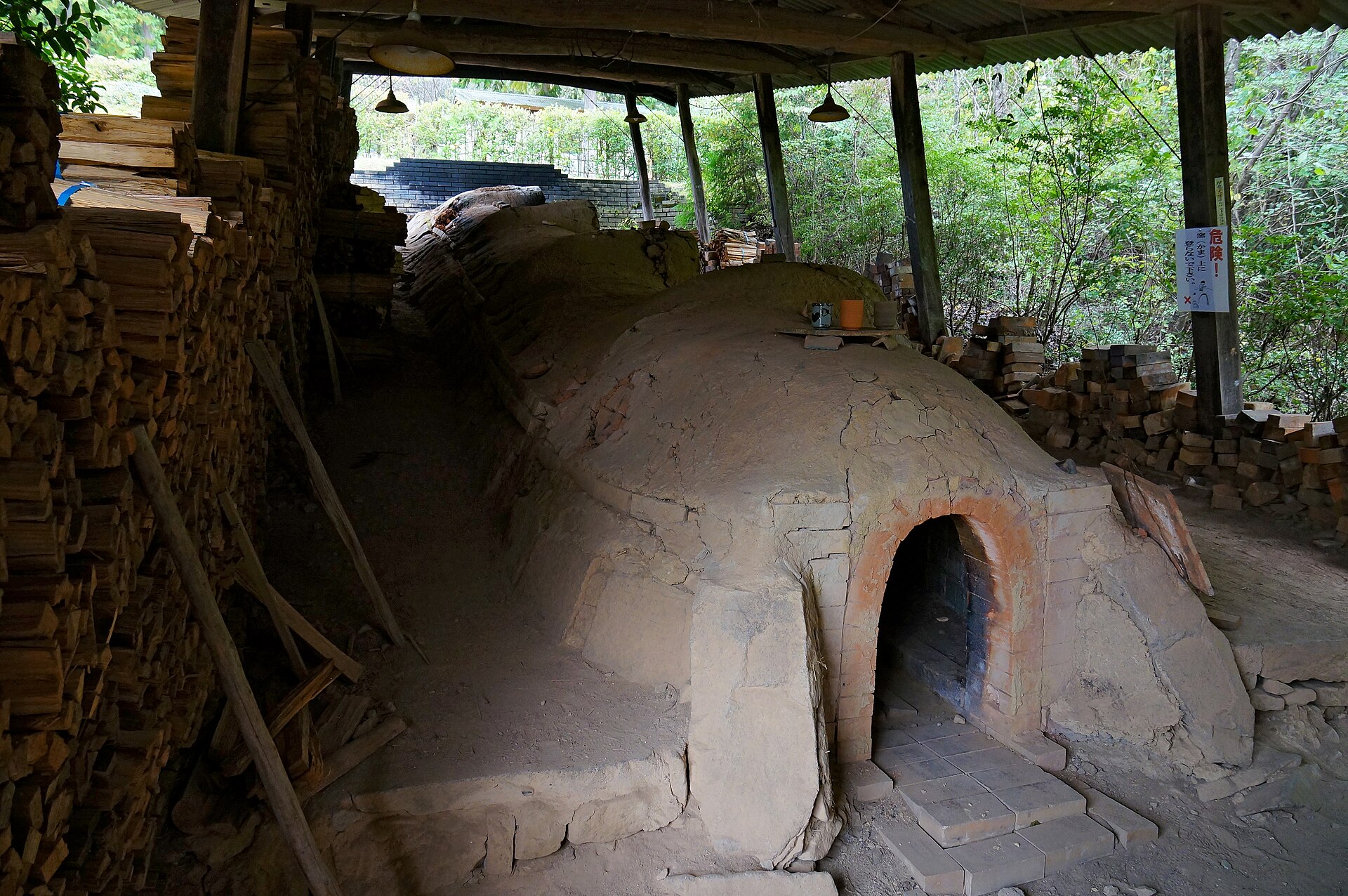
- The climbing kiln in the groundsa brick tunnel laid up the slope, the shape that fires a village's work in one go
- Restaurant Shishiginthe park's dining room, cooking on the produce of the Tamba district
- The oldest climbing kiln47 metres of chambered kiln in the hamlet, a prefectural folk property, fired about once a year
How to actually get there
- To Aino Station on the JR Fukuchiyama Line.
- Station front → Shinki bus toward Shimizu or the ceramic museum → Sue-no-Sato-mae.
- Kamado-Yokocho first, then the studio and the climbing kiln in the grounds.
- Out of the gate into the hamlet for the Meiji-era kiln, then the bus back down.
- To Aino, then the bus into the hills
- Aino is a stop on the JR Fukuchiyama Line. From the station front the Shinki bus bound for Shimizu or for the prefectural ceramic museum climbs into the pottery valley and sets you down at the park gate. Getting off one stop earlier at Tachikui-Kokaido-mae leaves a short walk up through the hamlet instead. A taxi from the same forecourt covers the distance on any timetable.
- Back down to Aino
- It is the bus rather than the train that fixes your last usable departure, and the service thins out through the afternoon. Read the return times at the stop before you settle into the sales hall. If the bus has gone, a taxi down to Aino is short enough not to hurt.
About the place
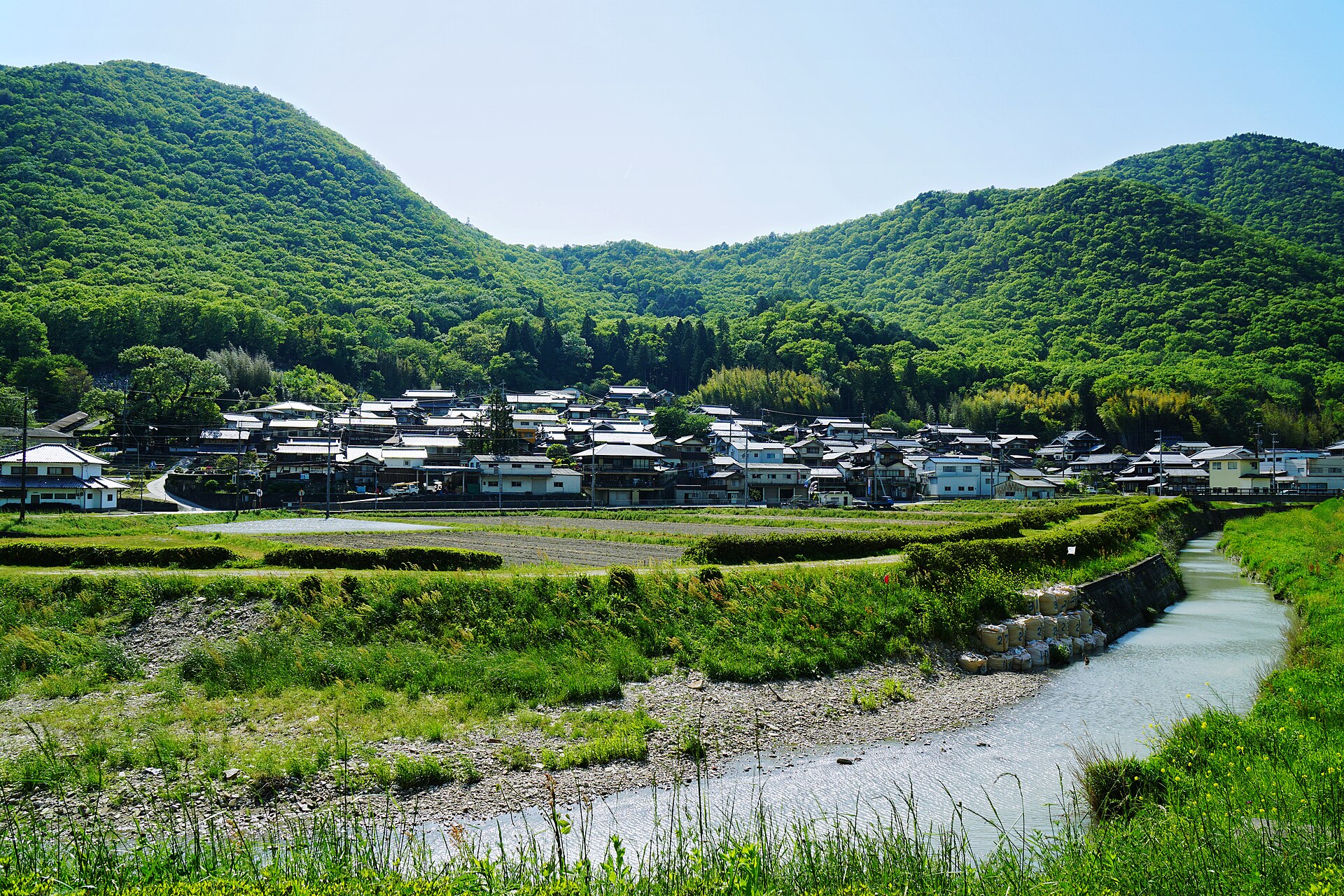
Tamba is one of six kiln districts that have fired without a break since medieval times, and all of it comes out of a single valley hamlet called Tachikui. What the district is known for is not applied decoration but an accident of the fire: pine ash settles on the pots during a long firing, melts into the clay and leaves a glaze nobody brushed on. The cooperative's park stands at the head of the hamlet, and its sales hall carries the work of some fifty kilns, laid out kiln by kiln instead of mixed together. Beyond the gate the same lanes run on between the yards that made it.
How to enjoy it
Give it half a day rather than an hour, because the sales hall, the studio and the two kilns make one chain and the bus back runs to a country timetable. The oldest kiln is lit about once a year, and that firing runs day and night with the site left open to anyone who wants to watch. If you are choosing a season, the hamlet reads best in the green months, when the wooded slopes close in around the roofs.
Background & history
Potting here goes back to the end of the Heian period and the beginning of the Kamakura, when the work was fired in a sloping tunnel cut into the hillside. In the early Edo years a Korean-style climbing kiln arrived, half sunk into the slope with its firing chambers linked in a chain, and with it came the kick wheel that Tachikui alone still turns to the left. The name was designated a national traditional craft in 1978, and in 2017 the district was written into the Japan Heritage listing that binds the six ancient kilns together. The oldest kiln left standing in the hamlet dates from 1895.
Before you go
- Cash
- The themed exhibition room inside the gateway building charges its own admission and the studio charges by the piece. How the park itself handles entry has changed recently, so read the notice at the gate rather than an old listing. The kilns sell their own work in the hall, so carry a card and some coins.
- Good to know
- The park takes one closing day a week and shuts over the new year. Individual halls keep their own schedules and can close for refurbishment or between exhibitions, so one building may be shut while the rest of the site is open. The lanes, the slope and the older kiln outside the gate do not depend on any of that.
- Another way
- By car the park is about ten minutes from the Sanda-nishi interchange on the Maizuru-Wakasa Expressway, or about twenty from Tannan-Sasayama-guchi, and there is parking on site. Driving also links the hamlet with the prefectural ceramic museum nearby without waiting on a bus.
- After you get off
- Sue-no-Sato-mae puts you within a minute or two of the gate. From Tachikui-Kokaido-mae the walk is about five minutes, up through the hamlet, which is the better arrival if you want the lanes before the exhibits.
Nearby notes
 illustration (AI-illustrated)
Food · Hyogo★
Moushi
9.3 km · straight line
 663highland / CC BY 2.5
History · Hyogo★
Kawaramachi Tsumairi Merchant Row
13.2 km · straight line
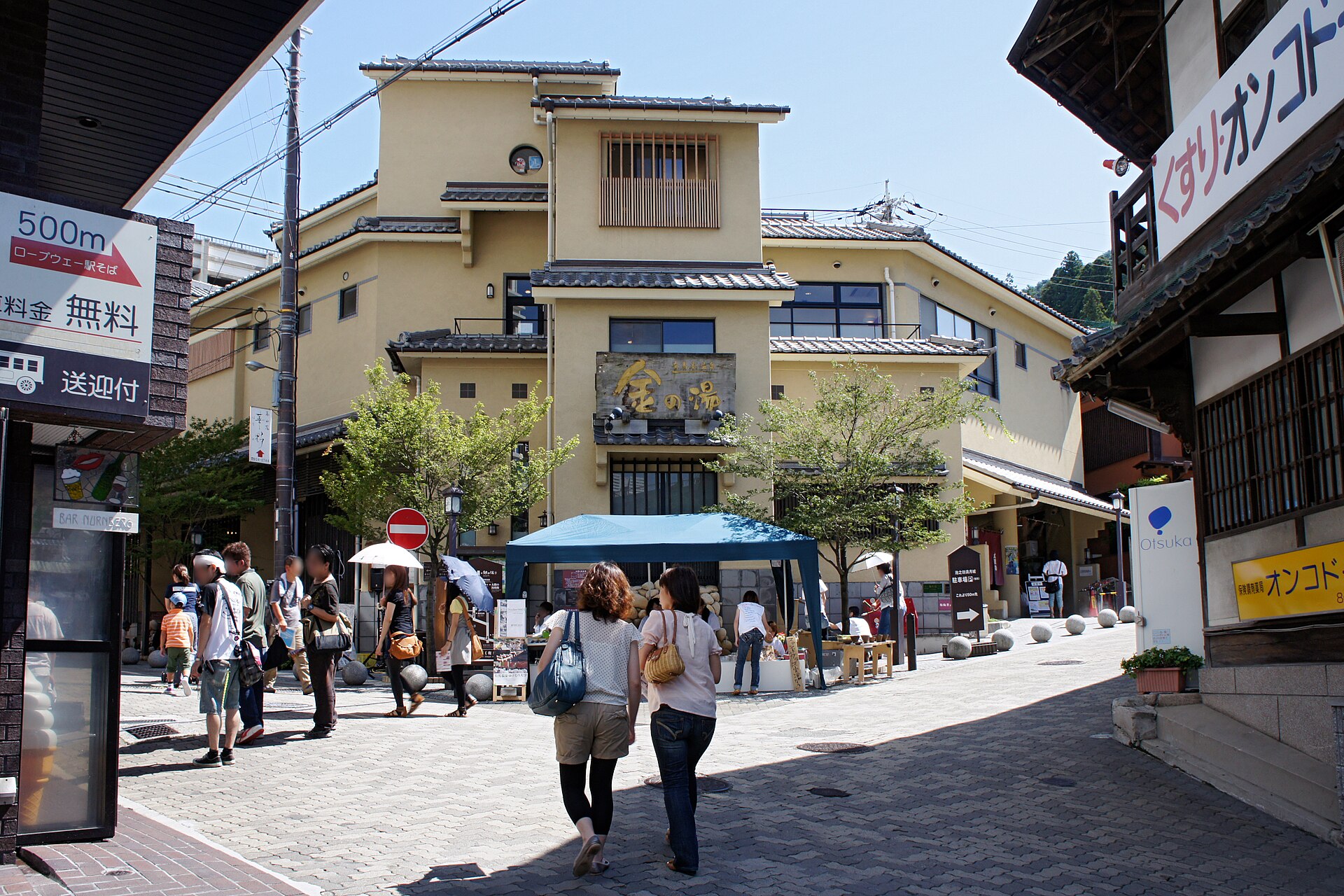 663highland / CC BY 2.5
Onsen · Hyogo★★★
Arima Onsen
23.1 km · straight line
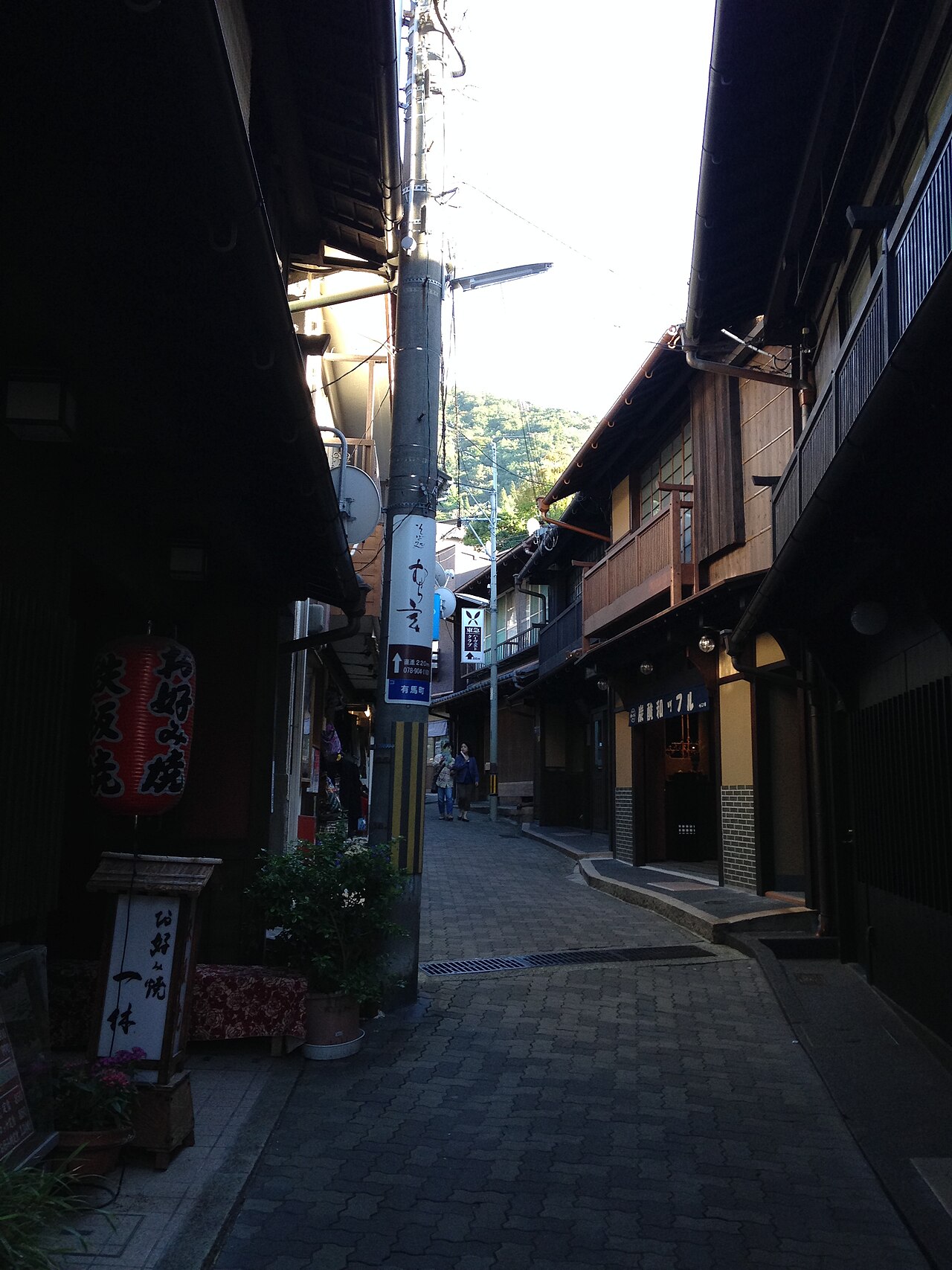 そらみみ / CC BY-SA 4.0
History · Hyogo★★
Arima Onsen's upper temple quarter
23.2 km · straight line
Distances are straight lines on the map, not travel times.