Kanagawa · YokosukaNo.355★★Open in map →
Sarushima
— an uninhabited island fortress in Tokyo Bay
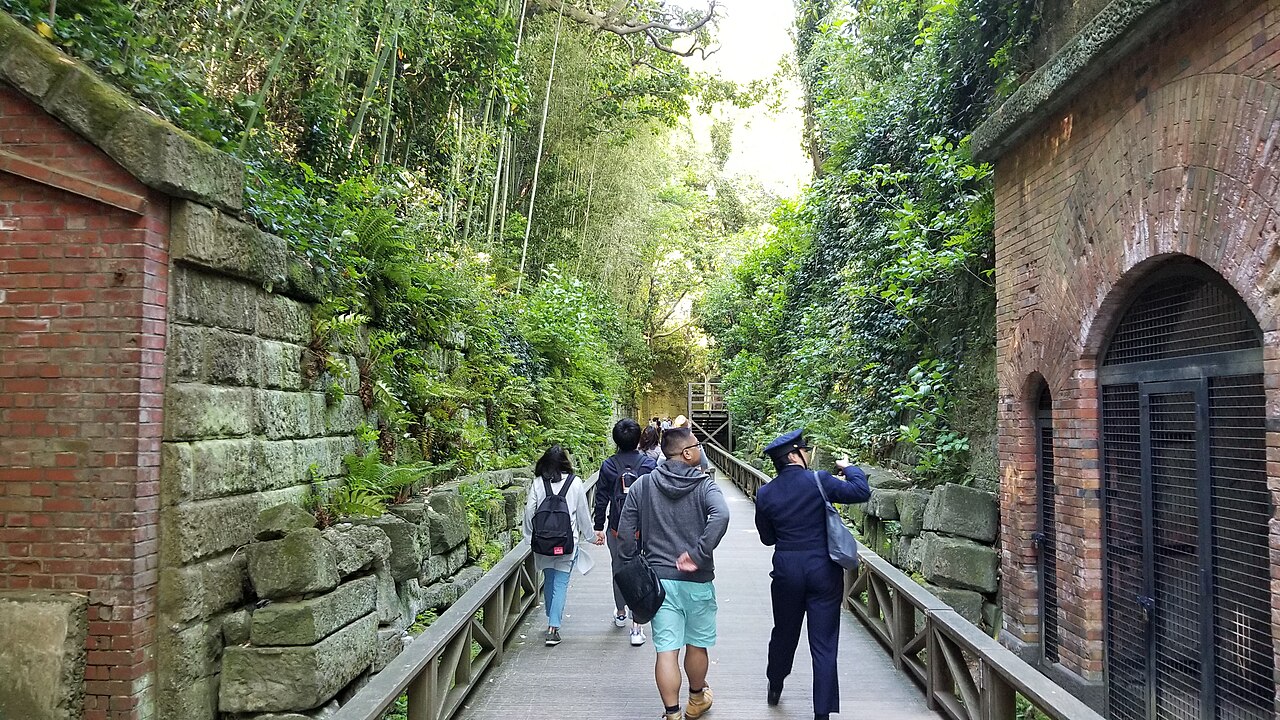
The only natural uninhabited island in Tokyo Bay, about ten minutes by boat from Yokosuka. Brick tunnels, arched magazines and gun emplacements from a nineteenth-century coastal fortress survive on the island, now overgrown by forest. It also has a beach, fishing spots and barbecue areas.
- FromShinagawa Stn
- ~90 mintrain + 10 min ferry
- Get off atMikasa Terminal / Mikasa Pier (Sarushima ferry)
- From there
- Sarushima
The sweet spot
There is nothing else like it within reach of Tokyo. Fortress ruins exist elsewhere in Japan, but rarely as a complete small system you can walk end to end in under an hour, and almost never on an island you have to take a boat to. The brickwork itself is part of the interest — much of it is laid in a bond that was used in Japan only for a short window in the nineteenth century, and the fortress remains are nationally designated. The overgrown state, which would be a maintenance failure anywhere else, is exactly what makes it photograph the way it does.
Where it is
43 more notes in Kanagawa · open the map →What to look for — in walking order
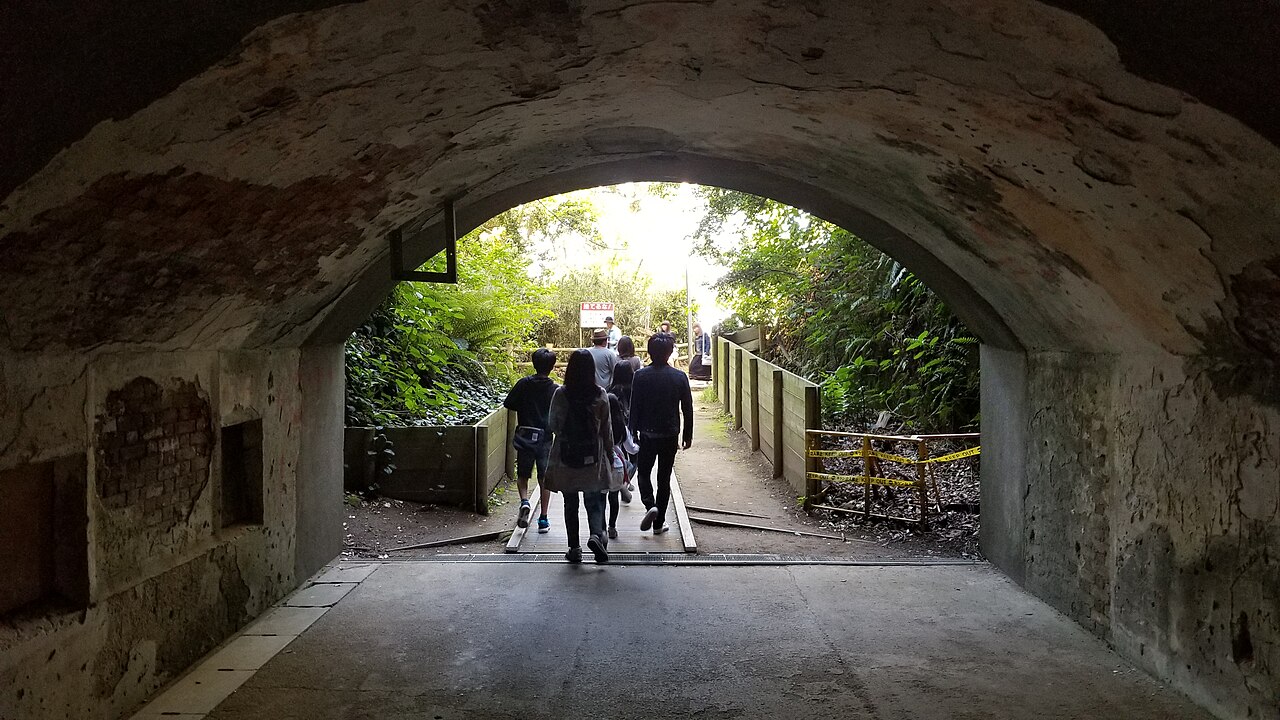
- The brick tunnel through the ridgeThe main passage cut through the island's spine, brick-lined and dripping, with ferns growing out of the joints. This is the section visitors photograph most. Go through slowly and look at the arch construction overhead — the vaulting is the part that gets lost when people shoot only the tunnel mouth.
- The arched magazines and emplacementsAlong the cutting are brick-arched chambers set into the hillside for ammunition storage, with the gun positions above. They are open to walk into. The scale is domestic rather than monumental, which makes the engineering easier to read than at a large fortress.
- The high ground and the bay viewPaths climb from the fortress works to open points on the ridge looking out over Tokyo Bay's shipping lane, with the Boso peninsula opposite and container traffic passing close. It is immediately obvious from up here why the island was fortified.
- The beach and the shoreline walkA small sand beach sits near the landing, with a rocky shoreline path leading away from it. In summer it is a swimming and barbecue destination; out of season it is empty, and the contrast with the fortress above is most of the island's character.
How to actually get there
- Shinagawa Station → Yokosuka-chuo Station (Keikyu Main Line limited express, ~50 min).
- Yokosuka-chuo Station → Mikasa Pier (walk through Mikasa Park, ~15 min).
- Mikasa Pier → Sarushima (ferry, ~10 min, roughly hourly on a fixed timetable).
- Keikyu to Yokosuka-chuo, walk to Mikasa Pier, then the boat
- Shinagawa Station →(Keikyu Main Line limited express, ~50 min)→ Yokosuka-chuo Station → walk ~15 min through the town and Mikasa Park to Mikasa Pier →(Sarushima ferry, ~10 min)→ Sarushima. Total ~90 min. The ferry runs on a fixed timetable, roughly hourly, with more sailings in summer — check the day's schedule on sarushima.jp before you set out.
- Return by the same ferry
- Boats return from the island on the posted timetable and the last sailing is in the afternoon or early evening depending on the season. This is the one hard constraint of the trip — confirm the last departure when you buy your ticket, and be at the landing early, because a missed boat has no alternative.
About the place
Sarushima lies less than two kilometres off Yokosuka, a small wooded rock in the shipping lane at the mouth of Tokyo Bay. It is the only natural uninhabited island in the bay, and its position — directly in front of the approach to Edo — meant it was fortified early. Coastal batteries were placed here in the closing years of the Tokugawa period, and the Imperial Japanese Army later built the island out properly: brick-lined tunnels cut through the ridge, arched magazines set into the hillside, emplacements and command positions on the high ground. Then it was abandoned. What survives is a fortress being taken back by forest. Ferns and roots have worked into the brick facing, the tunnel walls are damp and green, and light comes down through the canopy into cuttings that were engineered to be hidden. Visitors have taken to calling the main passage the Laputa road, after the ruined sky-island in the Ghibli film. Around the fortifications the island also has a small beach, fishing spots and barbecue areas, so a visit can be either a forty-minute walk through military archaeology or an entire day.
How to enjoy it
The whole island can be walked in about an hour, but two to three hours is the comfortable amount — enough for the fortress loop, the ridge viewpoints and a stop at the beach. The tunnel and hillside paths are damp, uneven and unlit in places; wear shoes with grip and bring a small torch if you want to look properly into the magazines. Summer is the crowded season, with barbecue and swimming bookings; late autumn and spring give the fortress ruins to yourself. The single thing that ruins this trip is the boat timetable — sailings are roughly hourly, the last one is earlier than you expect, and rough weather cancels service outright. Confirm both the schedule and the forecast on the morning you go.
Background & history
Batteries were first placed on Sarushima in the closing decades of the Tokugawa period, when foreign ships entering Tokyo Bay made the approach to Edo a defensive problem. The Imperial Japanese Army subsequently developed the island into a full fortified position, with brick-lined tunnels and magazines cut into the ridge. Much of the brickwork uses a bond that was in use in Japan only briefly in the nineteenth century, which is one reason the remains carry national designation. The island's name comes from a legend that the monk Nichiren, caught in a storm in the bay, was led ashore here by a white monkey.
Before you go
- Cash
- Two charges apply: the round-trip boat fare and a separate island entry fee. Buy both at the Mikasa Pier ticket office. Barbecue sets and equipment rental on the island are booked separately, in advance in summer.
- Good to know
- The ferry does not sail in bad weather or heavy swell, and the service is reduced or suspended in winter on some days. Sailings are cancelled at short notice when conditions turn, so check sarushima.jp the morning of your visit rather than the night before.
- Another way
- JR Yokosuka Station is also walkable to Mikasa Pier, about 20 minutes, and is the better choice if you are coming on the JR Yokosuka Line from Tokyo or Kamakura rather than by Keikyu from Shinagawa.
- After you get off
- Mikasa Terminal, at Mikasa Pier on the edge of Mikasa Park, is where the Sarushima ferry leaves — about 15 minutes on foot from Yokosuka-chuo Station, next to the preserved battleship Mikasa. The crossing takes about 10 minutes; if you have time before your sailing, the battleship is worth the detour.
Nearby notes
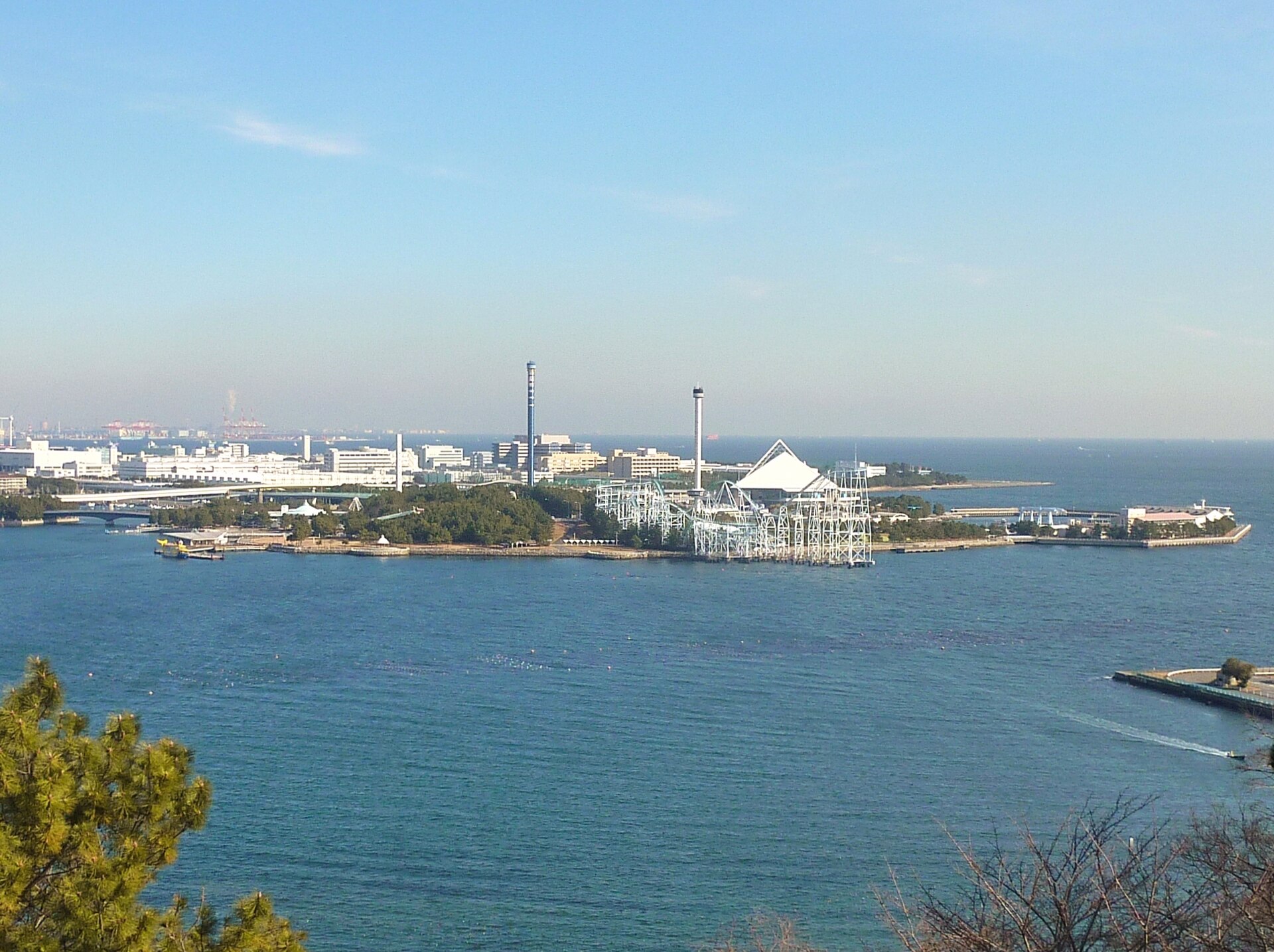 Quercus acuta / CC BY-SA 4.0
Entertainment · Kanagawa★★
Yokohama Hakkeijima Sea Paradise
7.1 km · straight line
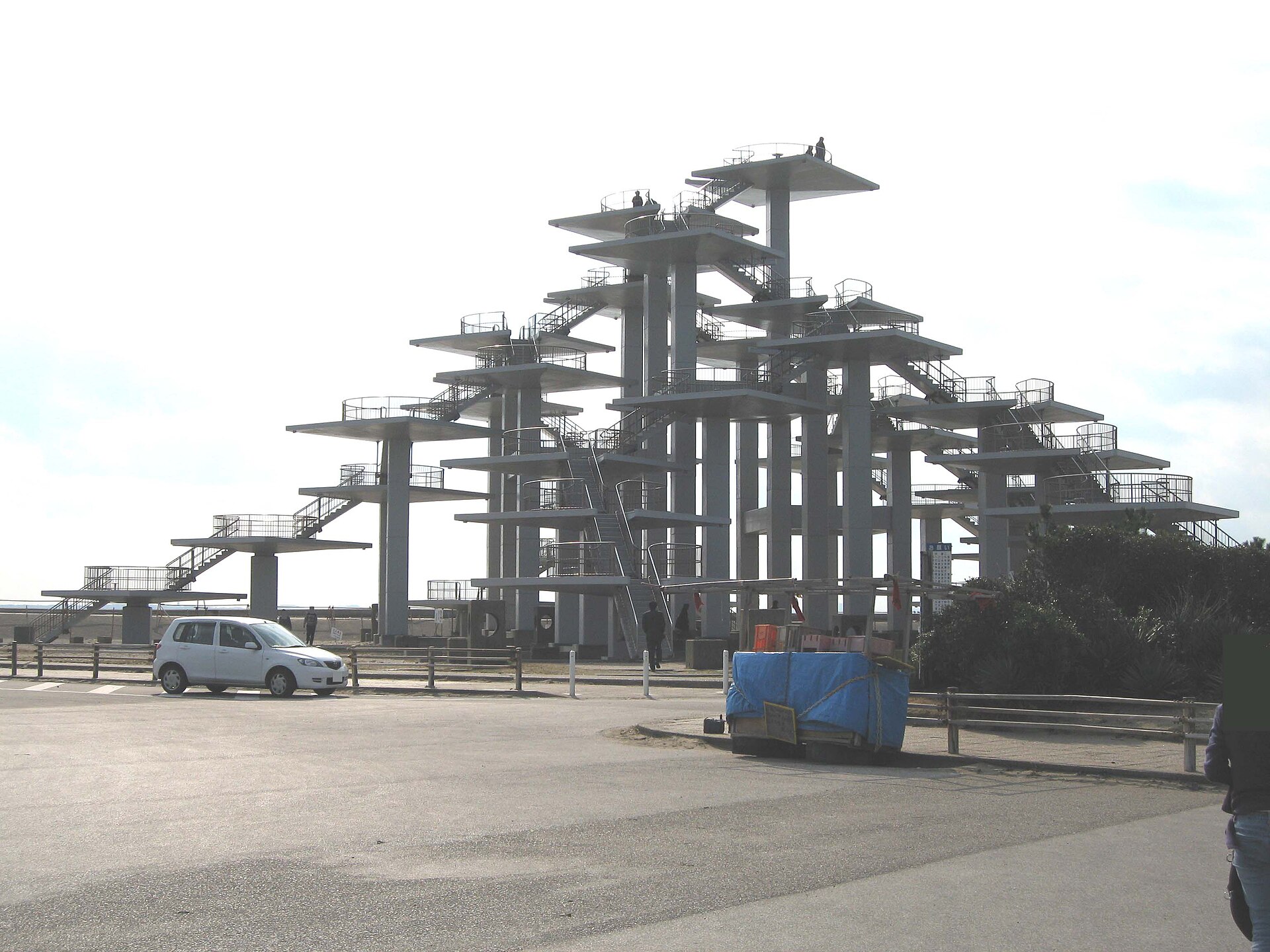 xpon / Public domain
Nature · Chiba★
Meiji Centennial Observation Tower
8.8 km · straight line
 illustration (AI-illustrated)
Local life · Kanagawa★
Shinnase Beach
11.3 km · straight line
 Reginald Pentinio / CC BY 2.0
History · Kanagawa★
Hokokuji
12.0 km · straight line
Distances are straight lines on the map, not travel times.