Gunma northwest · NakanojoNo.292★Open in map →
Shima Onsen
— a cure-spring valley set apart in 1954
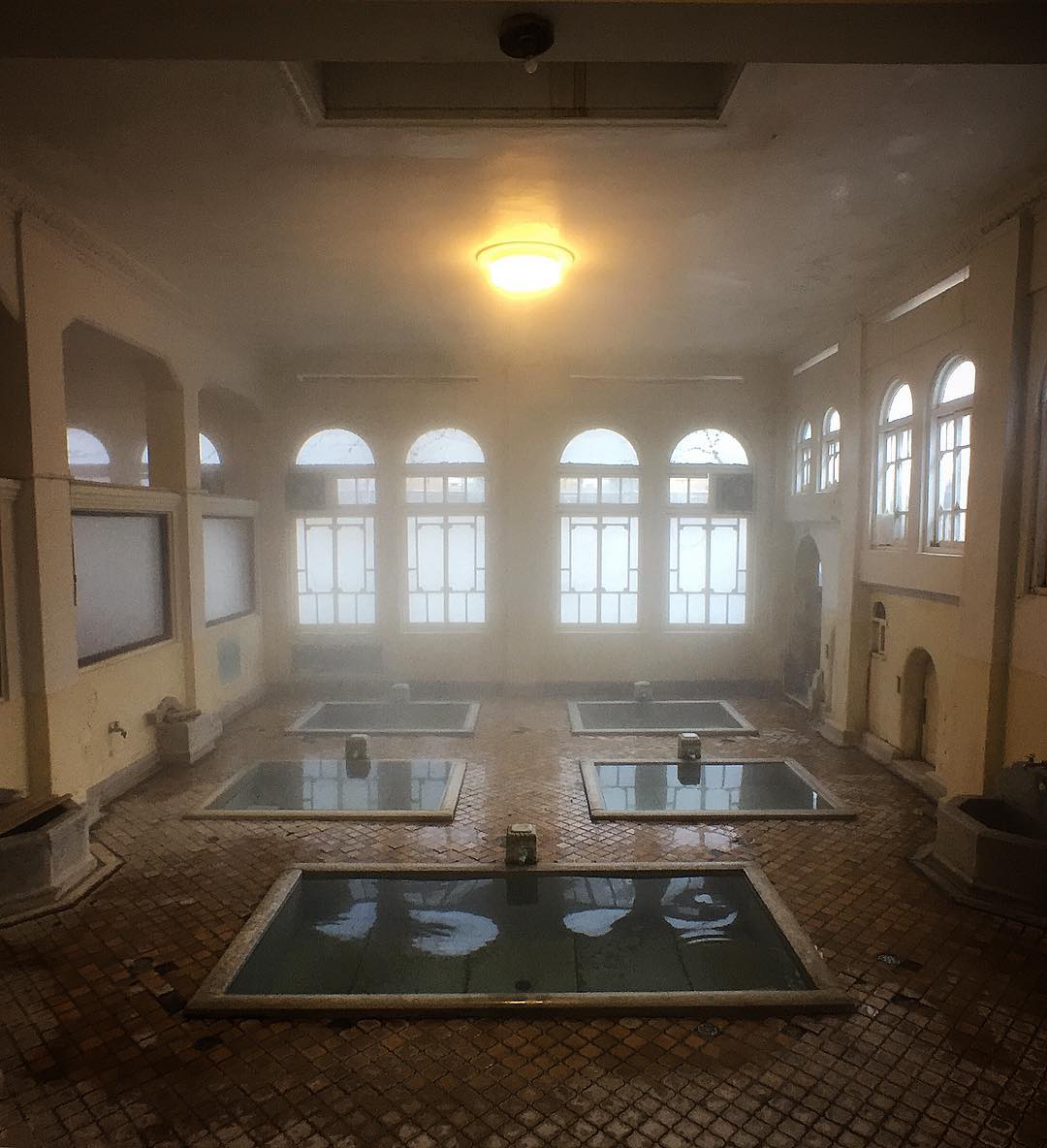
A hot-spring valley in a national park, designated in 1954 as one of Japan's first three health-resort springs. Drinkable water, riverside inns strung along several kilometres, and a bright blue reservoir at the head of the valley.
- FromTokyo Stn
- ~3 htrain + bus (bus ~40 min)
- Get off atShima Onsen bus terminal
- From there
- Shima Onsen
The sweet spot
Foreign itineraries through Gunma default to Kusatsu, whose sulphur pools and water-cooling performance make an obvious set piece. Shima has no equivalent spectacle — the appeal is the river, the blue reservoir and water you can drink, none of which reduces to one photograph.
Where it is
20 more notes in Gunma · open the map →What to look for
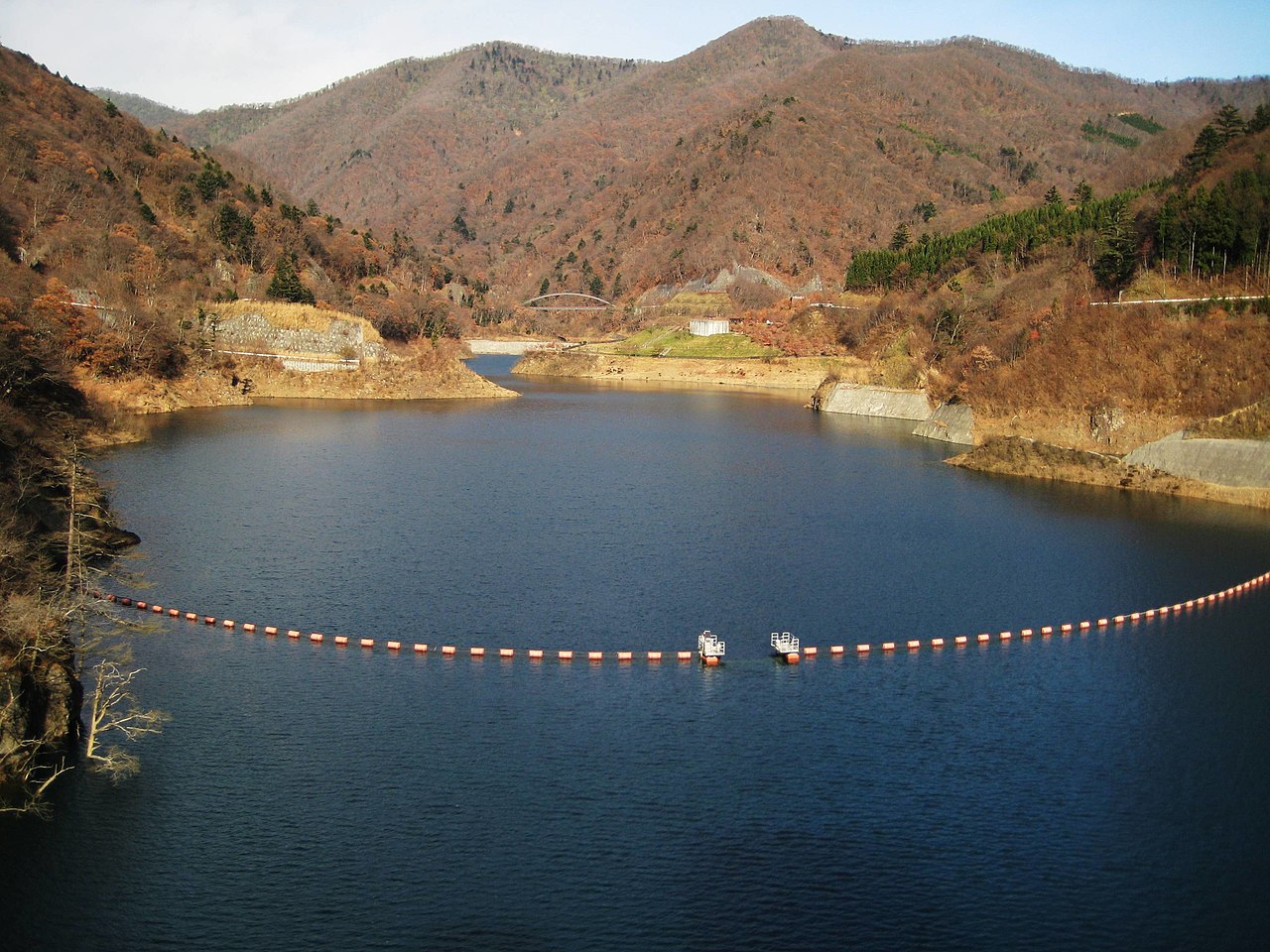
- Okushima LakeA reservoir at the head of the valley whose water reads an intense blue in good light — locally called Shima Blue. A road runs round the shore.
- The Shima potholesRound hollows ground into the riverbed rock by the current, seen from walkways downstream of the town.
- Public drinking fountainsThe spring is mild enough to drink, and cups are set out at fountains in the town; several inns have their own.
- Hinatami footbathA free footbath at the far Hinatami end of the valley, beside an old wooden Yakushi hall.
- SekizenkanA landmark wooden inn on the river, approached across a small red arched bridge — the most photographed building in the valley.
How to actually get there
- Tokyo Stn → Takasaki Stn (Joetsu/Hokuriku Shinkansen, ~50 min)
- Takasaki Stn → Nakanojo Stn (JR Agatsuma Line, ~1 h; infrequent)
- Nakanojo Stn → Shima Onsen (Kan-etsu Kotsu bus, ~40 min)
- Shinkansen + JR local + bus
- Tokyo Stn →(Joetsu or Hokuriku Shinkansen, ~50 min)→ Takasaki Stn →(JR Agatsuma Line, ~1 h)→ Nakanojo Stn →(Kan-etsu Kotsu bus bound for Shima Onsen, ~40 min)→ Shima Onsen terminal. About 3 hours in all. Agatsuma Line trains are infrequent, so fix the Takasaki connection before choosing a departure.
- Same route in reverse
- The last buses down to Nakanojo leave in the early evening, and the Agatsuma Line also thins out after dark. Check both timetables at the bus terminal on the day you arrive rather than on the day you leave.
About the place
Shima Onsen is strung out along a narrow river valley at about 700 metres, inside Joshinetsu-kogen National Park. Its name means 'forty thousand,' from an old belief that the water cures forty thousand ailments, and the spring was already known as a curative bath in the medieval period; local tradition puts the first bather here as the Heian general Sakanoue no Tamuramaro, on campaign in the east. In 1954 the health ministry created a designation for hot springs suited to recuperation rather than nightlife, and named three places in the first group: Sukayu in Aomori, Nikko Yumoto in Tochigi, and Shima. The water is a sodium-calcium chloride-sulfate spring, hot at the source at roughly 40 to 80 degrees, and mild enough to drink — which is why there are public drinking fountains along the valley as well as baths. With around 37 places to stay spread over several kilometres of riverside, the resort never resolves into a single dense strip.
How to enjoy it
Stay a night rather than day-tripping: the designation exists precisely because this is water that rewards repeated bathing. Walk downstream to the potholes in the morning, then head up to Okushima Lake around midday, when the colour is at its strongest. Drink from one of the public fountains at least once — it is the point of the place. Autumn colour in the valley runs from early October to mid-November.
Background & history
Shima was known as a healing spring long before the modern era — the name itself encodes the claim that it works on forty thousand illnesses, and the town's founding story attaches to Sakanoue no Tamuramaro's eastern campaigns. What changed its modern character was the designation of National Health Resort Hot Springs in 1954, a category created for places with abundant medically useful water and surroundings fit for a stay of several days rather than a single night. Shima was named in the first group of three. The designation shaped what got built: drinking fountains and free footbaths rather than bar streets, and inns that expect you to bathe repeatedly over a couple of days. The water is recommended locally for rheumatism, neuralgia and skin complaints, and taken internally for stomach trouble.
Before you go
- Cash
- Bring cash. Several bathhouses and small shops along the valley take cash only, and day-use bathing is paid at the door.
- Good to know
- Most of the baths belong to working inns and open to day visitors only within set hours. Ask at the tourist office by the bus terminal which are open that day before walking out to one.
- Another way
- A direct limited express from Ueno Station, the Kusatsu-Shima, reaches Nakanojo without a change in a little over two hours, then the same 40-minute bus.
- After you get off
- The Shima Onsen terminal is at the upper end of the inhabited valley. The riverside potholes lie downstream, and Okushima Lake is further upstream — both need the local bus, a taxi or a long walk from here.
Nearby notes
 Aspere / CC0
Onsen · Gunma★★★
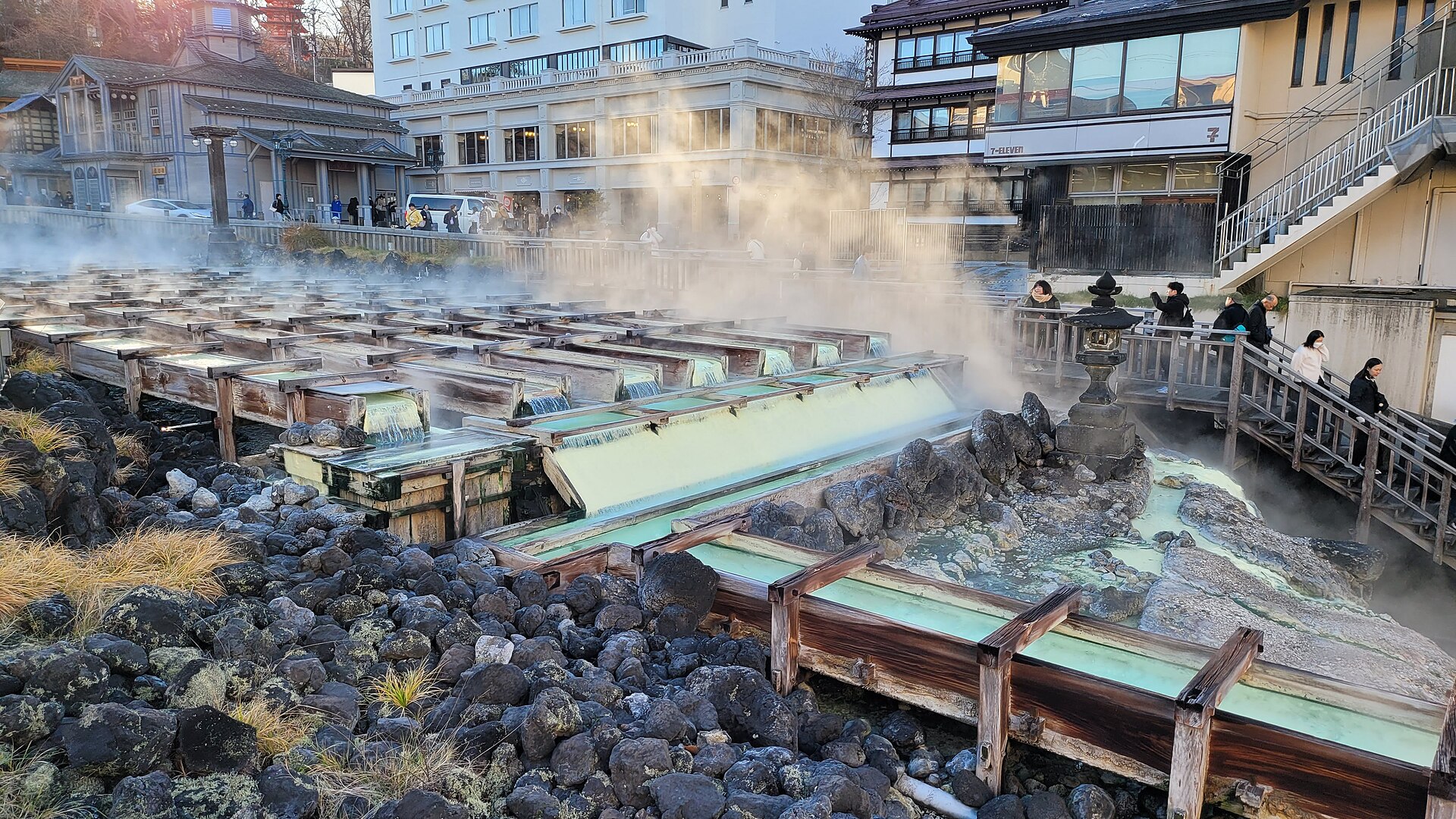
Kusatsu Onsen's Yubatake
17.4 km · straight line
 On-chan / CC0
Local life · Gunma★★
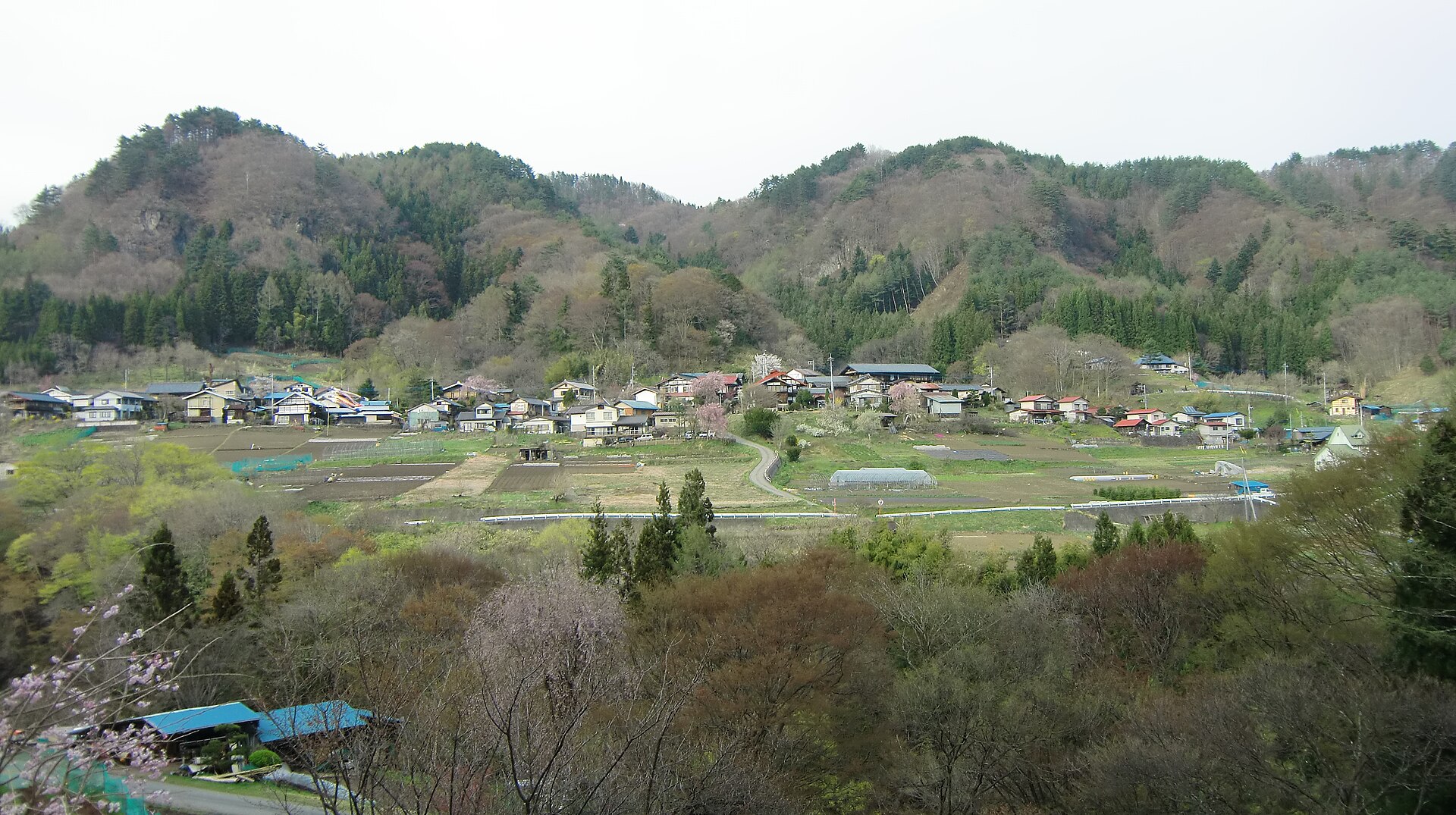
Kuni-Akaiwa Village
17.9 km · straight line
 Qurren / CC BY-SA 4.0
Onsen · Gunma★★
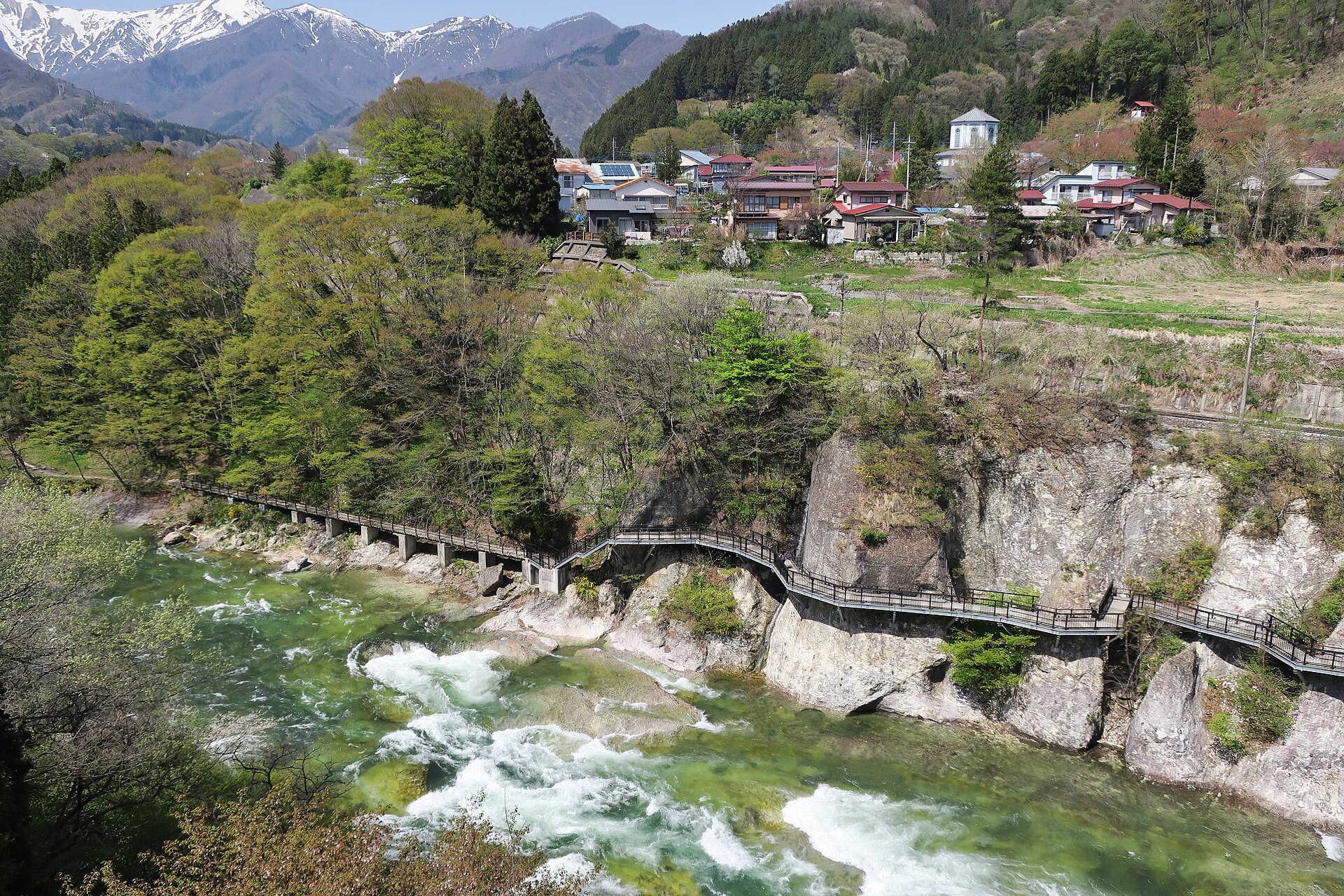
Minakami Onsen
19.7 km · straight line
 Raita Futo from Tokyo, Japan / CC BY 2.0
Nature · Gunma★★
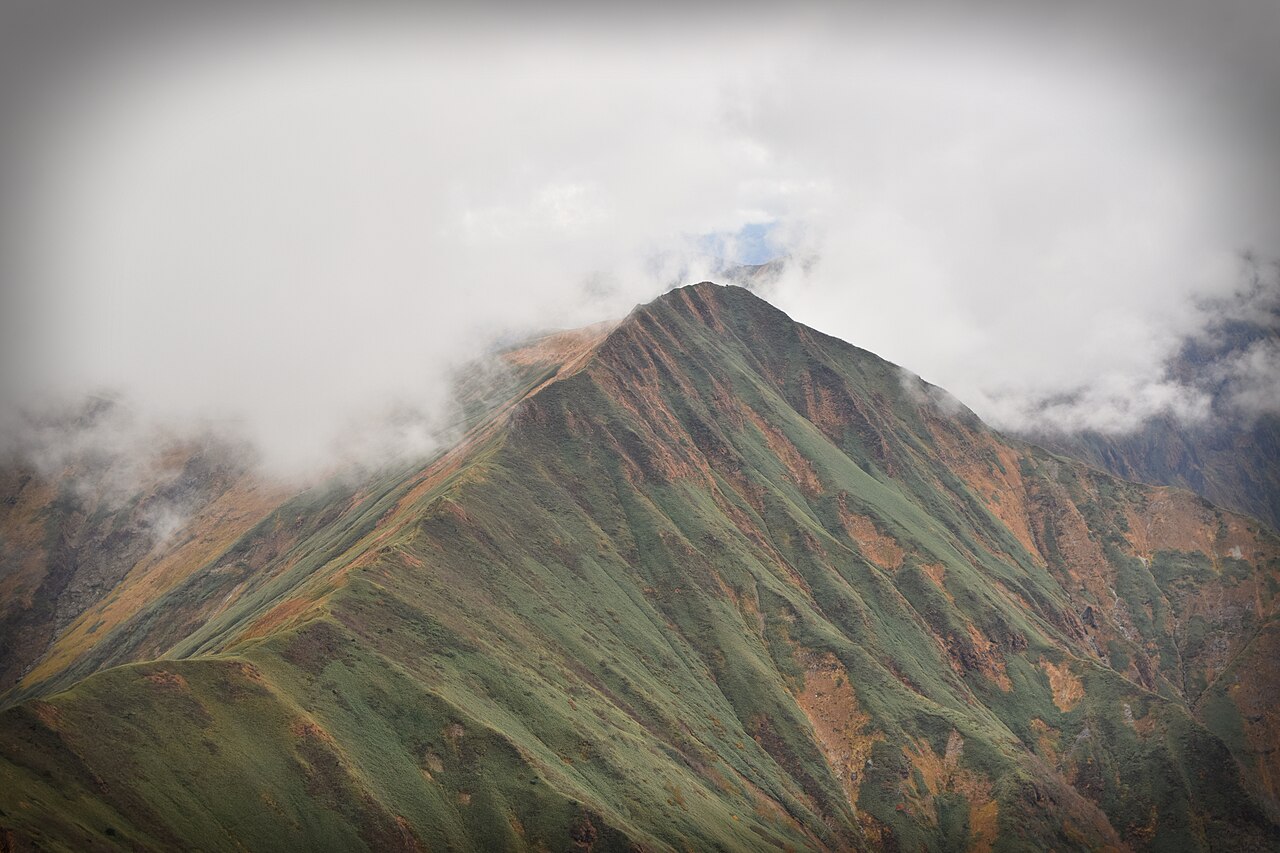
Mt. Tanigawa
21.4 km · straight line
Distances are straight lines on the map, not travel times.