Osaka · ShinsaibashiNo.404★★★Open in map →
Shinsaibashi-suji
— the covered street that runs into Dotonbori
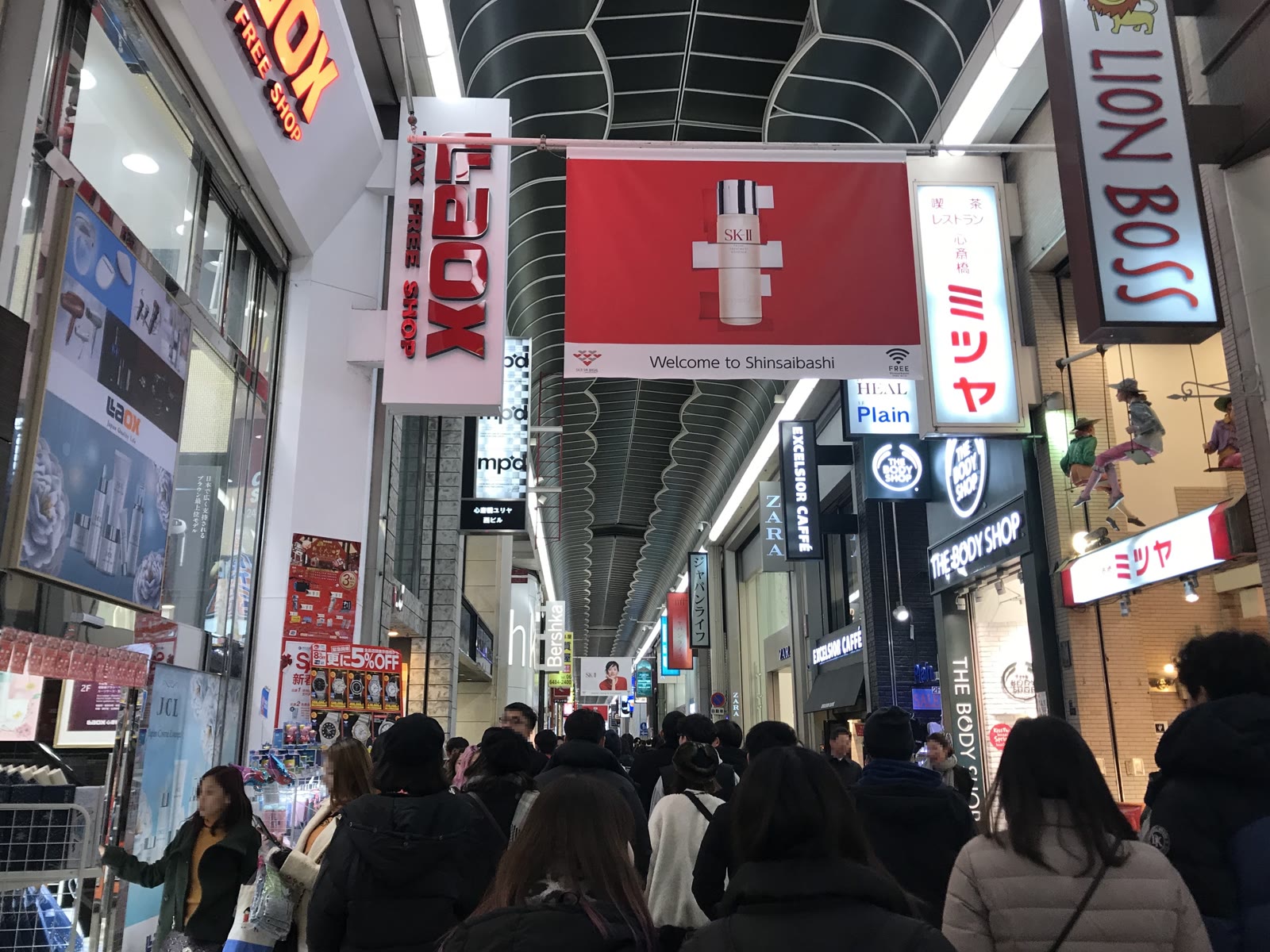
Osaka's principal shopping arcade, running under cover from Nagahori-dori south to Ebisubashi at the edge of Dotonbori. It has been a merchants' street since the Edo period and delivers you straight to the Glico sign.
- FromShin-Osaka Stn
- ~20 minOsaka Metro, doorstep
- Get off atShinsaibashi Station (Midosuji, Nagahori Tsurumi-ryokuchi lines)
- On foot
- Shinsaibashi-suji
Where it is
40 more notes in Osaka · open the map →What to look for — in walking order
- The arcade itselfa covered pedestrian run from Nagahori-dori to Ebisubashi, breaking briefly at Suomachi-dori; usable in any weather
- The Ebisubashi endthe southern mouth, which opens straight onto Dotonbori and the Glico sign — the arcade is how locals arrive there
- Daimaru Shinsaibashithe department store anchoring the west side, whose original building was designed by William Merrell Vories and completed in 1922 and 1925
- The lanes either sideAmerikamura to the west, young and loud; the quieter streets toward Sakaisuji to the east — both a few steps off the arcade
How to actually get there
- Shin-Osaka Stn → Shinsaibashi Stn (Osaka Metro Midosuji Line, ~12 min).
- Station exit → walk south through the arcade (~15 min end to end), passing Daimaru Shinsaibashi.
- Arcade mouth at Ebisubashi → Dotonbori and the Glico sign.
- Detour west into Amerikamura, or east toward Sakaisuji.
- Shin-Osaka Stn → Shinsaibashi Stn (Osaka Metro Midosuji Line)
- From Shin-Osaka take the Osaka Metro Midosuji Line south to Shinsaibashi, about 12 minutes with no change. The station exits directly onto the arcade. From Osaka/Umeda Station the same line takes about 8 minutes.
- Shinsaibashi Stn → Shin-Osaka Stn
- The Midosuji Line runs back north to Umeda and Shin-Osaka until late. Namba Station is also about 10 minutes' walk south past Ebisubashi, which connects to the Kintetsu and Nankai networks for Nara and the airport.
About the place
Shinsaibashi-suji is the covered arcade that runs north-south through central Osaka, from Nagahori-dori at its top down to Ebisubashi at the bottom, where it opens directly onto Dotonbori and the Glico sign. That geography is the point: most visitors arrive at Dotonbori, photograph the sign, and never realise the arcade behind them is the older and larger thing. It has been a shopping street since the Edo period, and by the mid-eighteenth century, when Daimaru opened here, the district was already established as the place Osaka came to buy. The roof means it works in any weather, which in a city with Osaka's summers is not a small consideration. The arcade breaks briefly at Suomachi-dori and resumes, so it reads as two runs rather than one continuous tube. Daimaru's Shinsaibashi store is the landmark along it: the original building was designed by the American architect William Merrell Vories, completed in stages in 1922 and 1925, and its successor still anchors the west side. Off the arcade to the west is Amerikamura, which is a completely different register — young, loud, secondhand — and to the east the quieter lanes toward Sakaisuji.
How to enjoy it
Walk it north to south and let it deliver you to Dotonbori rather than the other way round: you arrive at the Glico sign from the direction Osaka arrives from, and the sign is better in the evening anyway. The whole arcade takes about fifteen minutes end to end at a walking pace, longer if you stop. Because it is roofed, this is the reliable move on a wet or brutally hot day when the rest of an Osaka itinerary stops working. Kuromon Market is about ten minutes east on foot if you want food rather than shops, and Amerikamura is immediately west if you want the opposite of a department store.
Background & history
The Shinsaibashi district developed as a merchants' quarter in the Edo period and had become established as Osaka's shopping centre well before the modern era; Daimaru's presence here dates to the eighteenth century. The Vories-designed Daimaru building, completed in two phases in 1922 and 1925, was among the most significant works of Western-style commercial architecture in prewar Osaka and gave the street an architectural anchor it has kept through successive redevelopments. The arcade's roofing and the pedestrianisation of the street are twentieth-century additions to a route that had been the city's principal shopping axis for far longer.
Before you go
- Cash
- Department stores and chain shops take cards and IC payment. Carry cash for smaller shops and the food stalls at the Dotonbori end. IC cards work throughout the Osaka Metro.
- Good to know
- The arcade is a public street and open at all hours, but shops generally run from late morning to evening. It is one of the busiest pedestrian routes in Osaka on weekend afternoons. Cycling is restricted within the arcade during shopping hours.
- Another way
- Namba Station on the Midosuji, Yotsubashi and Sennichimae lines is at the southern end past Dotonbori. Osaka Metro Nagahori Tsurumi-ryokuchi Line also stops at Shinsaibashi from the east-west direction.
- After you get off
- Shinsaibashi Station exits open directly into the northern half of the arcade. Turn south and walk; the arcade runs continuously to Ebisubashi and Dotonbori.
Nearby notes
 BradBeattie at English Wikipedia / CC BY-SA 3.0
Local life · Osaka★★
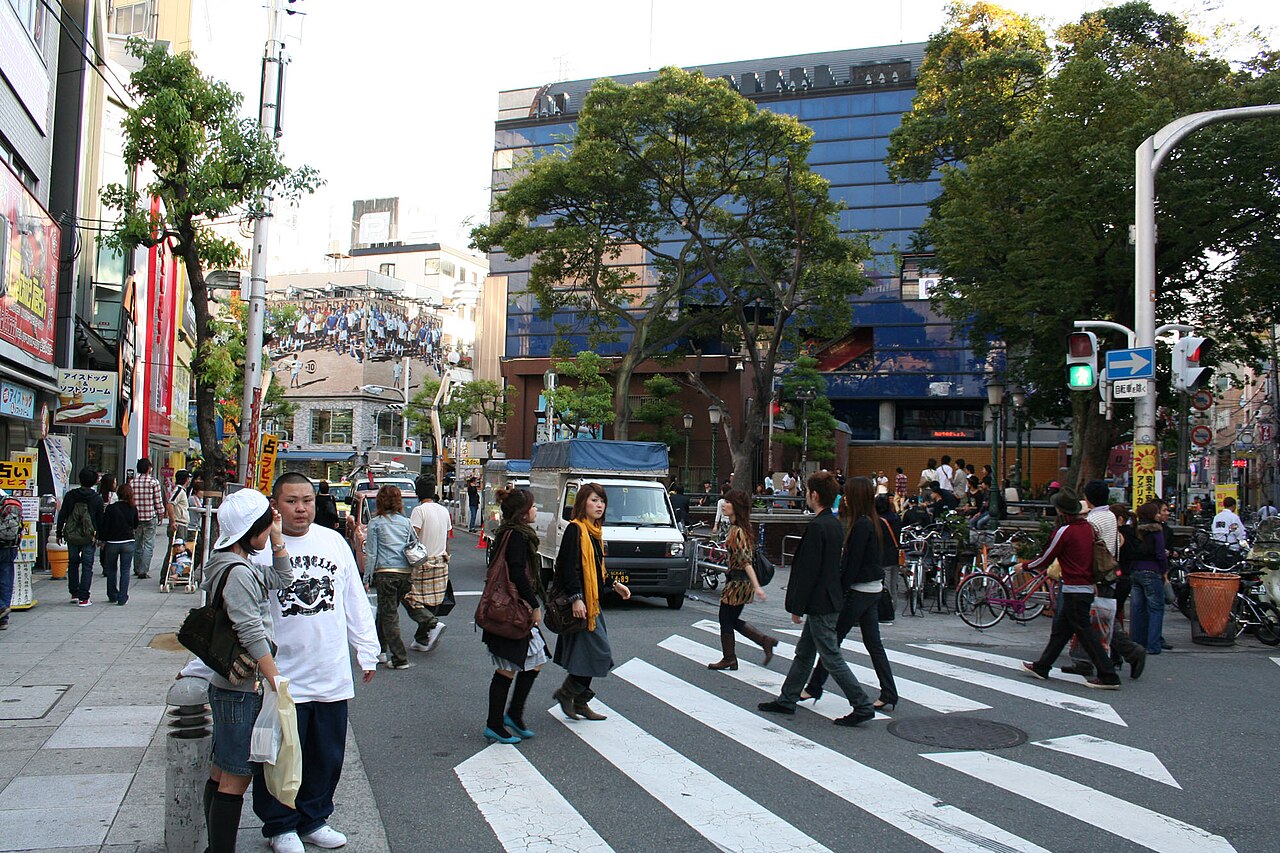
Amerikamura and Triangle Park
0.3 km · straight line
 Sakaori (talk) / CC BY-SA 3.0
Food · Osaka★★★
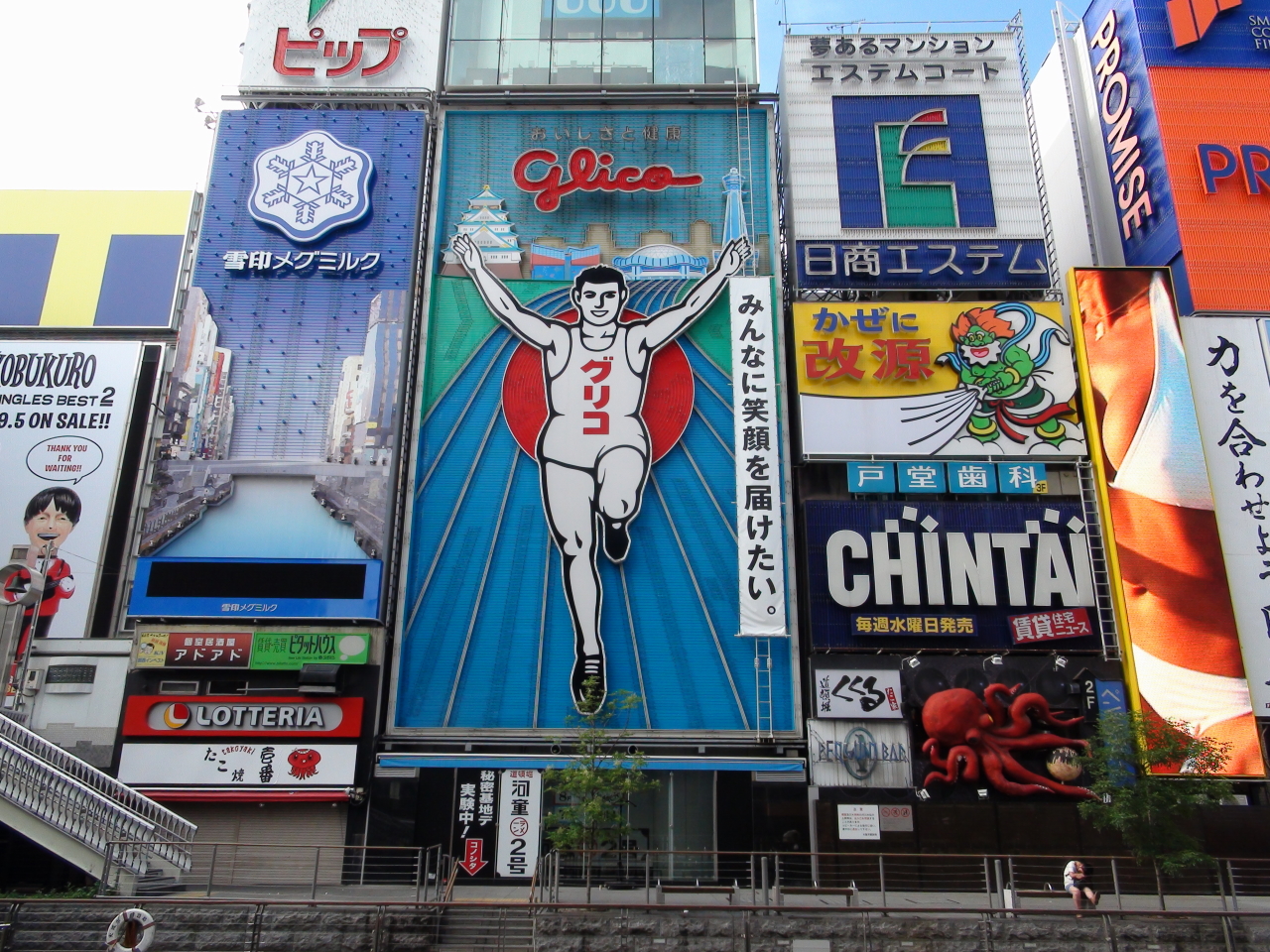
The Glico Sign at Dotonbori
0.4 km · straight line
 lumoplank / CC0
Local life · Osaka★★★
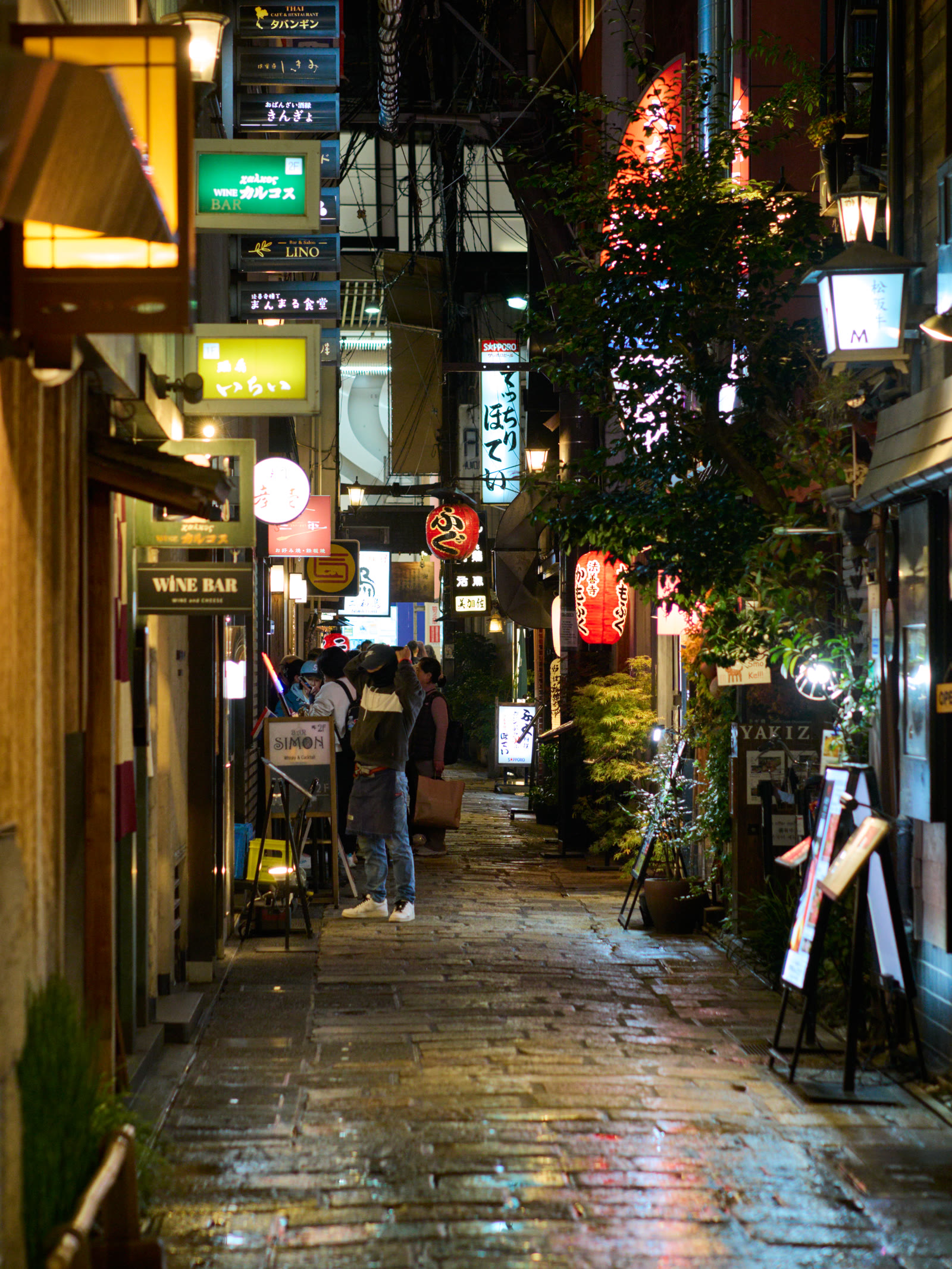
Hozenji Yokocho
0.5 km · straight line
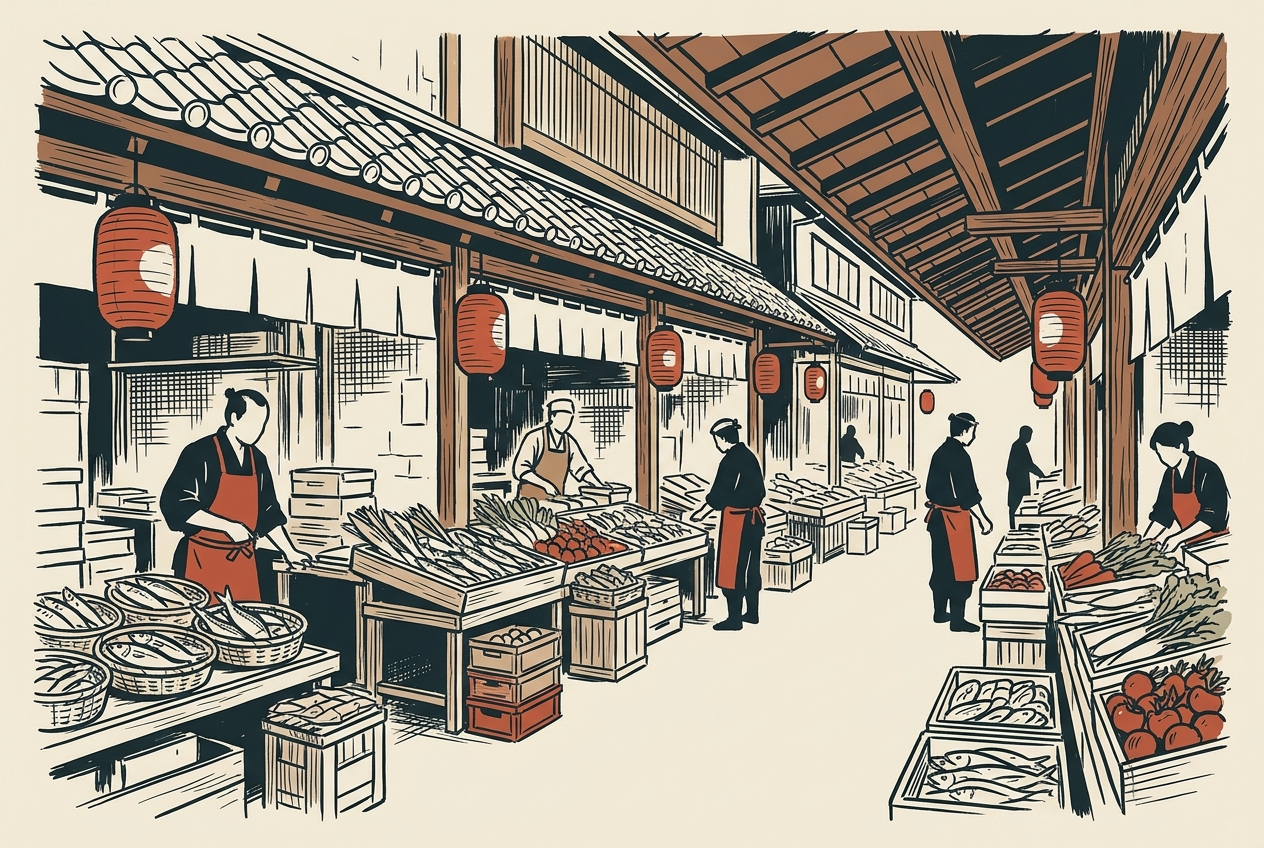 illustration (AI-illustrated)
Food · Osaka★★★
Kuromon Ichiba Market
0.7 km · straight line
Distances are straight lines on the map, not travel times.