Osaka · Minami / NambaNo.128★★★Open in map →
The Glico Sign at Dotonbori
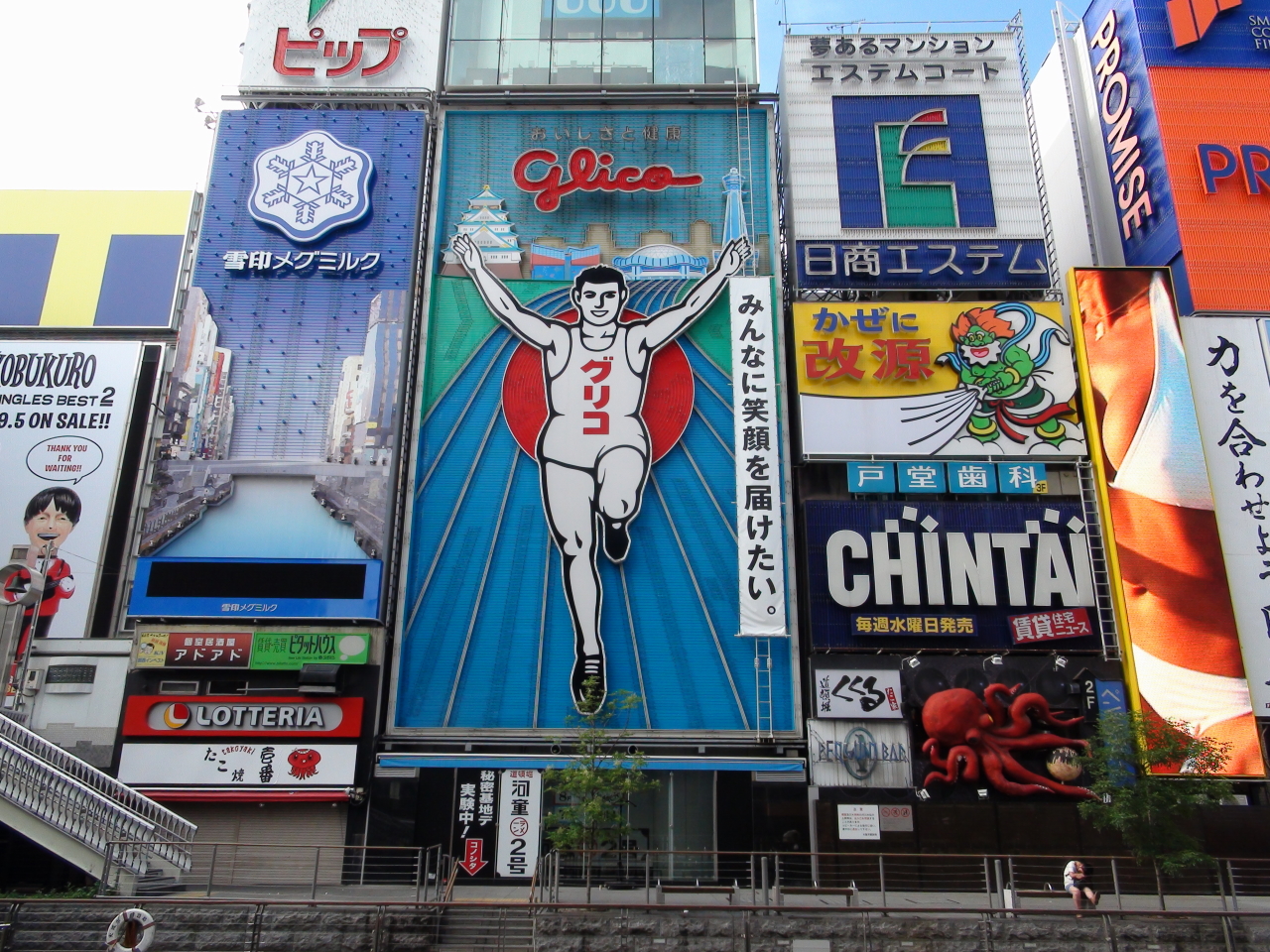
The giant Glico running-man sign above Ebisubashi Bridge glows over the Dotonbori canal — the defining image of Osaka's Minami district.
- FromOsaka / Umeda Stn
- ~15-20 minmetro (very frequent)
- Get off atNamba Stn (Osaka Metro Midosuji line)
- On foot
- The Glico Sign at Dotonbori
Where it is
40 more notes in Osaka · open the map →What to look for — in walking order
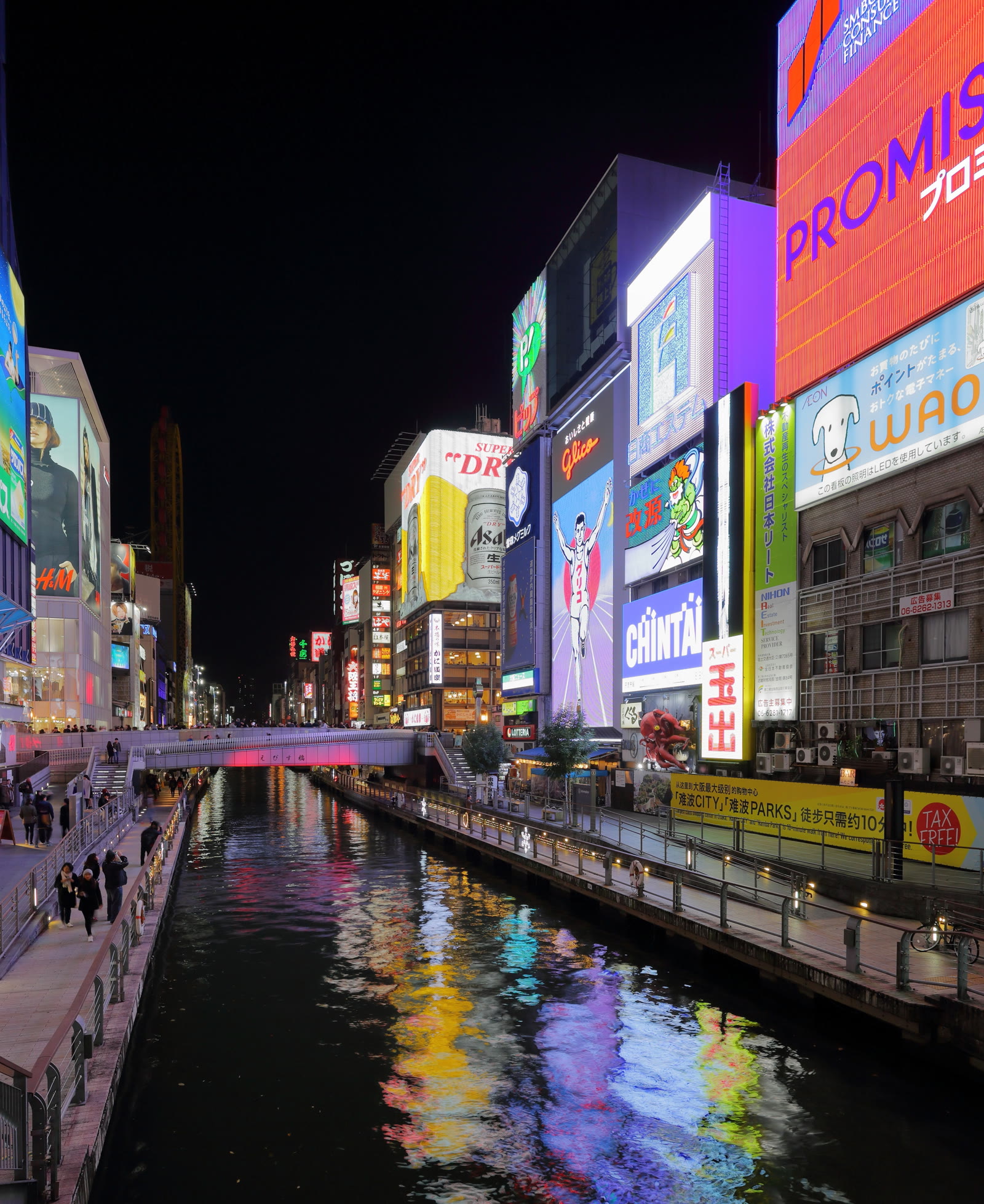
- Ebisubashi Bridgethe bridge facing the sign directly — the classic photo position
- Canal-side promenadethe walkway below the bridge for an upward angle on the sign
- The sixth-generation signLED panel replacing earlier neon versions in 2014, lit from ~30 min after sunset to midnight
- Dotonbori canalthe waterway completed in 1615 that gives the district its name
How to actually get there
- From Umeda Station (beside JR Osaka Station), take the Osaka Metro Midosuji line south to Namba Station (~8 min).
- Leave Namba Station by Exit 14.
- Walk north about 5 minutes to Ebisubashi Bridge; the Glico sign is directly across the canal.
- Osaka Metro Midosuji line
- From Umeda Station (next to JR Osaka Station), take the Osaka Metro Midosuji line south to Namba Station (about 8 minutes). Leave by Exit 14 and walk north about 5 minutes to Ebisubashi Bridge and the Glico sign. Total about 15-20 minutes. Trains run very often, every few minutes.
- return
- Return the same way: walk back to Namba Station and take the Osaka Metro Midosuji line north to Umeda. Trains run frequently until around midnight, so no need to rush.
About the place
The Glico sign shows a runner crossing a finish line on a blue track. Ezaki Glico, an Osaka food company, has used this image to stand for energy and health since 1935, when the sign first went up over Dotonbori. The version standing today is the sixth generation, and the first built with LEDs rather than neon tubes. It faces Ebisubashi Bridge, widely cited as the best vantage for a photograph. From the canal-side promenade below, you can also shoot upward at the sign. At its most spectacular in the evening, when the screens and lanterns all come on at once — this is one of the most recognisable stretches of street in Japan.
How to enjoy it
The sign lights up roughly 30 minutes after sunset and stays on until midnight — come in the evening to see it at full brightness. For the head-on view, stand on Ebisubashi Bridge. For a different angle, walk down to the canal promenade and shoot upward. Early morning brings calm water and clean reflections before the day's crowds fill the lanes.
Background & history
The canal that gives Dotonbori its name was completed in 1615. In 1621, the Tokugawa Shogunate designated the district as Osaka's entertainment quarter. By 1662, the avenue held six kabuki theatres and five bunraku (puppet theatre) stages. Ebisubashi Bridge was originally built to reach the nearby Ebisu Shrine. Ezaki Glico raised its first sign here in 1935; the current LED version is the sixth, rebuilt several times since.
Before you go
- Cash
- The Osaka Metro accepts IC cards (rechargeable transit cards such as ICOCA or Suica) and cash. Many small standing bars in the surrounding lanes are cash only, so carry some coins and small notes.
- Good to know
- The canal embankment can be slippery after rain. In the evening (about 19:00-22:00) the crossing is very crowded and slow to move through.
- Another way
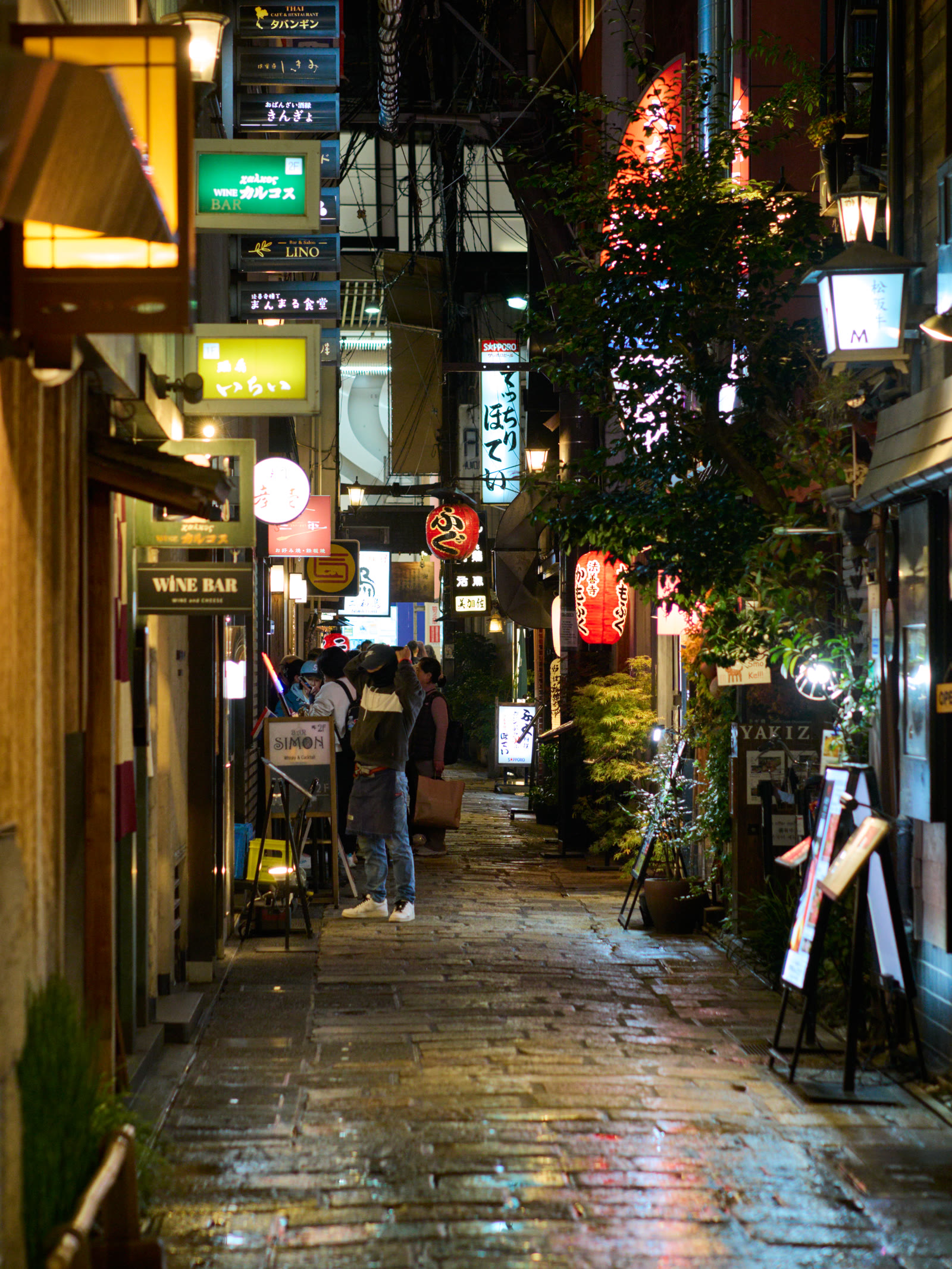
- Hozenji Yokocho, one block south of the canal, is a narrow stone-paved lane of old restaurants. It is quieter than the canal at any hour.
- After you get off
- From Namba Station Exit 14, walk north about 5 minutes to reach Ebisubashi Bridge, where the Glico sign faces you across the canal.
Nearby notes
 lumoplank / CC0
Local life · Osaka★★★
Hozenji Yokocho
0.1 km · straight line
 そらみみ / CC BY-SA 4.0
Local life · Osaka★★★
Shinsaibashi-suji
0.4 km · straight line
 BradBeattie at English Wikipedia / CC BY-SA 3.0
Local life · Osaka★★
Amerikamura and Triangle Park
0.5 km · straight line
 illustration (AI-illustrated)
Food · Osaka★★★
Kuromon Ichiba Market
0.5 km · straight line
On a curated routeOsaka, Morning to Neon →
Distances are straight lines on the map, not travel times.