Okutama · ShiromaruNo.069★Open in map →
Shiromaru Dam Fish Ladder
— a 330-metre tunnel you can walk inside
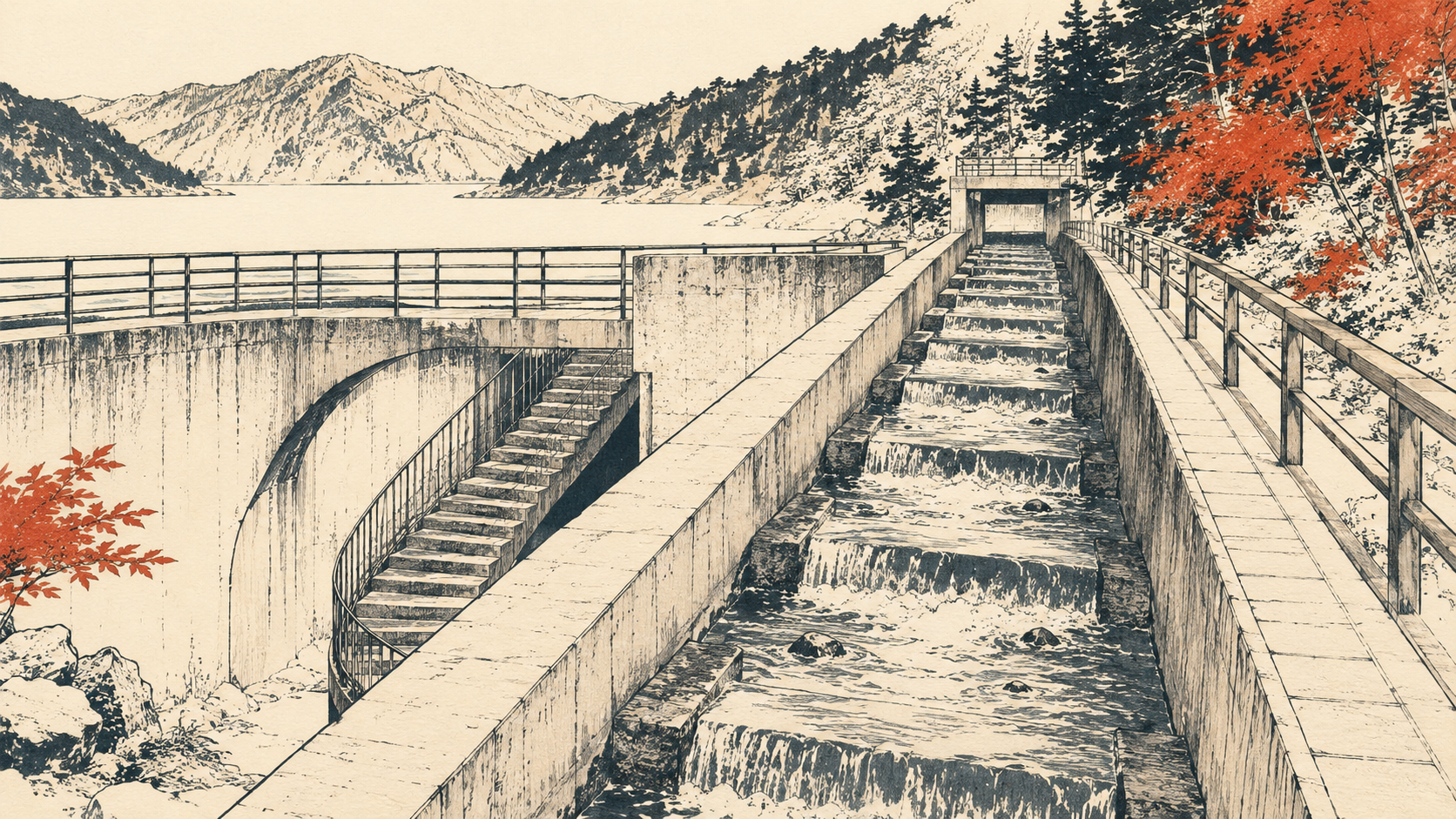
A walk-in fish ladder beside a small hydroelectric dam on the upper Tama River, where a spiral staircase descends into a roughly 330-metre underground channel built to help river fish pass the dam.
- FromShinjuku
- ~1h50mtrain (1-2/hr)
- Get off atShiromaru Station
- On foot
- Shiromaru Dam Fish Ladder
The sweet spot
There is little English signage or information about it, the entrance looks like a plain staff door, and it opens only on limited days, so most day-trippers walk past it toward the lake buses.
Where it is
77 more notes in Tokyo · open the map →What to look for — in walking order
- Spiral staircase descenta large spiral stair drops from the surface into the underground channel
- 330-metre channela long stepped waterway that climbs about 27 metres to bypass the dam
- Resting poolscalmer basins set along the route where fish pause between climbs
- Ayu and yamameayu (sweetfish) and yamame (landlocked trout) among the fish that use the ladder
How to actually get there
- Shinjuku → Ome (Chuo Line rapid toward Ome, via Tachikawa, ~75 min).
- Ome → Shiromaru (change to the Ome Line local toward Okutama, ~30 min).
- Shiromaru Station → the fish ladder (cross the river bridge, south-bank path, ~10-15 min walk).
- Chuo + Ome Line, ~1h50m
- Shinjuku →(Chuo Line rapid toward Ome, via Tachikawa, ~75 min)→ Ome Station → change to the Ome Line local toward Okutama →(~30 min)→ Shiromaru, a small unstaffed station. Total about 1 hour 50 minutes. On weekends and holidays a direct Holiday Rapid Okutama also runs from Tokyo Station, saving the change at Ome. Trains toward Okutama run only about 1 to 2 per hour, so check the day's timetable before you leave.
- trains thin out in the evening
- Ome Line trains back toward Ome and Tokyo run only about 1 to 2 per hour and get sparse in the evening. Note the return times before you leave the station, or check them on the platform when you arrive.
About the place
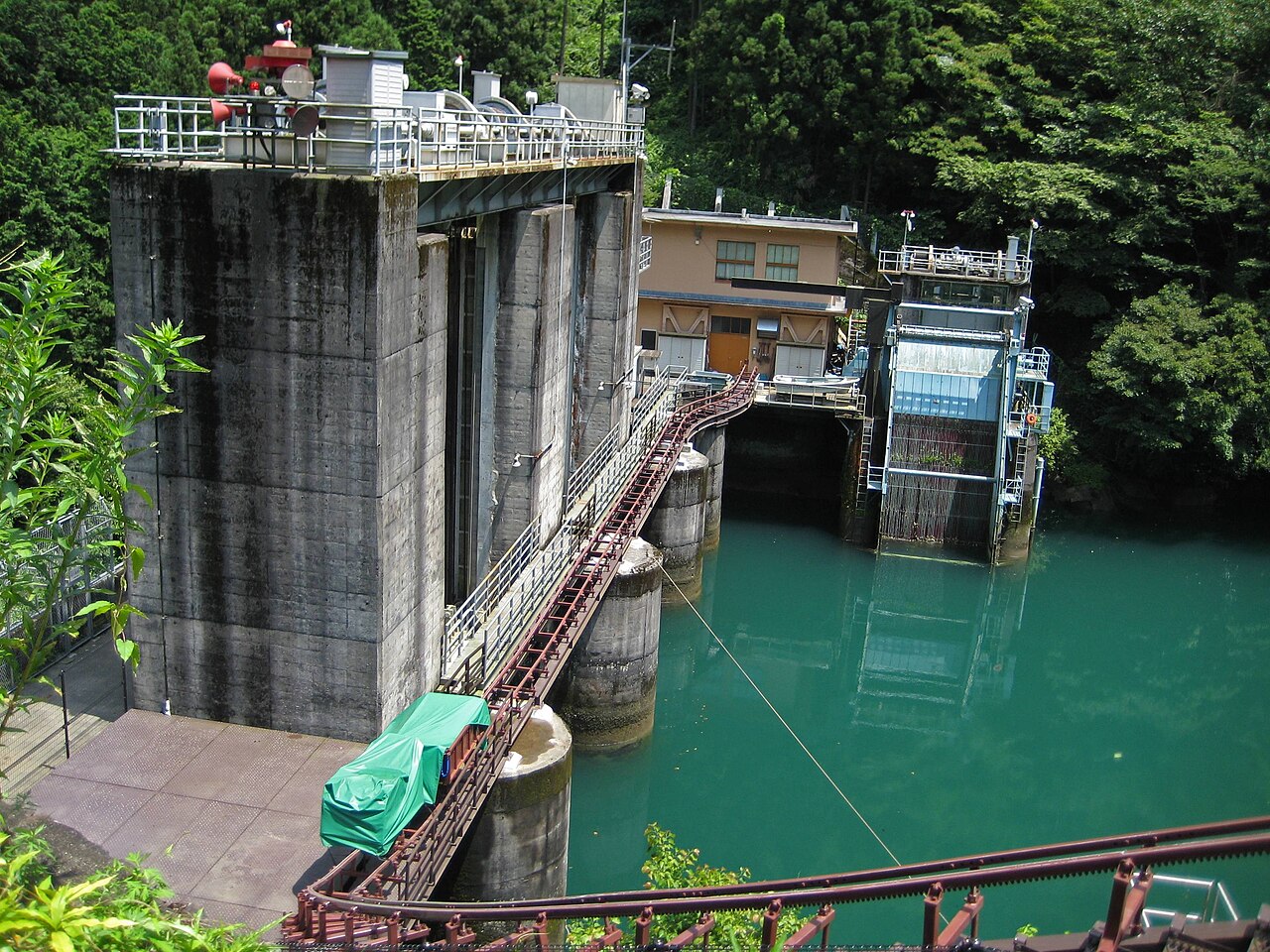
Shiromaru Dam is a small hydroelectric wall on the upper Tama River in Okutama, at the western edge of Tokyo. Its unusual draw is the fish ladder — a passage that lets fish swim past the dam. A spiral staircase drops from ground level into an underground tunnel about 330 metres long and roughly 27 metres high. The channel is stepped and dotted with resting pools so that ayu (sweetfish) and yamame (a landlocked trout) can work their way upstream in stages. It is documented as one of Japan's largest structures of its kind, and it is open to the public for free on a limited schedule.
How to enjoy it
Opening days are limited: generally weekends and holidays from April to November, and daily from mid-July to end of August, 10:00 to 16:00 (last entry 15:30). Dates change each year, so check the current schedule on the Okutama town website before going. Admission is free. Both Shiromaru and Hatonosu stations are unstaffed with no ticket machines, but Suica and PASMO readers work — load enough balance before boarding. From either station, the entrance is a short walk across the river bridge on the south-bank path, about 10 to 15 minutes.
Background & history
The dam, formally the Shiromaru Regulating Reservoir Dam, began operating in 1963 as part of the Tokyo Metropolitan Government's hydroelectric system on the Tama River. Because the dam blocked fish moving up and down the river, the national government added the fish ladder in 2001. Its length and 27-metre rise make it one of the largest fish passages in the country.
Before you go
- Cash
- Both Shiromaru and Hatonosu stations are unstaffed and have no ticket machine, but Suica and PASMO tap readers work, so load enough balance onto your card before you board. There is no shop at the ladder, so bring your own water.
- Good to know
- The ladder opens only on limited days (weekends and holidays April to November, daily mid-July to end of August, 10:00 to 16:00). Check the current schedule on the Okutama town website first.
- Another way
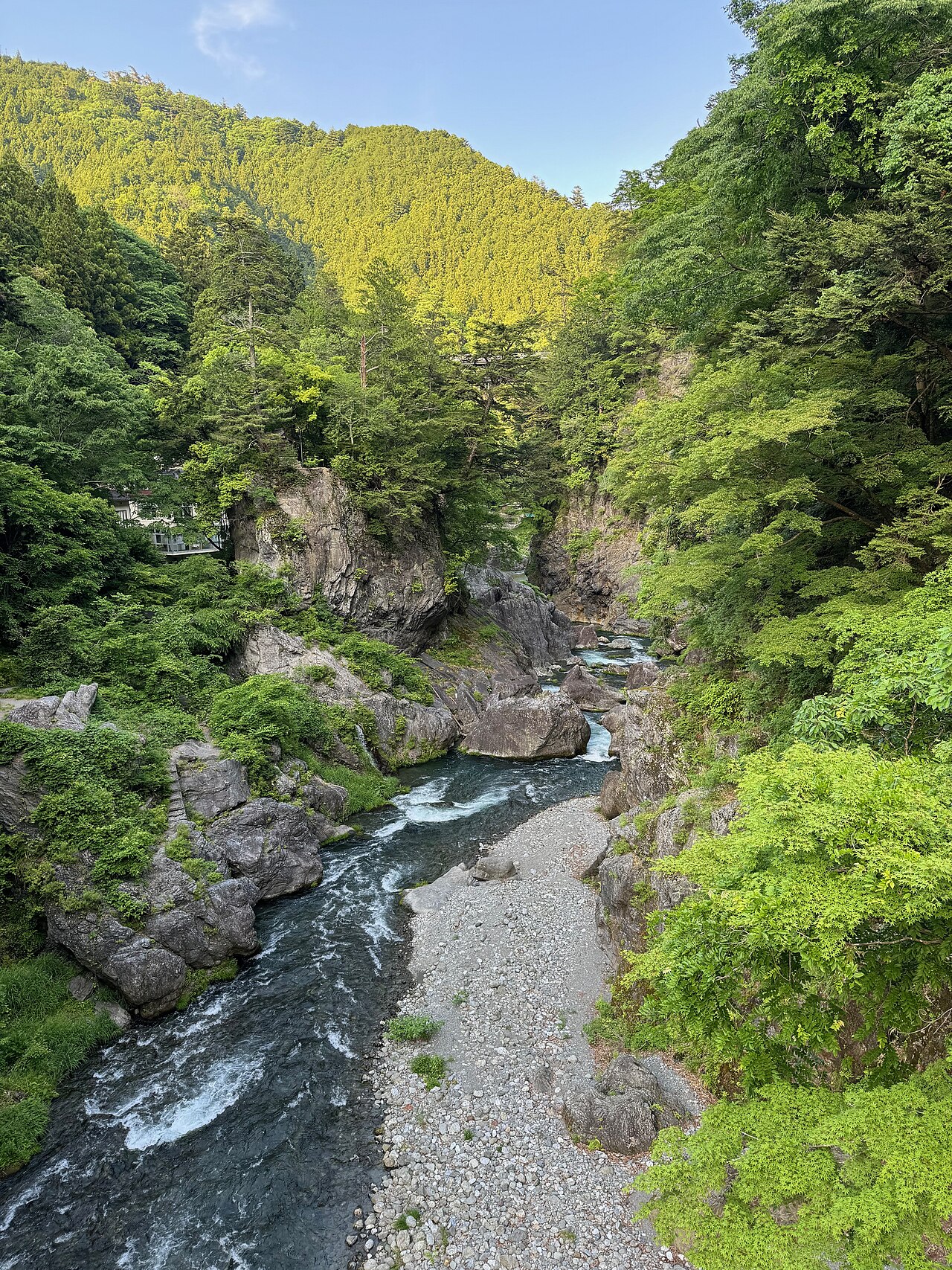
- From either station you can walk the Hatonosu Gorge path along the river to see the deep turquoise pools.
- After you get off
- The dam sits about midway between Hatonosu and Shiromaru stations. From the station, walk down toward the river, cross the Tama River on the bridge, and take the path on the south side of the river to the entrance, roughly a 10 to 15 minute walk. Do not walk along Route 411 on the north bank, which has no sidewalk.
Nearby notes
 皓月旗 / CC BY-SA 4.0
Nature · Tokyo★
Hatonosu Gorge
0.4 km · straight line
 Wiiii / CC BY 3.0
Culture · Tokyo★
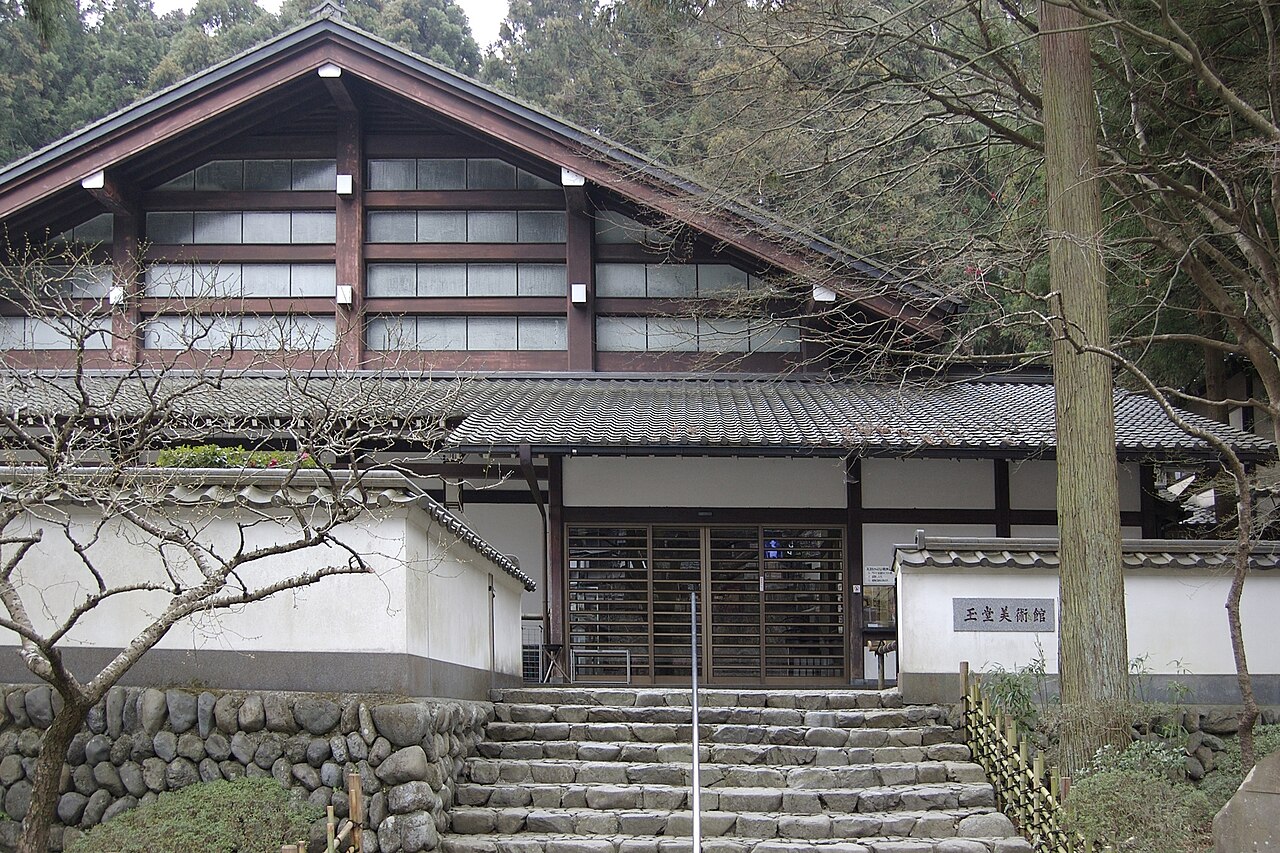
Gyokudo Art Museum
5.5 km · straight line
 illustration (AI-illustrated)
Food · Tokyo★
Sawanoi
6.3 km · straight line
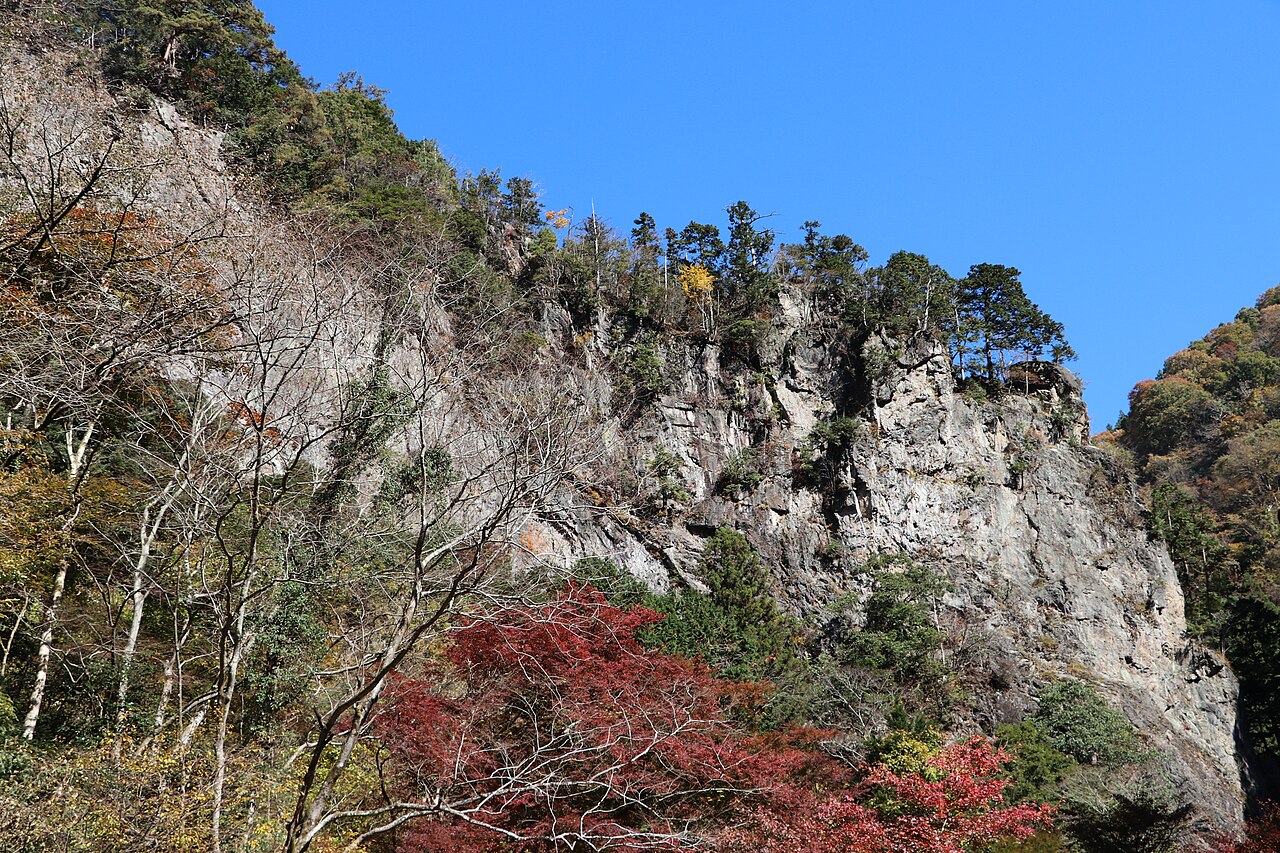 Osumi Akari / CC BY-SA 4.0
Nature · Tokyo★
Kanotoiwa
6.3 km · straight line
On a curated routeTokyo's Wild West →
Distances are straight lines on the map, not travel times.