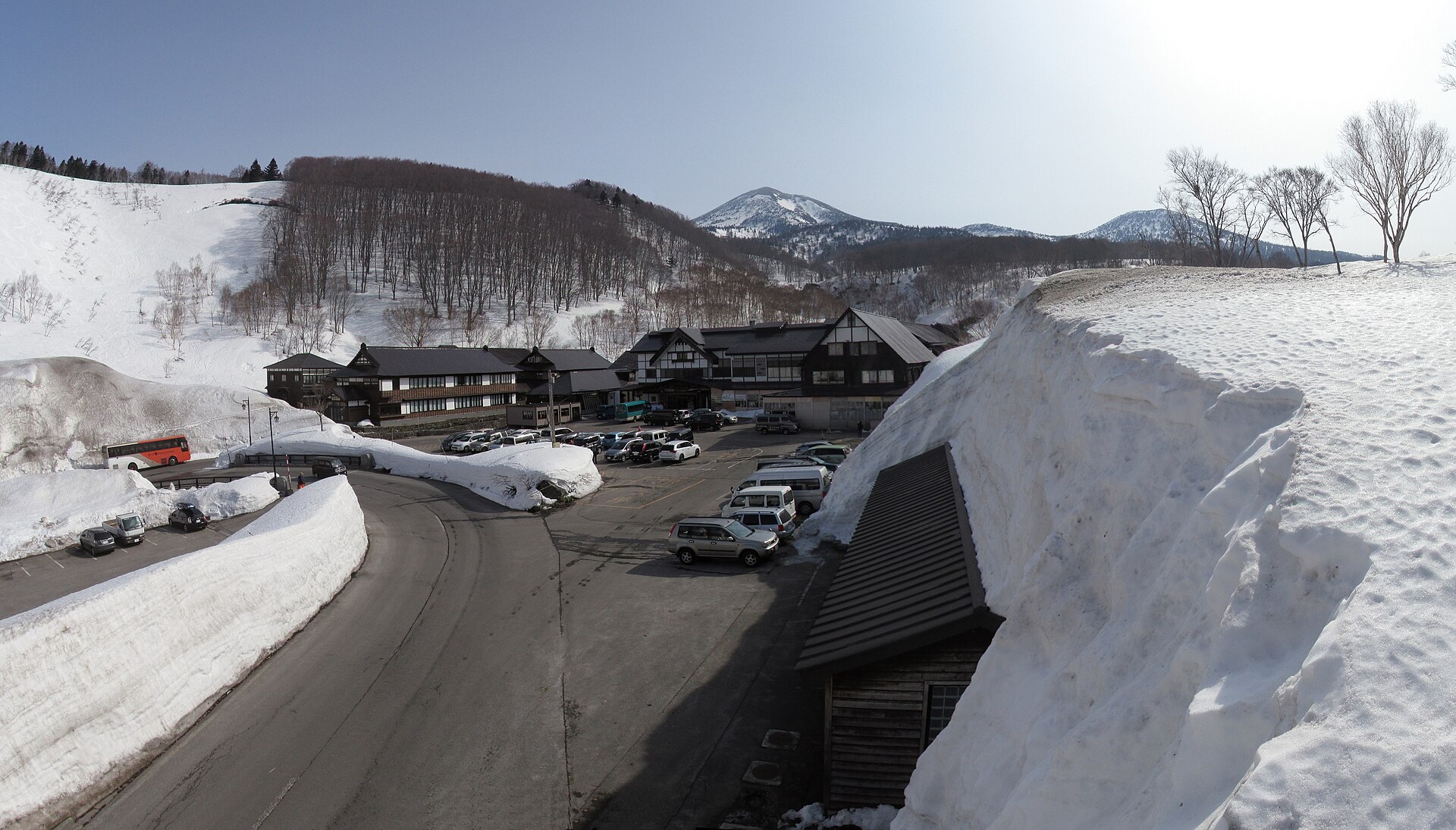
Hakkoda · Aomori CityNo.834★★★Open in map →
Sukayu Onsen
— The all-cypress mountain bath on Hakkoda
A single inn on the Hakkoda slopes at around 900 metres, built around one enormous bath of hiba cypress. It was the first place in Japan designated a national health-resort hot spring, and the snow that falls on it has set national records.
- FromAomori Station
- ~1 hr 10 minJR bus from Aomori Station
- Get off atSukayu Onsen (JR Bus Tohoku)
- On foot
- Sukayu Onsen
Where it is
34 more notes in Aomori · open the map →What to look for — in walking order
- Hiba Sennin-burothe mixed bath: 160 tatami of all-cypress room with no pillar in it
- Tama-no-yuthe smaller separated baths, same cloudy acidic water from another source
- Manju-fukashian outdoor steam seat where you sit clothed on a lidded box over the vent
- Jigokunumaa bare steaming pond below the inn where sulphurous gas still vents
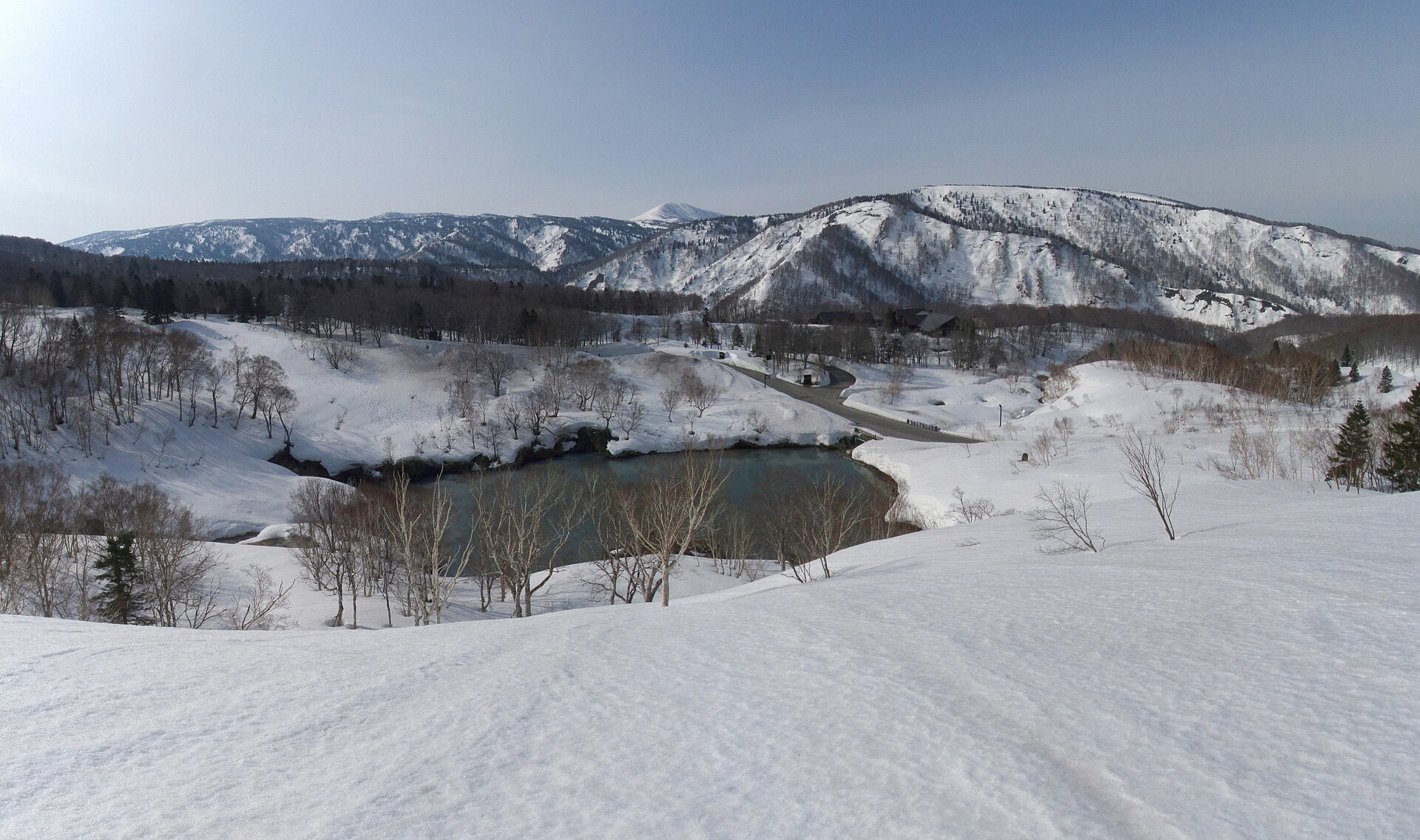
- Suiren-numaa marsh pond further up the road with the Hakkoda peaks standing behind it
How to actually get there
- Aomori Station east exit → Sukayu Onsen stop (JR Bus Tohoku Mizuumi-go, about 1 hr 10 min, no reservation needed).
- Pay at the inn's desk and change: the great cypress bath is mixed, the Tama-no-yu baths are separated by sex.
- Afterwards walk down to Jigokunuma to see the same volcanic water surfacing in the open.
- Take the Mizuumi-go back toward Aomori, or carry on up the road toward Lake Towada.
- JR Bus Tohoku Mizuumi-go from Aomori Station
- Aomori Station east exit →(JR Bus Tohoku, the Mizuumi-go service toward Lake Towada, about 1 hr 10 min by the inn's own guide)→ the Sukayu Onsen stop, which is at the inn door. The service takes no reservations, so you board on the day; fares are set out on JR Bus Tohoku's published table. From Shin-Aomori the same route runs about ten minutes longer.
- Back down to Aomori
- The same Mizuumi-go route returns from the Sukayu Onsen stop toward Aomori and Shin-Aomori. Departures are limited and the timetable changes with the season, so read the return times at the shelter before you undress. Overnight guests can book a free shuttle from Shin-Aomori instead.
About the place
Sukayu stands alone on the western slopes of Hakkoda at roughly 900 metres, on the road that climbs out of Aomori toward Lake Towada. It is a working inn rather than a resort: a lodging wing, a long-stay cure wing with shared kitchens, and one bathhouse that everyone comes for. That bath is built entirely of hiba cypress, wide and carried without a single supporting pillar, with more than one source feeding separate pools inside the same room. The water is acidic and sulphurous, clouded white, and the pools are named for how long their warmth stays with you.
How to enjoy it
Day visitors are taken as well as guests, and the 8 to 9 morning hour set aside for women in the great bath is worth planning the bus around. Check the current bathing hours on the inn's own page before you commit to a departure, because they have been revised. In winter the manju-fukashi steam seat outside is shut, and the road demands proper tyres.
Background & history
The spring is dated to 1684, when a hunter from Yokouchi, now part of Aomori city, is said to have followed a wounded deer into the mountains and found hot water where the animal had healed. The place was called Shika-no-yu, the deer's bath, before the name shifted to Sukayu. Bathers came for long cures through the Edo period, and in 1954 Sukayu was named the first of Japan's designated national health-resort hot springs. On 26 February 2013 the weather station here measured 566 centimetres of lying snow, the second deepest figure in the national record.
Before you go
- Cash
- Day-use bathing is 1,000 yen for adults and 500 yen for elementary-school children. Bus fares are paid on board against the operator's table, so bring cash — the mountain stops have no ticket machines.
- Good to know
- The manju-fukashi steam seat closes once the snow lies. Road crews stop clearing the mountain road after 5pm in winter, and the inn asks winter drivers to have four-wheel drive or chains. Bathing hours have been revised recently, so confirm them for the day you go.
- Another way
- By car it is about 40 minutes up from the Aomori-Chuo interchange, about 50 minutes from the Aomori interchange and about 45 minutes from Kuroishi. A taxi from central Aomori takes roughly 45 minutes.
- After you get off
- The Sukayu Onsen stop is in front of the inn itself, so there is no walk in from the road. The day-use entrance is inside the main building — ask at the desk rather than heading straight for the bath.
Nearby notes
 MaedaAkihiko / CC BY-SA 4.0
Nature · Aomori★★★
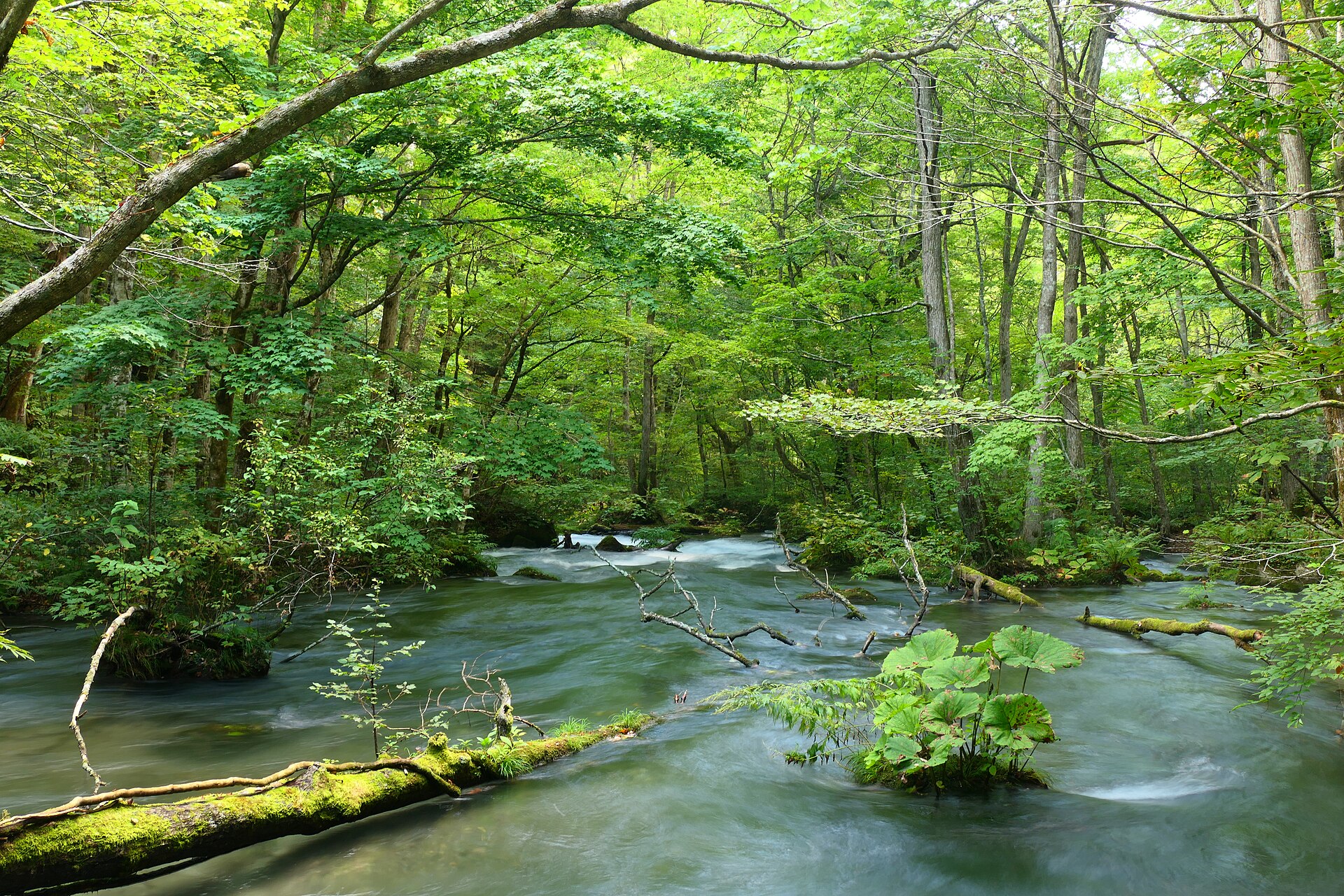
Oirase Gorge
16.2 km · straight line
 掬茶 / CC BY-SA 4.0
Local life · Aomori★★
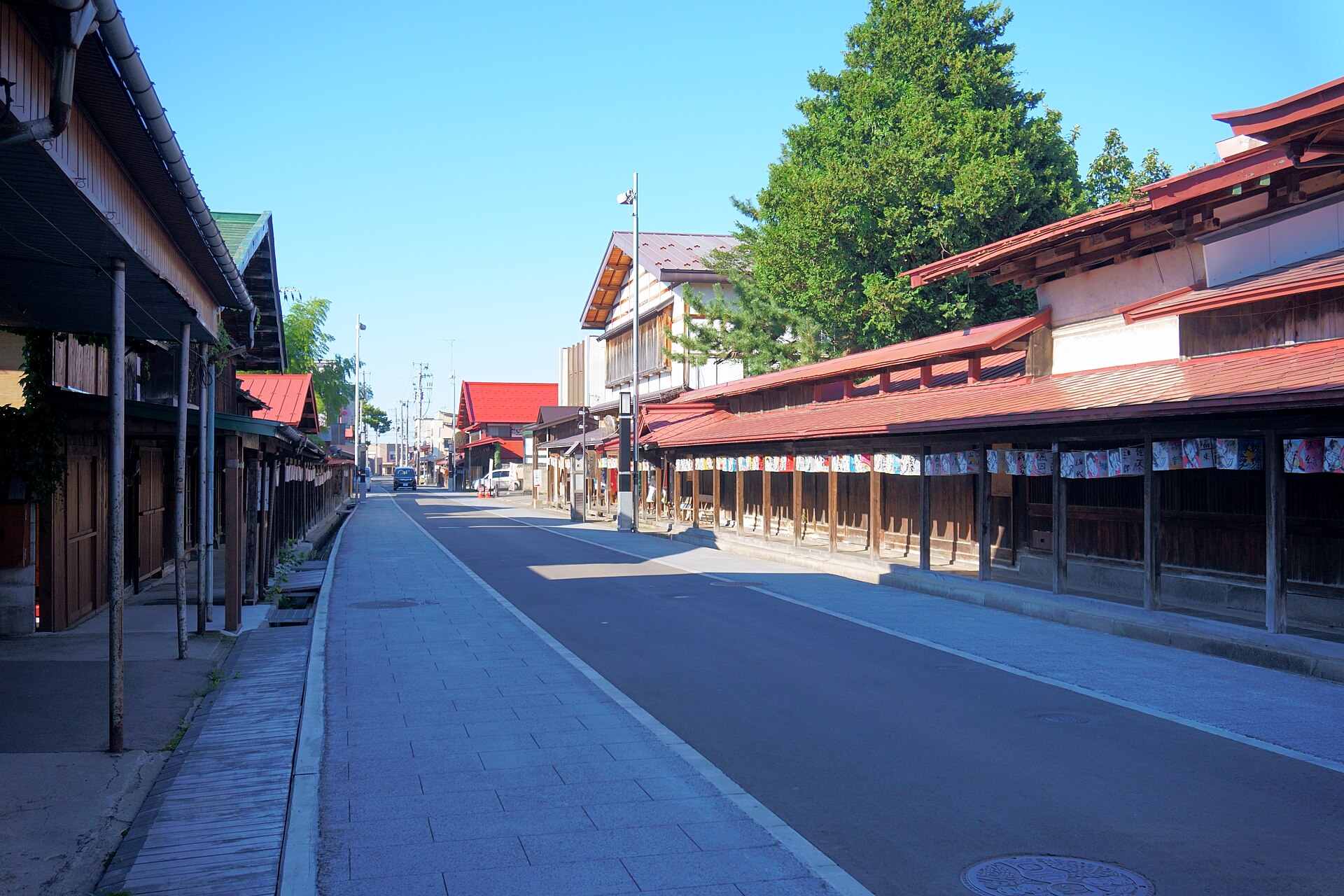
Kuroishi Komise Street
21.6 km · straight line
 663highland / CC BY 2.5
Culture · Aomori★★
Aomori Museum of Art
21.6 km · straight line
 あおもりくま (Aomorikuma) / CC BY-SA 4.0
Food · Aomori★★
Mutsu Bay Scallops
21.9 km · straight line
Distances are straight lines on the map, not travel times.