Kanagawa · YugawaraNo.313★★Open in map →
Yugawara Onsen
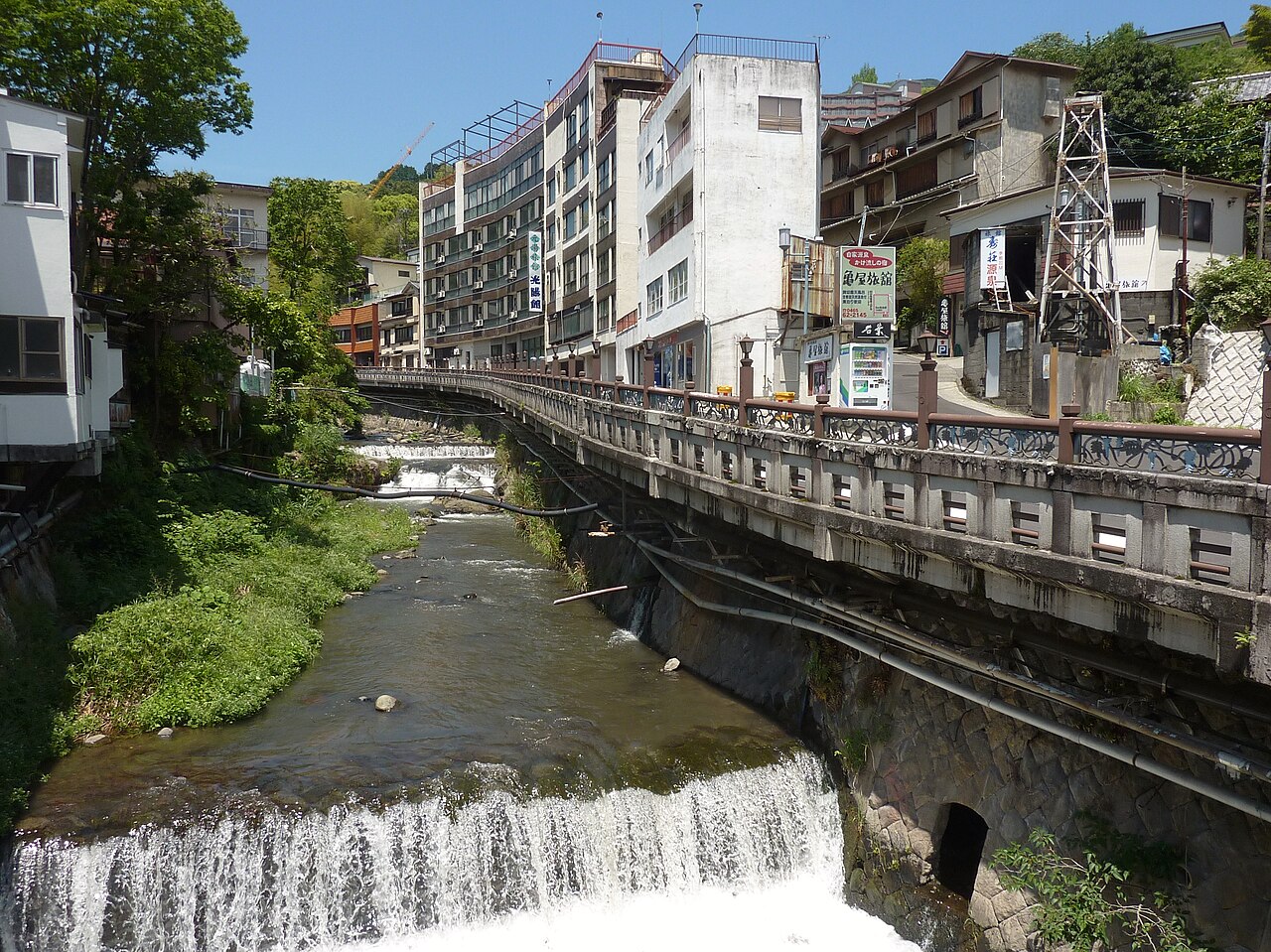
A small, weakly alkaline hot-spring town in a river valley at the western edge of Kanagawa — about ninety minutes from Tokyo, one stop before Atami.
- FromTokyo Stn
- ~1 hr 50 mintrain (frequent) + short bus
- Get off atOchiaibashi bus stop (from Yugawara Stn)
- On foot
- Yugawara Onsen
The sweet spot
Trains from Tokyo run straight past Yugawara to Atami and on toward Hakone, and it barely appears in the English-language hot-spring lists foreign visitors read. The town is small, residential and undramatic — no lake, no ropeway, no volcanic valley — so day-trippers keep going one more stop.
Where it is
43 more notes in Kanagawa · open the map →What to look for — in walking order
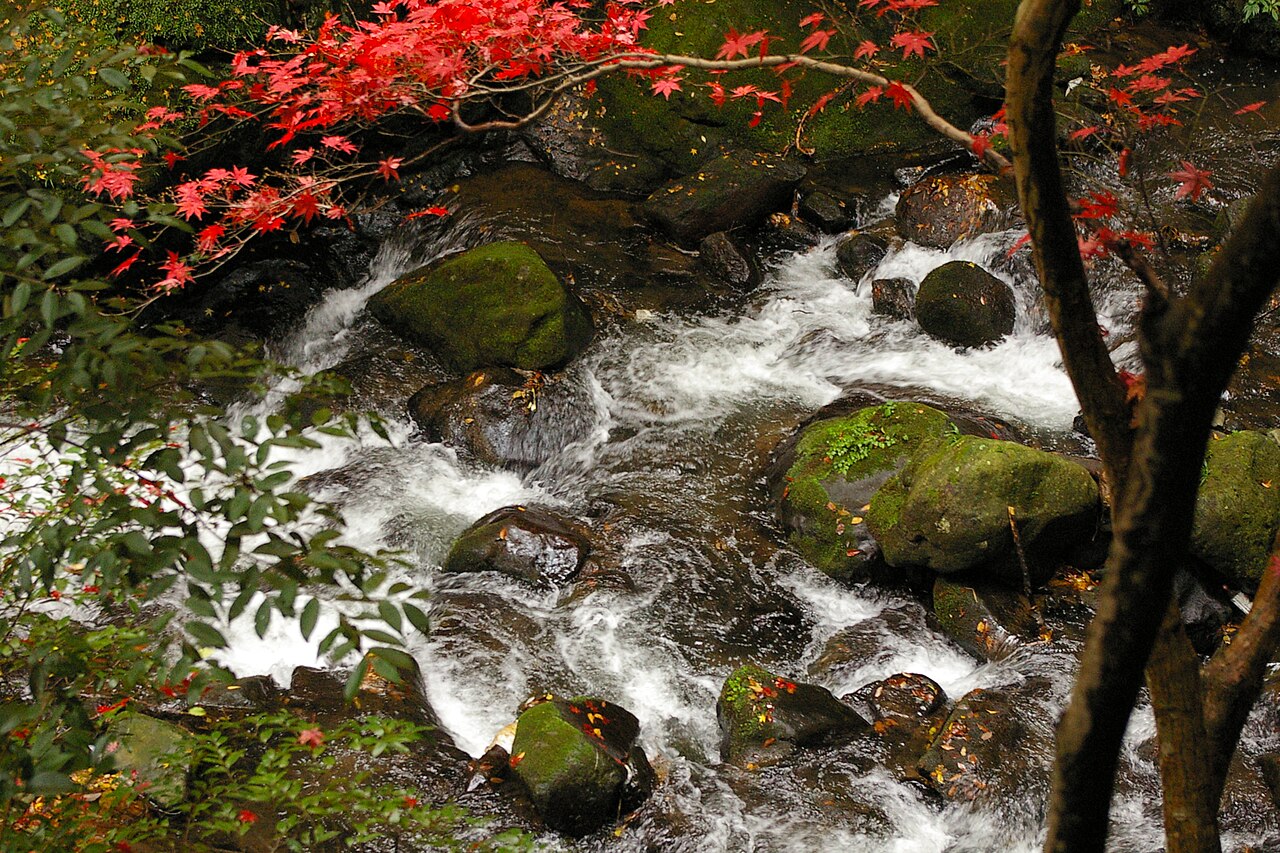
- Manyo Parka riverside park at the top of the town, laid out around the valley's poetic and literary history
- Doppo-no-yu foot bathsopen-air foot baths in the park, named for the writer Kunikida Doppo — no booking, no towel needed beyond your own
- Yugawara Soyua bathhouse-and-reading retreat opened in the park in 2021, built along the river
- The writers' innsSoseki, Toson, Akutagawa, Tanizaki and Yosano Akiko all worked in this valley; several of their inns still take guests
How to actually get there
- Tokyo Stn → Yugawara Stn (JR Tokaido Line, direct, ~1 hr 40 min; Odoriko limited express ~1 hr 20 min)
- Yugawara Stn → Ochiaibashi stop (Hakone Tozan bus toward Oku-Yugawara, ~10 min)
- Ochiaibashi → Manyo Park and the inn quarter (on foot, uphill, a few minutes)
- JR Tokaido Line to Yugawara, then a short bus
- Tokyo Stn →(JR Tokaido Line toward Atami, direct, ~1 hr 40 min)→ Yugawara Stn →(Hakone Tozan bus toward Oku-Yugawara, ~10 min)→ Ochiaibashi stop, in the middle of the inn quarter. The Odoriko limited express shortens the train leg to roughly 1 hr 20 min. Local trains run several times an hour; daytime buses run roughly every 15-20 minutes.
- Same route in reverse
- Buses back down to Yugawara Station run into the evening but thin out after dark, so if you are bathing late, check the return times posted at the Ochiaibashi stop when you arrive. Tokyo-bound Tokaido Line trains continue until late.
About the place
Yugawara sits at the far southwestern corner of Kanagawa, where the Chitose and Fujiki rivers cut down out of the hills toward the sea. The inns line the valley road above the town, and the water is soft and weakly alkaline — locals describe it as the kind you can get into again and again without it drying your skin. It is also one of the oldest recorded springs in eastern Japan: a poem in the Man'yoshu, the 8th-century anthology that is Japan's oldest surviving collection of verse, is read as referring to this valley, and it is the only hot spring in the Kanto region the anthology names. From the Meiji period onward, writers came here to work — Natsume Soseki, Shimazaki Toson, Akutagawa Ryunosuke, Tanizaki Junichiro, Yosano Akiko. Soseki stayed in 1916 and worked here on Meian, the novel he left unfinished when he died later that year.
How to enjoy it
Ride up to Ochiaibashi first, walk the valley road to Manyo Park while it is still light, then take a bath in the late afternoon when the day-trip crowds bound for Hakone have already gone past. The water suits repeat bathing, so a short soak, a walk, and a second soak is the local rhythm rather than one long stay. Bring your own small towel — day-use rates at inns often do not include one.
Background & history
Yugawara is counted among the oldest springs in eastern Japan on the strength of a single verse: the Man'yoshu, compiled in the 8th century, contains a poem read as describing this valley's water, and it is the only hot spring in the Kanto region the anthology names. The town grew as a quiet writers' retreat rather than a resort. Natsume Soseki stayed in 1916 and worked here on Meian, left unfinished at his death that year; Shimazaki Toson, Akutagawa Ryunosuke, Tanizaki Junichiro and the poet Yosano Akiko also stayed and wrote in the valley. Manyo Park, laid out to mark that literary and poetic inheritance, holds Doppo-no-yu, a set of open-air foot baths named for the writer Kunikida Doppo, and in 2021 the park gained Yugawara Soyu, a riverside bathhouse-and-reading retreat.
Before you go
- Cash
- Day-use bathing at inns is usually paid in cash at the front desk, and rates differ from inn to inn. Some smaller inns and the bus have no card option, so carry notes and coins.
- Good to know
- Most inns admit day visitors only within a set afternoon window, and some suspend day-use entirely when they are fully booked. Ring ahead, or ask at the tourist information by Yugawara Station before you take the bus up.
- Another way
- If the inns are full, the foot baths in Manyo Park and the town-run public bath nearby take walk-ins and need no booking.
- After you get off
- The Ochiaibashi stop sits where the two rivers meet, at the foot of the inn quarter; Manyo Park is a few minutes uphill on foot from there.
Nearby notes
 663highland / CC BY-SA 4.0
Onsen · Shizuoka★★★
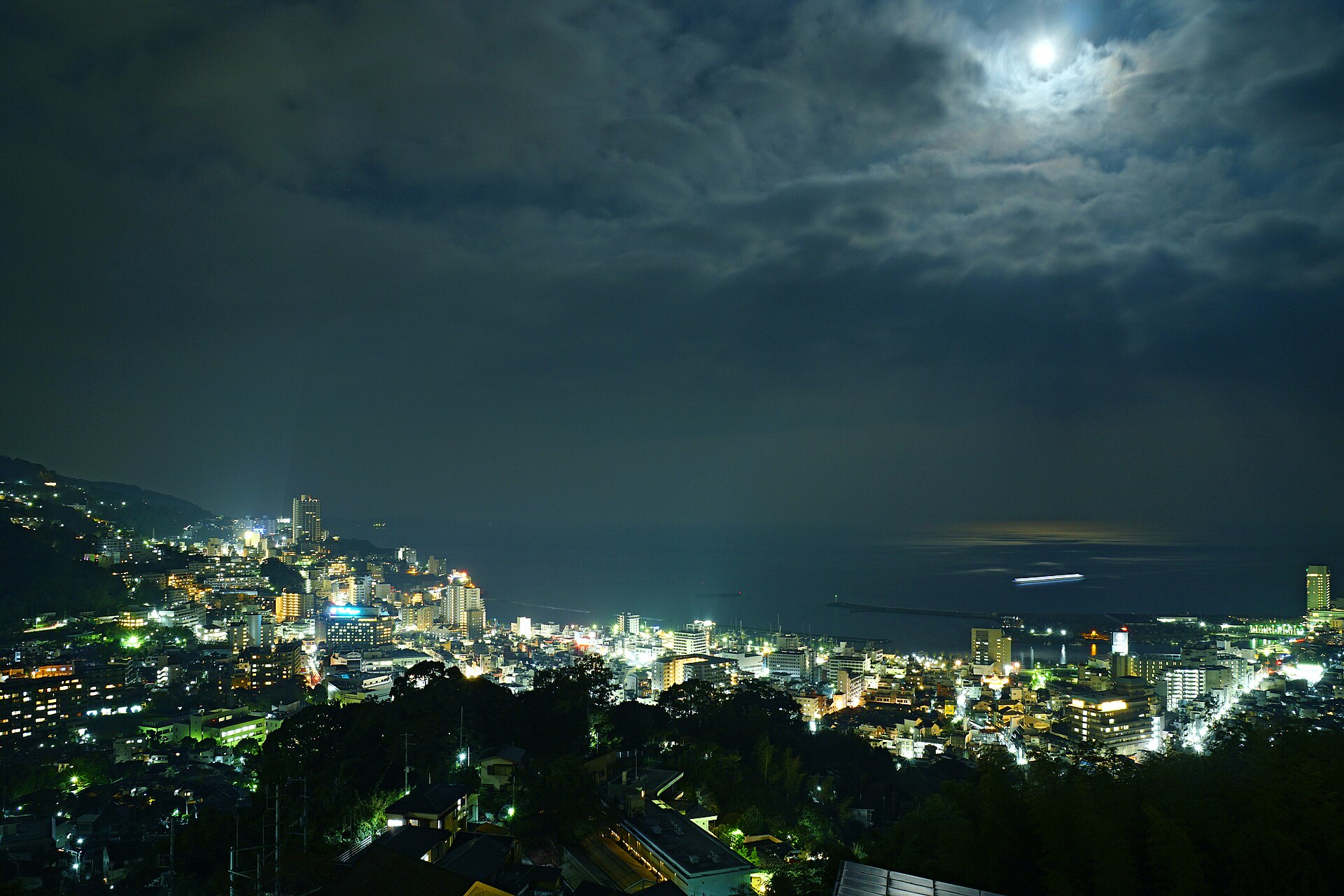
Atami Onsen
5.3 km · straight line
 Kentagon / CC BY-SA 4.0
Nature · Kanagawa★★★
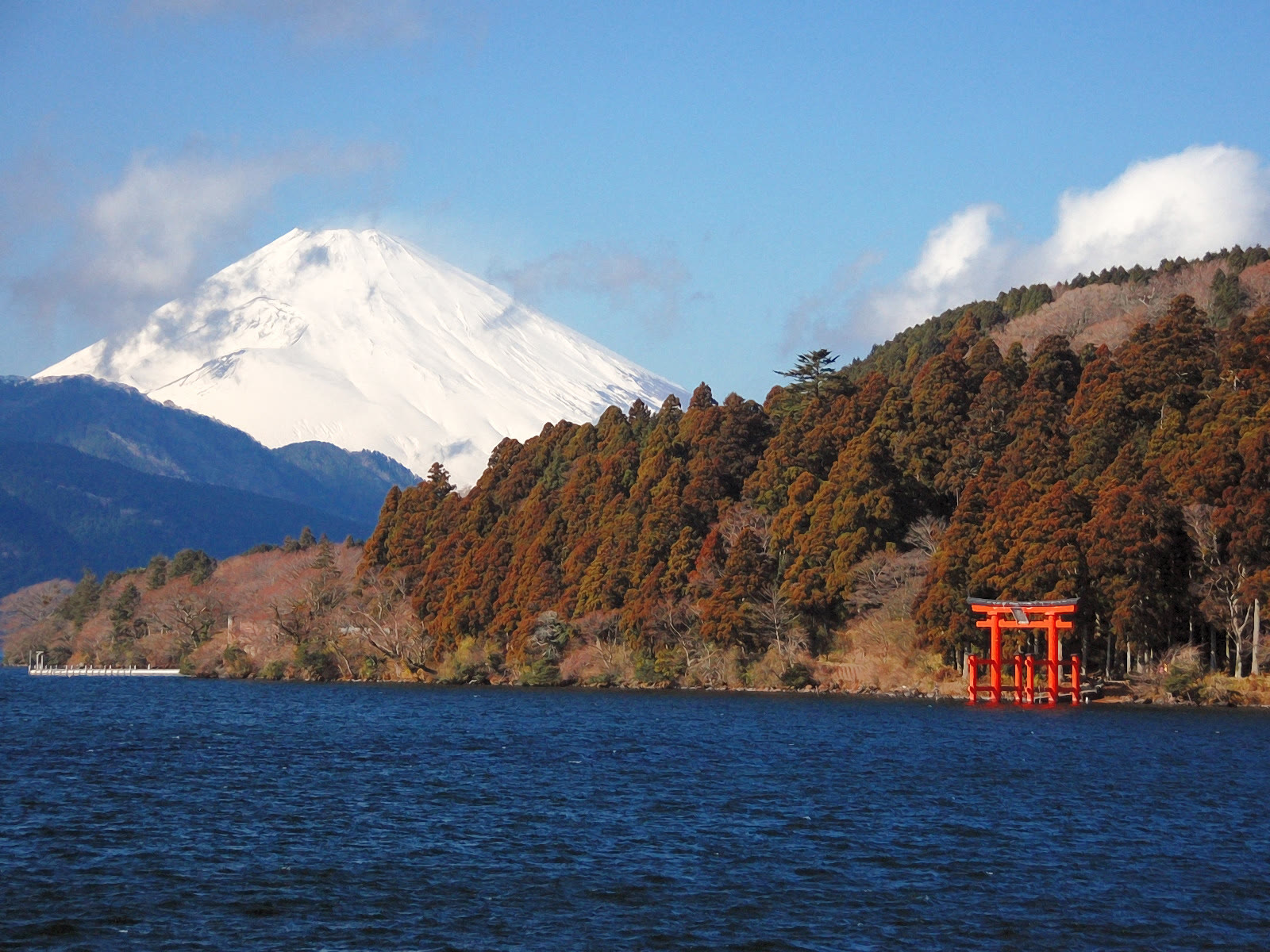
Lake Ashi
7.3 km · straight line
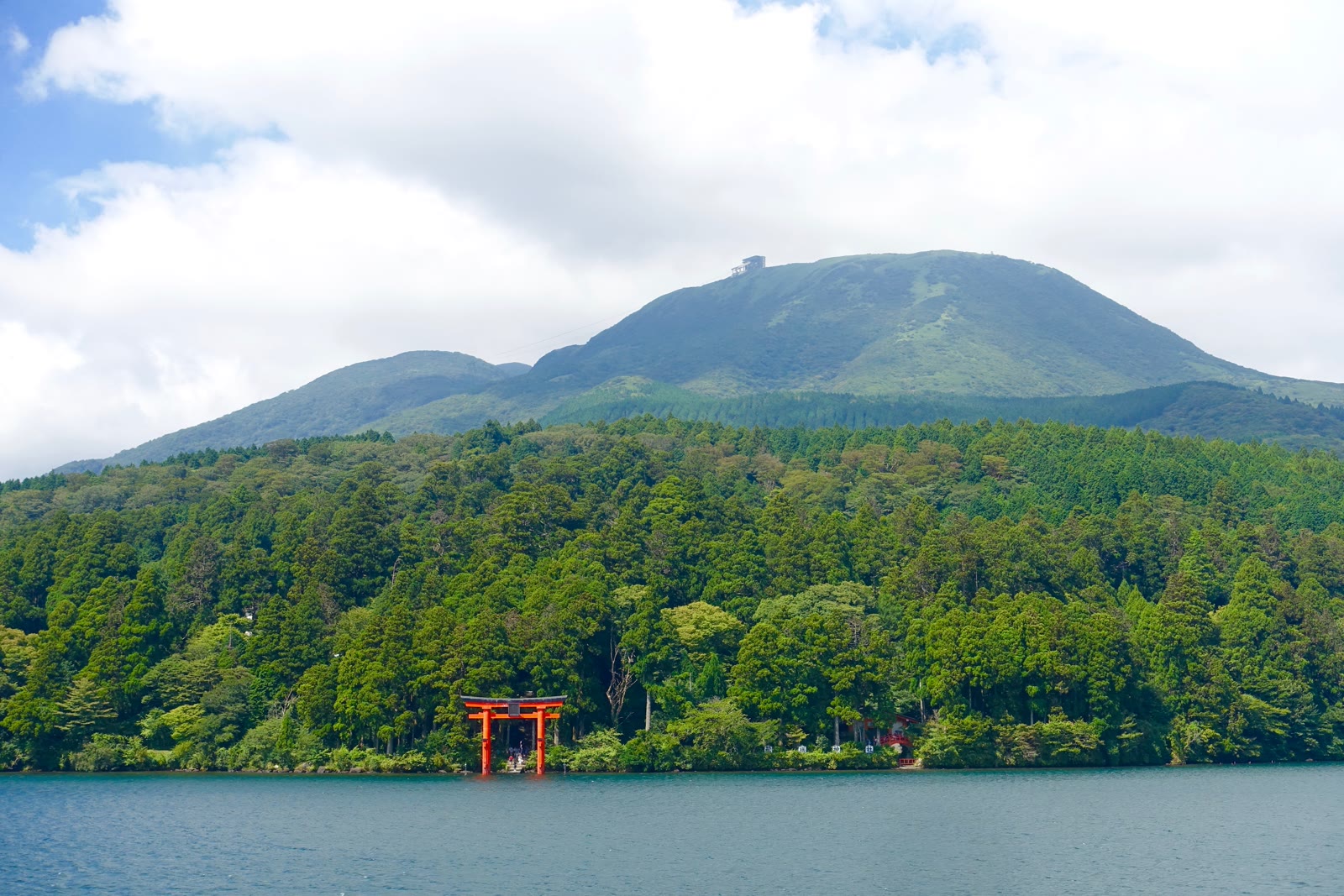 Daderot / CC0
History · Kanagawa★★★
Hakone Shrine and the Peace Torii
7.7 km · straight line
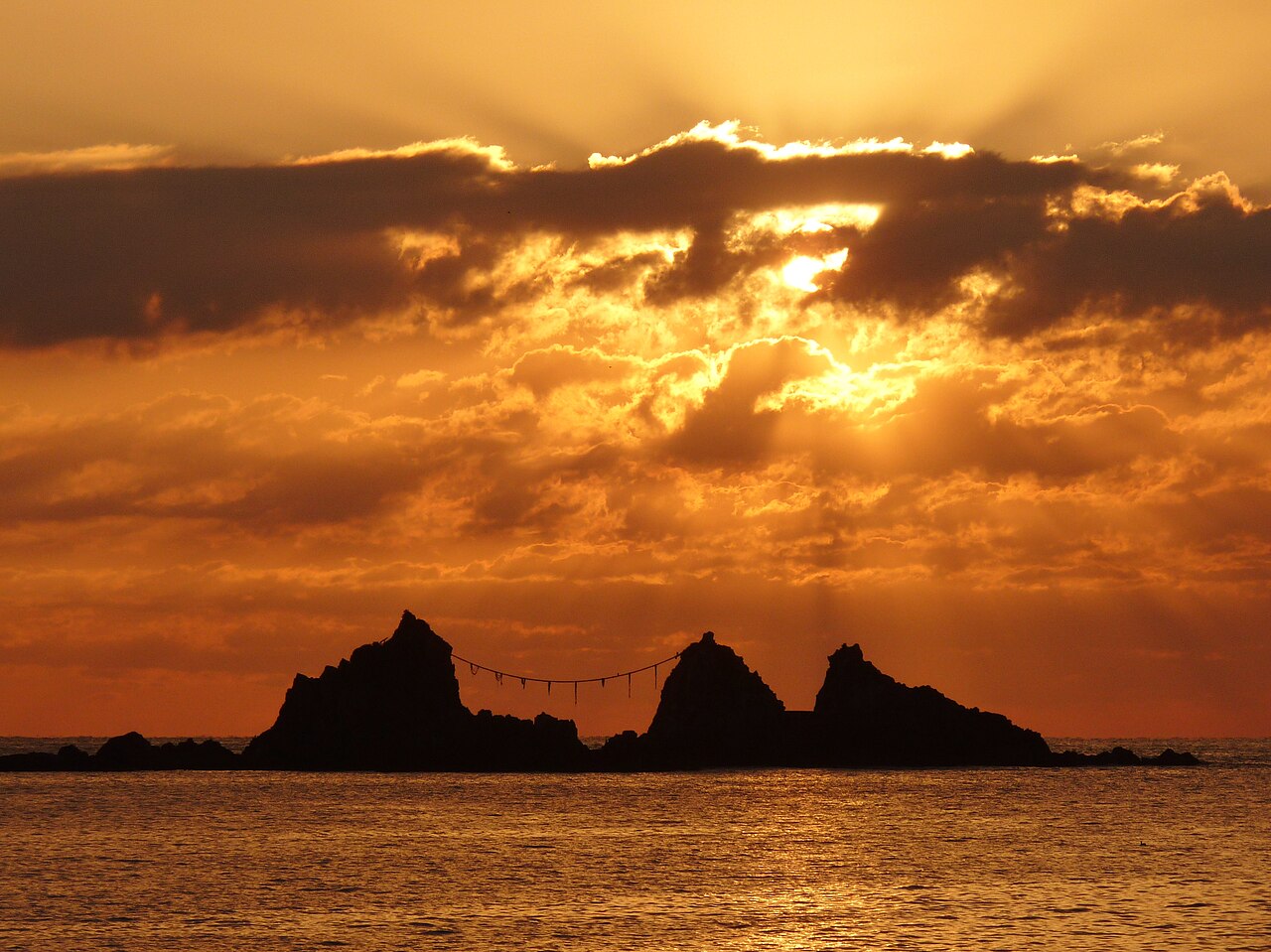 Quercus acuta / CC BY-SA 4.0
Nature · Kanagawa★
Mitsuishi
8.2 km · straight line
Distances are straight lines on the map, not travel times.