Kyoto · OkazakiNo.226★★★Open in map →
Heian-jingu Shrine
Built in 1895 to mark 1,100 years of Kyoto as Japan's imperial capital, the shrine's brilliant vermilion courtyard and four landscaped gardens are among the city's finest set pieces.
- FromKyoto Stn
- ~45 minsubway + bus
- Get off atHigashiyama Station (Kyoto Municipal Subway Tozai Line)
- On foot
- Heian-jingu Shrine
Where it is
90 more notes in Kyoto · open the map →What to look for — in walking order
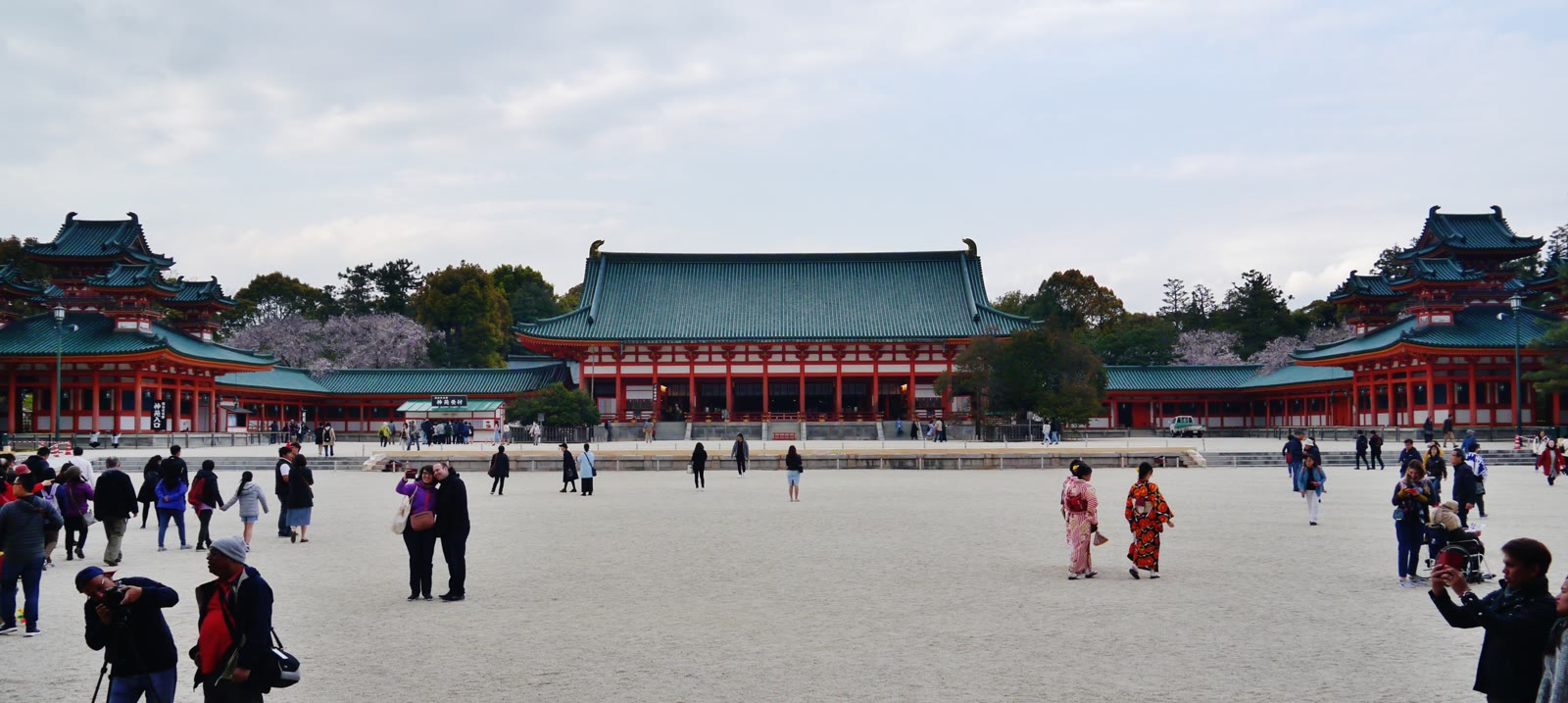
- Oten-mon gate and gravel courtyardthe wide raked ceremonial courtyard flanked by the Azure Dragon and White Tiger towers in classic Heian court style
- Daigokuden (main hall)a reconstruction of the Heian-period emperor's audience hall in orange and white
- Seiho-en garden (west)early part of the garden walk; late-March to mid-April cherry trees, including weeping cherries overhanging the pond
- Naka-shin-en and Higashi-shin-en (central and east)the heart of the garden; stepping-stone bridges, irises in May–June, maples in November
How to actually get there
- Kyoto Station → Karasuma Oike Station (Subway Karasuma Line, ~5 min).
- Karasuma Oike → Higashiyama Station (Subway Tozai Line, ~8 min).
- Higashiyama Station → Heian-jingu main gate (walk north, ~10 min).
- Subway to Higashiyama, then walk or bus
- Kyoto Station → (Kyoto Municipal Subway Karasuma Line to Karasuma Oike, ~5 min) → change to Tozai Line → Higashiyama Station (~8 min) → walk north along Jingu-michi avenue (~10 min) → Heian-jingu. Total ~30–35 min. Alternatively, bus 5 or 100 from Kyoto Station runs directly to Okazaki Koen Bijutsukan Mae stop (~35 min by bus).
- Return via Higashiyama Station or bus
- Walk south back to Higashiyama Station (subway Tozai Line) and return to central Kyoto. Or take bus 5 or 100 back toward Kyoto Station.
About the place
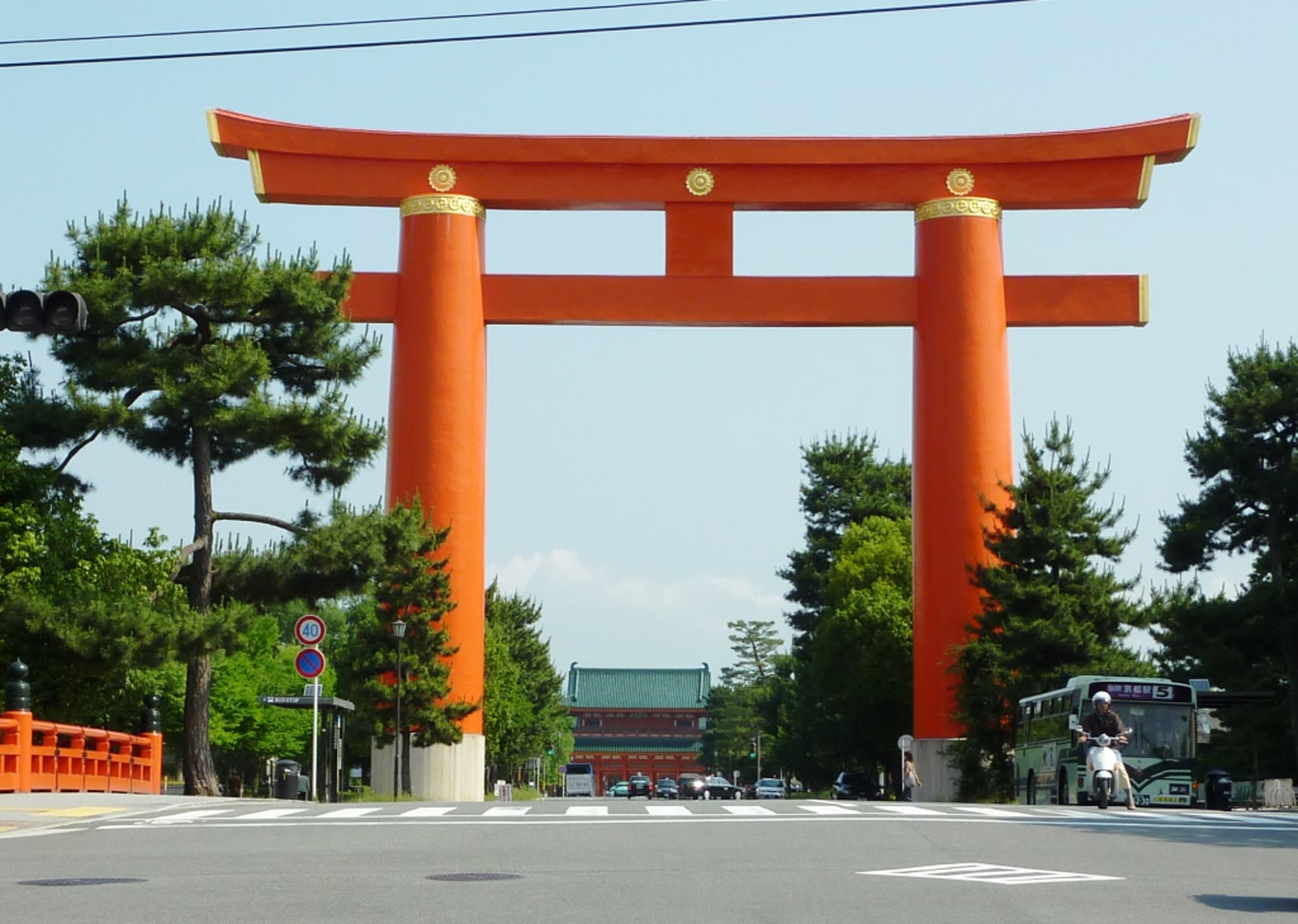
Heian-jingu was built in 1895 to commemorate the 1,100th anniversary of the founding of Heiankyo — the name by which Kyoto was known as Japan's imperial capital from 794 until the capital was moved to Tokyo in 1868. The shrine is dedicated to the spirits of the first and last emperors who reigned from the city: Emperor Kammu (who established the capital in 794) and Emperor Komei (the last emperor to reign from Kyoto, who died in 1867). Its architecture is a scaled-down reconstruction of the original Heian-period Imperial Palace, built in the traditional orange and white palette. The approach to the shrine is marked by one of Japan's largest torii gates, standing about 24 metres tall. Behind the main hall, four distinct landscaped gardens covering 30,000 square metres are designated a National Site of Scenic Beauty. The gardens follow the seasons from spring cherries and irises to autumn maples.
How to enjoy it
The shrine courtyard is free to enter and remarkable on its own — the broad vermilion courtyard flanked by towers is one of the grandest views in Kyoto. The four gardens require a separate ticket (¥600) and are the reason to linger: cherry blossoms fill the west garden from late March to mid-April, and irises bloom in the central and east gardens in May and June. Outside peak season, the gardens are calm and the stepping-stone bridges uncrowded. The great torii gate stands a ten-minute walk south of the shrine along Jingu-michi avenue, a good starting point for the approach.
Background & history
The shrine was completed in 1895 as the centrepiece of the National Industrial Exposition held to revive Kyoto's fortunes after the imperial capital moved to Tokyo. Its design drew on historical records of the Heian-period palace, which no longer survives in its original form. The four gardens — Seiho-en (west), Nishi-shin-en (northwest), Naka-shin-en (central), and Higashi-shin-en (east) — were designed by the landscape architect Ogawa Jihei (Ueyakishi Jihei the 7th) over a period from 1895 to 1915. The central and east gardens are particularly celebrated for the wooden stepping-stone bridges crossing the pond.
Before you go
- Cash
- IC cards (Suica / PASMO / ICOCA) accepted on the subway. Shrine courtyard: free. Gardens (Shin-en): ¥600.
- Good to know
- Shrine grounds: open approximately 6:00 until dusk (exact times vary by season — check the official website heianjingu.or.jp). Gardens: 8:30–17:30 (to 17:00 in winter). Busiest in late March–April (cherry blossom) and November (autumn colour).
- Another way
- Bus 5 or 100 from Kyoto Station stops at Okazaki Koen Bijutsukan Mae, a 5-minute walk from the shrine — convenient if the subway is crowded.
- After you get off
- Higashiyama Station Exit 2 leads to the start of Sanjo-dori; follow signs north along the main road about 10 minutes to the shrine approach.
Nearby notes
 Bruno Cordioli / CC BY 2.0
Craft · Kyoto★★★
Kyo-Yuzen
0.4 km · straight line
 Kirin7739 / CC BY 4.0
History · Kyoto★★
Keage Incline
0.8 km · straight line
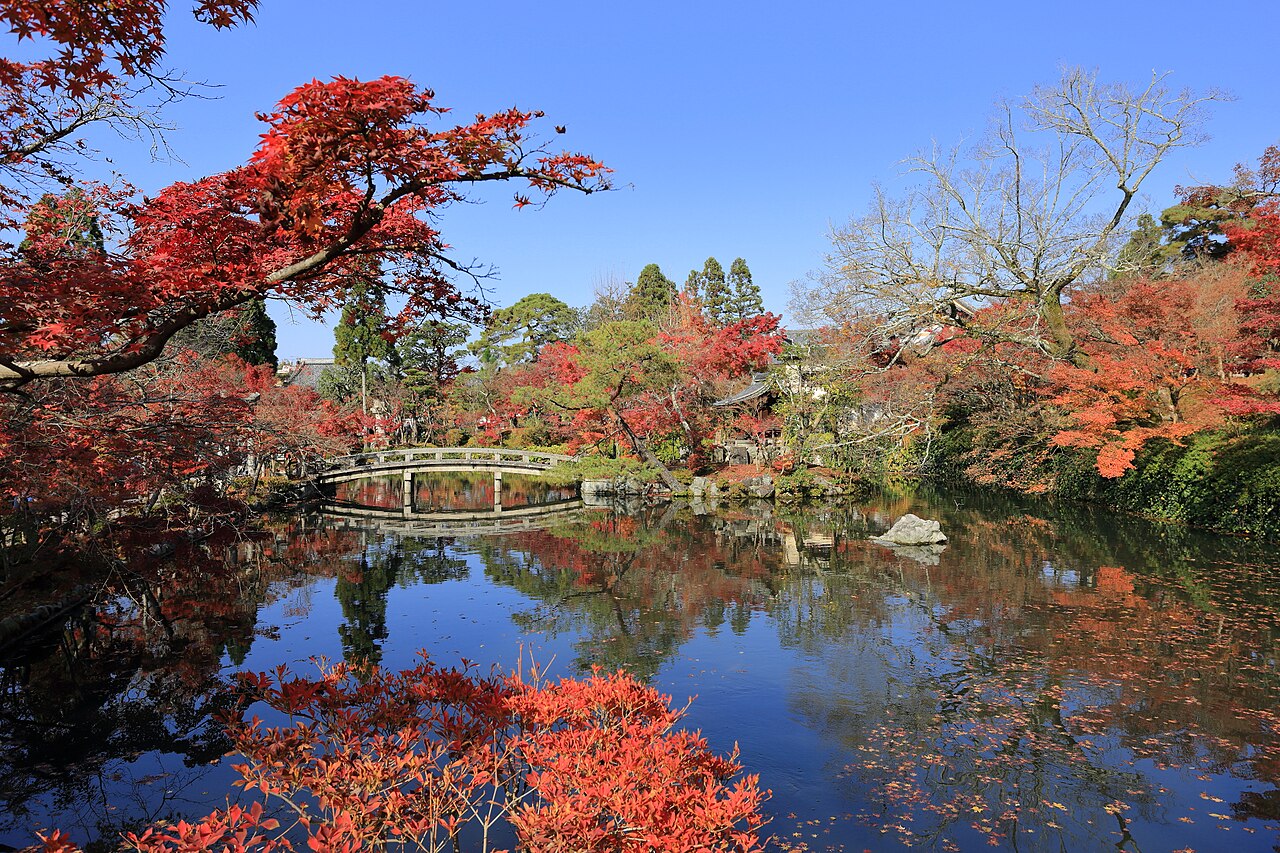 Martin Falbisoner / CC BY-SA 4.0
History · Kyoto★★
Eikando Zenrin-ji
1.1 km · straight line
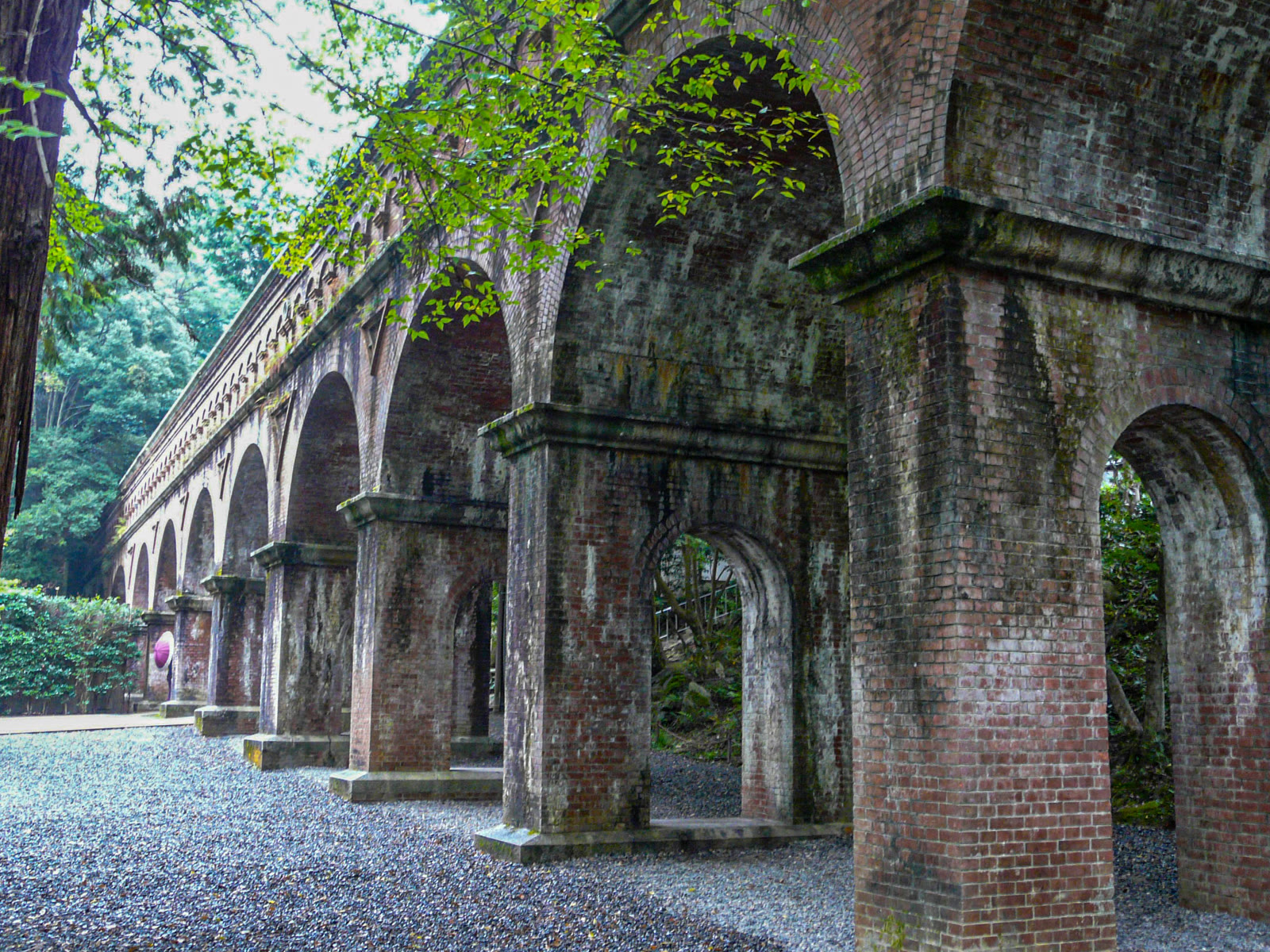 Naokijp / CC BY-SA 4.0
History · Kyoto★★★
Nanzen-ji
1.2 km · straight line
Distances are straight lines on the map, not travel times.