North Kyoto · KamigamoNo.229★★★Open in map →
Kamigamo Shrine
One of the oldest Shinto shrines in Japan, enshrined on the Kamo River at the northern edge of Kyoto. A UNESCO World Heritage site with National Treasure buildings, the destination of the Aoi Festival procession held every May since at least the sixth century.
- FromKyoto Stn
- ~35 minbus ~35 min
- Get off atKamigamo Jinja-mae (City Bus 46)
- On foot
- Kamigamo Shrine
Where it is
90 more notes in Kyoto · open the map →What to look for — in walking order
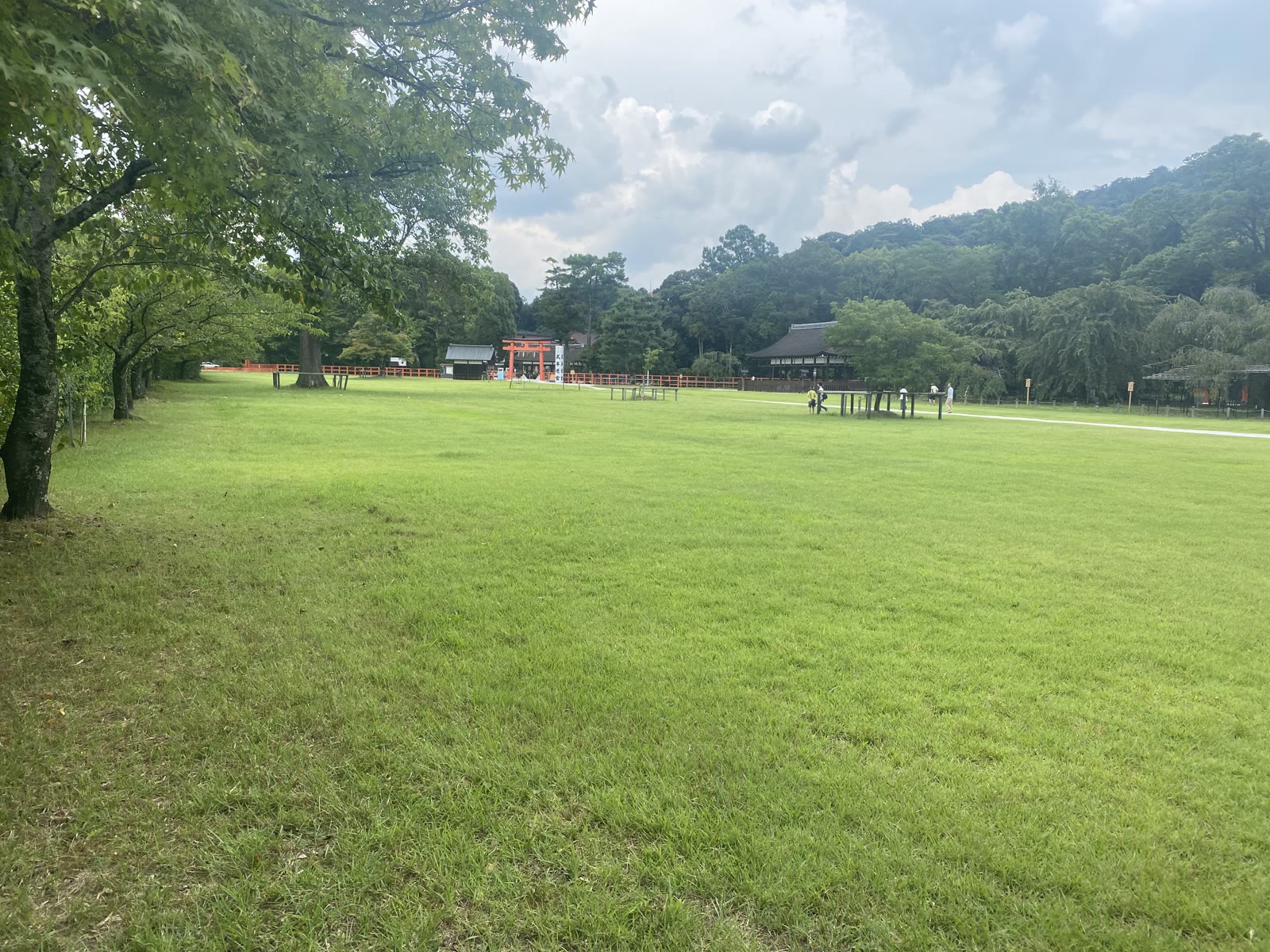
- Sandojo (approach courtyard)the wide expanse of raked white sand leading from the Torii through to the main shrine buildings
- Hashidono (bridge hall)a long, low hall spanning the Omiya River; where priests purify sacred objects before ceremonies
- Romon Gatethe vermilion two-storey gate leading into the inner precinct; an Important Cultural Property
- Futaba aoi gardena planting of the sacred two-leaf aoi plant (Asarum caulescens) near the Shokei'en garden; symbol of both Kamo shrines
How to actually get there
- Kyoto Station → City Bus 46 northbound → Kamigamo Jinja-mae stop (~35 min).
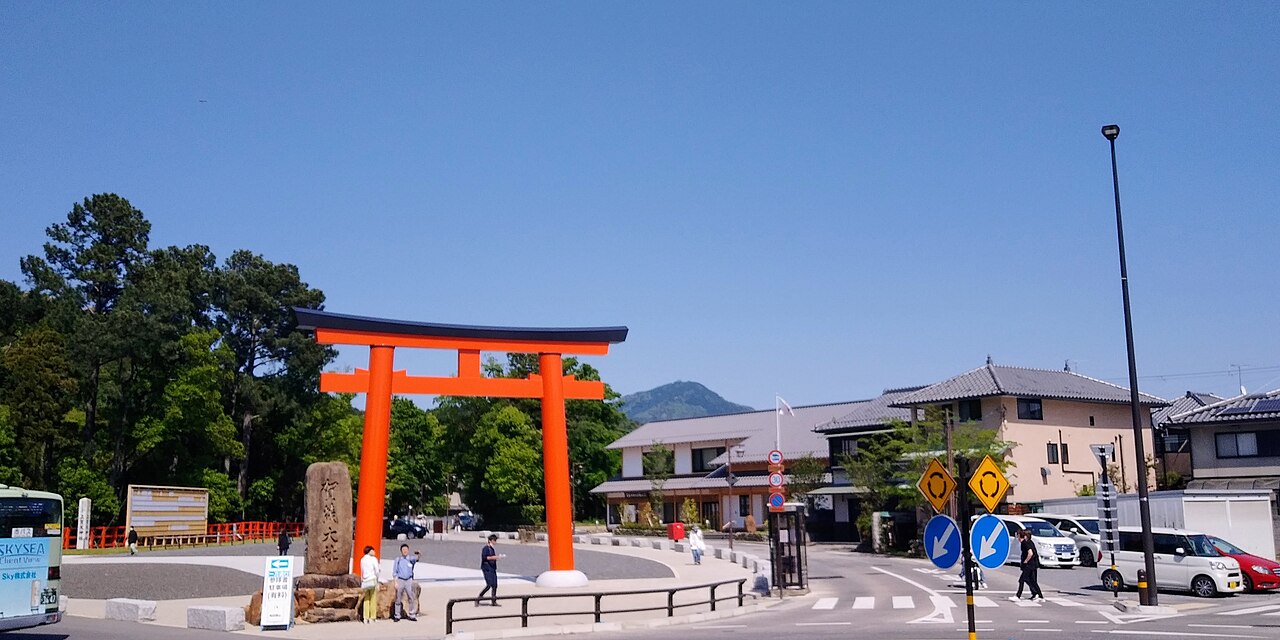
- Walk north from bus stop through the first Torii → Sandojo courtyard.
- Inner approach → Romon Gate → Hashidono (bridge hall) → Futaba aoi garden.
- City Bus 46 to Kamigamo Jinja-mae
- Kyoto Station Bus Terminal → City Bus 46 (bound for Kamigamo-jinja) → Kamigamo Jinja-mae stop → the shrine approach is about 1 minute's walk. Bus journey about 35 minutes. Trains on the Karasuma Subway Line to Kitayama Station and a 15-minute walk north is an alternative.
- Bus 46 back to Kyoto Station
- Take City Bus 46 from Kamigamo Jinja-mae back to Kyoto Station, about 35 minutes. Alternatively subway Karasuma Line south from Kitayama Station.
About the place
Kamigamo Shrine stands at the northern edge of old Kyoto, where the Omiya River emerges from the hills before joining the Kamo River. The approach opens into one of the widest, most open sand courtyards of any Shinto shrine — the two conical sand mounds (tatezuna) standing like sentinels before the main buildings. Across the inner bridge, the Hashidono runs parallel to the river, its low eaves reflected in the water in the mornings. The shrine has been the terminus of the Aoi Festival — the procession of hundreds of people in Heian court dress — for well over a thousand years; outside that season it sits quietly at the edge of the city, the sound of the river constant.
How to enjoy it
The outer precinct including the approach and the Sandojo courtyard is free to enter and open all year. A special paid admission (Tokusei Sanpai) gives access to the inner sanctum area and a guide explanation — check kamigamojinja.jp for days and times. The Aoi Festival procession arrives here from Shimogamo Shrine each year in mid-May; the courtyard and approach fill with the procession of about 500 participants in Heian court dress. The shrine is quietest early in the morning.
Background & history
Kamigamo Shrine — formally Kamo Wakeikazuchi Jinja — is one of the oldest shrines in Japan, with records of the Kamo Festival reaching back to the sixth century, predating Kyoto's establishment as the capital in 794. The main shrine honours the deity Kamo Wakeikazuchi, associated in legend with thunder and divine descent onto nearby Mount Koyama. In 807 the Kamo Festival (also known as the Aoi Festival) received imperial patronage and became a chokusai, one of the court's official state ceremonies. The shrine complex holds 2 National Treasure structures and 41 Important Cultural Properties, and the entire precinct was inscribed as a UNESCO World Heritage Site in 1994.
Before you go
- Cash
- City Bus is flat-rate; IC cards (ICOCA, Suica) accepted. The outer approach and courtyard are free. The Tokusei Sanpai special inner admission has a fee; check kamigamojinja.jp for current days and prices.
- Good to know
- Aoi Festival is held in mid-May each year; the procession arrives at Kamigamo after passing through Shimogamo Shrine. The inner sanctum is entered only under the Tokusei Sanpai programme or during special events.
- Another way
- Shimogamo Shrine (the paired Kamo shrine, UNESCO) is about a 30-minute walk south along the Kamo River, or accessible by bus. Both together make a full morning.
- After you get off
- The Kamigamo Jinja-mae bus stop is at the foot of the long approach road; walk straight north from the stop to reach the first Torii gate.
Nearby notes
 Markus Leupold-Löwenthal / CC BY-SA 2.0
History · Kyoto★★★
Daitoku-ji Temple
1.9 km · straight line
 Mochi at Japanese Wikipedia / CC BY-SA 3.0
History · Kyoto★★★
Shimogamo Shrine
3.0 km · straight line
 Basile Morin / CC BY-SA 4.0
History · Kyoto★★★
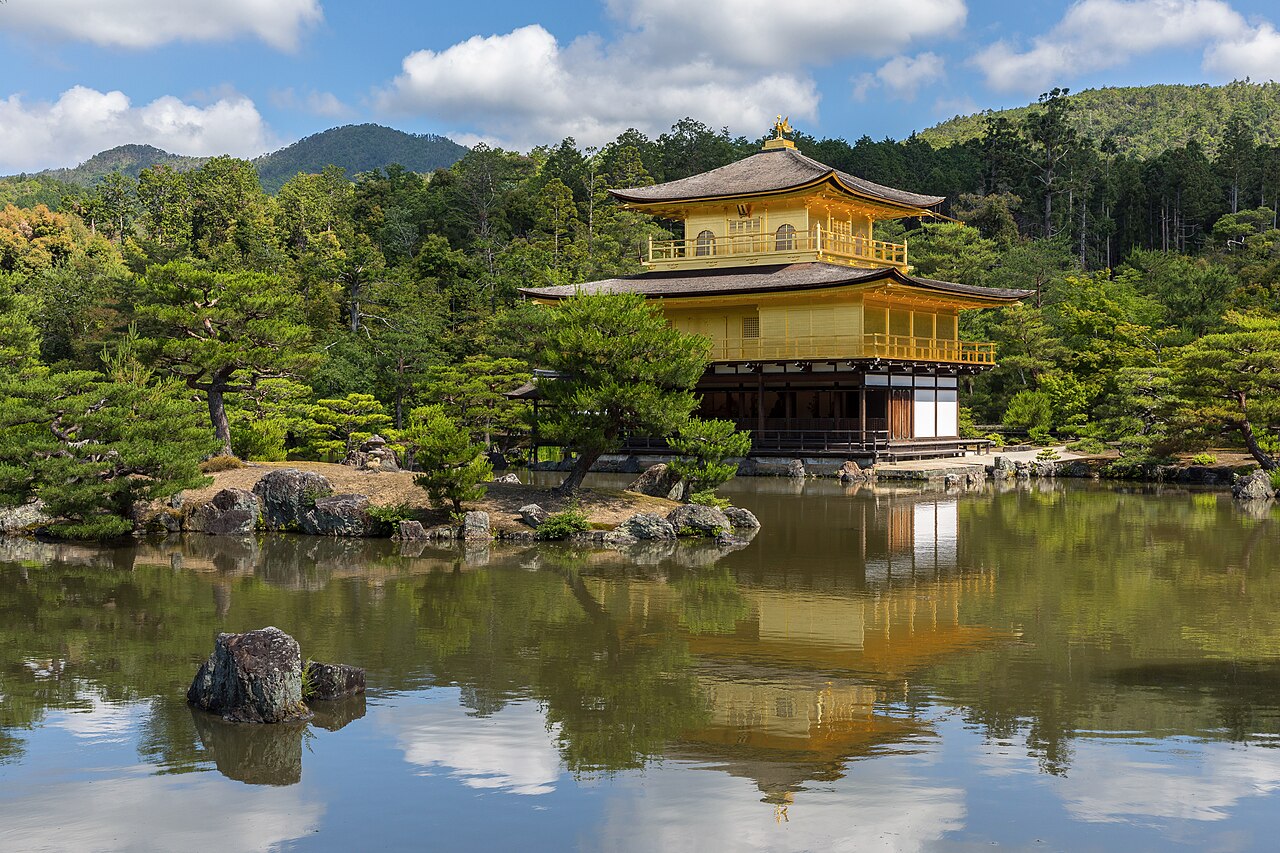
Kinkaku-ji
3.0 km · straight line
 Lundariokn45 / CC BY-SA 4.0
Craft · Kyoto★★★
Nishijin-ori
3.4 km · straight line
Distances are straight lines on the map, not travel times.