Northwest Kyoto · NishijinNo.1001★★★Open in map →
Nishijin-ori
— Kyoto's yarn-dyed figured silk
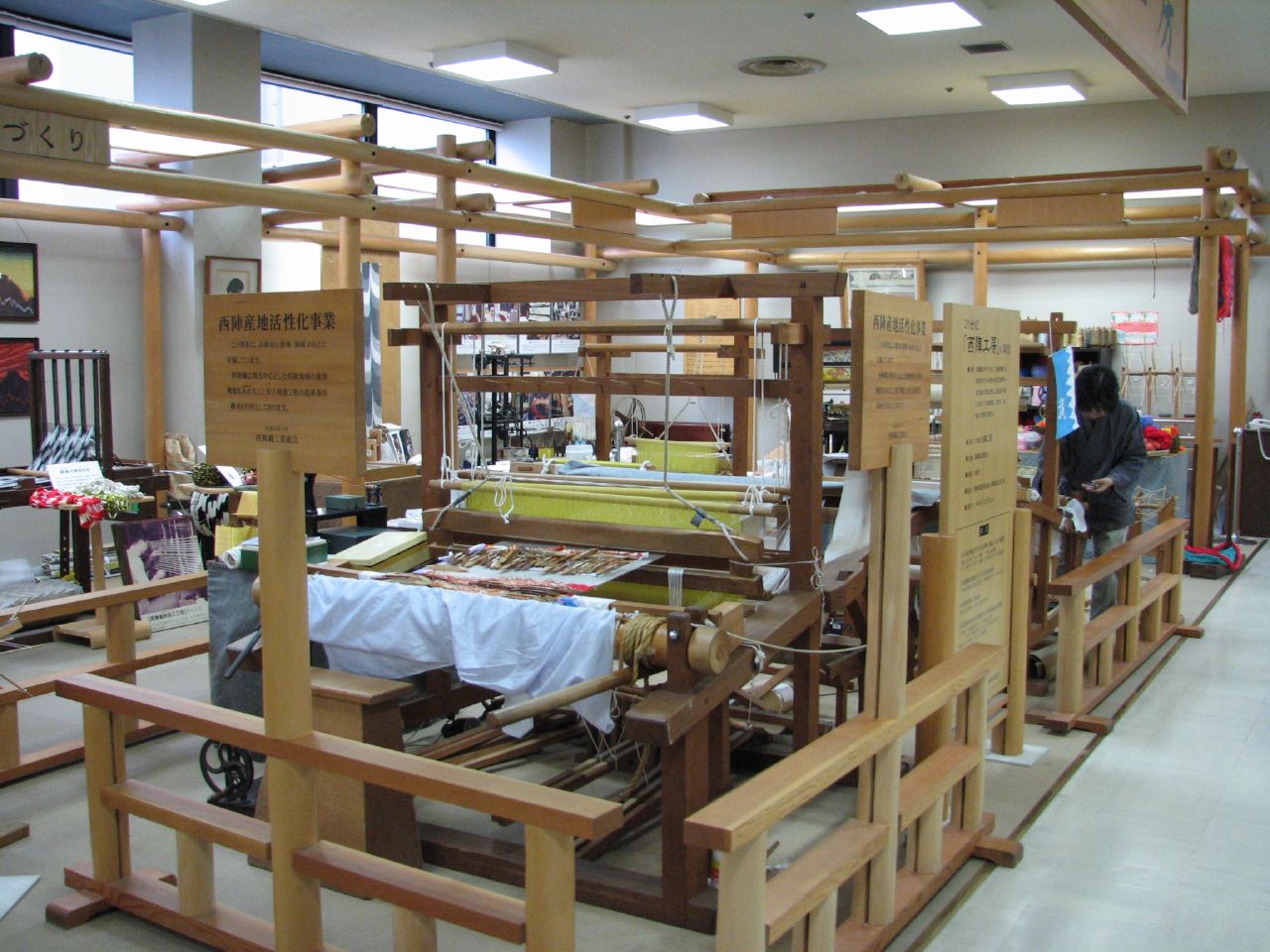
Figured silk from one quarter of Kyoto, woven from thread dyed before it reaches the loom. The trade association keeps a free hall on Horikawa Street where weavers work at hand looms in the open, alongside silkworms and a silk-reeling demonstration.
- FromKyoto Station
- ~30 minCity bus 9 from Kyoto Station
- Get off atHorikawa-Imadegawa (Kyoto City Bus)
- On foot
- Nishijin-ori
Where it is
90 more notes in Kyoto · open the map →What to look for — in walking order
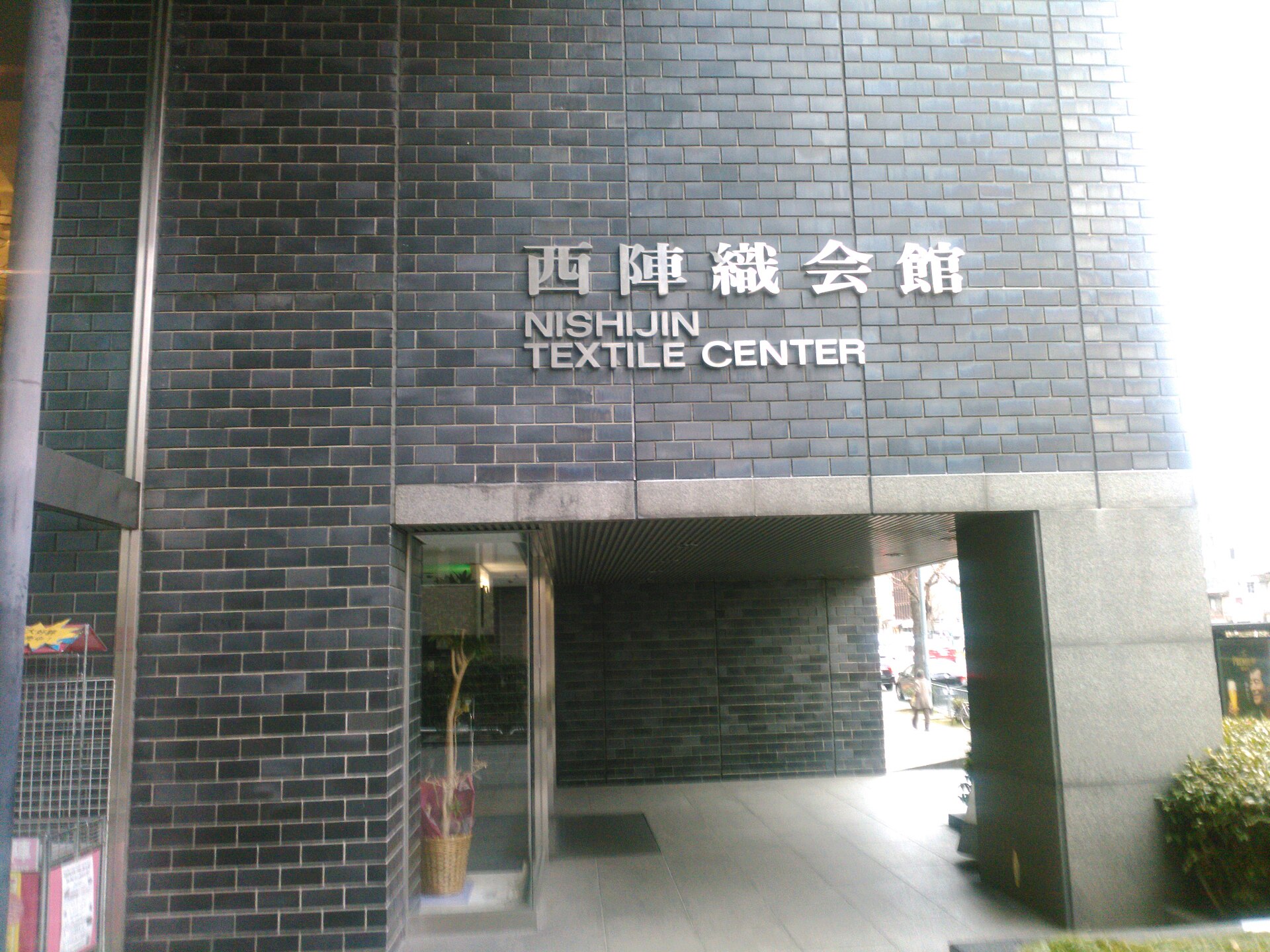
- The Horikawa Street frontagedark tiled brick with the hall's name in steel letters, just south of the Imadegawa crossing
- The permanent displayNishijin-ori and the quarter's historical material, shown all year
- The hand loomswooden looms worked in the open by the association's own weavers
- Silkworms and the zaguri reelingsilkworm rearing and the drawing of raw silk from cocoons
- The direct-from-the-source shopNishijin cloth sold direct by the producing association
How to actually get there
- Kyoto Station forecourt → Horikawa-Imadegawa by Kyoto City Bus route 9, north along Horikawa Street.
- Cross to the hall side of Horikawa if you are set down on the far pole; the entrance faces the street south of the Imadegawa crossing.
- Start with the permanent display, then the hand looms and the silkworms, and finish at the shop.
- Return on route 9 southbound, or walk east to Imadegawa Station on the Karasuma subway line.
- City bus 9 from Kyoto Station, straight up Horikawa
- Kyoto City Bus route 9 leaves the Kyoto Station forecourt and runs north along Horikawa Street to Horikawa-Imadegawa, which the transport bureau lists tenth on the route. The hall's own access guide puts the ride at about thirty minutes and the walk from the pole at one to two minutes. Horikawa is an arterial road, so allow for traffic.
- Back down Horikawa to Kyoto Station
- Route 9 runs south from the same crossing to the station. Because the hall closes in the afternoon rather than the evening, the return is rarely the tight part of the day. Read the posted times at the pole before you settle into the last room.
About the place
Nishijin-ori is figured silk in which the yarn is dyed first and the pattern is built as the cloth comes off the loom. That order decides everything, because colour cannot be corrected once the weaving starts. The trade works in many patterns and short runs rather than long identical bolts, and twelve weaves carry the national craft designation, from tsuzure tapestry to donsu damask and plain tsumugi. What leaves the quarter runs from obi and kimono to neckties, shawls and theatre curtains. The district sits north-west of the Imperial Palace, an ordinary grid of streets with workshops set behind the frontages. Its hall stands on Horikawa Street, and the looms inside are worked in the open.
How to enjoy it
The hall opens at ten and admission was free when checked, but the desk for hand-weaving and kimono dressing stops taking people at three, well before the building itself closes. The gap matters most in winter, when the afternoon is cut shorter still, so a morning arrival is the safe one if you want to weave. The association also lists a kimono show among the day's fixtures, so read the schedule at the entrance before deciding what to see first.
Background & history
Silk was woven on this ground long before it carried this name, which came out of the Onin War of 1467 to 1477: the western army camped here, and the weavers who had scattered during the fighting returned afterwards to the old camp ground. Fire scattered them a second time in 1730, when a blaze burnt through the quarter. Modernisation came in 1872, when Kyoto sent three of its technicians, Sakura Tsuneshichi, Inoue Ihee and Yoshida Chushichi, to France. They came back with the Jacquard loom.
Before you go
- Cash
- Admission to the hall was given as free when checked. Hand-weaving and kimono dressing are booked and paid for separately and are not covered by that, and the shop is run by the association, so carry cash.
- Good to know
- The hall closes on Mondays, and on the Tuesday when a Monday falls on a public holiday. It also closes over the new year, from 29 December to 3 January. The winter timetable ends the day earlier than the summer one. Horikawa is wide and busy, so cross at the signal rather than cutting across.
- Another way
- The Karasuma subway line reaches Imadegawa Station from Kyoto Station without a change, leaving a walk of a little over ten minutes west to Horikawa. That route takes road traffic out of the calculation altogether.
- After you get off
- The Horikawa-Imadegawa stop sits on Horikawa Street beside the hall, one to two minutes from the pole. The building is dark tiled brick with its name in steel letters above the entrance, easy to walk past if you are watching the traffic instead of the wall.
Nearby notes
 moja / CC BY-SA 3.0
History · Kyoto★★★
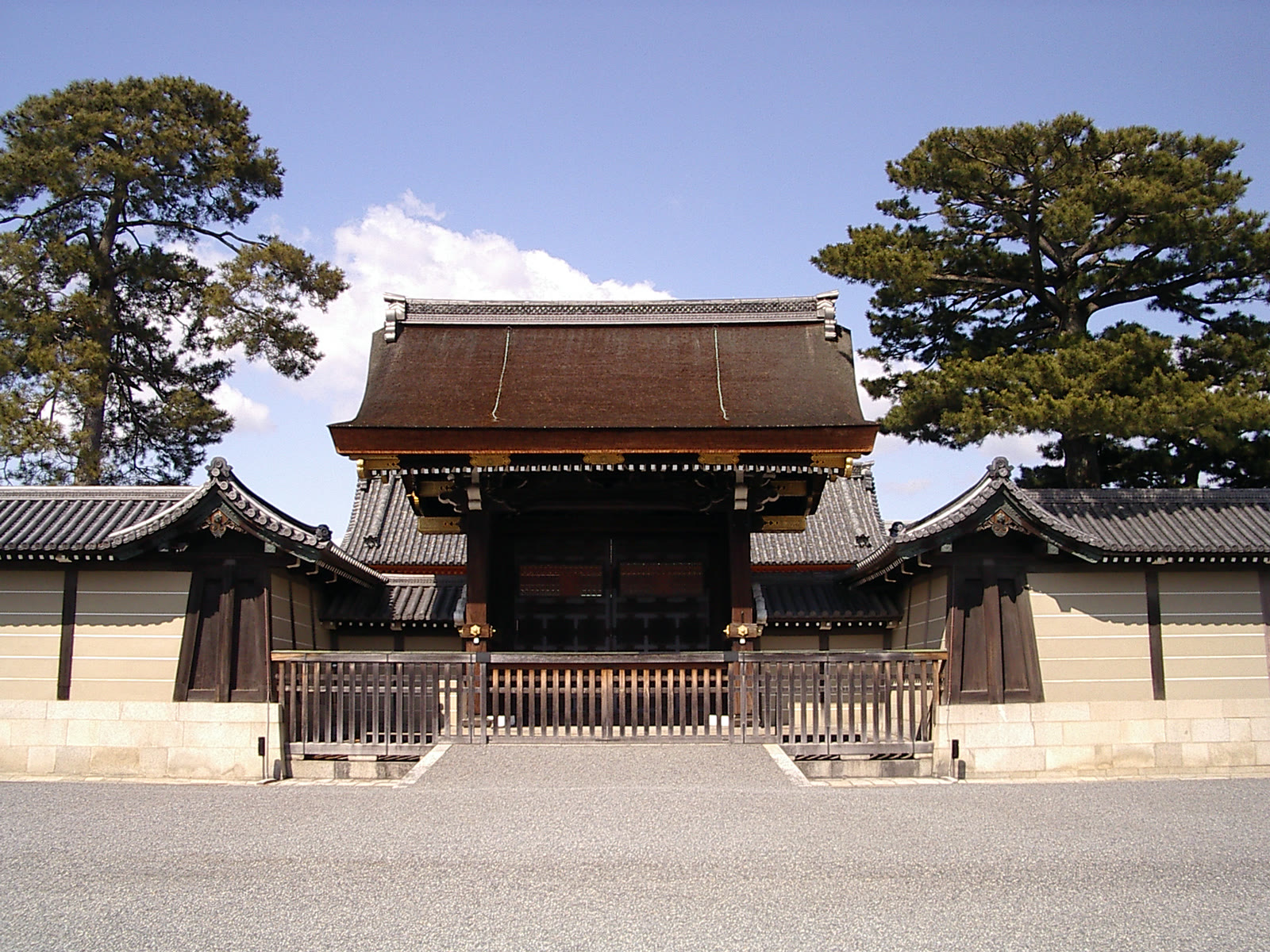
Kyoto Imperial Palace & Gyoen
1.1 km · straight line
 663highland / CC BY 2.5
History · Kyoto★
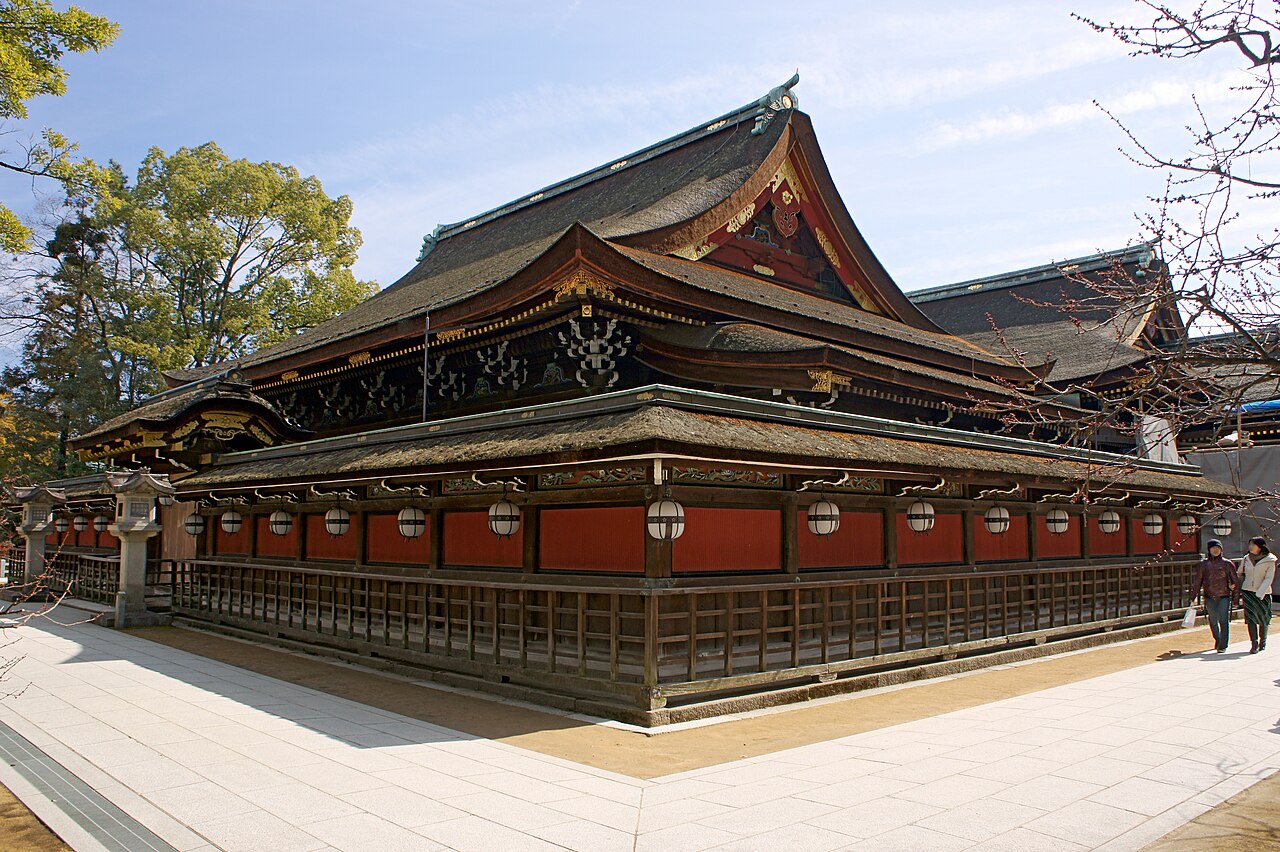
Kitano Tenmangu
1.5 km · straight line
 Markus Leupold-Löwenthal / CC BY-SA 2.0
History · Kyoto★★★
Daitoku-ji Temple
1.6 km · straight line
 Reggaeman / CC BY-SA 3.0
History · Kyoto★★
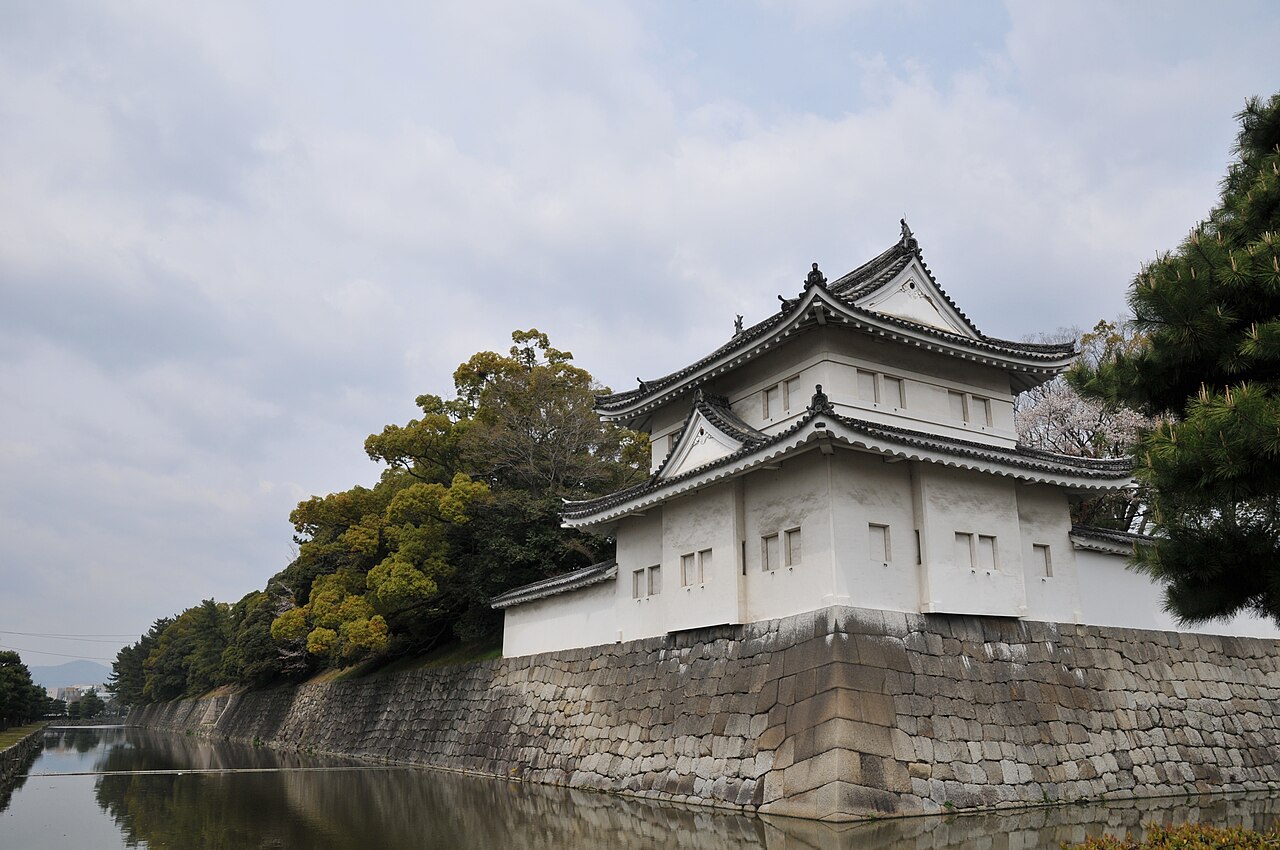
Nijo Castle
1.7 km · straight line
Distances are straight lines on the map, not travel times.