Wakayama · Nagusa hillNo.067★Open in map →
Kimiidera
— 231 steps up to a bay-view temple
A hillside temple in Wakayama City reached by 231 stone steps, known for a wide view over Wakanoura Bay and some of the Kansai region's earliest cherry blossoms.
- FromOsaka Stn
- ~100 mintrain + walk
- Get off atKimiidera Stn (JR)
- On foot
- Kimiidera
The sweet spot
The temple itself is well known, but few visitors come right at opening. There is little English-language information about visiting early, so the quiet first hour after the 8:00 opening stays a mostly local habit.
Where it is
21 more notes in Wakayama · open the map →What to look for — in walking order
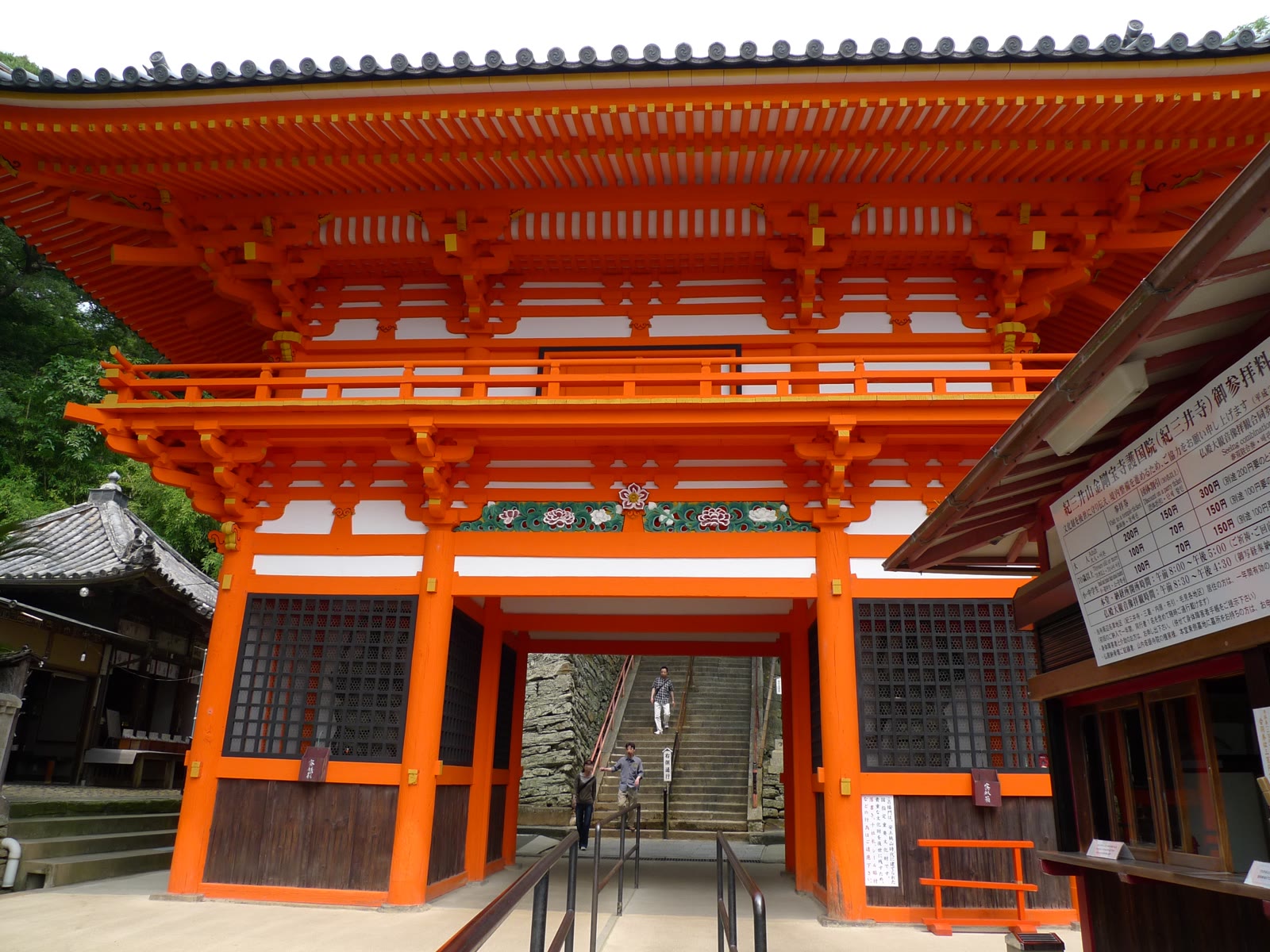
- 231 stone stepsthe steep main stairway climbing from the gate up to the grounds
- Wakanoura Bay viewa wide panorama over the Japan Heritage-listed bay from the hillside grounds
- Early cherry blossomshundreds of cherry trees that are among the first to bloom in the Kansai region
- Giant Kannon statuea wooden Thousand-Armed Kannon, about 12 metres tall, inside the modern hall
How to actually get there
- Osaka Stn → Wakayama Stn (JR Hanwa Line, Kishuji Rapid, ~90 min).
- Wakayama Stn → Kimiidera Stn (JR Kisei Line local, ~7 min).
- Kimiidera Stn → foot of the temple steps (flat walk, ~5 min).
- Up the 231 stone steps to the temple grounds (or take the cable car).
- JR Hanwa Line + JR Kisei Line
- Osaka Stn →(JR Hanwa Line, Kishuji Rapid, ~90 min)→ Wakayama Stn →(JR Kisei Line local, ~7 min)→ Kimiidera Stn →(flat walk, ~5 min)→ foot of the temple steps. Total about 100 min. The Kishuji Rapid runs about every 15 min; the Wakayama-to-Kimiidera local runs about twice an hour. From Tennoji Stn the rapid leg is shorter (~75 min).
- return
- Trains back toward Wakayama and Osaka run through the day, so there is no need to rush. The temple grounds close at 17:00, so plan to be back at Kimiidera Station before evening; check the next departure on the platform board when you arrive.
About the place
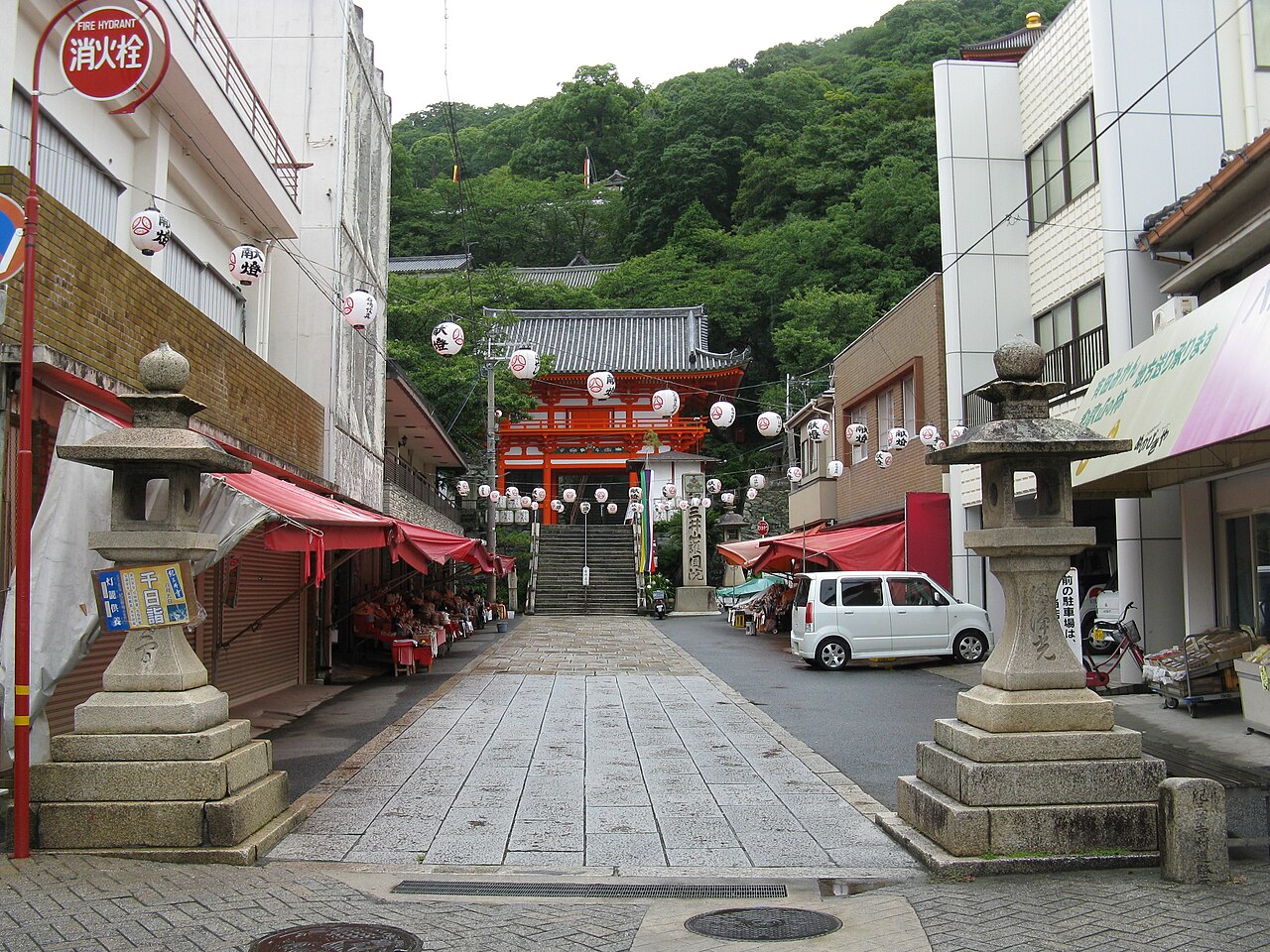
Kimiidera stands on the lower slopes of Mount Nagusa in Wakayama City. You reach the main hall through a bright-red gate and up a flight of 231 stone steps; from the grounds the view opens across Wakanoura Bay, a stretch of coast listed as a Japan Heritage site. The grounds hold hundreds of cherry trees, and the temple is widely known as one of the earliest places in Kansai to see blossoms each spring. It is also the second temple on the Saigoku Kannon Pilgrimage, an old 33-temple route that worshippers have walked for centuries.
How to enjoy it
Late March to early April is the main draw, when the cherry trees along the steps bloom ahead of most of Kansai. The temple is a short, flat walk from JR Kimiidera Station, and on a clear day the climb rewards you with a full view across Wakanoura Bay. Entry to the inner grounds is 400 yen for adults (the cable car added in 2022 is included in this fee), and the temple takes cash, so carry small notes and coins.
Background & history
The temple is said to have been founded in 770 by Iko Shonin, a monk who came from Tang-dynasty China; its formal name is Kongoho-ji. The popular name Kimiidera comes from three sacred springs on the grounds. The Wakayama Local Meteorological Office uses one Somei Yoshino cherry tree here as its official bloom-marker for the region — for much of the 2010s Wakayama recorded the earliest bloom announcement in the Kinki region. A modern hall holds a wooden statue of the Thousand-Armed Kannon, a Buddhist figure of mercy, standing about 12 metres tall.
Before you go
- Cash
- Walking up the 231 steps is free. Entry to the inner grounds is 400 yen for adults (this fee also covers the cable car); the temple takes cash, so carry coins and small notes.
- Good to know
- This is a working temple where people come to pray. Keep your voice low, and take the 231 steps slowly and steadily.
- Another way
- A barrier-free cable car (added in 2022) runs 8:30 to 16:30 for anyone who cannot manage the 231 steps; its cost is included in the 400 yen entry.
- After you get off
- From JR Kimiidera Station it is about a 5-minute flat walk on a paved lane to the foot of the stone steps.
Nearby notes
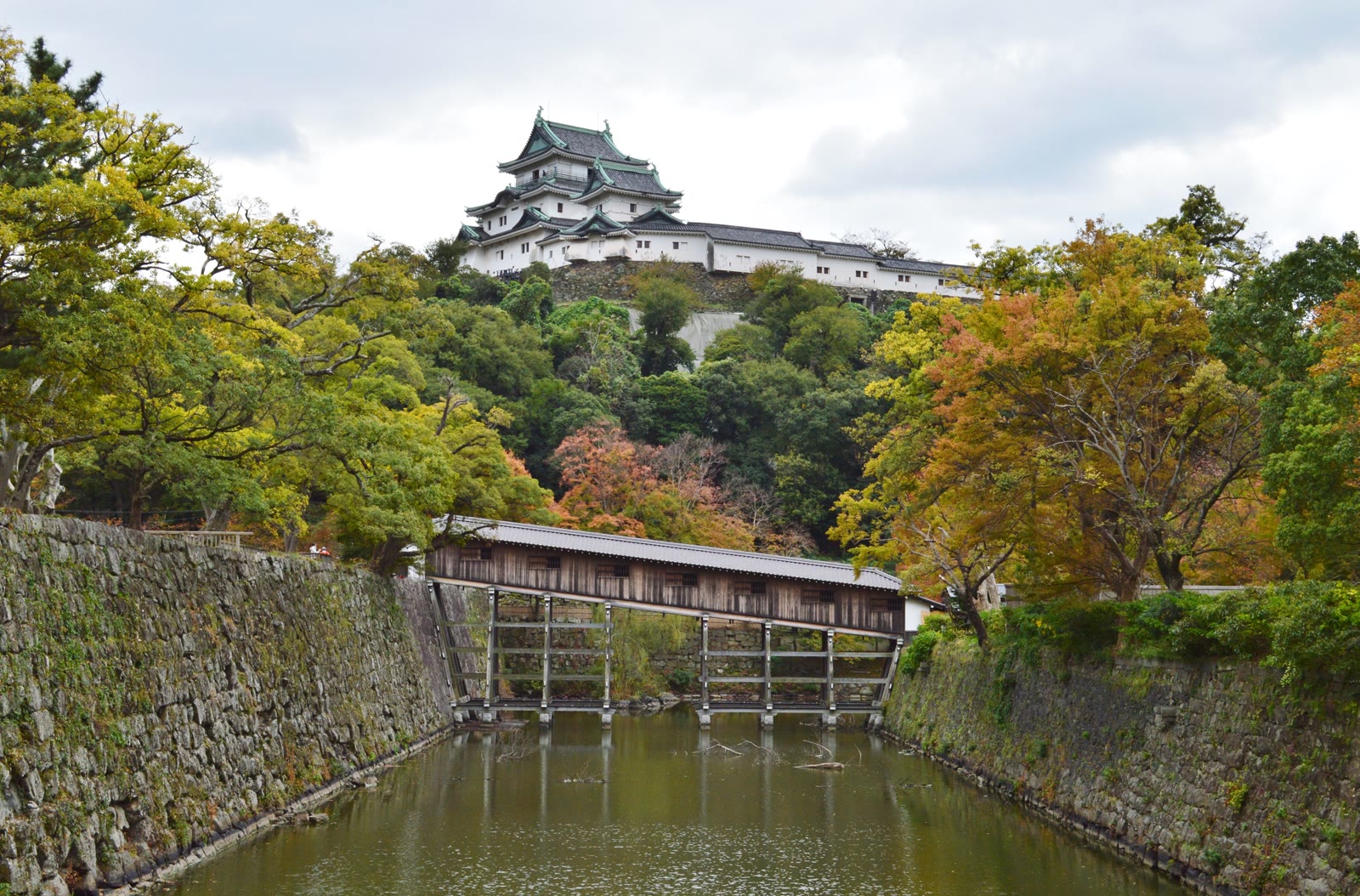 Saigen Jiro / CC0 (Public Domain)
History · Wakayama★★★
Wakayama Castle
5.3 km · straight line
 Sakumata / CC0
Food · Wakayama★
Wakayama chuka soba
5.5 km · straight line
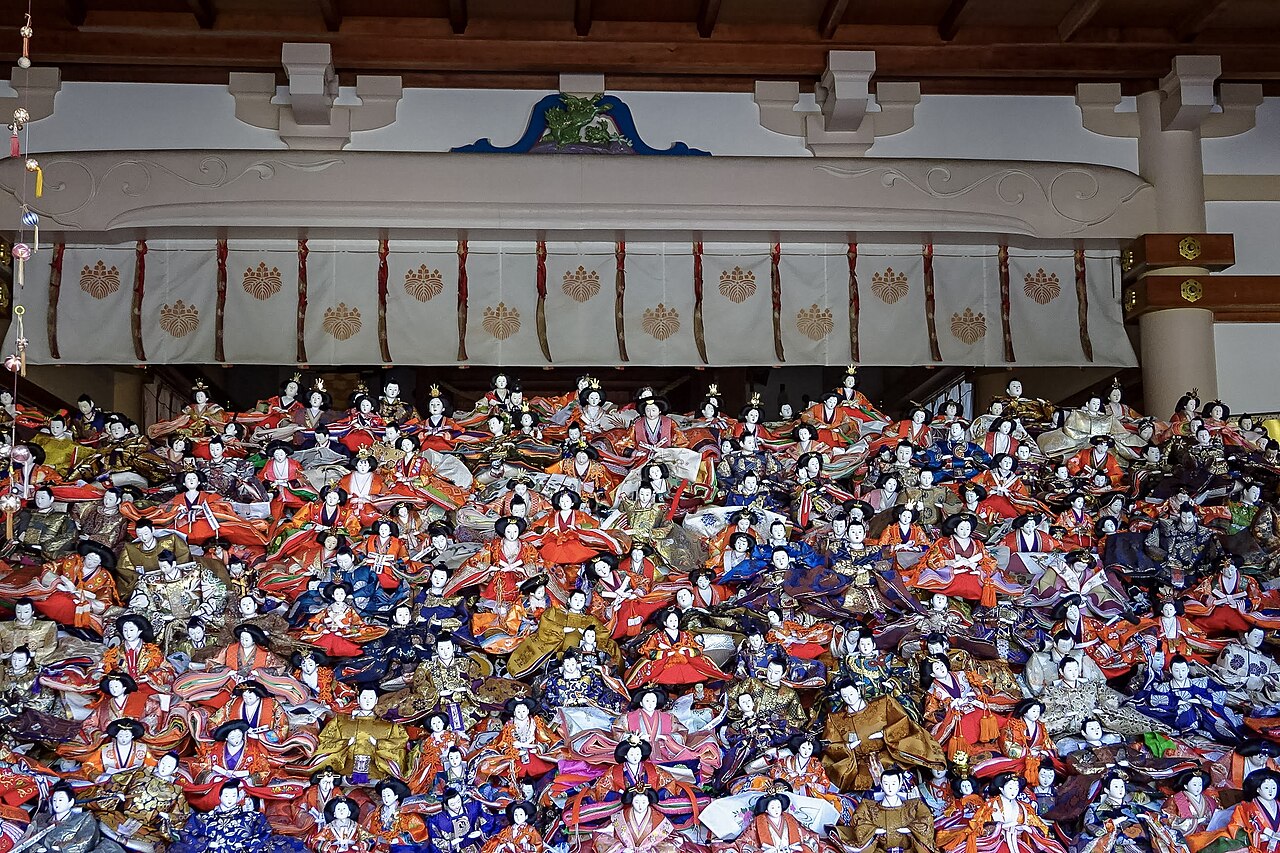 KQuhen / CC BY-SA 4.0
History · Wakayama★
Awashima Shrine
15.0 km · straight line
 illustration (AI-illustrated)
Nature · Wakayama★
Jogasaki Coast
15.8 km · straight line
Distances are straight lines on the map, not travel times.