Shiga · Omihachiman, KitanoshoNo.379★★Open in map →
La Collina Omihachiman
— a grass-roofed sweets village in the fields
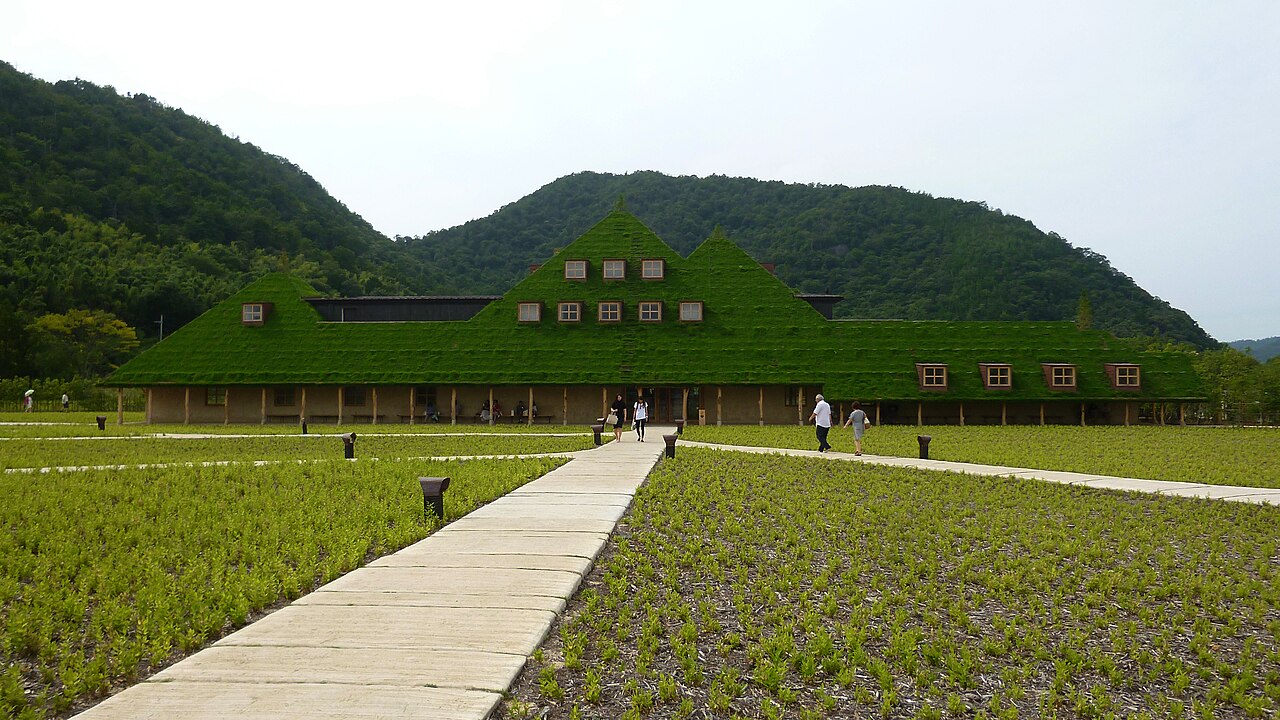
The flagship site of the Shiga confectioners Taneya and Club Harie, opened in 2015 and designed by the architect Fujimori Terunobu. Its main shop is buried under a roof of living turf, and the grounds include working rice fields.
- FromKyoto Stn
- ~55 minJR rapid + local bus
- Get off atLa Collina-mae bus stop
- On foot
- La Collina Omihachiman
The sweet spot
Fujimori Terunobu's buildings are internationally admired and almost impossible to visit — most are private houses, tiny tea huts, or museum pieces. La Collina is a full Fujimori landscape you can walk into for free, seven days a week, and then eat cake in. There is nowhere else in Japan where his work is this accessible at this scale.
Where it is
21 more notes in Shiga · open the map →What to look for — in walking order
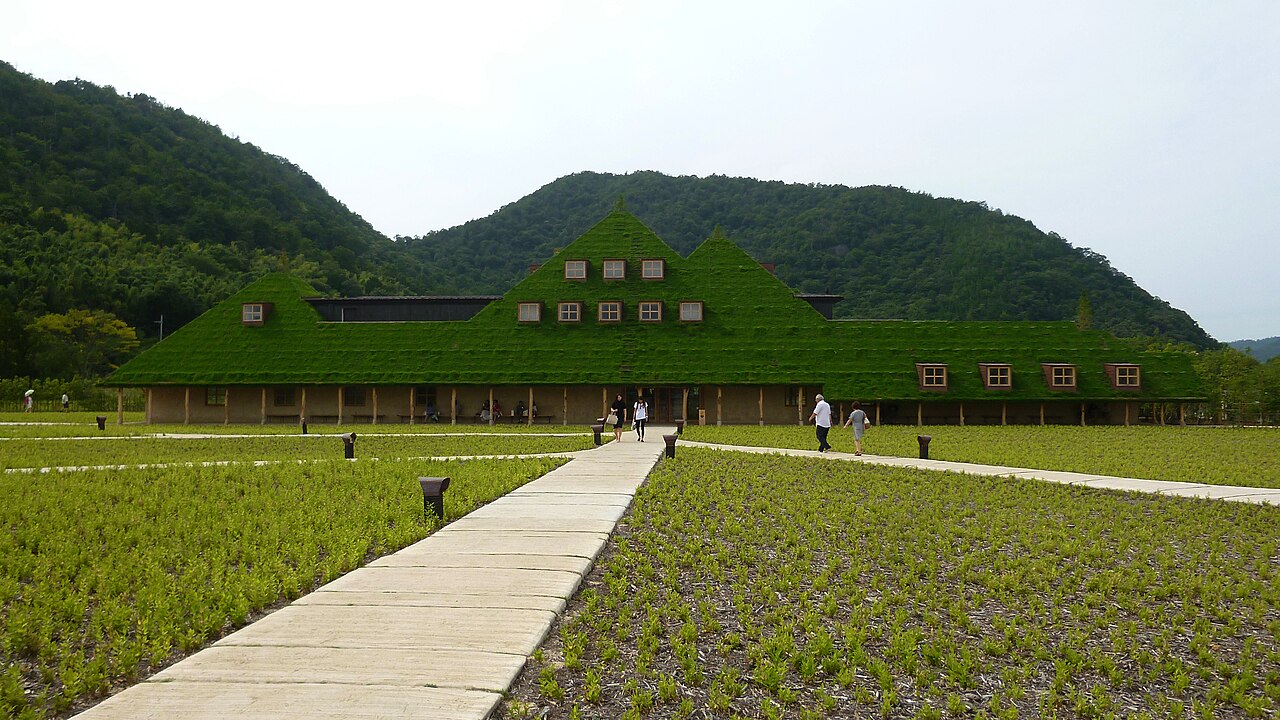
- The grass-roofed main shopFujimori's signature building — a turf roof sweeping to the ground and a black pine interior ceiling; walk the whole way around it
- The Baum Factorythe baumkuchen bakery, where the cake is baked on site and sold warm; expect a queue at weekends
- The rice fields and back groundsworking paddy on the site, with the wooded hills behind — the reason the buildings read as landscape rather than retail
- The castella shop and food courtthe outlying buildings across the grounds, each given a different structural idea, with seating for a proper stop
How to actually get there
- Kyoto Station → Omihachiman Station (JR Biwako Line special rapid, ~40 min).
- Omihachiman Station north exit → La Collina-mae stop (Omi Railway bus, ~10 min; or ~25 min on foot).
- Main grass-roofed shop first, then the Baum Factory, then walk the back grounds and rice fields.
- Kyoto → Omihachiman, then a short bus
- Kyoto Station → (JR Biwako Line special rapid toward Maibara, about 40 minutes) → Omihachiman Station. From the north exit, take an Omi Railway bus and get off at the La Collina-mae stop, roughly 10 minutes. Buses are not frequent — check the timetable at the stop when you arrive. Walking from the station takes about 25 minutes if the timing does not work.
- Bus back to Omihachiman Station
- Take the bus from the stop on the opposite side back to Omihachiman Station, then the JR Biwako Line to Kyoto. Because bus frequency is limited, note the return departures when you arrive rather than at closing time. Trains to Kyoto run frequently until late.
About the place
You come around the bend from the station road and the building does not read as a building. The main shop's roof is a single sweep of living grass running almost to the ground, so from a distance it is a low green hill with a door in it. Inside, the ceiling is charcoal-black pine studded with hundreds of small dark points, and the whole thing feels handmade rather than specified — which is the signature of Fujimori Terunobu, an architectural historian who designs, and whose buildings run on turf, charred timber and hand-troweled plaster. Behind the shop the site keeps going: a bright yellow-walled bakery cube, a castle-like brick tower, a long copper-topped hall, a market, and rice fields the company actually farms. And in the middle of all of it, the reason most of Japan comes — Club Harie's baumkuchen, baked on site, with a queue for the warm one. It is a confectioner's headquarters that decided to be a landscape, and it has become one of Shiga's most-visited places without being a temple, a castle or a lake.
How to enjoy it
Open 9:00–18:00, with the food court running 10:00–17:00. Entry to the grounds is free — you pay only for what you eat and buy. Weekends and holidays are genuinely busy and the baumkuchen queue is longest around midday, so a weekday morning is a different experience entirely. Allow an hour and a half at minimum; two to three if you eat. La Collina combines easily with the old merchant canal district of Hachiman-bori and the reed-channel boat rides on Nishino-ko, both a short ride away — a full day out of Kyoto without a single temple in it.
Background & history
Taneya is a long-established Omihachiman confectioner; Club Harie is its Western-cake arm, best known nationally for baumkuchen. La Collina opened in 2015 as their flagship, on farmland at the foot of the hills north of the old merchant town. The design is by Fujimori Terunobu — an architectural historian turned architect, known internationally for buildings that grow plants on their roofs and use charred cedar, hand-applied plaster and irregular hand-cut timber. The rice fields on the site are not decorative: the company grows a crop on them.
Before you go
- Cash
- Entry is free. Cards are accepted in the shops and cafes. Bus fare is payable with IC cards (ICOCA, Suica and other national cards), as is the JR leg.
- Good to know
- Opening is 9:00–18:00 and the food court is shorter, 10:00–17:00 — arriving at 16:30 hungry is a mistake. Weekends and long holidays are crowded, and the baumkuchen counter can sell out of the warm batch.
- Another way
- By car it is straightforward with on-site parking, and pairs naturally with Hachiman-bori and Nishino-ko. On foot from Omihachiman Station it is about 25 minutes on a flat road, which is a reasonable fallback when the bus timing is awkward.
- After you get off
- From the La Collina-mae stop the entrance is immediately visible — look for what appears to be a low green hill rather than a shopfront. The main shop is the grass-roofed building straight ahead.
Nearby notes
 663highland / CC BY-SA 3.0
History · Shiga★★★
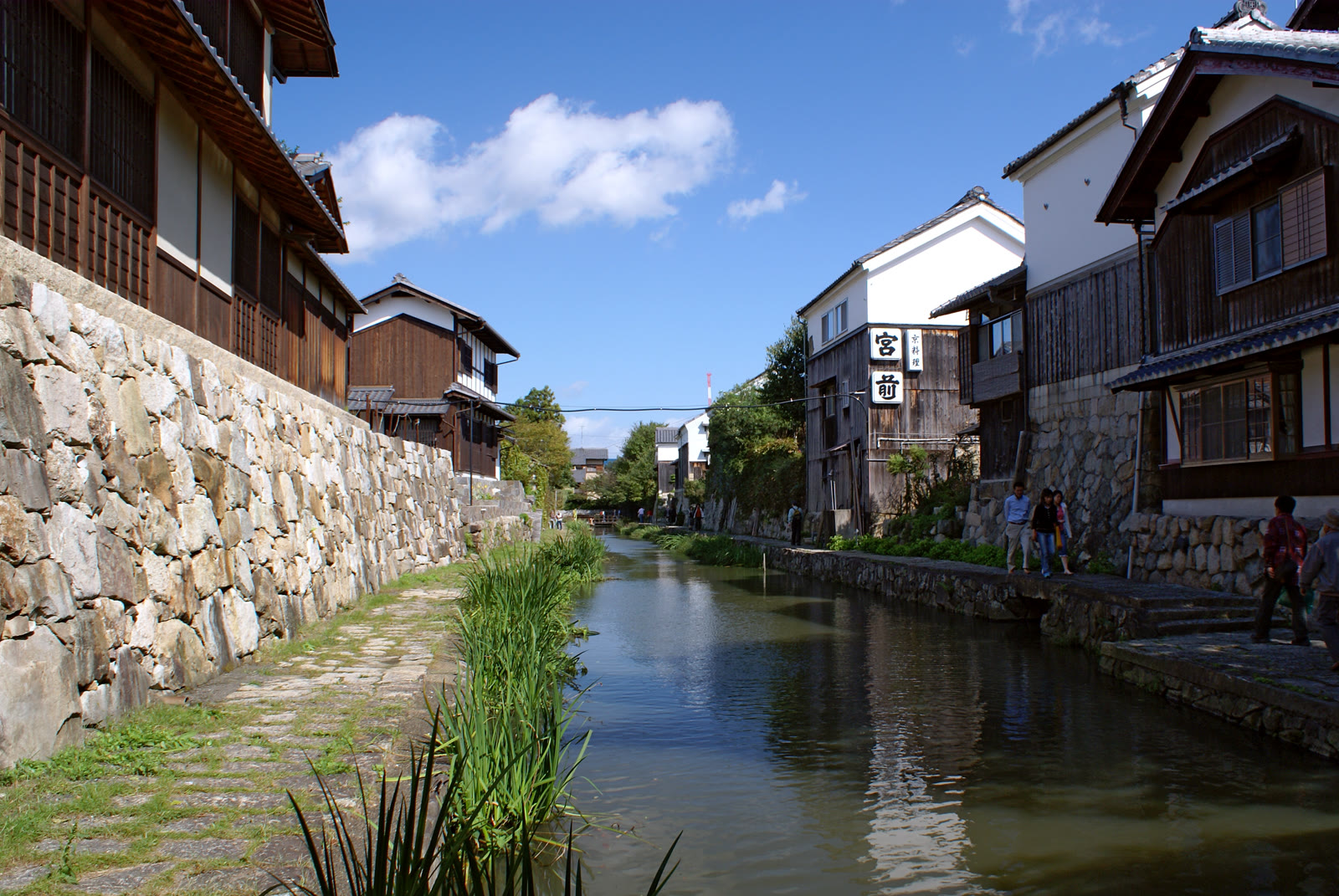
Omihachiman & Hachimanbori Canal
1.1 km · straight line
 illustration (AI-illustrated)
Nature · Shiga★
Nishino-ko reed channels
1.2 km · straight line
 Syced / CC0
Food · Shiga★★★
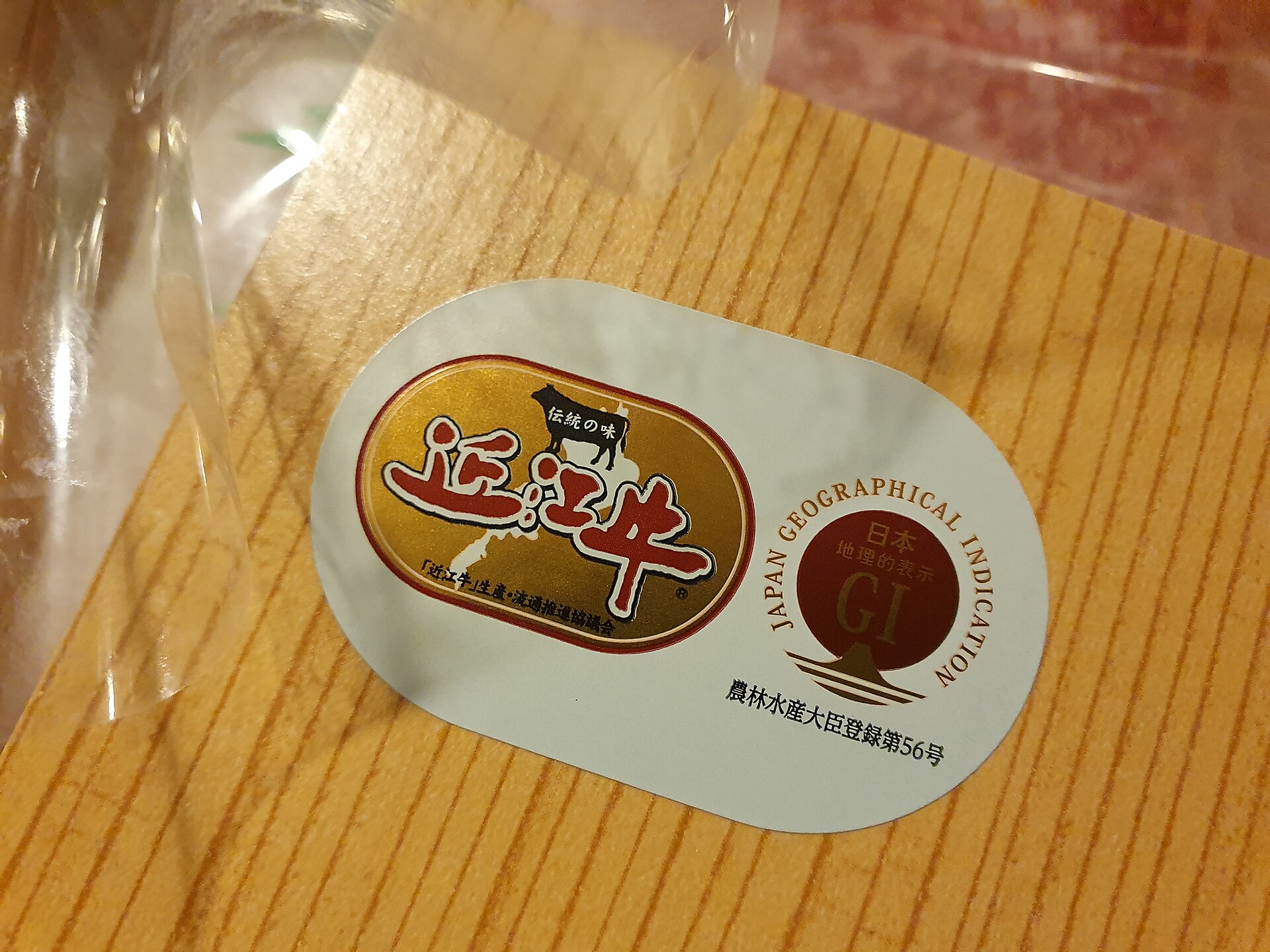
Omi Beef
7.1 km · straight line
 Kyoww / CC0
History · Shiga★
Gokasho Kondo
8.0 km · straight line
Distances are straight lines on the map, not travel times.