West Kyoto · HanazonoNo.1208★★Open in map →
Myoshin-ji
— Head temple of a walled town of Zen sub-temples
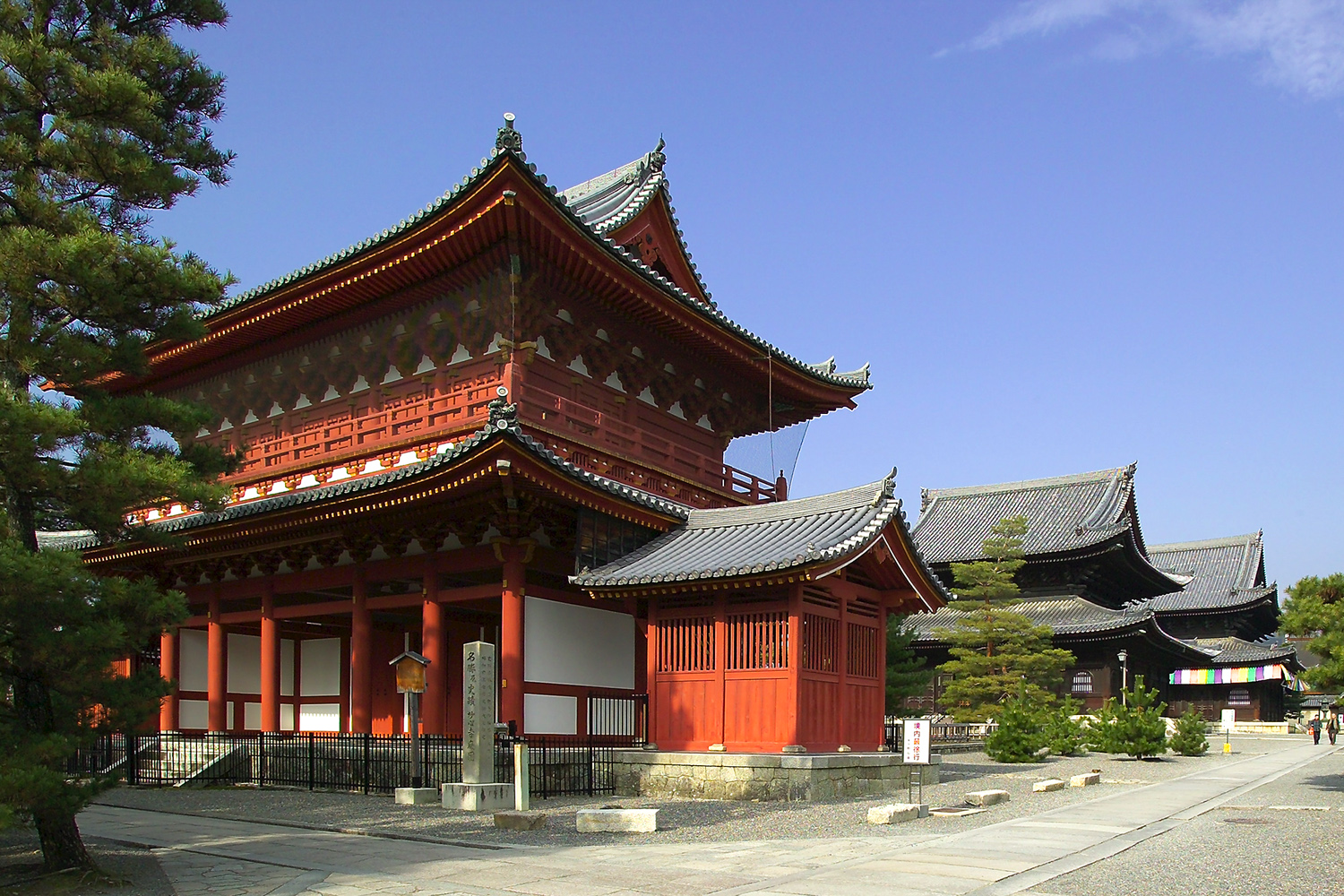
A Rinzai Zen head temple in western Kyoto that works less like one temple than like a small town. Walled lanes run between dozens of sub-temples, most of them private, while the great halls stand in a straight line down the middle.
- FromKyoto Station
- ~20 minJR train, then 5 min on foot
- Get off atHanazono Station (JR Sagano Line)
- On foot
- Myoshin-ji
The sweet spot
This is not an undiscovered corner of Kyoto. It is one of the city's great head temples, and it stays calm for a structural reason: almost all of the sub-temples are closed to the public, and the ticketed route inside covers a single hall.
Where it is
90 more notes in Kyoto · open the map →What to look for — in walking order
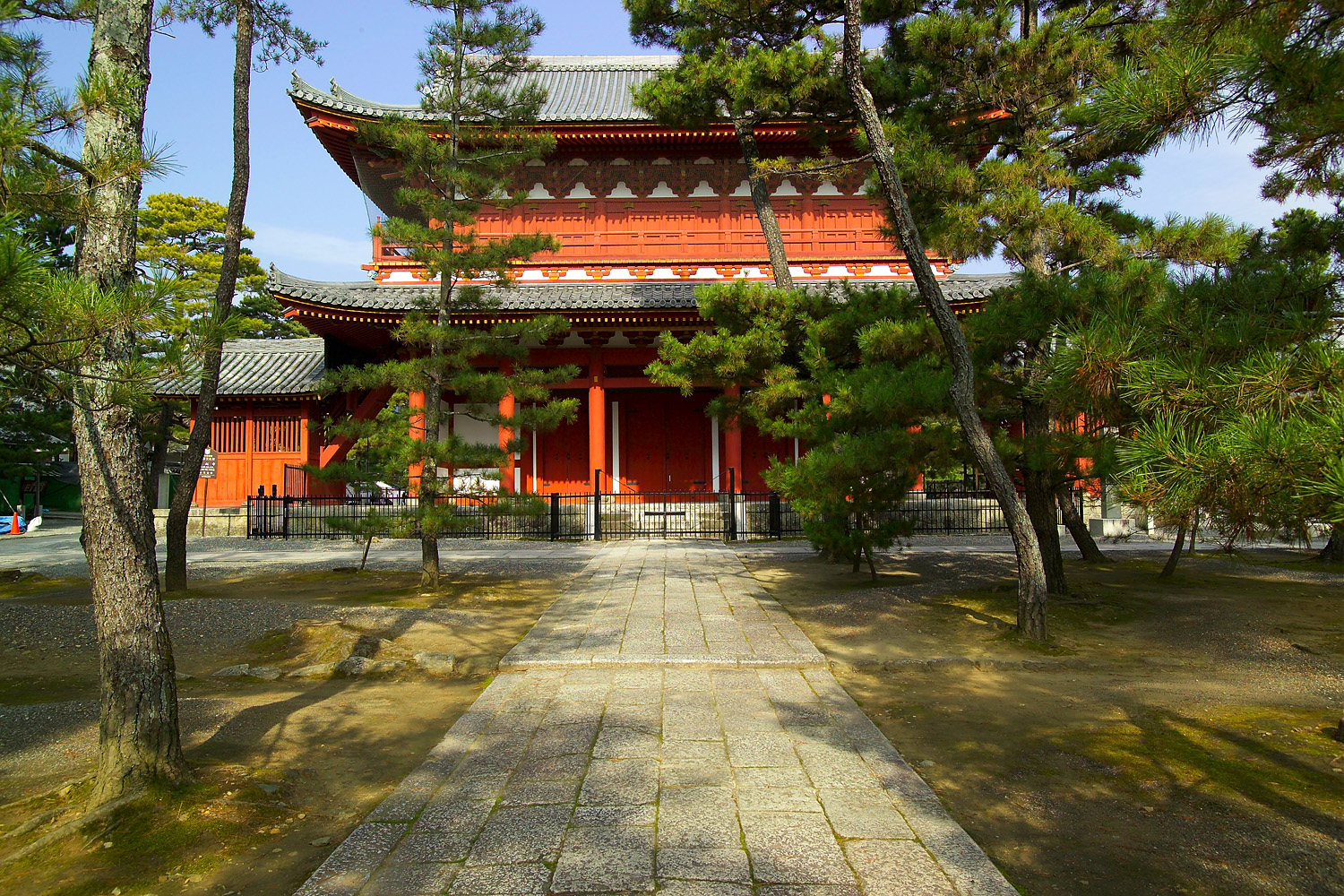
- Sanmon gatethe one vermilion structure in the precinct, at the south end of the central line
- Butsudenthe main hall on the axis, where Shakyamuni is enshrined
- Hattothe hall on the visitor route; Kano Tanyu's dragon on its ceiling took eight years to paint
- Yokushitsu bathhousean Edo-period steam bath built to pray for the soul of Akechi Mitsuhide
- The sub-temple laneswalled streets linking the south and north gates, closed sub-temple entrances on both sides
How to actually get there
- Kyoto Station → Hanazono Station (JR Sagano Line).
- Hanazono Station → the south gate of Myoshin-ji (walk about five minutes).
- South gate → Sanmon → Butsuden → Hatto, straight up the central axis; the hall ticket is bought at the Ohojo entrance.
- Hatto → the bathhouse and the sub-temple lanes → out through the north gate for the tram or the bus.
- JR Sagano Line to Hanazono Station
- Kyoto Station →(JR Sagano Line)→ Hanazono Station, then about five minutes on foot north to the south gate. The ticket desk for the hall is inside the grounds, at the entrance to the Ohojo, not at the gate itself.
- Back from Hanazono, or out of the north gate
- Return the way you came, on the JR Sagano Line to Kyoto Station. The alternative is to leave by the north gate: the Keifuku tram stop called Myoshinji is about three minutes away on the Kitano Line, and the JR bus and city bus 26 stop at Myoshinji-kitamon-mae, just outside that gate. The tram is a small local line, so check the last departure on the platform if you stay into the evening.
About the place
Myoshin-ji is the head temple of the Myoshinji branch of Rinzai Zen. Its precinct holds 46 sub-temples, each an independent temple behind its own wall and gate. Lanes run between them like streets, and along the central axis the Sanmon gate, the Butsuden and the Hatto stand in one line from south to north. Most of the sub-temples are closed to visitors, so what you walk here is the outside of the place rather than its interiors. The branch counts more than 3,400 affiliated temples in Japan and abroad, which makes this quiet grid of lanes the centre of a very large network.
How to enjoy it
Tickets for the Hatto go on sale from 9:00 and stop at 15:30, so the hall is best treated as the anchor of a mid-morning visit rather than an afternoon afterthought. Around it the precinct is flat and unhurried, and a few sub-temples open for their own seasonal viewings, which is the way to see a garden here.
Background & history
Emperor Hanazono turned his detached palace on this site into a Zen temple, and the temple takes 1337 as its year of foundation. The name Shobozan Myoshinji was given by the priest Shuho Myocho, and Kanzan Egen was invited as founding priest. The Sanmon gate standing today was raised in 1599, and the Hatto in 1657. A bronze bell here carries a date of 698, which makes it the oldest dated temple bell in Japan.
Before you go
- Cash
- The route to the Hatto is ticketed, and tickets are sold inside the grounds at the Ohojo entrance, from 9:00 until sales close at 15:30. Sub-temples that open for seasonal viewings charge their own admission on top of that. Carry cash: small temple desks in Kyoto are not reliably cashless.
- Good to know
- This is a daytime visit. Ticket sales for the hall end in the mid-afternoon, and the lanes between the sub-temples have very little lighting once it is dark. The ground is flat and paved throughout, so rain is manageable.
- Another way
- From Shijo-Kawaramachi, Kyoto Bus routes 62, 63, 65, 66 and 67 run to the Myoshinji-mae stop, a short walk from the south gate. From Hankyu Saiin, city bus 91 reaches the same stop.
- After you get off
- From Hanazono Station, walk north for about five minutes to the south gate of the precinct, then keep straight up the central lane toward the Sanmon.
Nearby notes
 663highland / CC BY 2.5
History · Kyoto★★★
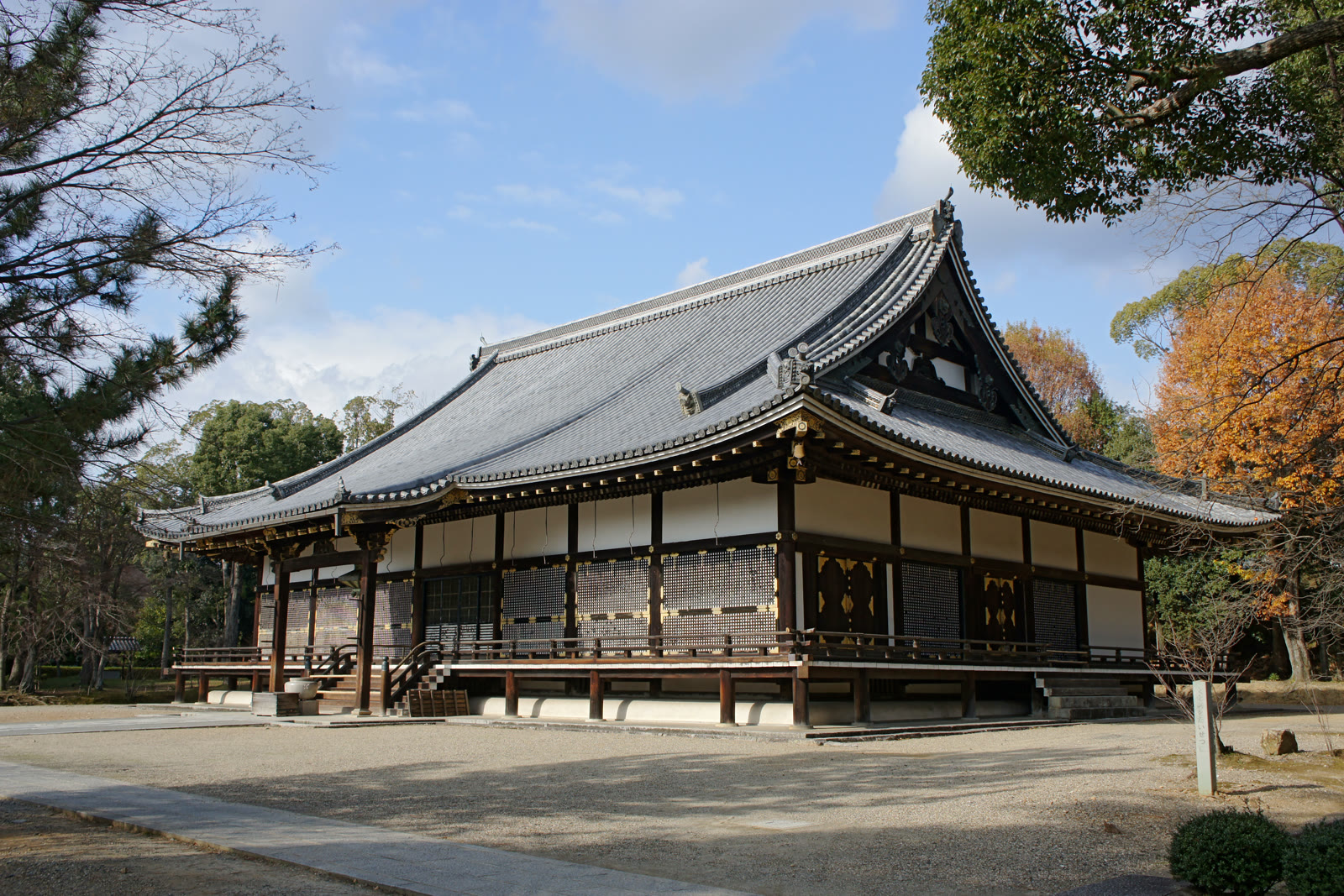
Ninna-ji Temple
1.0 km · straight line
 ttshr1970 / CC BY 3.0
History · Kyoto★★★
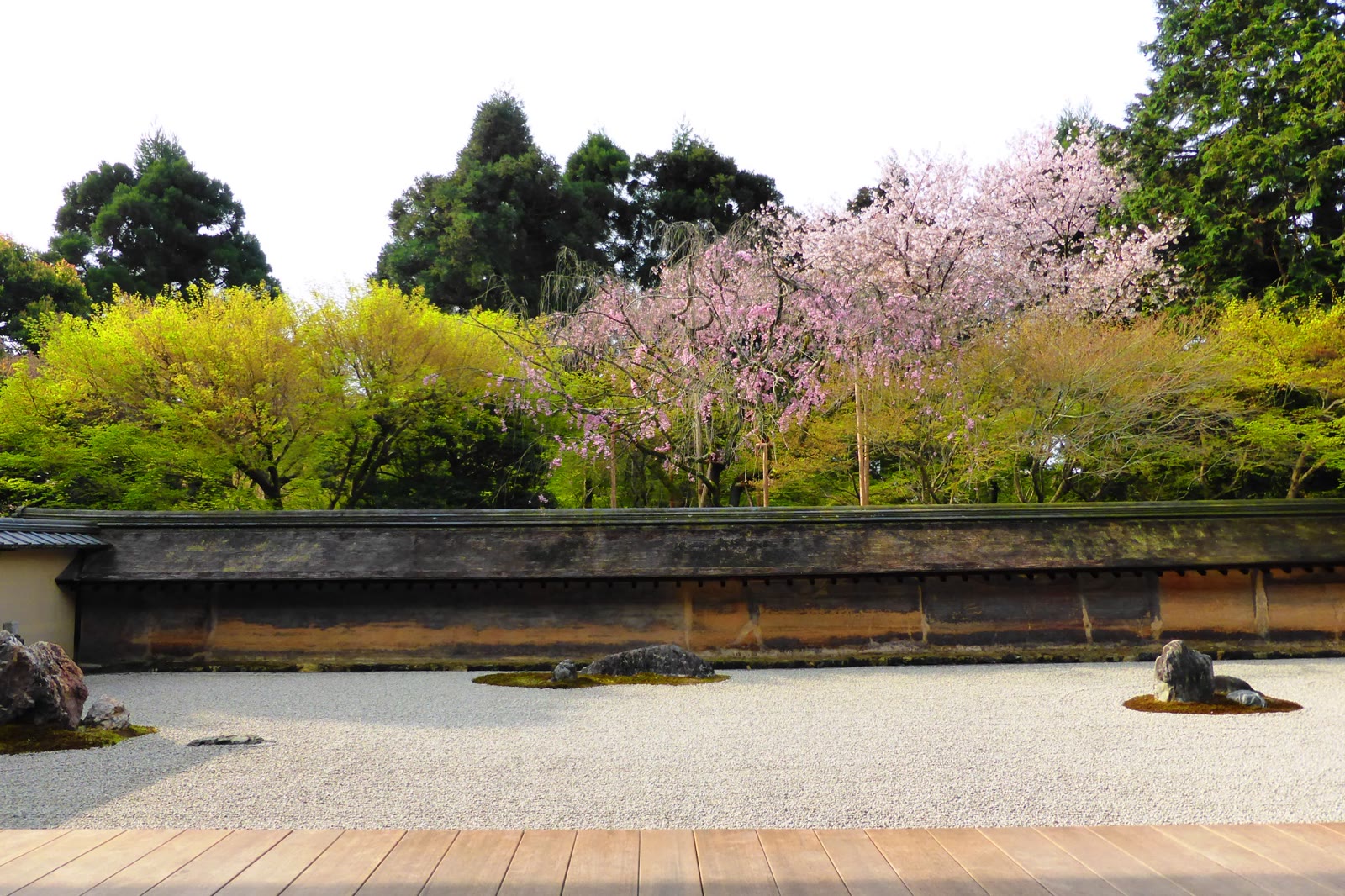
Ryoan-ji
1.2 km · straight line
 663highland / CC BY-SA 4.0
Entertainment · Kyoto★
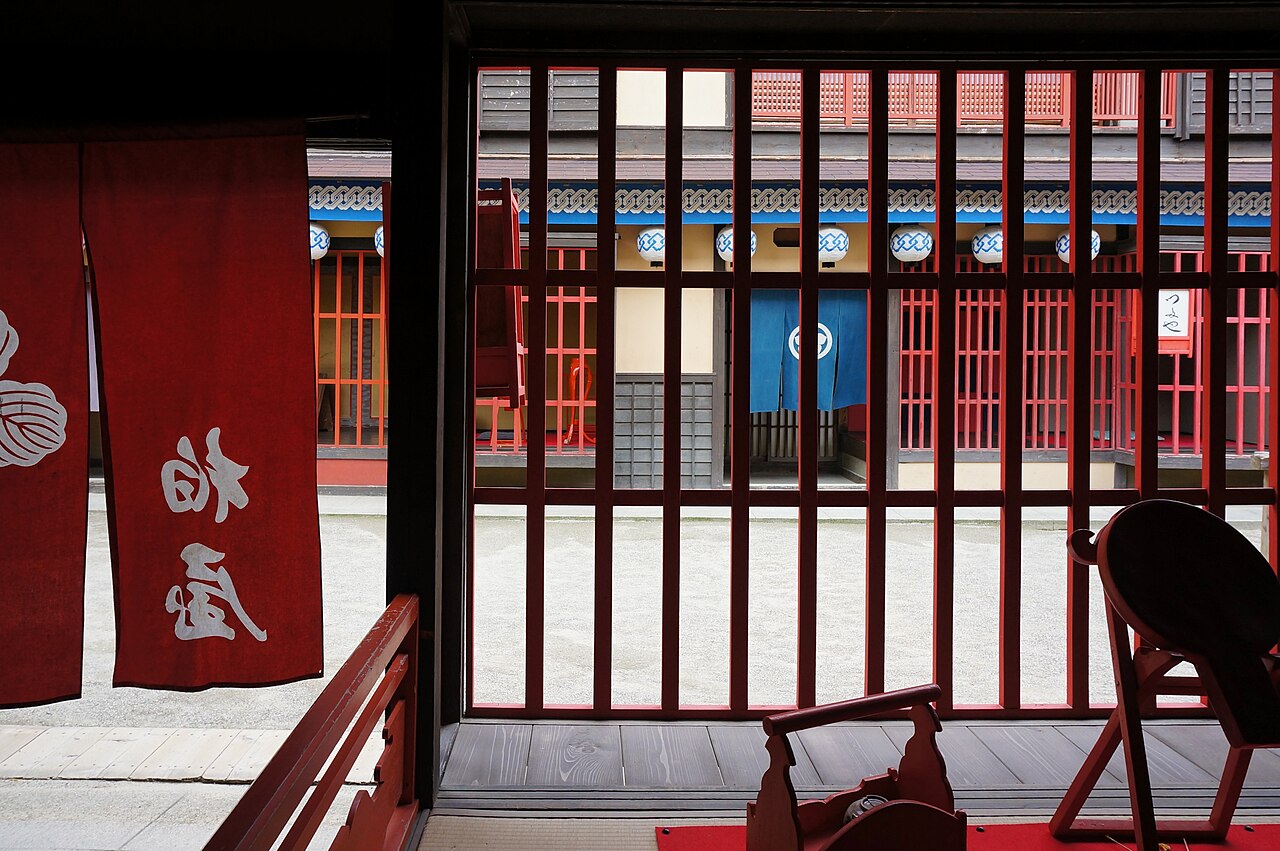
Uzumasa Kyoto Village
1.4 km · straight line
 663highland / CC BY 2.5
History · Kyoto★
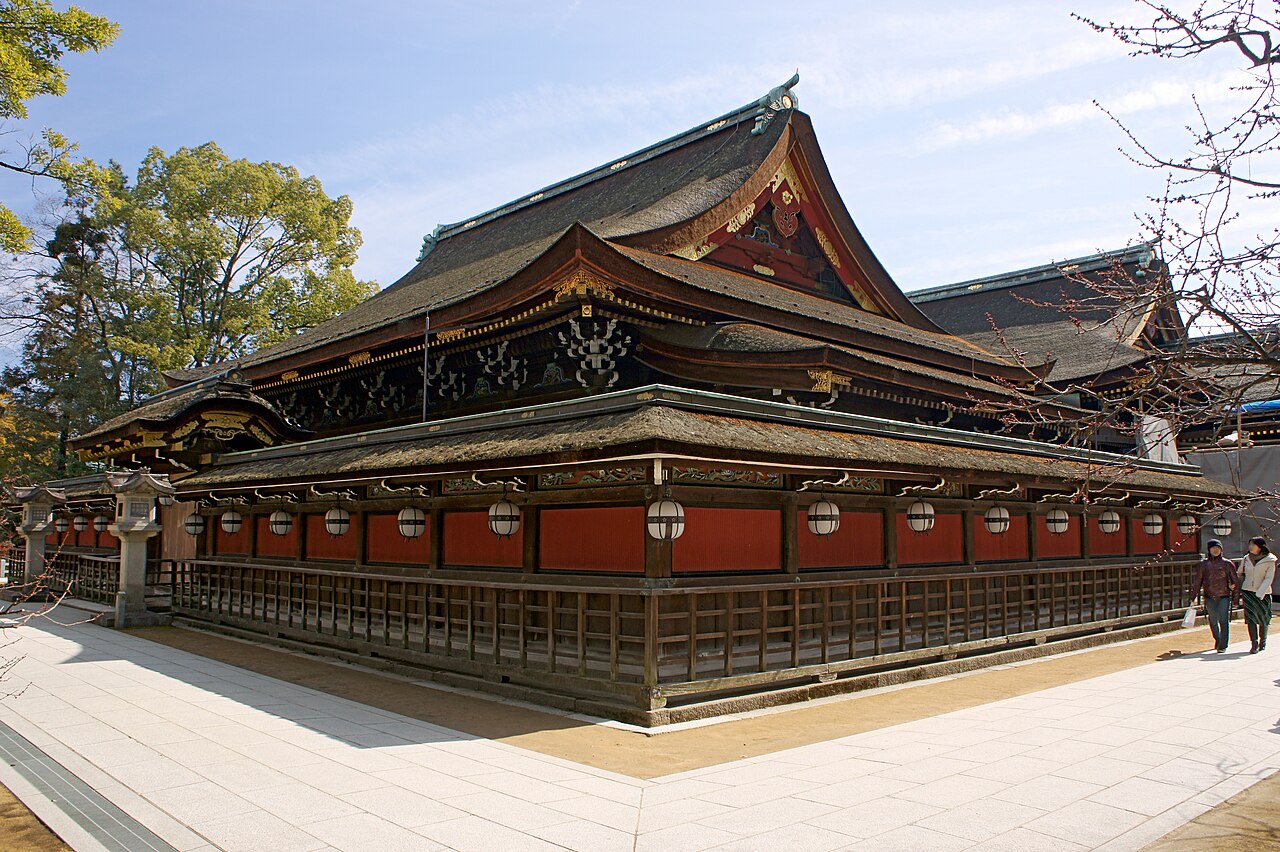
Kitano Tenmangu
1.6 km · straight line
Distances are straight lines on the map, not travel times.