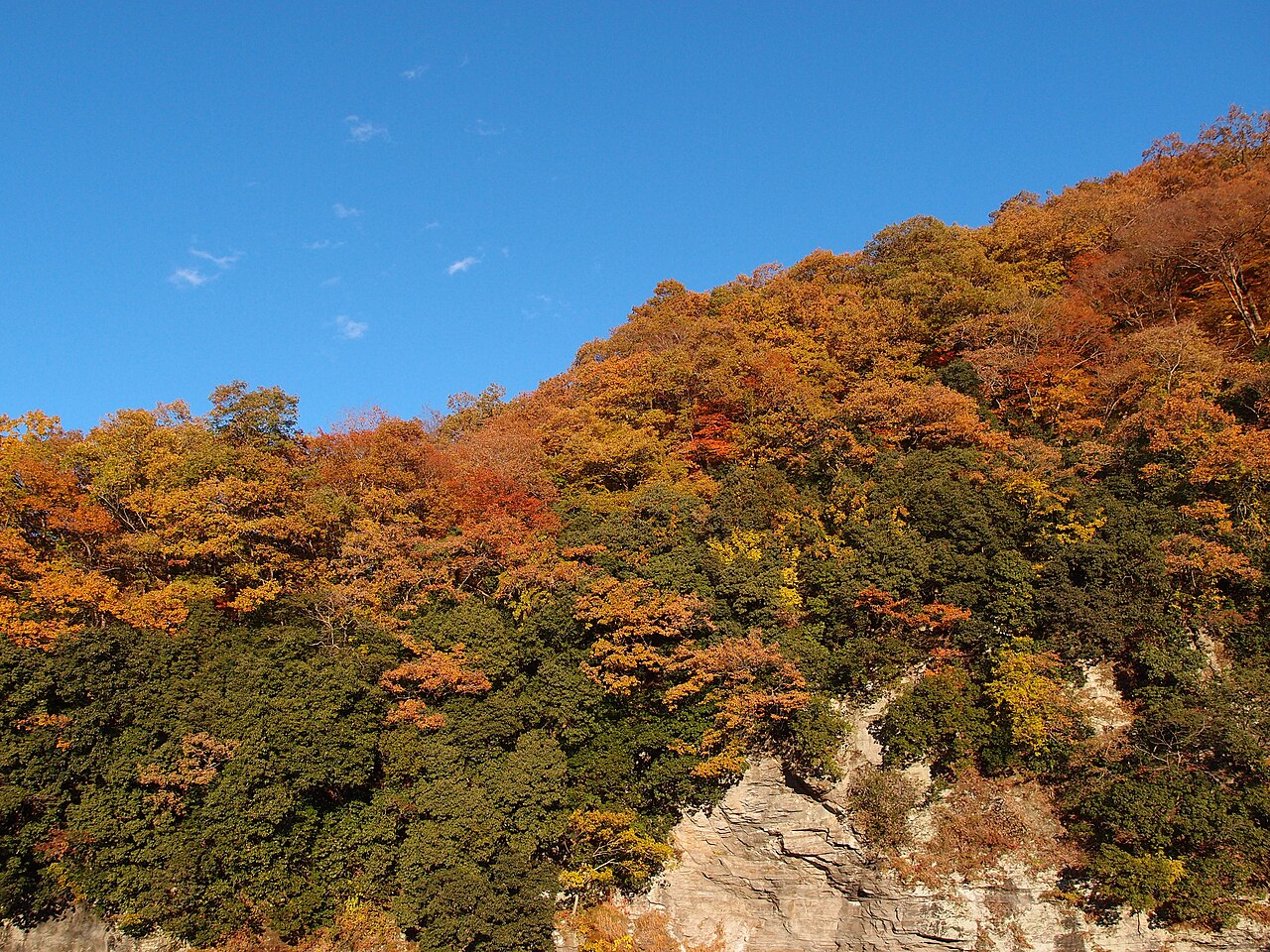
Saitama · Chichibu / NagatoroNo.322★★★Open in map →
Nagatoro
— rock terraces and a pole-steered boat
A gorge on the upper Arakawa in northern Saitama, where the river has exposed a broad shelf of crystalline schist — the Iwadatami, a National Place of Scenic Beauty and Natural Monument — and traditional pole-steered boats run the rapids beside it.
- FromIkebukuro Stn
- ~2 hrexpress + local line
- Get off atNagatoro Station (Chichibu Railway)
- From there
- Nagatoro
Where it is
19 more notes in Saitama · open the map →What to look for — in walking order
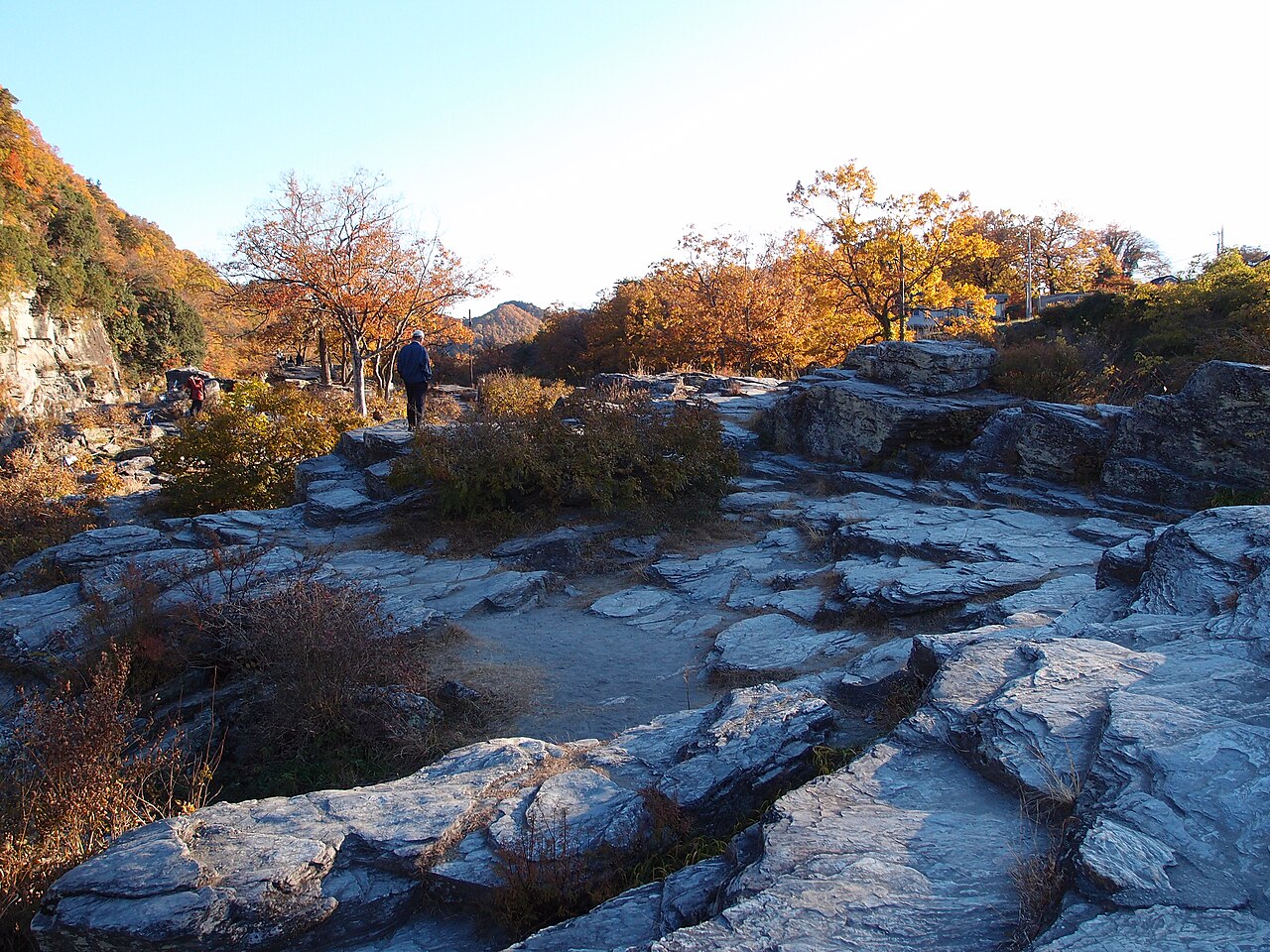
- The Iwadatami rock terracesa several-hundred-metre shelf of stepped blue-grey schist on the left bank; walkable right down to the water, with the slabs tilted and split by the river
- Line-kudari boat ridea wooden boat steered standing up with a single pole, through the rapids; short upstream and downstream courses, or the full run
- Chichibu Red Cliff, the far bankthe sheer schist wall facing the Iwadatami across the water — best seen from the boat or from the terraces at the river's edge
- Mount Hodosan cable car and shrinea short ropeway from the town to the summit, with Hodosan Shrine at the base and a wide view back over the gorge
How to actually get there
- Ikebukuro Station → Seibu-Chichibu Station (Seibu Ikebukuro/Chichibu Line, Laview limited express, ~80 min).
- Seibu-Chichibu Station → Ohanabatake Station (walk ~5 min) → Nagatoro Station (Chichibu Railway toward Yorii, ~15 min).
- Nagatoro Station → boat office and Iwadatami (walk 1–5 min); ride the Line-kudari, then walk the rock terraces (allow 3–4 hr in total).
- Ikebukuro Stn →(Seibu Ikebukuro Line)→ Seibu-Chichibu Stn →(walk)→ Ohanabatake Stn →(Chichibu Railway)→ Nagatoro Stn
- Ikebukuro Station →(Seibu Ikebukuro/Chichibu Line, Laview limited express, ~80 min)→ Seibu-Chichibu Station → walk about 5 min to Ohanabatake Station →(Chichibu Railway toward Yorii, ~15 min)→ Nagatoro Station. Total roughly 2 hours. The Chichibu Railway runs only 1–2 trains an hour, so check the day's timetable before you leave. An alternative from the JR side: Ueno or Tokyo Station →(JR Takasaki Line, ~60–70 min)→ Kumagaya Station →(Chichibu Railway, ~60 min)→ Nagatoro Station.
- Return via Ohanabatake / Seibu-Chichibu, or via Kumagaya
- Take the Chichibu Railway back toward Ohanabatake for the Seibu limited express to Ikebukuro, or toward Kumagaya for the JR Takasaki Line. Both local-line services thin out in the evening — check the return times on the platform board when you arrive, and note that the last Laview from Seibu-Chichibu leaves well before midnight.
About the place
Nagatoro sits where the Arakawa river cuts through the eastern edge of the Chichibu mountains, and the rock it cuts through is crystalline schist — stone that was metamorphosed deep underground and later pushed back to the surface. The river has scraped the covering away, and what is left on the left bank is the Iwadatami, literally the 'rock tatami': a broad, flat shelf of grey-green stone running several hundred metres along the water, split into slabs and steps you can walk out over right to the river's edge. Geologists nicknamed the place the 'window on the earth' for exactly this reason — the rock on show here normally sits kilometres down. Directly opposite, the far bank rises into a sheer schist wall known locally as the Chichibu Red Cliff. The second half of Nagatoro is on the water: the Line-kudari, wooden boats that a boatman steers standing up with one long pole, threading between the rocks and dropping through the small rapids. The boats leave from beside the Iwadatami and from a bridge upstream, and the whole trip is narrated by the boatman, who has usually worked the same stretch of water for years.
How to enjoy it
Do the boat first and the terraces after — the boatman points out features you will then want to walk to. Wear shoes with grip: the schist is smooth and can be slippery when wet, and there are no railings at the water's edge. Late November is the busiest and the best-looking, when the maples above the gorge turn; spring cherry along the Kitazakura-dori lane is the other peak. Boat tickets are same-day only, so on autumn weekends buy them on arrival before you do anything else.
Background & history
The stone here is crystalline schist, formed under high pressure deep in the earth's crust and later lifted and exposed by the Arakawa. Because the sequence is unusually legible, Nagatoro became one of the founding field sites of modern Japanese geology and is still visited by student survey parties every year; the nickname 'window on the earth' comes from that teaching tradition. The Iwadatami and the surrounding gorge are designated a National Place of Scenic Beauty and Natural Monument. Mount Hodosan, rising directly behind the town, carries Hodosan Shrine at its foot and a summit reached by cable car.
Before you go
- Cash
- The Chichibu Railway does not accept IC cards on all services — buy a paper ticket at the station. Line-kudari boat tickets are sold same-day at the boarding office and can sell out on autumn weekends; cash is safest. Seibu limited express seats should be reserved in advance in peak season.
- Good to know
- The Line-kudari runs its normal season roughly from 10 March to 4 December, 9:00 to around 16:00, with tickets sold until they run out; in January and February the operator switches to heated 'kotatsu boats' instead. At the very start and end of the season the hours shorten to about 10:00–14:30. High water after heavy rain suspends the boats — check the operator's page on the morning you go.
- Another way
- By car it is about 30 minutes from the Hanazono interchange on the Kan-etsu Expressway. Paid car parks sit near the Iwadatami, but they fill early on autumn weekends.
- After you get off
- From Nagatoro Station, the shopping lane opposite the exit leads straight down to the river — the Iwadatami is about 5 minutes on foot, and the boat office is about a minute from the station.
Nearby notes
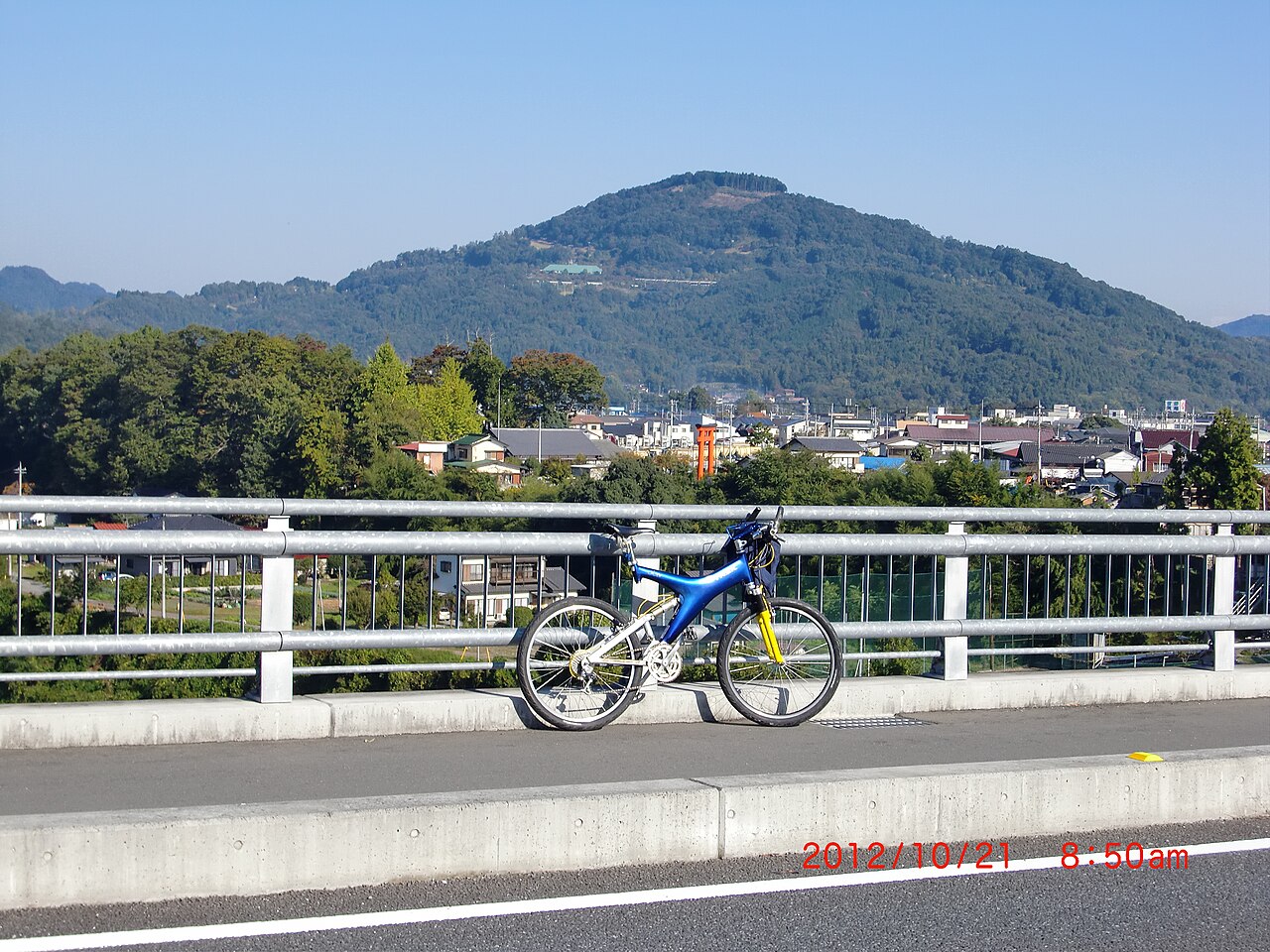 toriichi3 / CC BY 3.0
Nature · Saitama★
Mt. Minoyama
4.2 km · straight line
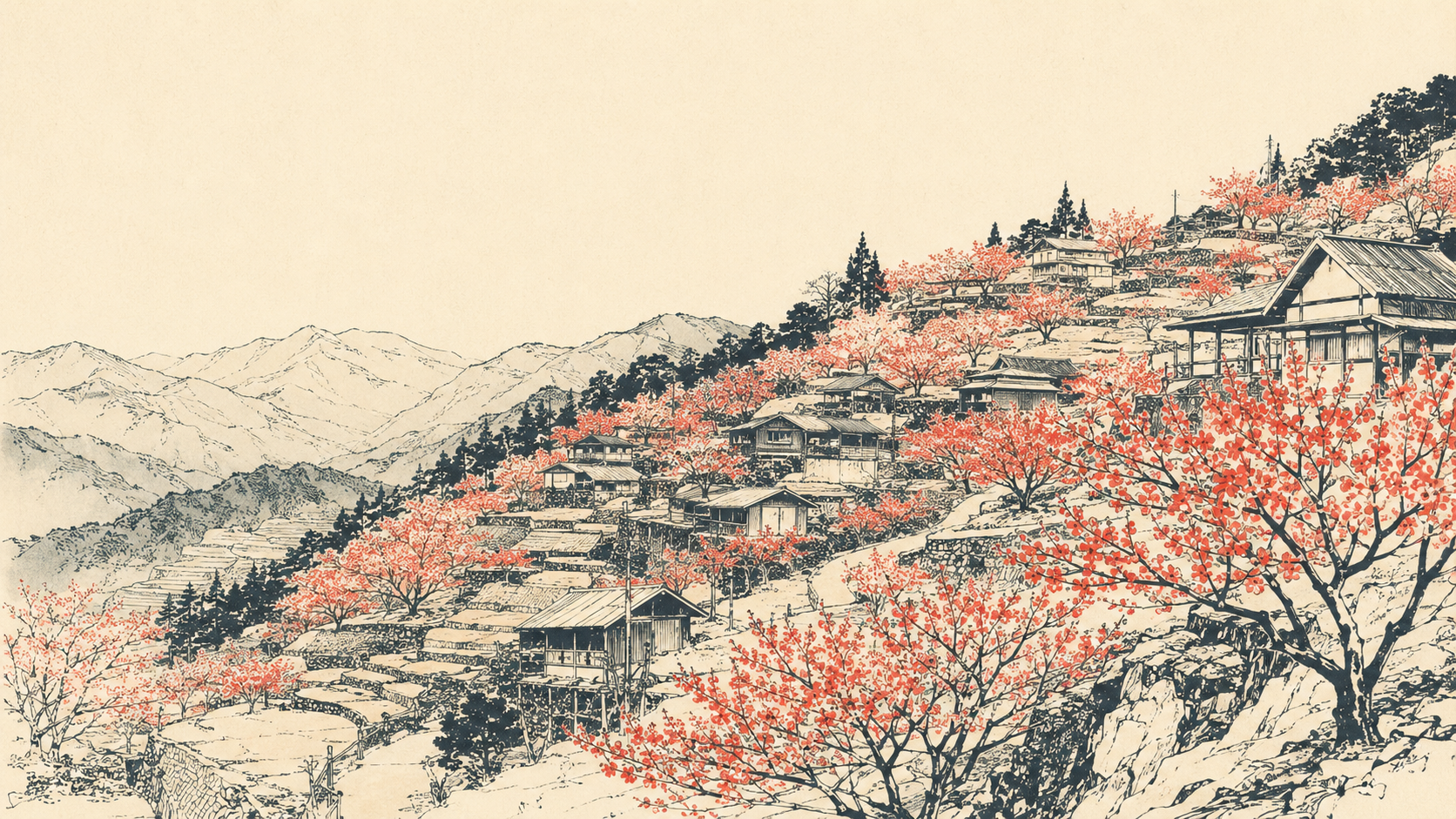 illustration (AI-illustrated)
Nature · Saitama★
Ouchizawa Hanamomo no Sato
5.0 km · straight line
 Bryanmackinnon / CC BY 4.0
History · Saitama★
Wadō Ruins
5.3 km · straight line
 Taketarou / CC BY-SA 3.0
History · Saitama★
Hachigata Castle Ruins
7.4 km · straight line
Distances are straight lines on the map, not travel times.