Saitama · Higashi-ChichibuNo.089★Open in map →
Ouchizawa Hanamomo no Sato
— a hillside of flowering peach trees
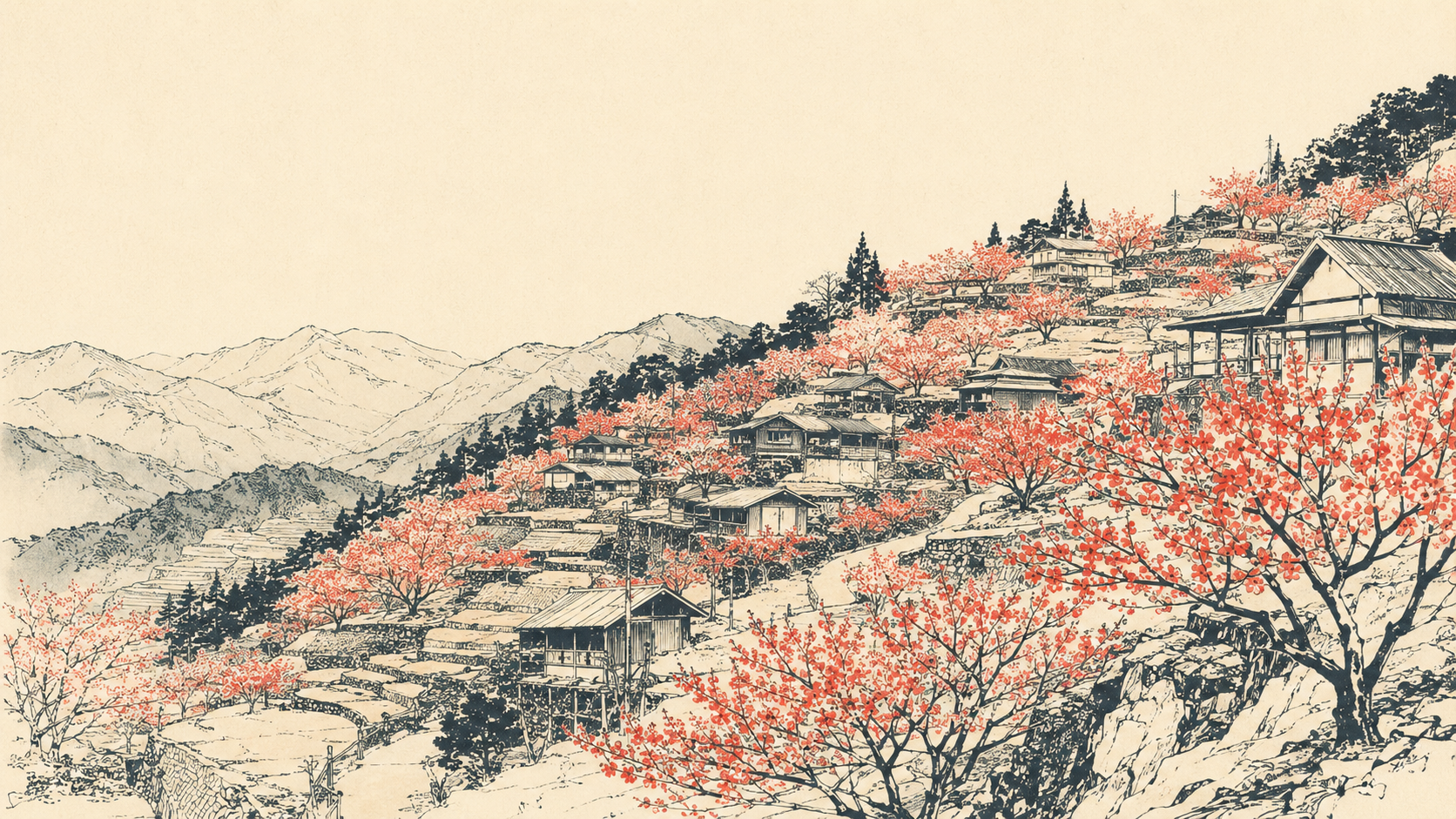
A farming slope in Higashi-Chichibu, a mountain village in Saitama, where residents planted thousands of ornamental peach trees. For a couple of weeks in early spring the whole hillside glows pink and white.
- FromIkebukuro Stn
- ~2 hrtrain + bus (weekdays only)
- Get off atDaiho bus stop
- On foot
- Ouchizawa Hanamomo no Sato
The sweet spot
There is no train station in the hamlet, the bus from the nearest station runs only a handful of times a day and stops entirely on weekends and holidays, and very little is written about the place in English. That thin, weekday-only access keeps it off the main tourist flow, so it never fills the way a city park does.
Where it is
19 more notes in Saitama · open the map →What to look for — in walking order
- Flowering peach slopeshanamomo (ornamental peach) trees blanketing the south-facing terraces
- Mixed spring bloomscherry, forsythia, sanshuyu, plum, and rapeseed flowering alongside the peach
- Hillside lookouta viewpoint partway up for a bird's-eye view of the blossoming terraces
- Chichibu backdropthe mountain ridgelines of Chichibu rising behind the blossoming farmland
How to actually get there
- Ikebukuro Stn → Yorii Stn (Tobu Tojo line, transfer at Ogawamachi, ~1 hr 40 min)
- Yorii Stn → Daiho stop (Eagle Bus toward Washi-no-Sato, ~10 min · weekdays only)
- Daiho stop → flowering terraces (on foot, uphill, ~10 min)
- Tobu Tojo line + Eagle Bus
- Ikebukuro Stn →(Tobu Tojo line toward Yorii, usually a transfer at Ogawamachi Stn, ~1 hr 40 min)→ Yorii Stn →(Eagle Bus toward Washi-no-Sato, ~10 min)→ Daiho stop. Total roughly 2 hr, plus waiting time for the bus. IMPORTANT: this bus runs only on weekdays, about 6 times a day (driver shortage; weekend and holiday runs are fully suspended). Check the day's bus timetable before you leave, and plan to arrive on a weekday.
- Same route in reverse
- Return by Eagle Bus back to Yorii Stn, then the Tobu Tojo line to Ikebukuro. Because there are only about 6 weekday buses and the last useful one leaves in the early evening, check the return times posted at the Daiho stop as soon as you arrive, so you do not get stranded.
About the place
Hanamomo no Sato is a south-facing hillside in the Ouchizawa area of Higashi-Chichibu, covered with thousands of flowering trees — sources put the count at roughly five to seven thousand. Hanamomo, the ornamental flowering peach (grown for its blossom, not its fruit), leads the show, but cherry, forsythia, sanshuyu (a yellow-flowering dogwood), plum, and rapeseed bloom alongside it, so the slope carries several colors at once. A lookout partway up the village gives a bird's-eye view of the terraced slope and the Chichibu mountain ridgelines behind. Local guides often call the place a togenkyo — an earthly peach-blossom paradise — and the name fits when everything is in bloom.
How to enjoy it
Peak bloom is documented from late March into early April, though the timing shifts with the weather — check the village's bloom-status updates before you go. The lanes into the hamlet are narrow, and the management association asks each visitor for a small maintenance fee. The bus from Yorii runs only on weekdays, so plan accordingly.
Background & history
The planting grew out of a community effort to make use of once-abandoned farmland, turning bare terraces into a spring attraction. A local management association now maintains the site and asks each visitor for a small cooperation fee. Higashi-Chichibu is the only municipality in Saitama Prefecture still classed as a village; about four-fifths of its land is forested mountainside.
Before you go
- Cash
- Rural buses and village stalls here are often cash-only, and there is a small cooperation fee for the site, so carry coins and small notes.
- Good to know
- Peak bloom is roughly late March to mid-April only; outside those weeks there is little to see.
- Another way
- By car, drive in via the Washi-no-Sato roadside station and park below the slope; a car avoids the weekday-only, sparse bus timetable.
- After you get off
- From the Daiho bus stop, walk about 100 m along the prefectural road, then turn off toward the site — it is roughly a 10-minute walk uphill to the flowering terraces.
Nearby notes
 Taketarou / CC BY-SA 3.0
History · Saitama★
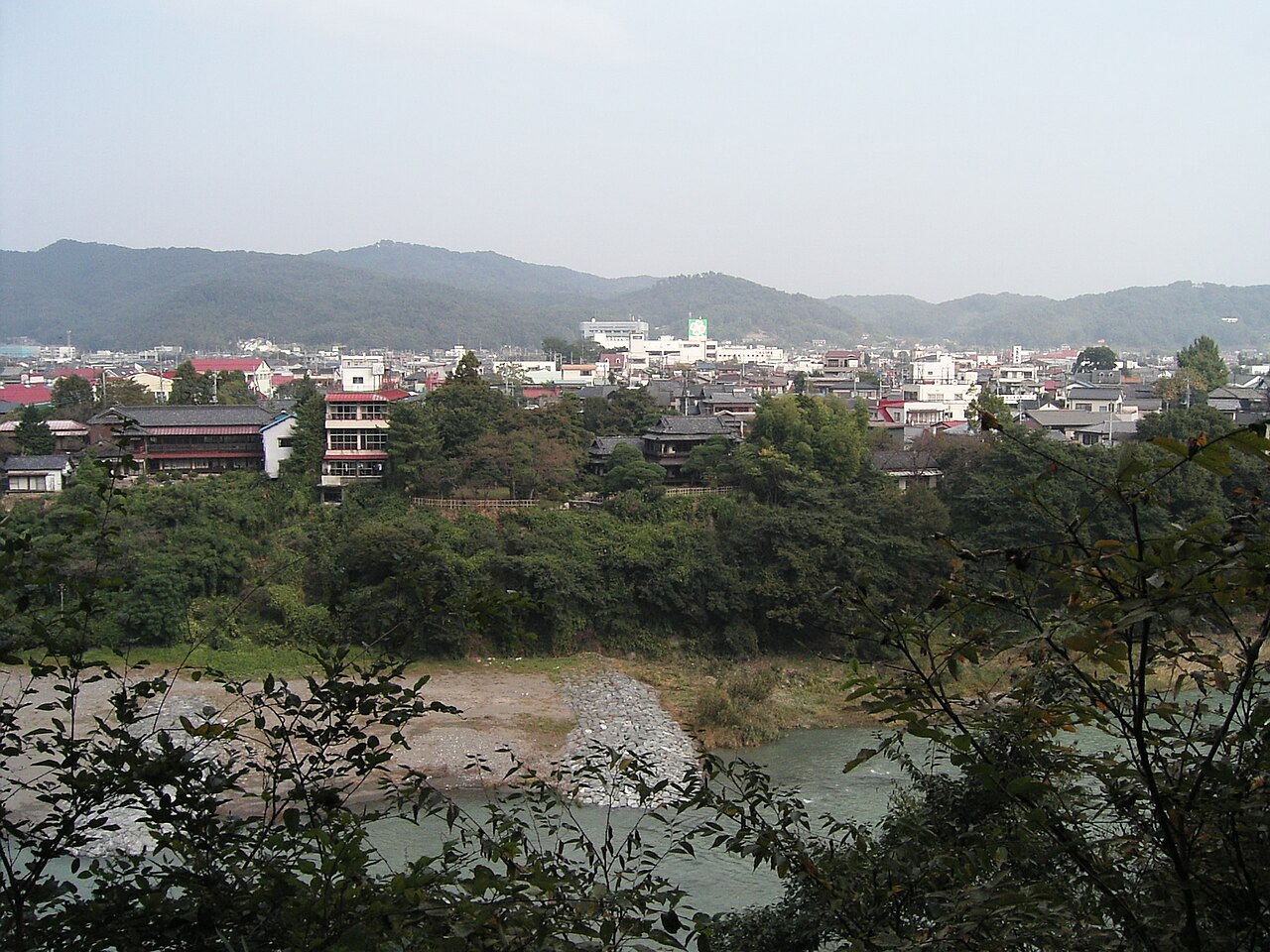
Hachigata Castle Ruins
4.0 km · straight line
 Guilhem Vellut from Annecy, France / CC BY 2.0
Nature · Saitama★★★
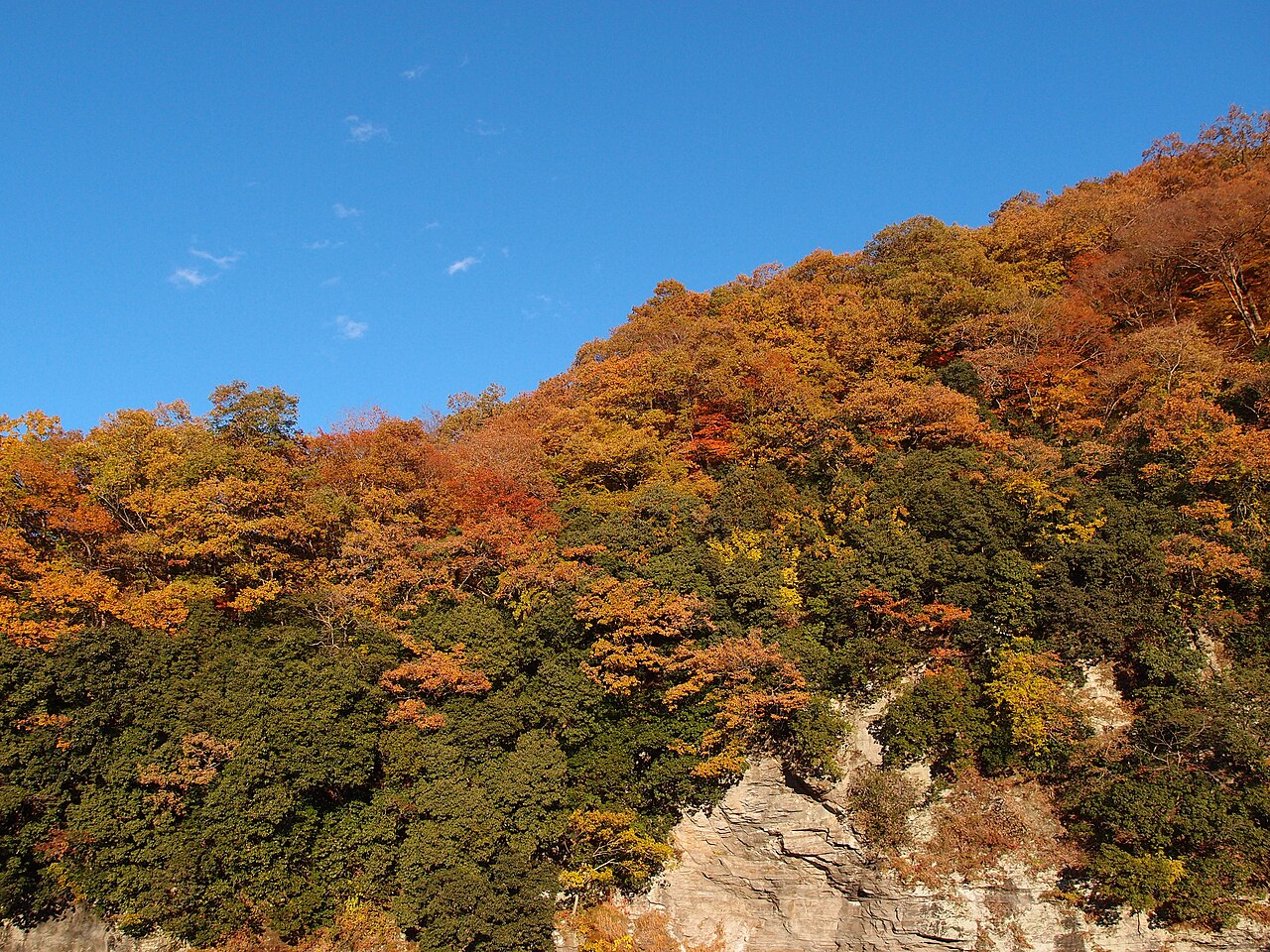
Nagatoro
5.0 km · straight line
 toriichi3 / CC BY 3.0
Nature · Saitama★
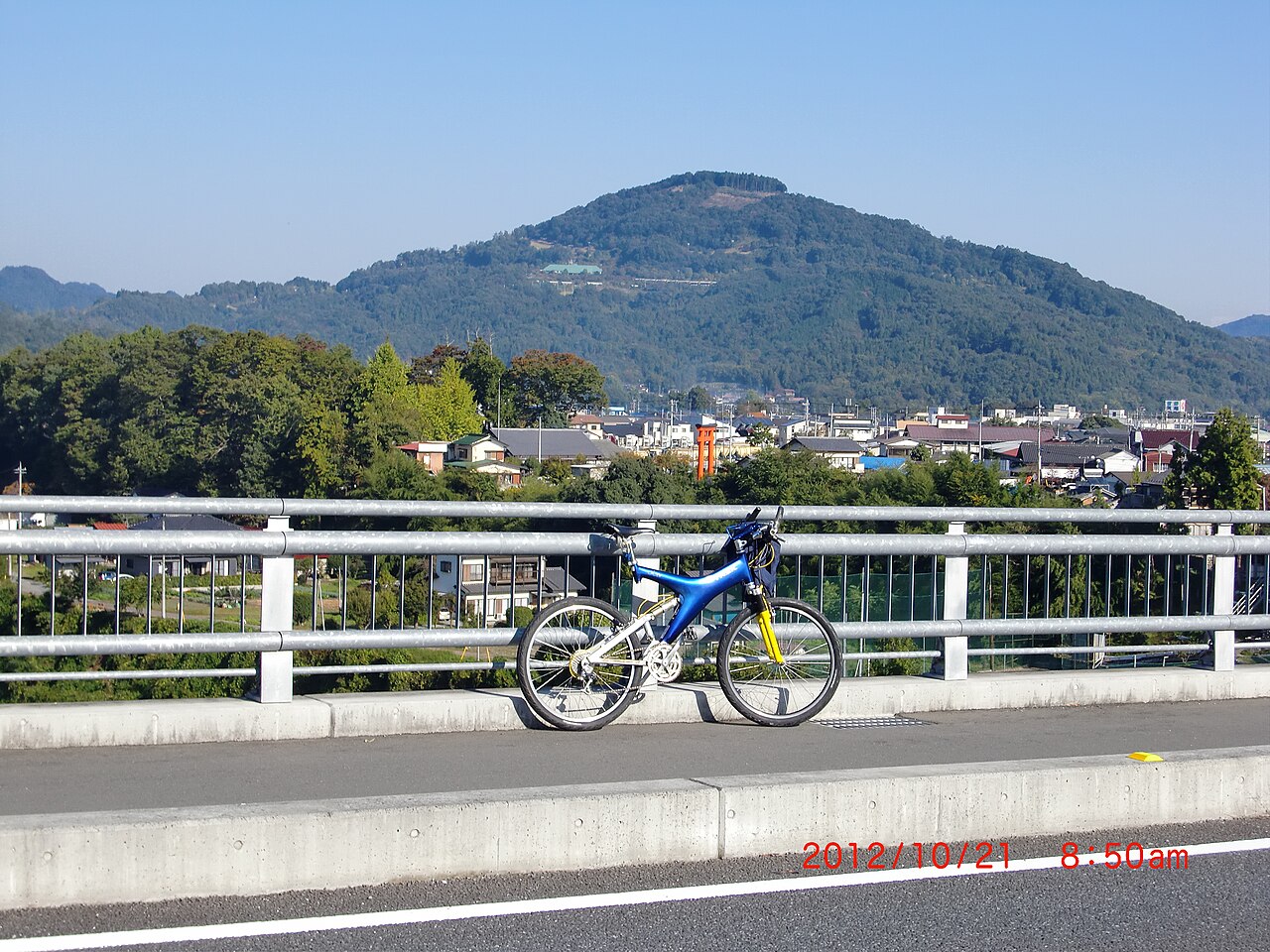
Mt. Minoyama
5.7 km · straight line
 Bryanmackinnon / CC BY 4.0
History · Saitama★
Wadō Ruins
6.7 km · straight line
Distances are straight lines on the map, not travel times.