South Osaka · SumiyoshiNo.129★★Open in map →
Sumiyoshi Taisha's Drum Bridge
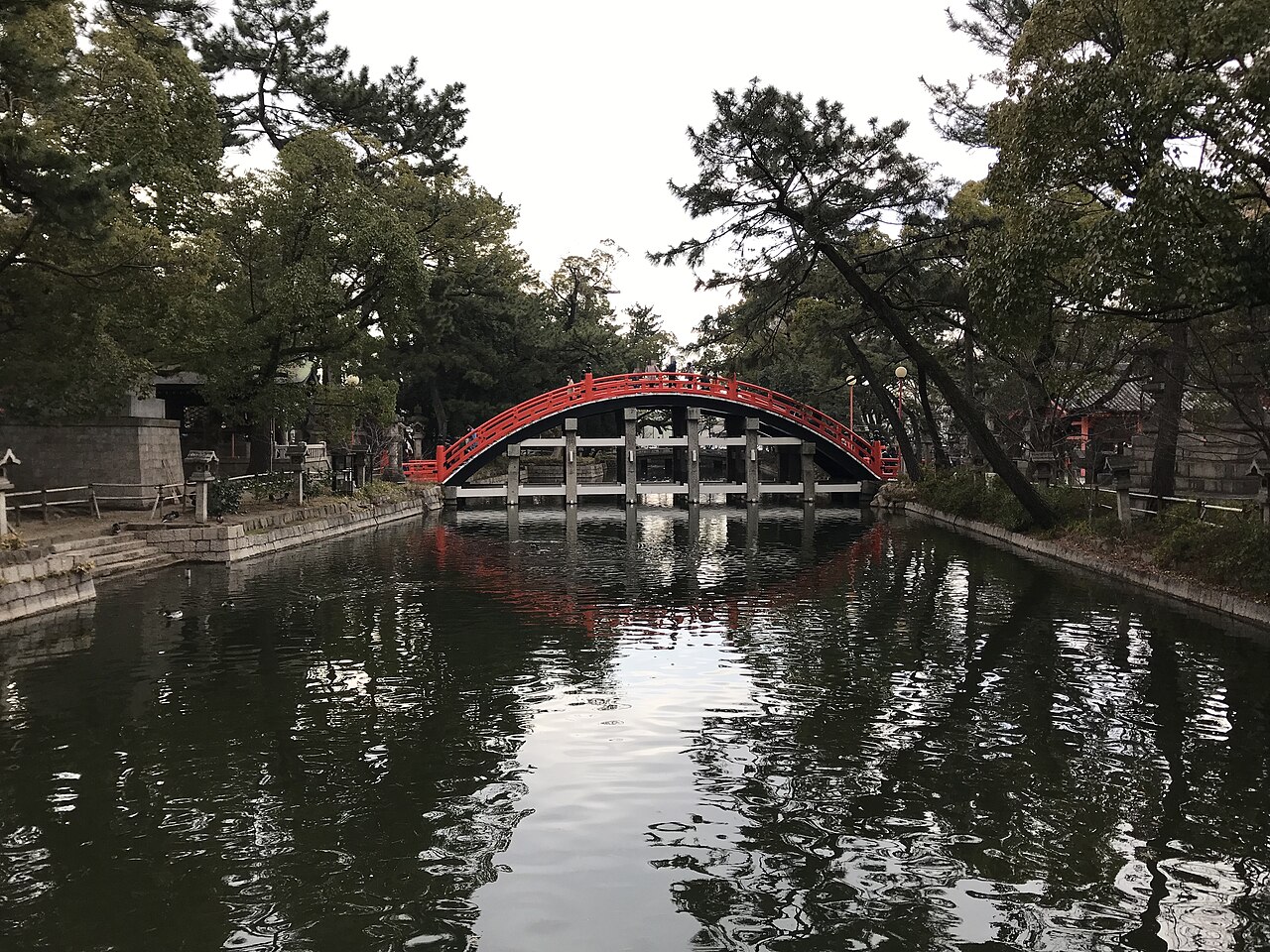
The steep vermilion arched bridge at Sumiyoshi Taisha, one of Osaka's most important Shinto shrines. Its arch and pond reflection together form a near-perfect circle.
- FromNamba (Nankai)
- ~15 minNankai (frequent)
- Get off atSumiyoshi-taisha Station (Nankai Main Line)
- On foot
- Sumiyoshi Taisha's Drum Bridge
Where it is
40 more notes in Osaka · open the map →What to look for — in walking order
- Main torii gatethe gateway marking the entrance; the drum bridge arches over the pond a short way inside
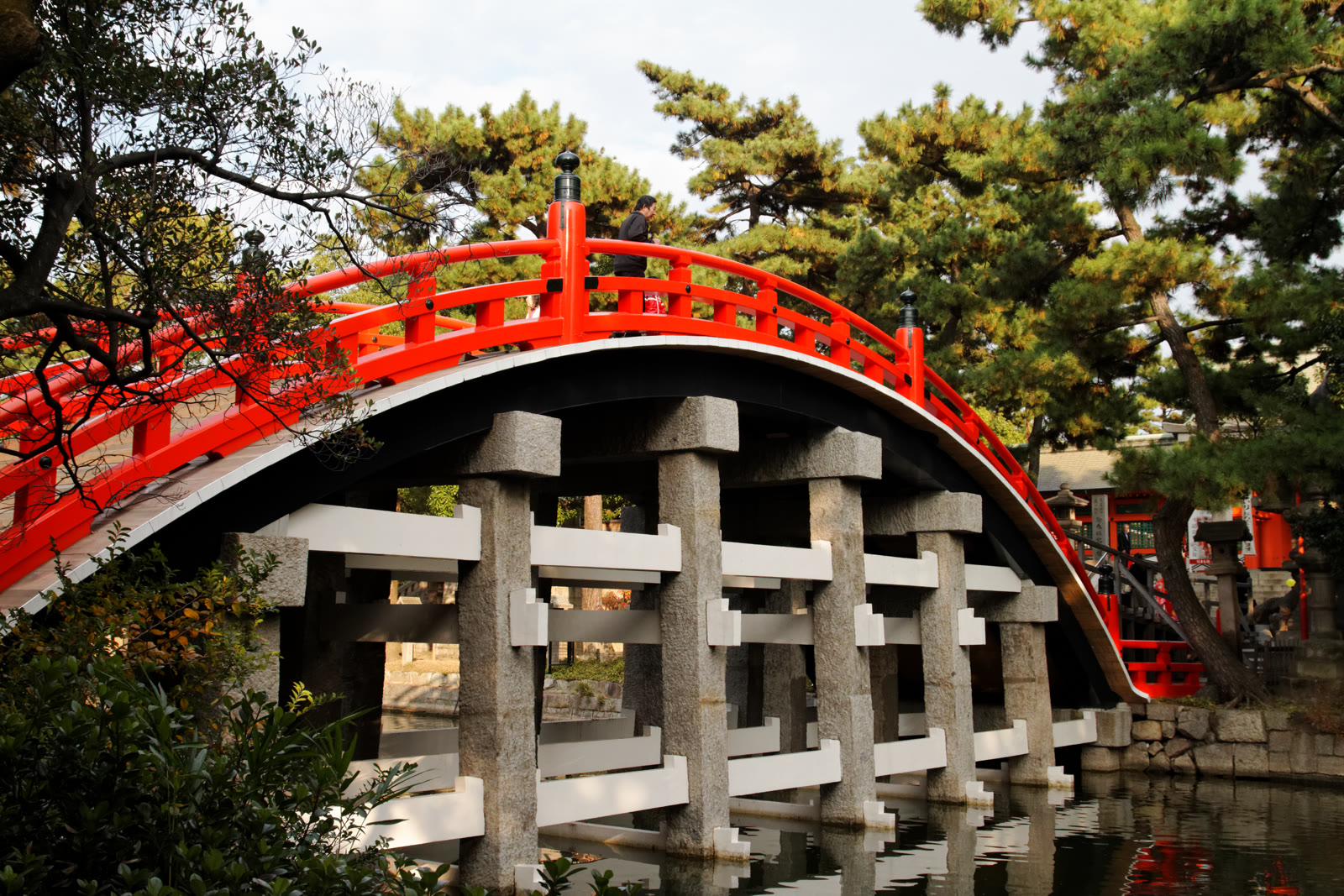
- The steep archa slope of roughly 48 degrees that makes the short crossing surprisingly dramatic
- Drum-shaped reflectionon calm sunny days, the vermilion arch and its mirror image in the pond form a circle
- Sumiyoshi-zukuri main hallsthe four National Treasure honden in one of Japan's oldest shrine building styles
How to actually get there
- Nankai Namba Station → Sumiyoshi-taisha Station (Nankai Main Line local train, ~10 min, 4 stops).
- From the station east exit, walk ~2-3 min to the main torii gate.
- Pass through the gate; the drum bridge arches over the pond directly ahead, with the four main halls beyond it.
- Nankai Main Line from Namba
- Nankai Namba Station →(Nankai Main Line local train, ~10 min, 4 stops)→ Sumiyoshi-taisha Station. Total about 10 min, 240 yen. Take a LOCAL train: faster rapid and express trains skip Sumiyoshi-taisha Station, so check the train type on the platform display. Local trains run often through the day (several per hour). From the station exit, the shrine's main torii gate (the gateway marking a shrine entrance) is about a 2-3 minute walk east.
- same Nankai line back to Namba
- Return on the Nankai Main Line from Sumiyoshi-taisha Station toward Namba (~10 min). Local trains run frequently through the day and into the evening, and no booking is needed, so you can leave whenever you finish. Check the return times on the platform display when you arrive.
About the place
The sorihashi — also called the taiko-bashi, or drum bridge — is the defining sight at Sumiyoshi Taisha. A wooden arch roughly 20 metres long and 5.5 metres wide, it rises about 3.6 metres to a maximum slope of around 48 degrees, making the crossing feel like climbing a staircase. The bright vermilion railings curve so sharply that, on a calm sunny day, the bridge and its reflection in the pond form a near-perfect circle. That circle resembles a drum, which is where the name comes from. Beyond the bridge stand four main halls in the Sumiyoshi-zukuri style — an ancient form of shrine architecture with straight roof lines, vermilion pillars, and white walls — all designated National Treasures.
How to enjoy it
The shrine opens at 6:00 (April to September) or 6:30 (October to March). Come early for calm water and quiet light — that is when the drum-shaped reflection in the pond shows at its best. Take the arch slowly; the steps down the far side feel steeper than they look.
Background & history
The stone piers supporting the bridge are traditionally said to date to the Keicho era, around the turn of the 17th century. Shrine tradition holds they were donated by Yodo-dono, a consort of the warlord Toyotomi Hideyoshi, as a prayer for her son Toyotomi Hideyori, though some accounts credit Hideyori himself. The four honden (main worship halls) beyond are built in the Sumiyoshi-zukuri style, regarded as one of the oldest surviving styles of shrine architecture in Japan.
Before you go
- Cash
- Entry to the shrine grounds is free. On Nankai trains you can tap an IC card (a rechargeable transit card such as ICOCA or Suica) or buy a paper ticket at the machine; no cash is needed for the shrine itself.
- Good to know
- The bridge slope is steep (about 48 degrees). Handrails are provided, but wear footwear with good grip. The four main halls beyond are active places of worship — please stay quiet and respectful.
- Another way
- From the Tennoji area, you can instead ride the Hankai tram (a small street tram line) from Tennoji-ekimae to the Sumiyoshi-toriimae stop, about 15 min for 230 yen; that stop is right in front of the shrine's torii gate.
- After you get off
- From Sumiyoshi-taisha Station, take the east exit and walk about 2-3 minutes to the main torii gate; the drum bridge arches over the pond a short way inside, directly ahead.
Nearby notes
 Kyoww / CC BY-SA 3.0
History · Osaka★
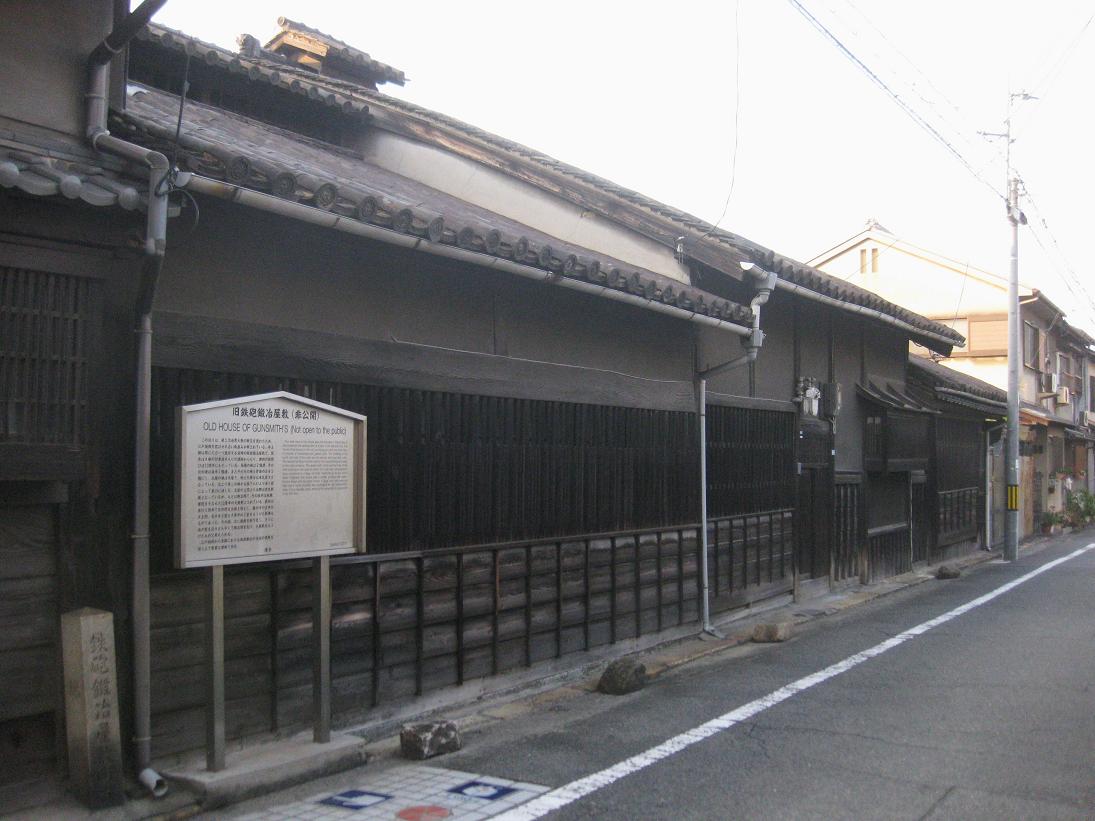
Inoue Sekiemon Residence
2.5 km · straight line
 illustration (AI-illustrated)
Entertainment · Osaka★★★
teamLab Botanical Garden Osaka
2.9 km · straight line
 KENPEI / CC BY-SA 3.0
Craft · Osaka★★
Sakai's forged blades
3.6 km · straight line
 Laitche / CC BY-SA 4.0
Local life · Osaka★★
Harukas 300
4.2 km · straight line
On a curated routeOsaka, Morning to Neon →
Distances are straight lines on the map, not travel times.