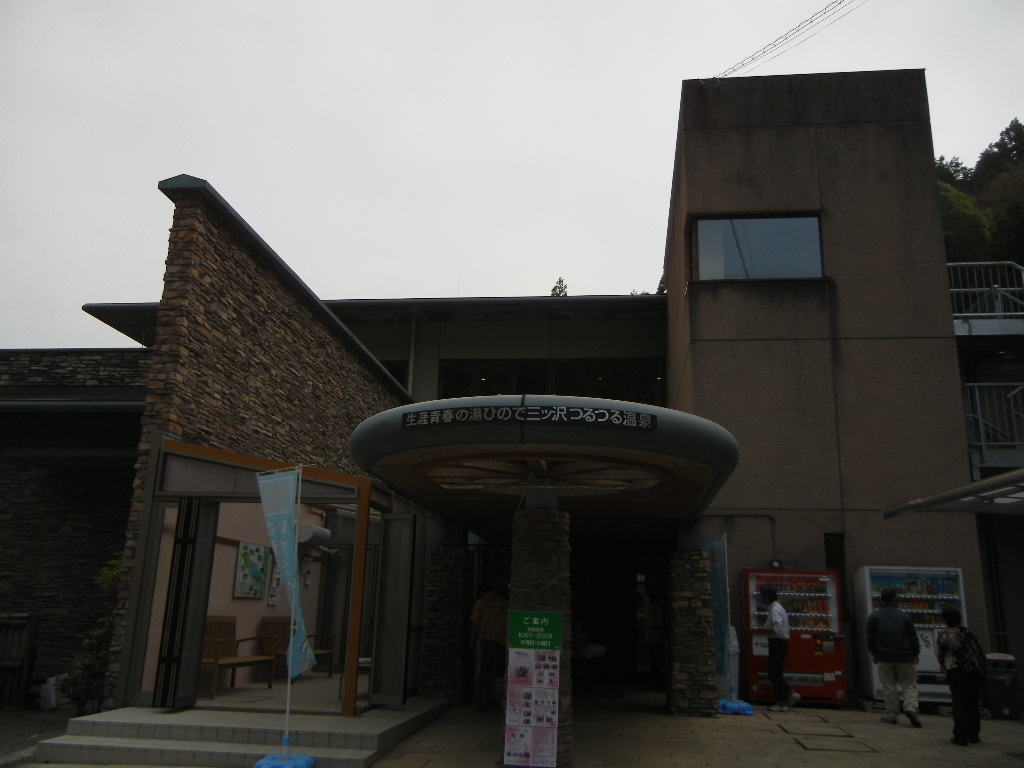
Tokyo west · HinodeNo.071★Open in map →
Tsurutsuru Onsen
A day-use hot spring in the mountain town of Hinode, west of central Tokyo. It is known for silky alkaline water that gives the skin a smooth 'tsuru-tsuru' feel (tsuru-tsuru means 'smooth' in Japanese).
- FromShinjuku
- ~90 mintrain + bus (bus infrequent)
- Get off atTsurutsuru Onsen bus stop
- From there
- Tsurutsuru Onsen
The sweet spot
It is a plain town-run day bath rather than a resort, so it rarely appears on tourist lists, and there is little English information about it. Getting there needs a train plus an infrequent local bus, which keeps it off the main tourist flow. Local visitors, though, prize the water.
Where it is
77 more notes in Tokyo · open the map →What to look for — in walking order
- Alkaline pH 10.1 waterdrawn from about 1,500 m underground; so soft it leaves the skin feeling smooth
- Two bath halls that swap by gendera Western-style area and a Japanese-style area; which is for men and which for women switches daily
- Open-air cypress and rock tubsoutdoor baths including a hinoki (Japanese cypress) tub and a rock-lined tub, kept around 40–42°C
- Hirai valley settingset in the wooded Mitsuzawa valley near the Hinode and Mitake hills west of the city
How to actually get there
- Shinjuku Station → Tachikawa Station (JR Chuo Line rapid, ~40 min).
- Tachikawa Station → Musashi-Itsukaichi Station (JR Ome / Itsukaichi Line, ~30 min).
- Musashi-Itsukaichi Station → Tsurutsuru Onsen (Nishi-Tokyo Bus route 20, ~20 min, ends at the onsen).
- JR train + local bus, ~90 min
- Shinjuku Station →(JR Chuo Line rapid, ~40 min, change at Tachikawa)→ Tachikawa →(JR Ome / Itsukaichi Line, ~30 min)→ Musashi-Itsukaichi Station →(Nishi-Tokyo Bus route 20, signed 'Tsurutsuru Onsen', ~20 min)→ Tsurutsuru Onsen stop. Total about 90 minutes. The bus runs only about ten times a day (first around 06:40, last around 19:10) — check the day's timetable before you leave.
- same route in reverse; bus is infrequent
- Return by the same bus and trains. The last bus from the onsen back to the station leaves in the early evening, so check the return times posted at the stop when you arrive, before you soak.
About the place
Tsurutsuru Onsen sits in the wooded Mitsuzawa valley on the western edge of greater Tokyo, where the Hirai river is still a clean mountain stream. Its formal Japanese name, Shogai Seishun no Yu, means roughly 'the bath of lifelong youth.' The water is an alkaline simple spring drawn from about 1,500 metres underground, measured at pH 10.1. That high alkalinity makes the water feel slippery on the skin — the source of the 'tsuru-tsuru' name and its reputation as a beauty bath. The building has two bathing areas, one styled Western and one styled Japanese, which switch between men and women on alternating calendar days; each has an indoor bath plus an open-air tub. A restaurant inside the building rounds out the day.
How to enjoy it
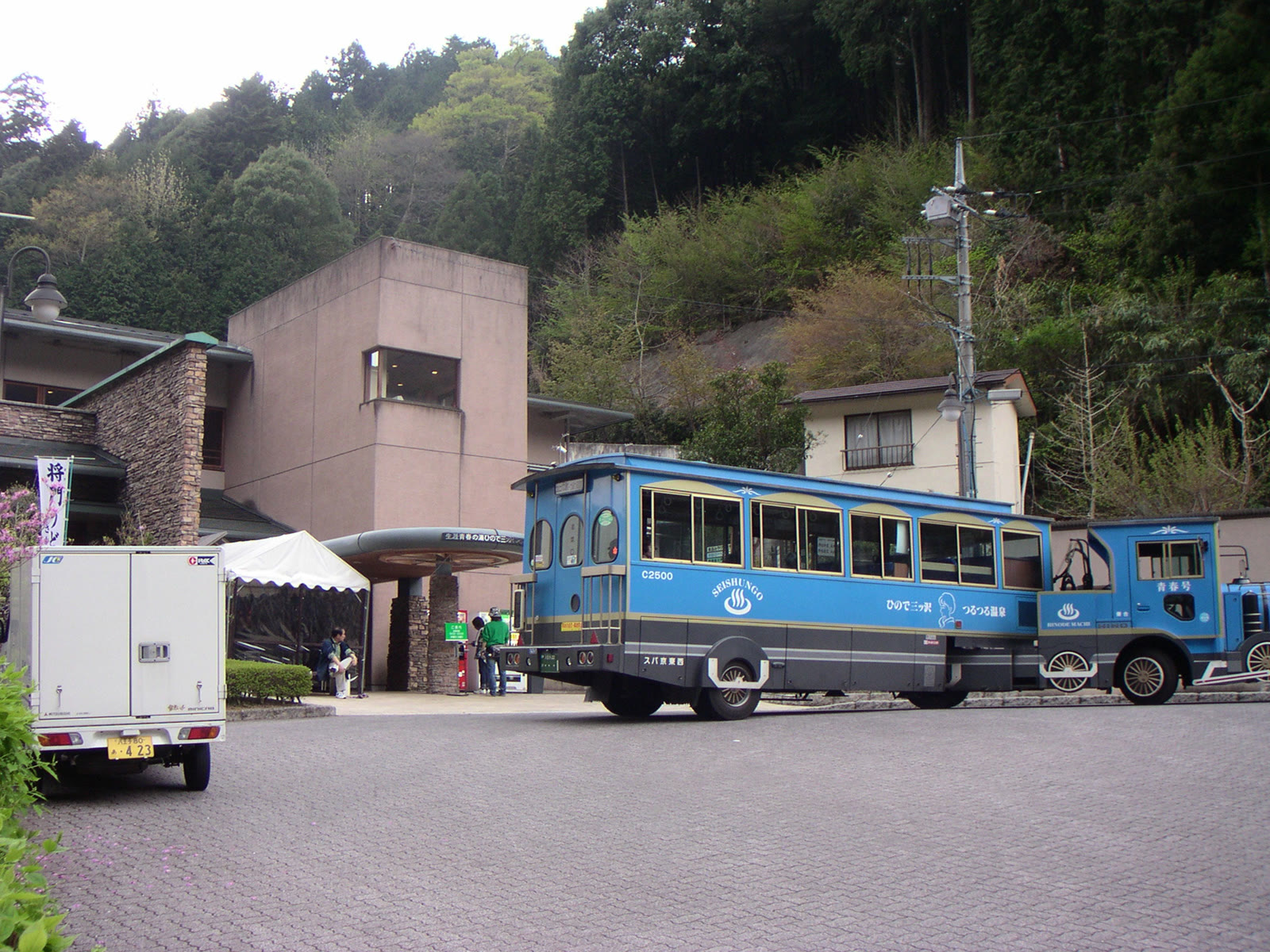
Treat it as a relaxed half-day trip from western Tokyo. Ride the bus about 20 minutes up from Musashi-Itsukaichi Station, soak in the open-air bath, and stay for a meal at the restaurant. Because the two bath halls swap between men and women on odd and even calendar days, check in advance which side you will have access to if that matters to you. The onsen is closed on the third Tuesday of each month, plus a couple of maintenance closures per year — confirm on the official site before making the trip.
Background & history
The hot spring opened in 1996 as a public day-bathing facility run for the town of Hinode. For many years the main draw was the 'Seishun-go,' a shuttle bus built to look like a steam locomotive, described for much of its run as the only commercially operating trailer bus in Japan on the roughly 20-minute route from Musashi-Itsukaichi Station. The vehicle was retired on 31 March 2023 as the ageing coach became hard to maintain; a regular mid-size route bus now serves the same road.
Before you go
- Cash
- The onsen accepts credit cards, but the restaurant and small purchases may be cash only, and rural buses are often cash only — carry some coins and small notes to be safe.
- Good to know
- Closed on the third Tuesday of each month, plus a couple of maintenance closures per year. Confirm on the official site before you make the trip.
- Another way
- On weekends and holidays you can instead reach the same bus from Ome Station on the JR Ome Line.
- After you get off
- The bus ends its route at the onsen entrance, so there is no walk from the stop.
Nearby notes
 Wiiii / CC BY 3.0
Culture · Tokyo★
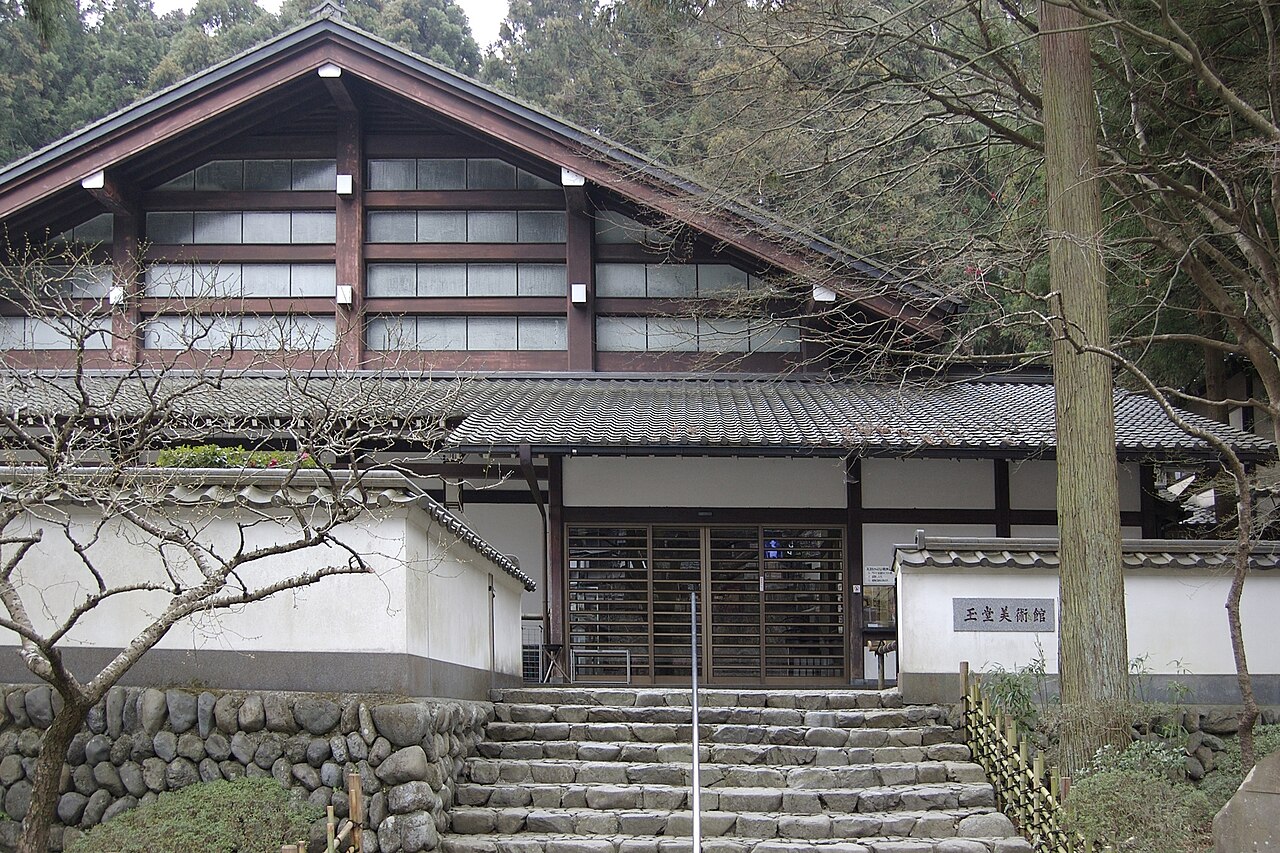
Gyokudo Art Museum
2.3 km · straight line
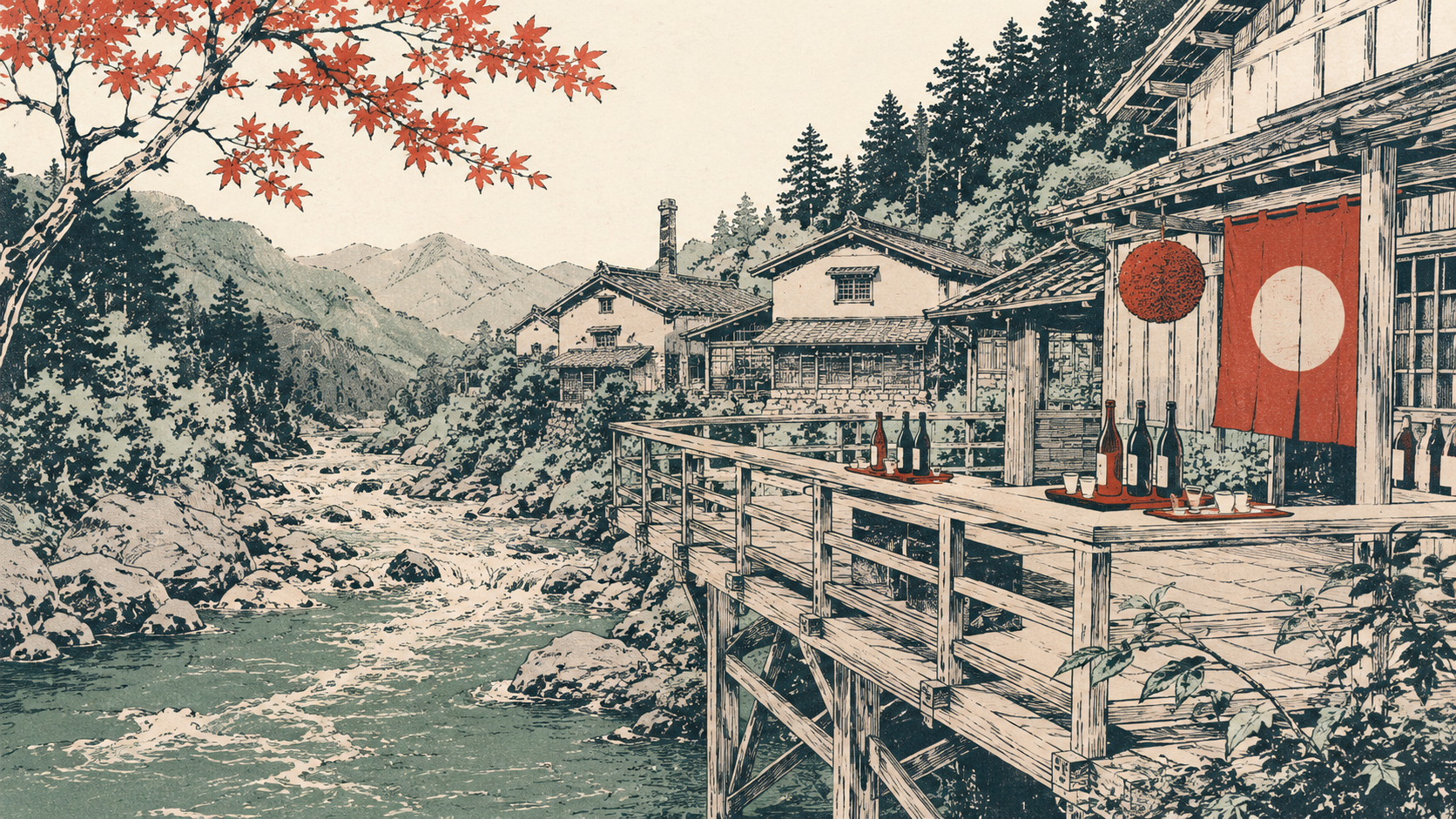 illustration (AI-illustrated)
Food · Tokyo★
Sawanoi
2.7 km · straight line
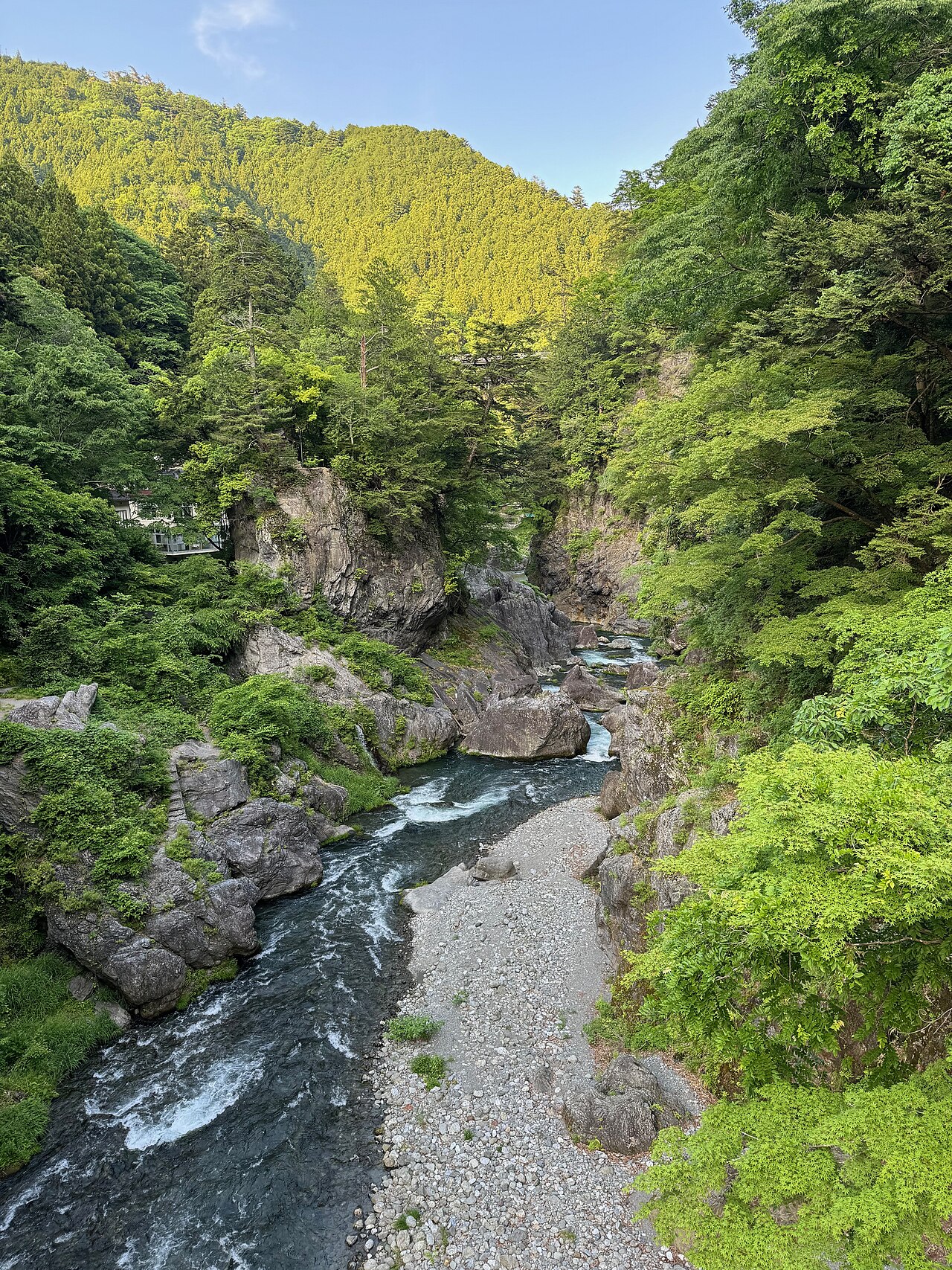 皓月旗 / CC BY-SA 4.0
Nature · Tokyo★
Hatonosu Gorge
6.8 km · straight line
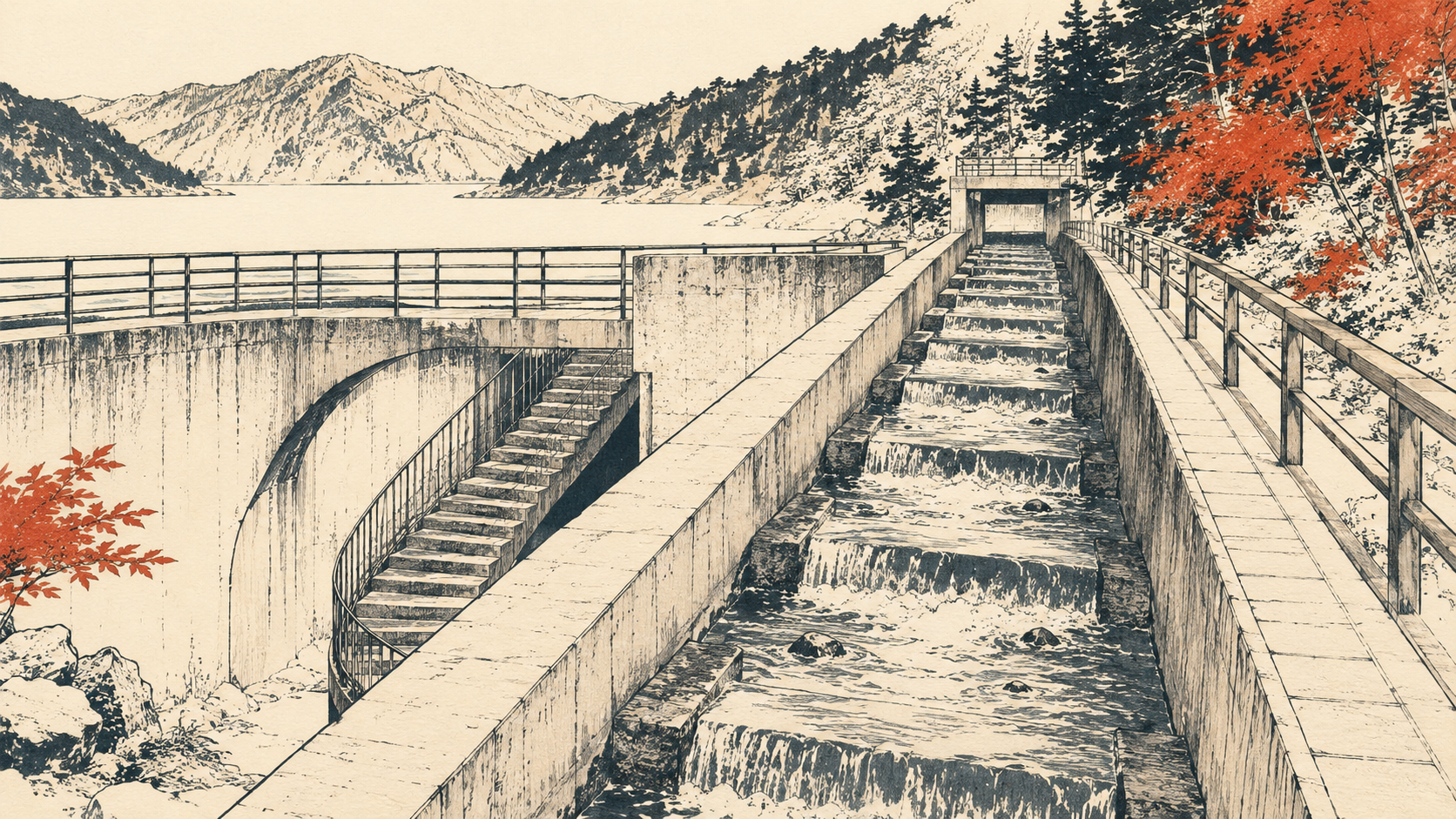 illustration (AI-illustrated)
Nature · Tokyo★
Shiromaru Dam Fish Ladder
7.1 km · straight line
Distances are straight lines on the map, not travel times.