Central Tokyo · YanakaNo.075★Open in map →
Hebimichi
— a buried river made into a lane
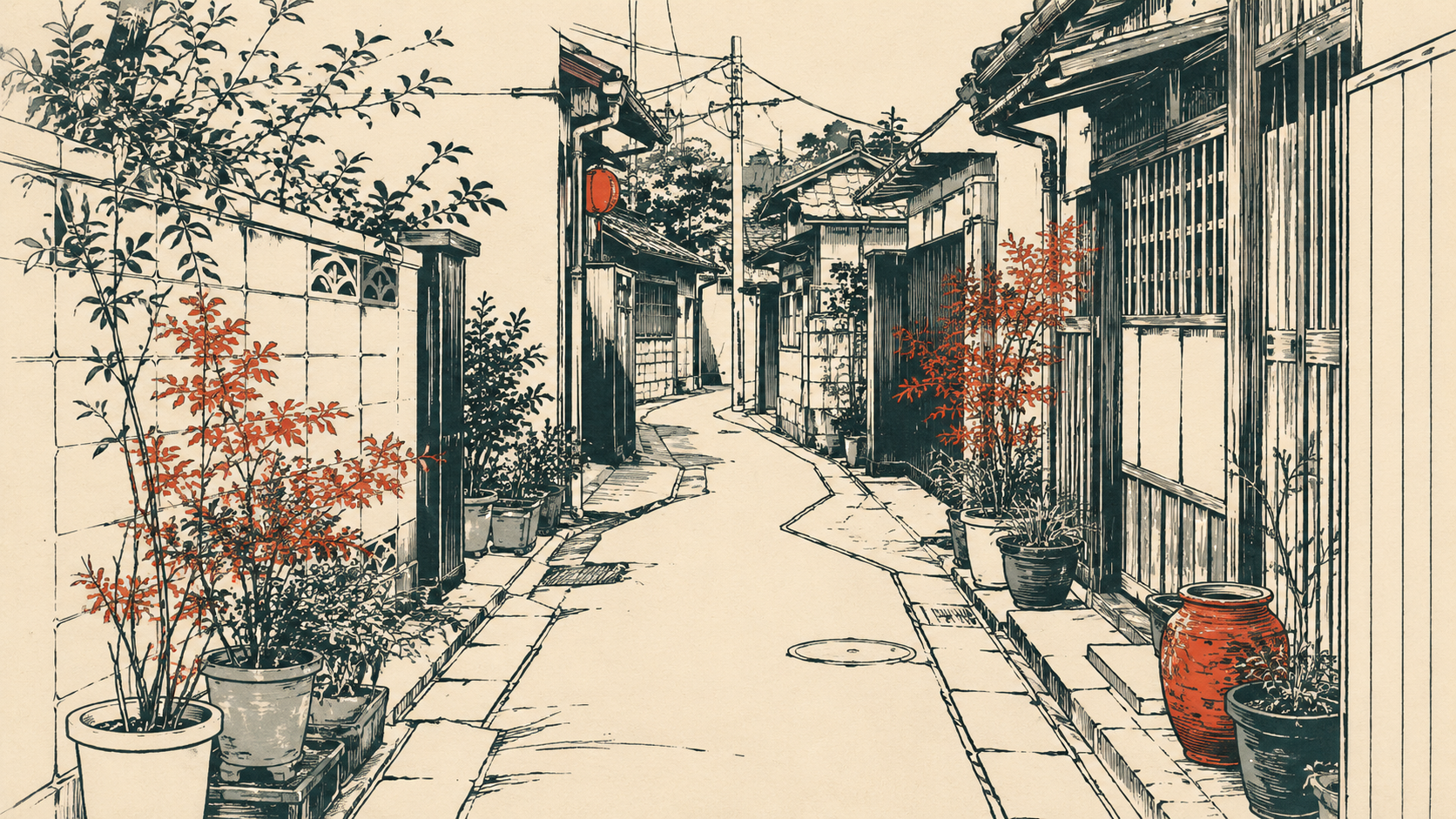
A 150-metre alley that bends about fifteen times through old-town Yanaka — not by design, but because it traces the channel of the Aizome-gawa, a stream buried underground in 1921.
- FromUeno Stn
- ~15 mintrain (frequent) + walk
- Get off atSendagi Stn (Chiyoda)
- On foot
- Hebimichi
The sweet spot
There is very little English information about this lane, and no sign on site explains it — you have to already know the curves were once a river to read the street. Tour groups head for the photogenic sunset steps at nearby Yanaka Ginza and rarely turn into this residential back lane.
Where it is
77 more notes in Tokyo · open the map →What to look for — in walking order
- Sendagi Station endthe northern entry point, a few minutes' walk from Sendagi Station on the Chiyoda Line
- Fifteen tight bendsthe serpentine sequence of curves that traces the vanished Aizome-gawa and gives the lane its name
- Ward boundary linethe former riverbed divides Taito Ward (east) from Bunkyo Ward (west)
- Yanaka Ginza endthe southern end opens near the Yanaka district, a short walk from Yanaka Ginza
How to actually get there
- Ueno Stn → Nishi-Nippori Stn (JR Yamanote or Keihin-Tohoku Line, ~5 min, 3 stops)
- Nishi-Nippori Stn → Sendagi Stn (Tokyo Metro Chiyoda Line, 1 stop, ~2 min)
- Sendagi Stn → the lane (on foot, level ground, ~5 min)
- JR + Tokyo Metro Chiyoda line
- Ueno Stn →(JR Yamanote or Keihin-Tohoku Line, ~5 min, 3 stops)→ Nishi-Nippori Stn →(transfer to Tokyo Metro Chiyoda Line, 1 stop, ~2 min)→ Sendagi Stn. Total about 10-15 min including the transfer. Both lines run very often (every few minutes), so no timetable is needed. From Sendagi Station the lane begins a few minutes' walk away.
- Same route in reverse
- Return the same way: Chiyoda Line one stop from Sendagi to Nishi-Nippori, then JR back to Ueno. Both lines run frequently until around midnight, so there is no early cut-off to worry about. On foot you can also loop back through Yanaka toward Nippori or Nezu instead of taking the train.
About the place
Hebimichi, literally "snake road," earns its name from the path's roughly fifteen tight bends as it threads between Yanaka and Sendagi. The curves are not a designer's whim: the lane follows the former channel of the Aizome-gawa, a small stream whose name is commonly traced to the dye workshops once found along its banks, said to have tinted the water an indigo colour. The stream was put underground in 1921 and paved over. Today Hebimichi is a quiet residential street of houses and small shops, with no sign on site explaining its origins — you have to know the bends were once a river to read the street. The lane marks the present-day boundary between Taito Ward to the east and Bunkyo Ward to the west. The same buried river also appears in Natsume Soseki's 1908 novel Sanshiro.
How to enjoy it
Walk it at a slow pace from Sendagi Station, a few minutes on foot from the Metro Chiyoda Line exit. The lane pairs naturally with a longer wander through the Yanesen (Yanaka–Nezu–Sendagi) neighbourhood. Keep your voice down — people live along the lane.
Background & history
The Aizome-gawa ran south through the low ground of Yanaka, Nezu and Sendagi before draining toward Shinobazu Pond in Ueno. Prone to repeated flooding, the stream was gradually put underground beginning in the tenth year of the Taisho era (1921). Its name is commonly traced to the dye workshops once on its banks, which are said to have coloured the water indigo.
Before you go
- Cash
- There is nothing to pay here — it is a public lane through a residential neighbourhood. For the train, an IC card (Suica or PASMO) works on both the JR and Tokyo Metro legs.
- Good to know
- People live along this lane. Keep your voice down and do not photograph doorways or into windows.
- Another way
- Pair it with Nezu Shrine, a Shinto shrine a short walk south of the lane.
- After you get off
- From Sendagi Station, walk out and follow the neighbourhood streets toward the old town; the winding lane begins a few minutes on foot from the exit, on level ground.
Nearby notes
 DavideGorla / CC BY 2.0
History · Tokyo★★
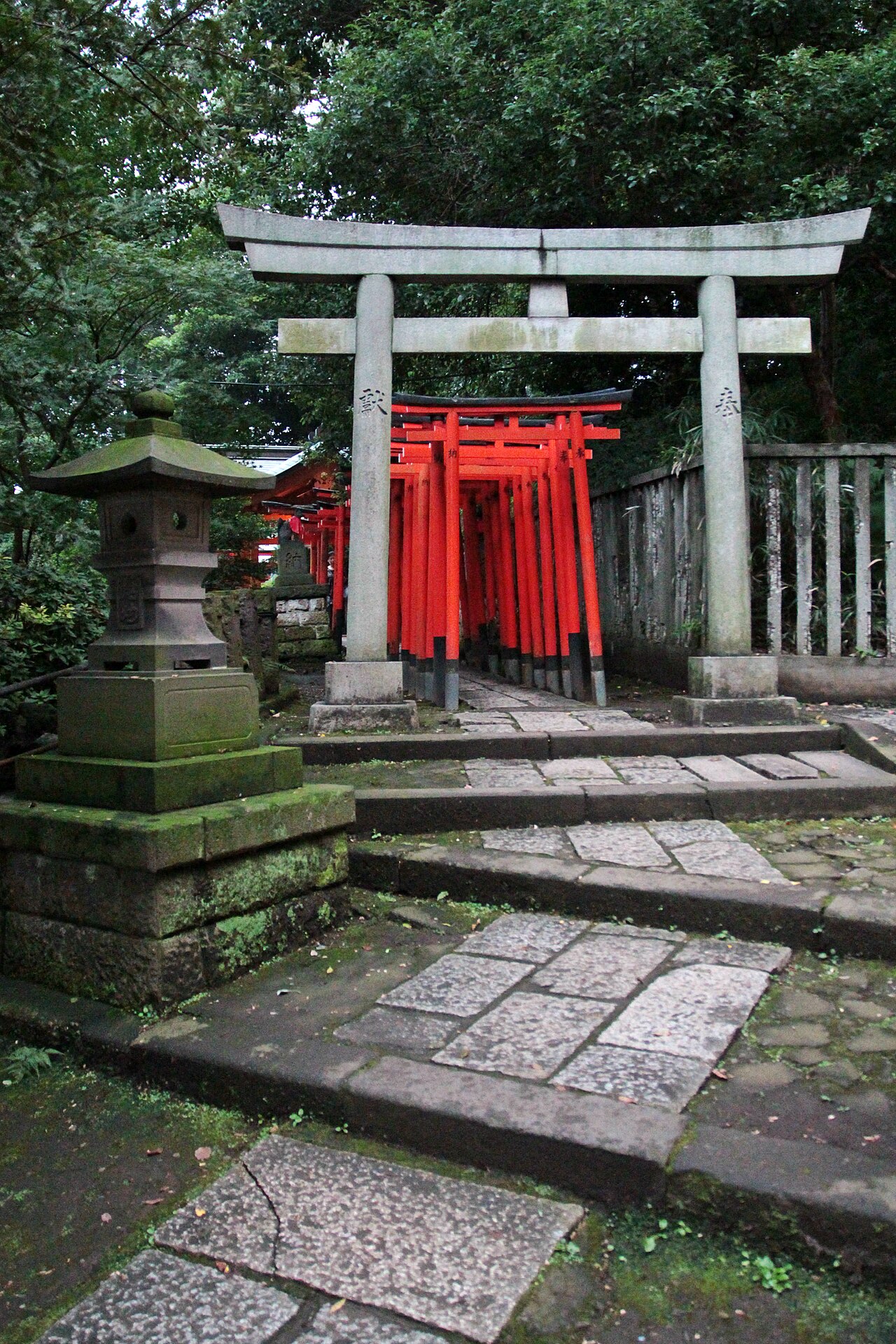
Nezu Shrine's Otome Inari torii tunnel
0.5 km · straight line
 Doricono / CC BY-SA 3.0
Local life · Tokyo★★
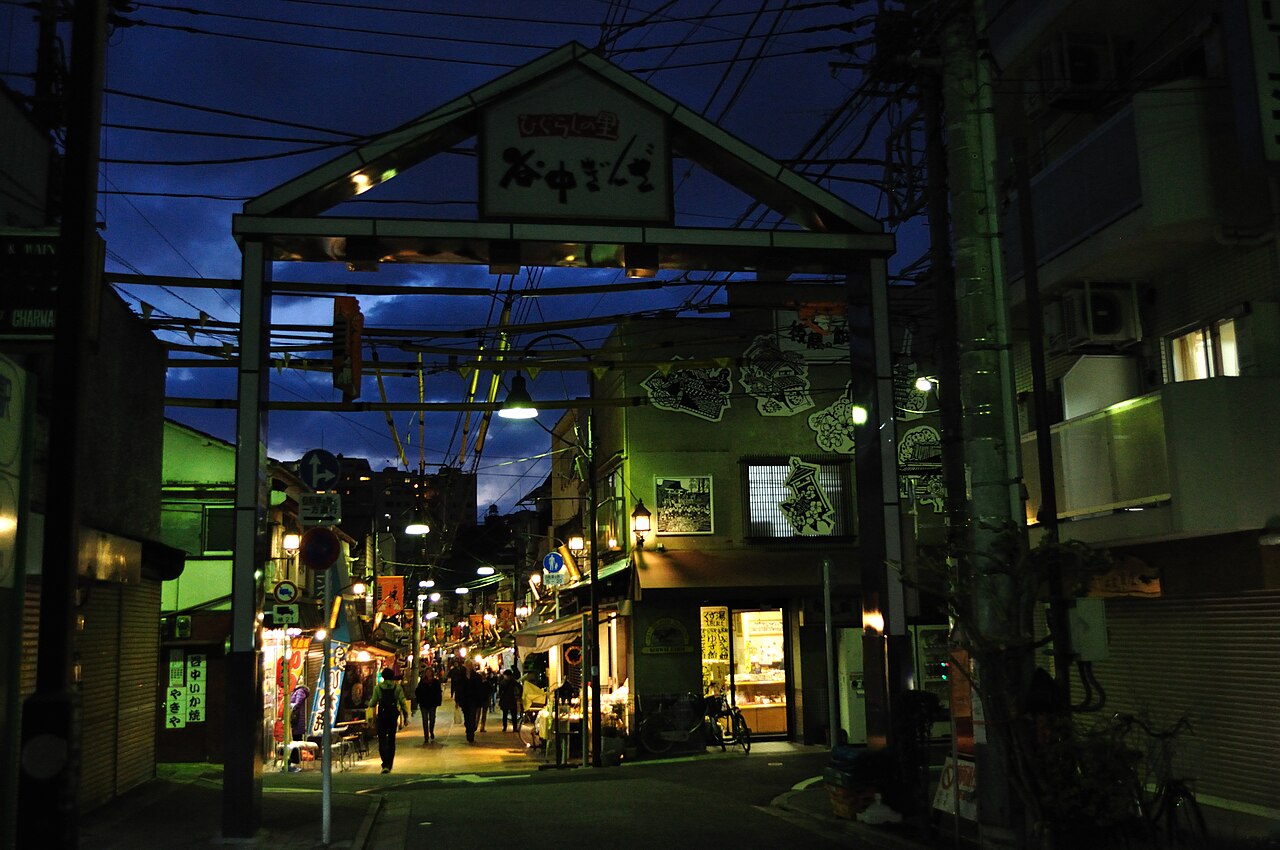
Yanaka Ginza
0.5 km · straight line
 江戸村のとくぞう / CC BY-SA 4.0
Local life · Tokyo★★★
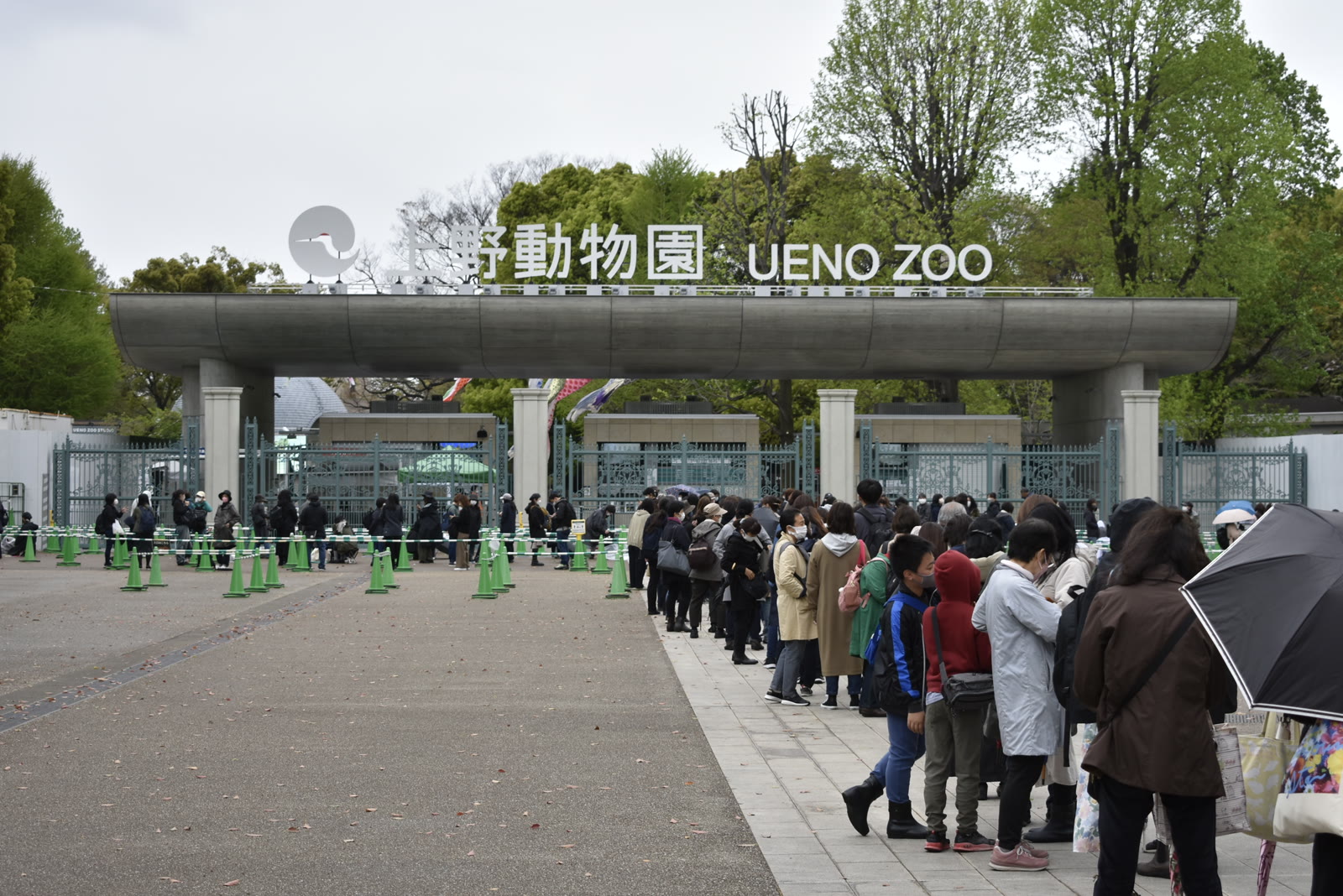
Ueno Zoo
1.0 km · straight line
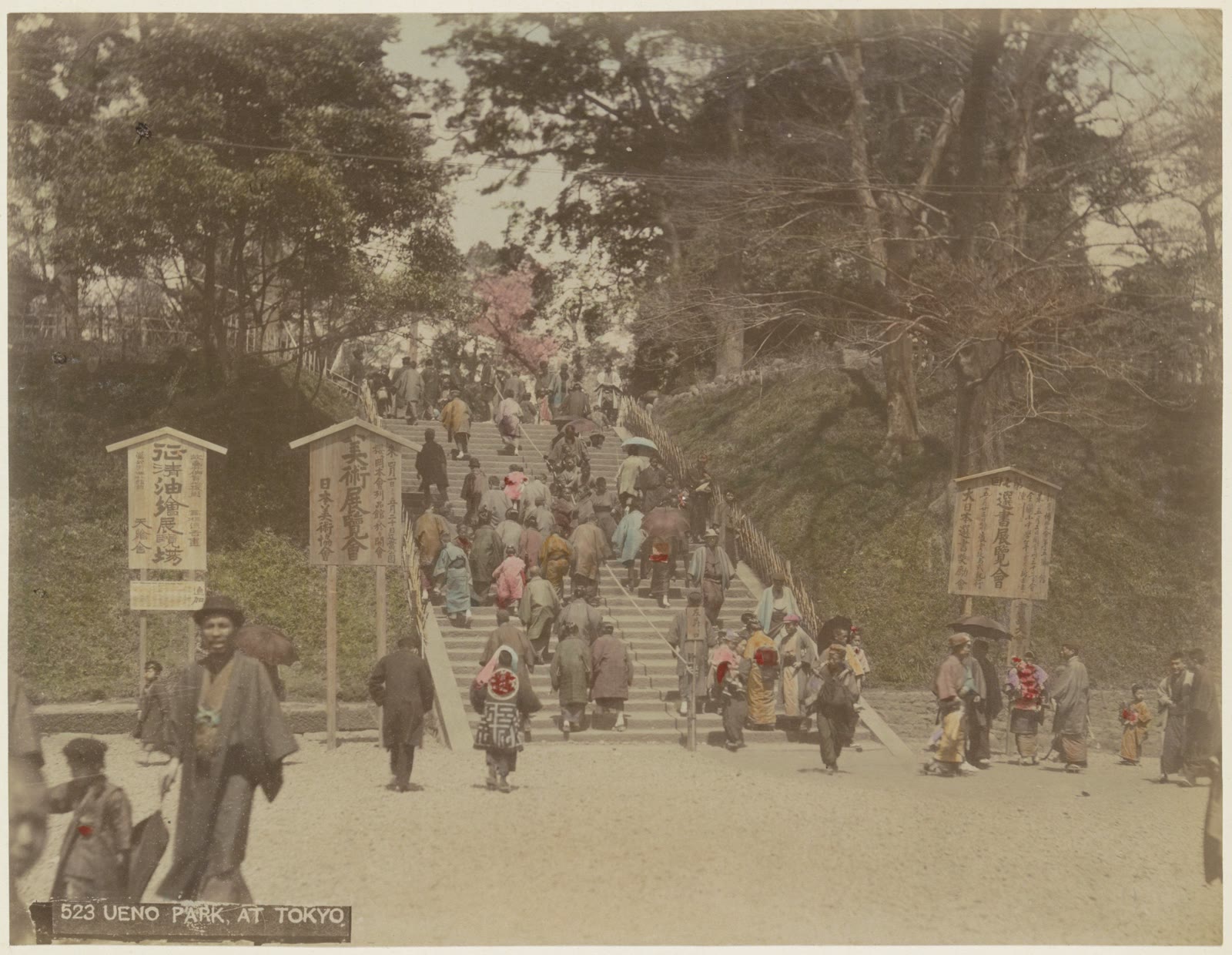 Rijksmuseum / CC0
Culture · Tokyo★★★
Ueno Park
1.2 km · straight line
Distances are straight lines on the map, not travel times.