Wakayama · YuasaNo.1060★★★Open in map →
Yuasa Soy Sauce Town
— A preserved brewing district in Wakayama
A brewing town at the head of a Wakayama inlet, said to be where soy sauce was born. Warehouses and merchant houses fill a compact preservation district, and the small museums inside it are open to walk through.
- FromTennoji Station, Osaka
- ~1 hr 25 minJR limited express, then a walk
- Get off atYuasa Station (JR Kinokuni Line)
- On foot
- Yuasa Soy Sauce Town
Where it is
21 more notes in Wakayama · open the map →What to look for — in walking order
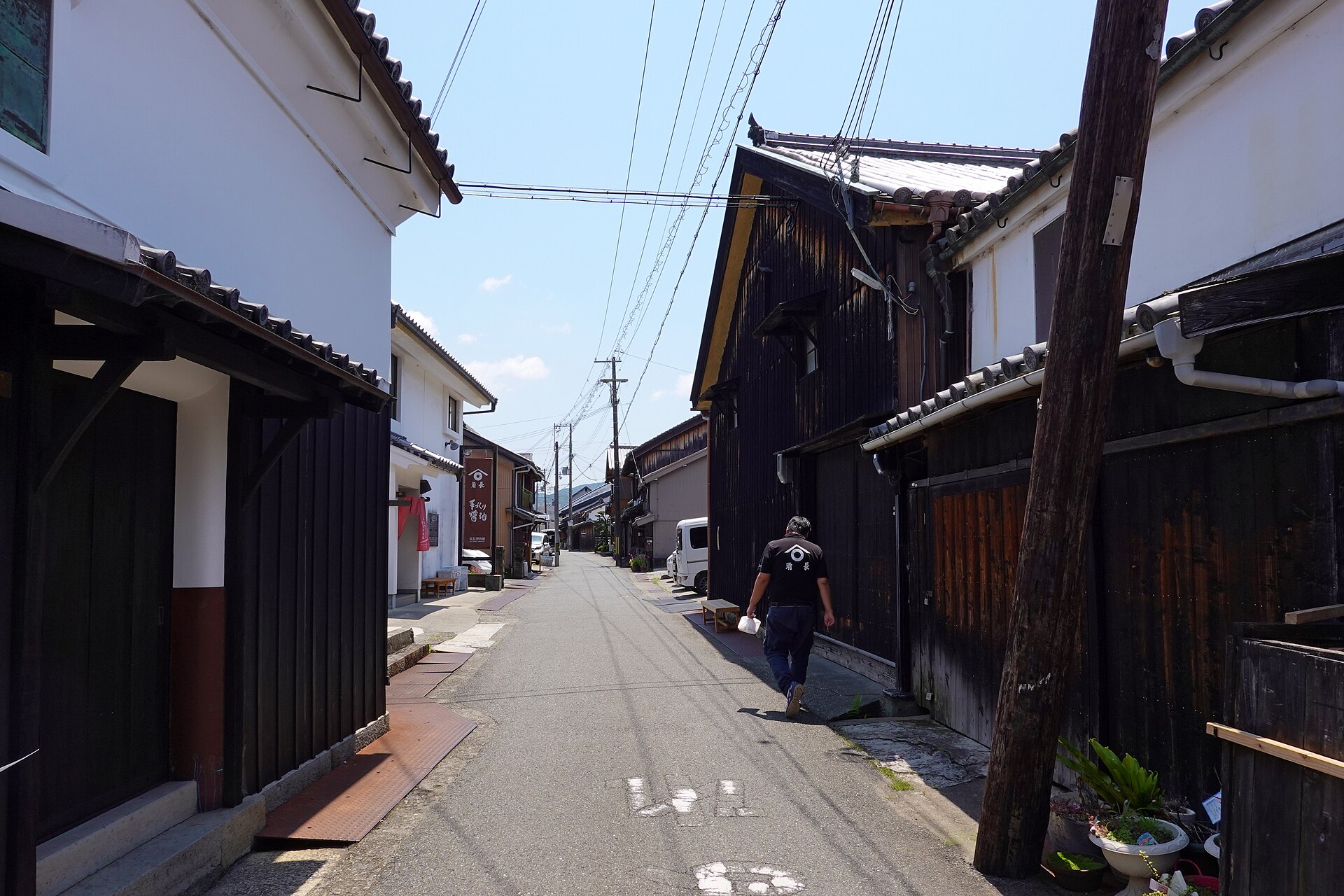
- Kitamachi-dorithe spine of the district, dark-boarded brewing warehouses facing white plaster storehouses
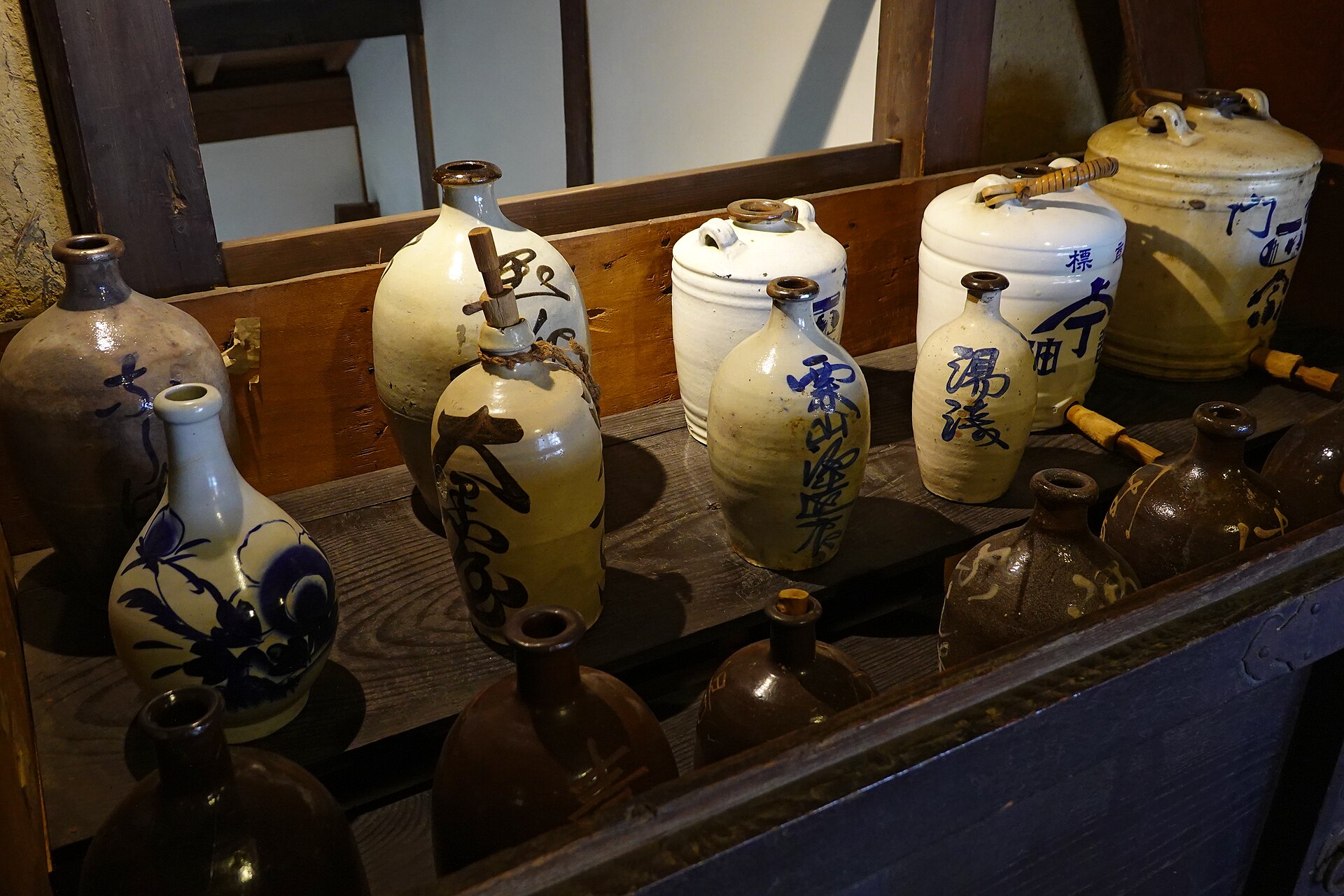
- Kadocho Shokunin-guraan exhibition warehouse opened by the old brewery, brewing tools left where they stood
- Jinburoa former public bathhouse kept as a museum, stone tubs and tiled walls intact
- Daisenborithe stone-walled inner harbour where soy sauce barrels were loaded onto boats
How to actually get there
- Tennoji Station → Yuasa Station (JR limited express Kuroshio, about 70 min; pick a train that stops at Yuasa).
- Yuasa Station → cross Domachi-dori and enter Kitamachi-dori (10 to 15 min on foot).
- Walk west along Kitamachi-dori, stopping at the exhibition warehouse and Jinburo, out to Daisenbori.
- Turn back from Daisenbori along the same streets to Yuasa Station.
- Limited express Kuroshio from Tennoji
- Tennoji → (JR limited express Kuroshio, about 70 min) → Yuasa Station, then a 10 to 15 minute walk into the preservation district. The town's own page says 15 minutes and the prefectural tourism site says 10. Not every Kuroshio stops at Yuasa, so check the stopping pattern before you board.
- Return from Yuasa Station
- Head back from Yuasa Station by limited express or local train toward Wakayama and Osaka. Yuasa is an unstaffed station with no ticket window, so follow the notices at the gate for tickets and IC cards. Since not every limited express calls here, settle on your return train early.
About the place
Yuasa sits at the head of an inlet on the Kii Channel in western Wakayama, and it grew both as a port and as a lodging town on the pilgrimage route to Kumano. The preservation district runs about 400 metres east to west and 280 metres north to south, covering 6.3 hectares. Inside it an early-modern street plan of through-streets and narrow side lanes survives, lined with brewing warehouses and merchant houses. White plaster storehouses, lattice doors and mushiko windows are the marks of a town that lived on brewing and trade. Soy sauce and kinzanji miso are still made within those same few blocks.
How to enjoy it
Walk west from the station into Kitamachi-dori, follow the row of warehouses, and come out at Daisenbori on the water. Allow about an hour and a half for the loop back to the station, which leaves time for the exhibition warehouse and the bathhouse museum. The small museums keep closing days, so check the town's official pages before fixing the date.
Background & history
Soy sauce here traces back to the medieval period. The Zen monk Kakushin returned from Song China with a method for kinzanji miso, passed on in 1254, and the liquid pooling in the miso vats was refined by local hands into what became soy sauce. By the Edo period the town counted 92 soy sauce makers, and a brewery founded in 1841 still works on Kitamachi-dori. The district was selected as a national Important Preservation District for Groups of Traditional Buildings in 2006, and the wider story was certified as Japan Heritage in 2017.
Before you go
- Cash
- Walking the district costs nothing, and the town lists Jinburo as free to enter. Other exhibition spaces are run separately, so read the notice at each entrance for admission. It is a small town, so carry a little cash.
- Good to know
- People live in the district and the warehouses are still in working use, so stay on the public streets rather than entering yards or workspaces. The small museums have closing days, and the lanes carry little lighting after dark. Walk it while there is daylight.
- Another way
- By car from Osaka, take the Kinki and Hanwa expressways and join Route 42. From either Arida IC on the Hanwa Expressway or Yuasa IC on the Yuasa-Gobo road, the town is about 5 minutes away.
- After you get off
- From Yuasa Station head west, cross Domachi-dori, which is part of the old Kumano pilgrimage road, and continue into Kitamachi-dori. The way is flat and paved, with side lanes branching off as you go.
Nearby notes
 KENPEI / CC BY-SA 3.0
History · Wakayama★
Kimiidera
16.6 km · straight line
 Saigen Jiro / CC0 (Public Domain)
History · Wakayama★★★
Wakayama Castle
21.5 km · straight line
 Sakumata / CC0
Food · Wakayama★
Wakayama chuka soba
21.6 km · straight line
 KQuhen / CC BY-SA 4.0
History · Wakayama★
Awashima Shrine
28.2 km · straight line
Distances are straight lines on the map, not travel times.