Asuka, Nara
Before Nara, Before Kyoto
Five stops on the plain of Japan's first capitals — opening on a gravel court at sunrise, turning at a valley of some three hundred stone-walled paddies, and closing in an Edo merchant town of five hundred houses, still lived in. Asuka itself, by rented bicycle.
5 stops · one day
The route
- 01
 Yoshio Kohara / CC BY 3.0
Nara · Kashihara / Mt. Unebi · From Kyoto Stn · ~65 min · Better early
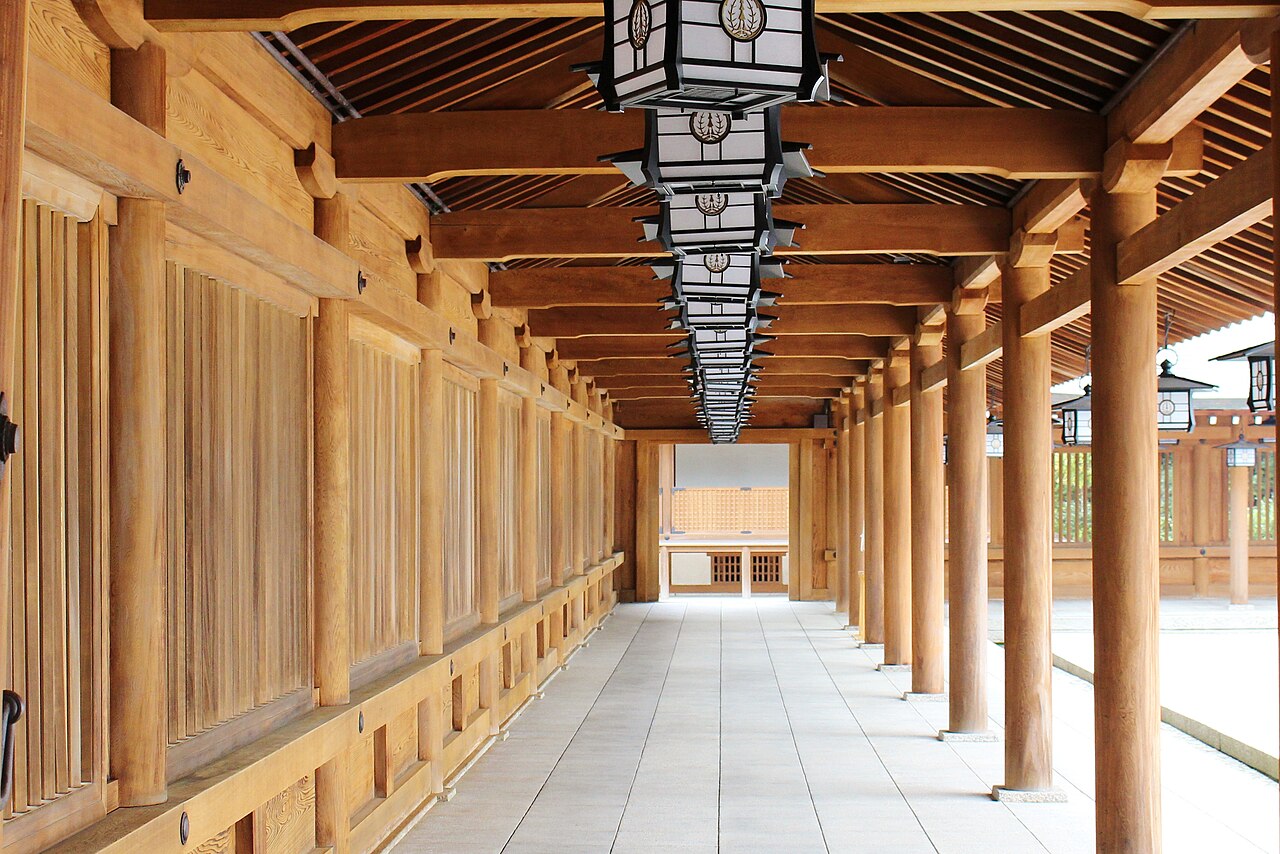
Kashihara Jingu
The shrine to Japan's legendary first emperor — free, vast, and quiet at sunrise, with Mt. Unebi behind the halls.
What to look for
- The outer worship hall (Gaihaiden) — a broad open hall facing a gravel court, with Mt. Unebi rising directly behind the inner precinct
- The main sanctuary — an Important Cultural Property, moved to this site from the Kyoto Imperial Palace
- Fukada Pond and the outer precinct — a quiet pond and wooded walking loop on the east side, usually almost empty
- Next stop · 4.6 km in a straight line
- 02
 8-hachiro / CC BY-SA 4.0
Asuka · Inabuchi · From Kyoto Stn · ~2 hr from Kyoto · Better early
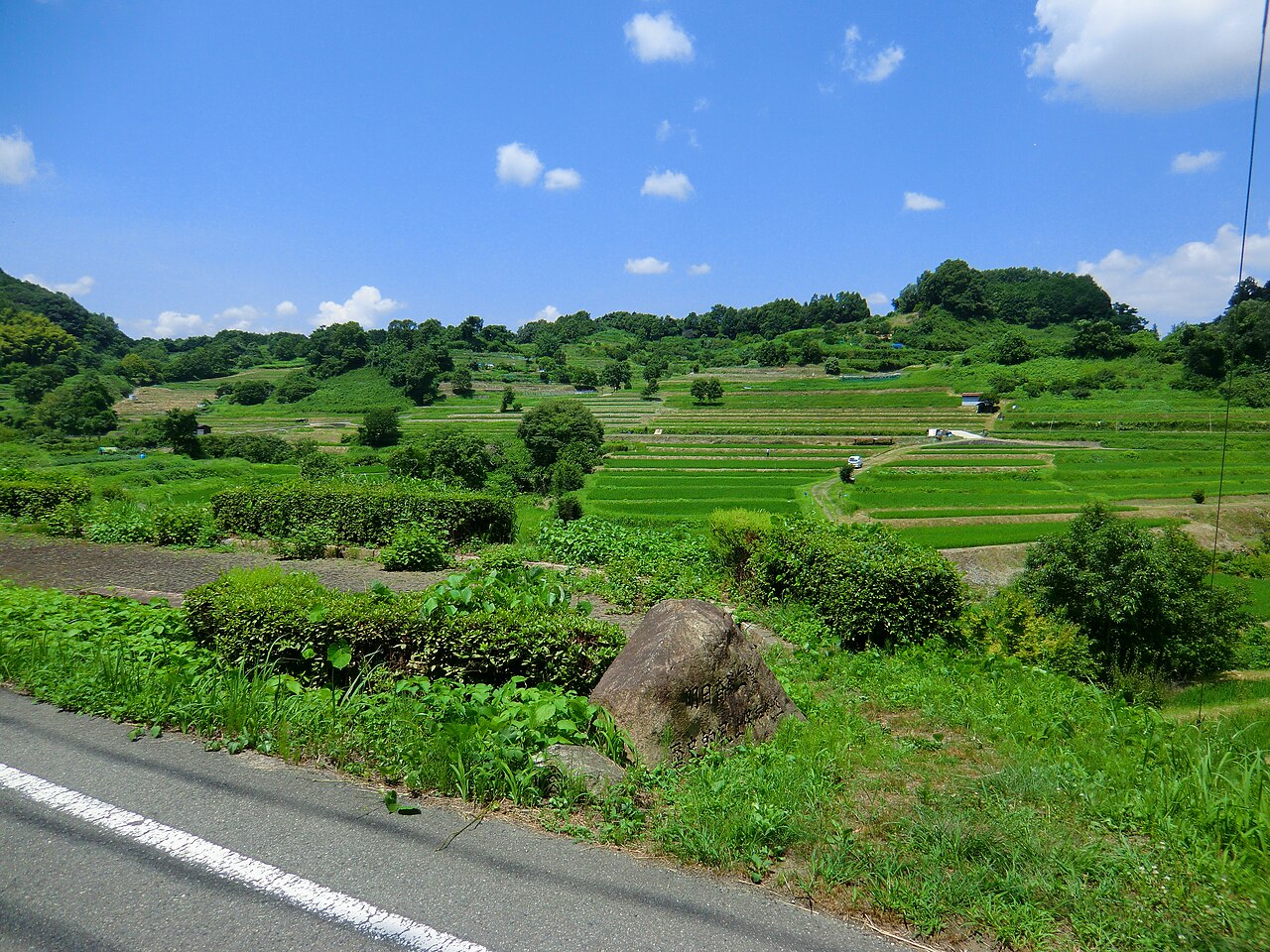
Inabuchi Rice Terraces & Scarecrow Road
A living Top-100 rice-terrace valley, lined with handmade scarecrows each autumn.
What to look for
- The stone-walled terraces — about 300 dry-stone rice paddies stepping up the valley, a nationally designated Important Cultural Landscape
- Red spider lilies — higanbana coloring the terrace banks in late September
- Scarecrow Road — handmade scarecrows lining the paddy paths, on display from September into early November
- Next stop · 1.2 km in a straight line
- 03
 663highland / CC BY 2.5
Nara · Asuka Village · From Kyoto Stn · ~2 hrs
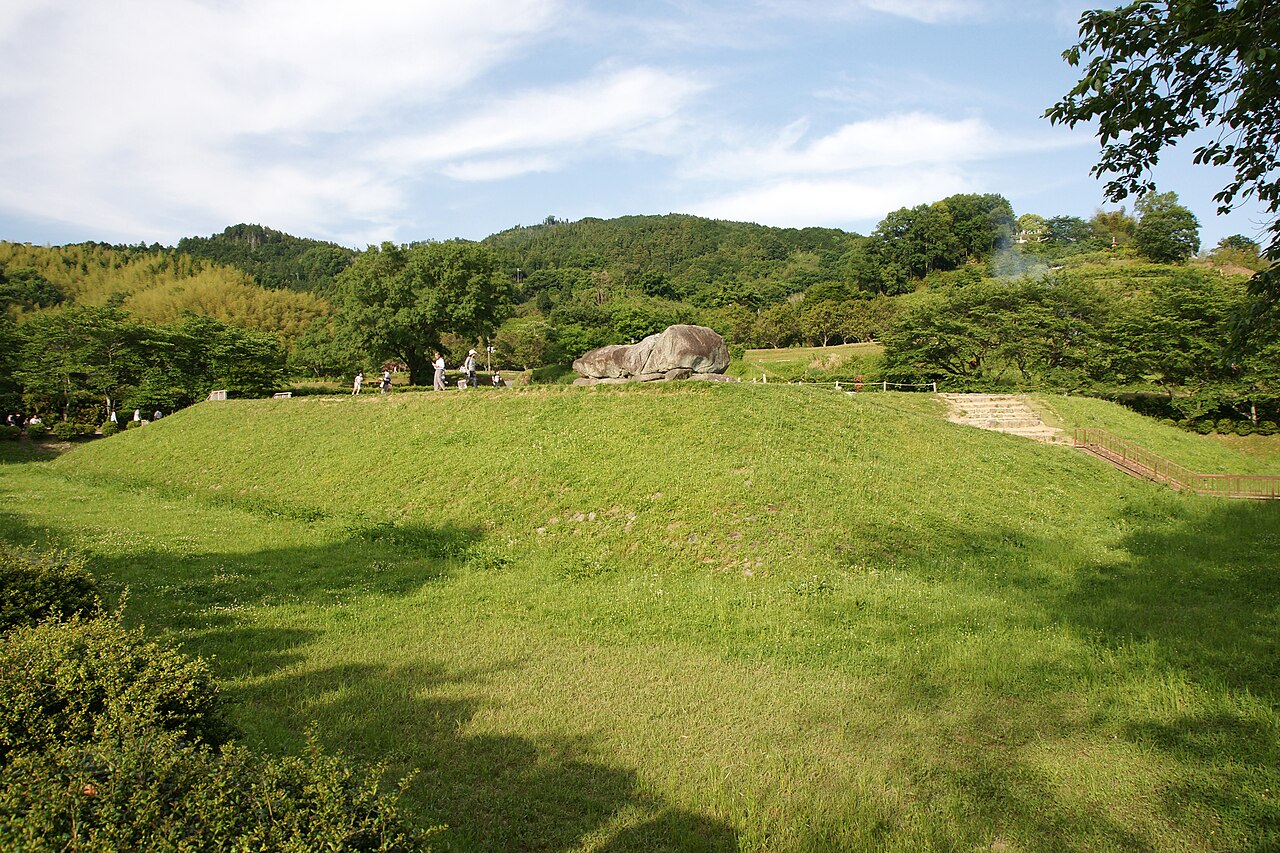
Ishibutai Kofun
A 7th-century megalithic tomb you can walk inside — 2,300 tons of granite standing bare in an Asuka field.
What to look for
- The two roof stones — the largest blocks in the structure, and the reason the tomb reads as engineering rather than ruin
- Inside the chamber — a horizontal stone room you enter through a low passage; the walls are dressed granite laid without mortar
- The surrounding lawn and moat trace — the outline of the original square mound is marked on the ground around the stones
- Next stop · 1.9 km in a straight line
- 04
 Saigen Jiro / CC0
Nara · Asuka Village · From Kyoto Stn · ~2 hr
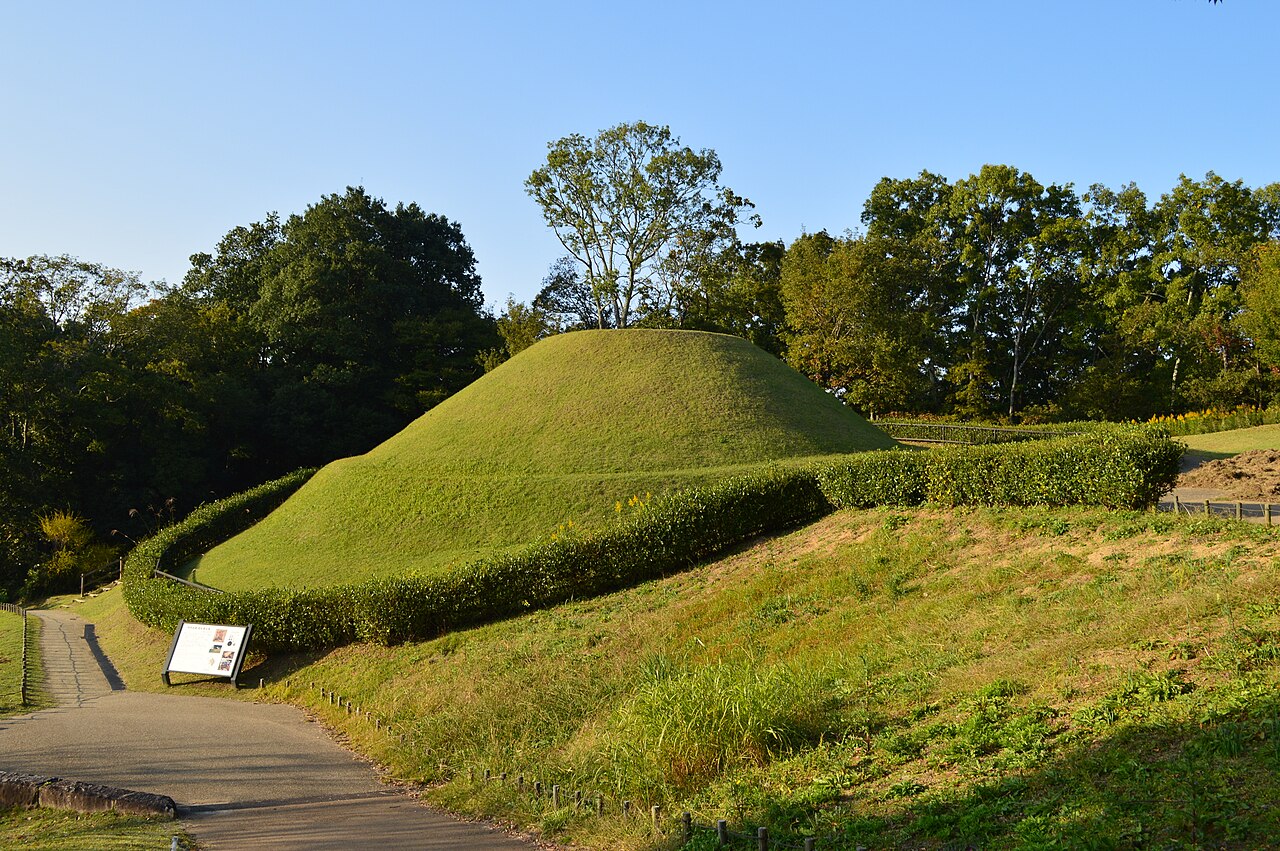
Takamatsuzuka Tomb
An empty 7th-century tomb whose National Treasure murals were removed in 2007 — shown next door as reproductions, and in the original only by ballot.
What to look for
- Takamatsuzuka Mural Hall — the museum beside the mound, with precise reproductions of all four walls and a full-scale model of the stone chamber
- The restored mound — the tomb itself, re-turfed and reshaped, standing empty on the parkland — free to walk up to at any hour
- Asuka Historical National Government Park — the open lawns and paths around the tomb, part of the national park covering Japan's earliest imperial capital district
- Next stop · 5.3 km in a straight line
- 05
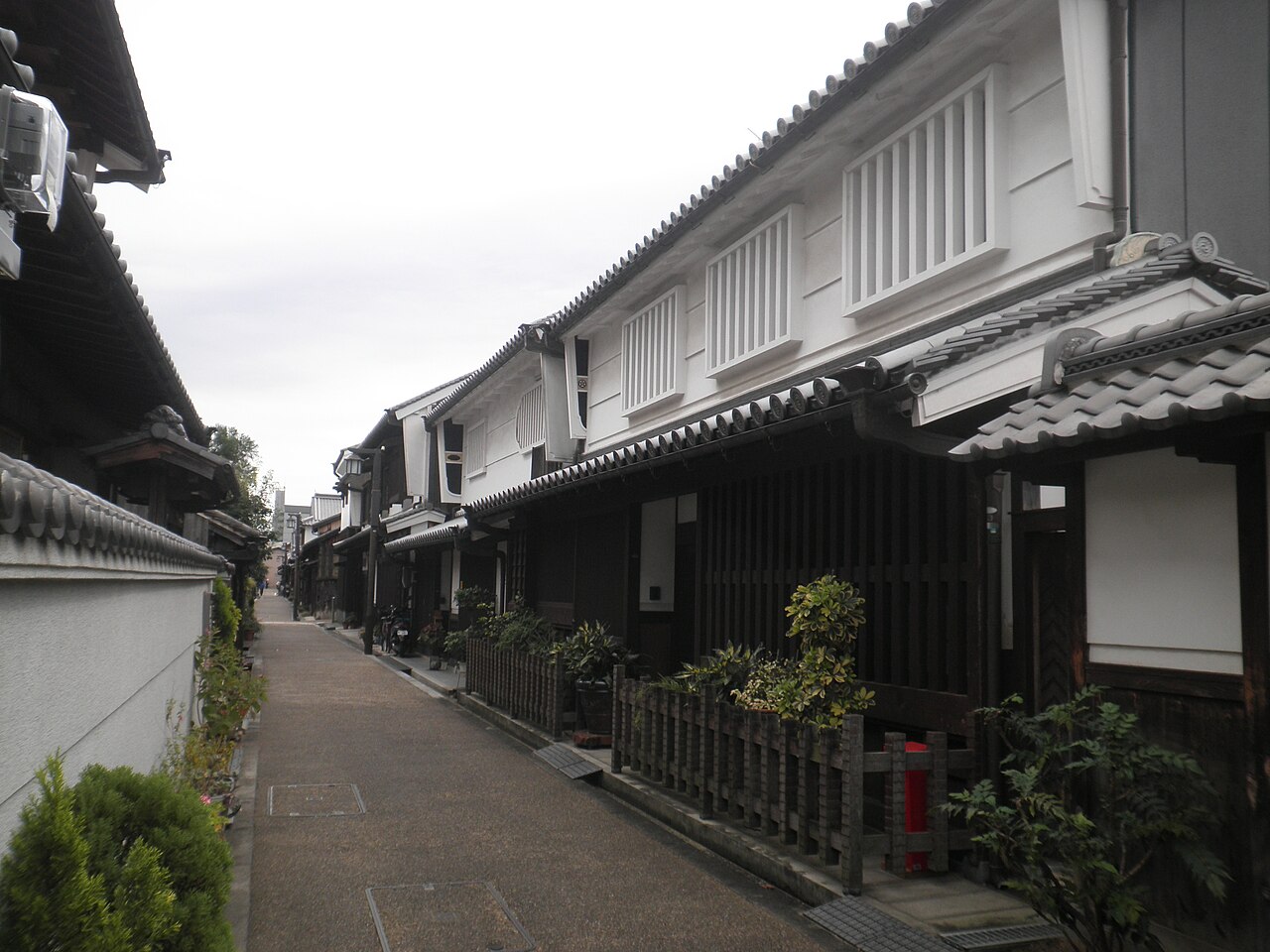 At by At / CC BY-SA 3.0
Nara · Kashihara · From Kintetsu Yamato-Yagi Stn · ~10 min
Imai-chō
An entire Edo merchant town still standing and still lived in — five hundred traditional houses on the original grid, free to walk, ten minutes from the station.
What to look for
- Imanishi residence (1650) — Important Cultural Property; the head elder family's house, with a multi-gabled roof that looks deliberately castle-like — interior visits by advance reservation
- Shōnen-ji temple — the Jōdo Shinshū temple the whole town grew around; its main hall is an Important Cultural Property
- Hanairaka (Imai Machinami Kōryū Centre) — a 1903 Meiji-era building, now a free orientation museum with a scale model of the district — start here