Nara · KashiharaNo.338★★Open in map →
Imai-chō
— an Edo merchant town still lived in
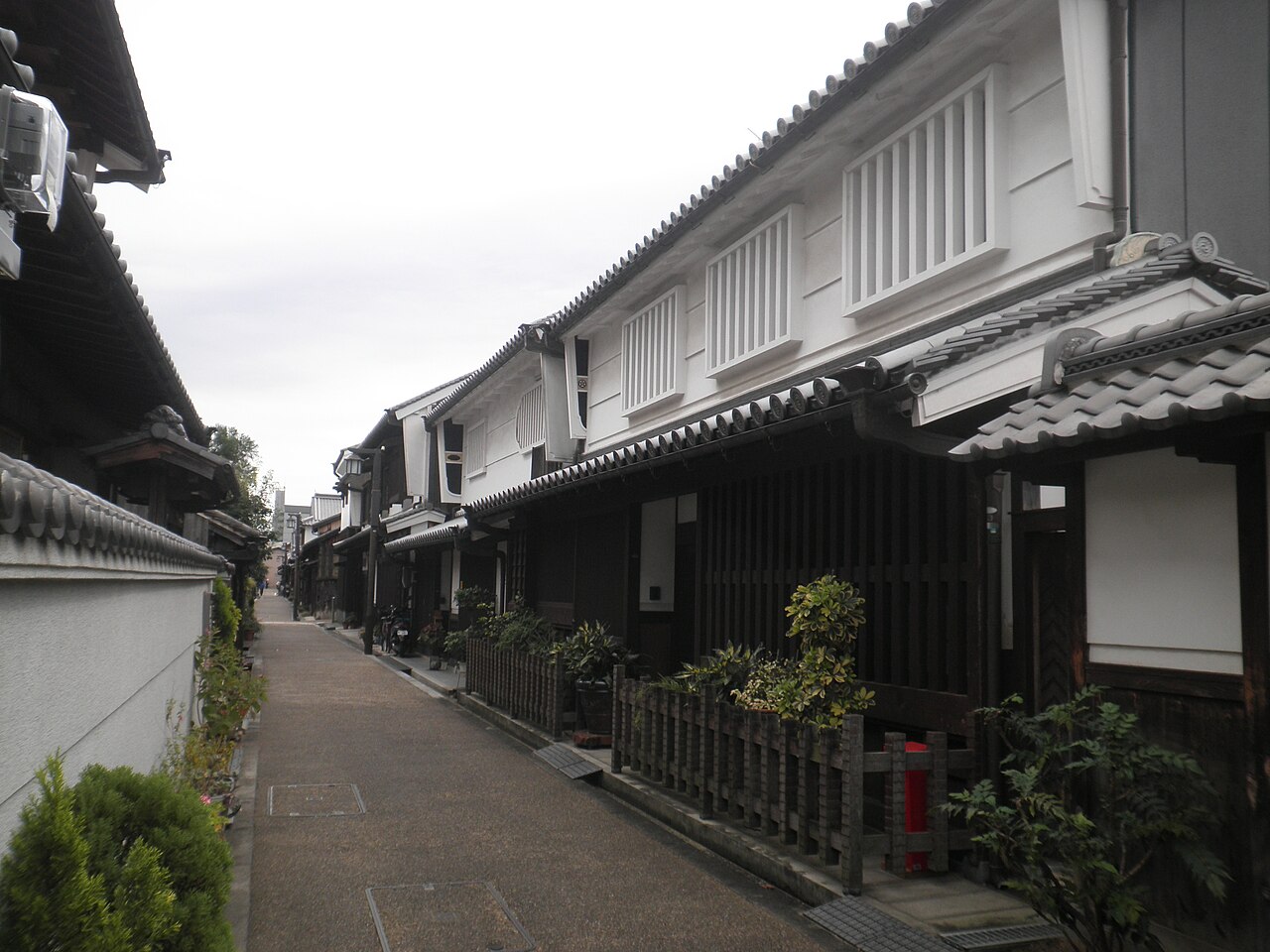
A merchant quarter of roughly 500 surviving traditional buildings, laid out on a grid inside a former moat. Designated a national Important Preservation District in 1993, and still lived in — these are homes, not exhibits.
- FromKintetsu Yamato-Yagi Stn
- ~10 minwalk ~5 min from station
- Get off atYagi-Nishiguchi Station (Kintetsu Kashihara Line)
- On foot
- Imai-chō
The sweet spot
Japan has many preserved streets; most are one lane long, or heavily reconstructed, or emptied of residents. Imai-chō is an entire town — around five hundred traditional buildings on the original grid, still inhabited, ten minutes' walk from a Kintetsu station and free to enter. For anyone who wants to understand what a wealthy Edo merchant town actually felt like at street level, this is the most complete example in the Kansai region.
Where it is
32 more notes in Nara · open the map →What to look for — in walking order
- Imanishi residence (1650)Important Cultural Property; the head elder family's house, with a multi-gabled roof that looks deliberately castle-like — interior visits by advance reservation
- Shōnen-ji templethe Jōdo Shinshū temple the whole town grew around; its main hall is an Important Cultural Property
- Hanairaka (Imai Machinami Kōryū Centre)a 1903 Meiji-era building, now a free orientation museum with a scale model of the district — start here
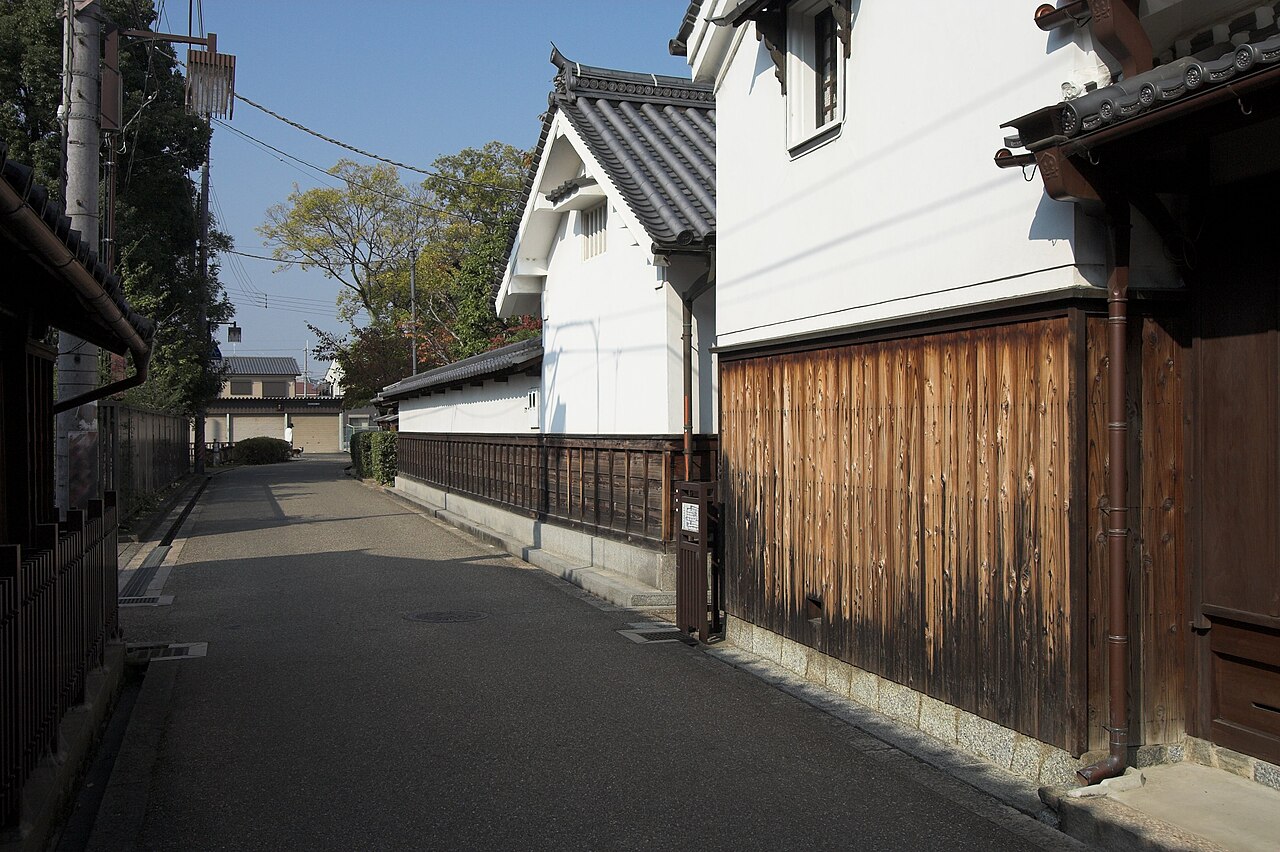
- The lattice streets themselveswalk the full grid rather than one lane; the eave heights and lattice patterns shift subtly street to street
How to actually get there
- Kyoto Stn → Yamato-Yagi (Kintetsu Kyoto/Kashihara Line limited express, ~50 min), or Osaka-Uehonmachi → Yamato-Yagi (Kintetsu Osaka Line, ~35 min).
- Yamato-Yagi → Yagi-Nishiguchi (Kintetsu Kashihara Line, 1 stop).
- Yagi-Nishiguchi → northern edge of Imai-chō (walk south ~5 min).
- Kintetsu to Yagi-Nishiguchi, then walk south
- From Kyoto: Kintetsu Kyoto Line limited express to Yamato-Yagi (~50 min), then one stop on the Kashihara Line to Yagi-Nishiguchi. From Osaka: Osaka-Uehonmachi → Yamato-Yagi (Kintetsu Osaka Line, ~35 min), same connection. From Yagi-Nishiguchi it is about a 5-minute walk south to the northern edge of the district; from Yamato-Yagi itself, about 10 minutes.
- Walk back to Yagi-Nishiguchi or Yamato-Yagi
- Yamato-Yagi is the bigger interchange and worth the extra five minutes on foot if you are heading for Kyoto, Osaka or Nagoya — limited expresses in all three directions stop there. Trains run frequently until late.
About the place
Turn off the main road and the twentieth century stops. Imai-chō is about 600 metres by 310, a grid of narrow streets lined almost continuously with machiya — plastered white walls, dark timber lattice, low tiled eaves, the occasional udatsu firewall rising between neighbours. Roughly five hundred of the district's buildings are traditional, and nine are nationally designated Important Cultural Properties. What makes it different from a preserved showpiece is that people live here. Laundry hangs behind some of the lattices; a resident wheels a bicycle out of a doorway that has been in the same family for generations. The grandest house, the Imanishi residence of 1650, belonged to the family that headed the town's council of elders; its multi-gabled roof is so elaborate it reads as a small castle, which is roughly the point — this was a town that governed itself and looked the part.
How to enjoy it
Ninety minutes is enough to walk the grid properly. Start at Hanairaka for the model and the free map, then work outward. Several machiya open their interiors — the Imanishi and Toyoda houses among them — but opening days vary and the Imanishi needs booking ahead, so check at the centre first. There are a handful of cafés and a soba shop inside converted townhouses. Photograph respectfully: these are private homes, and the residents are the reason the place is still alive rather than embalmed.
Background & history
Imai-chō formed in the mid-16th century as a jinaichō, a fortified settlement around the Jōdo Shinshū temple Shōnen-ji, ringed by moat and earthwork. It sided with the Honganji forces against Oda Nobunaga and held out until surrendering in 1575. Rather than raze it, Nobunaga's side allowed the town a remarkable degree of self-government, and under the Tokugawa it grew wealthy on trade and money-lending — a saying of the period held that seven-tenths of Yamato Province's money was in Imai. The self-governing structure, headed by councils of elders drawn from leading merchant families, ran the town's own courts and finances. In December 1993 the district was designated an Important Preservation District for Groups of Traditional Buildings, and it is also part of a nationally recognised Japan Heritage story.
Before you go
- Cash
- The district is free to walk and the Hanairaka centre is free. Individual house interiors charge small admissions in cash (the Imanishi residence around ¥500, by reservation). Cafés inside the district are largely cash-preferred; draw money at Yamato-Yagi station before walking in.
- Good to know
- The streets are open at all times. Hanairaka and the house museums close on Mondays and over New Year, and each keeps its own opening hours — confirm on the Kashihara City site, as each house keeps its own days.
- Another way
- Kashihara Jingū, a large early-20th-century shrine at the foot of Mount Unebi, is two stops further down the Kashihara Line and combines easily into a half day.
- After you get off
- At Yagi-Nishiguchi take the west side exit and head south; the district begins where the road narrows and the first white plaster walls appear. Yamato-Yagi is one stop north on the same line if you need lockers or a wider choice of trains.
Nearby notes
 Yoshio Kohara / CC BY 3.0
History · Nara★★
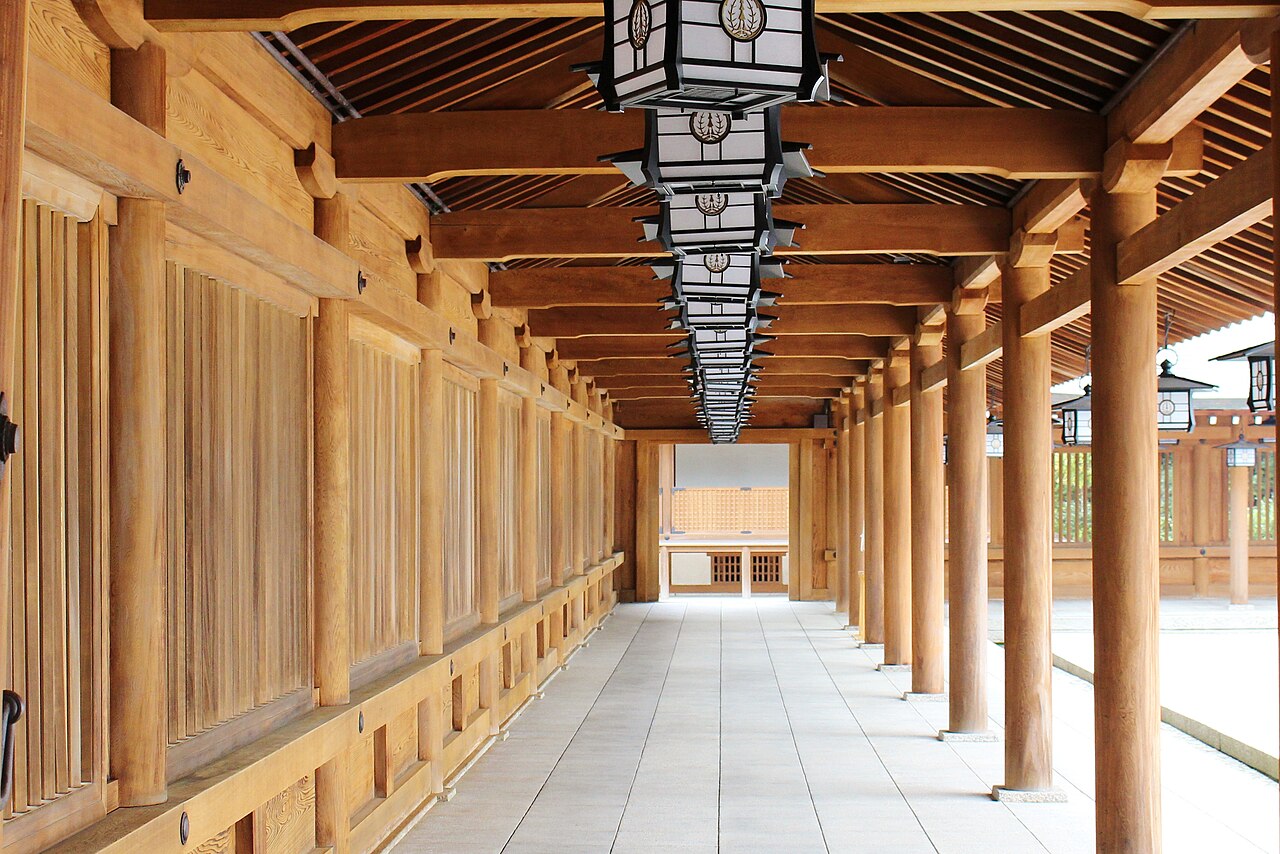
Kashihara Jingu
2.1 km · straight line
 Saigen Jiro / CC0
History · Nara★★
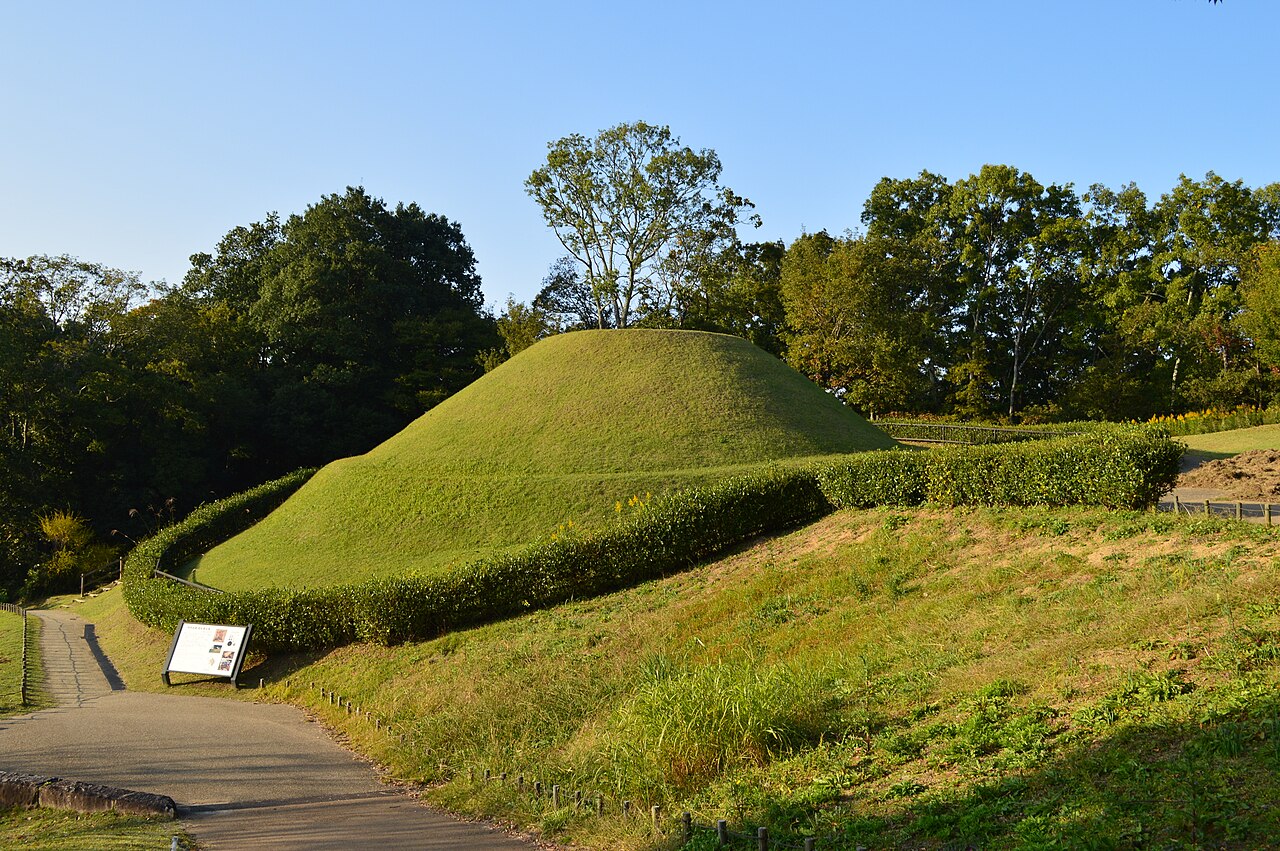
Takamatsuzuka Tomb
5.3 km · straight line
 663highland / CC BY 2.5
History · Nara★★
Ishibutai Kofun
5.7 km · straight line
 Immanuelle / CC BY 4.0
Food · Nara★
Miwa
6.3 km · straight line
On a curated routeBefore Nara, Before Kyoto →
Distances are straight lines on the map, not travel times.