Nara
Down Into the Old Capital
Nara from above, then Nara at street level — a hillside veranda that never closes and never charges, the widest view of the basin you can reach without a ticket at first light, and a half-day walking down into it, ending in the lattice-fronted lanes before noon.
5 stops · one day
The route
- 01
 Nekosuki / CC BY-SA 4.0
Nara · Todaiji Temple precinct · From Kyoto Stn · ~1 hour · Better early
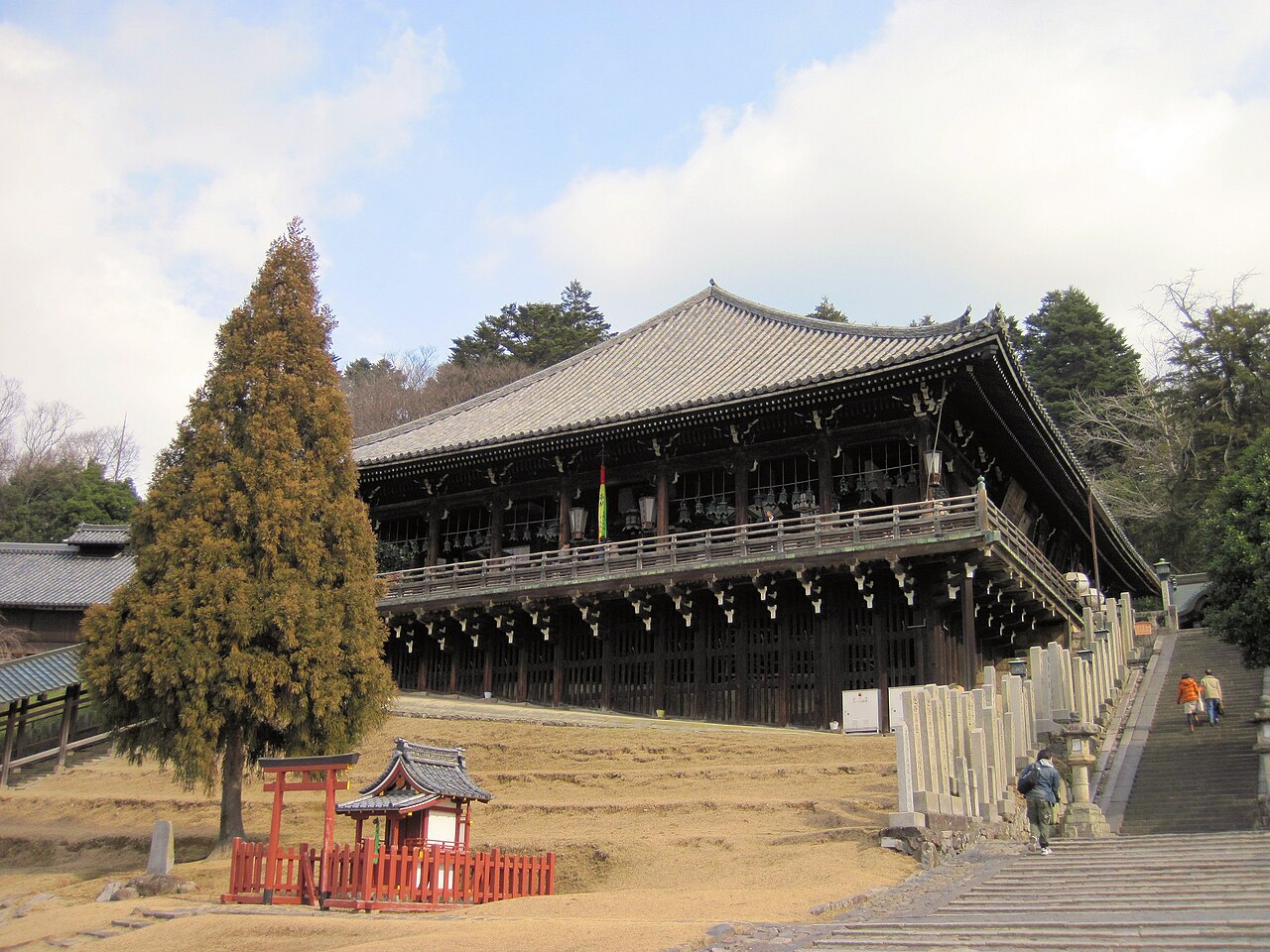
Nigatsudo Hall
A National Treasure hall with a free 24-hour veranda and the widest dawn view over Nara.
What to look for
- Stone steps from behind the Great Buddha Hall — the uphill approach; the path is unlit before dawn — a phone light helps
- The stilt veranda (butai-zukuri) — a wooden platform built out over the hillside, free and open 24 hours
- The basin view — the Great Buddha Hall roof, Kofukuji Temple's five-story pagoda, and Nara Park spread out below
- Next stop · 0.4 km in a straight line
- 02
 Guilhem Vellut from Annecy, France / CC BY 2.0
Nara · Nara Park area · From Osaka/Namba Stn · ~35 min
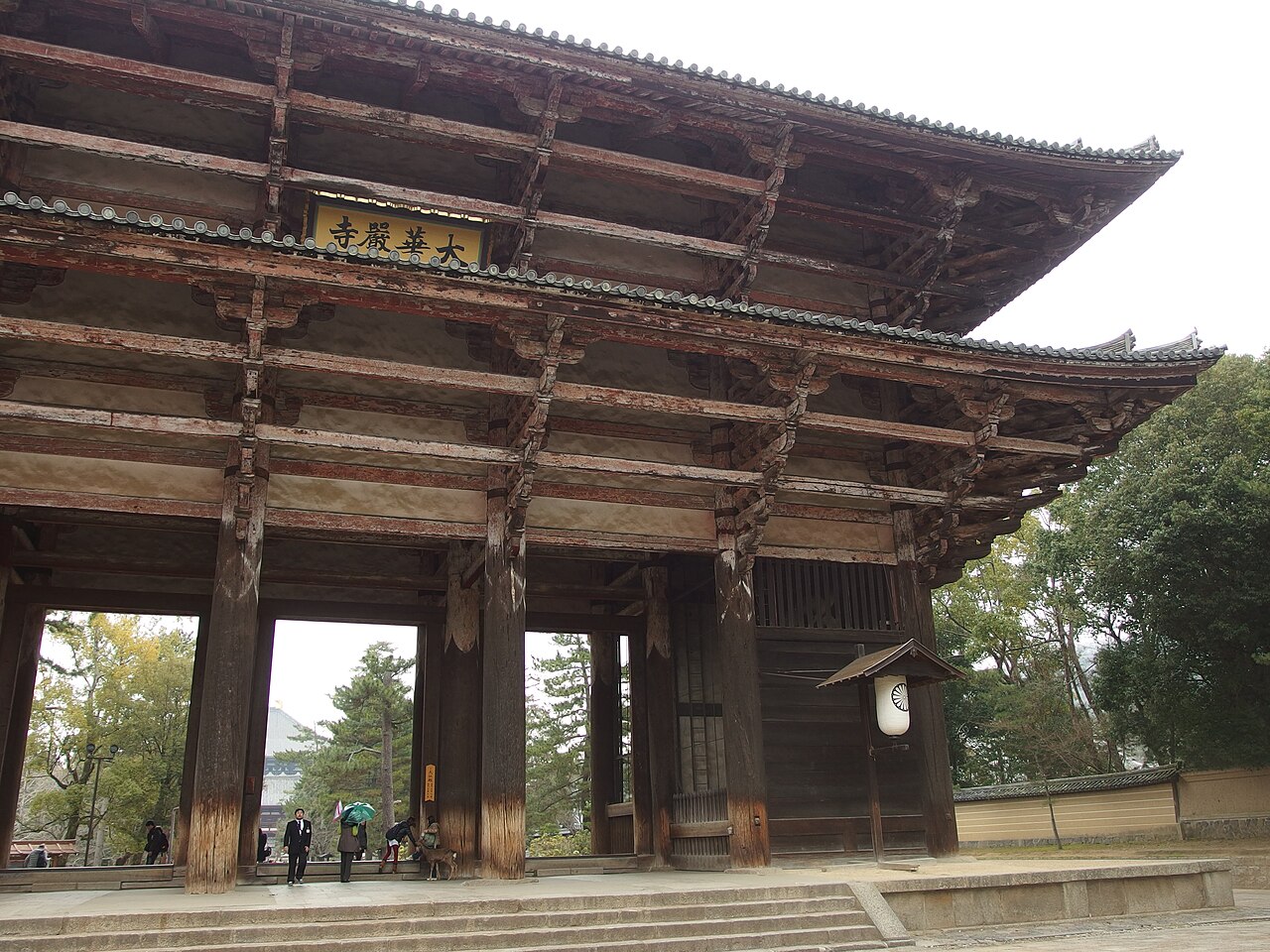
Todai-ji and Nara Park
One of the world's largest wooden halls and its giant bronze Buddha — arrive early, then climb to Nigatsu-do for the view.
What to look for
- Nandaimon Gate (south main gate) — a monumental 13th-century gate housing two large wooden Nio (guardian) figures; the approach passes through it
- Daibutsuden (Great Buddha Hall) — the large wooden hall containing the bronze Vairocana Buddha, about 15 m tall; a hole through one of the wooden pillars inside is said to match the Buddha's nostril in size
- Nigatsu-do Hall — a hillside hall east of the main complex whose wooden balcony looks out over Nara; site of the annual Omizutori fire ceremony in March
- Next stop · 1.1 km in a straight line
- 03
 そらみみ / CC BY-SA 3.0
Nara · Kasugayama · From Kintetsu Nara Stn · ~20 min · Better early
Kasuga Taisha
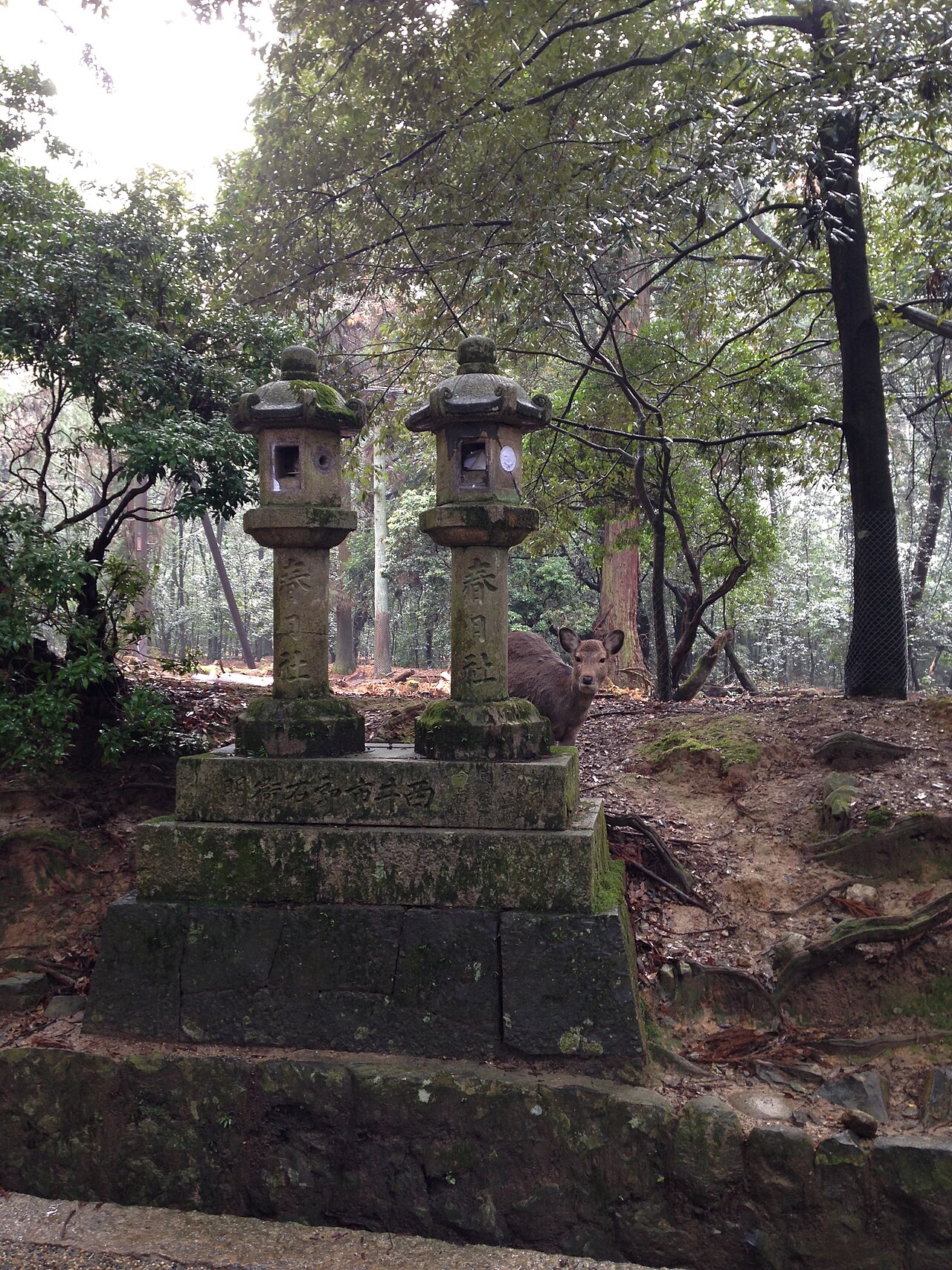
A UNESCO shrine; a forest path of ~2,000 stone lanterns, free to walk and quiet early on.
What to look for
- Second torii gate (Ninotorii) — the start of the lantern-lined approach path into the shrine
- Stone lantern corridor — about two thousand lanterns donated over eight centuries, lining the path to the main hall
- Sacred Nara deer — free-roaming deer revered by the shrine as divine messengers
- Next stop · 1.5 km in a straight line
- 04
 Ph0kin / Public domain
Nara · Nara Park · From Osaka (Namba) · ~50 min
Kofuku-ji
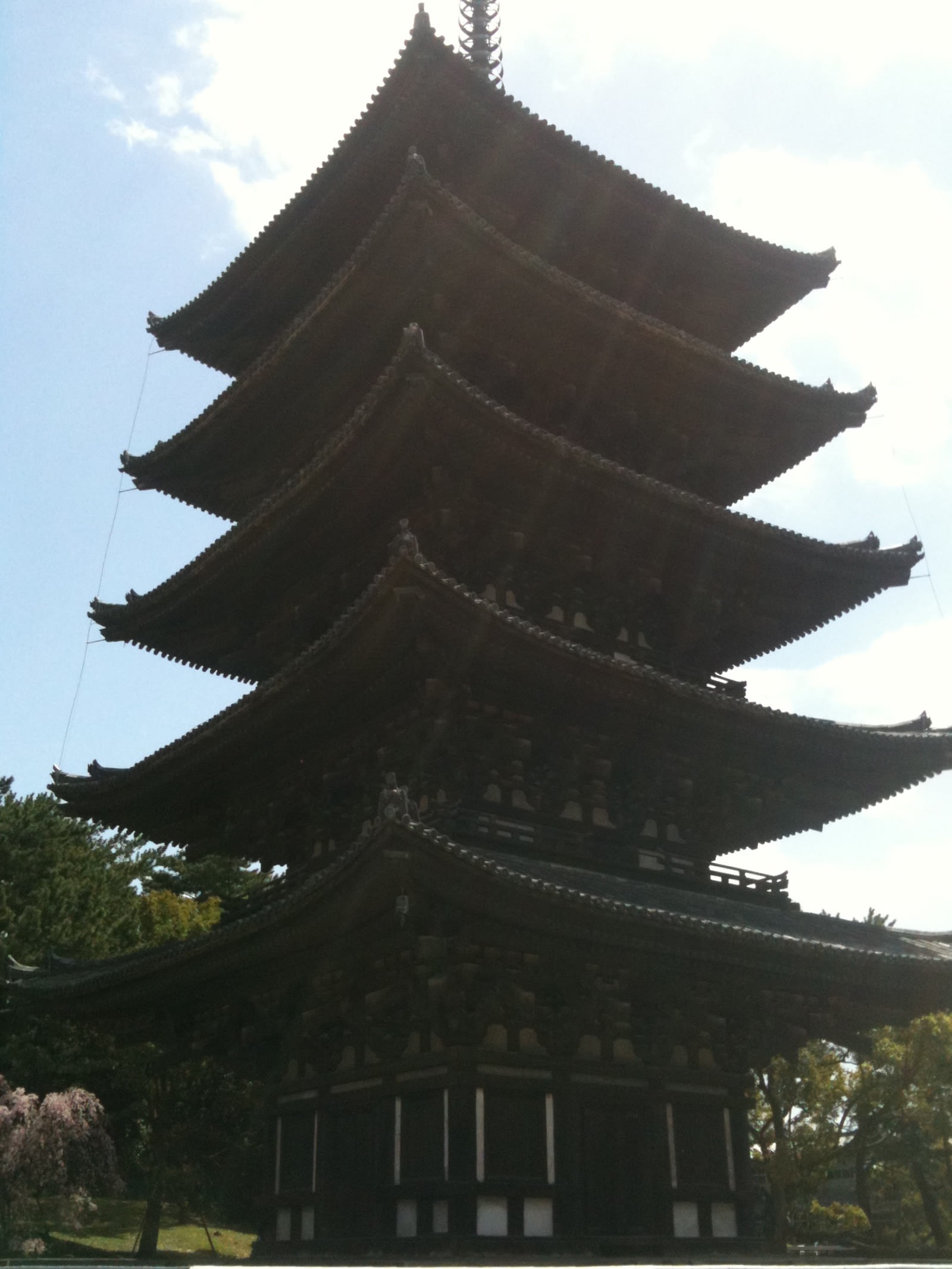
The Ashura statue in the National Treasure Hall and Japan's second-tallest wooden pagoda, side by side in Nara Park.
What to look for
- Five-storey Pagoda — the 50-metre wooden pagoda, rebuilt in 1426; Japan's second-tallest
- National Treasure Hall (Kokuhōkan) — over 300 Buddhist sculptures including the celebrated Ashura figure
- Tō-kondō (East Golden Hall) — a reconstructed Nara-period golden hall with important Buddhist images inside
- Next stop · 0.8 km in a straight line
- 05
 shankar s. / CC BY 2.0
Nara · Naramachi · From Kintetsu Nara Stn · ~40 min
Naramachi
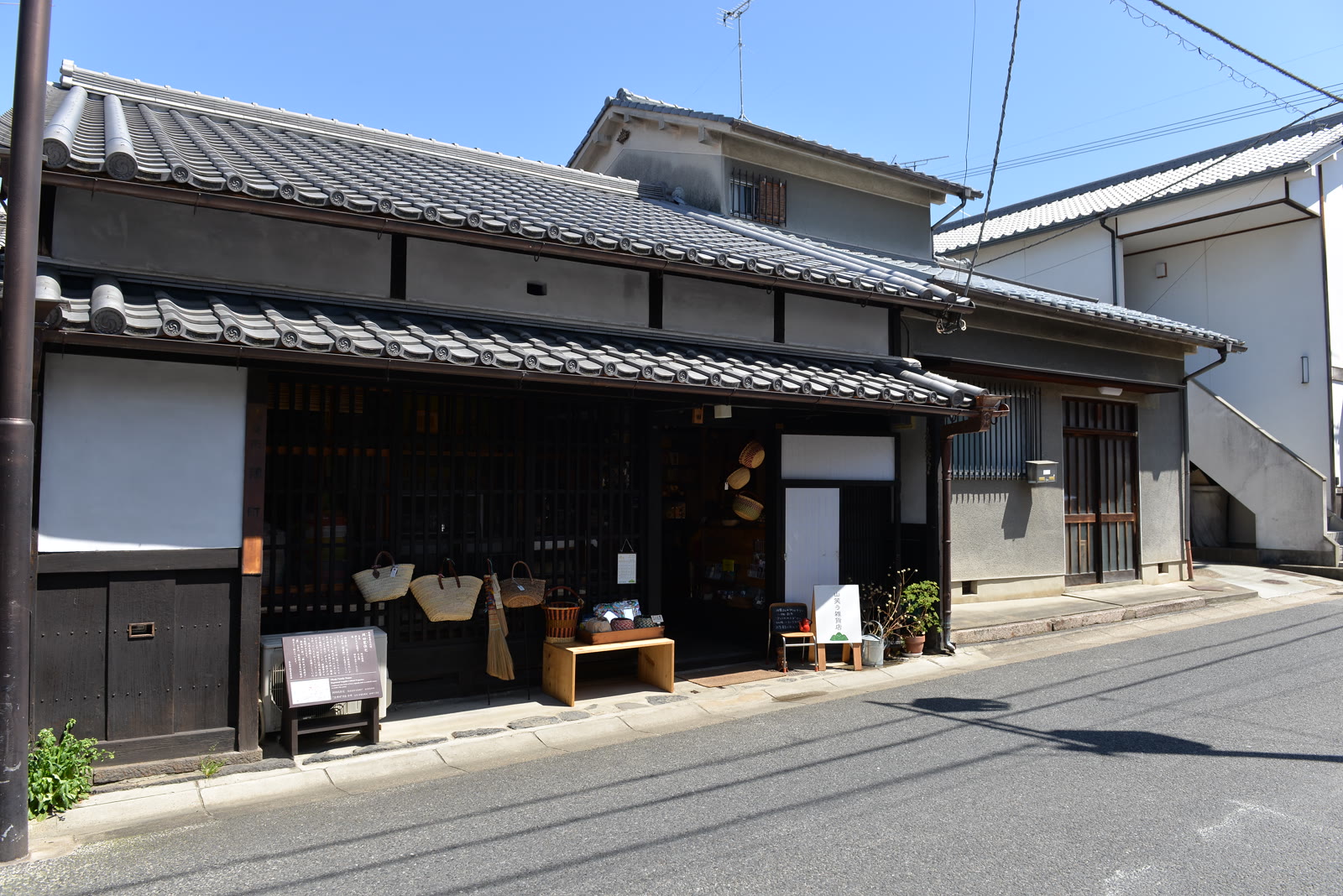
Nara's intact old merchant quarter: Edo and Meiji machiya on an eighth-century street grid, with cafes, craft shops, and red monkey-doll folk charms.
What to look for
- Naka-no-shōji-chō main lane — the central street with the densest run of preserved machiya frontages and galleries
- Koshi-no-ie (Lattice House) — a fully restored Meiji-period machiya open free to the public, showing the deep narrow plan inside; closed Wednesdays
- Migawari-zaru good-luck dolls — red monkey figures hung on house eaves as protective charms — a Naramachi folk tradition still visible on many doors