Tokyo · Taito-ku / Ueno–OkachimachiNo.282★Open in map →
Ameyoko
— Tokyo's postwar market street
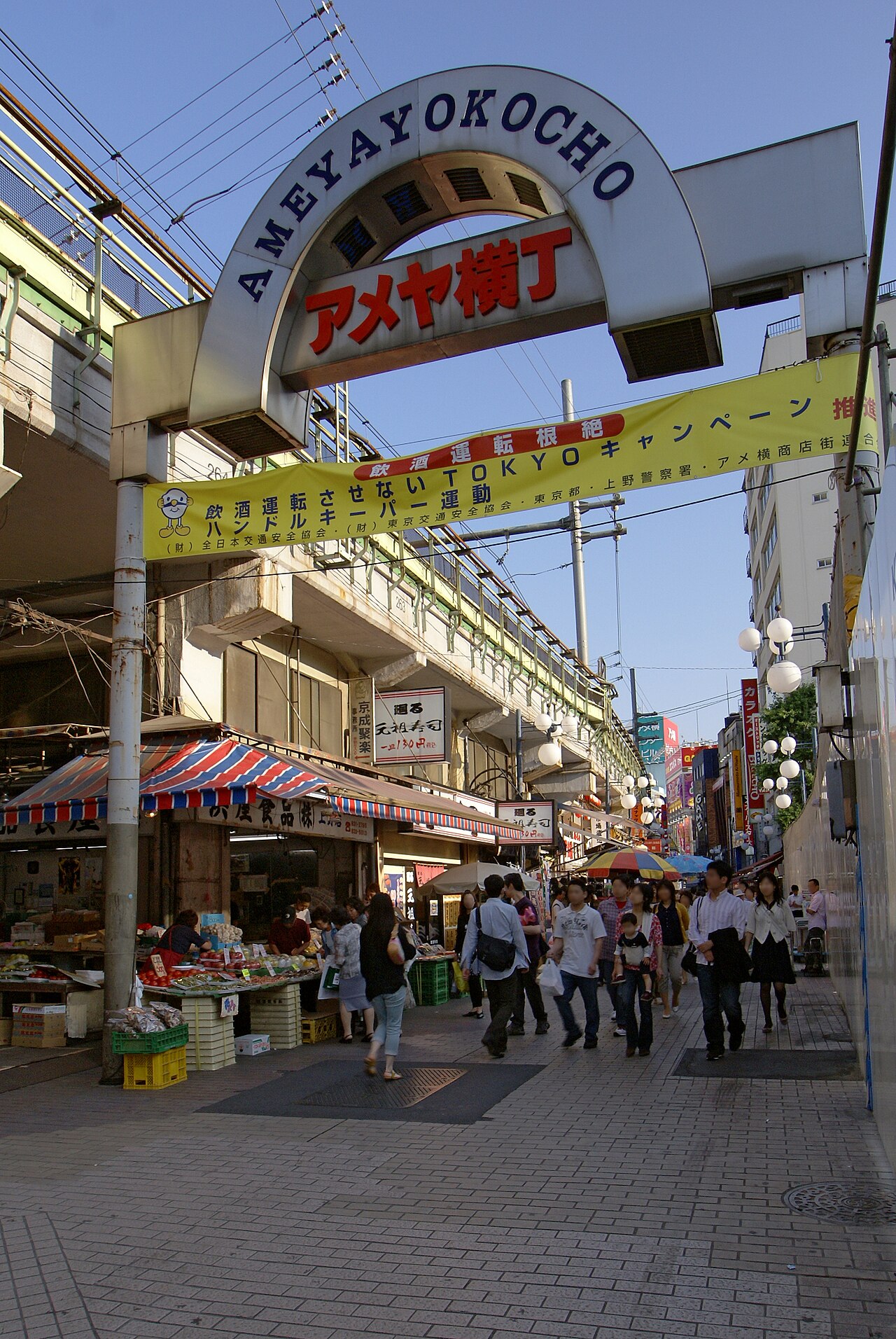
About 400 shops packed into roughly 500 metres between Ueno and Okachimachi stations, along and beneath the elevated railway. It grew out of the black market that formed here after 1945 and still sells fish, dried goods, sweets, spices and cosmetics at shouted prices.
- FromTokyo Stn
- ~5 minJR / metro (frequent)
- Get off atOkachimachi Station (JR) or Ueno Station (JR, Tokyo Metro)
- On foot
- Ameyoko
The sweet spot
Visitors are routed to Ueno Park and the museums and often never turn the corner. The market is the same five-minute walk from the same station, and it is the rarer thing: not a preserved district but a working one, whose layout was set by a black market and never rationalised.
Where it is
77 more notes in Tokyo · open the map →What to look for
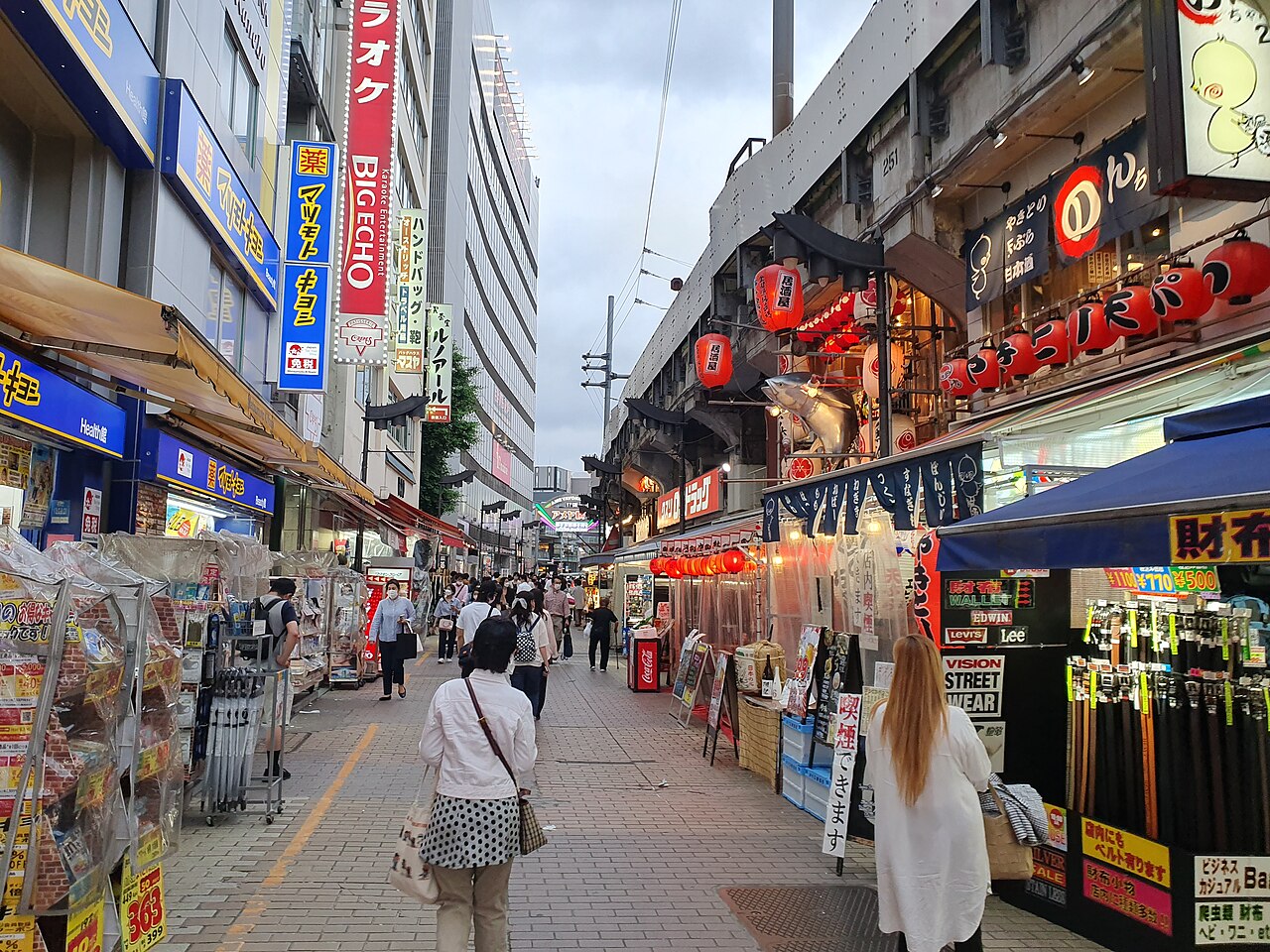
- The viaduct stretchthe section where shops trade directly under the railway arches, with trains passing overhead
- Fresh fish and seafood stallsthe loudest part of the street — vendors call prices and cut to order in the open
- Dried goods, nuts and sweetsthe trade the street was named for, still sold by weight from open bins
- Spice and imported food shopsa strong South and Southeast Asian presence that has grown up within the older market
- Standing bars and street foodkebab, grilled seafood and cheap standing izakaya wedged between the shops
How to actually get there
- Tokyo Stn → Okachimachi Stn (JR Yamanote Line, ~7 min; daytime Keihin-Tohoku rapid trains skip Okachimachi).
- North exit → the market begins immediately; walk north under the viaduct toward Ueno (~500 m).
- Come out at Ueno Station and continue into Ueno Park if you want to make a half day of it.
- Tokyo Stn → Okachimachi or Ueno (JR Yamanote Line)
- Tokyo Stn →(JR Yamanote Line, inner loop toward Akihabara and Ueno, or Keihin-Tohoku Line, ~5–7 min)→ Okachimachi Stn or Ueno Stn. From Okachimachi, the street entrance is directly outside the north exit; from Ueno, take the Hirokoji exit and walk about 3 minutes south. Trains run every few minutes all day.
- Return from either end of the street
- The street has a station at each end, so return from whichever you finish at: Ueno or Okachimachi on the JR Yamanote and Keihin-Tohoku lines, or Ueno-Okachimachi on the Tokyo Metro Hibiya Line and Ueno-hirokoji on the Ginza Line. Central Tokyo trains run to around midnight, so there is nothing to plan.
About the place
Ameyoko runs for about 500 metres between Ueno and Okachimachi stations in Taito ward, partly alongside and partly directly underneath the elevated railway tracks, with roughly 400 shops crammed into that strip. It began as a black market that formed spontaneously under the viaduct in 1945, in a city short of everything. Two explanations for the name are commonly given and both are still repeated locally: that the Occupation's restrictions on sugar sent people looking for sweets, so hundreds of candy sellers — ameya — set up here, making it Ameya Yokocho, the candy sellers' alley; and that it referred to the American surplus goods traded in the same stalls. What survives is the trading manner rather than the goods: fresh fish and seafood, dried foods, nuts and confectionery, spices, cosmetics, sportswear and bags, sold by vendors who price out loud and expect to be answered.
How to enjoy it
An hour is enough to walk it; two if you eat as you go. Most shops run roughly 10:00 to 20:00 and each shop sets its own hours, so late afternoon into early evening is when the whole street is reliably alive. Walk it from Okachimachi towards Ueno so you finish at the park, which turns the two into a single half-day. Prices are called out and haggling is part of the culture here, which is unusual in Japan and worth experiencing even if you buy nothing. The last week of December is the street's famous peak, when the whole city seems to come here for New Year food — spectacular, but shoulder to shoulder.
Background & history
In the months after the war ended in 1945, an unofficial market appeared under the Ueno–Okachimachi viaduct, trading from around four in the morning until the police patrols arrived. Ueno Station was the terminal for the northern trunk lines, which made this the point where goods and people from the provinces entered the city — the reason the market took hold here rather than somewhere else. It was progressively formalised through the postwar decades into a registered shopping street, but the physical form set in those years never changed: narrow, roofed in places by the railway itself, and dense to the point of having no spare frontage. The Ministry of Land, Infrastructure and Transport's official multilingual guidance treats the street's black-market origin as its defining history.
Before you go
- Cash
- Carry cash. Many stalls are small independent traders who take cash only, and prices are often quoted verbally rather than marked — haggling is normal here in a way it is not elsewhere in Japan. The larger discount stores and chains accept cards and IC payment, but do not rely on it at the stalls.
- Good to know
- Typical shop hours are around 10:00 to 20:00; individual shops set their own hours and closing days. The final week of December is extraordinarily crowded with New Year food shoppers.
- Another way
- Ueno-Okachimachi Station on the Tokyo Metro Hibiya Line and Ueno-hirokoji on the Ginza Line both let out onto the same block, which is useful if you are coming from Ginza, Roppongi or Asakusa rather than Tokyo Station.
- After you get off
- From Okachimachi Station's north exit the market begins immediately across the road; from Ueno Station take the Hirokoji exit on the south side and walk about 3 minutes with the elevated tracks on your left.
Nearby notes
 Rijksmuseum / CC0
Culture · Tokyo★★★
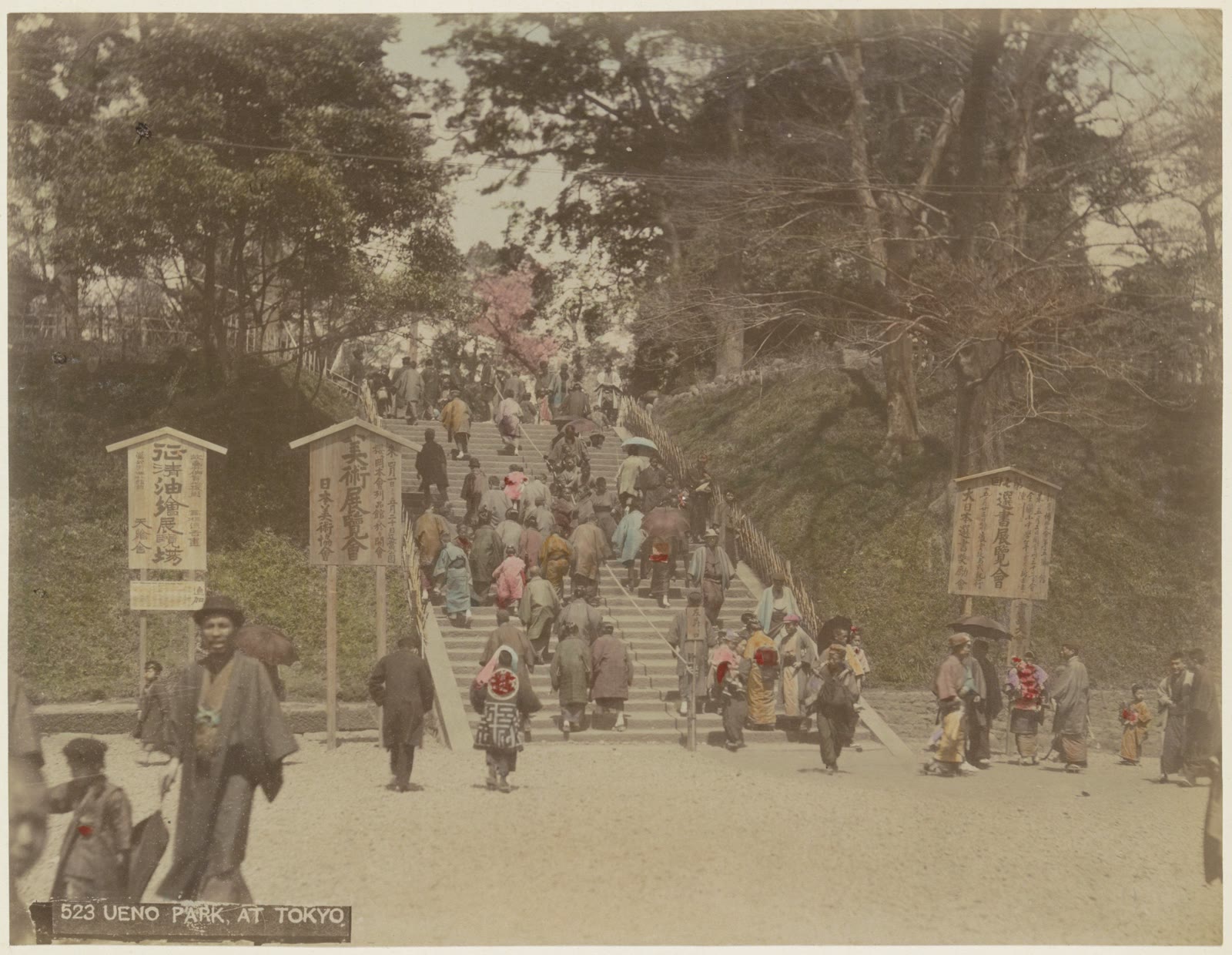
Ueno Park
0.7 km · straight line
 663highland / CC BY 2.5
History · Tokyo★★★
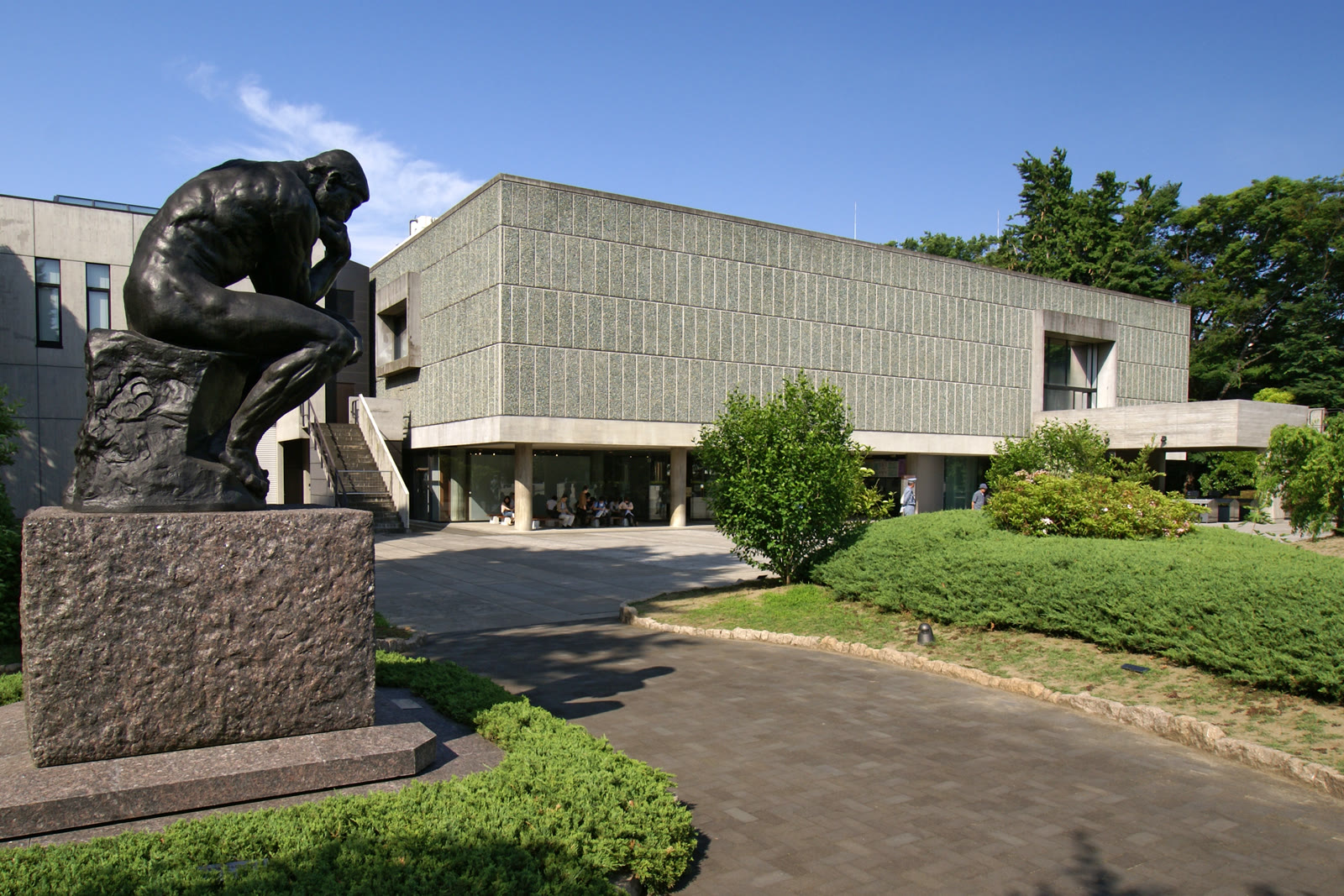
National Museum of Western Art
0.8 km · straight line
 istolethetv / CC BY 2.0
History · Tokyo★★★
National Museum of Nature and Science
0.9 km · straight line
 江戸村のとくぞう / CC BY-SA 4.0
Local life · Tokyo★★★
Ueno Zoo
0.9 km · straight line
On a curated routeThe Low City, Dawn to Sunset →
Distances are straight lines on the map, not travel times.