
Nara · Sakurai / YamatoNo.187★★★Open in map →
Hasedera Temple
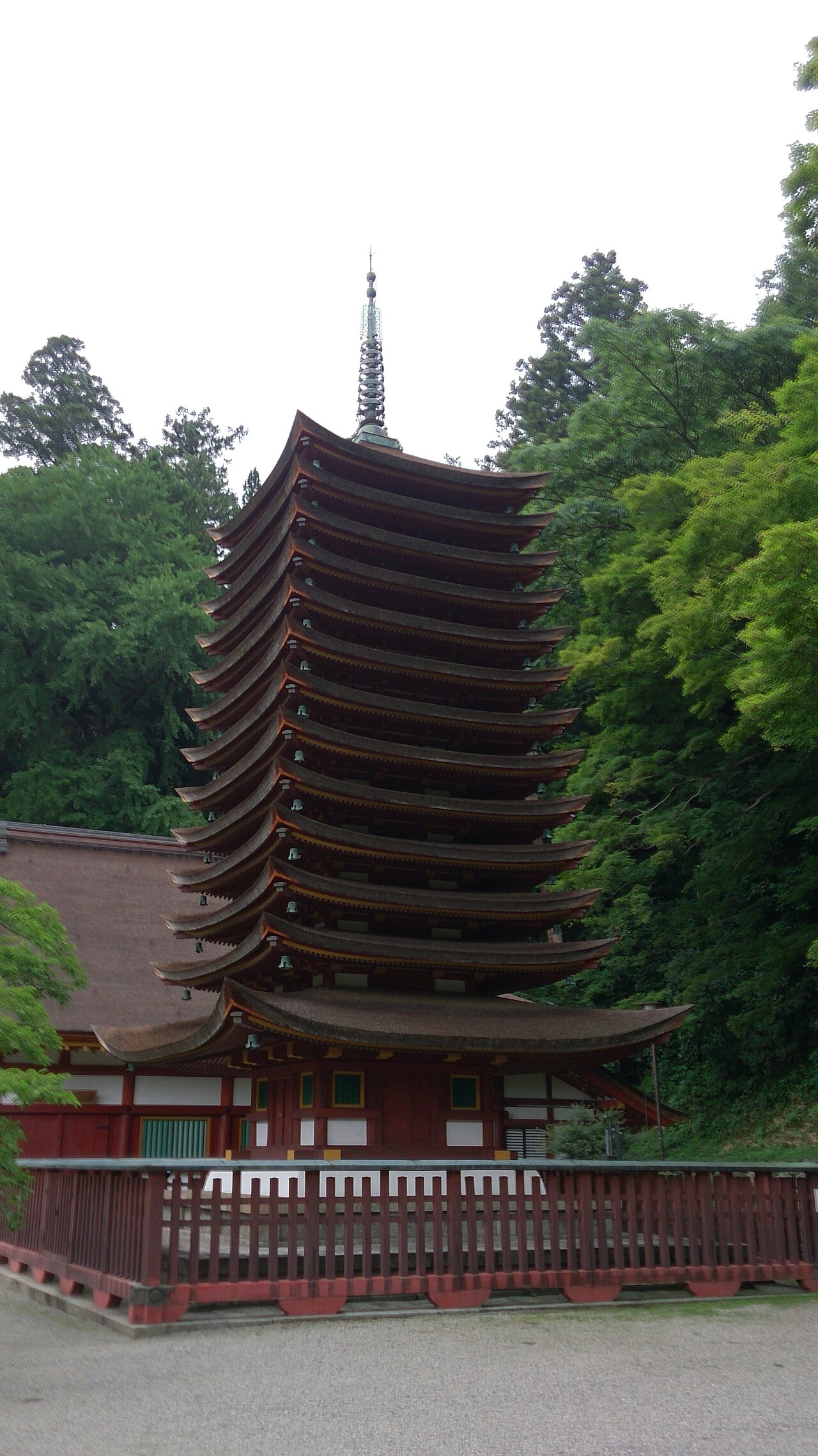
The head temple of the Shingon Buzan sect in Sakurai, Nara, known as the 'Temple of Flowers.' A covered wooden stairway of 399 steps climbs through the hillside to a main hall enshrining one of Japan's largest wooden Kannon statues.
- FromOsaka-Uehommachi Stn
- ~50 minKintetsu Osaka Line (express)
- Get off atHasedera Station (Kintetsu Osaka Line)
- On foot
- Hasedera Temple
Where it is
32 more notes in Nara · open the map →What to look for — in walking order
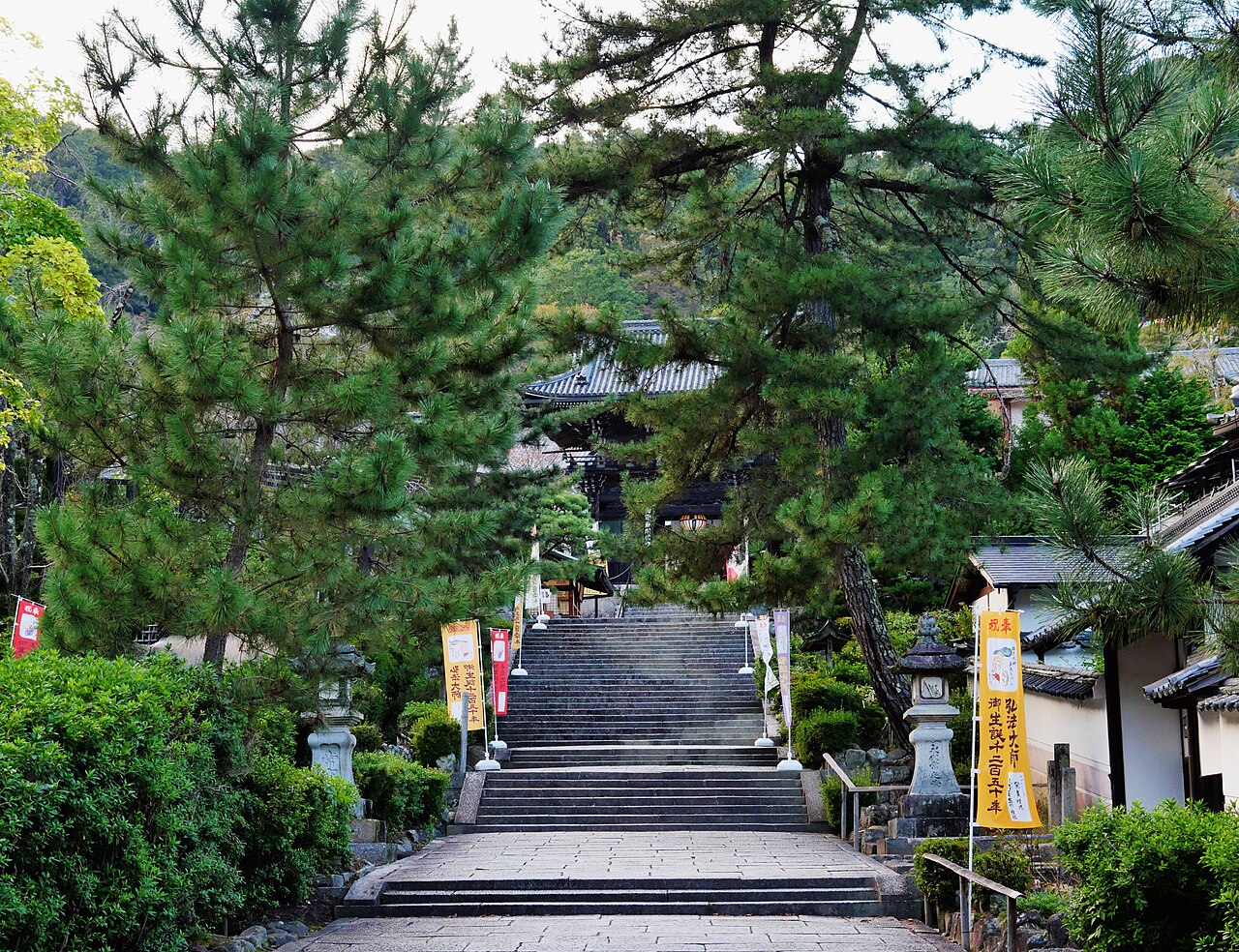
- Niomon Gatethe lower entrance gate marking the start of the todan stairway approach
- Todan (covered stairway)399 steps in a 200-metre open-sided wooden corridor, climbing the hillside in three covered sections built in different eras
- Main Hall (Hondo) and stagea National Treasure rebuilt in 1650, projecting over the valley on wooden pillars; the 10-metre Kannon inside carved in 1538
- Peony gardenabout 7,000 peonies planted along the stairway corridor and hillside, at peak bloom in late April and May
How to actually get there
- Osaka-Uehommachi Station → Hasedera Station (Kintetsu Osaka Line express, ~50 min). IC cards accepted.
- Hasedera Station → Niomon gate (walk along approach lane, ~15 min, following signs).
- Niomon gate → todan stairway (399 covered steps) → Main Hall stage → peony garden (allow 1–2 hrs for the temple).
- Kintetsu Osaka Line express from Osaka-Uehommachi
- Osaka-Uehommachi Station →(Kintetsu Osaka Line express, ~50 min)→ Hasedera Station. Total about 50 min. Kintetsu express trains run frequently on this line. From Hasedera Station, the temple gate is about a 15-minute walk along the approach lane (follow the main road then signs for Hasedera). IC cards (Suica, ICOCA) are generally accepted on Kintetsu lines; confirm at the station.
- Return from Hasedera Station on Kintetsu Osaka Line
- Walk back down the approach lane (about 15 min) to Hasedera Station, then take the Kintetsu Osaka Line express back to Osaka-Uehommachi (~50 min). Trains run frequently through the day. You can also continue on the Kintetsu Osaka Line toward Nara or Kyoto, using Sakurai or Yamato-Yagi as connection points.
About the place
Hasedera stands on a steep hillside in Sakurai City, tucked into a narrow valley east of the Yamato Plain. The temple is most visible through its todan — a 200-metre covered wooden stairway of 399 steps linking the Niomon gate at the base to the main hall above. The corridor's open-sided design lets views of the hillside change as you climb, with peonies in May and wisteria, hydrangeas, and autumn leaves colouring the slopes through the seasons. The main hall, a National Treasure rebuilt in 1650, extends beyond the cliff edge on a wooden stage platform — the structure projects over the valley — framing the wooded ridge below. Inside stands the principal object of worship: one of Japan's largest wooden Kannon statues, about 10 metres tall, carved in 1538. Hasedera is the eighth temple on the Saigoku Kannon Pilgrimage, one of Japan's oldest pilgrimage circuits, and draws pilgrims year-round alongside seasonal flower visitors.
How to enjoy it
Come in late April or May to walk the todan corridor when the peonies are in bloom — the flower beds line both sides of the covered stairway. The corridor is also beautiful in late November for autumn leaves. From the main hall's outdoor stage, the wooded ridge view is worth staying with for a few minutes. The 15-minute walk from Hasedera Station to the temple gate passes through a quiet approach lane of souvenir shops and traditional guesthouses.
Background & history
Hasedera's founding is dated to 686, when the priest Domyo enshrined a bronze relief of the Lotus Sutra on the western hill. The Kannon hall was established in 727 under imperial order, and an 11-faced Kannon statue has been at the temple's centre since then — the current figure, carved in 1538, replaced an earlier one lost to fire. The todan covered stairway in its present form dates from 1039; the lower and middle sections were rebuilt in 1894 after fire damage. Hasedera became the head temple of the Shingon Buzan sect in the early modern period and today oversees temples across Japan.
Before you go
- Cash
- Temple admission is charged (confirm current fee at hasedera.or.jp). During peony season a separate peony garden admission may be added. Kintetsu lines accept IC cards. The approach lane has restaurants and guesthouses; most accept cash.
- Good to know
- The temple is open year-round. Peony season (late April–May) draws the largest crowds; autumn leaves (November) are also popular. The main hall is a functioning place of worship — quiet and respectful behaviour is expected.
- Another way
- From Kyoto or Nara, take the Kintetsu Kyoto Line or Nara Line to Yamato-Yagi Station, then the Kintetsu Osaka Line to Hasedera Station (about 30–40 min from Yamato-Yagi). This connects the temple with a Nara day itinerary.
- After you get off
- Hasedera Station (Kintetsu Osaka Line): from the station exit, walk along the main road and follow signs to Hasedera, about 15 minutes to the Niomon gate at the base of the todan.
Nearby notes
 Immanuelle / CC BY 4.0
Food · Nara★
Miwa
5.3 km · straight line
 Saigen Jiro / CC0
History · Nara★
Uda-Matsuyama
6.5 km · straight line
 coniferconifer / CC BY 2.0
Nature · Nara★
Matabei-zakura
6.8 km · straight line
 Maechan0360 / CC BY-SA 3.0
History · Nara★★
Tanzan Shrine
8.9 km · straight line
Distances are straight lines on the map, not travel times.