Nara · TōnomineNo.337★★Open in map →
Tanzan Shrine
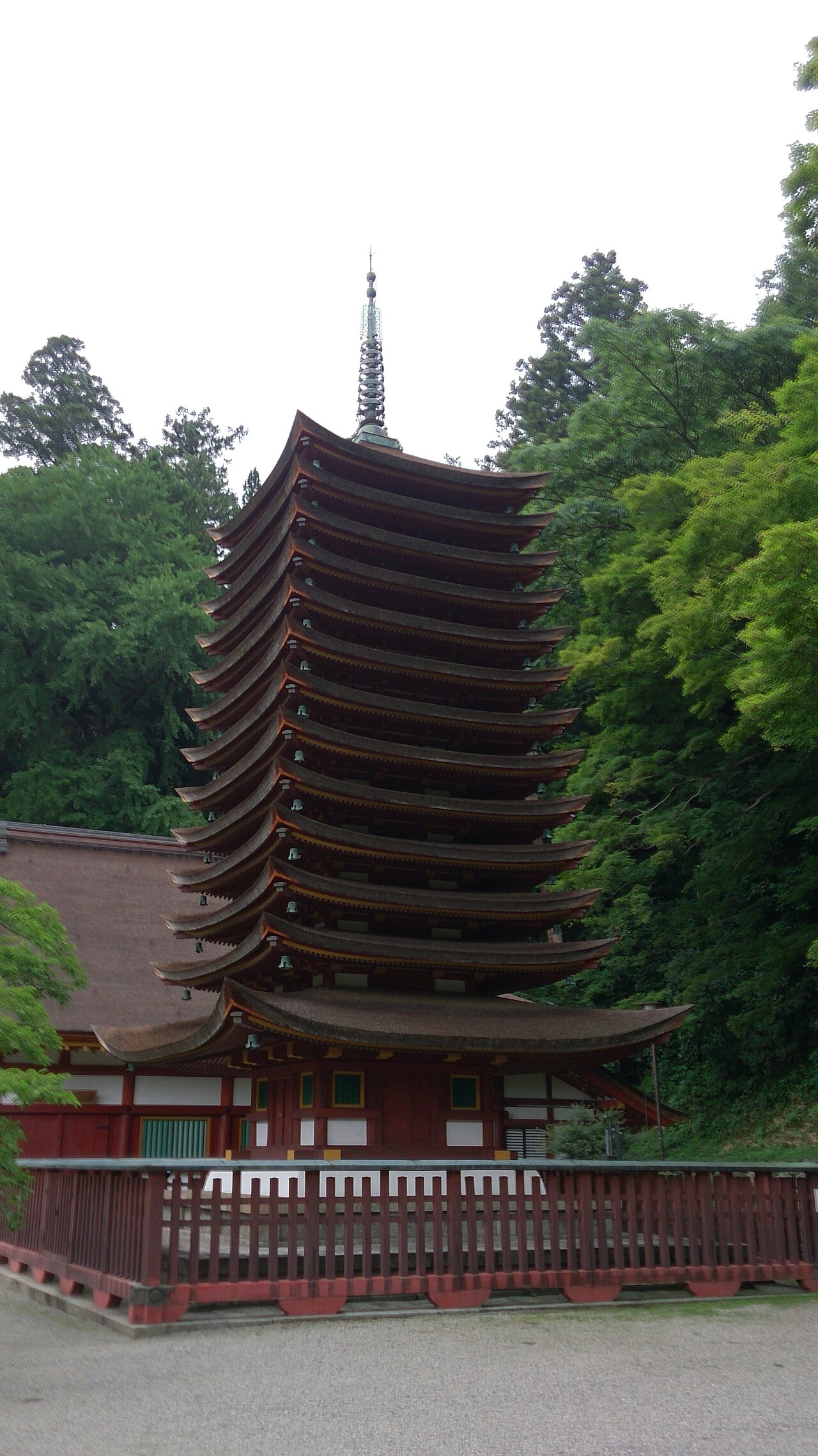
A shrine on Mount Tōnomine dedicated to Fujiwara no Kamatari, founded in 678. Its thirteen-storey wooden pagoda, 16.17 m tall and rebuilt in 1532, is the only one of its kind left standing anywhere.
- FromSakurai Stn (JR / Kintetsu)
- ~30 minbus ~25 min + steps
- Get off atTanzan-jinja bus stop (Nara Kōtsū, Tōnomine line)
- From there
- Tanzan Shrine
The sweet spot
There is exactly one wooden thirteen-storey pagoda left in the world and it is here, forty minutes from Nara city, seen by a fraction of the people who queue for Tōdai-ji. Add the fact that the political conspiracy that reshaped ancient Japan was hatched on this hillside, and it is one of the highest ratios of historical weight to visitor numbers anywhere in Kansai.
Where it is
32 more notes in Nara · open the map →What to look for — in walking order
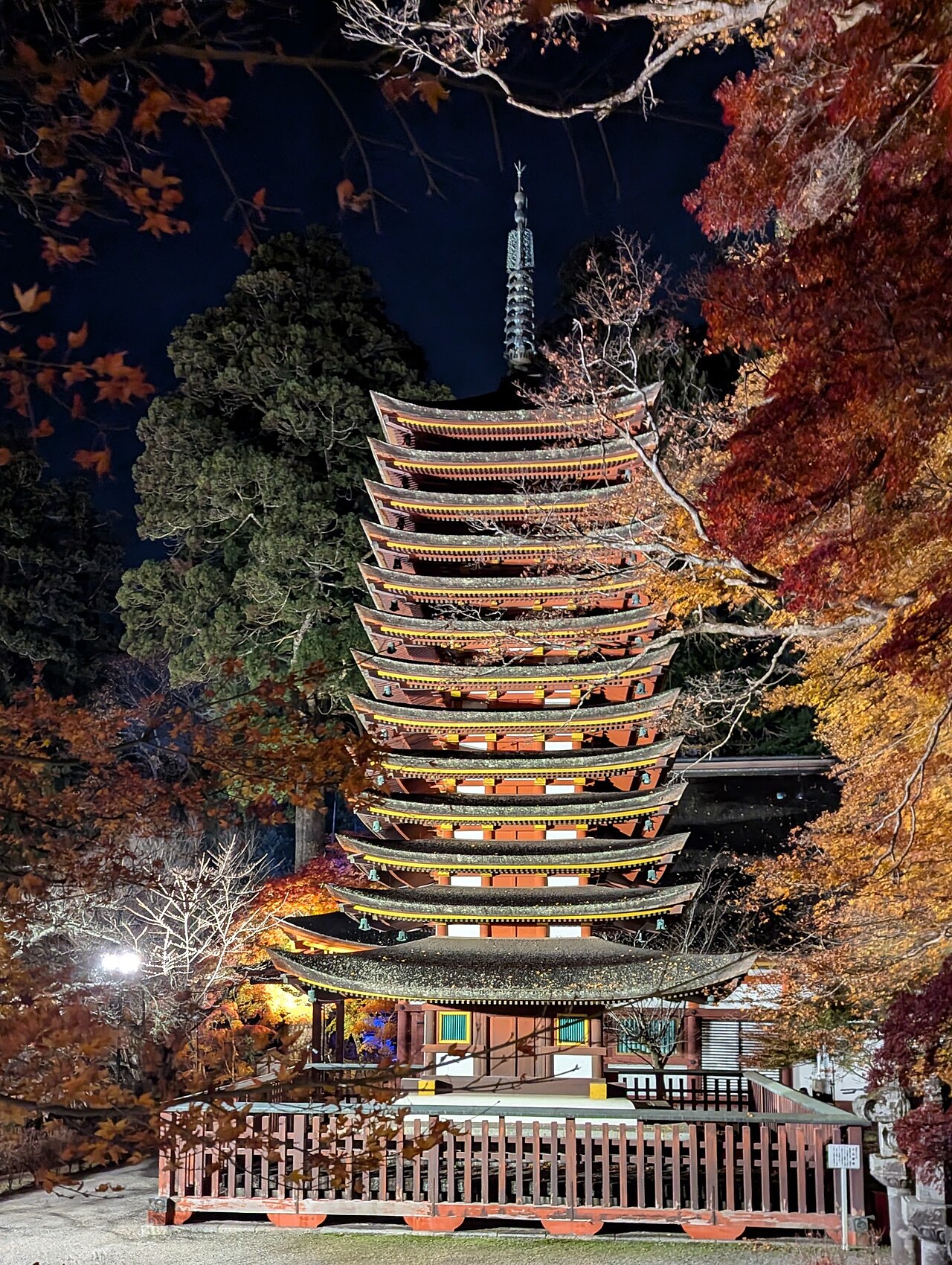
- Thirteen-storey pagoda16.17 m, rebuilt 1532; the only surviving wooden pagoda of this form in the world
- Haiden (worship hall) and Hondenvermilion halls on the upper terrace, linked by covered corridors; lattice windows frame the maples
- Kemari no Niwathe courtyard where the ancient courtly ball game kemari is performed each April and November, in Heian costume
- Sōrintō and the valley viewthe terrace above the pagoda gives the classic composition — thirteen roofs against three thousand maples
How to actually get there
- JR Nara Stn → Sakurai Stn (JR Man-yō Mahoroba Line, ~30 min), or Osaka-Uehonmachi → Sakurai (Kintetsu Osaka Line, ~40 min).
- Sakurai Stn south exit → Tanzan-jinja bus stop (Nara Kōtsū Tōnomine line, ~25 min).
- Bus stop → shrine gate (stone stairway, a few minutes on foot).
- Train to Sakurai, then the Tōnomine bus up the valley
- From Nara: JR Nara Stn → (JR Man-yō Mahoroba Line, ~30 min) → Sakurai Stn. From Osaka: Osaka-Uehonmachi → (Kintetsu Osaka Line, ~40 min) → Sakurai Stn. At Sakurai take the south exit and board the Nara Kōtsū bus for Tanzan-jinja (~25 min, around ¥500–570). From the stop, a stone stairway climbs a few minutes to the gate.
- Same bus back down to Sakurai
- Return buses leave from the stop below the stairway. Departures are infrequent and the last one is in the late afternoon — some services run only at weekends outside the autumn season, so confirm the timetable at the stop or with the shrine office before you go up.
About the place
The bus climbs out of Sakurai into a narrow valley and drops you at the foot of a stone stairway. At the top, past the vermilion-lacquered halls, the thing you came for stands against the hillside: a wooden pagoda of thirteen roofs, tapering upward, 16.17 metres tall. Thirteen-storey pagodas were built in Japan in stone, and occasionally in wood — but this is the only wooden one that survives, anywhere. Kamatari's son is said to have raised the original in 678 to hold his father's remains; the structure you see was rebuilt in 1532. Around it the shrine spreads across terraces linked by covered corridors, painted a deep vermilion that reads almost orange against the maples. Roughly three thousand of them fill the valley, which is why people here call the place the Nikkō of Kansai — high praise borrowed from the shrine complex in Tochigi, and in late November not unreasonable.
How to enjoy it
Late November is the reason most people come, and the shrine is genuinely crowded for those two weeks; the buses fill and a queue forms on the steps. Any other season you may have the terraces largely to yourself, and the pagoda photographs just as well against summer green. The kemari performances in mid-April and early November are worth timing a visit around. Bus service from Sakurai is limited and thins outside peak season — check the return departure before you climb, because a missed bus here means a taxi.
Background & history
In 645, Nakatomi no Kamatari and Prince Naka-no-Ōe met on this mountain to plan the removal of the dominant Soga clan. Their coup succeeded and the reforms that followed — the Taika Reform — reshaped the Japanese state. The mountain was named for that conversation: katarai-yama, the hill where they talked, contracted to Tanzan. Kamatari was granted the surname Fujiwara on his deathbed in 669, founding the family that would dominate the court for the next five centuries. His son Jōe, a monk who had studied in Tang China, is credited with founding the site in 678 and building the thirteen-storey pagoda over his father's grave. The complex functioned as a Buddhist temple, Tōnomine-dera, until the forced separation of Buddhism and Shinto in the Meiji period made it formally a shrine.
Before you go
- Cash
- Admission ¥600 adults, cash at the gate. IC cards (ICOCA / Suica) work on the trains and on Nara Kōtsū buses. There is no ATM at the shrine.
- Good to know
- 8:30–16:30, with last admission at 16:00. Open year-round. Hours extend during the autumn illumination period — check tanzan.or.jp for current dates.
- Another way
- Asuka, the cradle of the ancient Japanese state with its burial mounds and stone figures, sits on the other side of the same ridge and pairs naturally with Tanzan if you have a full day and hire a bicycle.
- After you get off
- Take the SOUTH exit at Sakurai Station — the Tōnomine buses do not leave from the north side. The service is signed 談山神社 (Tanzan-jinja) and terminates at the shrine.
Nearby notes
 663highland / CC BY 2.5
History · Nara★★
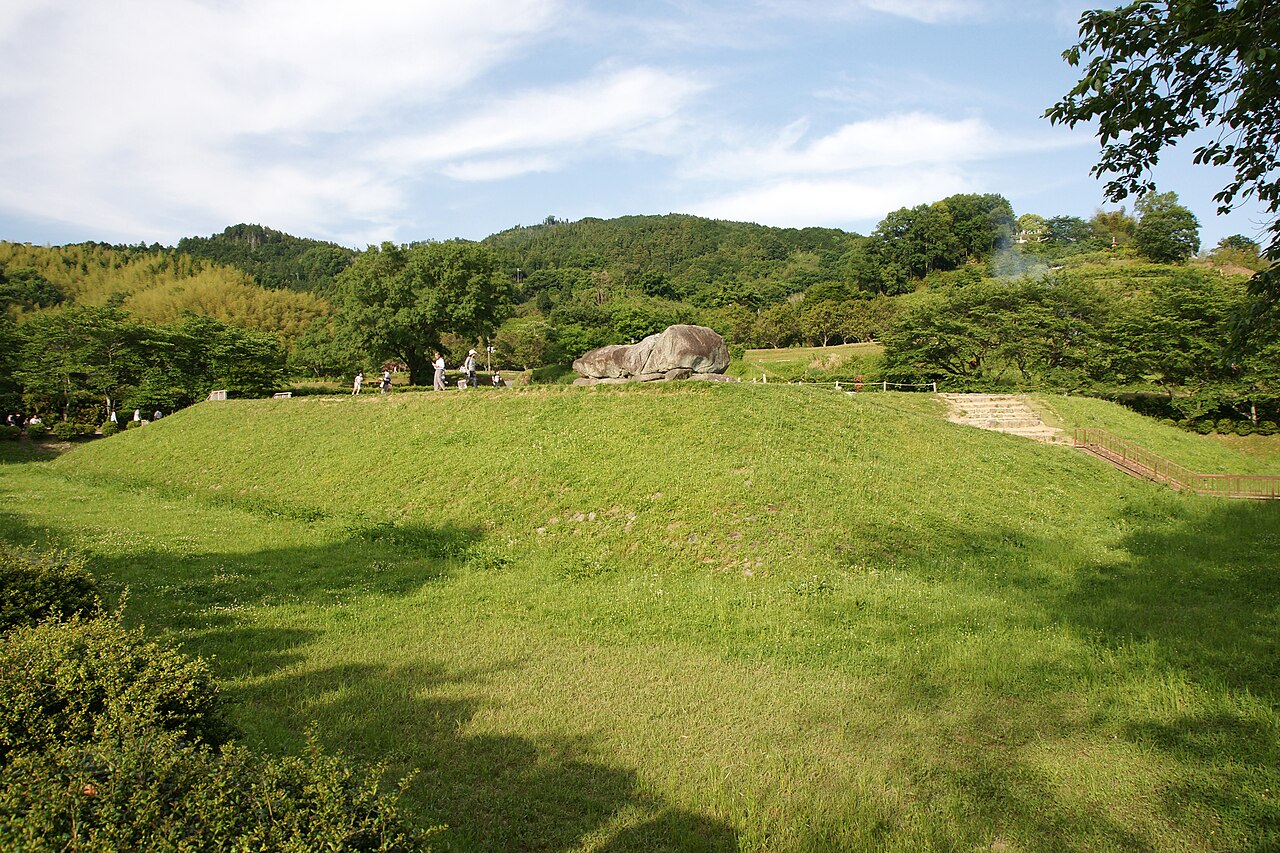
Ishibutai Kofun
3.4 km · straight line
 8-hachiro / CC BY-SA 4.0
Local life · Nara★
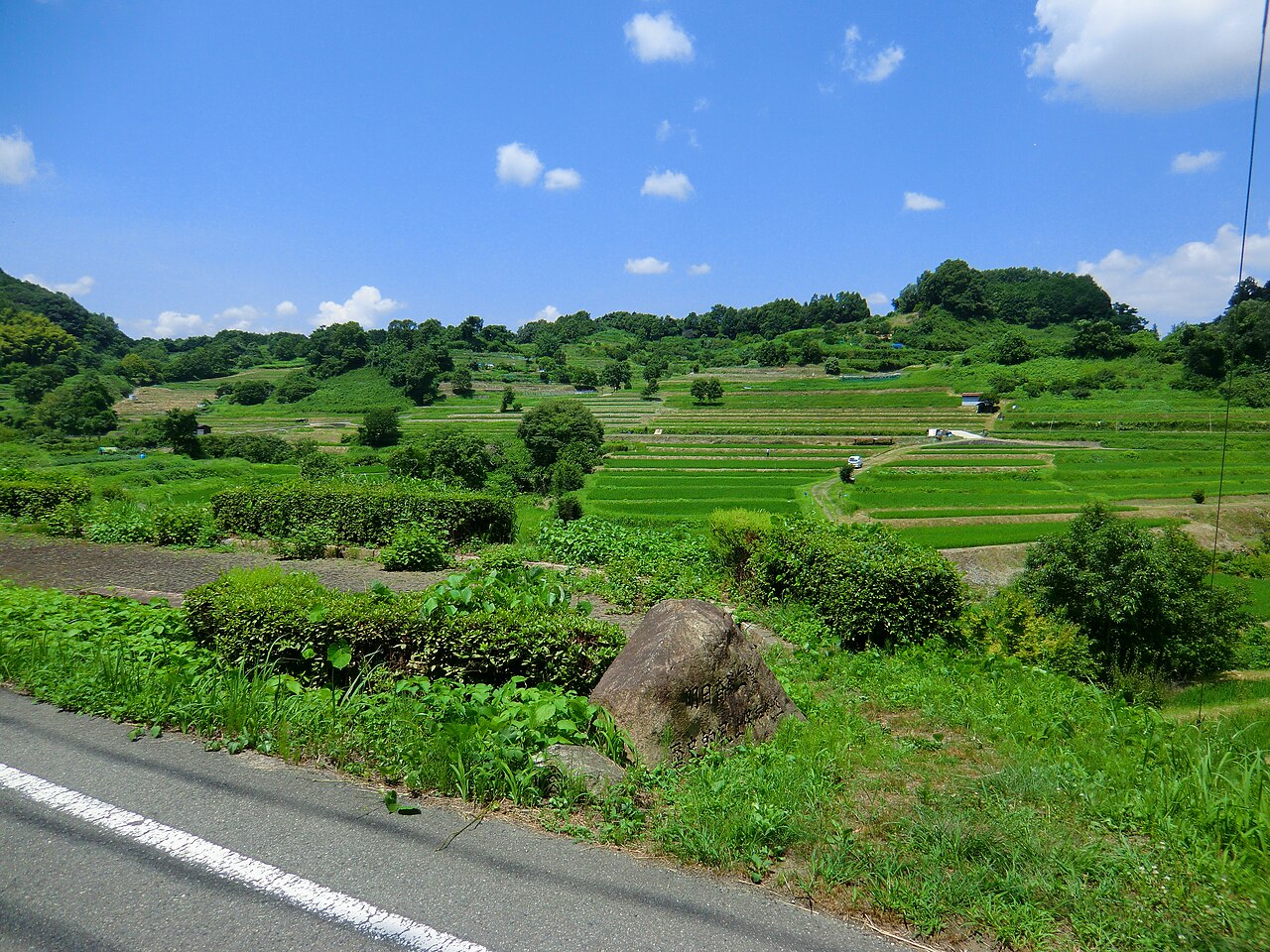
Inabuchi Rice Terraces & Scarecrow Road
4.0 km · straight line
 coniferconifer / CC BY 2.0
Nature · Nara★
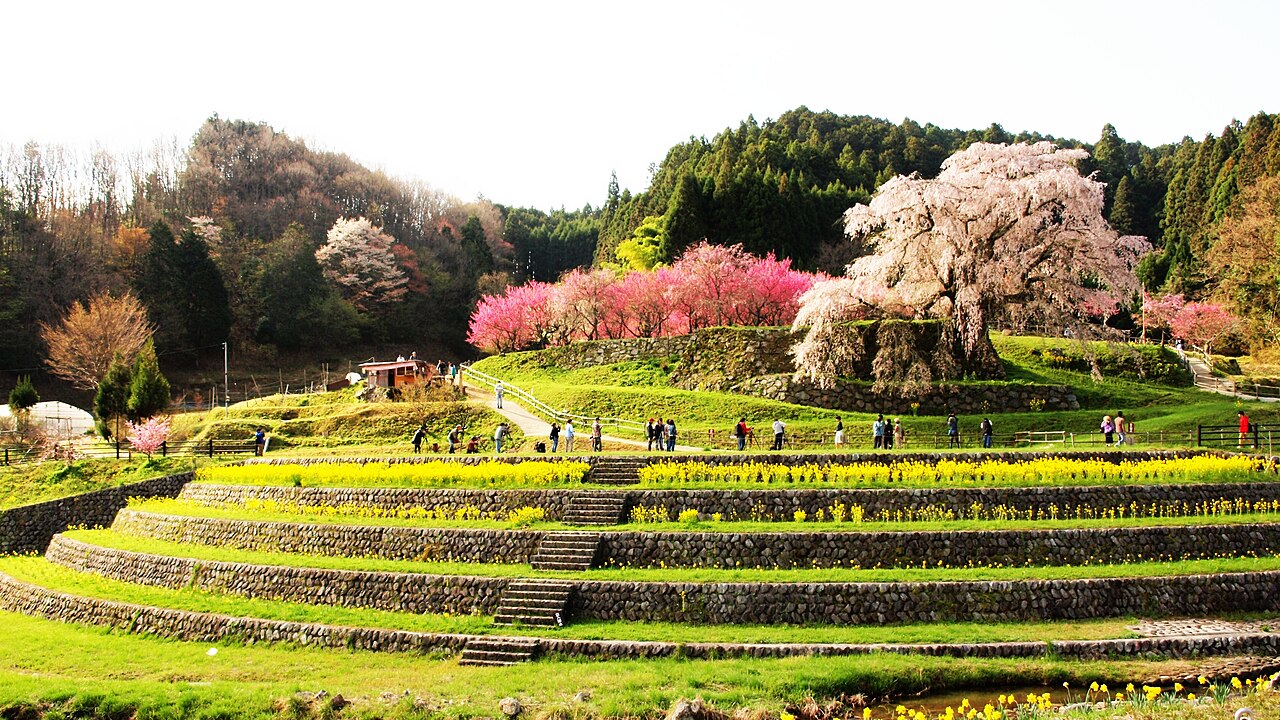
Matabei-zakura
5.1 km · straight line
 Saigen Jiro / CC0
History · Nara★★
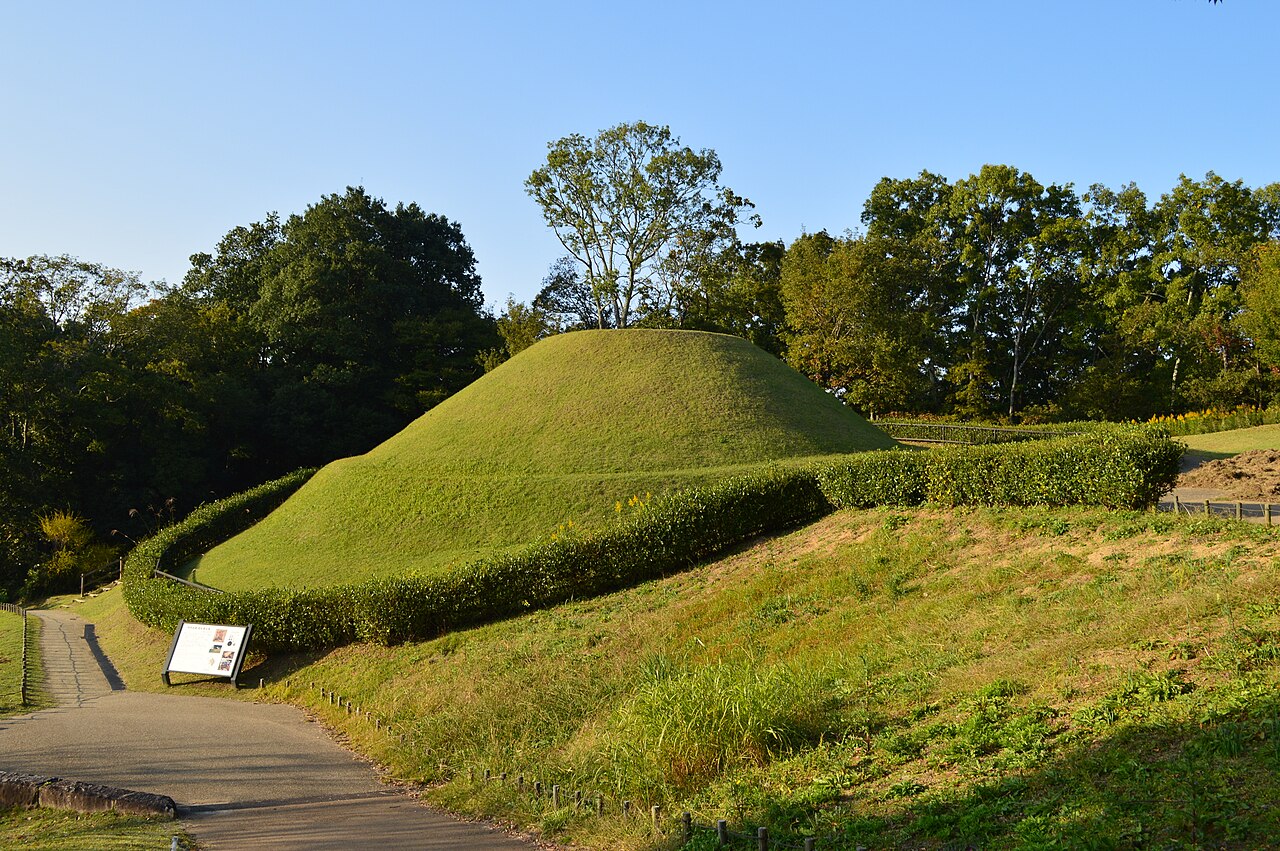
Takamatsuzuka Tomb
5.2 km · straight line
Distances are straight lines on the map, not travel times.