Nara southeast · UdaNo.057★Open in map →
Matabei-zakura
— a lone 300-year weeping cherry
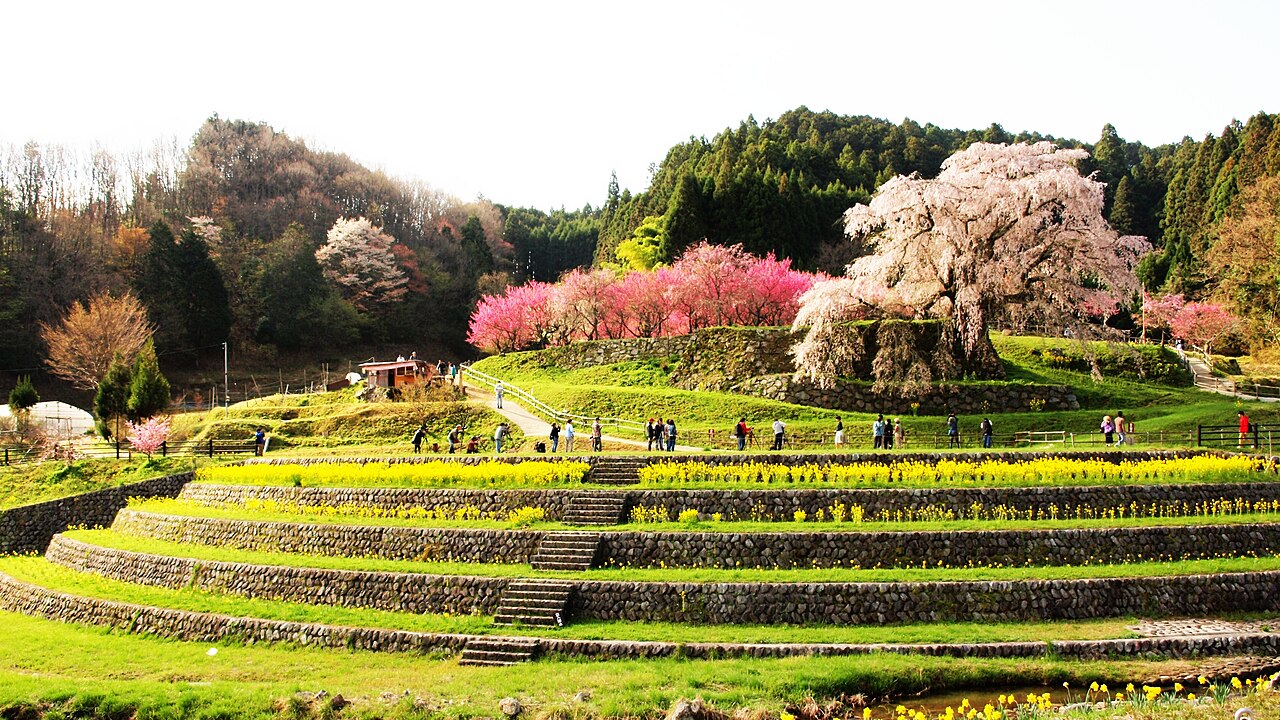
A single weeping cherry, said to be around 300 years old, standing alone on the site of a former samurai family's residence in the Uda hills — its pale-pink branches falling toward the field below.
- FromOsaka-Uehommachi Stn
- ~90 mintrain + bus (hourly) + walk
- Get off atOuda bus stop (last stop)
- From there
- Matabei-zakura
The sweet spot
It is a single tree in a small farming hamlet with no train station nearby, so it never made the big cherry-blossom lists that send crowds to Mount Yoshino. There is little English information about it, and reaching it takes a local bus plus a walk, so most visitors skip it.
Where it is
32 more notes in Nara · open the map →What to look for — in walking order
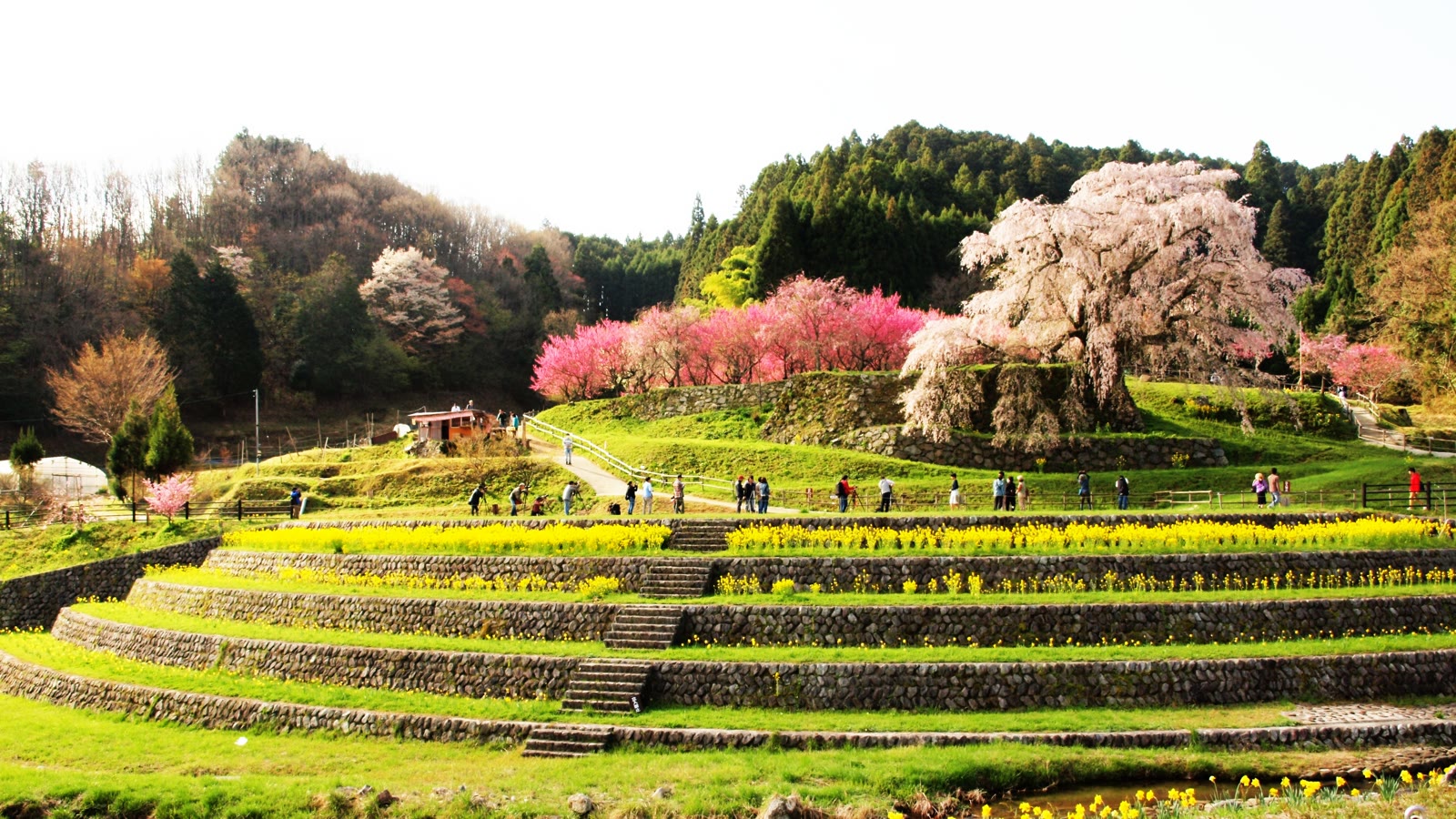
- The tree in the fieldone weeping cherry standing alone on a former estate lot — trunk over 3 m around, branches falling toward the field
- Peach-blossom backdropat peak bloom the pale-pink cherry sits against a bank of blooming peach trees behind it
- Evening illuminationthe tree is lit up after dark during the peak-bloom festival period
- A screen-famous treefeatured in the opening sequence of the 2000 NHK historical drama "Aoi: Tokugawa Sandai"
How to actually get there
- Osaka-Uehommachi Stn → Haibara Stn (Kintetsu Osaka Line express, ~50 min)
- Haibara Stn → Ouda last stop (Nara Kotsu bus bound for Ouda, ~20 min)
- Ouda stop → the cherry tree (on foot, ~20 min through the fields)
- Kintetsu train + Nara Kotsu bus
- Osaka-Uehommachi Stn (central Osaka) →(Kintetsu Osaka Line express, ~50 min, no transfer)→ Haibara Stn →(Nara Kotsu bus bound for Ouda, ~20 min)→ Ouda, the last stop. Total about 90 min including the walk. The bus runs roughly once an hour from early morning, so check the day's timetable before you leave.
- Same route in reverse
- Return the same way: bus from the Ouda stop back to Haibara Stn, then the Kintetsu Osaka Line to Osaka. The bus is only about hourly and the last runs end in the evening, so when you arrive at the Ouda stop, note the return times posted there before walking to the tree.
About the place
Matabei-zakura, also called Hongo no Takizakura, grows on what was once the Goto family estate, which is why it stands alone rather than in a grove. The tree reaches roughly 13 meters, with a trunk more than 3 meters around. At full bloom the pink canopy rises against a backdrop of blooming peach trees and the greening hillside — a combination that draws visitors and photographers each spring. The tree is registered as a protected tree of Nara Prefecture. During the peak-bloom festival the tree is lit up in the evening.
How to enjoy it
Aim for late March to early April, when the cherry and the peach trees behind it bloom together. The festival draws crowds at full bloom — morning visits give a calmer, well-lit view of the tree and the field. From the Ouda bus stop (last stop), the tree is about 20 minutes on foot through the fields, following the signs.
Background & history
The tree takes its name from Goto Matabei (Goto Mototsugu), a warrior of the Sengoku period known for the Siege of Osaka. By local tradition he survived the fall of the Toyotomi clan and settled quietly in the Ouda area, and the cherry stands on the site linked to his family's residence. The tree gained wider fame after appearing in the opening sequence of the 2000 NHK historical drama serial "Aoi: Tokugawa Sandai."
Before you go
- Cash
- Nara Kotsu buses take transport IC cards as well as cash. During the peak-bloom festival a paid parking lot (around 500 yen) opens for cars.
- Good to know
- The blossom lasts only about two weeks, from late March to early April; outside that window it is a quiet farm lane with a leafy or bare tree.
- Another way
- If the bus wait is long, sharing a taxi from Haibara Station is a faster alternative for the last leg.
- After you get off
- From the Ouda last stop, follow the signs along a paved lane through the fields; the tree is about 20 minutes on foot.
Nearby notes
 Saigen Jiro / CC0
History · Nara★
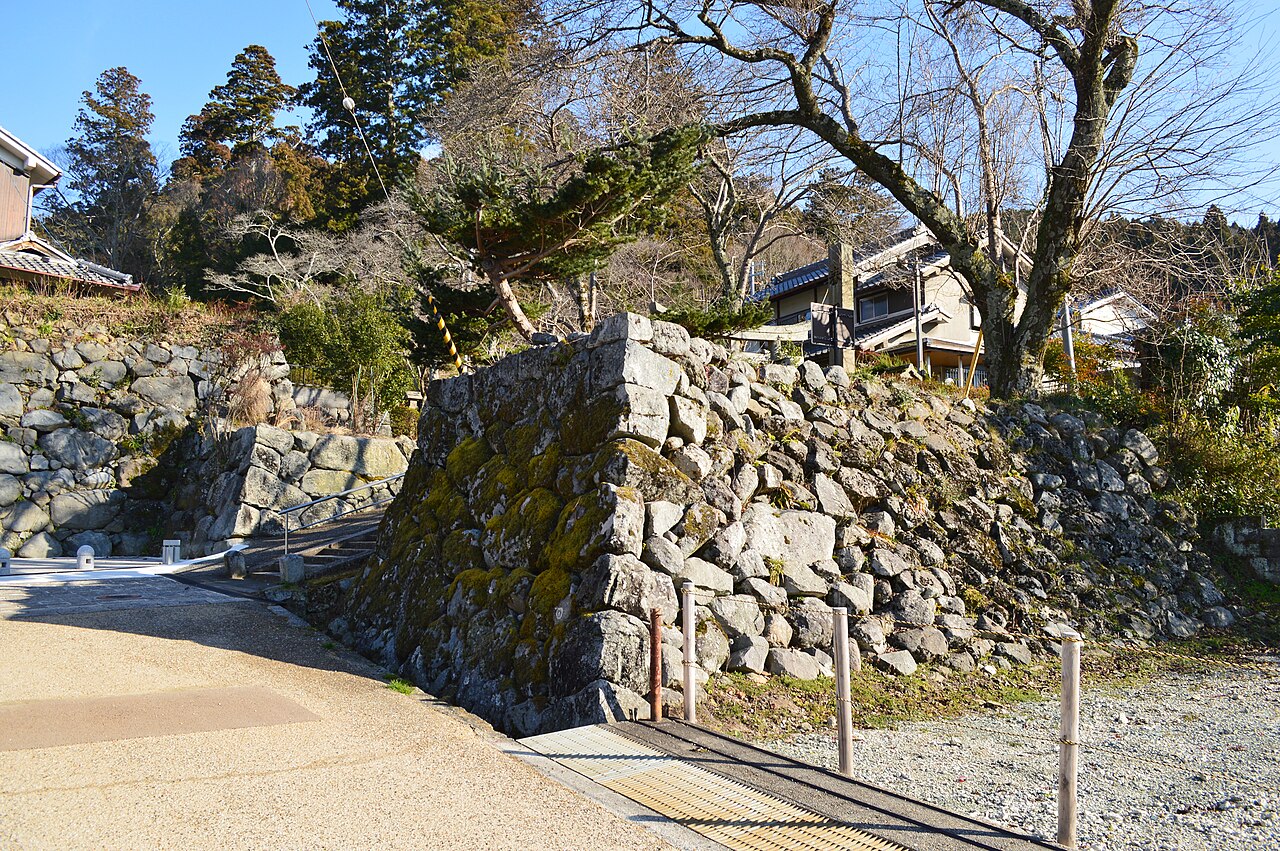
Uda-Matsuyama
1.5 km · straight line
 Maechan0360 / CC BY-SA 3.0
History · Nara★★
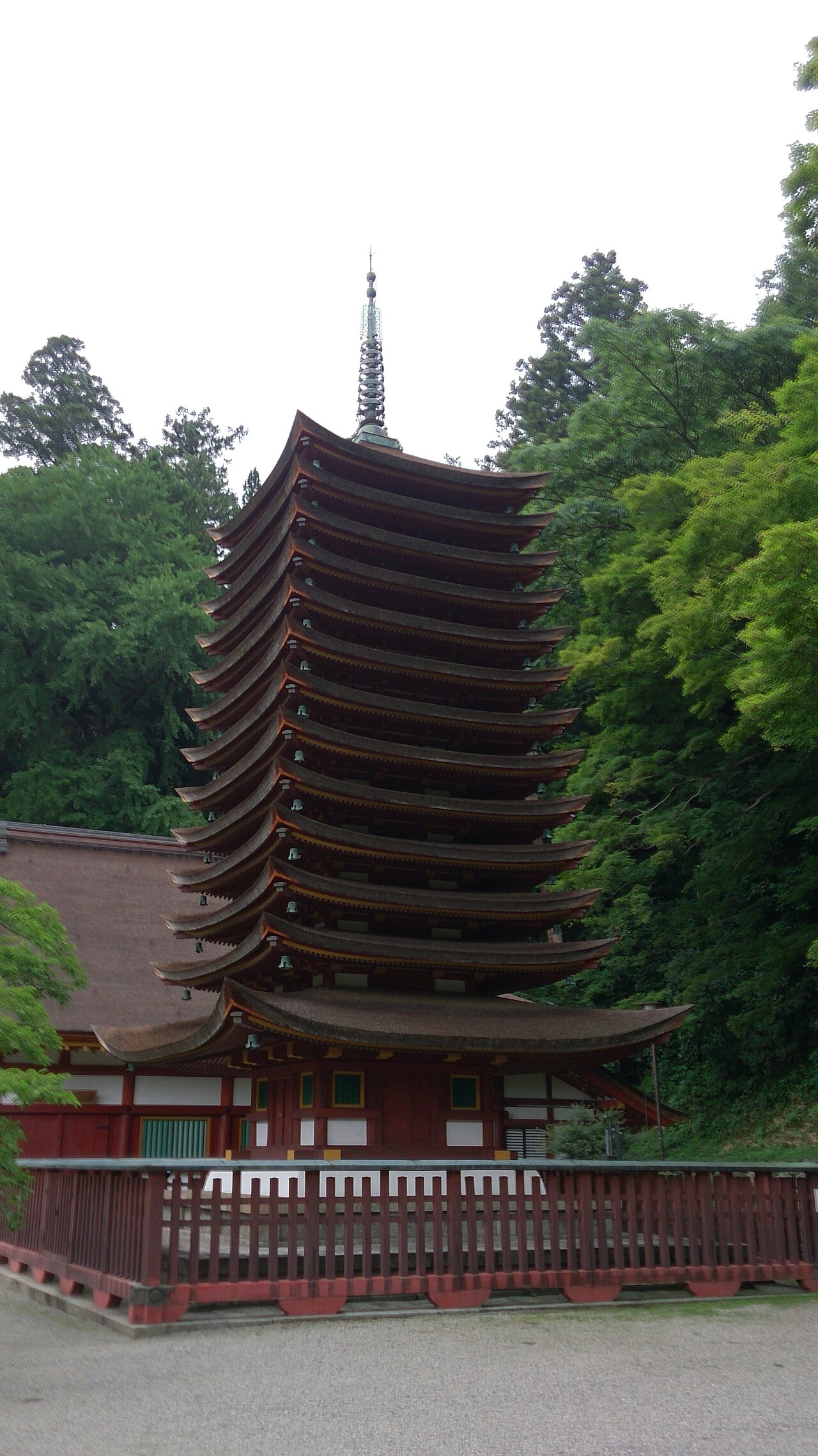
Tanzan Shrine
5.1 km · straight line
 Tawashi2006 / CC BY-SA 3.0
History · Nara★★★
Hasedera Temple
6.8 km · straight line
 663highland / CC BY 2.5
History · Nara★★
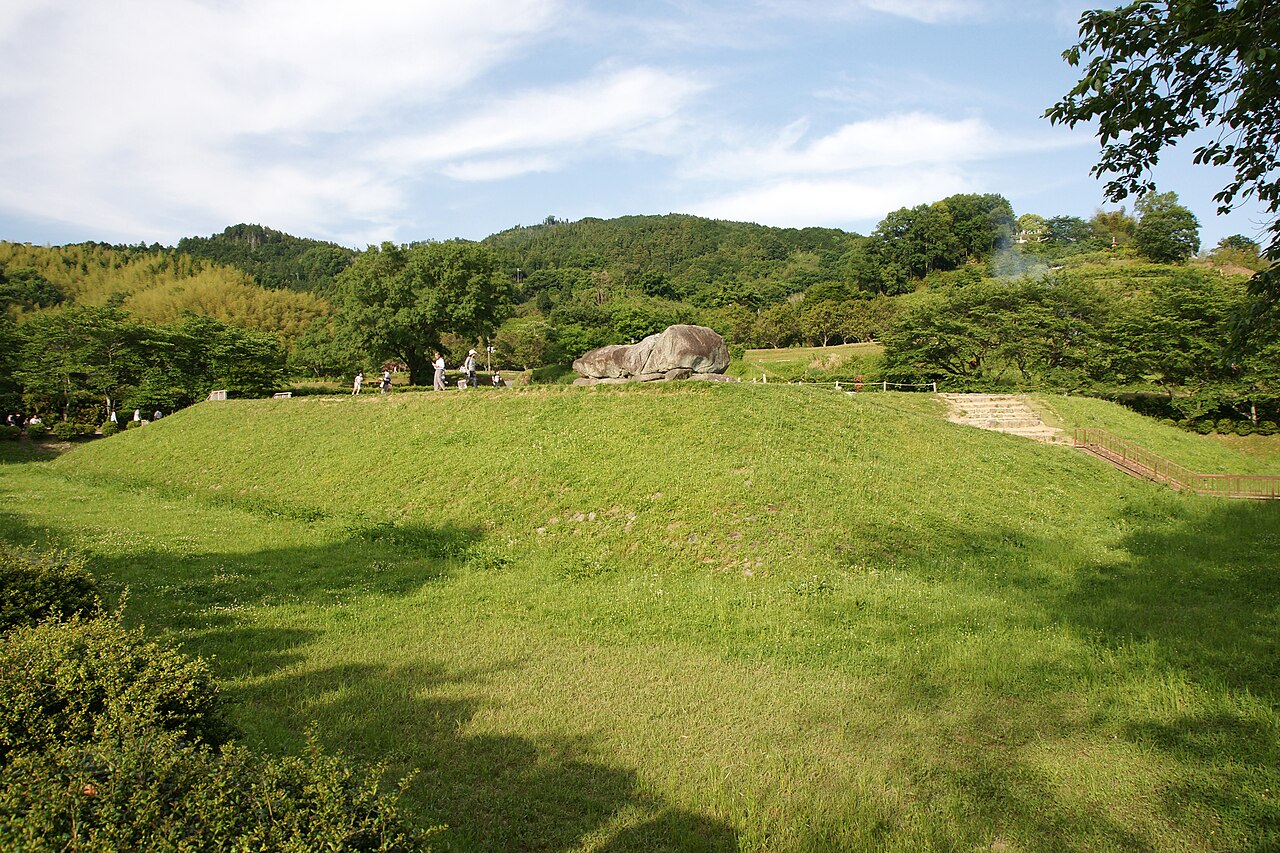
Ishibutai Kofun
8.4 km · straight line
Distances are straight lines on the map, not travel times.