Ikaruga · HokijiNo.060★Open in map →
Hokiji Temple
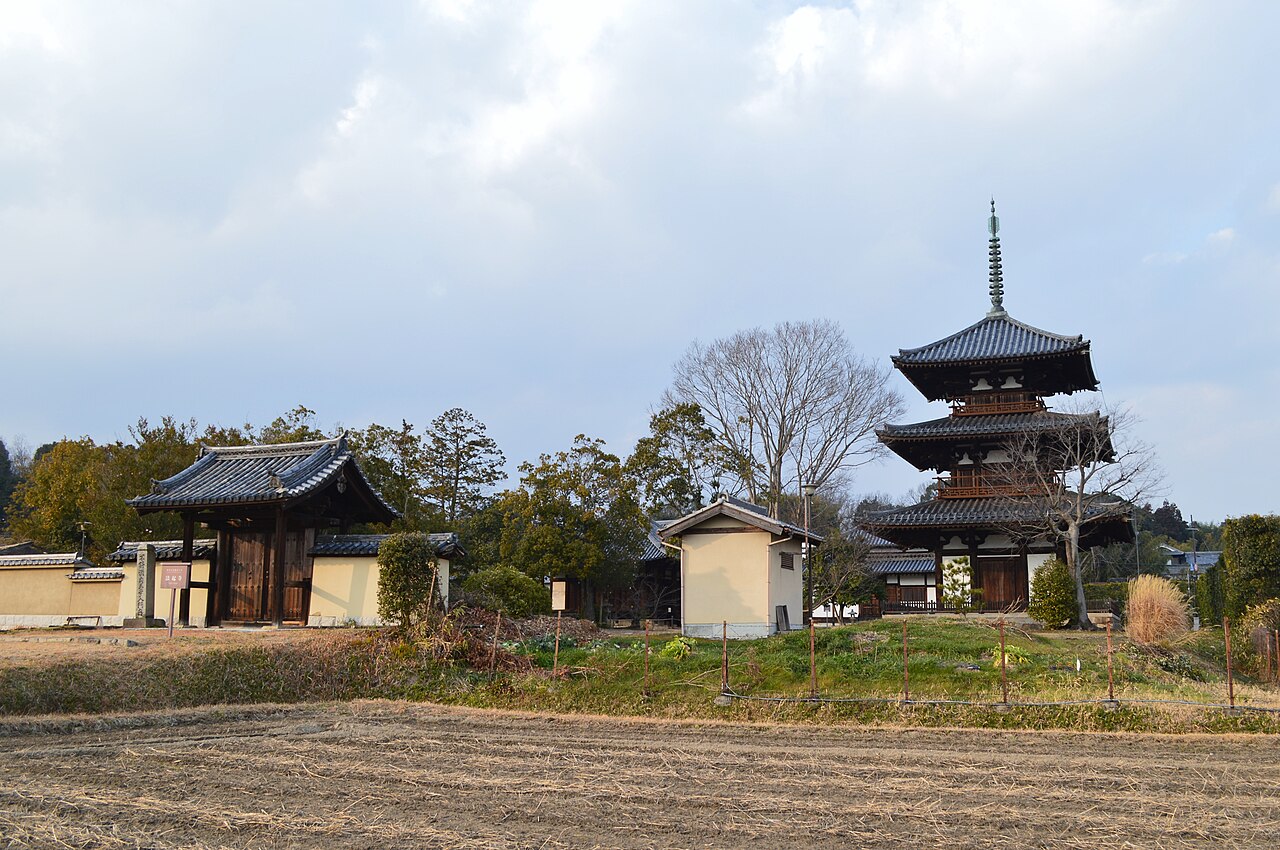
Japan's oldest three-storied pagoda, completed in 706, stands in open farmland a back-lane walk from the famous Horyuji Temple — part of the same UNESCO World Heritage site, surrounded by cosmos flowers each October.
- FromKyoto Stn
- ~100 mintrain + bus (infrequent)
- Get off atHokiji-mae bus stop
- On foot
- Hokiji Temple
The sweet spot
Almost all visitors to this area see the famous Horyuji Temple and then leave. Hokiji sits about a 40-minute walk away with only an infrequent local bus, there is little English information about it, and it is off the main tour route, so it stays calm even in cosmos season.
Where it is
32 more notes in Nara · open the map →What to look for — in walking order
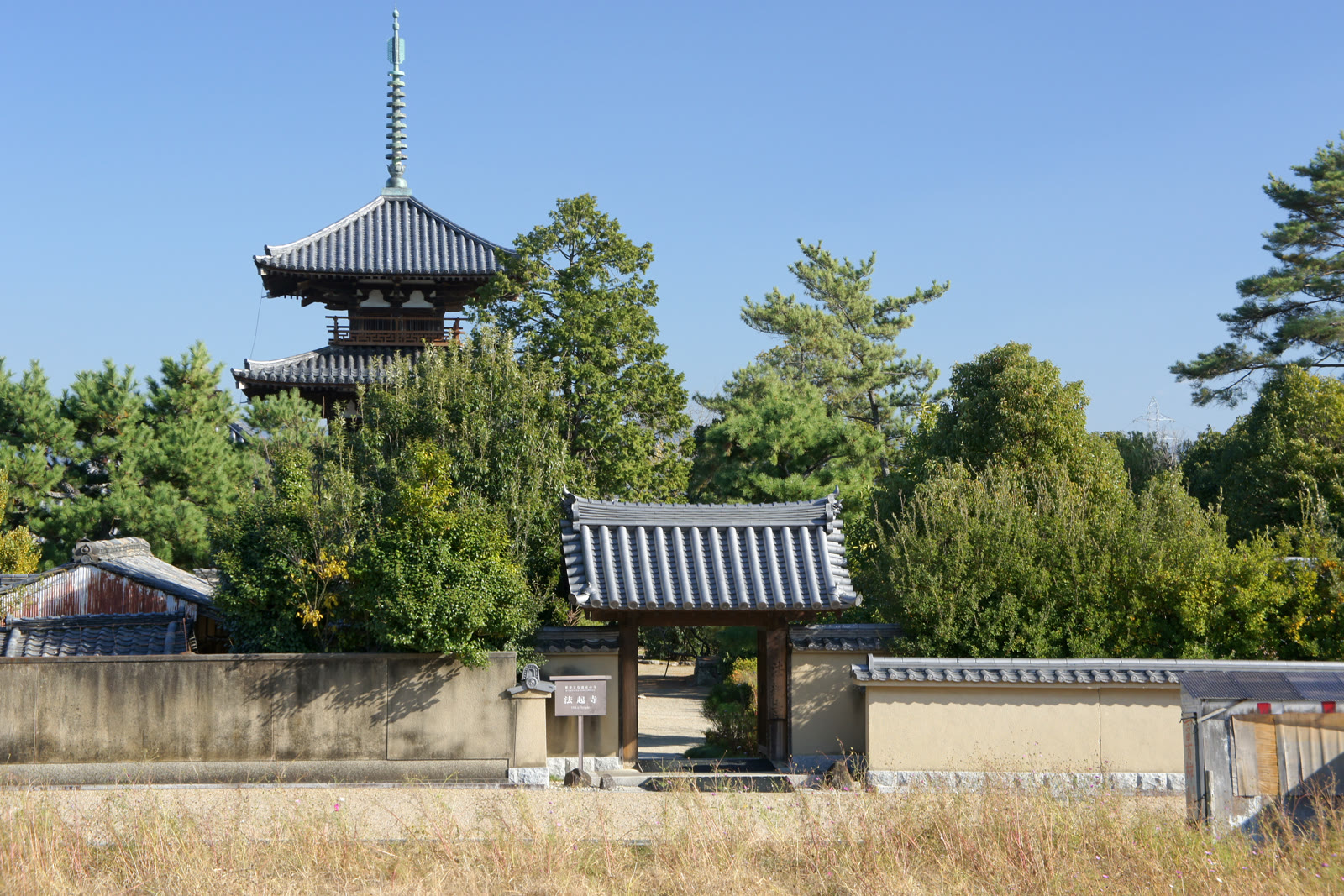
- West gate entryabout a 1-minute walk from the Hokiji-mae bus stop; the cosmos fields lie just south of the temple
- The 706 pagodaJapan's oldest three-storied pagoda, about 24 meters tall and a designated National Treasure
- October cosmos fieldscosmos planted by local farmers around the temple, best from mid-October to early November
- World Heritage listingpart of the UNESCO site 'Buddhist Monuments in the Horyu-ji Area'
How to actually get there
- Kyoto Stn → Nara Stn (JR Nara Line rapid, ~47 min)
- Nara Stn → Horyuji Stn (JR Yamatoji Line, ~13 min)
- Horyuji Stn → Hokiji (on foot ~40 min, or the infrequent Ikaruga Kaiyu Line loop bus to Hokiji-mae)
- JR to Horyuji Stn, then walk or the loop bus
- Kyoto Stn →(JR Nara Line rapid to Nara Stn, ~47 min)→ Nara Stn →(JR Yamatoji Line, ~13 min)→ Horyuji Stn →(on foot, ~40 min northeast, flat) OR the Nara Kotsu 'Ikaruga Kaiyu Line' loop bus to the Hokiji-mae stop. Total roughly ~100 min if you walk the last part. The loop bus runs only about 8 times a day, so check the day's timetable before you leave.
- Same route in reverse
- Return by walking back to Horyuji Stn, or by the same loop bus. The loop bus finishes in the late afternoon and the temple closes at 17:00 (16:30 in winter), so when you arrive, check the return bus times at the stop before you set off to see the fields.
About the place
Hokiji sits in the quiet Okamoto district of Ikaruga, a rural town in Nara, a short walk from the far more visited Horyuji Temple. Its three-storied pagoda, completed in 706 during the Asuka period, is documented as the oldest surviving three-storied pagoda in Japan and the only structure remaining from the temple's original founding. At roughly 24 meters it rises from working farmland with little else built up around it — a National Treasure within the UNESCO World Heritage site 'Buddhist Monuments in the Horyu-ji Area.' Each autumn local farmers plant cosmos in the surrounding fields, and the pink-and-white blooms frame the ancient tower against the rice country.
How to enjoy it
Come from mid-October to early November for the cosmos in full bloom — the pagoda rising above the field of pink-and-white flowers is the signature view. Temple admission is around 500 yen. The cosmos is private farmland, so view it from the lanes rather than stepping into the rows. Horyuji Station to Hokiji is about 40 minutes on foot (flat); the loop bus runs about 8 times a day.
Background & history
Hokiji is traditionally said to have been founded in 638 by Prince Yamashiro-no-oe, a son of Prince Shotoku, who converted his father's Okamoto palace into a temple as the prince had wished. The pagoda that survives today was completed in 706, modeled — according to architectural historians — on the five-storied pagoda at nearby Horyuji. After a period of decline the temple came under Horyuji's administration, and the pagoda was repaired in the late 17th century. A full disassembly-and-rebuild restoration was completed in 1975.
Before you go
- Cash
- Temple admission (about 500 yen for adults) and rural buses are often cash only, so carry some coins and small notes.
- Good to know
- The cosmos field is private farmland — view it from the path and do not step into the flower rows.
- Another way
- If the bus times do not fit, the walk from Horyuji Stn is flat and takes about 40 minutes; renting a bicycle near Horyuji is another option.
- After you get off
- From the Hokiji-mae bus stop, the temple's west gate is about a 1-minute walk, and the cosmos fields lie just south of the temple.
Nearby notes
 そらみみ / CC BY-SA 3.0
History · Nara★★★
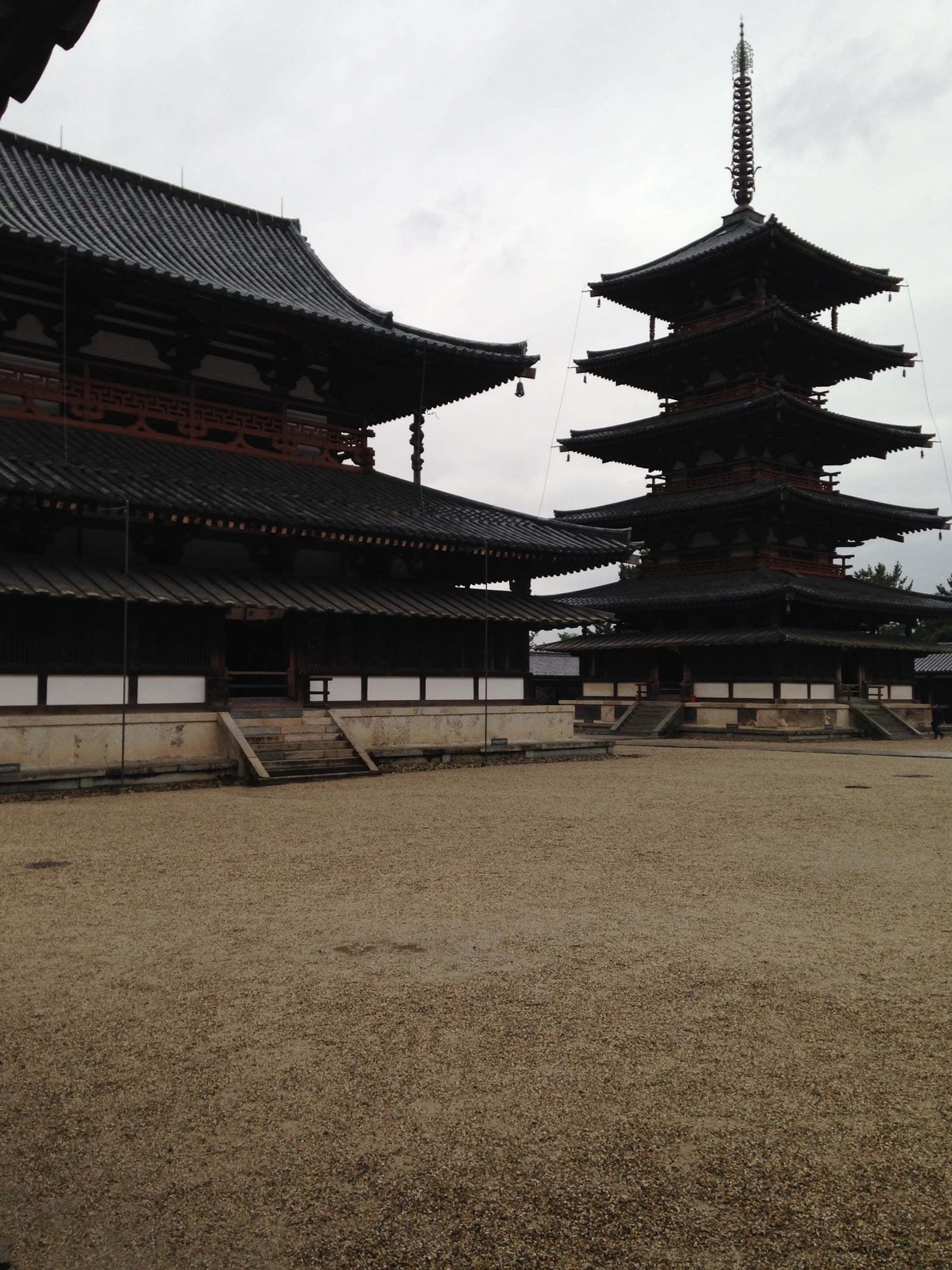
Horyu-ji
1.4 km · straight line
 Tokumeigakarinoaoshima / CC BY-SA 4.0
History · Nara★★★
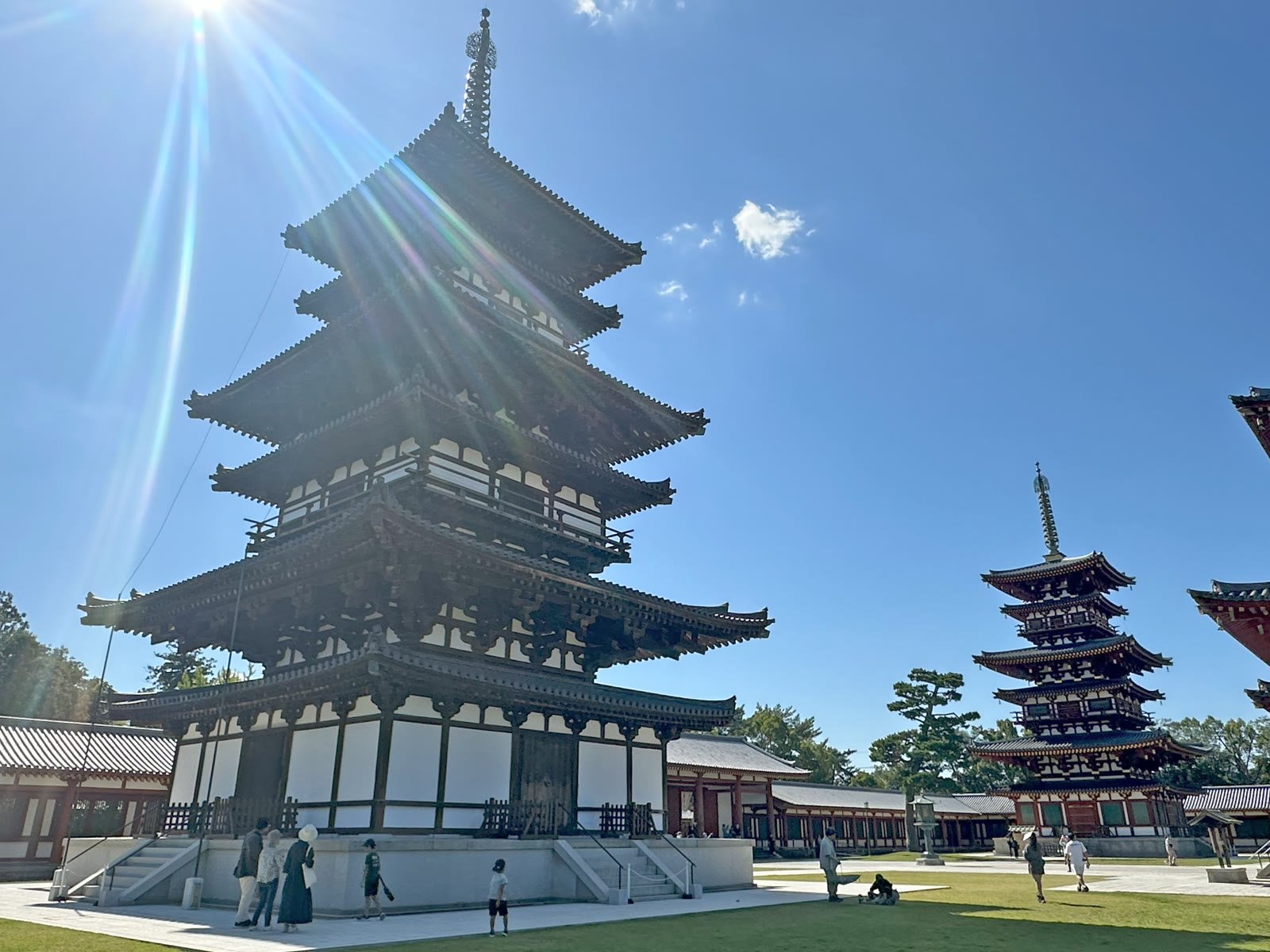
Yakushi-ji Temple
6.2 km · straight line
 663highland / CC BY 2.5
History · Nara★★★
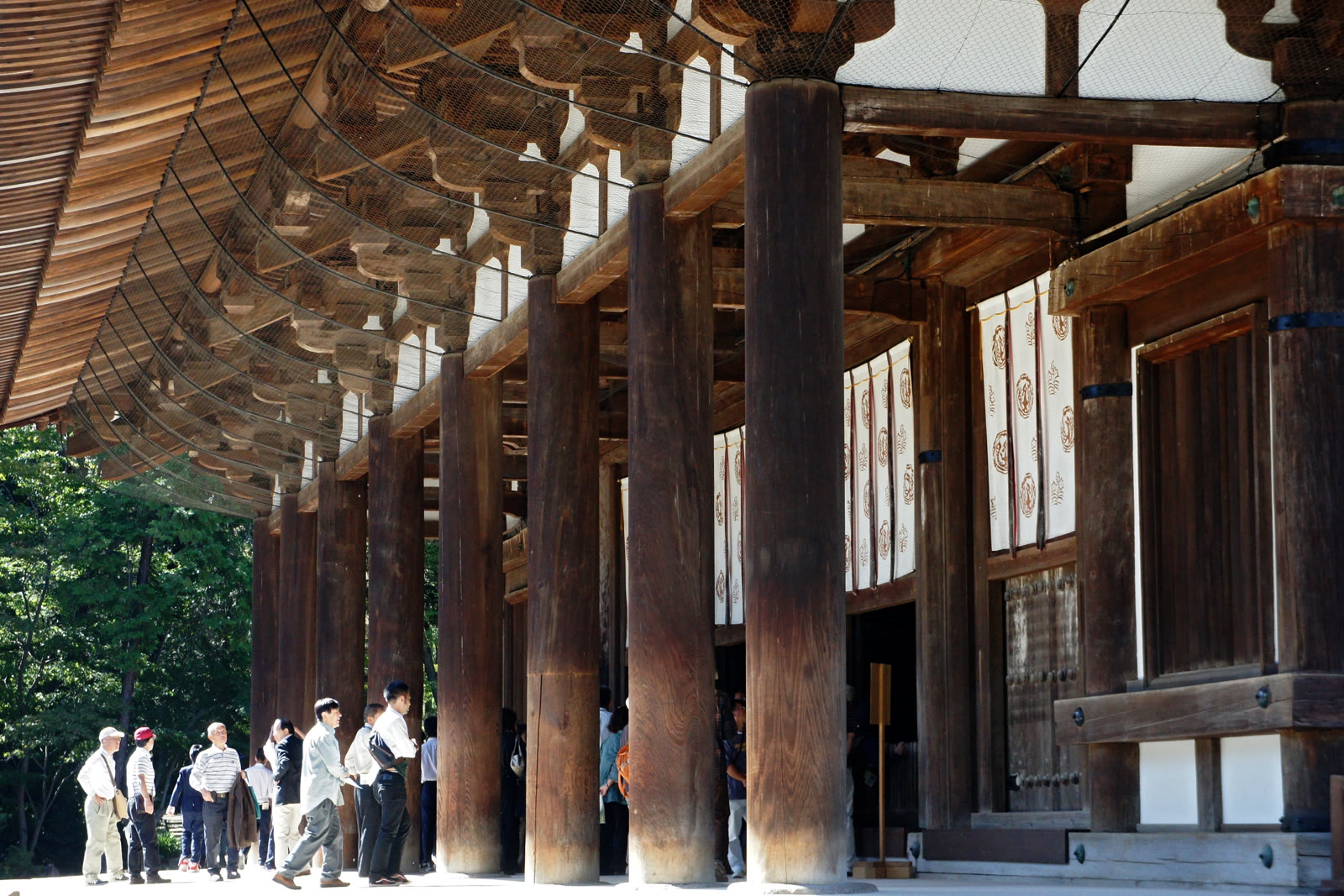
Tōshōdai-ji Temple
6.9 km · straight line
 Sakaori / CC BY-SA 3.0
History · Nara★★★
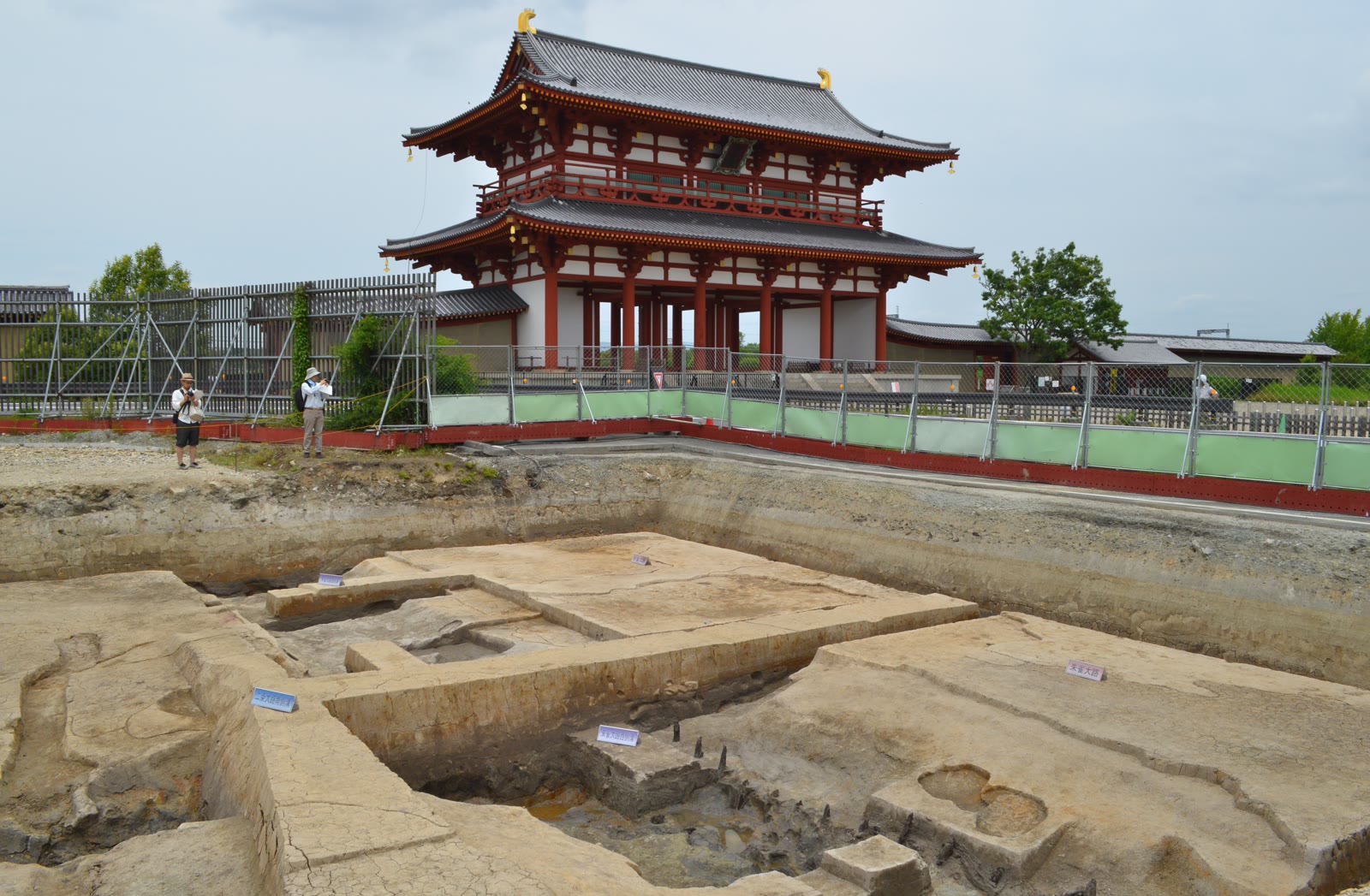
Heijo Palace Site
8.9 km · straight line
Distances are straight lines on the map, not travel times.