Okukawachi · KawachinaganoNo.035★Open in map →
Kanshin-ji
— the mountain temple of Kusunoki Masashige
A Shingon Buddhist temple in the wooded hills of Kawachinagano, Osaka, holding a National Treasure Kannon statue and deep ties to the 14th-century samurai Kusunoki Masashige.
- FromNamba (Osaka)
- ~55 minbus (about hourly)
- Get off atKanshinji bus stop
- On foot
- Kanshin-ji
The sweet spot
It sits at the end of a local bus ride into the hills beyond Kawachinagano, and there is little English travel information about it. Most visitors stay on the train straight to Mt. Koya and never stop here.
Where it is
40 more notes in Osaka · open the map →What to look for — in walking order
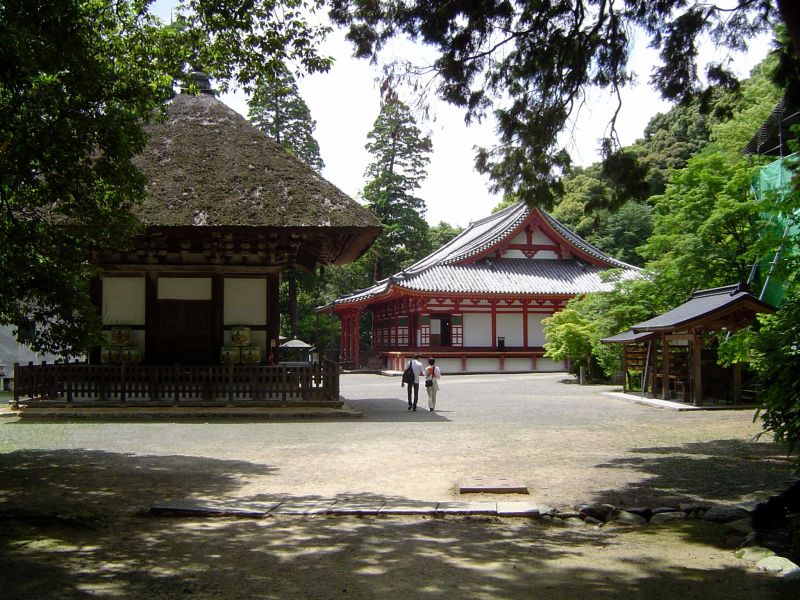
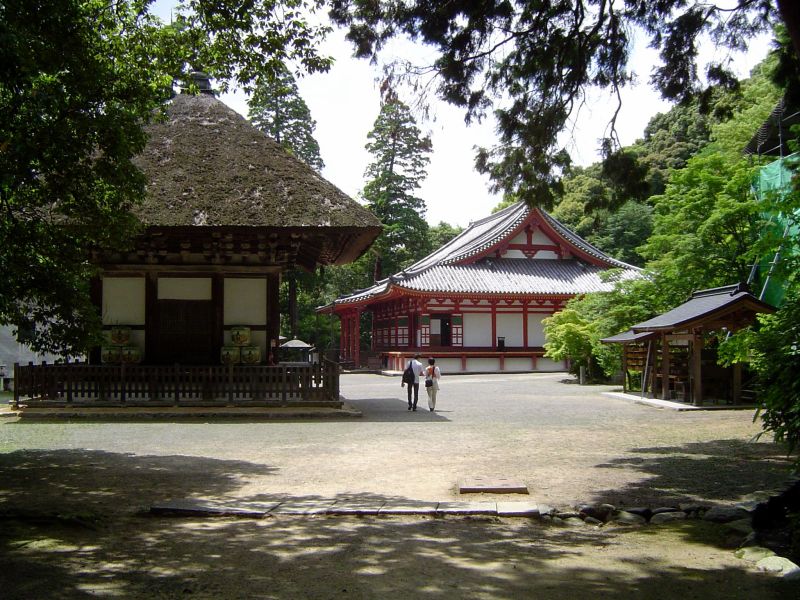
- Kondo (main hall)a National Treasure hall blending Japanese, Chinese and Indian Buddhist architectural styles
- Nyoirin Kannon statuea National Treasure wooden Kannon, shown publicly only on April 17 and 18 each year
- Kusunoki head mound (kubizuka)the burial site of the general's head, returned here after the 1336 Battle of Minatogawa
- The unfinished pagodaa three-storey tower begun by Kusunoki and left incomplete after his death
How to actually get there
- 1. Nankai Namba Station → Kawachinagano Station (Nankai Koya Line, express, ~30 min)
- 2. Kawachinagano Station stand 3 → Kanshinji stop (Nankai bus toward Kobukidai / Mt. Kongo Ropeway, ~15 min)
- 3. Kanshinji stop → temple gate (walk ~200-300 m up the road, ~5 min)
- Nankai Koya Line + Nankai bus
- Nankai Namba Station →(Nankai Koya Line, express, ~30 min; local ~45 min)→ Kawachinagano Station →(Nankai bus from stand 3, toward Kobukidai or Mt. Kongo Ropeway, ~15 min)→ get off at the Kanshinji stop → ~200-300 m walk up the road to the gate. Total about 50-55 min from Namba. Buses run only about once an hour, so check the day's timetable before you leave.
- Return by the same bus and train
- The same bus takes you back to Kawachinagano Station, then the Nankai Koya Line to Namba. Buses thin out later in the day, so when you arrive, note the return times posted at the stop.
About the place
Kanshin-ji sits in the forested hills of Kawachinagano, where the borders of Osaka, Nara and Wakayama meet. The temple belongs to the Koyasan branch of Shingon Buddhism and holds two National Treasures: a wooden statue of Nyoirin Kannon (shown publicly only on April 17 and 18 each year), and the Kondo main hall itself, admired for its blend of Japanese, Chinese and Indian Buddhist architectural styles. The temple is best known for its link to Kusunoki Masashige, a 14th-century samurai commander said to have studied here as a boy. The grounds keep both a pagoda he left unfinished and the burial mound where his head was interred.
How to enjoy it
Reach the temple by Nankai bus from Kawachinagano Station and allow time to walk the hillside grounds. Come on April 17 or 18 to see the Kannon statue on its two public days, or visit during plum, cherry-blossom or autumn-leaf season — Kanshin-ji is counted among Kansai's noted seasonal temples. Admission is about 300 yen (more on Kannon viewing days).
Background & history
Temple tradition dates the founding to 701, attributed to the mountain ascetic En no Gyoja. The monk Kukai (Kobo Daishi) is said to have restored it in the early 9th century and given it the name Kanshin-ji. Kusunoki Masashige, loyal to Emperor Go-Daigo, studied at the temple in his youth. After his defeat and death at the Battle of Minatogawa in 1336, his head was returned here and buried in a kubizuka (head mound). The three-storey pagoda he had begun was never completed after his death.
Before you go
- Cash
- Entry is a small fee (about ¥300; higher on the two Kannon-viewing days). The bus is best paid with an IC card or cash — carry coins in case.
- Good to know
- A working temple, open about 9:00-17:00. Autumn foliage is a beautiful, quieter time to come.
- Another way
- If the bus timing does not work, a taxi from Kawachinagano Station reaches the temple in roughly 15 minutes.
- After you get off
- From the Kanshinji bus stop it is a short walk of about 200-300 m up a paved road to the temple gate.
Nearby notes
 Penpen / Public domain
History · Osaka★
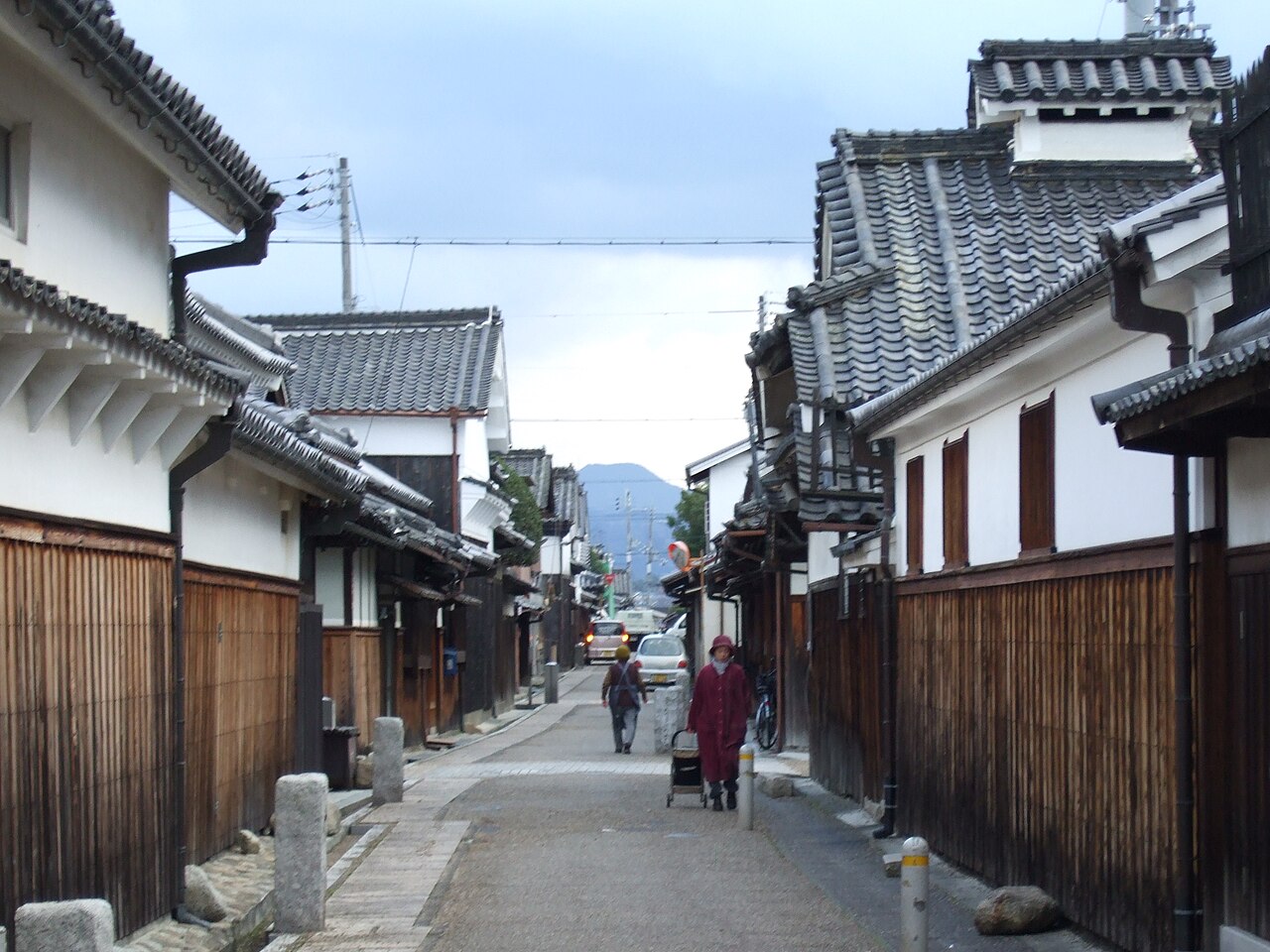
Tondabayashi Jinaimachi
7.0 km · straight line
 KENPEI / CC BY-SA 3.0
Nature · Osaka★
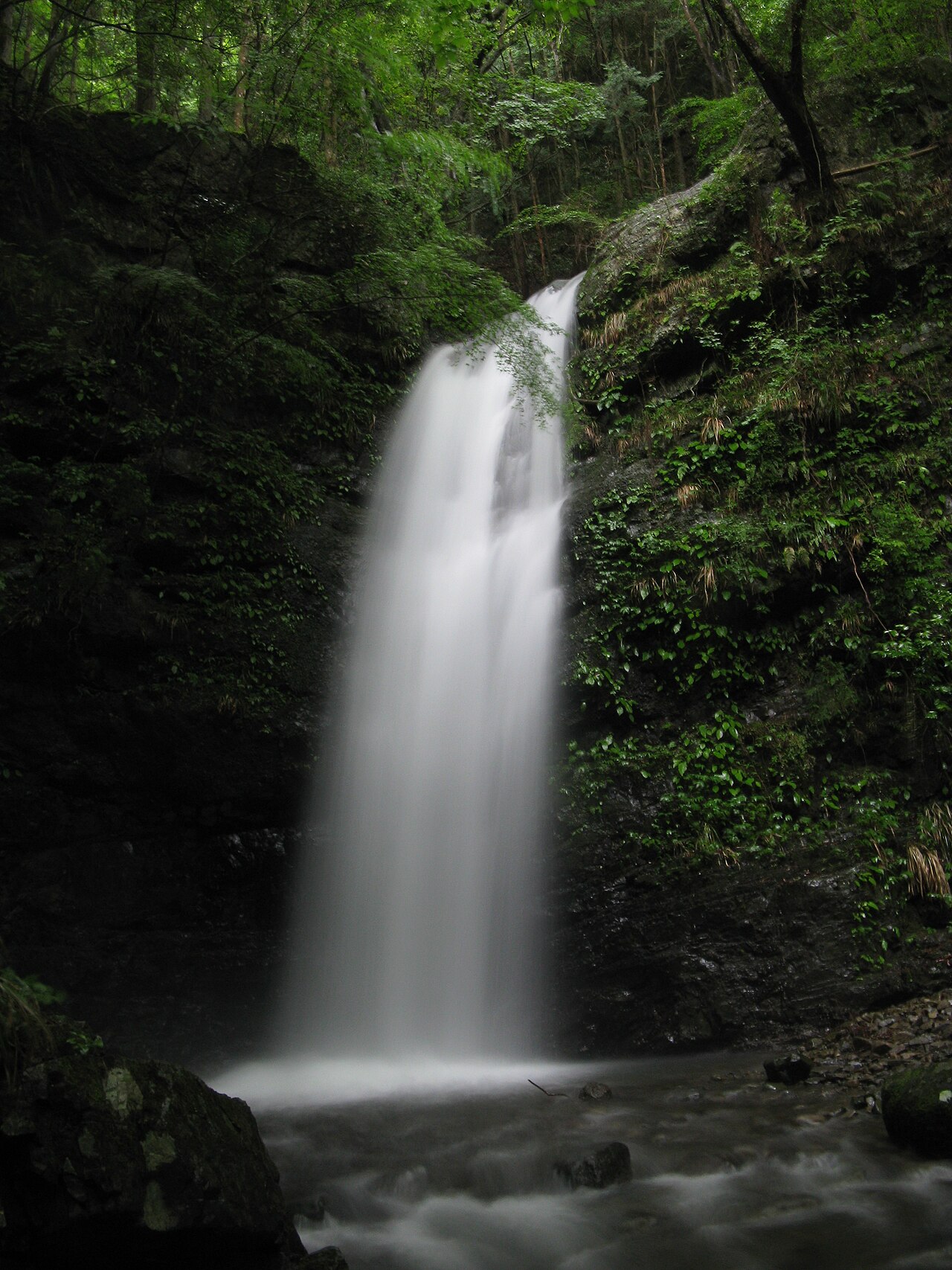
Takihata 48 Waterfalls
10.8 km · straight line
 Kyu3a / CC BY-SA 4.0
Food · Nara★★★
Kakinoha-zushi
13.1 km · straight line
 Nankou Oronain (as36… / CC BY-SA 3.0
Nature · Osaka★
Ushitaki Gorge & Daiitoku-ji
15.6 km · straight line
Distances are straight lines on the map, not travel times.