Wakayama · KoyasanNo.277★Open in map →
Danjo Garan and Kongobuji
— the ceremonial core of Mount Koya
The founding precinct of Mount Koya, laid out by Kukai as the ground plan of Shingon esoteric Buddhism, together with the head temple that governs the mountain. Both are components of the UNESCO World Heritage 'Sacred Sites and Pilgrimage Routes in the Kii Mountain Range'.
- FromOsaka Namba Stn
- ~2 hrNankai + cable car + bus
- Get off atKongobuji-mae bus stop (Nankai Rinkan Bus)
- From there
- Danjo Garan and Kongobuji
The sweet spot
Almost every foreign itinerary to Koyasan is built around Okunoin, and the schedule of the last cable car down means the Garan gets a fifteen-minute stop or none at all. Yet this is the precinct Kukai actually designed, its grounds are open and free to walk at any hour, and the two sites sit ten minutes apart on the same bus route.
Where it is
21 more notes in Wakayama · open the map →What to look for
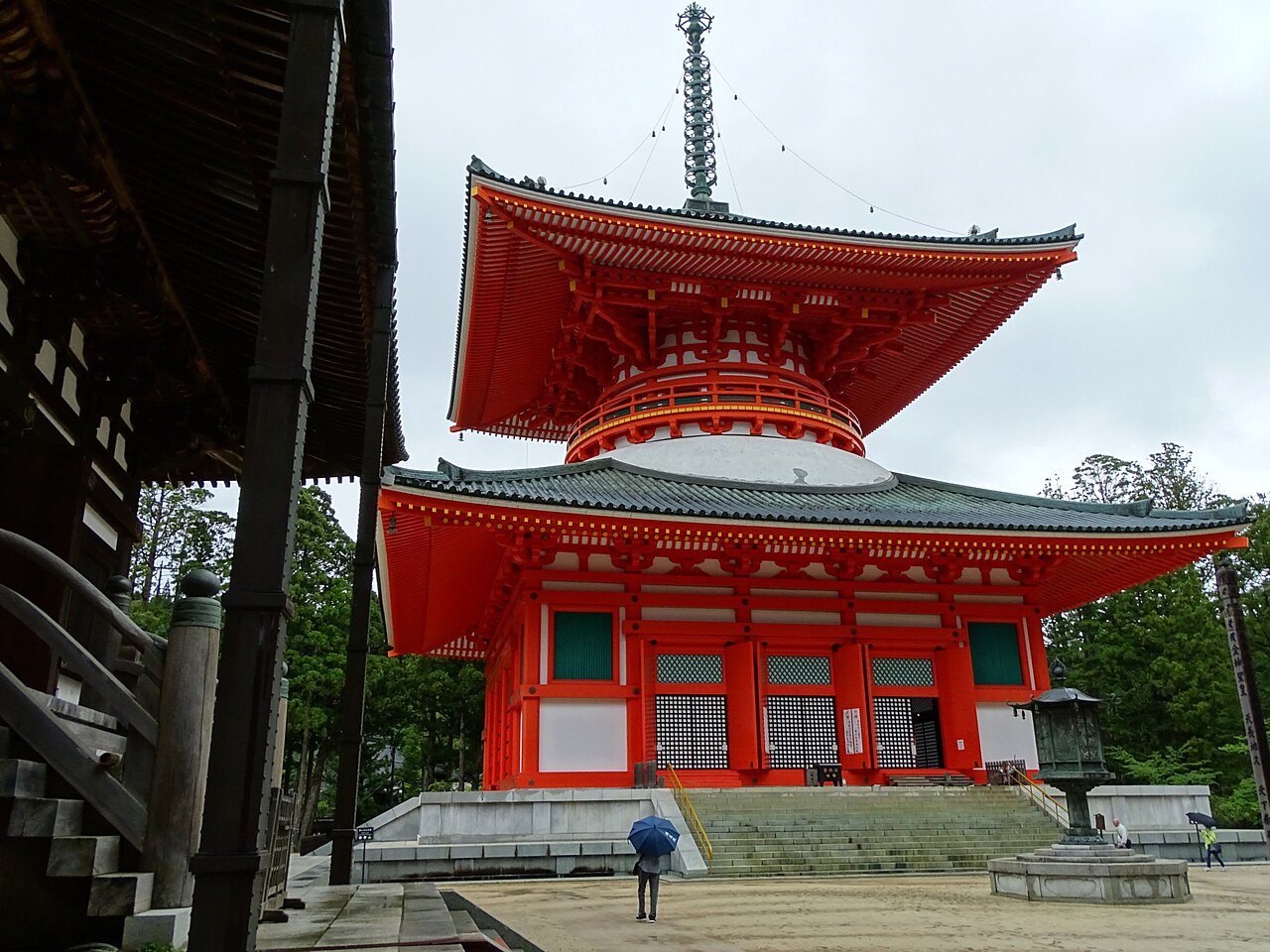
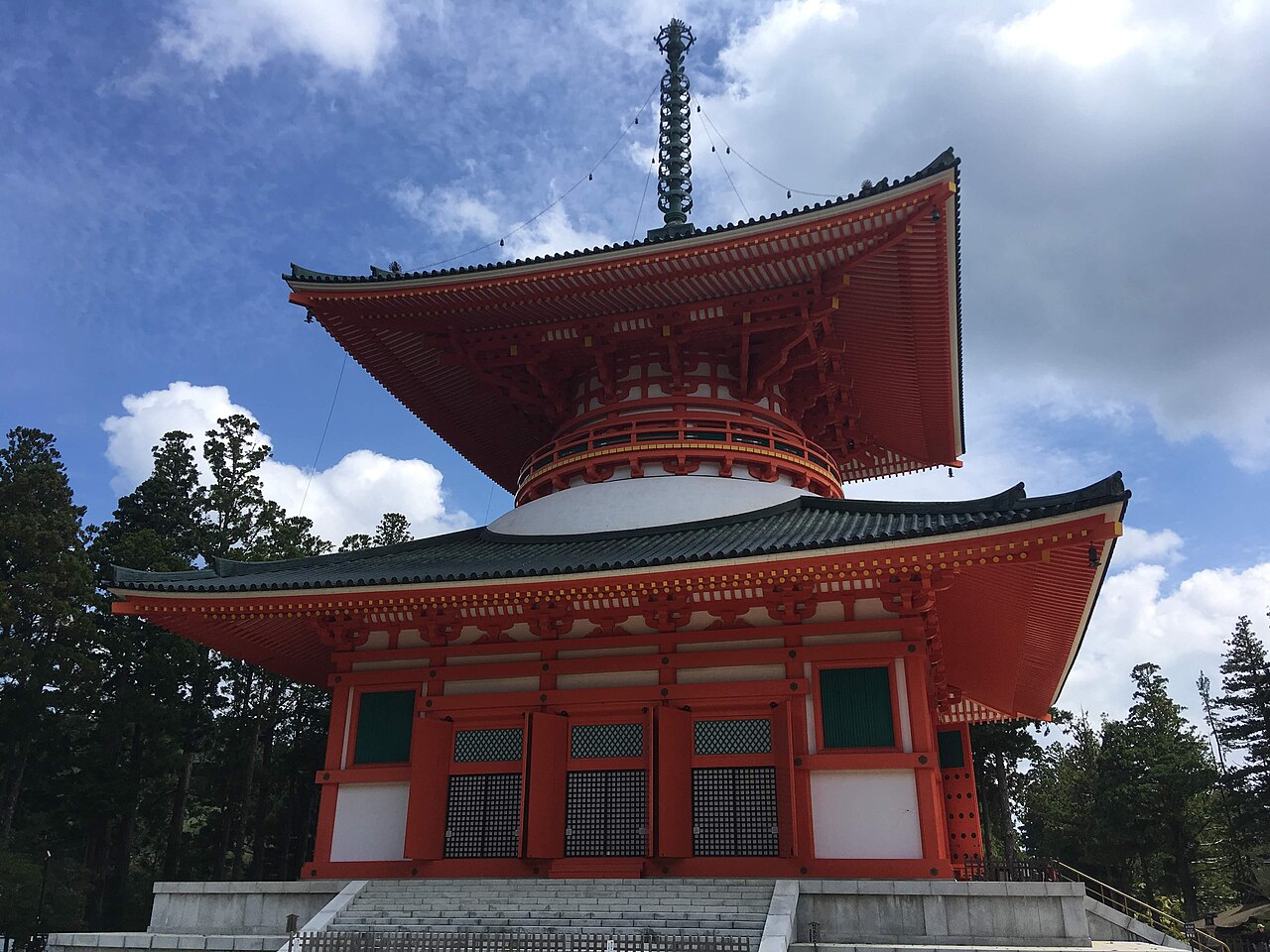
- Konpon Daitothe vermilion pagoda at the centre of the precinct, 48.5 metres tall and rebuilt in 1937; ¥200 to step inside the painted interior
- Kondothe main hall of the entire mountain, where Koyasan's principal annual rites are held; the present building dates from 1932
- Miedo and Chumonthe hall enshrining the portrait image of Kobo Daishi, rebuilt in 1847, and the great gate restored in 2015 after 172 years of absence
- Kongobuji main hallthe head temple of Koyasan Shingon Buddhism, a 60-by-70-metre complex of 1863 with painted sliding screens and a seated image of Kobo Daishi in the inner rooms
- Banryutei rock garden2,340 square metres of raked gravel and granite behind Kongobuji, among the largest rock gardens in Japan, its stones set as dragons guarding the inner hall
How to actually get there
- Osaka Namba Stn → Gokurakubashi Stn (Nankai Koya Line, ~80-100 min)
- Gokurakubashi Stn → Koyasan Stn (Nankai cable car, ~5 min)
- Koyasan Stn → Kongobuji-mae bus stop (Nankai Rinkan Bus, ~10 min)
- Nankai Koya Line + cable car + local bus
- Osaka Namba Station →(Nankai Koya Line limited express Koya or rapid express, ~80-100 min, changing at Hashimoto on the non-express services)→ Gokurakubashi Station →(Nankai cable car, ~5 min)→ Koyasan Station →(Nankai Rinkan Bus bound for Daimon, ~10 min)→ Kongobuji-mae bus stop. Total about 2 hours. Buses meet the arriving cable cars.
- Kongobuji-mae → Koyasan Stn → cable car → Namba
- Return the same way. The critical constraint is the last cable car down from Koyasan Station — check the departure time posted at the station when you arrive, because missing it means staying the night. Trains from Gokurakubashi to Namba run into the evening.
About the place
Koyasan is a monastic town on a wooded plateau in northern Wakayama, and it has two hearts. Okunoin, the cemetery and mausoleum, is the one that appears in photographs. Danjo Garan is the other: the original teaching precinct that Kukai — Kobo Daishi — laid out as the ground plan of Shingon esoteric Buddhism, where the halls are arranged as a three-dimensional diagram of the Buddhist cosmos rather than a row of buildings. At its centre stands the Konpon Daito, a vermilion pagoda 48.5 metres tall, treated as the symbol of Shingon itself. Around it are the Kondo, the main hall of the whole mountain, and the Miedo, which enshrines the portrait image of Kobo Daishi. A few minutes' walk east is Kongobuji, the head temple of the Koyasan Shingon school, which administers the entire mountain. Its main building runs 60 metres east to west and 70 metres north to south, and behind it lies Banryutei, at 2,340 square metres one of the largest rock gardens in Japan.
How to enjoy it
Take the bus to Kongobuji-mae, see the head temple first while it is open, then walk five minutes west into Danjo Garan, which has no gate and no closing time. Late afternoon suits this order: the Garan's vermilion reads best in low light, and the precinct empties as the last day-trippers head for the cable car. If you can stay the night in a shukubo temple lodging, the Garan at dawn — cold, silent, with monks crossing between the halls — is the reason people come back to this mountain. Okunoin's cedar approach begins about thirty minutes' walk east, so the two hearts of Koyasan fit into one unhurried day.
Background & history
Kukai established Koyasan as a monastic centre in the early ninth century, and Danjo Garan was the first ground broken. Fire and lightning destroyed the precinct repeatedly, and almost everything standing today is a reconstruction: the Kondo was rebuilt in 1932, the Konpon Daito in 1937, and the Miedo in 1847. Only the Fudodo, a National Treasure, survived the cycle of fires. The Chumon gate was rebuilt in 2015, 172 years after it last burned. Kongobuji has a different lineage — it was founded in 1593 by Toyotomi Hideyoshi, and its present main hall dates from 1863. The Banryutei rock garden behind it is comparatively new, laid out in 1984, with the stones arranged as a pair of dragons guarding the inner sanctuary.
Before you go
- Cash
- The Danjo Garan grounds are open and free to walk. Entering the Konpon Daito pagoda costs ¥200. Kongobuji admission is ¥1,000 for junior high school age and above, ¥300 for elementary school children. The Koyasan World Heritage Ticket from Nankai covers the round-trip train, cable car and unlimited local buses, and includes discounts at temple sites; buy it before boarding at Namba.
- Good to know
- Kongobuji is open 08:30 to 17:00, with last entry at 16:30. Both sites are active places of worship, not museums — services run through the day and photography is restricted inside some halls. Follow the signage.
- Another way
- You can walk between Danjo Garan and Kongobuji in under ten minutes, and on to the Okunoin approach in about thirty, so the whole central axis of the mountain can be done on foot if the buses do not suit.
- After you get off
- Get off at Kongobuji-mae and the head temple gate is directly in front of you. Danjo Garan is about five minutes further west on foot, or one stop on the same bus at Kondo-mae.
Nearby notes
 Indiana jo / CC BY-SA 4.0
History · Wakayama★★
Nyonin-michi
0.7 km · straight line
 No machine-readable author provided. Jimius~commonswiki assumed (based on copyright claims). / Public domain
History · Wakayama★★★
Koyasan Okunoin
2.0 km · straight line
 KENPEI / CC BY-SA 3.0
History · Wakayama★
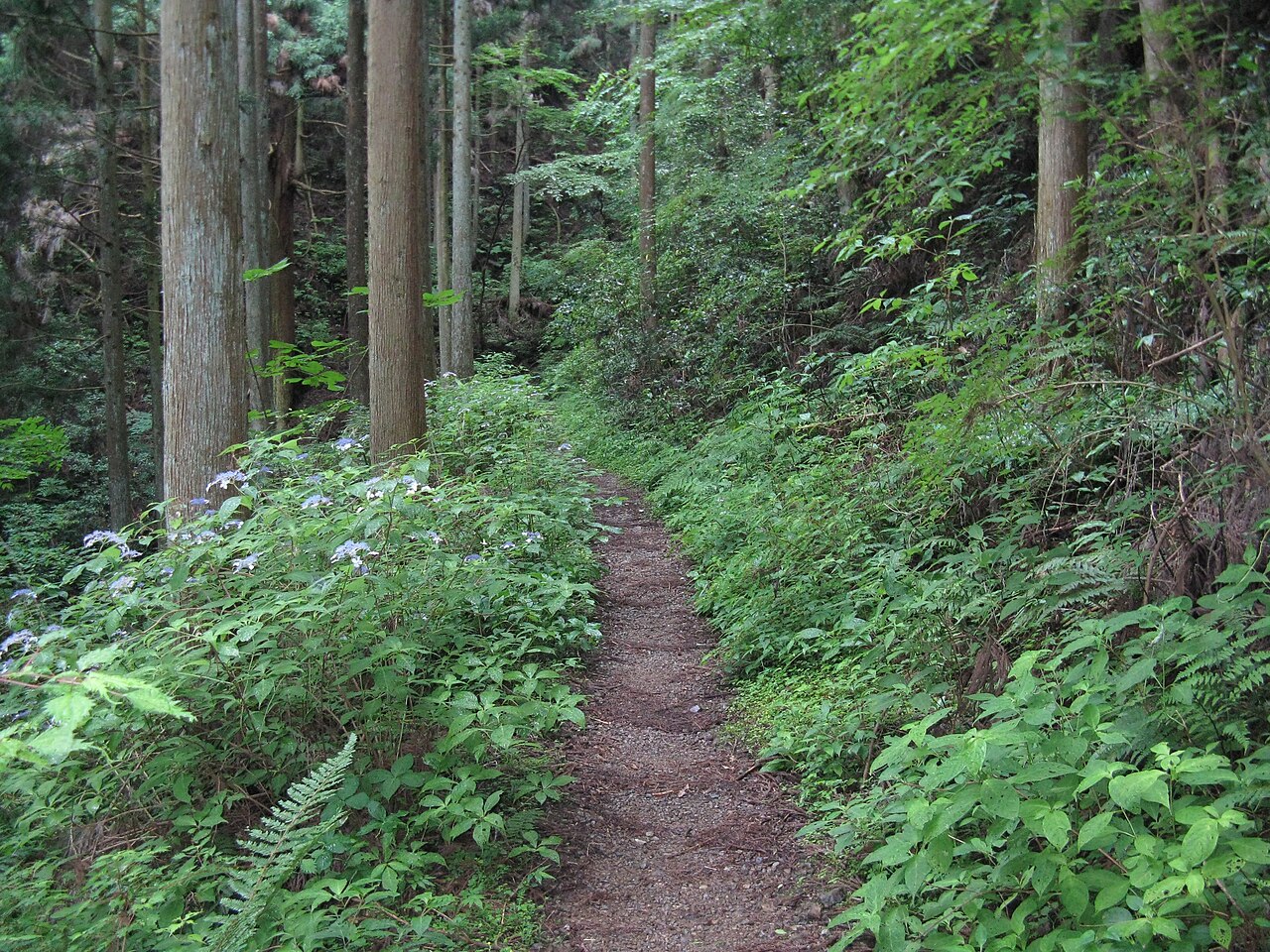
Choishi-michi
9.6 km · straight line
 Kyu3a / CC BY-SA 4.0
Food · Nara★★★
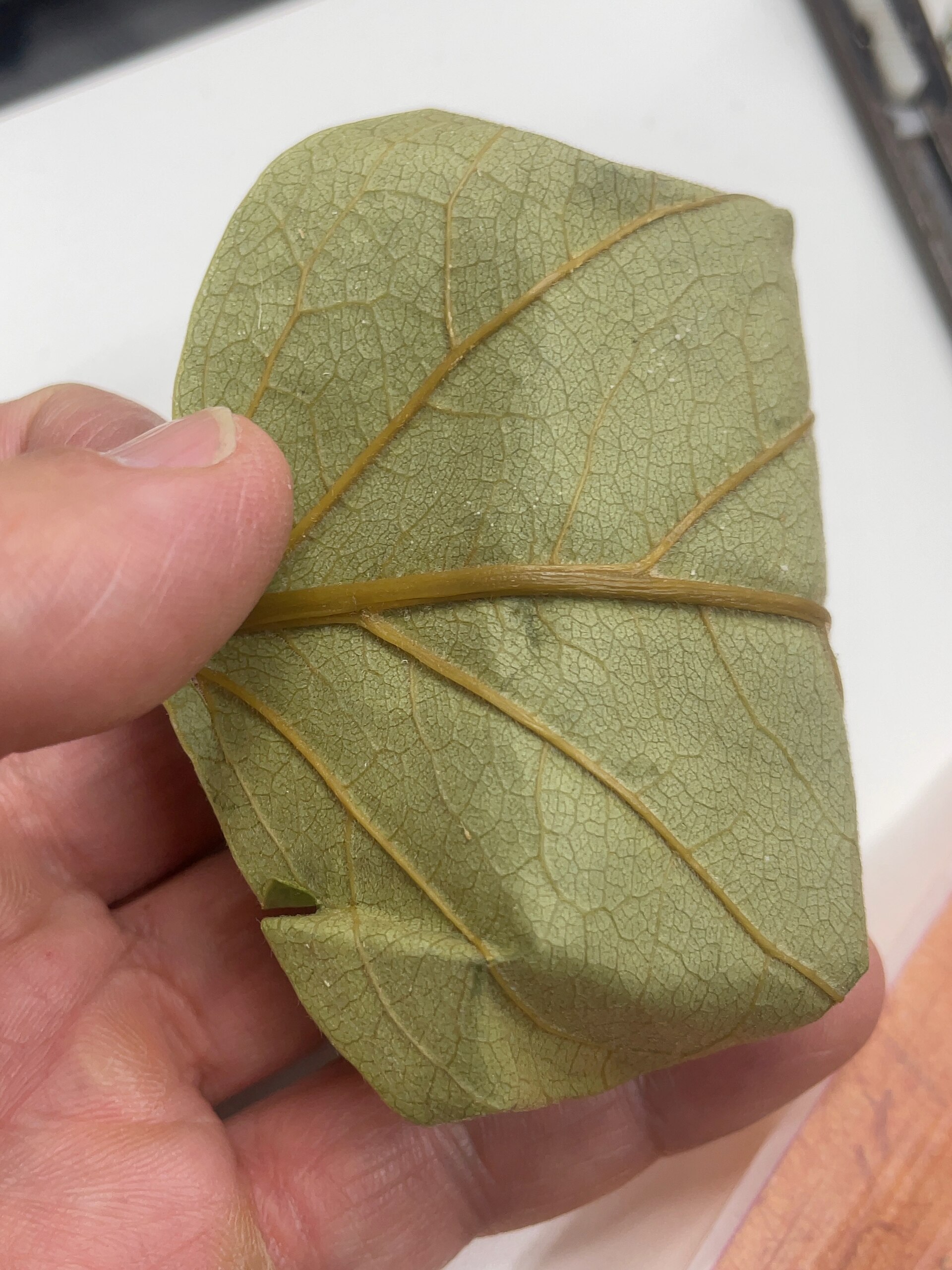
Kakinoha-zushi
18.0 km · straight line
Distances are straight lines on the map, not travel times.