Wakayama · Koyasan rimNo.066★★Open in map →
Nyonin-michi
— Koyasan's women's pilgrimage route
A roughly 16-km trail that circles the Koyasan plateau, walked for centuries by women barred from the sacred precinct until 1872. Koyasan is a mountain temple town founded by Buddhist monks in the 9th century.
- FromNamba (Osaka)
- ~2 hrcable car + bus
- Get off atNyonindo bus stop
- On foot
- Nyonin-michi
The sweet spot
Almost everyone stays down in the temple streets. This rim trail is a walkers' route with little English signage, so few foreign visitors take it — even though it starts right at the one women's hall that still stands.
Where it is
21 more notes in Wakayama · open the map →What to look for — in walking order
- Fudozaka-guchi Nyonindothe last surviving women's hall, now restored, beside the first bus stop above the station
- The seven gatesthe trail links Koyasan's seven traditional entrance gates to the sacred plateau
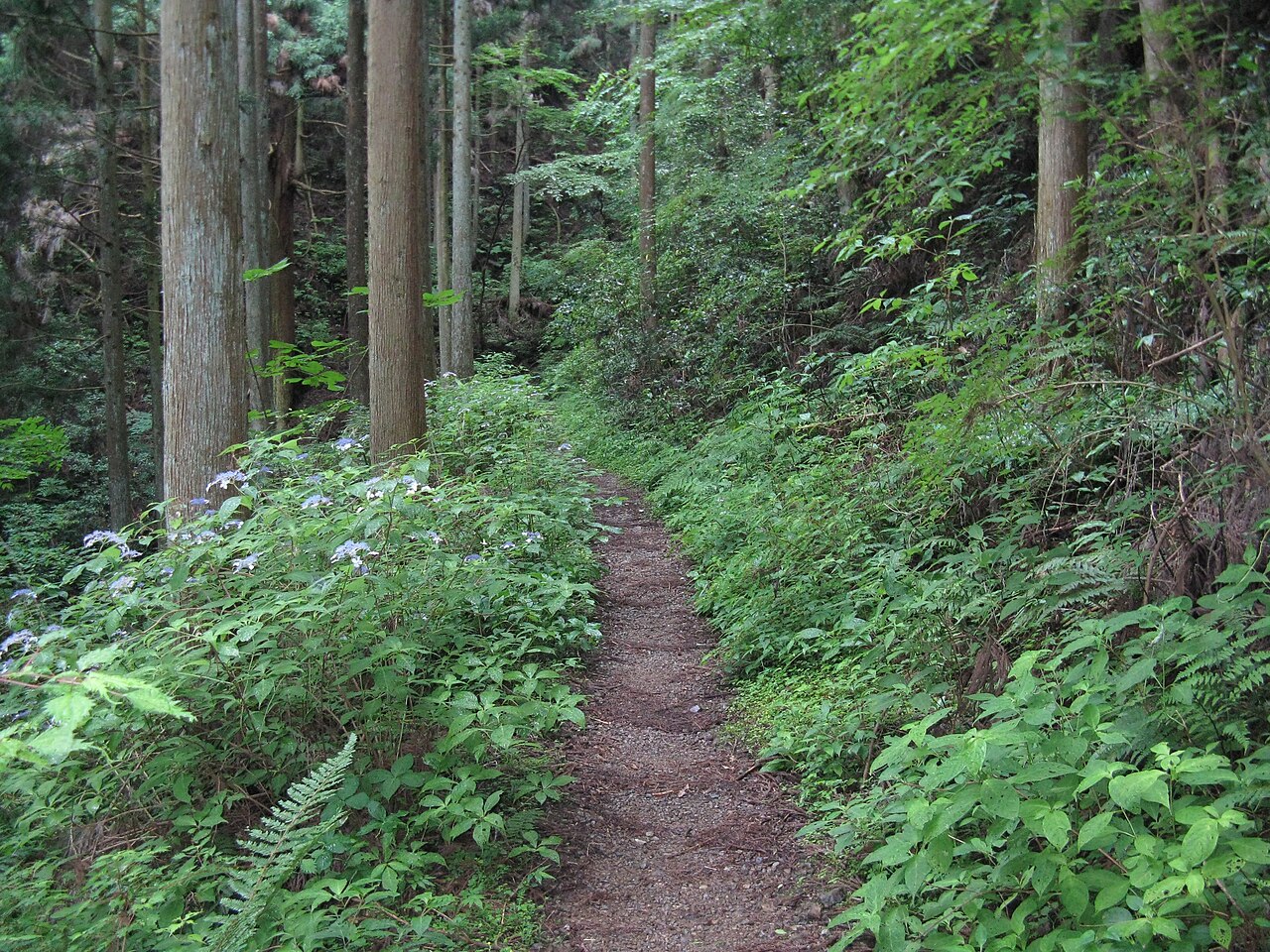
- Ridge-top cedar foresta roughly 16-km route through the forest that rings the temple town
- UNESCO heritage routepart of the Sacred Sites and Pilgrimage Routes in the Kii Mountain Range, listed in 2004
How to actually get there
- Namba Station (Osaka) → Gokurakubashi Station (Nankai Koya Line, ~100 min, transfer at Hashimoto)
- Gokurakubashi → Koyasan Station (Nankai cable car, ~5 min)
- Koyasan Station → Nyonindo bus stop (Nankai Rinkan bus, ~5 min, first stop)
- Nyonindo bus stop → trailhead beside the hall (on foot, right there)
- Namba → Nankai Koya Line + cable car + local bus
- Namba Station (Osaka) →(Nankai Koya Line express or rapid express, ~100 min, transfer at Hashimoto Station)→ Gokurakubashi Station →(Nankai cable car up the mountain, ~5 min)→ Koyasan Station →(Nankai Rinkan local bus, ~5 min, first stop)→ Nyonindo bus stop. Total ~2 hours. Trains run every 20-30 min; the town bus passes Nyonindo regularly.
- Same way back, but finish before dark
- Return the same way: Nyonindo bus stop → Koyasan Station → cable car → Nankai Koya Line to Namba. The forest trail has no lights, so finish walking and get back among the halls by dusk. Buses and the cable car stop running in the evening — check the last cable-car and train times when you arrive.
About the place
For most of Koyasan's history women were not allowed into the monastic town, so their pilgrimage followed the ridge that rings the mountain plateau. This is the Nyonin-michi — the 'women's road' — linking the seven traditional entrance gates to the sacred grounds. At each gate once stood a small hall called a nyonindo ('women's hall'), where women prayed toward the precinct and could rest overnight. Today only one hall survives: the restored Fudozaka-guchi Nyonindo, which stands beside the first bus stop above Koyasan Station, with markers noting where the other halls once stood. The trail is part of the UNESCO World Heritage site 'Sacred Sites and Pilgrimage Routes in the Kii Mountain Range.'
How to enjoy it
The full loop is a full-day hike of around eight hours; many visitors instead walk a shorter section, such as the stretch from the Fudozaka-guchi Nyonindo hall toward the Daimon gate at the town's western edge. The surviving hall stands right beside the first bus stop above Koyasan Station, making it a natural first stop before joining the trail. Wear proper walking shoes and check the weather — the path is a real mountain route in places. The two-day Koyasan World Heritage Ticket covers the round-trip train, cable car, and local buses.
Background & history
Koyasan was founded as a center of Shingon Buddhism, a school of esoteric Japanese Buddhism, in the early 9th century. For more than a thousand years its precinct was closed to women under a rule called nyonin kinsei. Women pilgrims worshipped from the perimeter, and the Nyonin-michi came into heavy use during the Edo period (1603–1867). The ban was lifted in 1872, when Japan's Meiji government ordered that temples and shrines could no longer exclude women. In 2004 Koyasan and its pilgrimage routes were added to the UNESCO World Heritage List.
Before you go
- Cash
- Carry water; there is nothing to buy once you are on the ridge. The 2-day Koyasan World Heritage Ticket covers the round-trip train, cable car, and local buses.
- Good to know
- The trail is a real mountain path in places, so wear proper walking shoes and check the weather before you go.
- Another way
- Short on time? Walk only the leg from the Nyonindo hall to the Daimon gate (the great gate at the town's western edge) and back.
- After you get off
- From the Nyonindo bus stop, the marked trailhead is right beside the old hall — no extra walk to find it.
Nearby notes
 Christophe95 / CC BY-SA 4.0
History · Wakayama★
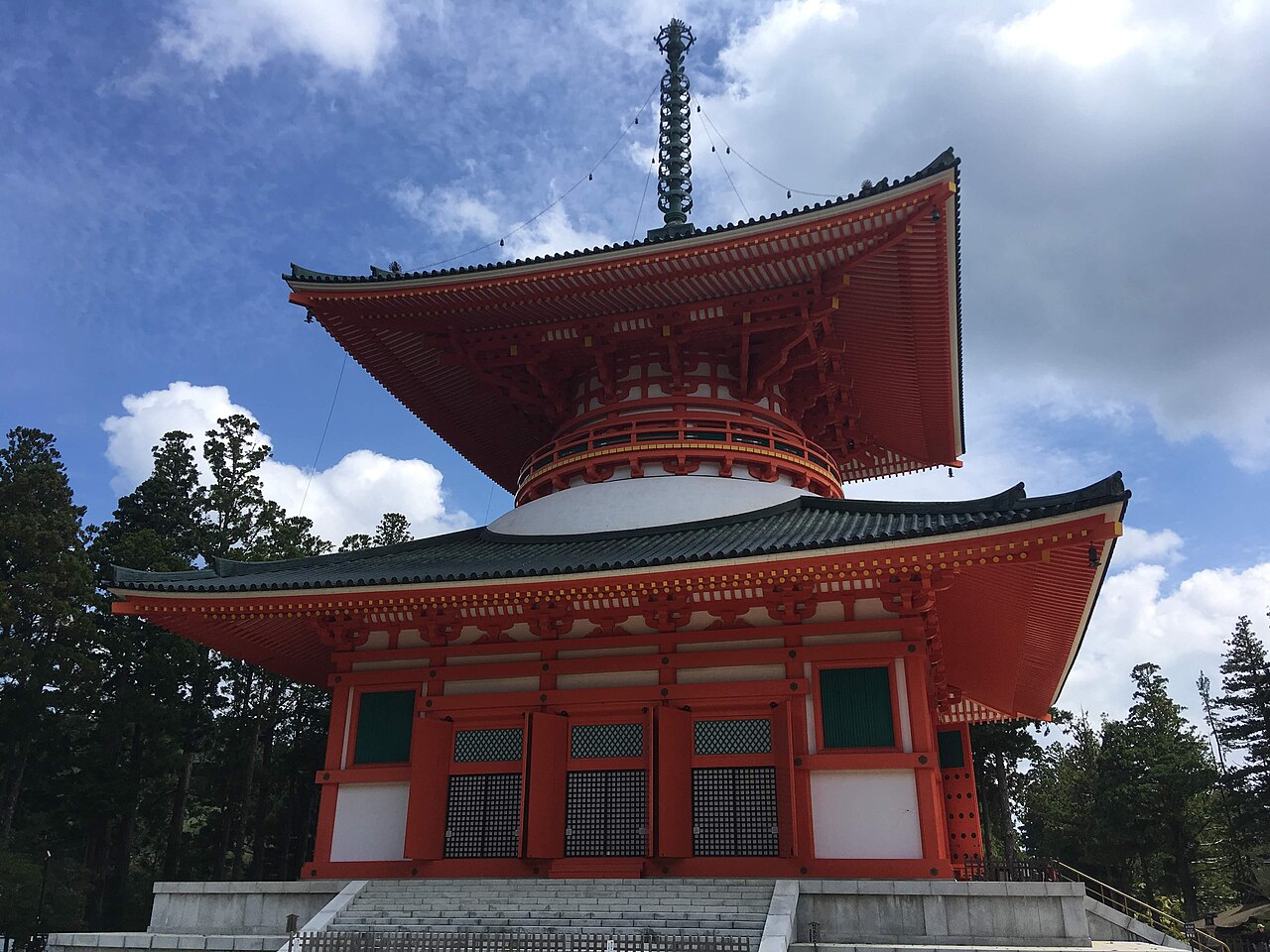
Danjo Garan and Kongobuji
0.7 km · straight line
 No machine-readable author provided. Jimius~commonswiki assumed (based on copyright claims). / Public domain
History · Wakayama★★★
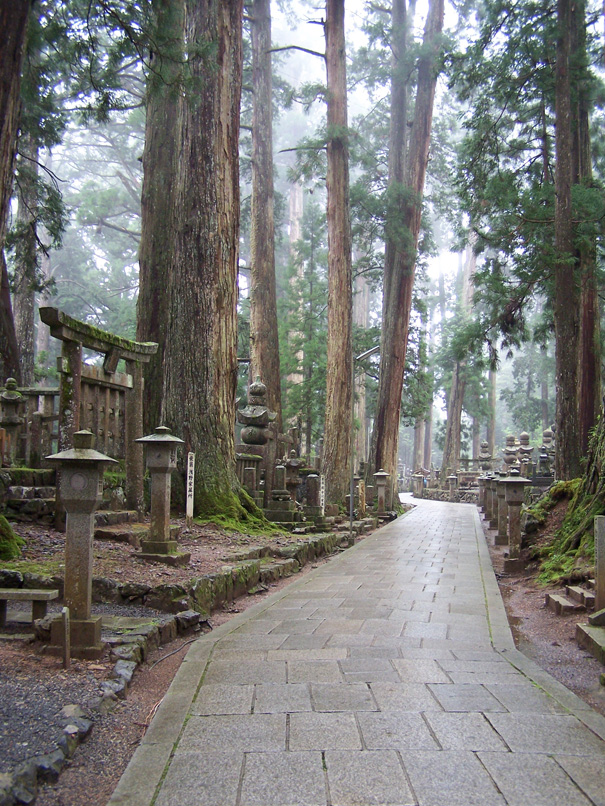
Koyasan Okunoin
2.2 km · straight line
 KENPEI / CC BY-SA 3.0
History · Wakayama★
Choishi-michi
9.0 km · straight line
 Kyu3a / CC BY-SA 4.0
Food · Nara★★★
Kakinoha-zushi
17.7 km · straight line
Distances are straight lines on the map, not travel times.