Kyoto north · KuramaNo.383★★Open in map →
Kurama-dera
— a mountain temple with its own school
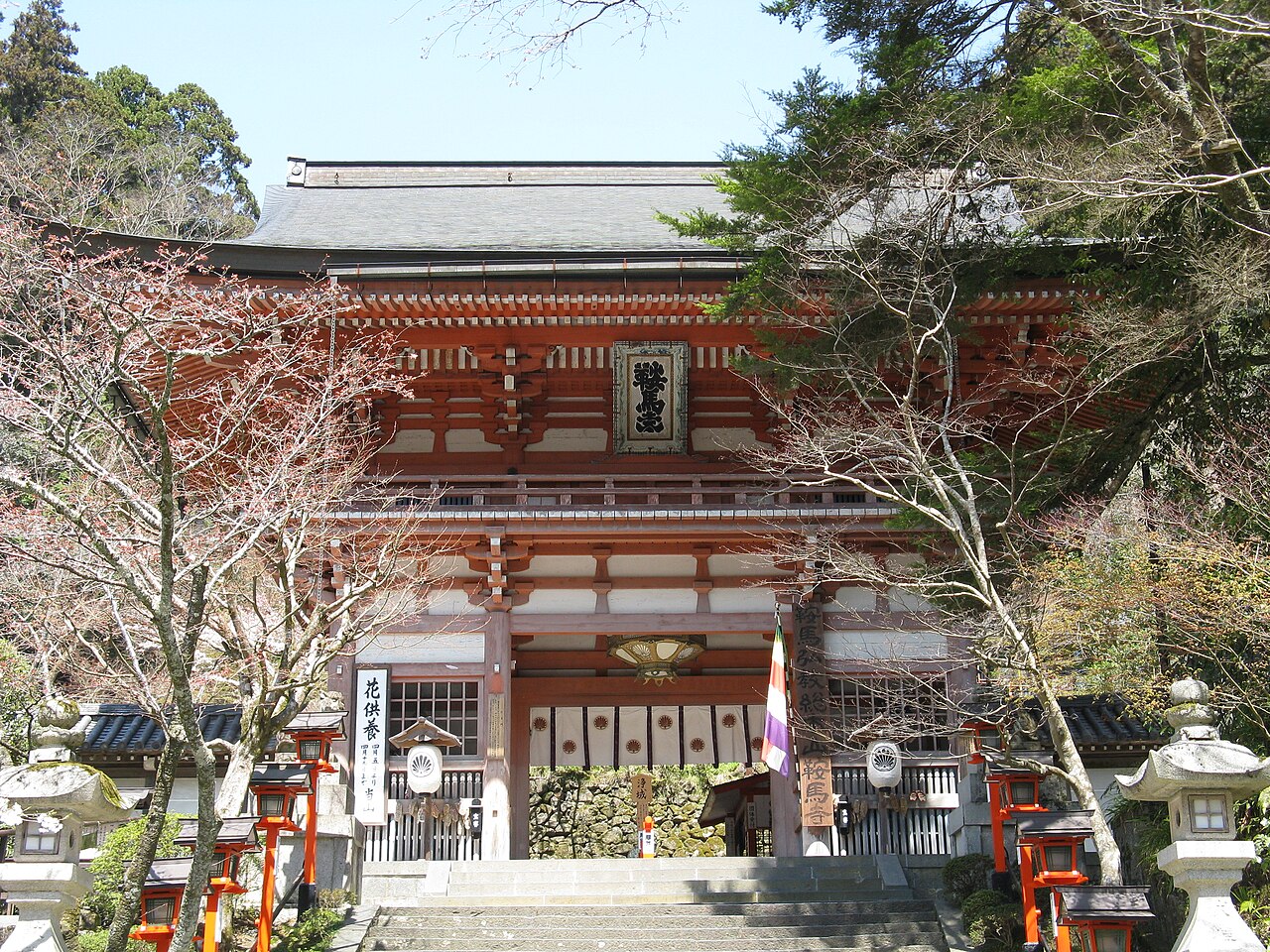
The head temple of the Kurama-kokyo school, spread up a cedar-covered mountainside north of Kyoto, with a star-mandala pavement before the main hall and a ridge path over to Kibune.
- FromKyoto Stn
- ~50 minEizan Railway
- Get off atKurama Station (Eizan Railway, Kurama Line)
- On foot
- Kurama-dera
The sweet spot
English guides treat Kurama as either a hike or an onsen day trip, and the temple itself gets demoted to a waypoint on the way to Kibune. It is in fact the head temple of its own school of Buddhism, with a cosmology and a festival calendar found nowhere else in Japan — and it is the rare major Kyoto temple you leave on foot, over a ridge, rather than by the way you came.
Where it is
90 more notes in Kyoto · open the map →What to look for — in walking order
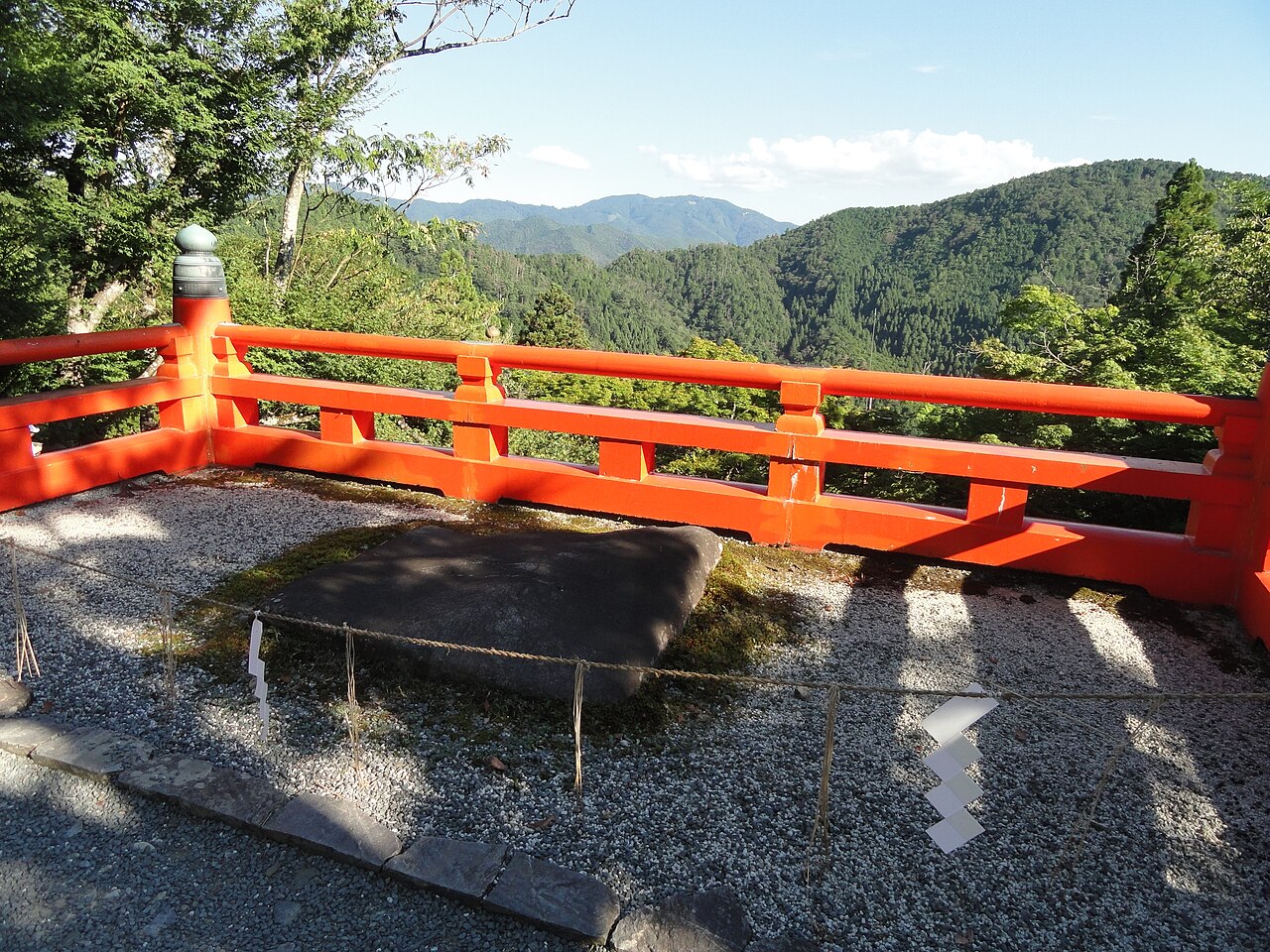
- Kongosho pavementthe circular star-mandala laid into the terrace in front of the main hall; the single most-photographed spot on the mountain
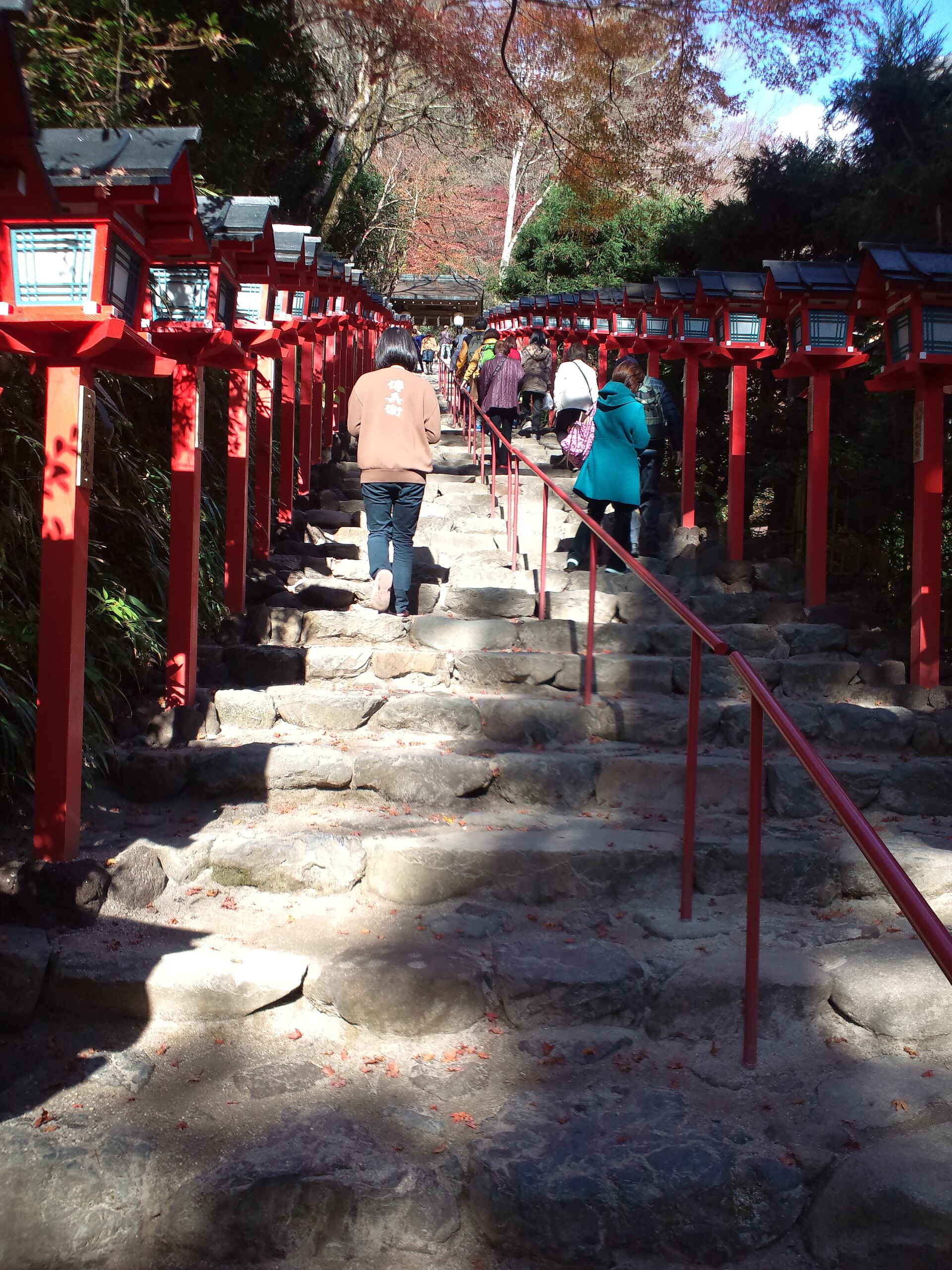
- The tsuzura-ori approachthe switchback path from the Niomon gate up through cedar to the main hall, about 30 minutes, passing Yuki Shrine and its great cedar
- Hondo Kondothe main hall, enshrining Sonten in three forms; the principal image is a hidden Buddha shown only once every sixty years
- The Okunoin ridge path to Kibunebeyond the main hall the trail climbs over exposed cedar roots to the inner sanctuary and descends into the Kibune valley — about an hour, one way
How to actually get there
- Kyoto Stn → Demachiyanagi (via Tofukuji, ~15 min), then Eizan Railway to Kurama Stn (~30 min, 500 yen).
- Walk 3 min to the Niomon gate; pay the 500 yen mountain fee.
- Climb the switchback path (~30 min) or take the cable car (2 min) plus a 10-min walk to the Hondo Kondo and the Kongosho pavement.
- Kyoto Stn → Demachiyanagi → Kurama Stn
- Kyoto Stn →(JR Nara Line to Tofukuji, then Keihan Main Line to Demachiyanagi, ~15 min)→ Demachiyanagi →(Eizan Railway, Kurama Line, ~30 min, 500 yen)→ Kurama Stn. The Niomon gate is a 3-minute walk from the station. Eizan trains run every 15-20 minutes; some services use the panoramic 'Kirara' cars with side-facing seats.
- Back from Kurama Stn, or walk out through Kibune
- Return the way you came from Kurama Stn. The alternative is to keep walking over the ridge past the Okunoin and down into the Kibune valley (about 1 hour from the main hall), then take Kyoto Bus 33 or walk down to Kibuneguchi Stn and ride the Eizan line home. Check the last train at Kurama Stn when you arrive — the line stops well before midnight.
About the place
Kurama-dera occupies the whole flank of a mountain rather than a walled plot. From the Niomon gate at the bottom the ground rises steadily through cedar to the Hondo Kondo, the main hall, and keeps rising behind it toward the ridge. Set into the terrace in front of the main hall is the Kongosho, a circular pavement laid as a star mandala; visitors stand at its centre facing the hall, and the gesture is the reason many Japanese visitors come at all. The temple does not belong to Tendai or Shingon or Zen — it separated in the mid-20th century and now heads its own school, Kurama-kokyo, whose object of worship is Sonten, described as a single cosmic force expressed through three figures: Senju Kannon, Bishamonten, and Goho Mao-son. Behind the main hall the path continues over the ridge through roots and rock to the Okunoin, then down the far side into the Kibune valley, a walk of about an hour that turns the visit into a traverse rather than a stop.
How to enjoy it
Go early and treat it as a half-day walk rather than a temple stop. The classic route is to ride the Eizan line out to Kurama, climb the switchback path on foot, spend time at the main hall and the Kongosho, then continue over the ridge and down into Kibune for lunch beside the river — ending at Kibuneguchi Station rather than doubling back. Wear proper shoes: the ridge section is roots, rock, and steps, not pavement. If you would rather not climb, the cable car covers the steepest stretch and leaves a ten-minute walk. Autumn colour on the Eizan line's 'maple tunnel' between Ichihara and Ninose is worth a window seat in itself.
Background & history
Tradition dates the founding to 770, when the monk Gantei is said to have been led to the mountain and enshrined Bishamonten here. The temple grew as the northern guardian of the capital and appears throughout classical literature — Sei Shonagon's Pillow Book names the switchback approach, and the legend of Ushiwakamaru, the boy who became Minamoto no Yoshitsune, places his training with the tengu of Mt. Kurama in the valley behind the main hall. The temple left the Tendai school in the 1940s to found Kurama-kokyo. Its own calendar is unusual: the Takekiri-eshiki bamboo-cutting rite on 20 June, and the Uesaku-sai held on the night of the full moon in May. The famous Kurama Fire Festival of 22 October is not a Kurama-dera event — it is the festival of Yuki Shrine, the small shrine that stands partway up the temple's own approach path.
Before you go
- Cash
- Entry to the mountain (aizanhi) is 500 yen for an adult, collected just past the Niomon gate — cash. The cable car between Sanmon and Tahoto stations is a separate 200 yen donation each way for adults, 100 yen for children. IC cards (ICOCA, Suica) work on the Eizan Railway but not at the temple gate.
- Good to know
- The mountain path is open through the day but the last cable car runs in the late afternoon; check current times before setting out. In winter the ridge path and the Kibune traverse can be icy, and the temple sometimes closes the crossing. The 22 October fire festival fills the village and the Eizan line beyond capacity — a difficult day for a casual visit.
- Another way
- You can walk the whole approach instead of riding the cable car: the tsuzura-ori switchback path from the Niomon to the main hall takes about 30 minutes and passes Yuki Shrine and its enormous cedar. This is the historic route and the better one if you are fit.
- After you get off
- From Kurama Station turn left along the village street; the red Niomon gate is about 3 minutes on foot, on the right.
Nearby notes
 Yiannis Theologos Michellis / CC0
Onsen · Kyoto★★
Kurama Onsen
0.5 km · straight line
 Yanajin33 / CC BY-SA 4.0
Culture · Kyoto★★★
Kifune Shrine
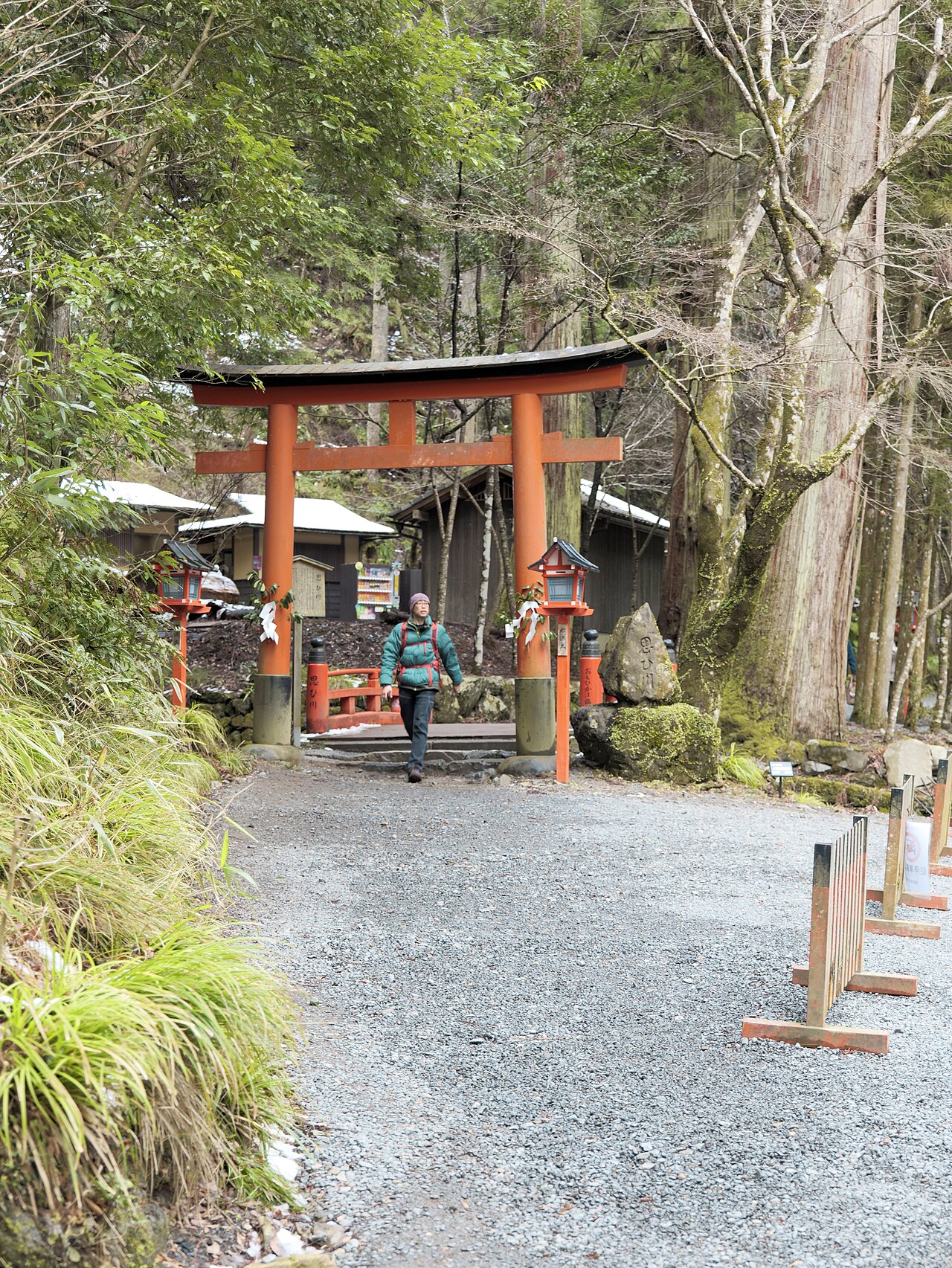
0.8 km · straight line
 Hyppolyte de Saint-Rambert / CC BY 4.0
Nature · Kyoto★
Kifune Shrine Okumiya
1.2 km · straight line
 Suikotei / CC BY-SA 4.0
History · Kyoto★★
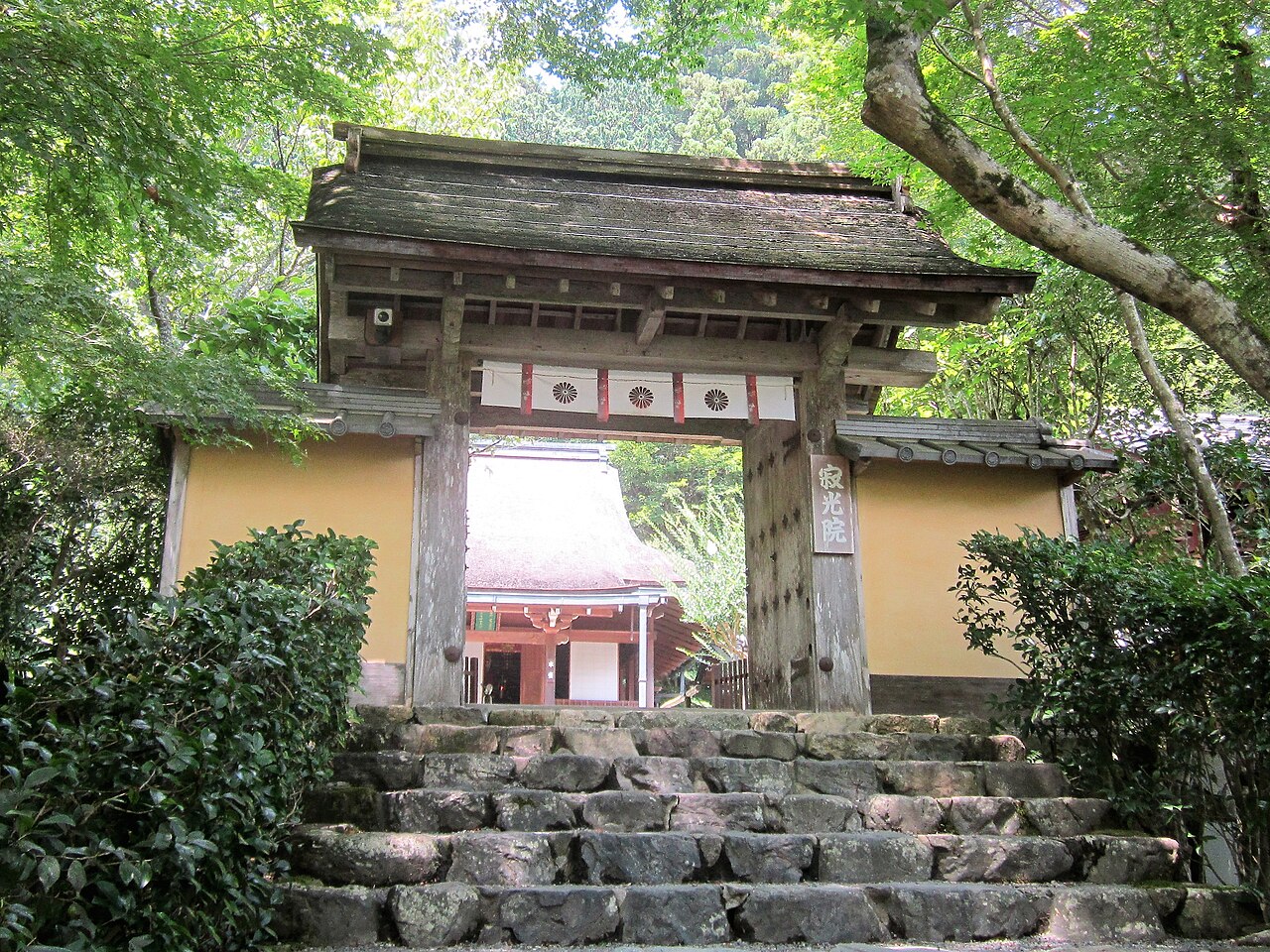
Jakkō-in
4.5 km · straight line
Distances are straight lines on the map, not travel times.