Tokyo · Aoyama / Jingu GaienNo.324★★★Open in map →
Jingu Gaien Ginkgo Avenue
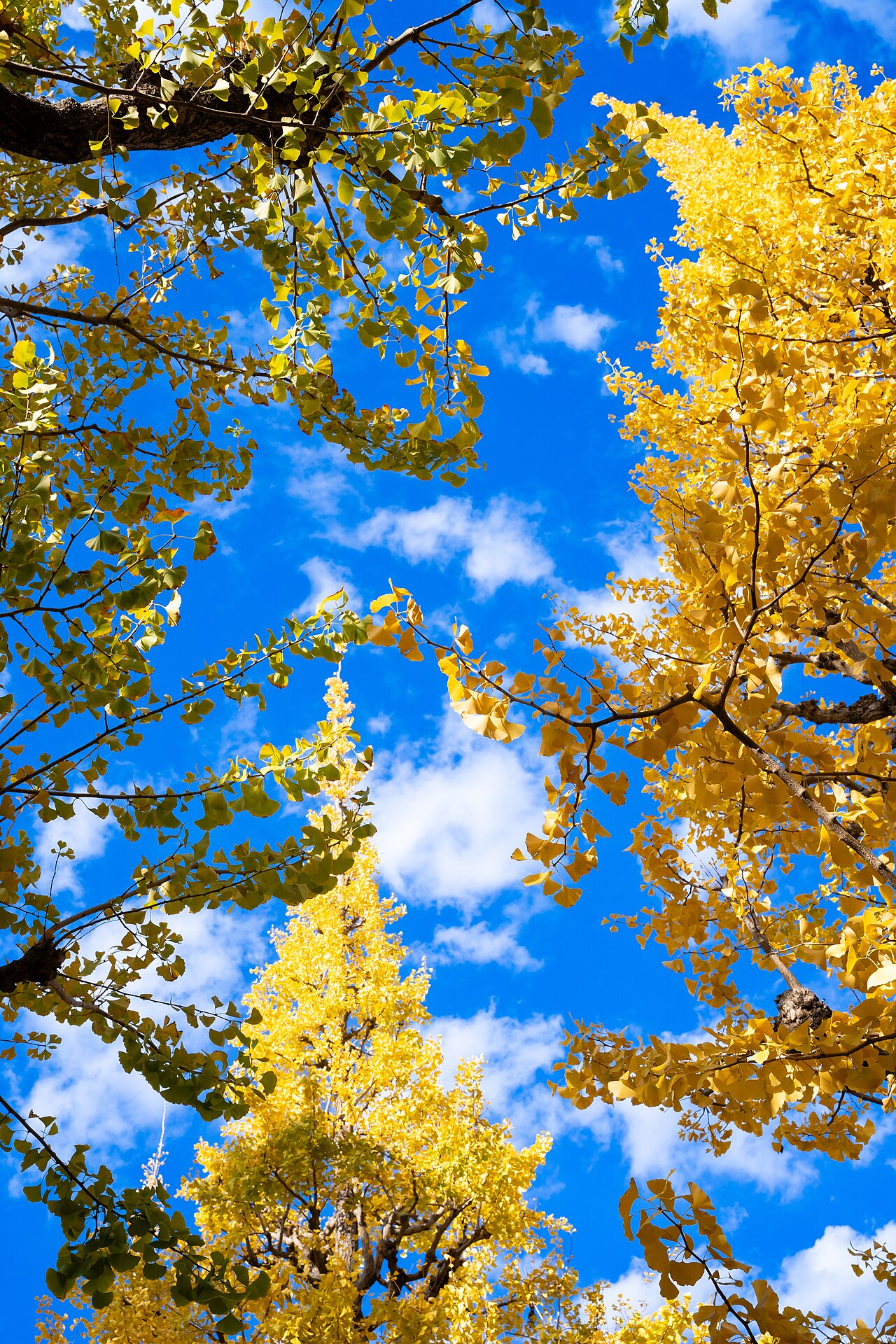
A 300-metre avenue of 146 ginkgo trees in four rows, running from Aoyama-dori to the domed Seitoku Memorial Picture Gallery. Planted in 1923 and graded by height to exaggerate the perspective, it is Tokyo's best-known autumn street.
- FromTokyo Stn
- ~15 minmetro (frequent)
- Get off atGaienmae Station (Tokyo Metro Ginza Line, G-03)
- On foot
- Jingu Gaien Ginkgo Avenue
Where it is
77 more notes in Tokyo · open the map →What to look for — in walking order
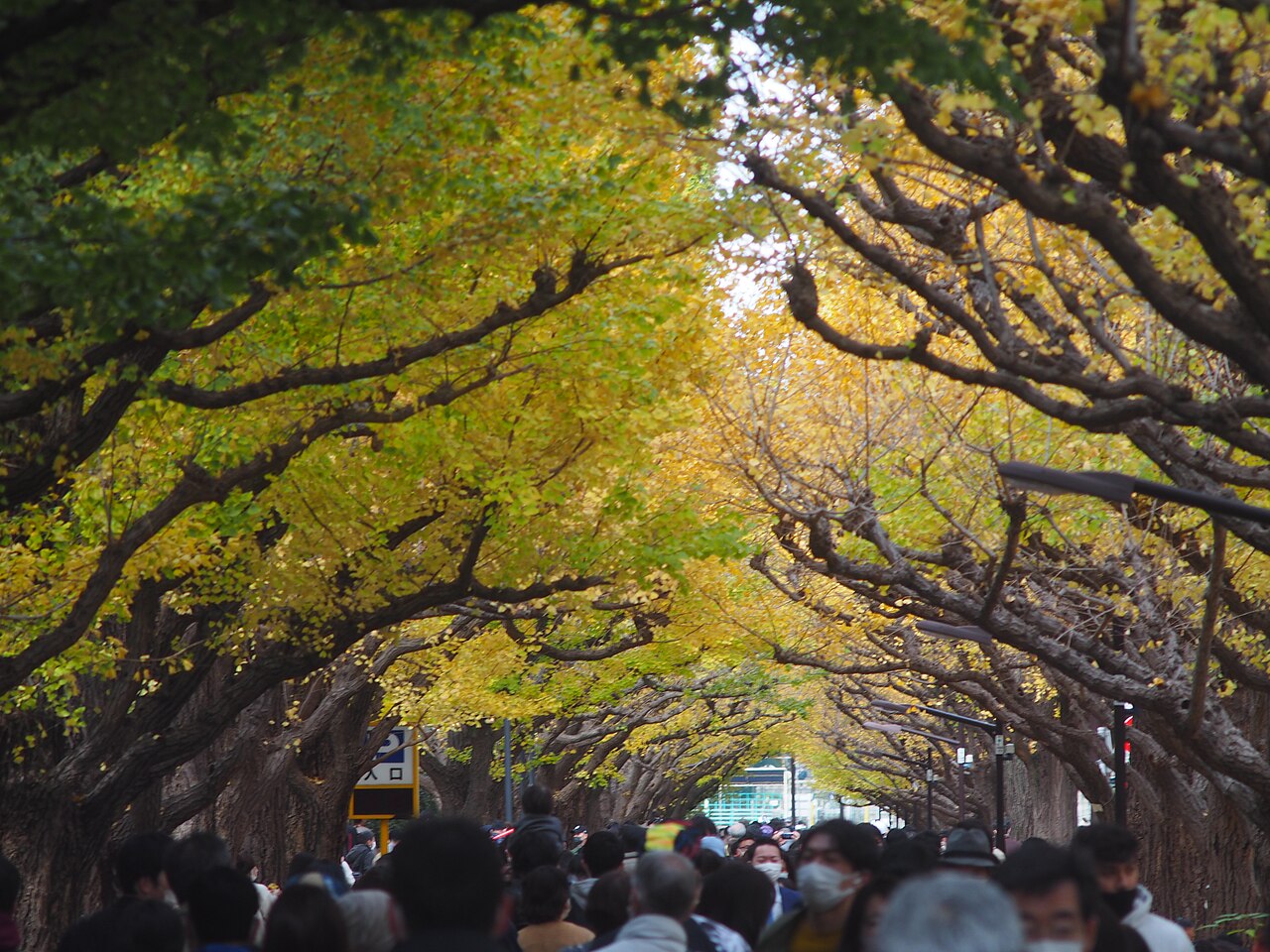
- The centre-line view from Aoyama-dorithe intended composition: standing on the axis at the southern entrance, looking north down the tunnel to the dome
- Seitoku Memorial Picture Gallerythe domed building closing the axis; inside, 80 paintings of Emperor Meiji's life, and an Important Cultural Property in its own right
- The fallen-leaf carpetearly December, when the road and pavements go completely yellow and the light comes up from the ground as well as through the canopy
- The Ginkgo Festival stallsfood stalls set up near the gallery end across the peak weeks — busy, but the easiest place to stop and look back down the avenue
How to actually get there
- Tokyo Station → Akasaka-mitsuke Station (Tokyo Metro Marunouchi Line, ~8 min).
- Akasaka-mitsuke Station → Gaienmae Station (transfer to the Ginza Line toward Shibuya, 3 stops, ~5 min).
- Gaienmae exit 4a → avenue entrance on Aoyama-dori (~5 min walk); stand on the centre line looking north, then walk the 300 m to the gallery.
- Tokyo Stn →(Marunouchi Line)→ Akasaka-mitsuke →(Ginza Line)→ Gaienmae Stn
- Tokyo Station →(Tokyo Metro Marunouchi Line toward Ogikubo, ~8 min)→ Akasaka-mitsuke Station →(transfer to the Ginza Line toward Shibuya, 3 stops, ~5 min)→ Gaienmae Station. Total about 15–20 min. Both lines run every few minutes all day, so no timetable check is needed. From Gaienmae, exit 4a and walk about 5 minutes northwest along Aoyama-dori to the avenue entrance.
- Return from Gaienmae or Aoyama-itchome
- Gaienmae is on the Ginza Line for Shibuya or Ginza; Aoyama-itchome, about 5 minutes on foot from the gallery end, is on the Ginza, Hanzomon and Toei Oedo lines. Trains run frequently until past midnight, so you can stay for the evening without planning around a timetable.
About the place
The avenue begins at Aoyama-dori and runs about 300 metres north on a dead-straight axis, four rows of ginkgo — 146 trees — closing overhead into a tunnel. At the far end, framed exactly by the trees, stands the Seitoku Memorial Picture Gallery under its stone dome. What most people photograph without knowing it is a piece of deliberate stagecraft: the trees were planted graded by height, tallest at the Aoyama-dori entrance and progressively shorter toward the gallery, so the canopy line falls away as it recedes and the eye reads the avenue as longer, and the building at the end as further off and larger, than either really is. The trees themselves came from seeds gathered at Shinjuku Gyoen in 1908, raised in a nursery, and planted here in 1923 when the Gaien grounds were laid out. From mid-November the whole avenue turns; by early December the road and the pavements are carpeted in fallen leaves, which is when the colour is at its most saturated and the light comes up off the ground as well as down through the canopy.
How to enjoy it
Come early. By ten in the morning at peak the centre line is a queue of tripods; before eight it is nearly empty and the low sun is coming straight down the axis from the side streets. Stand on the centre line at the Aoyama-dori end first — that is the composition the planting was designed for — then walk north and turn around once, because the reverse view with the trees growing taller toward you is the one nobody shoots. Keep to the pavement: this is an open road with traffic, and on peak weekends pedestrian flow is directed one way.
Background & history
The seeds were collected at Shinjuku Gyoen in 1908 and the resulting saplings were planted here in 1923, when the Meiji Jingu Gaien grounds were laid out as the outer precinct of the shrine dedicated to Emperor Meiji. The landscape designer set them in four rows graded by height along the axis, a perspective device borrowed from formal European avenue planting, so that the Seitoku Memorial Picture Gallery at the northern end would read as more distant and monumental. The gallery itself holds 80 large paintings depicting the life of Emperor Meiji — 40 in Japanese style and 40 in Western style — and is designated an Important Cultural Property.
Before you go
- Cash
- The avenue is a public street — free, always open, no ticket. The Seitoku Memorial Picture Gallery charges separate admission. During the Ginkgo Festival the food stalls at the gallery end are largely cash.
- Good to know
- The trees turn from mid-November, with the peak generally in the last week of November and the fallen-leaf carpet in early December. The Jingu Gaien Ginkgo Festival runs across roughly that window and brings food stalls and heavy weekend crowds. Note this is a live road with car traffic and the pavements are narrow at peak — the police often manage one-way pedestrian flow on the busiest weekends.
- Another way
- Shinanomachi Station (JR Chuo-Sobu Line) is about 10 minutes on foot from the gallery end, useful if you are coming across town on JR rather than the metro.
- After you get off
- From Gaienmae Station exit 4a, walk northwest along Aoyama-dori for about 5 minutes; the avenue opens on your right, running straight north with the domed gallery visible at the far end.
Nearby notes
 Guilhem Vellut from Annecy, France / CC BY 2.0
Culture · Tokyo★★★
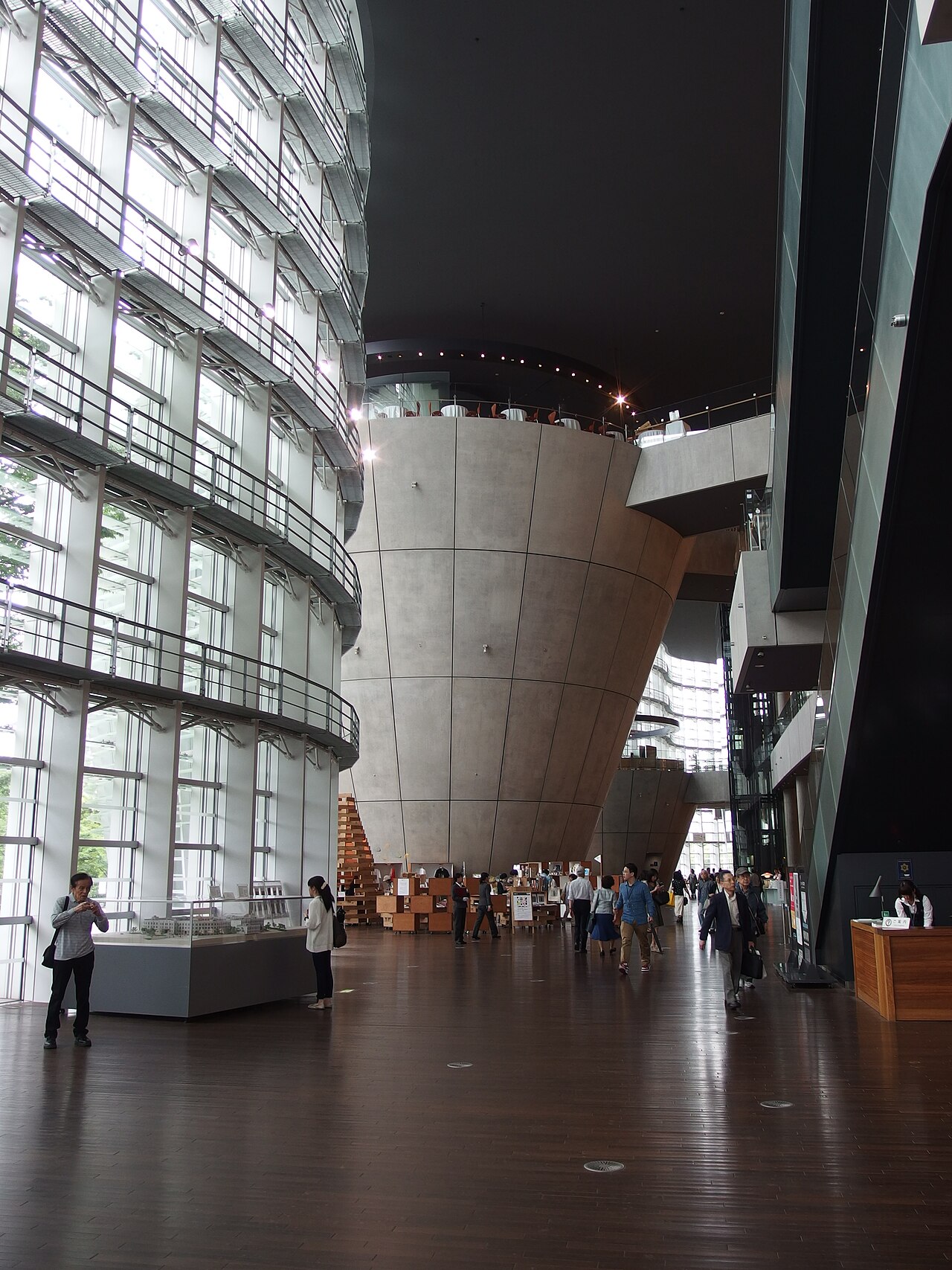
The National Art Center
1.2 km · straight line
 663highland / CC BY 2.5
Local life · Tokyo★★★
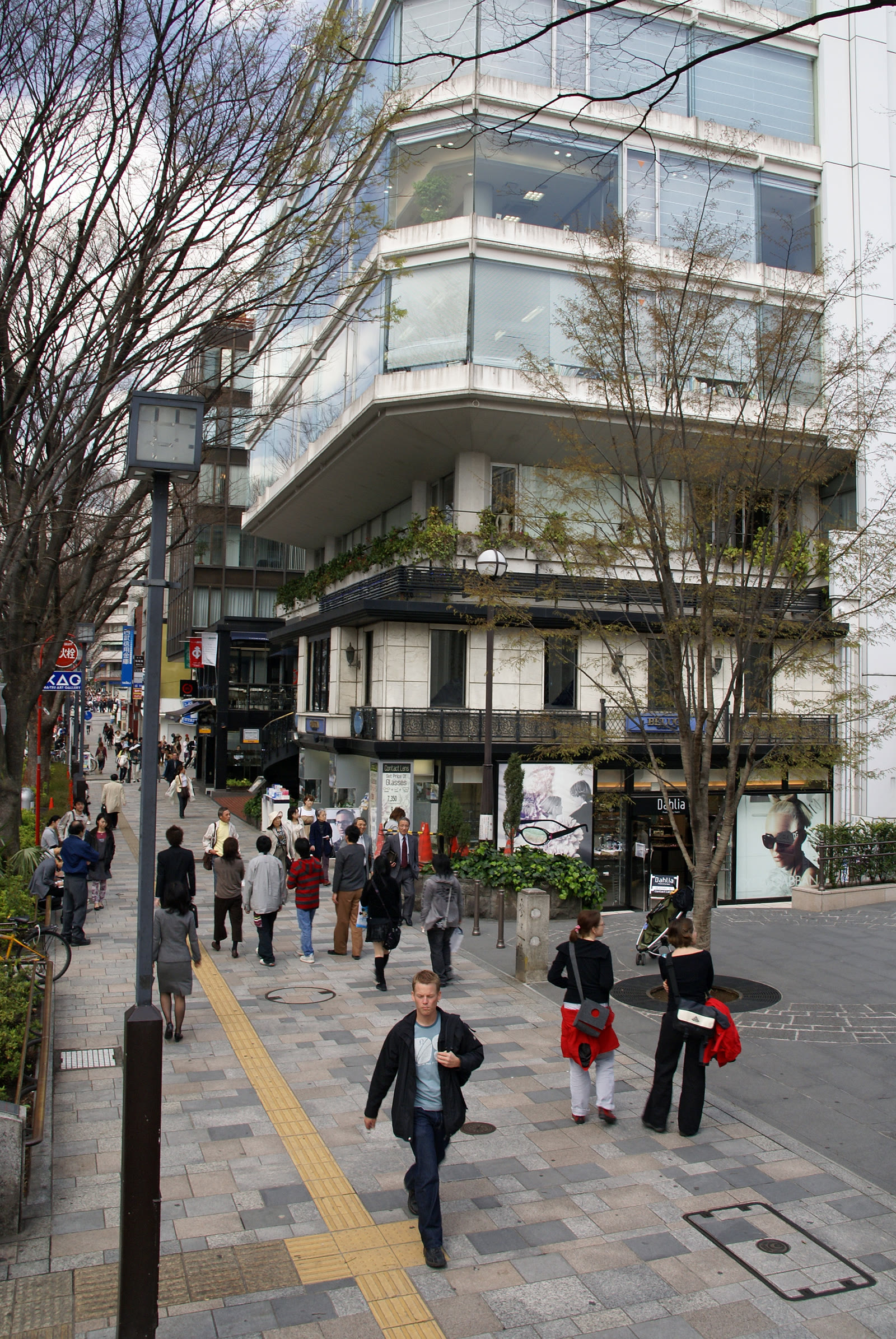
Omotesando
1.2 km · straight line
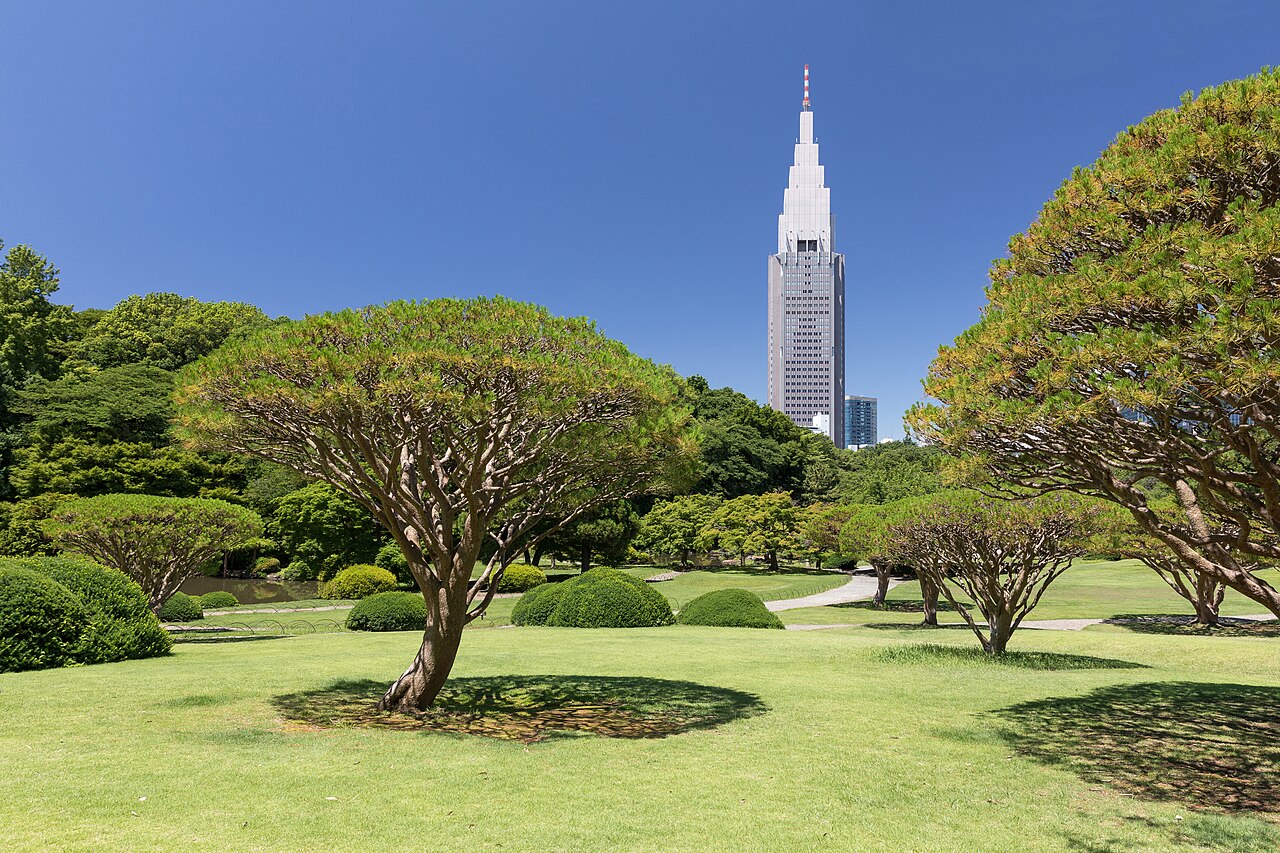 Basile Morin / CC BY-SA 4.0
Nature · Tokyo★★
Shinjuku Gyoen
1.5 km · straight line
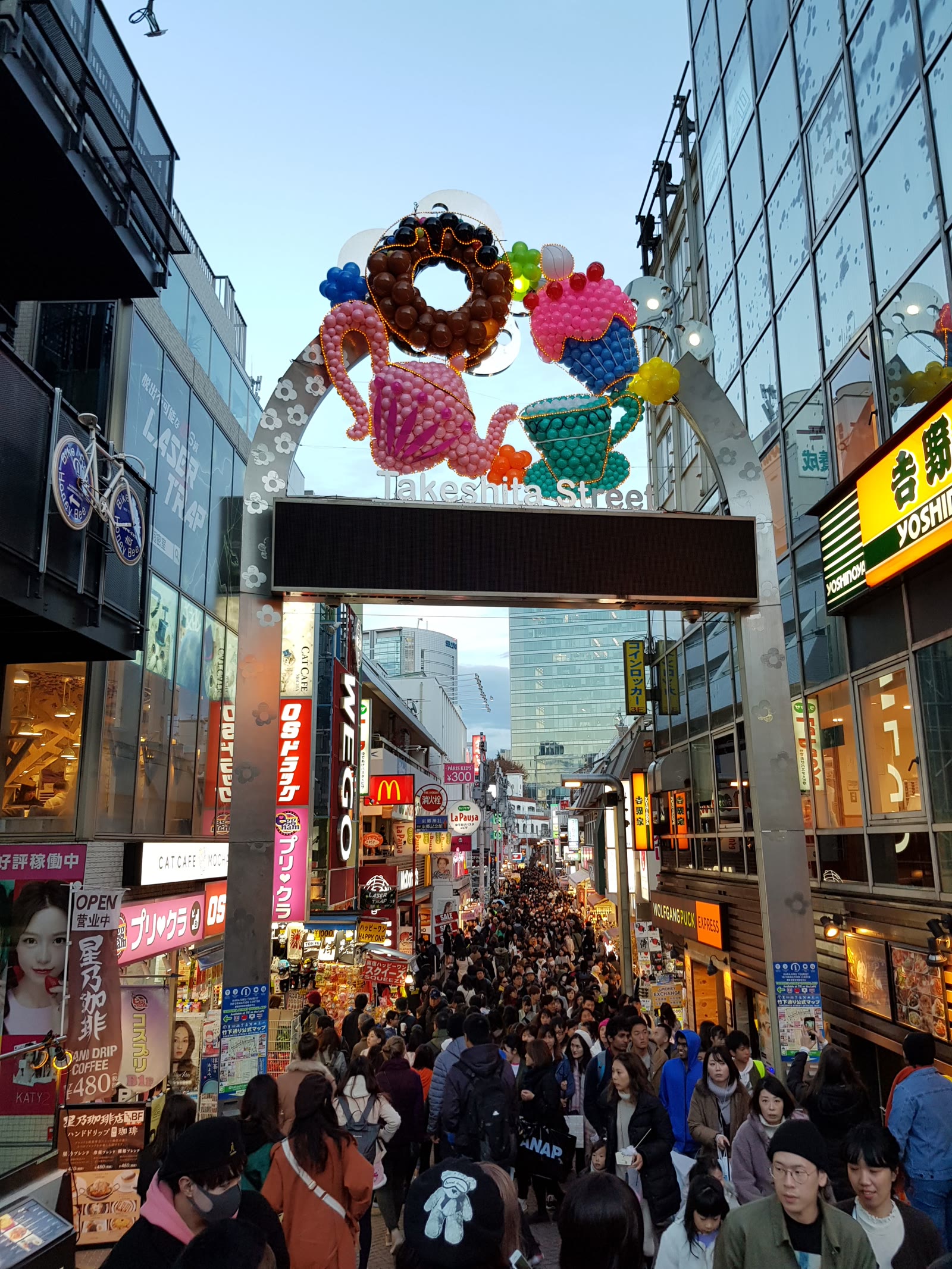 Intforce / CC BY-SA 4.0
Local life · Tokyo★★
Takeshita Street
1.6 km · straight line
Distances are straight lines on the map, not travel times.