Nara · UdaNo.336★★Open in map →
Murō-ji
— the mountain temple that welcomed women
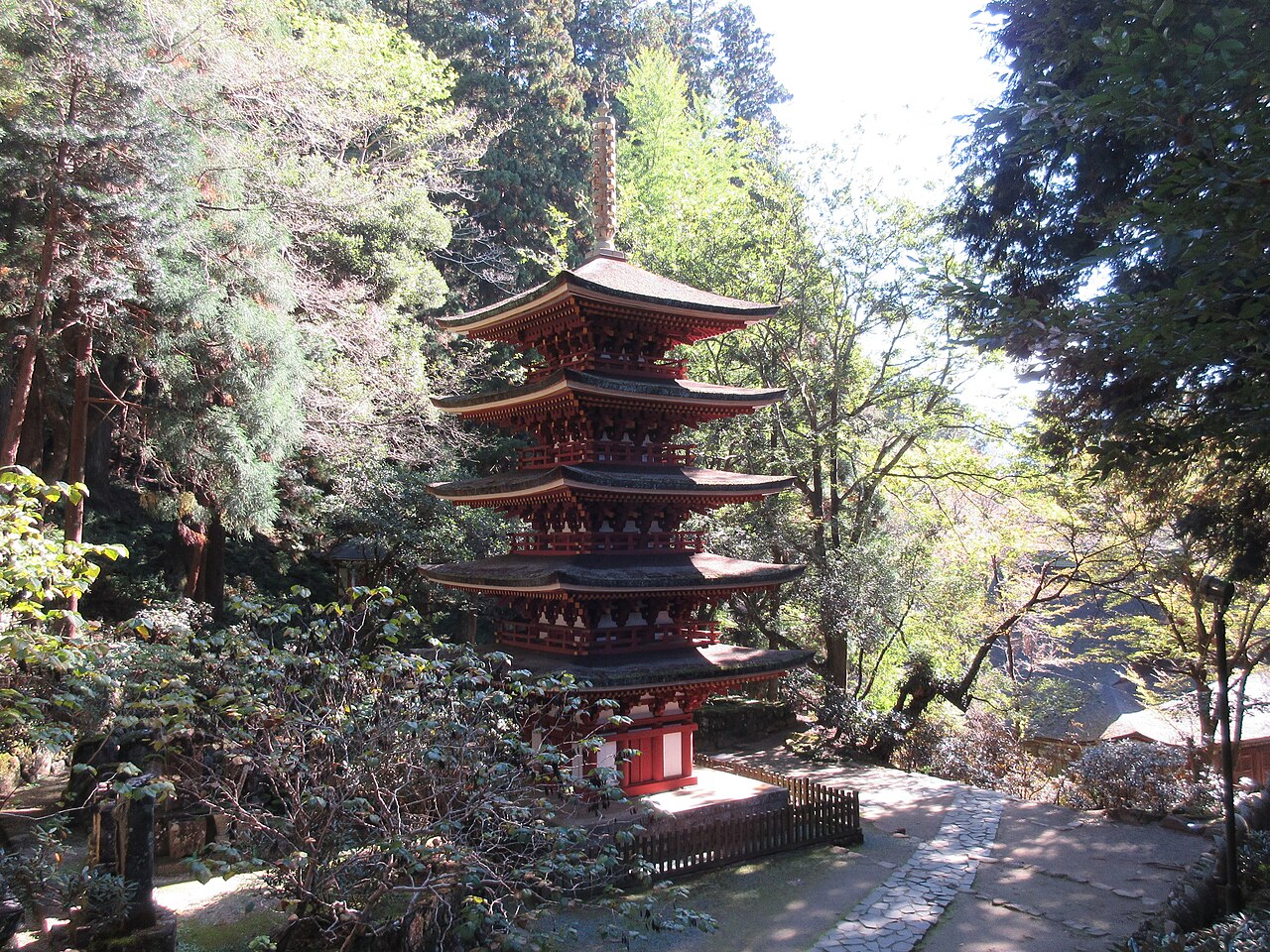
A mountain temple in eastern Nara that admitted women in centuries when Mount Kōya turned them away, which is why it is called Nyonin Kōya — the Kōya for women. Its five-storey pagoda, about 16 metres tall, is the smallest ancient outdoor pagoda in Japan.
- FromOsaka-Namba Stn
- ~1 hr 50 minKintetsu express + bus
- Get off atMurōguchi-Ōno Station (Kintetsu Osaka Line)
- From there
- Murō-ji
The sweet spot
Most visitors to Nara never leave the flat city temples. Murō-ji is an hour further east and delivers something the city cannot: a working mountain temple where the architecture is genuinely old, the sculpture is first-rank, and the crowd is a fraction of what Tōdai-ji sees on the same afternoon. The Nyonin Kōya story also gives the visit a thread that is easy to explain and hard to forget.
Where it is
32 more notes in Nara · open the map →What to look for — in walking order
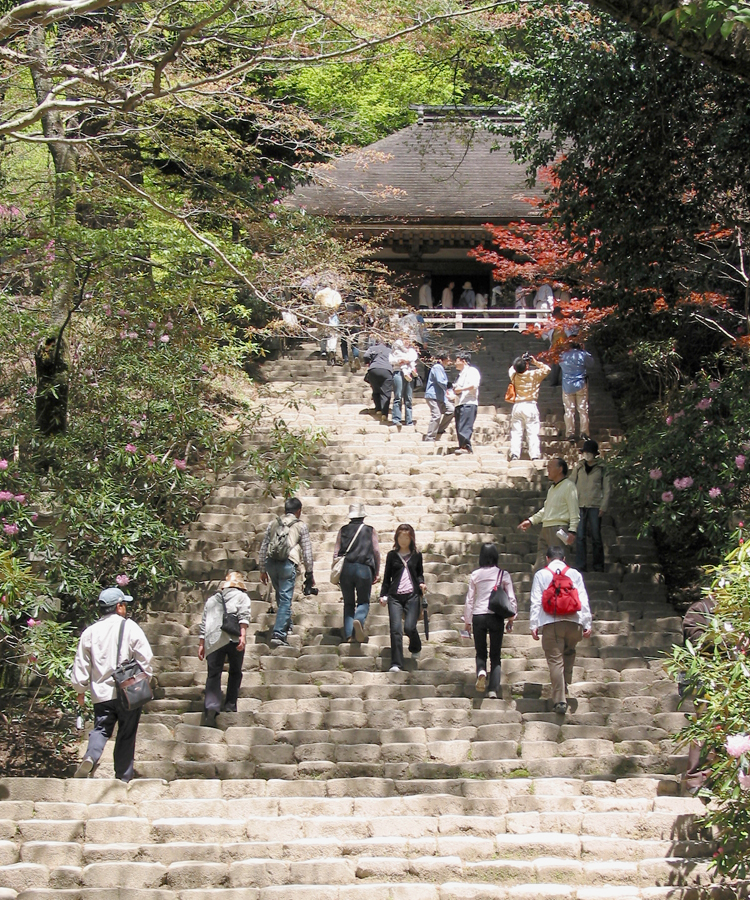
- Yoroizaka stone staircasethe broad cedar-shaded flight that opens the climb; the temple's most photographed approach
- Kondō (Golden Hall)National Treasure; cypress-shingle roof, housing a National Treasure standing Shakyamuni and an Eleven-headed Kannon
- Five-storey pagodaabout 16 m — the smallest ancient outdoor pagoda in Japan; restored after a cedar felled by a 1998 typhoon crushed its upper storeys
- Okunoin and the Mieidōreached by several hundred steep stone steps above the pagoda; the quietest point of the whole precinct
How to actually get there
- Osaka-Namba Stn → Murōguchi-Ōno Stn (Kintetsu Osaka Line express, ~1 hr 25 min; transfer at Tsuruhashi or Osaka-Uehonmachi depending on service).
- Murōguchi-Ōno Stn → Murō-ji-mae bus stop (Nara Kōtsū bus, ~14 min, roughly hourly).
- Murō-ji-mae → temple gate (walk ~5 min over the river bridge).
- Kintetsu Osaka Line east, then a local bus up the valley
- Osaka-Namba Stn → (Kintetsu Osaka Line express toward Nagoya/Haibara, change at Tsuruhashi or Osaka-Uehonmachi as required, ~1 hr 25 min) → Murōguchi-Ōno Stn → Nara Kōtsū bus bound for Murō-ji, alight at Murō-ji-mae (~14 min) → walk ~5 min across the river bridge. From Kyoto, ride the Kintetsu Kyoto Line to Yamato-Yagi and change to the Osaka Line.
- Same bus back to Murōguchi-Ōno, then the express west
- Buses back to Murōguchi-Ōno Stn leave from the same stop by the bridge, roughly hourly, with the last departure in the late afternoon — confirm it on arrival. From the station, Kintetsu Osaka Line expresses run west to Osaka-Uehonmachi/Namba.
About the place
The approach sets the tone before the temple does. You cross a red-railed bridge over the Murō River, pass through the gate, and then climb the Yoroizaka — a broad flight of stone steps that rises between cedars so tall the light arrives filtered and green. At the top stands the Kondō, a National Treasure hall roofed in layered cypress shingle, with a standing Shakyamuni Buddha inside that is itself a National Treasure. Keep climbing and the five-storey pagoda appears on a small terrace to the right: about 16 metres tall, vermilion and white, the smallest ancient outdoor pagoda in the country and small enough that you take it in whole rather than craning upward. A typhoon in 1998 brought a cedar down onto it and shattered the upper storeys; the repair took two years and is now invisible. Above that, a long stone staircase — several hundred steps, steep and uneven — leads to the Okunoin and its Mieidō. Not everyone goes up. Those who do get the valley to themselves.
How to enjoy it
Give this two and a half hours on the ground, not one — the climb is the experience. Rhododendrons bloom from mid-April to mid-May, about 3,000 of them banked along the stairways, and autumn colour arrives in November. Winter closes earlier and the upper steps can ice over. The treasure hall (Homotsuden) is a separate ticket and worth it if you care about early Heian sculpture. Buses from the station run only about once an hour and thin out in the afternoon, so photograph the return timetable at the stop before you walk in.
Background & history
Murō-ji was founded in the late 8th century in a valley long associated with rain-making rites and dragon deities. It later became a Shingon temple and today heads its own branch, Shingon-shū Murō-ji-ha. Its lasting distinction is social rather than doctrinal: Mount Kōya, the head monastery of Shingon Buddhism roughly 80 km to the south, excluded women from its precincts until 1872. Murō-ji did not, and from the Edo period onward women who wished to practise or pray in the Shingon tradition came here instead. The name Nyonin Kōya dates from that era. Five Buddhist images and three of the halls carry National Treasure designation.
Before you go
- Cash
- Temple admission ¥600 adults, ¥400 elementary school children; the treasure hall is a separate ¥400. Admission is cash at the gate. IC cards (ICOCA / Suica) work on the Kintetsu line and on the Nara Kōtsū bus. There is no ATM in the village — draw cash before you leave the city.
- Good to know
- 8:30–17:00 from 1 April to 30 November; 9:00–16:00 from 1 December to 31 March. Open year-round. The Okunoin stairway may be closed in snow or heavy rain.
- Another way
- Hase-dera, another Nara mountain temple famous for peonies, is on the same Kintetsu Osaka Line a few stops back toward Osaka, so the two combine into one long day if you start early.
- After you get off
- At Murōguchi-Ōno Station take the single exit and turn to the bus bay directly in front; the Murō-ji service is the only route that matters. At Murō-ji-mae, the temple is across the vermilion-railed bridge, about five minutes on foot past the souvenir shops.
Nearby notes
 KENPEI / CC BY-SA 3.0
Nature · Mie★★
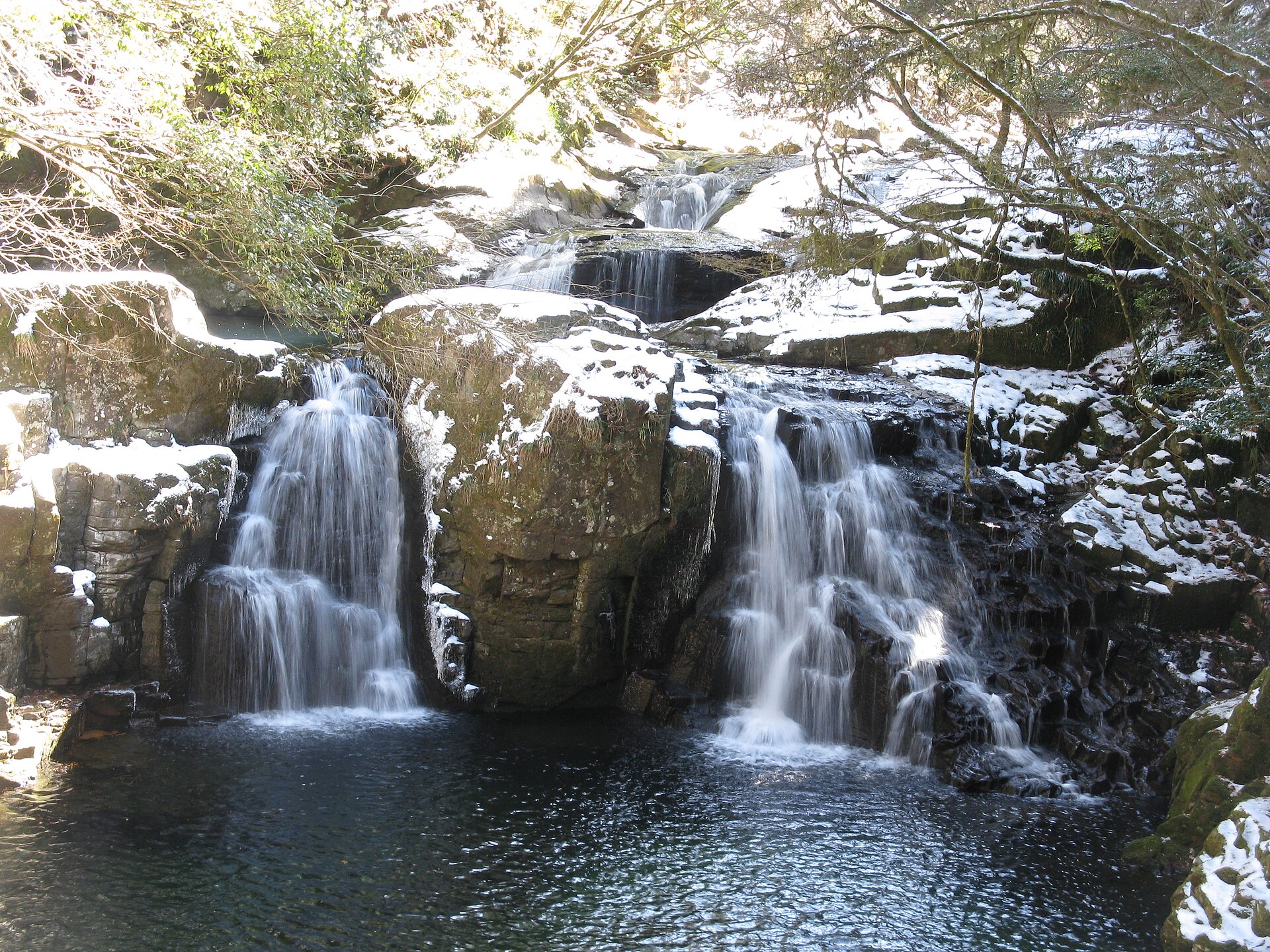
Akame 48 Waterfalls
5.0 km · straight line
 663highland / CC BY 2.5
Nature · Nara★★
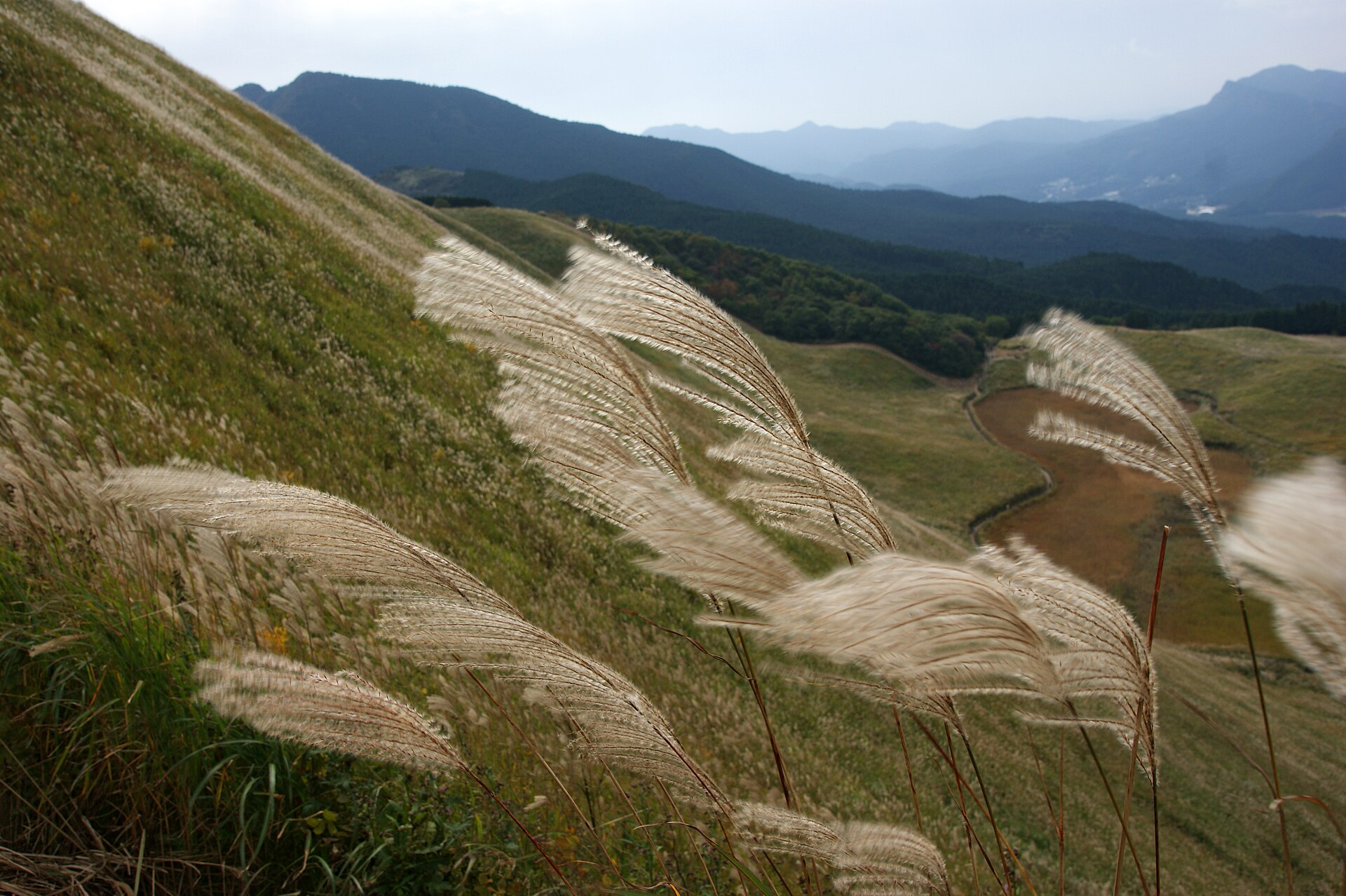
Soni Kogen
11.2 km · straight line
 Saigen Jiro / CC0
History · Nara★
Uda-Matsuyama
11.8 km · straight line
 Tawashi2006 / CC BY-SA 3.0
History · Nara★★★
Hasedera Temple
12.2 km · straight line
Distances are straight lines on the map, not travel times.